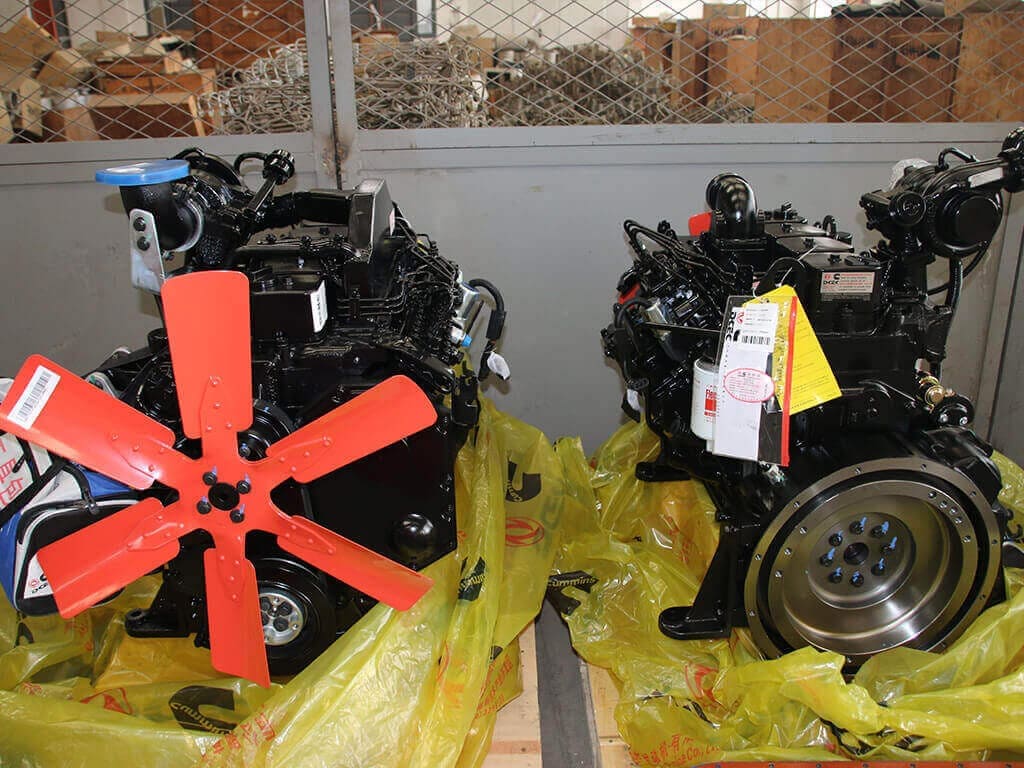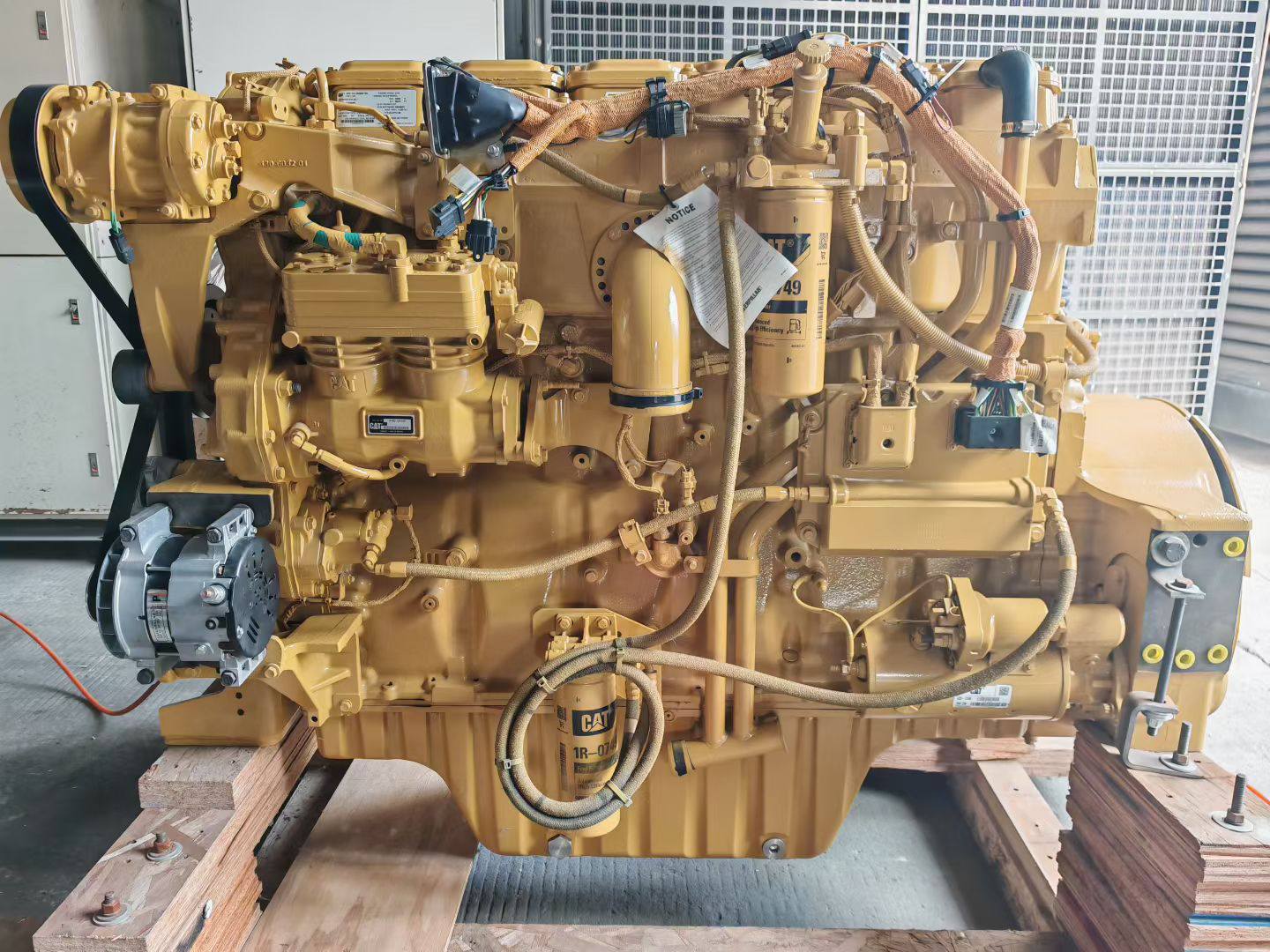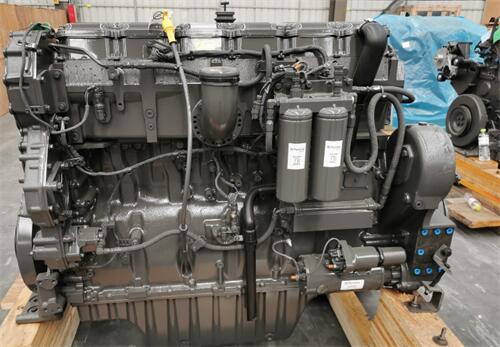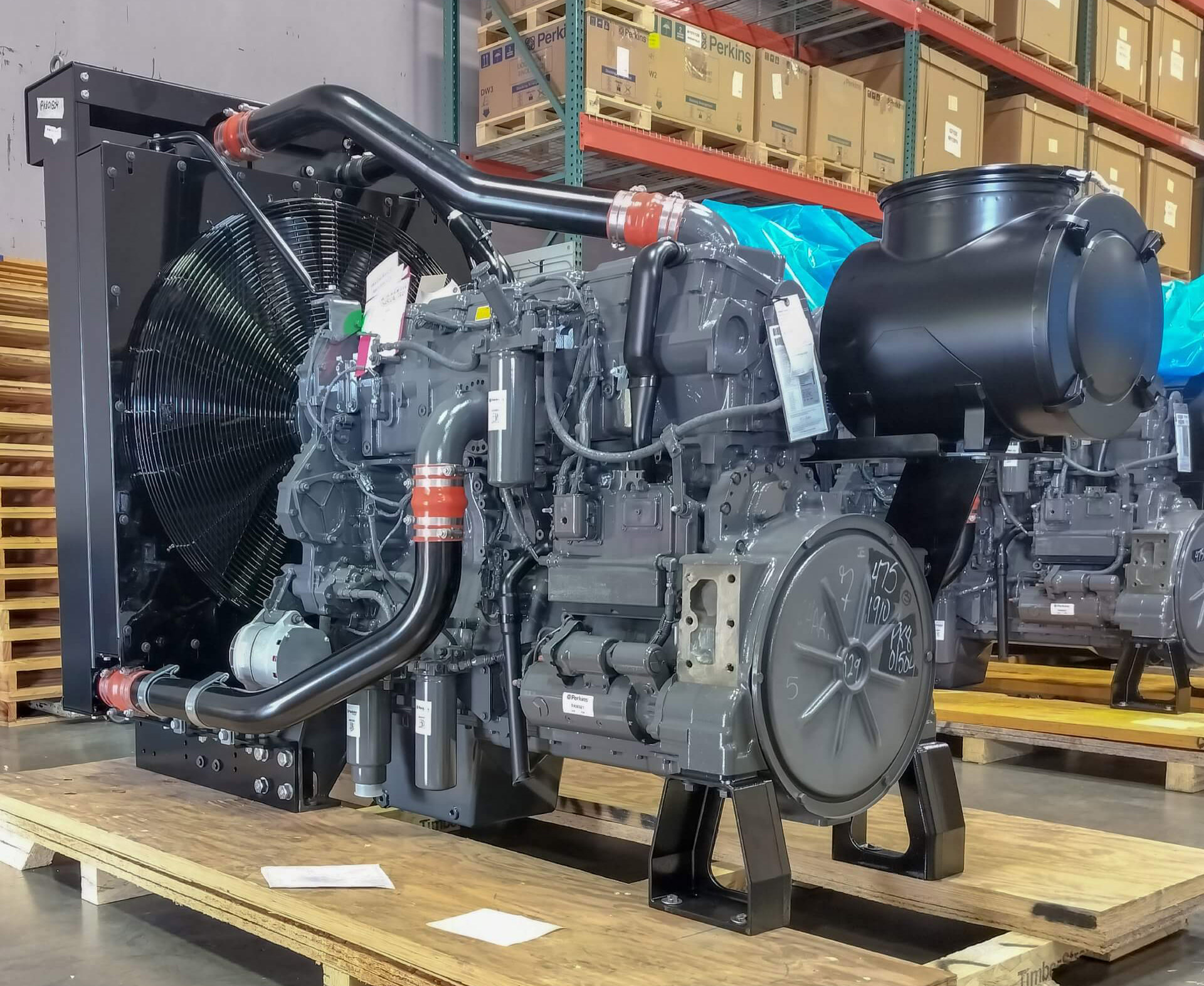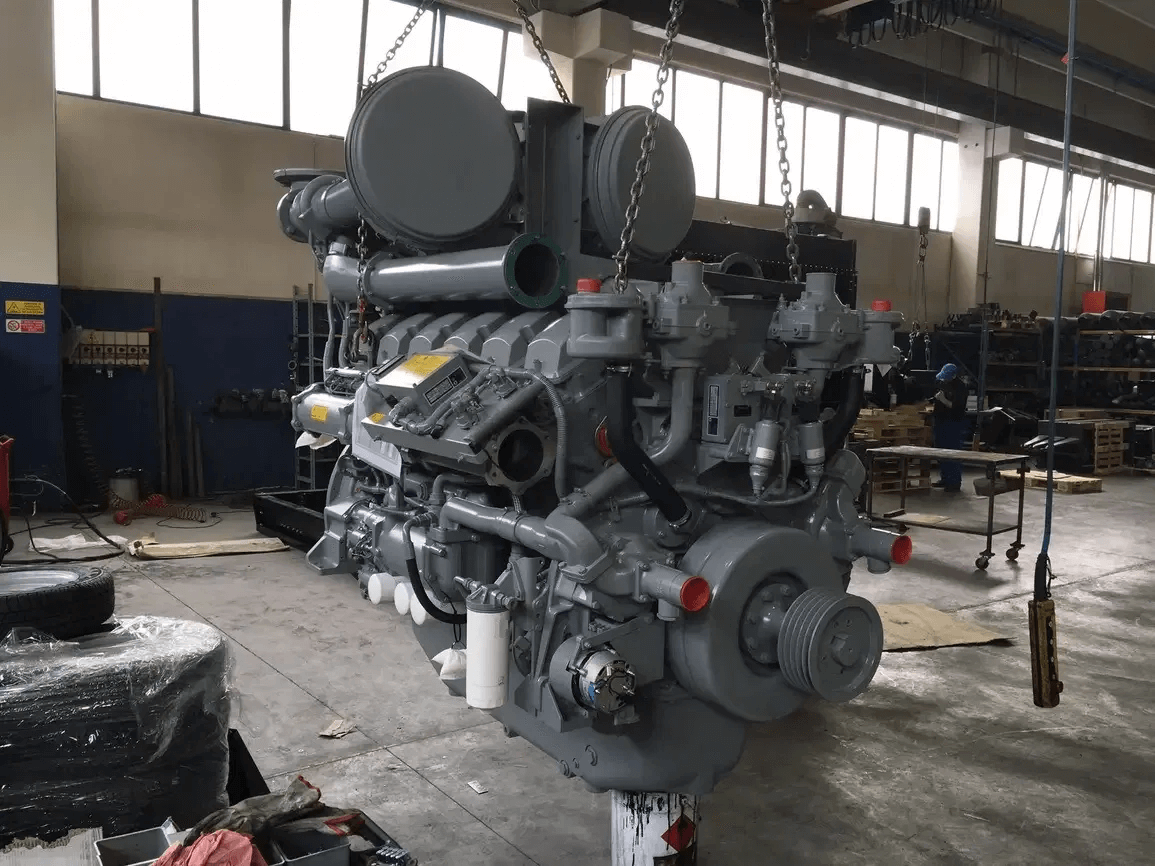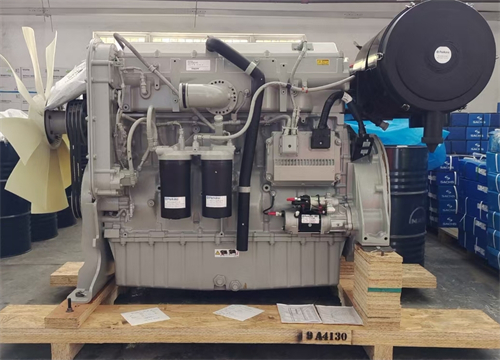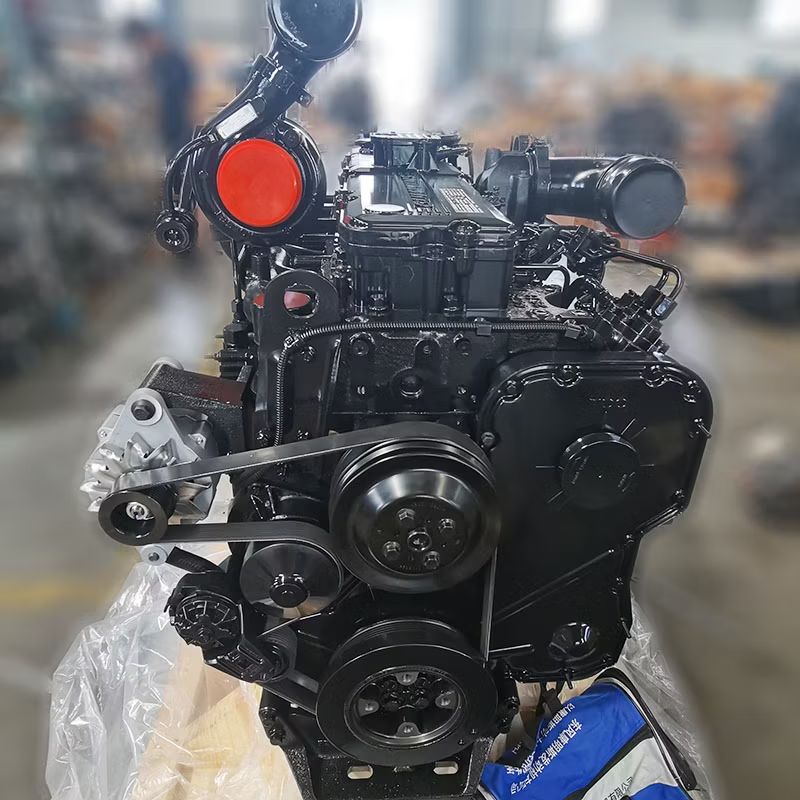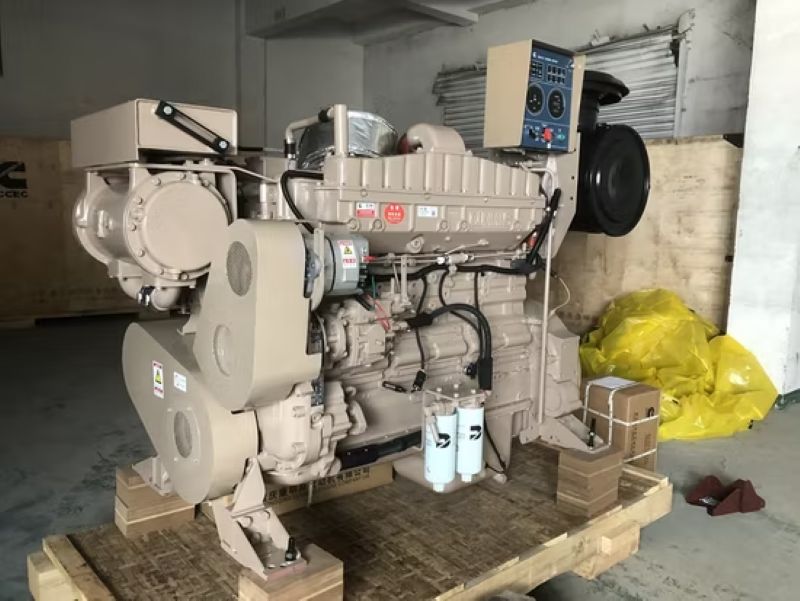

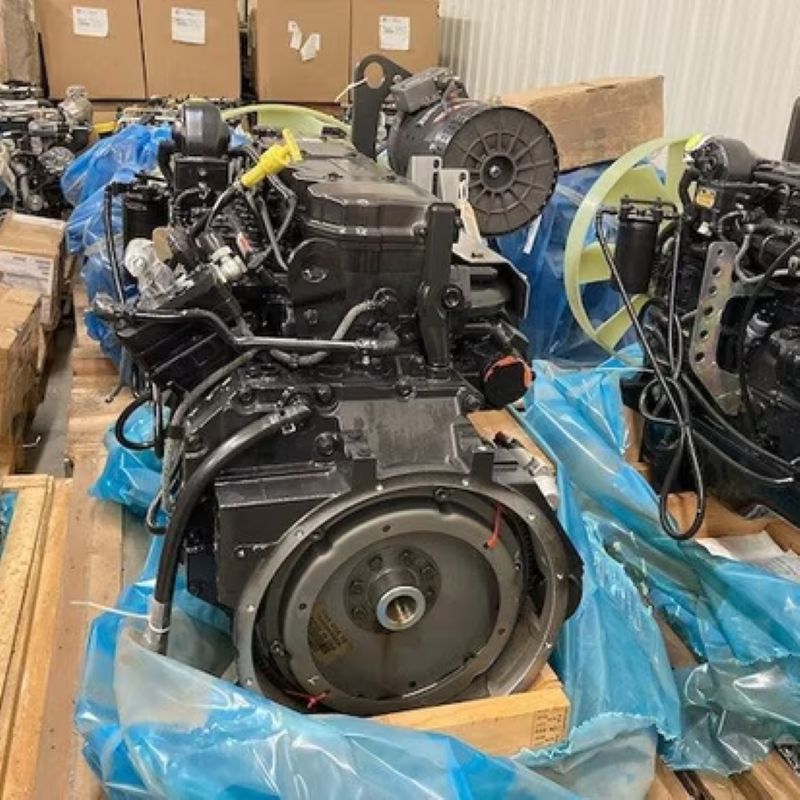
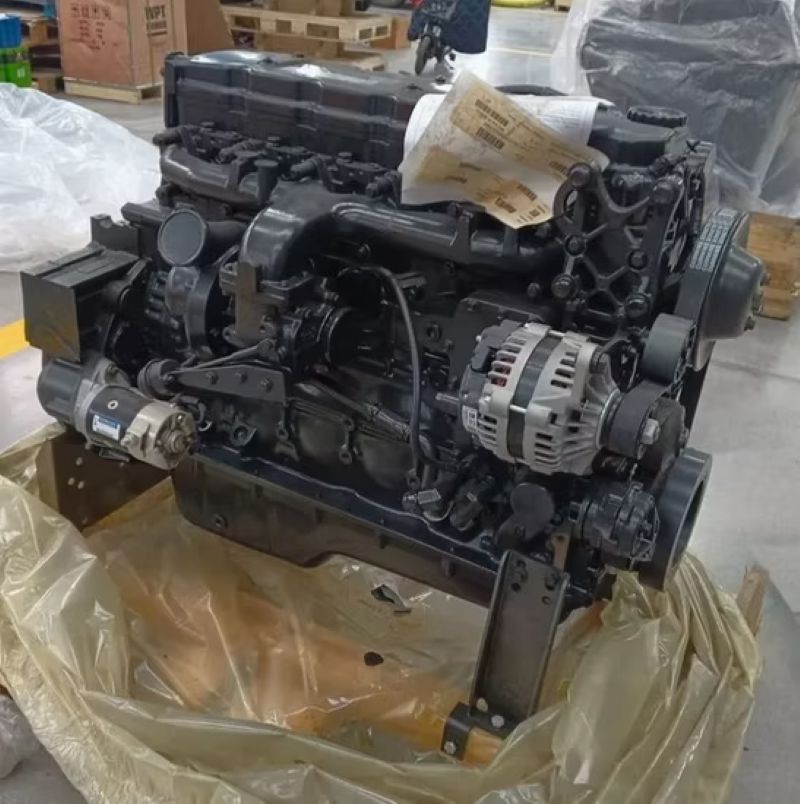
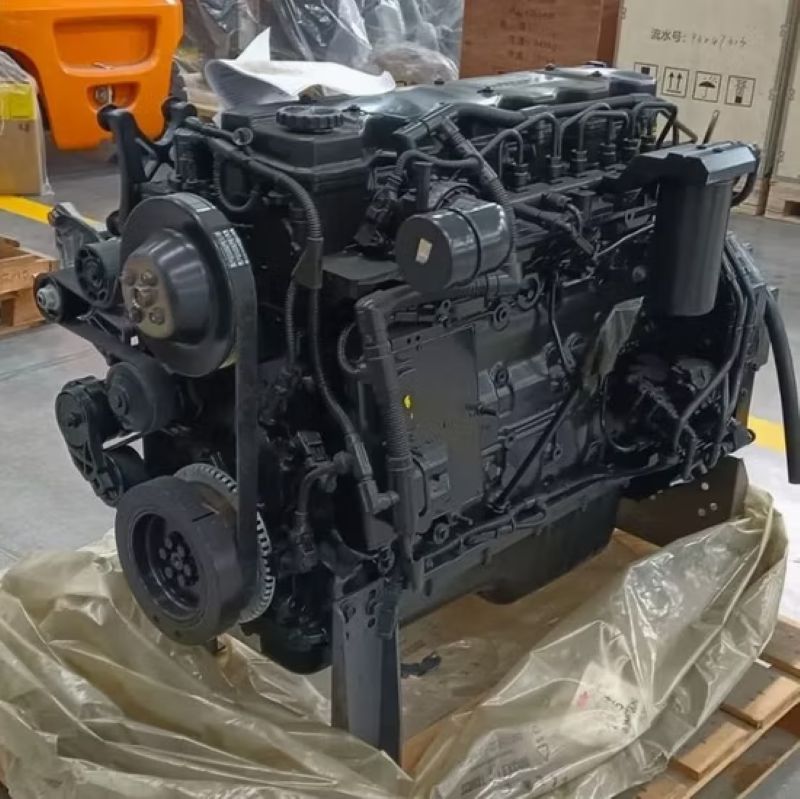
The Cummins QSB6.7-G3 is a 6.7L electronic diesel engine developed for 50Hz generator-set applications requiring 151 kW of prime engine power and 166 kW of standby engine power at 1,500 RPM.
Unlike mechanically governed generator engines, the QSB6.7-G3 uses an electronically controlled high-pressure common-rail fuel system. This allows the engine control system to adjust injection quantity and timing according to speed, load and operating conditions.
For generator-set manufacturers and replacement-engine buyers, however, engine power is only one part of the selection process. The final electrical output also depends on alternator efficiency, power factor, cooling capacity, ambient temperature, altitude, control-system calibration and the required ISO 8528 performance class.
- 6.7L inline-six, 4-stroke diesel engine
- Prime engine power: 151 kW at 1,500 RPM
- Standby engine power: 166 kW at 1,500 RPM
- Designed around 50Hz generator-set operation
- Electronic high-pressure common-rail fuel system
- Turbocharged with air-to-air charge-air cooling
- Electronic governing system
- EU Stage IIIA / China NS III emission reference
- CPL reference 3862
- 12V or 24V starting configuration, subject to final build
Planning a new generator set or replacing an existing QSB6.7 engine? Send the engine nameplate, ESN, CPL, required genset output, frequency and alternator model for configuration checking.
Start with Generator-Set Output, Not Engine Power Alone
The QSB6.7-G3 is rated at 151 kW prime and 166 kW standby at the engine flywheel. These figures describe mechanical engine output and should not be presented as the final electrical output of the complete generator set.
To estimate generator-set capacity, the alternator efficiency and the required power factor must also be considered.
| Selection Item | QSB6.7-G3 Reference | What It Means for the Genset |
|---|---|---|
| Prime Engine Power | 151 kW at 1,500 RPM | Mechanical power available for variable-load prime operation, subject to the applicable engine rating definition. |
| Standby Engine Power | 166 kW at 1,500 RPM | Mechanical power available for emergency standby duty, not intended as a continuous operating rating. |
| Rated Frequency | 50Hz reference | A four-pole alternator produces 50Hz at 1,500 RPM. |
| Estimated Prime Genset Class | Commonly evaluated around the 170–180 kVA class | The final value depends on alternator efficiency, power factor, fan load and project derating. |
| Estimated Standby Genset Class | Commonly evaluated around the 185–195 kVA class | The final standby rating must be confirmed using the selected alternator and complete genset design. |
For example, a 151 kW engine combined with a 93% efficient alternator and a 0.8 power factor produces an estimated electrical capacity of approximately 175 kVA. This is an engineering estimate rather than a guaranteed genset rating.
The original 237.7 kVA figure should not be used unless it is supported by a complete generator-set datasheet explaining the alternator, power factor, auxiliary loads and rating method.
1,500 RPM Means a 50Hz Generator Configuration
The listed QSB6.7-G3 performance data applies at 1,500 RPM. With a four-pole alternator, this corresponds to 50Hz output.
| Generator Frequency | Typical Engine Speed | Selection Requirement |
|---|---|---|
| 50Hz | 1,500 RPM | The listed 151 kW prime and 166 kW standby figures apply to this referenced operating speed. |
| 60Hz | 1,800 RPM | A separate 1,800 RPM engine rating, governor calibration and performance curve must be confirmed. |
A 1,500 RPM engine should not be marketed as a confirmed 60Hz solution without an approved 1,800 RPM datasheet. Engine power, fuel consumption, cooling demand, exhaust temperature and governor settings may differ at the higher speed.
Why the Electronic Common-Rail System Matters in a Genset
The QSB6.7-G3 uses an electronically controlled high-pressure common-rail fuel system. The rail maintains pressurised fuel independently of the individual injection event, while the engine control system manages injection timing and quantity.
In a generator application, this gives the engine control system more flexibility to respond to changing loads than a simple mechanical fuel-control system. It can also support cleaner combustion and more precise speed management.
| Electronic System Feature | Practical Genset Benefit | Important Limitation |
|---|---|---|
| Electronic fuel metering | Adjusts injected fuel according to actual load and operating conditions. | Fuel efficiency still depends on the engine load point and complete genset design. |
| Electronic governor | Supports controlled engine-speed response during load changes. | Transient frequency performance also depends on calibration, rotating inertia and load step size. |
| ECM fault monitoring | Allows sensors and operating faults to be monitored through the engine control system. | The genset controller, harness and communication interface must be compatible. |
| High-pressure injection | Supports fuel atomisation and controlled combustion across different operating points. | Fuel cleanliness and correct filtration are critical to injector and pump life. |
The engine alone does not determine voltage stability. Voltage regulation is primarily controlled by the alternator and AVR, while frequency response depends on the engine, governor, ECM calibration, alternator inertia and complete control-system tuning.
QSB6.7-G3 Technical Specifications
Engine and Performance Data
| Parameter | Reference Specification |
|---|---|
| Engine Model | QSB6.7-G3 |
| Engine Type | 4-stroke, inline six-cylinder diesel engine |
| Displacement | 6.7 L |
| Bore × Stroke | 107 × 124 mm |
| Compression Ratio | 17.3:1 for the referenced configuration |
| Firing Order | 1-5-3-6-2-4 |
| Prime Engine Power | 151 kW / approximately 202 HP at 1,500 RPM |
| Standby Engine Power | 166 kW at 1,500 RPM |
| Rated Speed | 1,500 RPM for the referenced 50Hz configuration |
| Idle Speed | Approximately 800 ± 100 RPM |
| CPL Reference | 3862 |
Fuel, Air and Control System
| Parameter | Reference Specification |
|---|---|
| Fuel System | Electronically controlled high-pressure common-rail system |
| Fuel-System Reference | BOSCH common-rail reference listed in the supplied data |
| Aspiration | Turbocharged with air-to-air charge-air cooling |
| Governor Type | Electronic control |
| Listed Governor Regulation | ≤3% reference |
| Control-System Requirement | Compatible ECM, engine harness, genset controller, sensors and shutdown logic |
The listed ≤3% governor-regulation figure should not be used by itself to claim a specific ISO 8528 transient-performance class. Complete genset testing is required to verify frequency dip, recovery time, voltage deviation and load-acceptance performance.
Cooling and Starting Data
| Parameter | Reference Specification |
|---|---|
| Cooling Method | Liquid cooled |
| Listed Heat Rejection | Approximately 68 kW for the referenced operating condition |
| Starting Voltage | 12V or 24V, subject to final engine configuration |
| Standard Starting Temperature | Approximately -10°C |
| Starting Temperature with Auxiliary Equipment | Approximately -25°C, subject to the complete cold-start package |
Cold-start capability depends on more than the starter motor. Battery capacity, battery condition, engine-oil viscosity, coolant temperature, fuel properties, intake heating and block-heater configuration all influence actual starting performance.
Dimensions and Weight
| Parameter | Reference Specification |
|---|---|
| Engine Dimensions | 1150 × 810 × 910 mm |
| Reference Net Weight | Approximately 520 kg |
| Reference Packing Dimensions | 1450 × 1110 × 1210 mm |
| Reference Gross Weight | Approximately 580 kg |
| Centre of Gravity from Block Front | Approximately 432 mm |
| Centre of Gravity above Crankshaft | Approximately 147 mm |
The centre-of-gravity data is important when designing the base frame, vibration isolators and lifting arrangement. Final skid design should use approved engine and alternator installation drawings.
Emission Reference and Destination-Market Approval
The supplied data lists EU Stage IIIA and China NS III as emission references for the QSB6.7-G3 configuration.
These references should not be interpreted as automatic approval for every current regulated market. Generator-set emission rules vary according to destination country, engine power, application type, production date, stationary or mobile use and local registration requirements.
| Destination Question | What the Buyer Should Confirm |
|---|---|
| Is Stage IIIA still accepted? | Check the current local regulation for stationary generator sets and the intended installation date. |
| Is an emission certificate included? | Confirm the exact certificate, engine family, serial-number coverage and document revision before ordering. |
| Is the genset for mobile rental use? | Mobile and non-road applications may face different requirements from fixed emergency generators. |
| Is local type approval required? | Verify whether the complete generator set, not only the engine, requires certification. |
QSB6.7-G3, G4, G32 and G31: Choose by Project Requirement
The listed QSB6.7 generator-drive models share the same general displacement platform, but they should not be treated as interchangeable power calibrations.
| Model | Listed Prime Power | Listed Standby Power | Typical Selection Question |
|---|---|---|---|
| QSB6.7-G3 | 151 kW | 166 kW | Does the project require a 50Hz engine in approximately the 170–180 kVA prime genset class? |
| QSB6.7-G4 | 168 kW | 185 kW | Is additional electrical-output headroom required without moving to the highest-output QSB6.7 configuration? |
| QSB6.7-G32 | 173 kW | 190 kW | Does the project require a higher-output calibration and the corresponding cooling, ECM and emission configuration? |
| QSB6.7-G31 | 209 kW | 230 kW | Can the alternator, radiator, intake, exhaust and base-frame design support the higher-output variant? |
The final model should be selected by the required electrical output, prime or standby duty, frequency, altitude, ambient temperature, emission requirement and approved alternator pairing.
A G4, G32 or G31 should not be treated as a simple software upgrade for a G3. Turbocharger, injectors, ECM calibration, cooling package, charge-air system, exhaust temperature and internal components may differ.
What Must Be Matched in a Replacement QSB6.7-G3
Because the QSB6.7-G3 is electronically controlled, replacement matching involves more than the engine block and flywheel housing.
| Matching Item | Required Check |
|---|---|
| Engine Serial Number | Use the ESN to identify the original build, calibration and compatible service parts. |
| CPL | Confirm whether the existing engine corresponds to CPL 3862 or another approved configuration. |
| Rated Speed | Confirm 1,500 RPM for 50Hz or obtain the correct 1,800 RPM configuration for 60Hz. |
| ECM Calibration | Match the power rating, governor characteristics, frequency and generator application. |
| Engine Harness | Verify connectors, sensor layout, starter circuit, shutdown wiring and controller interface. |
| Flywheel and Housing | Confirm SAE housing, flywheel, flexible coupling and alternator interface. |
| Cooling Package | Check radiator capacity, fan arrangement, coolant connections and charge-air cooler. |
| Air and Exhaust System | Verify air-cleaner restriction, turbo orientation, exhaust outlet and allowable back pressure. |
| Starting System | Confirm whether the genset uses 12V or 24V starting equipment. |
| Emission Documentation | Confirm that the supplied engine and documentation satisfy the destination project requirements. |
Applications Suited to the QSB6.7-G3 Output Range
The QSB6.7-G3 is mainly relevant to generator-set projects requiring a compact electronic engine in the medium-power 50Hz range.
| Application | Why the QSB6.7-G3 May Be Considered | Project Check |
|---|---|---|
| Factory Backup Power | Electronic control can support changing motor and production loads. | Confirm the largest motor-starting load and required transient performance. |
| Commercial Buildings | The output range is relevant to medium-sized emergency-power systems. | Calculate elevators, pumps, HVAC and fire-system starting demand. |
| Telecommunications Sites | Compact engine dimensions can support packaged and containerised gensets. | Review low-load operation, fuel autonomy, remote monitoring and local service access. |
| Healthcare and Critical Facilities | Can be considered where electronic engine control and standby capacity are required. | The complete genset must meet local response-time, redundancy and certification requirements. |
| Construction and Rental Fleets | The 6.7L platform offers a compact package for medium-power mobile gensets. | Confirm emission acceptance, enclosure cooling, transport design and variable-site conditions. |
| Remote Industrial Sites | May support pumps, workshops, camps and auxiliary industrial loads. | Review altitude, dust, ambient temperature, fuel quality and maintenance capability. |
Available Supply Formats
| Supply Format | Suitable Buyer | What Must Be Confirmed |
|---|---|---|
| Base Generator Engine | Genset manufacturers with their own radiator, controller, harness and base-frame design | Included flywheel, housing, starter, alternator, sensors and wiring |
| Complete Replacement Engine | Owners replacing an existing QSB6.7-G3 | ESN, CPL, ECM calibration, electrical connectors and mechanical interfaces |
| Engine with Cooling Package | OEMs requiring a matched radiator and charge-air cooler | Ambient-temperature rating, fan power and enclosure airflow |
| Generator Drive Package | Projects requiring engine, radiator, controller, base frame and selected accessories | Alternator model, kVA requirement, voltage, frequency, enclosure and control logic |
| Project Spare Engine | Data centres, factories, utilities and remote sites maintaining critical spares | Long-term preservation, ECM compatibility, accessory completeness and storage procedure |
Parts and Service Support
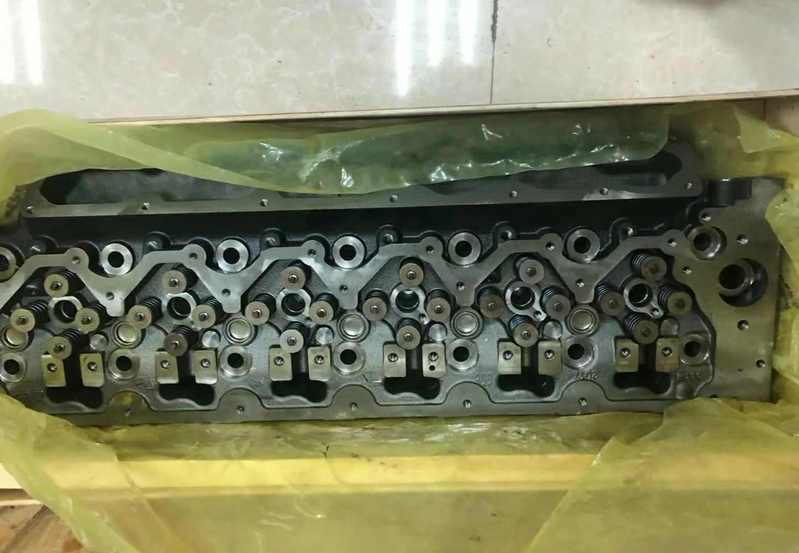
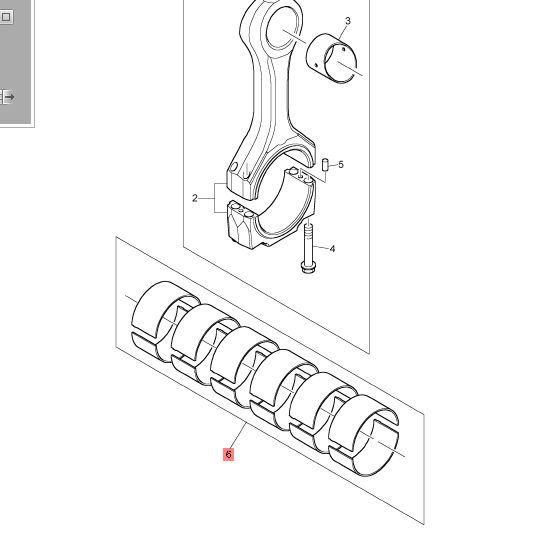
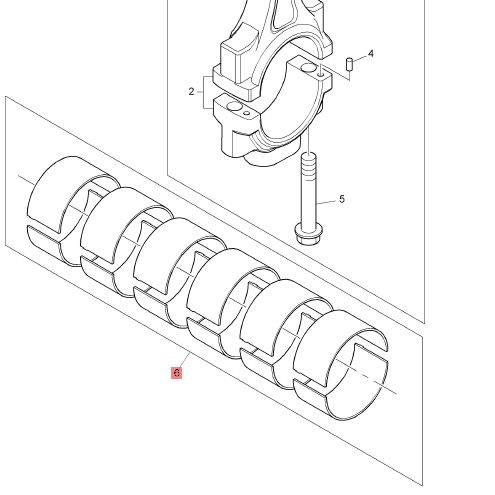
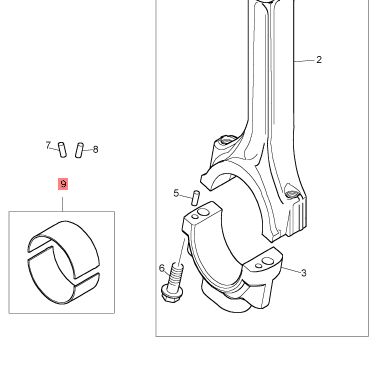
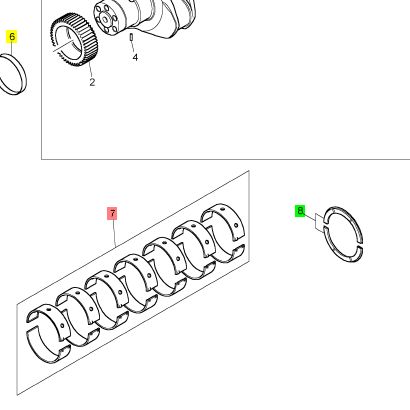
ZEB Power can supply Cummins QSB6.7 engine parts for routine service, fuel-system repair, cooling-system maintenance and engine overhaul.
- Fuel injectors and common-rail components
- High-pressure fuel-pump components
- Fuel filters and water separators
- Turbocharger and charge-air components
- Water pumps and thermostats
- Oil pumps and lubrication-system parts
- Electronic sensors and switches
- Starter motors and alternators
- Gasket and seal kits
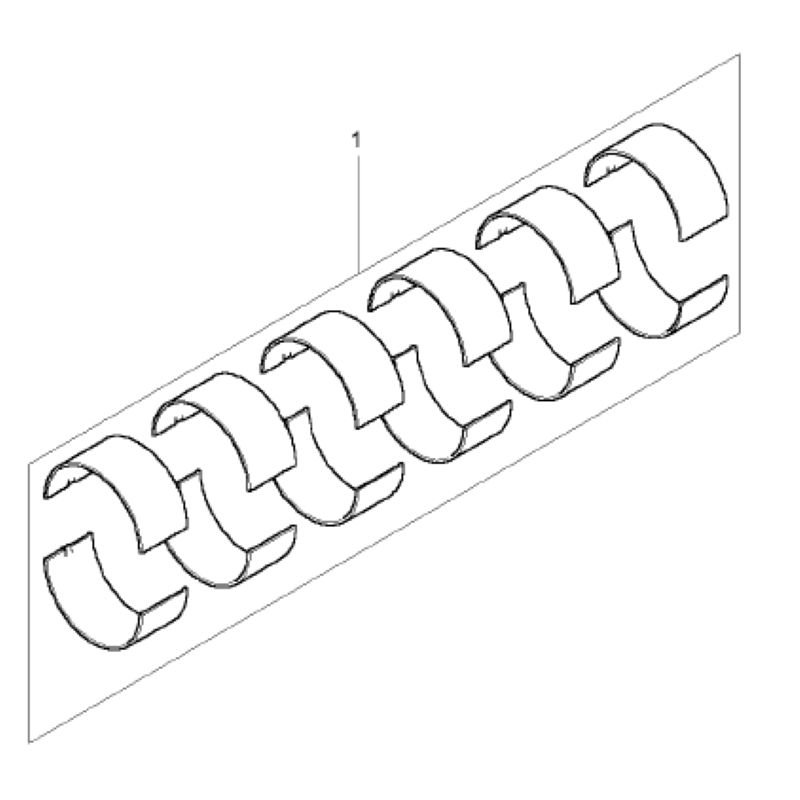
- Pistons, rings, bearings and cylinder components
- Routine maintenance kits
Electronic fuel-system parts should be selected using the ESN, CPL and individual part number. Injector and high-pressure-pump cleanliness requirements must be followed during installation and service.
Commercial, Packing and Warranty Information
| Commercial Item | Reference Information |
|---|---|
| Supply Type | Base engine, replacement engine, cooling package, generator-drive package or service parts |
| Lead Time | Normally 15–30 working days, depending on stock and final configuration |
| Payment Terms | T/T or L/C, subject to order confirmation |
| Trade Terms | FOB / CIF / CFR / EXW |
| Port of Loading | Shenzhen or another confirmed China port |
| Reference Packing Size | 1450 × 1110 × 1210 mm |
| Reference Gross Weight | Approximately 580 kg, subject to the final accessory list and packing document |
| Warranty Reference | 1 year or 1,500 operating hours, whichever comes first, subject to the final sales contract |
| Available Documents | Commercial invoice, packing list, engine documentation, test information and other agreed export documents |
The warranty-hour reference should not be confused with a maintenance interval. Oil, fuel-filter, valve-clearance and other service intervals must follow the operation and maintenance manual for the final ESN and working conditions.
Frequently Asked Questions
What generator-set size can the QSB6.7-G3 drive?
The engine provides 151 kW prime mechanical power and 166 kW standby mechanical power at 1,500 RPM. Depending on alternator efficiency, power factor and derating, it is commonly evaluated for approximately the 170–180 kVA prime and 185–195 kVA standby classes.
The final electrical rating must be calculated using the selected alternator and complete genset design.
Is the QSB6.7-G3 suitable for 60Hz generator sets?
The listed performance data applies at 1,500 RPM, corresponding to a 50Hz four-pole alternator. A 60Hz application normally requires 1,800 RPM and a separately confirmed engine rating and ECM calibration.
What is the main difference between the G3 and G4?
The listed G4 output is higher at 168 kW prime and 185 kW standby. Before changing from G3 to G4, confirm the ECM calibration, turbocharger, cooling demand, charge-air system, emission configuration and alternator rating.
Does EU Stage IIIA mean the engine can currently be sold in every European market?
No. Stage IIIA is the listed emission reference for the engine configuration, but current acceptance depends on the country, application type, installation date and local generator-set regulations.
Does the common-rail system guarantee stable voltage and frequency?
No single engine component guarantees complete genset stability. The common-rail system and electronic governor support engine response, but final frequency and voltage performance depend on the ECM calibration, alternator, AVR, controller, rotating inertia and complete system tuning.
Can the engine start at -25°C?
The supplied reference lists approximately -10°C standard starting capability and approximately -25°C with an auxiliary cold-start system. Actual performance depends on the battery, oil, fuel, coolant, heaters and complete installation.
What information is needed for a replacement quotation?
Provide the original engine nameplate, ESN, CPL, generator-set model, prime and standby rating, voltage, frequency, alternator model, starting voltage, controller model and photos of the engine installation.
Request a QSB6.7-G3 Generator-Engine Quotation
To prepare an accurate quotation, the engine configuration must be matched to both the generator-set output requirement and the existing electrical and mechanical interfaces.
Please provide:
- Required prime and standby generator-set output
- Voltage and frequency
- Alternator brand and model
- Power factor
- Original engine model and nameplate photo
- Engine serial number and CPL
- ECM and engine-harness information
- Generator controller model
- 12V or 24V starting requirement
- Site altitude and maximum ambient temperature
- Emission or certification requirement
- Open, silent or containerised genset design
- Required supply scope
- Quantity and destination port
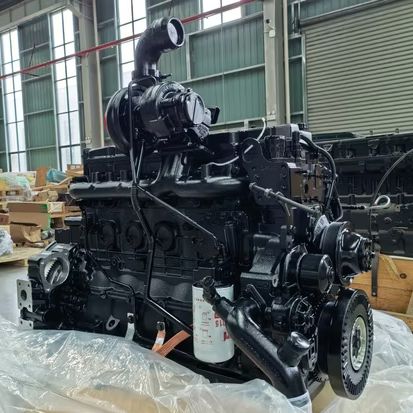
Get Your Engine & Parts Quote
Upload your parts list or send your ESN — we reply within 30 minutes. Engine down? Need fast replacement? Contact us to check today’s stock & delivery time.