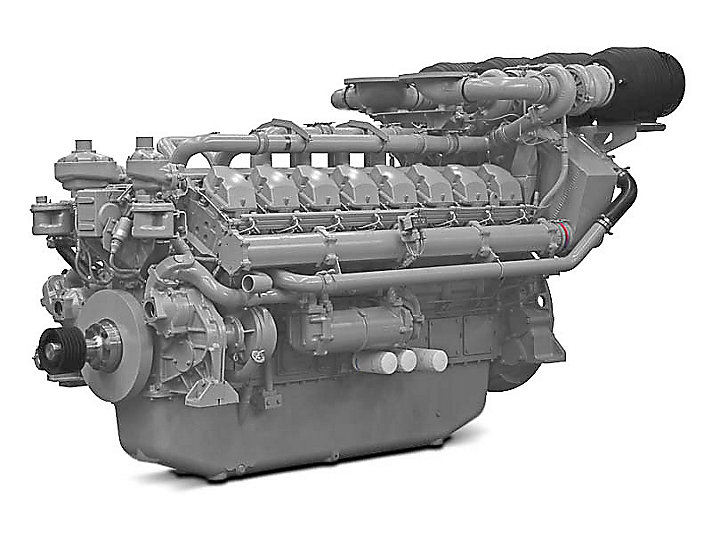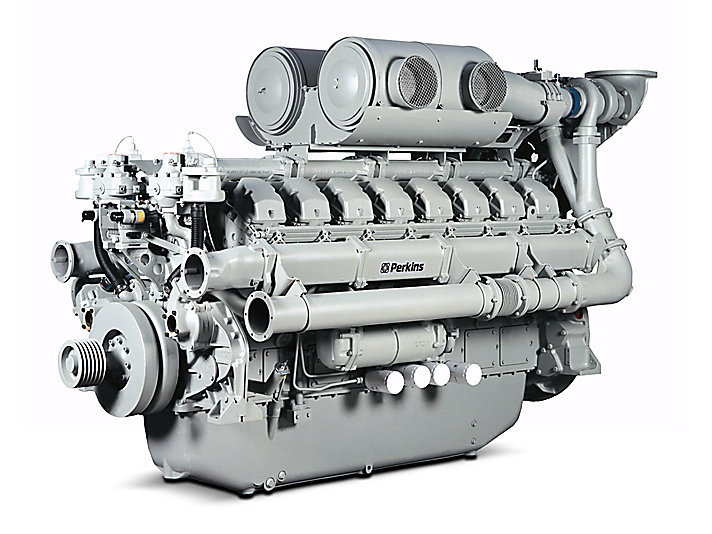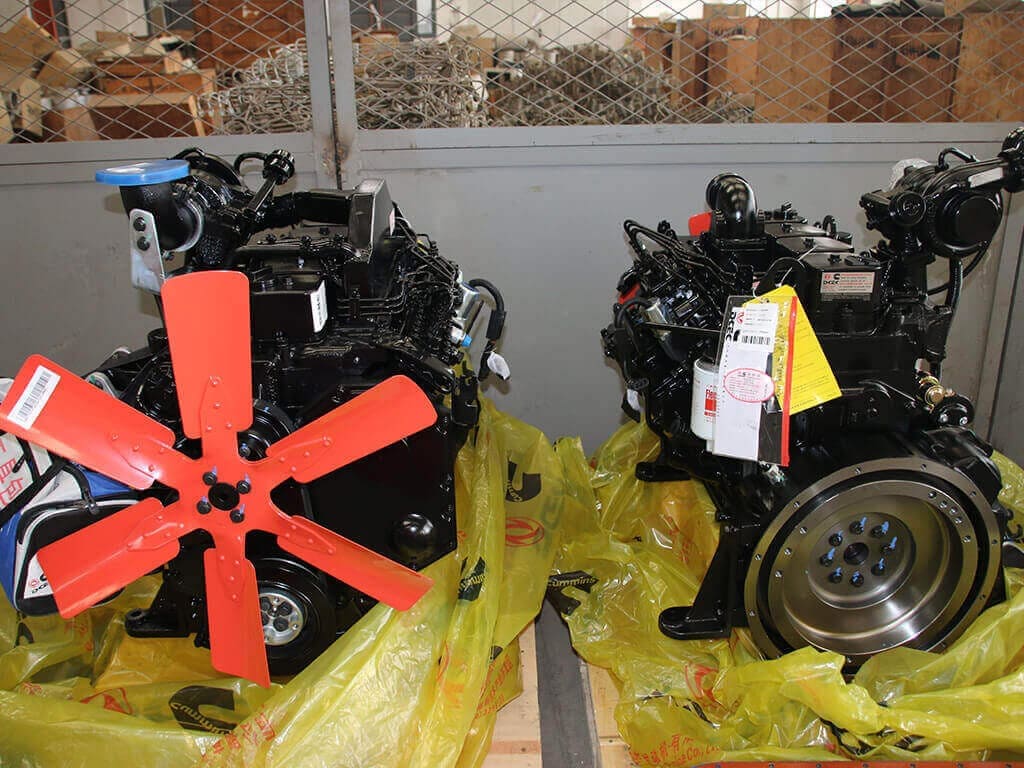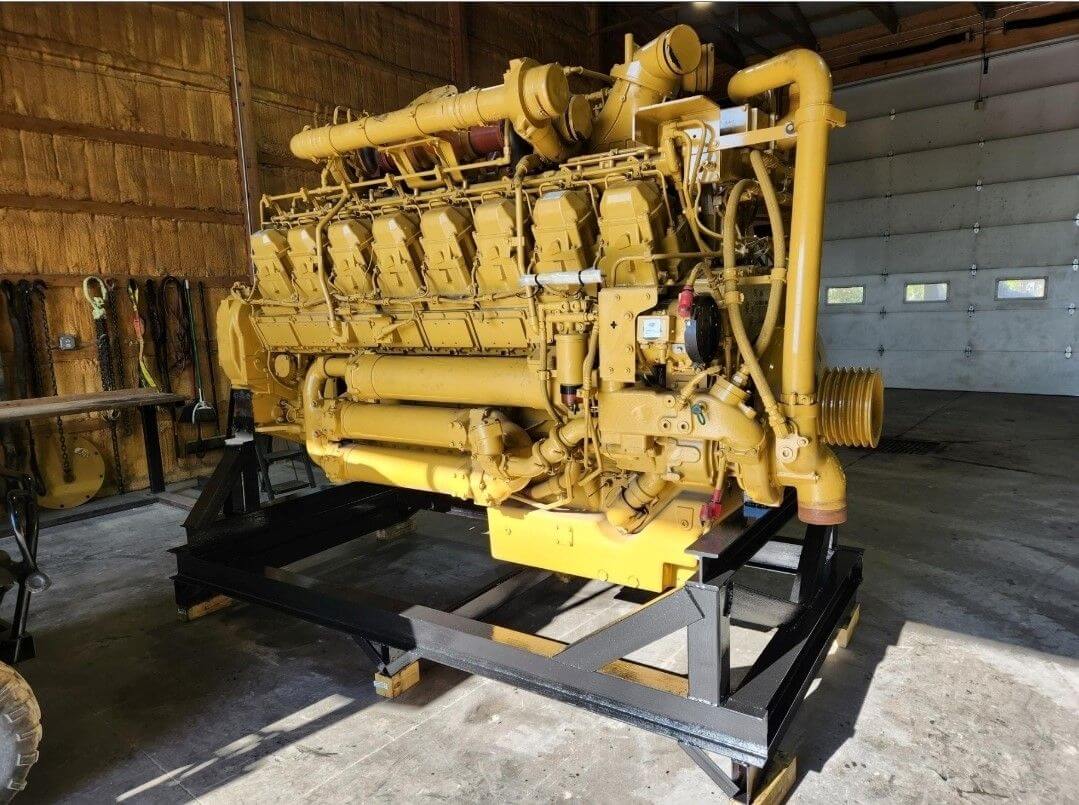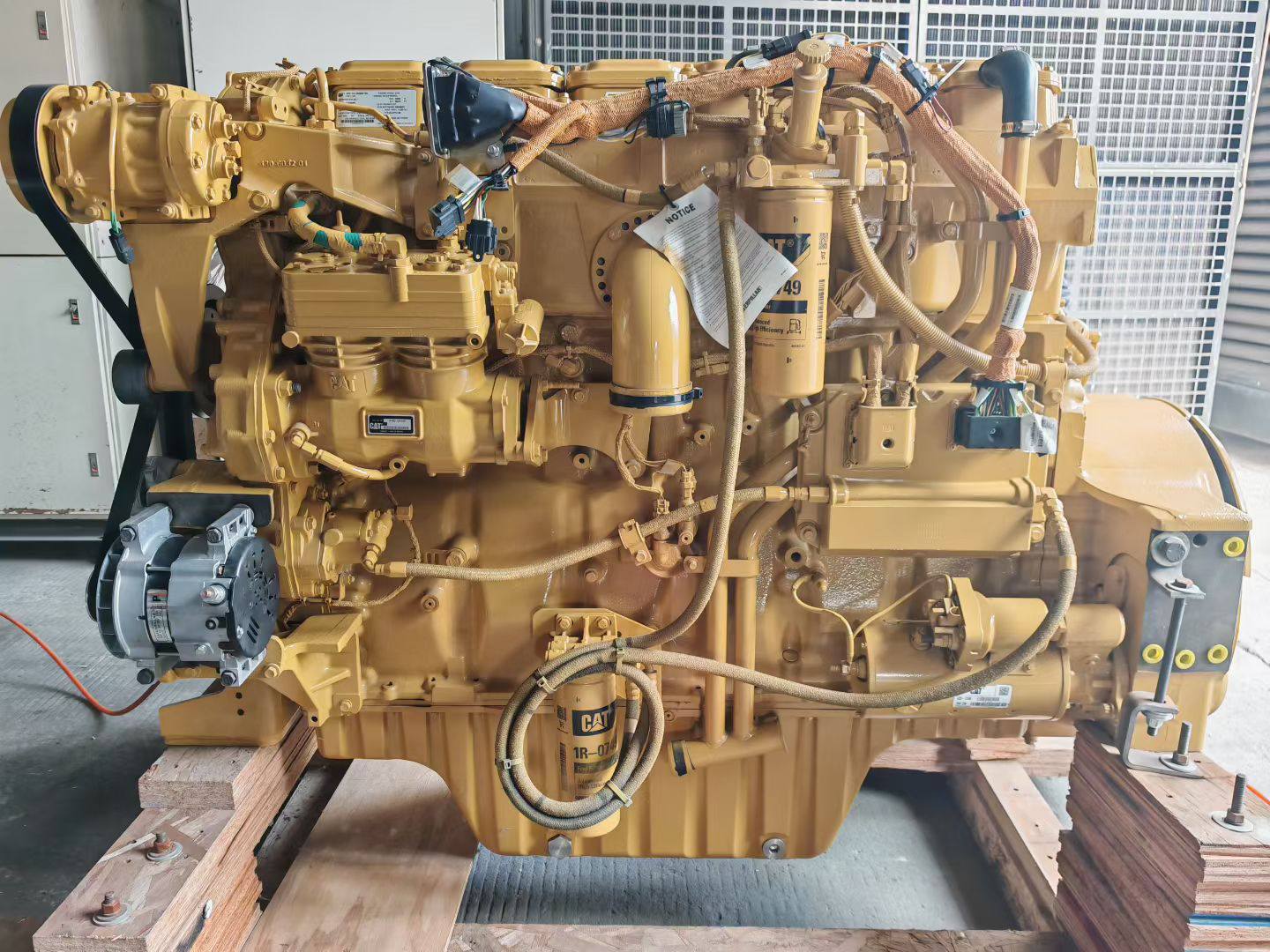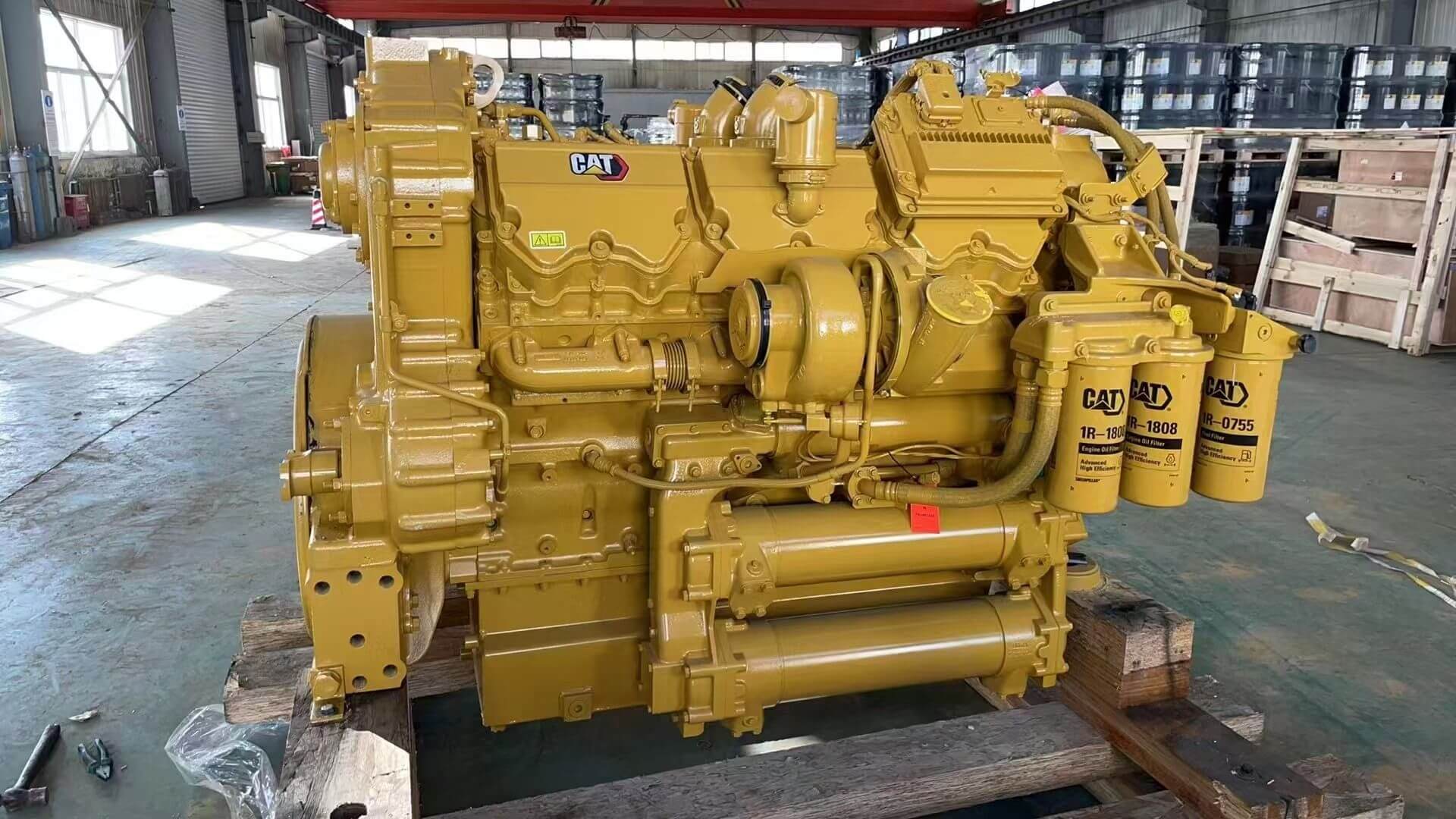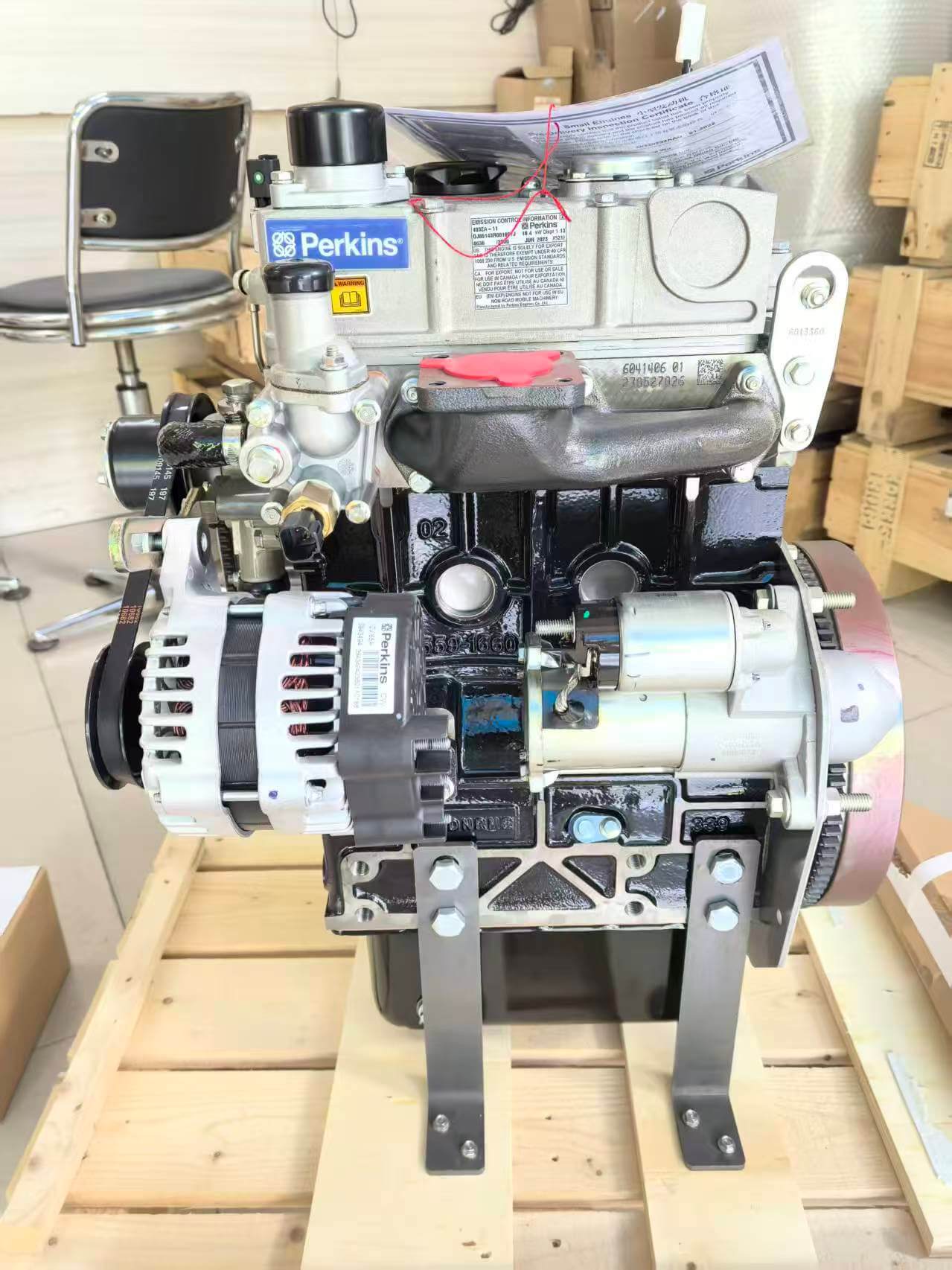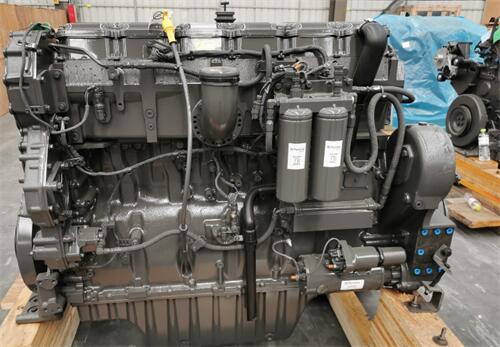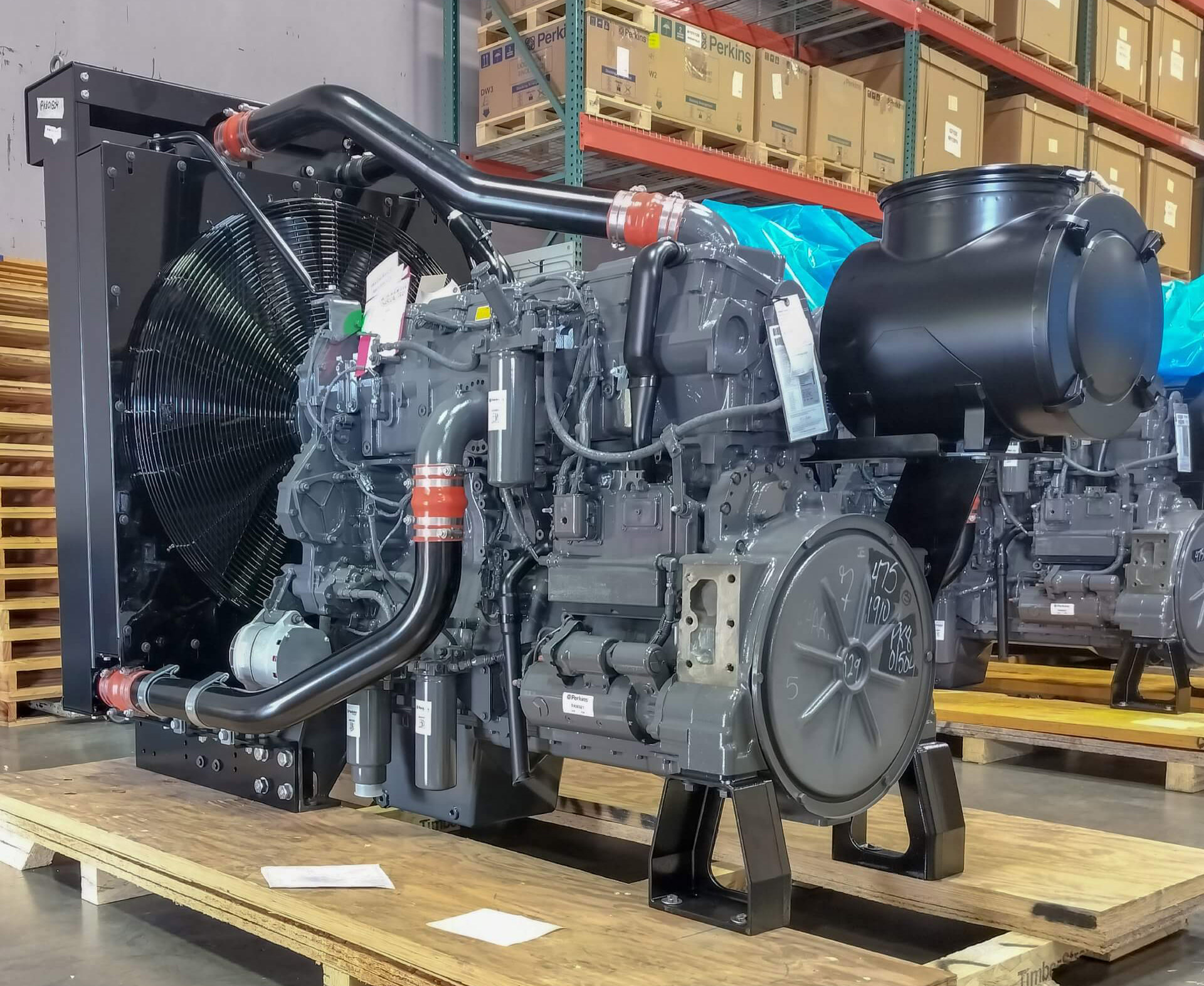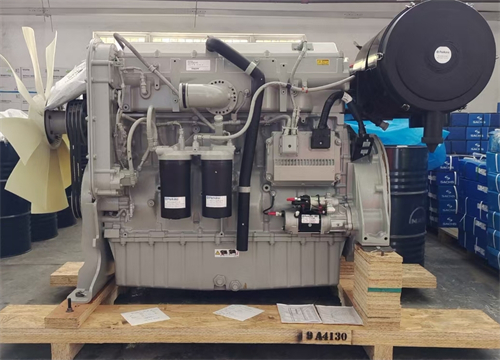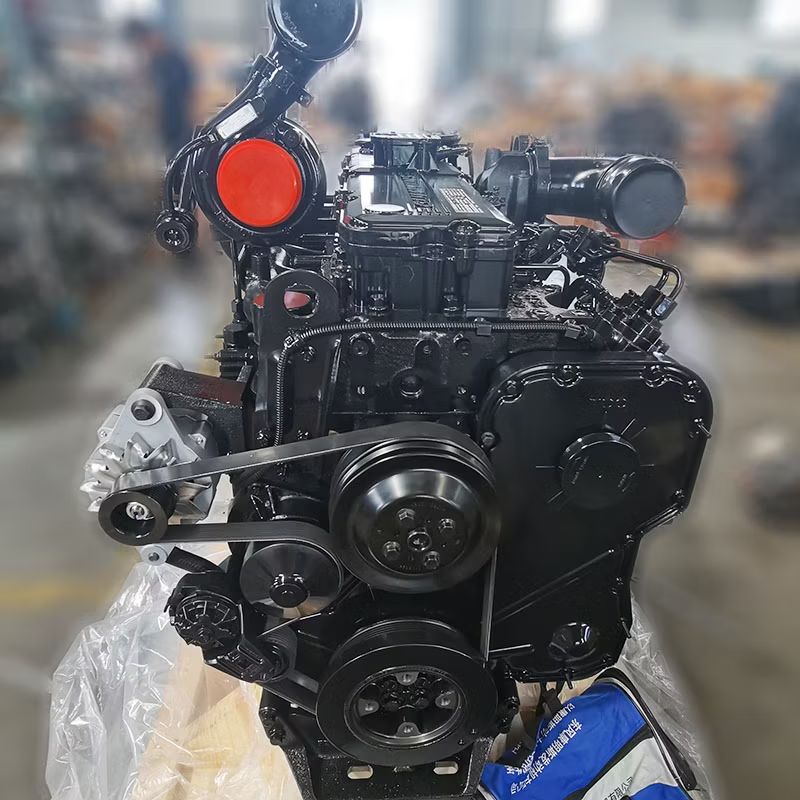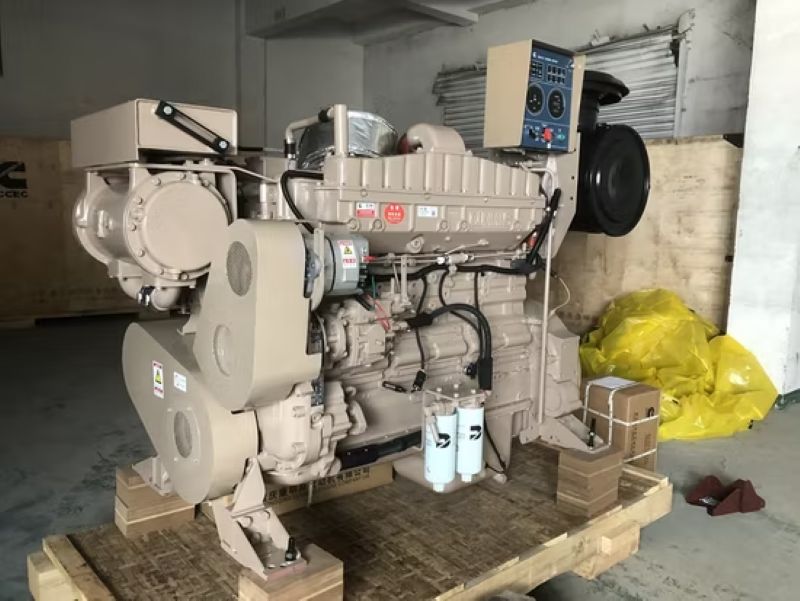

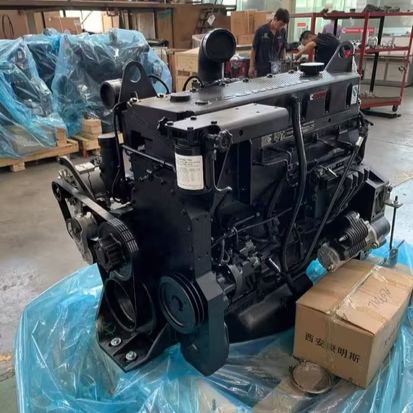
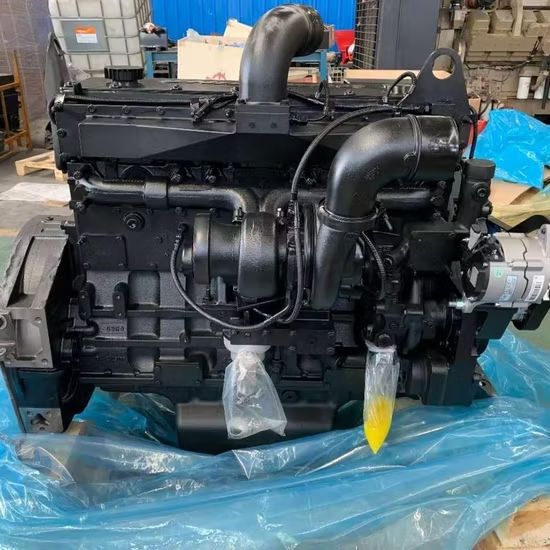
The Cummins QSM11-G3 is a 10.8L inline-six generator-drive diesel engine with separate ratings for 50 Hz and 60 Hz generator-set applications.
At 1,500 rpm, the engine provides 257 kW prime power and 292 kW standby power for a referenced 50 Hz configuration. At 1,800 rpm, it provides 387 kW prime power and 443 kW standby power for a referenced 60 Hz configuration.
This makes the QSM11-G3 different from generator engines that remain within a similar output class at both frequencies. The selected frequency changes not only the engine speed, but also the available mechanical power, estimated generator-set capacity, cooling demand, fuel consumption and ECM or governor configuration.
- 10.8L inline-six, 4-stroke diesel engine
- 50 Hz prime power: 257 kW at 1,500 rpm
- 50 Hz standby power: 292 kW at 1,500 rpm
- 60 Hz prime power: 387 kW at 1,800 rpm
- 60 Hz standby power: 443 kW at 1,800 rpm
- Cummins PT fuel system with direct injection
- Turbocharged with air-to-air charge-air cooling
- Electronic governing reference
- 24V starting and electrical system
- EU Stage III emission reference
- CCEC manufacturing reference
Planning a new generator set or replacing an existing QSM11 engine? Send the engine nameplate, ESN, CPL, required kVA, frequency, alternator model and controller information for configuration checking.
One Engine Model, Two Different Generator-Set Output Classes
The QSM11-G3 should not be treated as one fixed-kVA generator engine. Its 1,500 rpm and 1,800 rpm ratings place it in two significantly different generator-set output classes.
| Configuration | Prime Engine Power | Standby Engine Power | Typical Genset Positioning |
|---|---|---|---|
| 50 Hz at 1,500 rpm | 257 kW | 292 kW | Commonly evaluated around the 295–305 kVA prime and 335–345 kVA standby classes. |
| 60 Hz at 1,800 rpm | 387 kW | 443 kW | Commonly evaluated around the 445–455 kVA prime and 510–520 kVA standby classes. |
The final generator-set rating depends on alternator efficiency, power factor, fan power, enclosure airflow, altitude, ambient temperature and transient-performance requirements.
Engine kW Is Not the Same as Generator-Set kVA
The QSM11-G3 power figures are mechanical outputs measured at the engine flywheel. They should not be presented directly as the electrical output of the complete generator set.
A preliminary kVA estimate can be calculated using the engine output, alternator efficiency and generator-set power factor:
- Estimated electrical kW = engine kW × alternator efficiency
- Estimated kVA = estimated electrical kW ÷ power factor
| Engine Rating | Calculation Using 93% Efficiency and 0.8 PF | Estimated Capacity |
|---|---|---|
| 257 kW prime at 1,500 rpm | 257 × 0.93 ÷ 0.8 | Approximately 299 kVA |
| 292 kW standby at 1,500 rpm | 292 × 0.93 ÷ 0.8 | Approximately 339 kVA |
| 387 kW prime at 1,800 rpm | 387 × 0.93 ÷ 0.8 | Approximately 450 kVA |
| 443 kW standby at 1,800 rpm | 443 × 0.93 ÷ 0.8 | Approximately 515 kVA |
Values such as 321 kVA, 365 kVA, 484 kVA or 554 kVA result from dividing the engine power directly by a 0.8 power factor without deducting alternator and auxiliary losses. They should not be used as confirmed generator-set ratings unless supported by a complete genset datasheet.
1,500 rpm and 1,800 rpm Are Separate Operating Configurations
A four-pole alternator normally produces 50 Hz at 1,500 rpm and 60 Hz at 1,800 rpm. Although the same QSM11-G3 model designation is listed for both speeds, the two configurations should be treated as separate ratings.
| Selection Item | 50 Hz Configuration | 60 Hz Configuration |
|---|---|---|
| Engine Speed | 1,500 rpm | 1,800 rpm |
| Prime Power | 257 kW | 387 kW |
| Standby Power | 292 kW | 443 kW |
| Governor or ECM Setting | Must match the approved 1,500 rpm generator calibration | Must match the approved 1,800 rpm generator calibration |
| Cooling Requirement | Based on the 1,500 rpm heat-rejection curve | Normally higher and must be confirmed using the 1,800 rpm curve |
| Alternator Selection | Matched to the required 50 Hz kVA and voltage | Matched to the required 60 Hz kVA and voltage |
A 50 Hz engine package should not be converted to 60 Hz merely by increasing the governor speed. The approved power curve, governor configuration, cooling system, fan, alternator, coupling and protection settings must all be reviewed.
Prime, Standby and Continuous Ratings Must Be Separated
The QSM11-G3 data provides prime and standby ratings. These terms should not be used interchangeably with continuous power.
| Rating Type | General Operating Meaning | QSM11-G3 Purchasing Implication |
|---|---|---|
| Prime Power | Extended operation under a variable electrical load, according to the applicable engine rating definition. | Use 257 kW at 1,500 rpm or 387 kW at 1,800 rpm only within the approved prime-duty curve. |
| Standby Power | Emergency backup operation during interruption of the normal power source. | 292 kW and 443 kW are emergency standby ratings, not normal long-duration operating points. |
| Continuous Power | A separate rating for long-duration operation at a relatively constant load. | Do not assume that the listed prime ratings are automatically approved continuous ratings. |
For base-load power stations, isolated grids, mining camps and other continuous-duty projects, request the applicable continuous-duty documentation before confirming the generator-set output.
Why the Cummins PT Fuel System Matters
The QSM11-G3 uses a Cummins PT fuel system with direct injection rather than a high-pressure common-rail system. The PT system controls fuel delivery through the relationship between fuel pressure and injector metering time.
In generator applications, the fuel system works together with the governor and control system to maintain engine speed as the electrical load changes.
| PT System Characteristic | Practical Benefit | Service Consideration |
|---|---|---|
| Established mechanical fuel-system architecture | Relevant to operators familiar with Cummins PT pumps and injectors. | Pump pressure, injector condition and fuel quality directly affect engine performance. |
| Direct injection | Supports combustion and load response across the approved generator rating. | Injector calibration and timing must follow the applicable engine configuration. |
| Electronic governing reference | Supports controlled engine-speed response during load changes. | The governor, actuator, controller and wiring must be matched and commissioned together. |
| Field-service familiarity | PT-system parts and service knowledge are available in many industrial markets. | Parts must still be selected by ESN, CPL and individual part number. |
The PT fuel system does not control generator voltage. Voltage stability is managed mainly by the alternator and AVR, while frequency response depends on the engine, governor, controller, rotating inertia and load-step size.
QSM11-G3 Technical Specifications
Core Engine Data
| Parameter | Reference Specification |
|---|---|
| Engine Model | QSM11-G3 |
| Manufacturer Reference | Chongqing Cummins Engine Co., Ltd. / CCEC |
| Engine Type | 4-stroke, inline six-cylinder diesel engine |
| Displacement | 10.8 L |
| Bore × Stroke | 125 × 147 mm |
| Compression Ratio | 16.1:1 for the referenced configuration |
| Firing Order | 1-5-3-6-2-4 |
| Aspiration | Turbocharged with air-to-air charge-air cooling |
| Fuel System | Cummins PT pump with direct injection |
| Cooling Method | Liquid cooled |
| Electrical System | 24V reference |
Power and Speed Data
| Parameter | Reference Specification |
|---|---|
| Prime Power at 1,500 rpm | 257 kW |
| Standby Power at 1,500 rpm | 292 kW |
| Prime Power at 1,800 rpm | 387 kW |
| Standby Power at 1,800 rpm | 443 kW |
| Referenced 50 Hz Speed | 1,500 rpm |
| Referenced 60 Hz Speed | 1,800 rpm |
| Idle Speed | Approximately 675–750 rpm |
| Maximum Friction-Power Reference | 22.4 kW |
| Governor | Electronic-control reference; final model and calibration must be confirmed |
Cooling and Starting Data
| Parameter | Reference Specification |
|---|---|
| Total Coolant Volume | Approximately 34 L for the referenced system |
| Engine-Only Coolant Volume | Approximately 9.5 L |
| Starting System | 24V electric-start reference |
| Minimum Starting Temperature | Approximately -12°C without auxiliary starting equipment |
Actual cold-start performance depends on battery capacity, battery condition, oil viscosity, fuel properties, coolant temperature, intake heating and block-heater configuration.
Dimensions, Weight and Installation References
| Parameter | Reference Specification |
|---|---|
| Engine Dimensions | 1312 × 930 × 1158 mm |
| Dry Weight | Approximately 993 kg with the referenced flywheel and charging alternator configuration |
| Wet Weight | Approximately 1041 kg with operating fluids and the referenced accessories |
The listed alternator in the engine-weight description refers to the engine charging alternator, not the main generator alternator.
Use the wet operating weight for skid, anti-vibration mount, lifting and structural-load calculations. The main generator alternator, radiator, base frame and enclosure must be calculated separately.
How to Interpret the Listed Fuel-Consumption Figures
The supplied data lists fuel-consumption references of 69 L/h at prime output and 79 L/h at standby output.
However, the source does not clearly identify whether these figures apply to the 1,500 rpm or 1,800 rpm rating. Because the QSM11-G3 has significantly different outputs at the two speeds, the applicable operating point must be confirmed before using the figures for fuel-tank or operating-cost calculations.
| Fuel Reference | Listed Value | Required Confirmation |
|---|---|---|
| Prime Output | 69 L/h | Confirm engine speed, rated output, fuel density and test conditions. |
| Standby Output | 79 L/h | Confirm whether this applies to the 50 Hz or 60 Hz standby curve. |
Actual site consumption depends on average load factor, idle time, altitude, ambient temperature, fuel quality, alternator efficiency, cooling-fan demand and engine condition.
QSM11-G1, G2, G3 and G4 Selection
The QSM11 generator-drive variants share a general 10.8L platform, but they should not be treated as identical engines with software-only power changes.
Power calibration, governor settings, turbocharger, injectors, fuel-pump configuration, charge-air cooling, radiator requirement, exhaust temperature and external accessories may differ.
Referenced 50 Hz Ratings at 1,500 rpm
| Model | Listed Prime Power | Listed Standby Power | Selection Position |
|---|---|---|---|
| QSM11-G1 | 234 kW | 257 kW | Lower-output 50 Hz configuration. |
| QSM11-G2 | 292 kW | 321 kW | Higher 50 Hz output than the G3 reference. |
| QSM11-G3 | 257 kW | 292 kW | Intermediate 50 Hz output with a much higher listed 60 Hz rating. |
| QSM11-G4 | 292 kW | 322 kW | Similar listed 50 Hz power to the G2 but requires model-specific configuration confirmation. |
Referenced 60 Hz Ratings at 1,800 rpm
| Model | Listed Prime Power | Listed Standby Power | Selection Position |
|---|---|---|---|
| QSM11-G1 | 268 kW | 295 kW | Lower-output 60 Hz option. |
| QSM11-G2 | 319 kW | 351 kW | Mid-range 60 Hz configuration. |
| QSM11-G3 | 387 kW | 443 kW | High-output 60 Hz configuration for projects below the listed G4 maximum. |
| QSM11-G4 | 426 kW | 470 kW | Highest listed 60 Hz output in the comparison. |
The comparison figures should be verified against the model-specific datasheet, ESN and CPL before ordering. Similar listed power does not confirm identical components or direct interchangeability.
When the QSM11-G3 Is the Appropriate Choice
| Project Requirement | Why the G3 May Be Considered |
|---|---|
| Approximately 300 kVA prime at 50 Hz | The 257 kW prime rating is commonly evaluated around this electrical-output class. |
| Approximately 340 kVA standby at 50 Hz | The 292 kW standby rating may support this emergency-power class after alternator and site calculations. |
| Approximately 450 kVA prime at 60 Hz | The 387 kW prime rating places the G3 in a substantially higher output class at 1,800 rpm. |
| Approximately 515 kVA standby at 60 Hz | The 443 kW standby rating may suit high-output 60 Hz emergency projects. |
| Existing QSM11-G3 replacement | Matching the original model may reduce project risk, provided ESN, CPL and installation interfaces are confirmed. |
| OEM requiring one engine family for multiple frequency markets | The model has listed 50 Hz and 60 Hz ratings, but separate configurations must be managed correctly. |
Same QSM11 Model Does Not Guarantee Direct Replacement
A QSM11-G3 replacement should be verified using more than the model name or CPL alone.
| Matching Item | Required Verification |
|---|---|
| Engine Serial Number | Use the ESN to identify the original production build, calibration and service parts. |
| CPL | Confirm the control-parts configuration, but do not use the CPL as the only compatibility reference. |
| Frequency and Rated Speed | Confirm 1,500 rpm for 50 Hz or 1,800 rpm for 60 Hz. |
| Governor and Control Calibration | Match the engine rating, load-response settings and generator controller interface. |
| Flywheel Housing | Confirm the SAE housing, flywheel and alternator coupling arrangement. |
| Engine Mounts | Compare the front and rear mounting brackets, height and frame clearances. |
| Cooling Package | Verify radiator capacity, fan arrangement, coolant connections and charge-air cooler. |
| Intake and Exhaust | Check filter restriction, turbocharger orientation, exhaust outlet and allowable back pressure. |
| Starting and Charging System | Confirm the 24V starter, charging alternator, batteries and wiring. |
| Controller Integration | Verify analogue signals, speed-control interface, alarms, shutdown circuits and protection logic. |
A G1, G2 or G4 should not be substituted for a G3 solely because the engines belong to the same QSM11 family or have similar dimensions. The complete engine and generator package must be reviewed.
Generator-Set Applications
| Application | Why the QSM11-G3 May Be Considered | Project Check |
|---|---|---|
| Industrial Standby Power | The 50 Hz and 60 Hz standby ratings cover medium-to-large emergency-power projects. | Calculate motor starting, load steps, redundancy and required recovery time. |
| Factory Prime Power | The prime ratings may support manufacturing equipment, pumps and auxiliary systems. | Confirm average load, largest motor, operating hours and continuous-duty requirements. |
| Commercial Buildings | Can be considered for emergency systems serving HVAC, lifts, pumps and fire systems. | Separate critical loads from non-essential loads and calculate starting demand. |
| Data and Telecommunications Facilities | The output range is relevant to packaged standby-generator projects. | Verify transient class, redundancy, remote monitoring and fuel autonomy. |
| Mining and Remote Sites | The QSM platform and PT fuel system may suit industrial projects with established service support. | Review altitude, dust, temperature, fuel quality and maintenance capability. |
| Construction and Rental Power | The 60 Hz output may support high-capacity mobile and temporary-power projects. | Confirm mobile-emission rules, enclosure cooling, transport design and noise limits. |
| OEM Generator Manufacturing | The listed dual-frequency ratings allow OEMs to develop different market-specific packages. | Use separate approved designs for the 50 Hz and 60 Hz configurations. |
Emission Reference and Market Approval
The supplied data lists EU Stage III as an emission reference for the QSM11-G3 configuration.
This reference does not automatically confirm that the engine or complete generator set satisfies every current destination-market requirement.
| Compliance Question | Required Confirmation |
|---|---|
| Is EU Stage III accepted? | Check current regulations for the destination country, installation date and genset application. |
| Is an emission certificate supplied? | Confirm the exact certificate, engine family, serial-number coverage and document revision. |
| Is the genset stationary or mobile? | Stationary, mobile, rental and non-road equipment may fall under different regulations. |
| Does the complete genset require certification? | The alternator, controller, enclosure, electrical system, noise level and protection system may require separate approval. |
Available Supply Formats
| Supply Format | Suitable Buyer | Items to Confirm |
|---|---|---|
| Base Generator Engine | Genset manufacturers with their own cooling, wiring, controller and frame design | Flywheel, housing, starter, charging alternator, governor, harness and sensors |
| Complete Replacement Engine | Owners replacing an existing QSM11-G3 | ESN, CPL, speed, governor, accessories and installation interfaces |
| Engine with Cooling Package | OEMs requiring a matched radiator and charge-air cooler | Frequency, ambient-temperature rating, fan power and enclosure airflow |
| Generator Drive Package | Projects requiring a broader engine-side supply | Required kVA, voltage, frequency, alternator, controller and base-frame design |
| Complete Generator Set | Buyers requiring the engine, alternator, controller, cooling and frame as one package | Prime or standby duty, enclosure type, certification, voltage and destination conditions |
| Project Spare Engine | Factories, utilities, mining sites and other operators holding a critical spare | Long-term preservation, accessory completeness and commissioning procedure |
QSM11-G3 Parts and Service Support
ZEB Power can supply Cummins QSM11 engine parts for routine maintenance, PT fuel-system repair, cooling-system service and overhaul projects.
- PT fuel pumps and related components
- Fuel injectors and injector components
- Fuel, oil and air filters
- Turbocompressors and charge-air components
- Water pumps, thermostats and cooling parts
- Starter motors and charging alternators
- Electronic governors, actuators and sensors
- Gasket and seal kits
- Overhaul and in-frame repair kits
- Pistons, rings and cylinder components
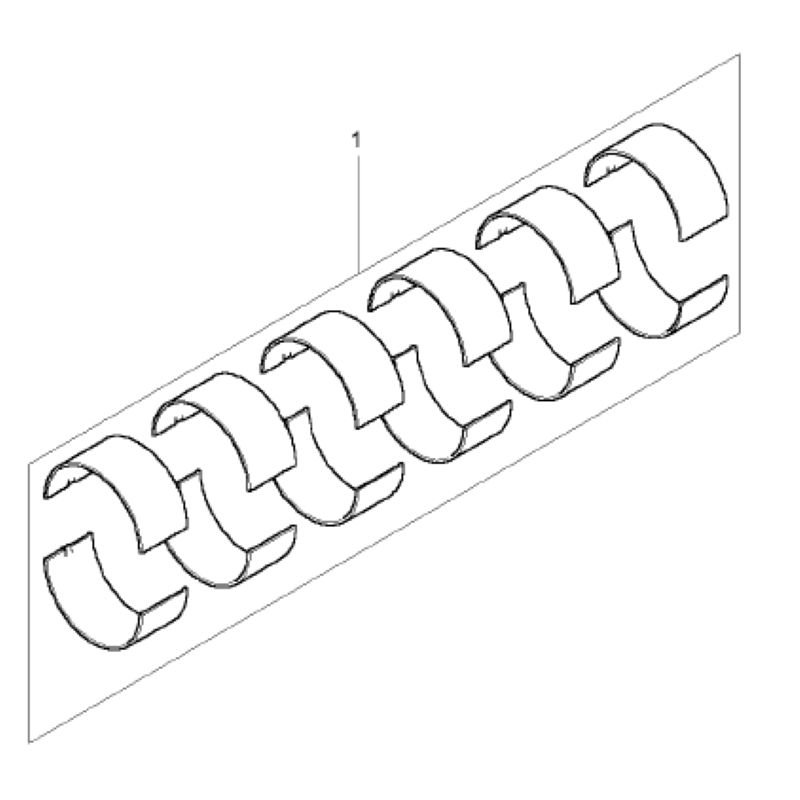
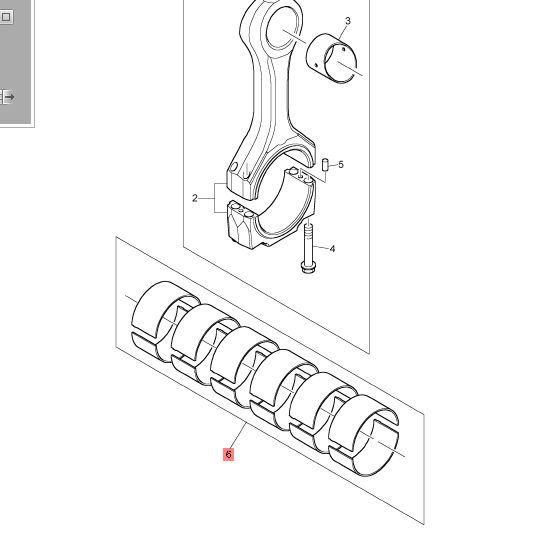
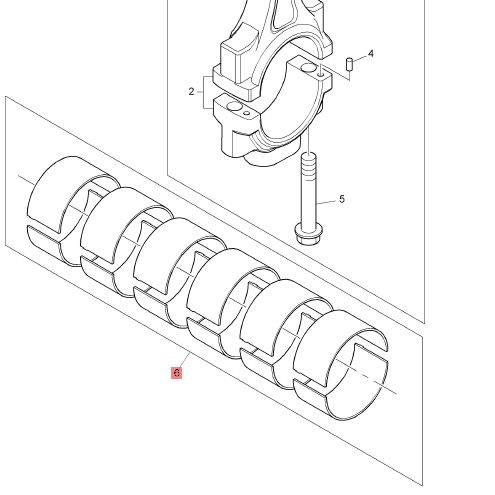
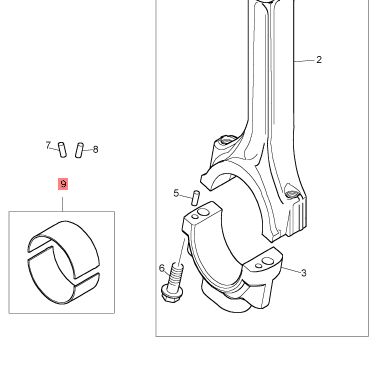
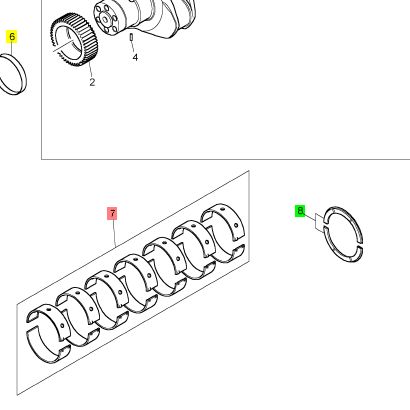
- Main and connecting-rod bearings
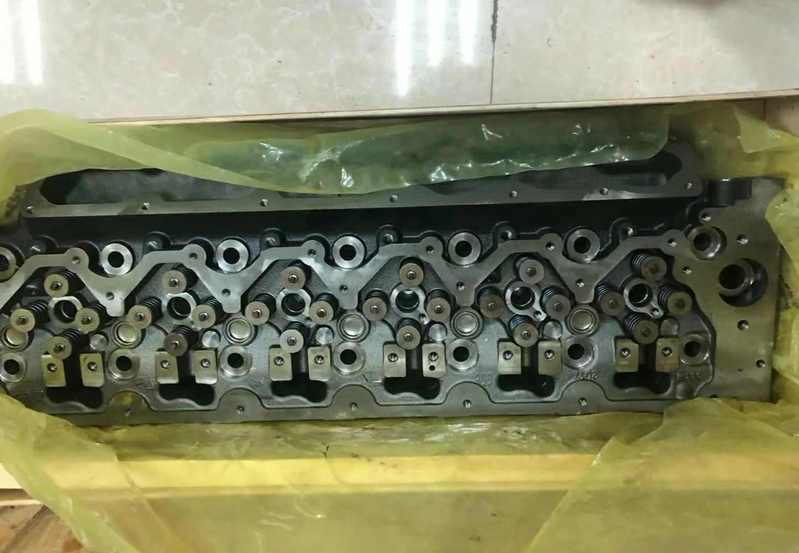
- Cylinder-head and valve-train components
Parts should be selected by ESN, CPL and individual part number. A QSM11 model designation or CPL alone may not identify every accessory, sensor, governor or production revision.
Commercial, Packing and Export Information
| Commercial Item | Reference Information |
|---|---|
| Minimum Order | 1 engine, subject to stock and quotation confirmation |
| Available Supply | Base engine, replacement engine, cooling package, generator-drive package, complete genset or service parts |
| Lead Time | Normally 15–30 working days, depending on stock, configuration and included accessories |
| Payment Reference | T/T, subject to the final quotation and order agreement |
| Standard Packaging | Export wooden case or agreed engine packaging |
| ISPM-15 Packaging | Available where required by the destination market |
| Export Documents | Commercial invoice, packing list, bill of lading, certificate of origin and other agreed documents |
| Preferential-Origin Documents | Form E, EUR.1 or other documents only when applicable and confirmed before shipment |
| Warranty | Warranty period, operating-hour limit and claim conditions must be confirmed in the final sales documentation |
Production capacity and current stock allocation should be confirmed at the time of inquiry rather than treated as a fixed monthly availability guarantee.
Frequently Asked Questions
What generator-set size does the QSM11-G3 support at 50 Hz?
At 1,500 rpm, the engine provides 257 kW prime and 292 kW standby mechanical power. Using a 93% alternator efficiency and a 0.8 power factor, the preliminary estimates are approximately 299 kVA prime and 339 kVA standby.
The final electrical rating must be confirmed with the selected alternator and complete generator-set design.
What generator-set size does it support at 60 Hz?
At 1,800 rpm, the engine provides 387 kW prime and 443 kW standby mechanical power. Using the same preliminary assumptions, the estimates are approximately 450 kVA prime and 515 kVA standby.
Why are the 60 Hz ratings much higher than the 50 Hz ratings?
The listed 60 Hz configuration operates at 1,800 rpm and uses a separate engine power curve and control calibration. It should not be treated as the same configuration running slightly faster.
Can a 50 Hz QSM11-G3 be converted directly to 60 Hz?
Not without technical verification. The governor, power curve, cooling system, fan, alternator, coupling, protection settings and fuel-consumption reference must all be checked.
Is the QSM11-G3 a Common Rail engine?
No. The supplied configuration uses a Cummins PT pump and direct-injection fuel system rather than an electronic high-pressure common-rail system.
Do the listed 69 L/h and 79 L/h fuel figures apply to 50 Hz or 60 Hz?
The source does not clearly identify the applicable speed. Confirm the exact engine curve and test condition before using these values for tank sizing or operating-cost calculations.
Can a QSM11-G4 directly replace a G3?
Not automatically. Even within the same QSM11 family, power calibration, governor, turbocharger, injectors, cooling demand, external accessories and alternator matching may differ.
Does the CPL guarantee compatibility?
No. The CPL is an important configuration reference, but compatibility also depends on the ESN, speed, governor, harness, flywheel housing, coupling, cooling system and controller integration.
Does EU Stage III guarantee import approval?
No. Import and use requirements depend on the destination country, application type, production date and whether the generator set is stationary, mobile or rental equipment.
Can the QSM11-G3 be used in a marine generator?
The G3 is configured as a generator-drive engine. Marine use may require a different cooling system, marine accessories, class approval and engine certification. A marine project must be reviewed separately.
What information is required for a parts quotation?
Provide the engine serial number, CPL, part number where available, component description, photographs and required quantity.
What information is required for a complete-engine quotation?
Provide the original nameplate, ESN, CPL, required prime and standby kVA, frequency, voltage, alternator model, controller model, starting system and destination.
Request a QSM11-G3 Configuration and Generator-Matching Check
To prepare an accurate quotation, the engine configuration must be matched to the required electrical output, frequency and existing mechanical, cooling and control interfaces.
Please provide:
- Required prime and standby generator-set output
- 50 Hz or 60 Hz operating frequency
- Voltage and phase configuration
- Alternator brand and model
- Power factor
- Original engine nameplate photo
- Engine serial number and CPL
- Governor and controller information
- Flywheel housing and coupling details
- Radiator and charge-air cooling information
- Site altitude and maximum ambient temperature
- Emission or certification requirements
- Required engine or complete-genset supply scope
- Quantity and destination port
Related Product
-
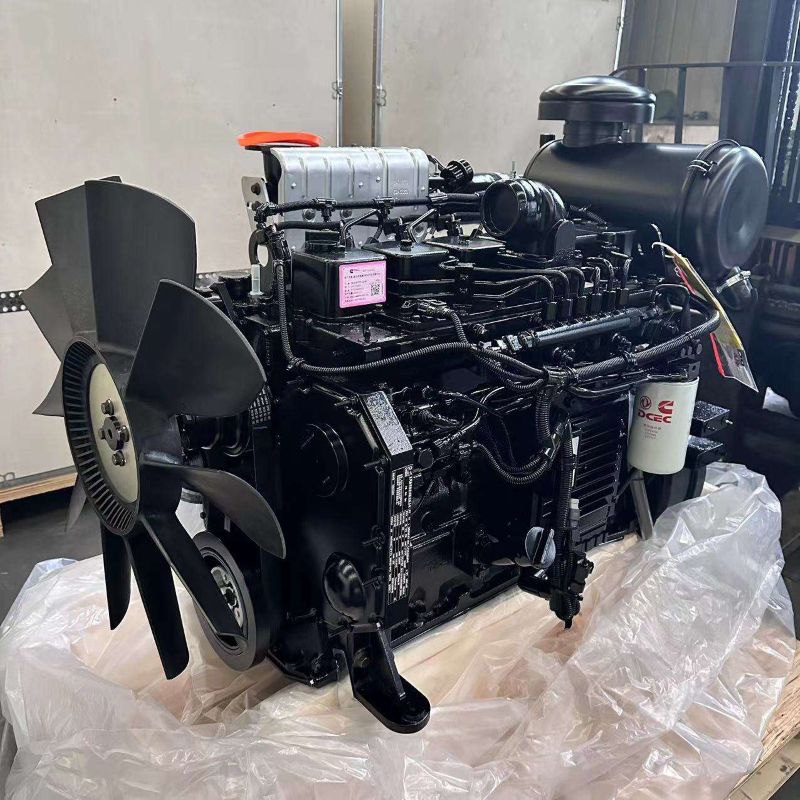 Cummins QSB5.9-G2 96kW Generator Drive EngineCummins QSB5.9-G2 5.9L diesel engine for 50Hz gensets, delivering 96kW prime and 106kW standby power for factory, commercial and remote backup ap…
 -
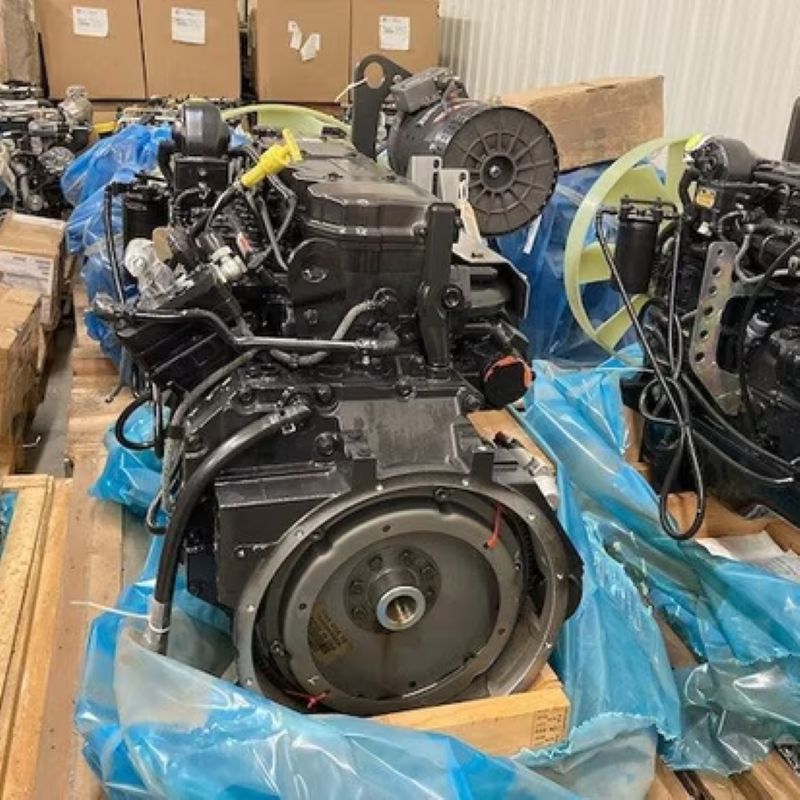 Cummins QSB6.7-G3 151kW Generator Drive EngineSource the Cummins QSB6.7-G3 6.7L generator engine with 151kW prime and 166kW standby power at 1500 RPM, common rail injection, parts support and…
Get Your Engine & Parts Quote
Upload your parts list or send your ESN — we reply within 30 minutes. Engine down? Need fast replacement? Contact us to check today’s stock & delivery time.