

Cummins Valve Cover Still Leaking After a New Gasket? Here's Why

8540
Table of Contents
Generating table of contents
When oil appears around the top of a Cummins engine, the first purchasing response is often to order a valve cover gasket.
However, a common repair outcome looks like this:
The gasket was replaced, but oil started leaking again from a similar area after the engine returned to service.
This does not necessarily mean the new gasket is defective. In many cases, the original leak source was not identified correctly, or excessive crankcase pressure is forcing oil through the next weakest sealing point.
Oil around the upper engine may come from:
- The valve cover
- The joint below the rocker housing
- The oil filler cap seal
- The crankcase breather base or vent tube
- An injector-harness pass-through
- A neighbouring housing joint
Oil visible at the top of the engine does not automatically prove that the valve cover gasket has failed.
This guide is written for buyers sourcing Cummins valve covers, rocker housings, crankcase breathers and related seals. It explains how these components differ, why the same leak may return after a gasket replacement, and how different site conditions affect the parts that should be ordered.
It does not provide leak-testing procedures, disassembly instructions or tightening specifications. Those tasks should be completed by a qualified service organisation.
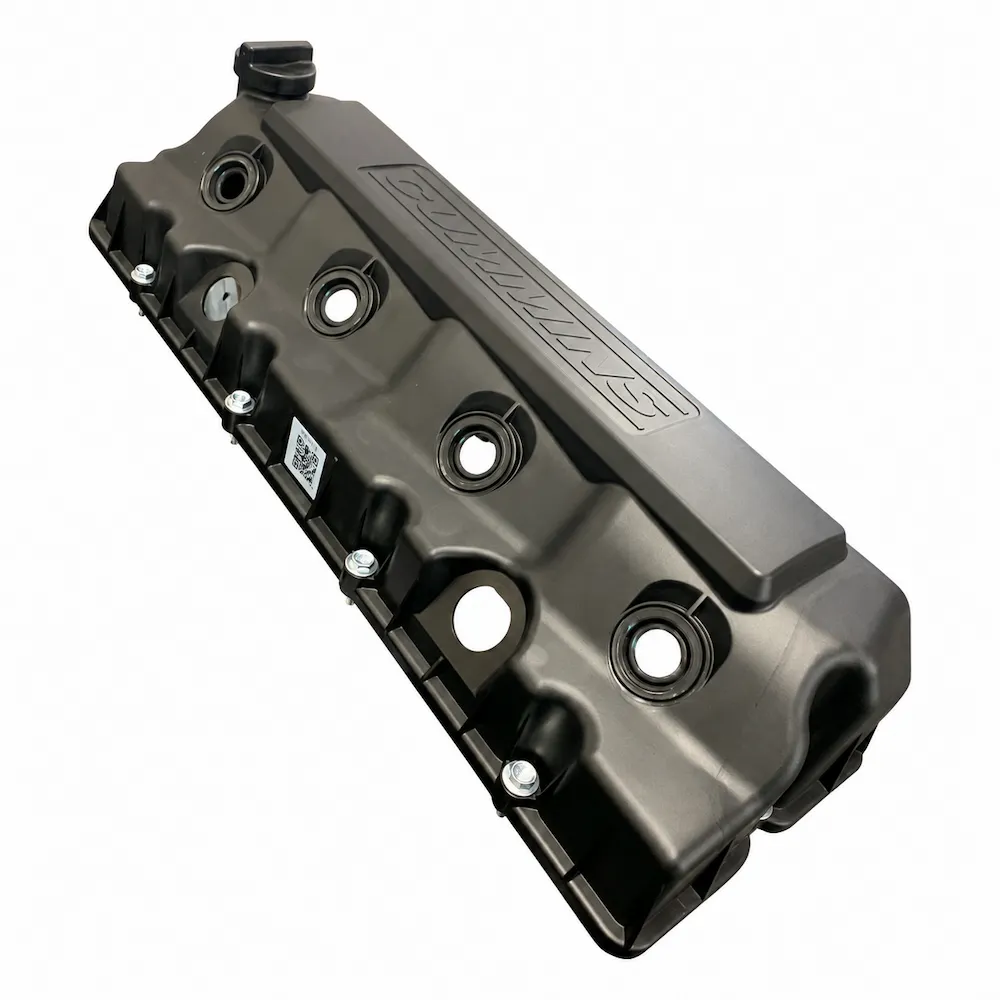
First Identify the Level Where the Oil Leak Begins
Oil runs downward across the cover, cylinder head and engine block. Fan airflow, vibration and dust can spread the oil further while the equipment is operating.
By the time the leak is inspected, the wet area may be far from the original source.
Start by identifying where the first fresh oil appears.
Oil First Appears Around the Upper Cover
This may involve:
- The valve cover gasket
- Cover-bolt seals
- A distorted cover
- The oil filler cap seal
- A breather connection integrated into the cover
If oil appears evenly around a large part of the cover perimeter, crankcase pressure should also be considered. The problem may not be limited to one damaged section of gasket.
Oil Appears at a Lower Joint Below the Cover
Some Cummins engines use a layered upper-engine structure. The upper cover and the rocker housing below it may use separate seals.
In this arrangement, replacing the valve cover gasket only repairs the upper sealing joint. It will not stop oil leaking between the rocker housing and the cylinder head.
Oil Is Concentrated Around the Breather, Filler Cap or Harness Connection
Inspect the immediate area around:
- The breather-to-cover seal
- Vent tubes and fittings
- The oil filler cap seal
- Harness pass-through seals
- Cracks in a plastic cover
Oil around the cover does not always mean that the complete perimeter gasket must be replaced.
Valve Cover and Rocker Housing Are Not Fixed, Universal Terms
In everyday communication, the terms valve cover, rocker cover and rocker lever cover are often used interchangeably.
However, Cummins engine platforms do not all use the same component names or upper-engine construction.
Some engines have a relatively simple top cover. Others have a separate rocker housing below the cover. Certain covers also integrate:
- Crankcase ventilation passages
- Oil-separation components
- An oil filler opening
- Harness pass-throughs
- Sensor or pipe connections
Cummins parts catalogues include separate items such as a valve cover gasket and a rocker lever housing gasket. On at least some platforms, these therefore represent different parts and different sealing locations.
A customer asking for a “rocker cover” may actually need:
- The upper cover
- The lower rocker housing
- One specific gasket
- A complete cover assembly with an integrated breather
The part should first be identified by its installed position. The formal name and part number should then be confirmed through the ESN-based parts catalogue rather than by relying on a general description such as “the cover on top of the engine.”
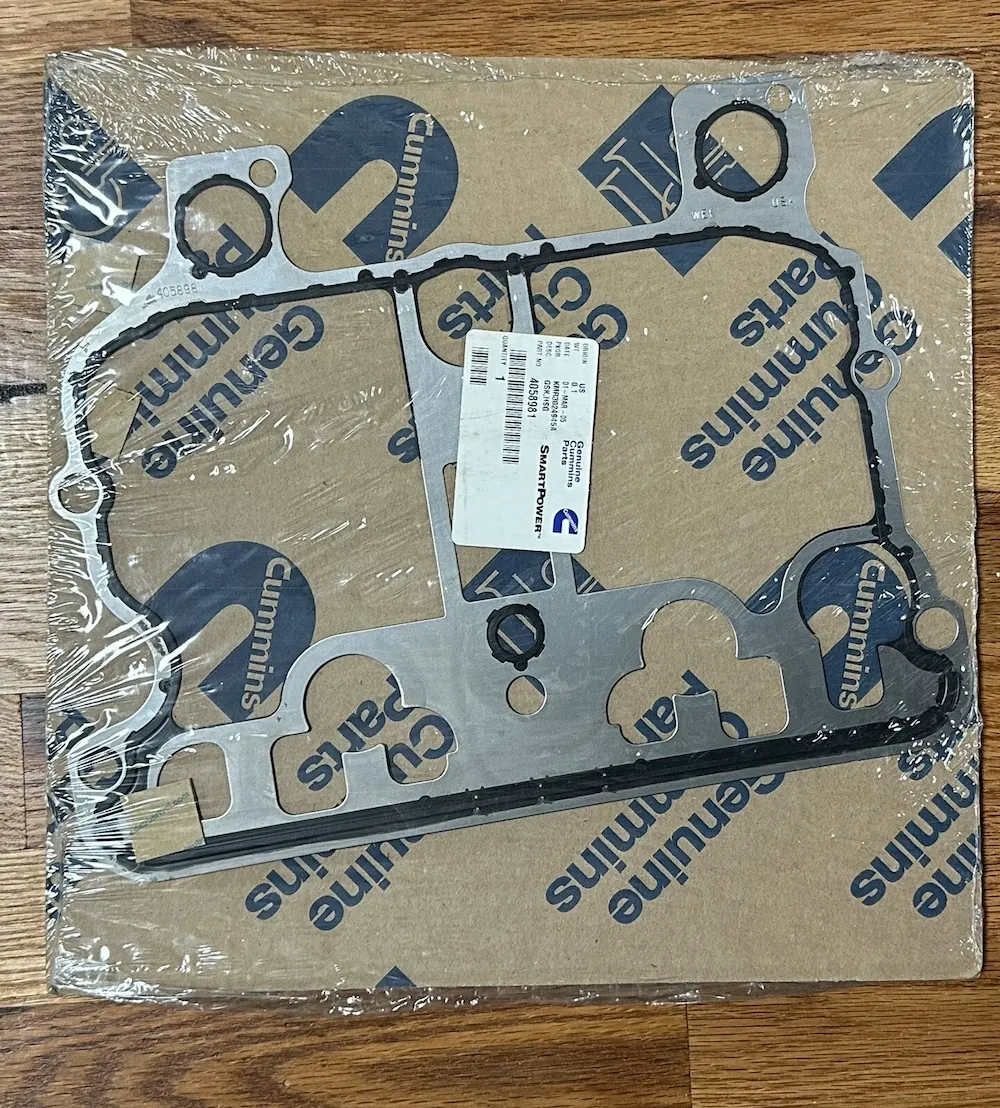
Why Does the Engine Still Leak After the Gasket Was Replaced?
When oil returns shortly after a new gasket is installed, several possibilities should be considered.
The Original Leak Source Was Misidentified
The oil may actually be coming from:
- The rocker housing gasket
- The breather base
- The oil filler connection
- An adjacent housing joint
If the old oil residue was not removed, it can be difficult to identify where the new oil first appears.
The Cover Is Distorted or Cracked
A plastic cover may distort because of heat cycling, age or incorrect tightening.
A metal cover may also lose its sealing ability if the mounting face is damaged or unevenly loaded.
In either case, replacing only the gasket will not restore the correct sealing pressure.
The Gasket Version or Cross-Section Is Incorrect
Gaskets that look similar are not necessarily interchangeable.
Different versions may vary in:
- Outer profile
- Seal-groove width
- Thickness
- Bolt-hole position
- Harness or injector interface details
A gasket that fits into the groove may still fail to seal correctly once the engine is operating.
The Mounting Surface or Fasteners Are Damaged
Old sealing material, a damaged groove, aged bolt isolators or uneven fastening can cause a new gasket to leak.
Cleaning, installation and tightening requirements should be taken from the service information for the correct ESN.
Crankcase Pressure Remains Too High
If internal pressure continues to push oil mist outward, the weakest seal may leak again even when the cover and gasket are correct.
In this situation, repeated gasket replacement may improve the appearance temporarily without correcting the underlying cause.
Why Can a Crankcase Breather Contribute to Valve Cover Leaks?
During operation, a small amount of combustion gas passes the piston rings and enters the crankcase. The crankcase ventilation system releases these gases while separating as much oil mist as possible.
If the breather element, vent tube or oil-separation path becomes restricted, crankcase pressure may rise.
Oil mist and liquid oil can then be forced through weaker sealing points, including:
- The valve cover gasket
- The rocker housing gasket
- The oil filler
- Breather fittings
- Front or rear crankshaft seals
However, oil at the breather outlet does not automatically mean that the breather itself has failed.
Similar symptoms may result from:
- Excessive engine-oil level
- Incorrect vent-tube routing
- Contaminated oil-separation components
- Increased blow-by caused by worn piston rings or cylinder liners
Replacing the breather will not correct persistent blow-by caused by serious internal wear. In that situation, the engine condition should be assessed by the repair organisation rather than by repeatedly replacing external components.
Breather maintenance requirements also vary between Cummins platforms. Some engines require scheduled inspection or replacement, while others use maintenance-free designs. A single replacement interval should not be applied to every Cummins engine.
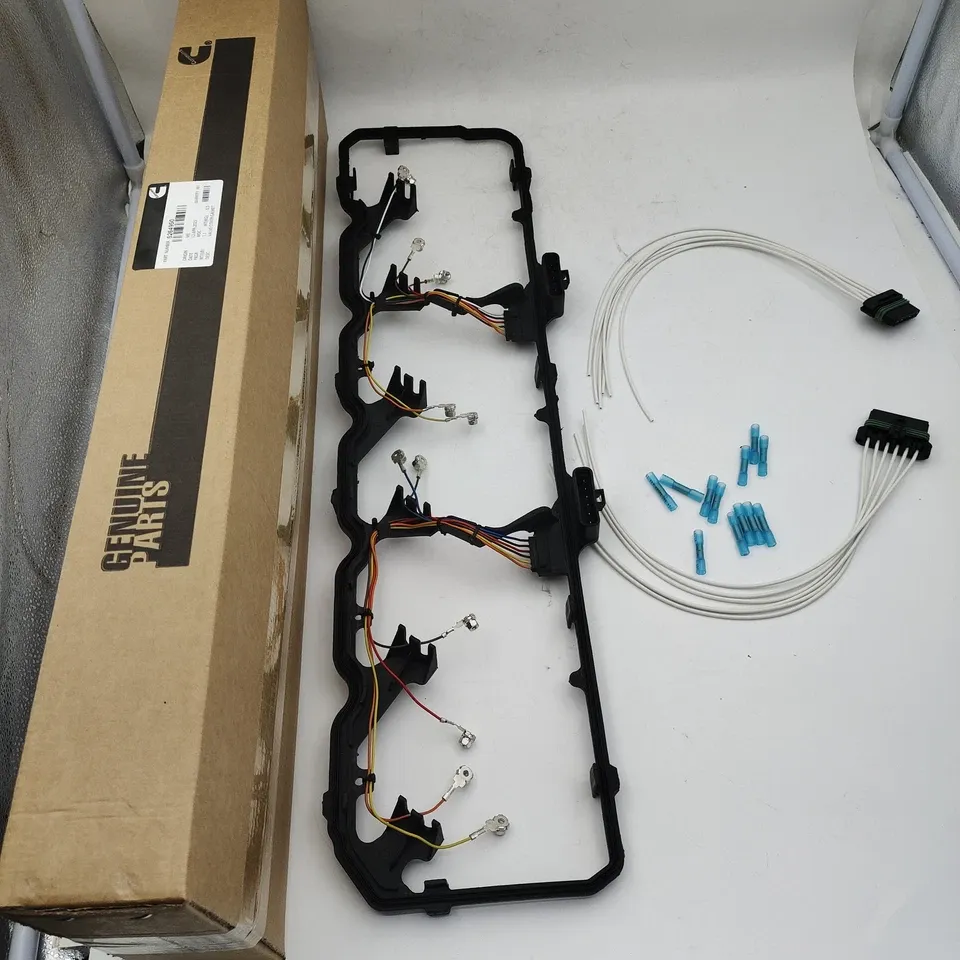
Four Site Conditions Lead to Different Purchasing Decisions
1. A Stable Localised Leak Appears on One Side of the Cover
If the leak source is clear, the cover is not cracked or distorted, and there are no signs of abnormal crankcase pressure, the repair may require only:
- The correct gasket
- A local seal
- A bolt seal
- An O-ring
A complete cover assembly may not be necessary.
2. The Gasket Was Replaced, but the Leak Returned Quickly
Do not immediately order a second gasket.
First confirm:
- Whether the leak comes from the lower rocker housing
- Whether the cover mounting surface is distorted
- Whether the gasket part number is correct
- Whether the breather system is restricted
A second purchase only makes sense after the repeated leak has been explained.
3. The Breather Tube Carries Large Amounts of Oil and Several Seals Leak
The problem may extend beyond one external gasket.
The service team should check:
- Whether the ventilation system is restricted
- Whether the engine-oil level is excessive
- Whether crankcase pressure is too high
- Whether internal blow-by requires further assessment
Until the internal condition is understood, repeatedly ordering cover gaskets, oil seals and breathers may not solve the problem.
4. The New Cover Looks Similar but Cannot Be Installed
The issue may not be poor manufacturing quality.
Common causes include:
- The same base engine model has a different ESN configuration
- The oil filler faces a different direction
- The breather design is different
- The harness opening is in a different position
- The old part number has been superseded without the replacement relationship being checked correctly
Do not force the part into place. Recheck the original part number, ESN and physical interfaces.
Some Covers Also Include Injector-Harness or Other Interfaces
On some electronically controlled Cummins engines, injector-harness or related electrical connections are located within the area enclosed by the valve cover.
They may connect to the external main harness through a connector mounted on the cover or rocker housing.
Other platforms may integrate:
- A crankcase breather
- An oil filler
- A sensor connection
- A pipe or hose interface
For this reason, cover matching should include more than the external shape and bolt pattern.
Also confirm:
- Harness pass-through location
- Connector position
- Internal clearance
- Related seals
- Pipe or hose interfaces
Whether any fuel-system interface is associated with the cover or housing must be confirmed from the specific ESN and parts catalogue. It should not be assumed to be common across all Cummins engines.
Should You Buy a Gasket, Cover, Housing or Breather?
Buy Only the Gasket When
A gasket-only repair is more appropriate when:
- The leak level has been confirmed
- The cover and housing are not distorted
- The seal groove is undamaged
- The breather system shows no obvious abnormal condition
The buyer must still identify whether the required part is:
- A valve cover gasket
- A rocker housing gasket
- A local O-ring or seal
These names should not be treated as interchangeable.
Buy the Complete Cover or Housing When
A complete assembly may be more suitable when:
- The cover is cracked
- The mounting face is distorted
- Bolt holes are damaged
- An integrated breather structure is damaged
- The old part has undergone repeated non-standard repairs
A quotation for a cover assembly does not automatically include:
- The gasket
- The breather
- The oil filler cap
- Mounting hardware
The included scope should be confirmed before ordering.
Buy the Correct Breather Component
First determine whether the requirement is for:
- A breather element
- A complete breather assembly
- A vent tube
- A hose
- A fitting
- A seal
Using only the description “crankcase breather” can lead the buyer and supplier to assume different supply scopes.
Delay External Parts Replacement When Internal Problems Are Suspected
If the engine has:
- Repeated leaks at several locations
- Heavy oil mist from the breather
- Obvious blow-by
- Increasing oil consumption
The ventilation system and internal engine condition should be evaluated before more gaskets and seals are ordered.
Genuine Parts or Replacement Parts: Confirm That the Function Is Fully Replicated
Simple metal covers and independent gaskets may be evaluated using:
- Material
- Mounting-face quality
- Seal-groove dimensions
- Dimensional consistency
A similar external appearance is not enough for assemblies that integrate:
- A crankcase breather
- Oil-separation structures
- Harness connectors
- Complex plastic housings
Important checks include:
- Part-number cross-reference
- Mounting-face accuracy
- Sealing design
- Connector and pipe interfaces
- Breather flow restriction
- Oil-mist separation design
- Maintenance method
For generator engines, mining equipment and other high-load applications, breather performance and sealing reliability can affect crankcase pressure, oil carryover and external oil contamination.
High-output engines and critical standby-power projects should normally use genuine parts or replacement options that have been verified against the actual configuration.
Information to Provide Before Ordering
Provide the following information whenever possible:
Engine ESN
Used to identify the original engine configuration and parts catalogue.
Original Part Number
Provide the complete number from the cover, housing, gasket or breather when available.
Installed-Position Photographs
Show:
- The part location
- The first visible leak point
- Connected pipes
- Harness connections
- Adjacent housings
Photographs of the Removed Part
Photograph:
- The front
- The back
- The mounting face
- Bolt holes
- Seal grooves
- Breather ports
- Harness openings
A casting number can support identification, but it is not always the current service part number.
An old and new part number may be different because of an official supersession. The difference alone does not prove that the replacement is incompatible.
If you have already received a quotation but are unsure whether it covers a gasket, bare cover, complete housing or breather assembly, send the quotation and engine ESN for scope verification before ordering.
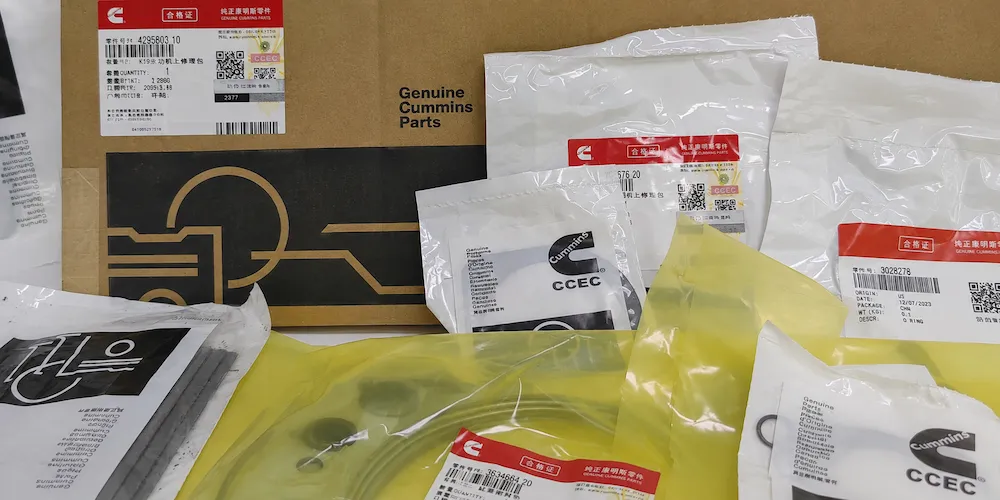
How ZEB Power Supports Parts Matching
ZEB Power supplies Cummins valve covers, rocker housings, crankcase breathers and related seals for construction machinery, mining equipment, generator sets and industrial engines.
Using the engine ESN, original part number and clear photographs, we can help verify:
- The formal component name in the parts catalogue
- Whether the gasket and housing belong to the same sealing level
- Whether the quotation covers a bare part, complete assembly or repair item
- Whether a breather quotation refers to an element or complete assembly
- Available genuine or verified replacement options
The final diagnosis of the oil leak, crankcase pressure and internal engine condition must still be completed by the technician responsible for site inspection.
Send the engine ESN, original part number, complete installed photographs, and clear front, rear and interface photographs of the removed part. A single photograph of an oil-covered gasket is usually not enough for accurate matching.
Frequently Asked Questions
Are a valve cover and rocker cover the same part?
On some engines and in some markets, the terms may describe a similar upper cover. They should not be treated as fixed synonyms across every Cummins platform. Confirm the part through the ESN, parts catalogue and installed position.
Can a rocker housing gasket replace a valve cover gasket?
Usually not. On engines with a layered upper structure, the two gaskets seal different joints and normally have different shapes and installation positions.
Does a repeated leak after gasket replacement mean the new gasket is poor quality?
Not necessarily. The original leak may have been misidentified, the cover may be distorted, another interface may be leaking, or crankcase pressure may be too high.
Does a blocked breather always cause a valve cover leak?
No. Restricted crankcase ventilation can raise internal pressure and push oil through a weak seal, but the exact leak location varies.
Does oil from the breather mean the breather must be replaced?
Not necessarily. Excessive oil level, incorrect vent routing or severe blow-by can produce similar symptoms.
Does a valve cover assembly always include the gasket?
No. Suppliers define assembly scope differently. Confirm whether the gasket, breather, oil filler cap and mounting hardware are included.
Can these parts be ordered using only the engine model?
It is not recommended. Engines with the same base model may use different upper structures, breathers and interfaces. Check the ESN, original part number and physical configuration.
Can the casting number on the cover be used as the ordering number?
Not always. A casting number may identify a structural or production version rather than an orderable service part number.
Can a quotation be prepared without the old part number?
An initial review or conditional quotation is often possible using the ESN, photographs of the leak location and visible markings on the current component.
If the engine has several configuration variants, additional information may still be required before the final part number and firm quotation can be confirmed.