

How to Find the Right Cummins Parts by ESN, CPL, or Part Number

6724
Table of Contents
Generating table of contents
When sourcing Cummins engine parts, most buyers start with an engine model — 6BT, QSB6.7, NT855, KTA19, QSK60 — and ask something like, "Do you have injectors, pistons, bearings, or an overhaul kit for this one?"
In practice, though, the engine model alone usually isn't enough. The same Cummins engine series can run different part versions depending on production batch, application, power rating, emissions configuration, CPL number, or a past repair or rebuild. Order based on model name alone, and you risk ending up with parts that don't fit, don't match spec, or are missing pieces entirely — sometimes with real consequences for the repair itself.
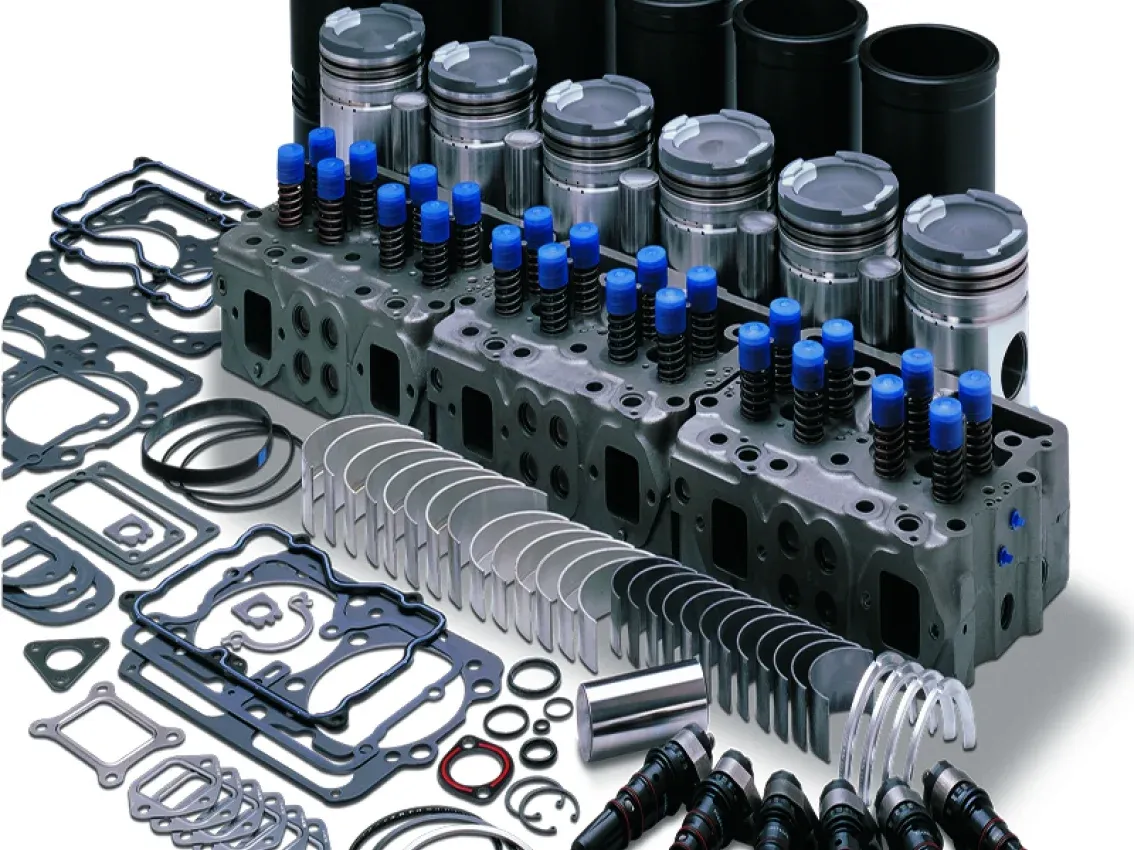
To source the right Cummins engine parts with confidence, the most reliable approach combines:
- ESN (Engine Serial Number)
- CPL (Control Parts List)
- Part number
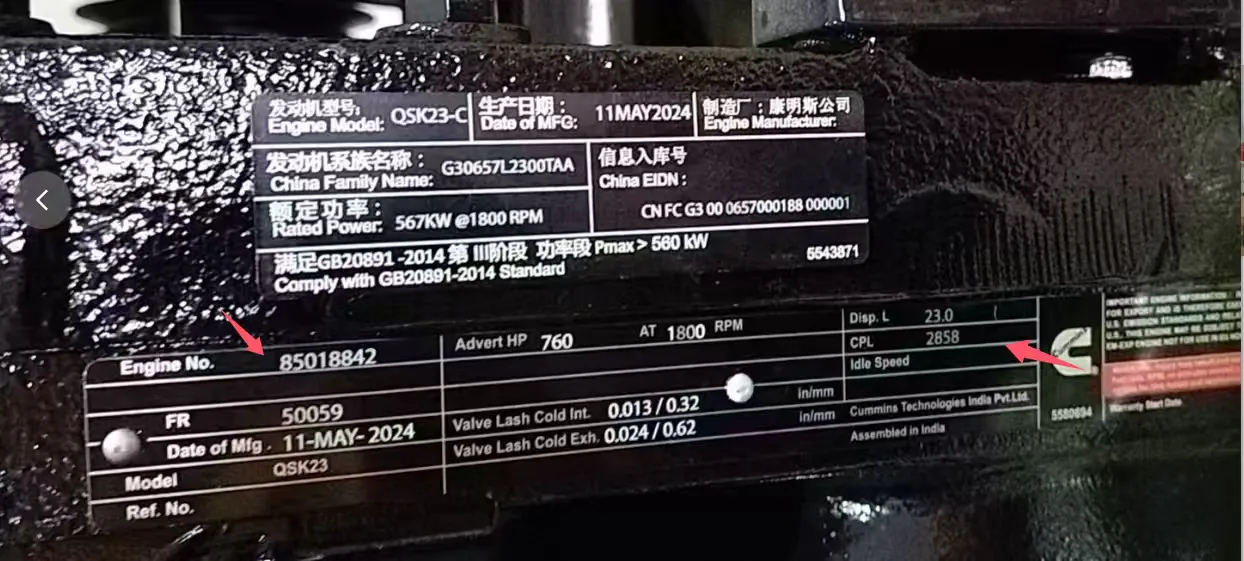
- Engine nameplate photo
- Old part photo
- Existing parts list
This guide walks through what ESN, CPL, and part numbers actually do, where to find them, and what information to have ready depending on your specific buying situation — so you can cut down the back-and-forth and avoid ordering the wrong part.
Why Engine Model Alone Isn't Enough to Order the Right Part
It's a common assumption: know the engine is a 6BT, QSB6.7, KTA19, or NT855, and you should be able to confirm every part you need. In reality, the engine model only tells you which series you're dealing with — not the specific configuration of the unit in front of you.
Take the KTA19, for example. It shows up in mining equipment, generator sets, marine applications, and industrial power systems — and depending on the application, power rating, fuel system, cooling system, injector configuration, and even some internal components can differ. The same holds for mid-displacement engines like the 6BT or QSB6.7: differences in manufacturer (DCEC vs. XCEC), production year, and application can mean parts aren't fully interchangeable, even within the same model line.
Engine model is a good starting point for narrowing things down — it's just not enough to finalize an order. For critical parts like injectors, pistons, liners, bearings, gaskets, seals, and overhaul kits, it's worth confirming further with the ESN, CPL, part number, or a nameplate photo.
What Is a Cummins ESN, and Why Does It Matter for Parts Matching?
ESN stands for Engine Serial Number — the identifier for one specific Cummins engine, as opposed to the model line it belongs to.
An engine model can apply to thousands of units; an ESN points to exactly one. With a clear ESN in hand, a supplier can pin down the engine's actual configuration, its correct parts list, and which service or overhaul components apply — rather than guessing based on the model name alone.
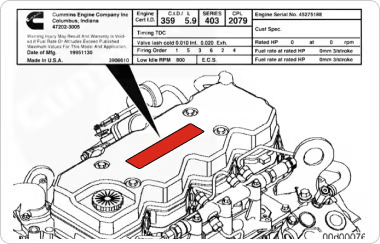
Where to Find the ESN
- Engine nameplate
- Near the valve cover
- Side of the cylinder block
- Side of the engine on generator sets
- Original equipment documentation or the engine manual
- Past purchase or service records
Cummins ESNs are typically 8 digits. If a serial number you've been given looks the wrong length, has unclear characters, or seems to be missing digits, it's worth double-checking before it's used to order parts. If the nameplate is worn, damaged, or covered in grime, a few photos from different angles are usually enough for us to work with.
What Is a CPL Number, and How Is It Different from the ESN?
CPL stands for Control Parts List — a code tied to the engine's specific configuration, used to identify the combination of key components it was built with.
If the ESN is the engine's unique identity, the CPL is more like a description of which configuration group it belongs to. It's particularly useful for:
- Overhaul kit matching
- Injector configuration
- Piston and liner combinations
- Fuel system components
- Genset and construction equipment application setups
That said, the CPL doesn't always fully substitute for the ESN. The safer approach is providing both, so the engine's configuration and part compatibility can be cross-checked — especially when confirming which version of an overhaul kit applies.
What Is a Part Number, and Why Is It the Most Direct Match?
For a specific component, the part number is usually the most direct way to confirm what you need. With an accurate part number, a supplier can typically confirm the part name, specification, stock availability, and whether a superseded or updated version exists — much faster than working from a description alone.
Saying "I need a Cummins injector" leaves too much room for error; providing the actual injector part number narrows it down immediately.
That said, a part number isn't foolproof either. A part pulled from the field may not be genuine to begin with — it could already be an aftermarket replacement from a prior repair, in which case the number stamped on it won't match the original OEM part number. If you only have a number off an old part, it's worth pairing it with the engine nameplate, ESN, or a photo of the part itself.
How ESN, CPL, and Part Number Work Together
| Information | Main Role | Reliability |
|---|---|---|
| Engine model | Identifies the engine series | Starting reference |
| ESN | Confirms the specific engine configuration | High |
| CPL | Confirms configuration group and overhaul kit version | High |
| Part number | Directly matches a specific part | Very direct |
| Nameplate photo | Prevents transcription errors on model/ESN | Very helpful |
| Old part photo | Helps confirm structure and version | Supporting reference |
| Parts list | Well suited to bulk or trade inquiries | Very practical |
In short:
- Routine consumables (filters, belts, sensors, water pumps) — a part number or engine model is usually enough
- Critical components (injectors, pistons, liners, bearings, gaskets, crankshaft seals, overhaul kits) — try to provide the ESN, CPL, part number, and a nameplate photo
- Full overhaul kits (top, in-frame, or complete) — ESN, CPL, and an existing parts list are the most reliable combination, since kit contents vary by rebuild scope
What to Prepare, Depending on Your Buying Situation
Different buyers are solving different problems, so the information worth prioritizing shifts depending on the scenario.
Replacing a Single Part
Swapping out an injector, water pump, starter motor, filter, or belt? Lead with: part number + engine model + ESN + a photo of the old part. That combination gets you the fastest read on stock availability, whether an aftermarket equivalent exists, and whether the version needs further confirmation.
Planning an Engine Overhaul
Prioritize: engine model + ESN + CPL + nameplate photo + which type of overhaul you need (top, in-frame, or complete) + any existing parts list. Overhaul kits can't be pinned down by model alone — different CPLs and rebuild scopes call for different kit contents.
Stocking Parts for a Mining Fleet
Prioritize: equipment list + engine model list + ESN list + commonly used parts list + estimated order quantities + genuine vs. aftermarket preference. Mining operators typically aren't just solving one repair — they're also stocking filters, belts, injectors, gaskets, bearings, and overhaul kits ahead of time.
Maintaining Generator Sets
Prioritize: genset model + engine model + ESN + hours run + maintenance schedule + parts needed. For standby power, data centers, factory, or mine-site gensets, reliability and planned maintenance usually matter more than speed — confirming critical parts and consumable stock in advance pays off.
Bulk Quotes for Workshops and Traders
You can go straight to: parts list + part number + quantity + engine model + genuine/aftermarket requirement + target delivery time. If any part number on the list is uncertain, adding a nameplate or old part photo cuts down on back-and-forth later.
Which Cummins Parts Need the Most Careful Matching?
Not every part carries the same risk if it's slightly off.
Higher-risk parts (verify carefully): injectors, pistons, piston rings, cylinder liners, connecting rod bearings, main bearings, thrust washers, head gaskets, crankshaft oil seals, cylinder head components, fuel pumps, turbochargers, and overhaul kits — these are closely tied to engine configuration, CPL, power rating, or rebuild version, so ordering from a rough model match alone is risky.
More routine maintenance items: oil filters, fuel filters, air filters, belts, some seals, and some sensors — even for these, it's worth providing a part number or nameplate photo when ordering in bulk or supplying a fleet, just to keep specs consistent.
What to Do If You Don't Have the ESN, CPL, or Part Number
In practice, not every buyer has complete information on hand right away. If that's the case, here's the order to fill in the gaps:
- Send an engine nameplate photo first — even if you're not sure how to read it, a photo is enough for us to identify the model, ESN, CPL, or other details from what's visible
- Send a photo of the old part next — especially useful for injectors, water pumps, starter motors, turbochargers, filter housings, and cylinder head components, where structure and fitment matter
- Add equipment details — brand, model, application, where the engine is mounted. It won't replace the ESN, but it narrows the range considerably
- Describe the symptoms — hard starting, black smoke, oil leaks, overheating, low oil pressure, unusual noise. These won't pin down a part number directly, but they point toward which system is likely involved
- When needed, confirm after teardown — for overhaul kits, bearings, and piston/liner assemblies, if information is genuinely insufficient, actual specs may need to be confirmed after the parts are removed, before ordering
How ZEB Power Helps Confirm the Right Cummins Parts
ZEB Power supplies parts for Cummins, Perkins, and Caterpillar diesel engines, with Cummins sourcing covering construction machinery, mining equipment, power generation, industrial power, workshops, traders, and select marine applications.
As part of the matching process, we help confirm:
- Whether a part number is correct
- Whether the engine model and part actually match
- Whether the ESN or CPL needs further verification
- Whether an overhaul kit is top, in-frame, or complete
- Whether genuine or high-quality aftermarket options are available
- Whether a part is suited to DCEC, XCEC, or CCEC-built engines
We supply genuine parts across the full DCEC, CCEC, and XCEC range, and also offer high-quality aftermarket alternatives for mid- and lower-displacement engines where cost and lead time matter most. Commonly supplied parts include injectors, pistons and liners, main and rod bearings, gasket kits, crankshaft oil seals, fuel and water pumps, starter motors and alternators, filters and belts, and top/in-frame/complete overhaul kits.
Not sure what information to send? Share your engine model, nameplate photo, or old part photo, and we'll help confirm the match before quoting.
Inquiry Template: What to Send for an Accurate Quote
Sending your inquiry in this format helps get you a faster, more accurate quote:
Cummins Parts Inquiry:
- Engine Model:
- ESN / Engine Serial Number:
- CPL Number:
- Part Number:
- Part Name:
- Quantity:
- Application:
- Genuine or Aftermarket Preference:
- Engine Nameplate Photo:
- Old Part Photo:
- Delivery Requirement:
Don't have everything on hand? That's fine — start with whatever you've got, even if it's just a nameplate or old part photo. For critical components and overhaul kits, it's worth confirming the match before quoting, so you're not stuck with a part that doesn't fit due to a model, configuration, or version mismatch.
Put together what you have using the template above, and we'll get back to you with a confirmed quote.
FAQ
1. Can I order Cummins parts without an ESN?
Yes, but accuracy drops. At minimum, try to provide the engine model, CPL, part number, nameplate photo, or old part photo. For injectors, bearings, pistons, liners, and overhaul kits, an ESN is strongly recommended.
2. Can a CPL replace the ESN?
A CPL helps confirm engine configuration, especially for overhaul kits and internal components, but it doesn't always fully replace the ESN. Providing both gives the most reliable result.
3. Can you quote directly from just a part number?
If the part number is accurate, yes. But if it came off an old part that might itself be aftermarket, it's worth pairing it with engine details and a photo of the part for confirmation.
4. Why does the same Cummins model use different parts?
Because the same engine series can be used across different applications — construction machinery, generator sets, marine engines, industrial power systems — and different power ratings, emissions configurations, and CPLs can call for different part versions.
5. What's the most important information for ordering a Cummins overhaul kit?
Engine model, ESN, CPL, a nameplate photo, and whether you need a top, in-frame, or complete overhaul. Different rebuild scopes require different kit contents.
6. Are old part photos actually useful?
Yes — they help confirm structure, fitment, appearance, and version. For critical parts, though, it's best not to rely on a photo alone; pairing it with a part number, ESN, or CPL gives a more reliable match.
7. Can Cummins parts be found just from the equipment model?
Sometimes it helps narrow things down, but equipment model can't fully substitute for engine information — the same machine can be fitted with engines in different configurations, so a nameplate photo or ESN is still the better source.
8. How do I avoid ordering the wrong Cummins part?
The most effective approach is providing an accurate part number, ESN, CPL, engine nameplate photo, or old part photo before ordering. For overhaul kits and internal components, avoid ordering from the engine model alone.
Summary: Accurate Matching Comes First
Price and lead time matter when sourcing Cummins engine parts — but getting the match right comes first. The wrong injector, bearing, liner, or overhaul kit can mean repair delays, a part that won't install, or worse, damage to the engine itself.
When ordering Cummins diesel engine parts, overhaul kits, injectors, pistons, liners, bearings, gasket kits, or filters, providing a part number, ESN, CPL, engine nameplate photo, or old part photo up front is the fastest way to get parts that actually fit the first time.
Not sure which Cummins part you need? Send us your engine model, nameplate photo, part number, old part photo, or parts list — we'll help confirm the right match and quote based on your application, timeline, and genuine or aftermarket preference.