

Cummins Crankshaft Seals & Sleeves for Sale | Front, Rear & Repair Kits

2914
Table of Contents
Generating table of contents
When oil appears at the front of an engine or around the flywheel side, the quickest conclusion is often that the crankshaft seal has failed.
A crankshaft oil seal, however, is not a generic ring that can be replaced by matching inside diameter, outside diameter and width. Correct fit also depends on the lip design and material, the actual condition of the crankshaft running surface, whether a wear or repair sleeve is used, and the current front-cover or rear-housing configuration.
The more expensive problem is that an incorrect seal may not leak immediately after installation. It may begin seeping after the equipment has returned to service, forcing the front drive, transmission, flywheel or related housing to be removed again.
For construction machinery, mining equipment and generator sets, the seal itself is rarely the largest cost. Repeat disassembly, a longer repair window and additional downtime are usually far more expensive.
This guide is for buyers sourcing Cummins front crankshaft seals, rear main seals, wear sleeves, repair sleeves, seal carriers and related housing parts. It explains what actually determines compatibility and which related items are most often omitted from a quotation.
The article focuses on part identification and purchasing logic. It does not provide leak-tracing procedures, pressure tests, installation depths, special-tool dimensions, sleeve installation positions or repair instructions.
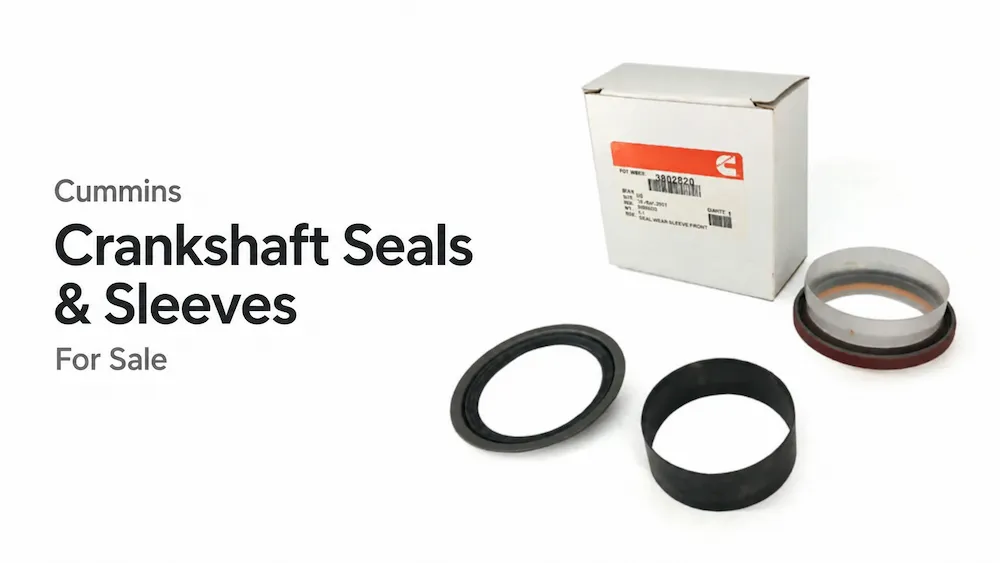
Oil in the area does not prove that the seal itself has failed
Oil found at the crankshaft front end or below the flywheel housing does not prove that the crankshaft seal is the only leak source.
Oil can travel along the engine surface, housing joints or rotating components before collecting at the lowest point. A front-end oil trace may come from the front cover, gear housing joint, front oil-pan area or a nearby accessory. Oil at the rear may involve the rear seal housing, rear oil-pan joint, flywheel-housing area or another static sealing surface.
Abnormal crankcase pressure, breather condition, crankshaft-surface wear and housing alignment or installation condition can also affect seal performance.
Before ordering parts, confirm:
- Whether the leak source has been located after inspection;
- Whether a front crankshaft seal or rear main seal is required;
- Whether the seal itself is damaged;
- Whether the crankshaft running surface has a wear groove, corrosion or scratches;
- Whether the current configuration uses a sleeve;
- Whether the seal carrier or housing remains suitable for service.
Ordering a seal by approximate size and visible leak location may not solve the actual problem.
Front and rear seals belong to the same category, but not the same configuration
The front crankshaft seal is installed at the front of the crankshaft. The rear crankshaft seal is installed at the rear and is commonly called the rear main seal.
Both control oil leakage at a rotating crankshaft interface, but the surrounding structure, running surface and supply format may be different.
Depending on the Cummins platform, the part may be supplied as:
- A separate front seal;
- A separate rear main seal;
- A seal-and-carrier combination;
- A seal-and-housing assembly;
- A seal-and-sleeve kit;
- A unitized or cassette-style seal assembly;
- A formal assembly with the front cover, rear cover or another housing component.
A buyer should not assume that a front seal is always a loose seal or that a rear seal is always a housing assembly.
The quotation should identify:
- Front or rear position;
- Current front cover, rear cover, seal carrier or housing part number;
- Separate seal or complete carrier/housing assembly;
- Sleeve requirement;
- Applicable supersession.
Also note:
The rear main seal is the sealing component. The rear seal housing or seal carrier supports and locates the seal. They are not the same orderable part.
The rear seal housing is also not the same as the flywheel housing. The flywheel housing is a larger rear-engine structural component that may be located in the same area but has a different function and supply level.
PTFE and elastomer seals should not be assumed interchangeable
Common crankshaft-seal constructions include elastomer lip seals and PTFE seals. Elastomer materials may include NBR, FKM or other compounds, while PTFE seals use a different lip design and operating principle.
Even if inside diameter, outside diameter and width are identical, the two designs should not be treated as direct substitutes without confirmation.
They may differ in:
- Lip profile;
- Contact pressure and running behavior;
- Garter-spring arrangement;
- Dust-lip design;
- Outer-diameter interface with the housing;
- Installation protector requirements;
- Directional hydrodynamic features;
- Crankshaft or sleeve compatibility.
Some PTFE or hydrodynamic lip designs have a specified installation orientation and direction of shaft rotation. A seal that physically fits the housing may still have a lip design that does not match the engine’s specified crankshaft rotation.
A change in seal material or construction should be accepted only when supported by:
- An official part-number supersession;
- An approved replacement;
- OEM service information;
- A complete seal-conversion kit;
- A verified seal-and-sleeve combination.
Matching dimensions do not make seal material and lip design freely interchangeable.
Diameter and width are only preliminary filters
Most seal inquiries provide:
- Inside diameter;
- Outside diameter;
- Width.
These measurements can eliminate obviously incorrect parts, but they do not complete the match.
Two seals with the same three dimensions may still differ in lip profile, material, spring arrangement, housing location features, running-surface requirements or sleeve configuration.
The strongest matching basis is:
ESN + CPL + Front/Rear Position + Current Crankshaft Part Number + Current Housing Part Number + Seal Service Part Number
Measurements and old-seal photos are useful supporting evidence, but they do not replace service-part-number confirmation.
This becomes especially important when the crankshaft, front cover, rear cover, seal carrier or housing has been replaced after the engine left the factory. The current configuration may be more relevant than the original BOM.
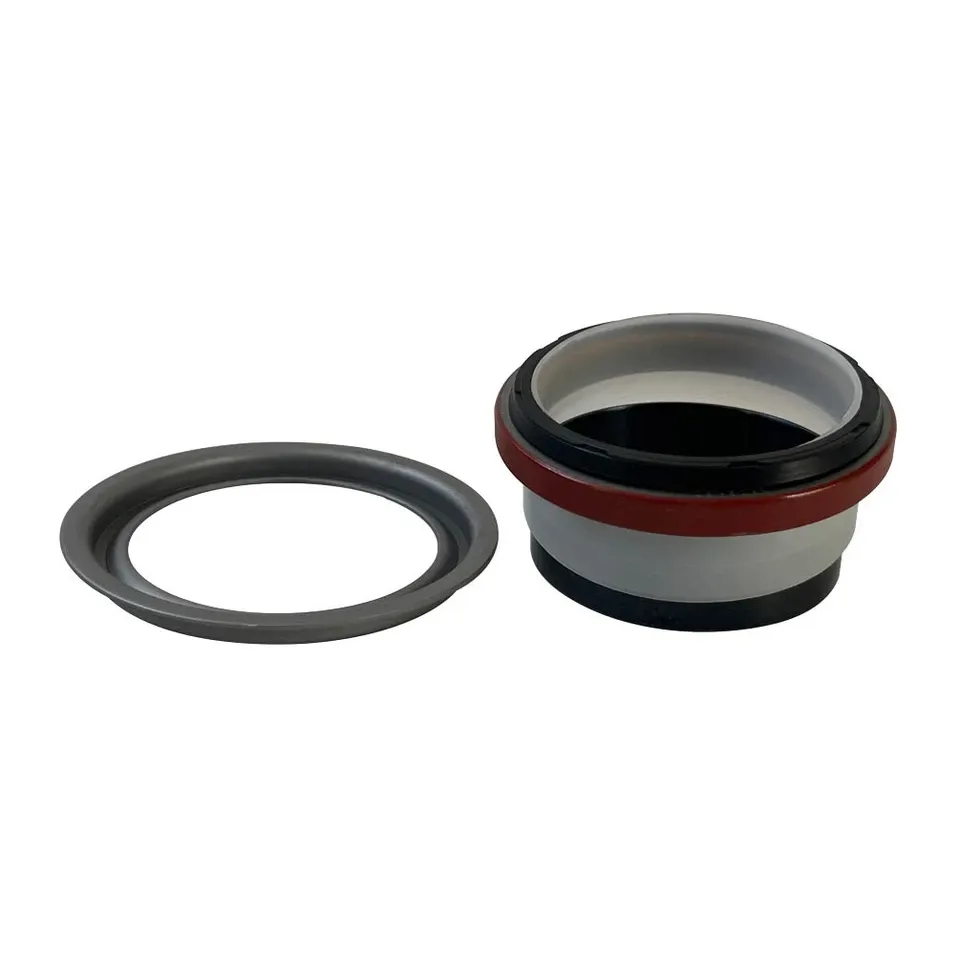
The crankshaft running surface determines whether the new seal can work reliably
The seal lip runs continuously on the crankshaft or on a matching sleeve surface.
After long service, the running surface may show:
- A wear groove;
- Corrosion;
- Scratches;
- Deposits;
- Remains of an old sleeve;
- Previous repair machining;
- A running diameter different from the original design.
In that condition, installing a new seal alone may not restore stable sealing.
If the new lip runs on the same worn location, or if it does not match the current running surface and diameter, repeat leakage may occur.
The buyer does not need to decide whether the crankshaft surface is reusable. However, the repair facility’s planned solution should be clear before the parts are quoted:
- Continue using the existing crankshaft surface;
- Replace the crankshaft;
- Use an OEM wear sleeve from the original design;
- Use an approved repair sleeve;
- Replace the seal-and-sleeve assembly;
- Replace the seal carrier or housing.
Each option may require a different seal part number and BOM.
Wear sleeve and repair sleeve are not one generic category
Common market terms include:
- Crankshaft wear sleeve;
- Seal sleeve;
- Repair sleeve;
- Shaft repair sleeve;
- Seal-and-sleeve kit.
These terms do not always describe the same design.
At minimum, two different approaches should be separated.
OEM wear sleeve or original-design sleeve
Some engines use a wear sleeve, unitized seal or specified seal-and-sleeve arrangement as part of the original sealing system.
That sleeve belongs to the designed configuration and must match the specified seal, crankshaft and housing. It should not be separated and recombined with parts selected only by approximate size.
Thin-wall repair sleeve
Some repair sleeves are designed specifically to restore a worn shaft surface. Depending on the approved repair method, the original seal size may continue to be used, or a specified seal may be required.
A sleeve should therefore not be assumed to change the seal size in every case. Likewise, a worn shaft does not automatically mean the oil-seal size must change.
Before ordering, confirm:
- Sleeve type;
- Front or rear position;
- Current crankshaft part number;
- Original seal design;
- Whether an old sleeve is already installed;
- Whether the repair sleeve belongs to an approved repair method;
- Whether the original seal size remains applicable;
- Whether the seal and sleeve must be supplied together.
The repair facility should decide whether a sleeve is needed after the old seal has been removed and the running surface inspected. Equipment age alone is not a valid reason to add one.
Rear-seal supply format: separate seal or housing assembly
Rear-seal quotations may use terms such as:
- Rear main seal;
- Rear seal housing;
- Rear seal carrier;
- Crankshaft seal carrier;
- Seal retainer;
- Rear cover;
- Flywheel housing.
These names should not be treated as interchangeable.
Some platforms use a separate rear main seal. Others may use a seal-and-carrier assembly, housing assembly or seal-and-sleeve combination. The actual supply level must be confirmed by ESN, CPL and current housing part number.
If the current configuration uses a housing assembly, a request for “one rear seal” may create two problems:
- The supplier cannot determine whether the requirement is a separate seal or the complete assembly;
- The quotation includes only the seal and omits the housing, static seals or related hardware.
Whether the housing-to-block interface uses a gasket, O-ring, liquid sealant or another static-sealing method must also be checked line by line. It cannot be inferred from the kit name.
Repeat leakage may also involve more than the seal itself. The repair facility may need to inspect:
- The seal bore inside the housing;
- Housing locating features;
- Housing distortion or damage;
- Housing-to-block mounting and sealing surfaces;
- Related rear-cover or structural parts.
If these interfaces are damaged, replacing only the seal or housing may still be insufficient.
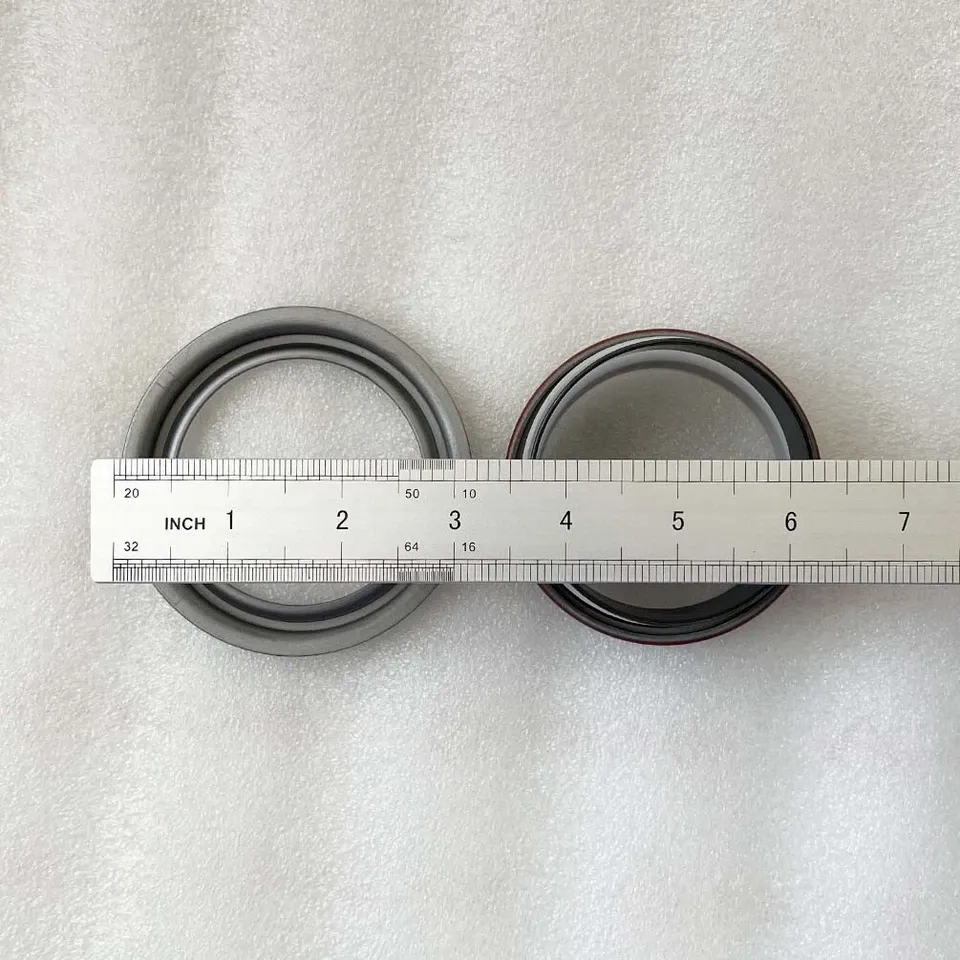
The front cover and gear housing must also match the front seal
The front crankshaft seal may be installed in the front cover, gear housing, seal carrier or another front-end structure.
Within the same engine family, the front seal may differ because of:
- Front-cover version;
- Gear-housing version;
- Accessory-drive arrangement;
- Crankshaft front-end design;
- Official supersession;
- A change from a separate seal to an assembly;
- A revised sleeve configuration.
If the front end has been repaired or updated, confirm:
- Current front-cover service part number;
- Current gear-housing part number;
- Current crankshaft part number;
- Previous front-seal part number;
- Sleeve configuration;
- Applicable supersession;
- Separate seal or carrier/cover assembly.
A casting number can support identification, but it is not necessarily the orderable service part number.
A crankshaft or housing replacement requires the seal to be checked again
The seal part number used when the engine left the factory may remain applicable after repair, or it may change because of a new crankshaft, cover, housing, sleeve or official supersession.
Common situations include:
- The crankshaft has been replaced by a new service part number;
- A repair sleeve has been added to the original crankshaft;
- The front cover or gear housing has been updated;
- The rear seal housing or carrier has been replaced;
- The original seal has been replaced by a seal-and-sleeve kit;
- A separate seal has been replaced by an assembly, or the reverse.
A cover or housing change does not automatically mean the seal will change. It also does not prove that the original seal remains correct.
Reconfirm:
Current Crankshaft + Current Cover/Housing + Current Sleeve Configuration + Seal Part Record
This step is especially important for mining equipment, construction machinery and generator sets that have been rebuilt more than once.
“Seal Kit” is not a standardized BOM
The following names may describe very different supply scopes:
- Crankshaft seal;
- Front seal kit;
- Rear main seal kit;
- Crankshaft seal kit;
- Seal-and-sleeve kit;
- Rear seal housing kit;
- Bottom gasket kit;
- Complete gasket kit.
One quotation may include only a seal. Another may include a seal and sleeve. A third may include the carrier, housing, O-ring, gasket, installation protector or locating components.
Words such as Complete, Kit and Assembly do not define the actual contents.
Before accepting the quotation, confirm:
- Front seal or rear main seal;
- Seal service part number and quantity;
- Wear sleeve or repair sleeve inclusion;
- Sleeve part number;
- Seal carrier or housing inclusion;
- Gasket, O-ring or other static-seal inclusion;
- Installation protector, locating parts or other accessories;
- Applicable ESN, CPL, crankshaft and housing part numbers;
- Standard or approved repair configuration.
If you already have a seal or rear-end repair quotation but are unsure whether it includes the sleeve, carrier, housing or static seals, send the quotation together with the ESN, CPL and old-part photos. ZEB Power can help review the BOM before the order is placed.
New genuine and quality alternative parts: compare rework risk, not only unit price
A crankshaft seal is usually inexpensive compared with the total engine-repair budget. If a transmission, flywheel, front drive or large accessory must be removed again, however, labor and downtime can greatly exceed the price difference between seals.
Service accessibility is an important risk factor, but it is not the only one.
Also consider:
- Equipment criticality;
- Downtime cost;
- Service-part-number applicability;
- Evidence for seal material and lip design;
- Sleeve and housing compatibility;
- Batch consistency;
- Packaging and lip protection;
- Warranty and claim process;
- Stock and lead time.
New genuine parts normally provide a more direct link to official applicability, supersession, packaging, traceability and warranty support.
A quality alternative is not automatically a low-quality part, but the supplier should provide sufficient evidence, including:
- Clear cross-reference;
- Applicable service part number;
- Seal material;
- Lip design;
- Key dimensions;
- Garter-spring arrangement, where applicable;
- Sleeve compatibility;
- Housing applicability;
- Batch inspection;
- Packaging protection;
- Warranty and claim process.
For locations with high rework cost, part-number accuracy, sealing design, batch consistency and after-sales responsibility should carry more weight.
Where access is easier and budget or lead time is more sensitive, a quality alternative may be evaluated if the evidence is complete. Easier installation does not justify weaker matching or quality requirements.
If you are comparing new genuine and quality alternative options for a specific repair, provide the ESN, CPL, front or rear position, repair scope, downtime requirements and target lead time. ZEB Power can help compare currently available supply options.
Information to provide before ordering
Engine information: Cummins engine model, ESN, CPL, equipment brand and full model, application, and whether the engine has been rebuilt or the crankshaft replaced.
Position and old-part information: Front seal, rear main seal or both; clear photos of both sides of the old seal; all visible markings; and whether the leak source has already been confirmed after inspection.
Crankshaft and sleeve information: Current crankshaft service part number; running-surface photos; whether a wear or repair sleeve is installed; old-sleeve part number and photos; and whether the repair facility plans to reuse the crankshaft, replace it or use a sleeve solution.
Cover and housing information: Current front cover, gear housing, rear cover, rear seal housing or seal carrier part number; casting number; whether the part has been replaced or repaired; and whether a housing assembly, gasket, O-ring or another static seal is required.
Commercial requirements: Separate seal, seal-and-sleeve kit or housing assembly; new genuine or quality alternative; quantity, destination, required lead time, labeling, batch inspection and traceability requirements.
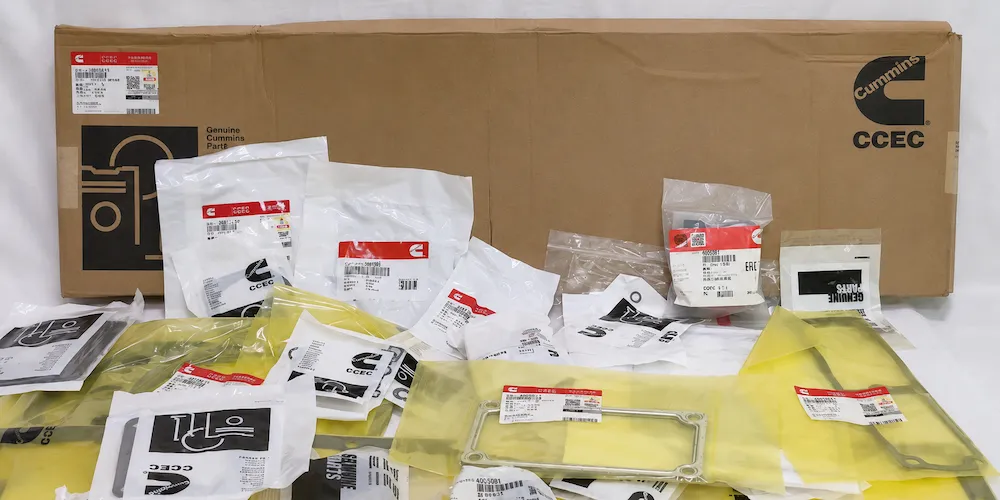
How ZEB Power supplies Cummins crankshaft seals and related parts
ZEB Power supplies Cummins crankshaft seals, sleeves and related cover and housing parts for construction machinery, mining equipment, generator sets and industrial equipment.
Based on the ESN, CPL, current crankshaft part number, current cover or housing part number, old part numbers and clear photos, we can help verify:
- Front crankshaft seal;
- Rear crankshaft seal;
- Rear main seal;
- OEM wear sleeve;
- Repair sleeve;
- Seal-and-sleeve kit;
- Front-cover seal;
- Rear seal housing;
- Seal carrier;
- Housing gasket, O-ring and related static seals;
- Related seals in the flywheel-housing area;
- Supersession;
- Standard or approved repair configuration;
- New genuine and confirmed quality alternative options;
- Actual BOM, quantity, lead time and quotation scope.
Crankshaft-surface inspection, housing-condition assessment, seal installation, sleeve installation and reuse decisions must be completed by a qualified local repair facility using the applicable service information.
ZEB Power’s role is to confirm that the seal, sleeve, cover, housing and static seals belong to the same configuration, reducing omitted items, incorrect orders and repeat purchasing.
Send the engine ESN, CPL, front or rear position, current crankshaft part number, current cover or housing part number, and clear photos of the old seal and running surface. ZEB Power can help verify candidate part numbers and kit scope.
Frequently asked questions
Does oil near the front end or flywheel housing always mean the crankshaft seal has failed?
No. Oil-pan joints, cover or housing static seals, crankcase pressure and nearby leak sources may all leave oil in the same area. The leak source should be confirmed first.
Can the front seal and rear main seal be interchanged?
Not by assumption. Their surrounding structure, lip design, material, running surface, housing and sleeve configuration may differ. Confirm each by service part number.
Can a PTFE seal replace an elastomer seal if the dimensions are the same?
Not based on dimensions alone. A change in material or construction should be supported by an official supersession, approved replacement or complete conversion arrangement.
Is a wear sleeve required every time a crankshaft seal is replaced?
No. The original-design OEM sleeve and a repair sleeve used to restore a worn shaft surface are different concepts. The current crankshaft condition and approved repair method determine what is required.
Is the rear main seal always supplied with a housing?
No. Depending on the platform, it may be a separate seal, carrier assembly, housing assembly or seal-and-sleeve combination. Confirm the current housing part number.
Does a “Seal Kit” always include the sleeve, housing and gasket?
No. A seal kit has no standardized BOM. Confirm every seal, sleeve, carrier, housing, gasket, O-ring and accessory line by line.
Can the number on the old seal be used directly for ordering?
Not always. It may be a service part number, seal-manufacturer number, mold number, material code or production batch. Verify it against the ESN, position, current housing and official parts record.
Can I receive a quotation without the old seal part number?
An initial review is possible. Provide the ESN, CPL, front or rear position, current crankshaft part number, current cover or housing part number, and clear photos of the old seal and installation area.
Should crankshaft seals always be new genuine parts?
Not necessarily. The decision should consider rework cost, equipment criticality, downtime risk, evidence for material and design, batch inspection, lead time and warranty support. A quality alternative needs a clear cross-reference and complete quality evidence.