

Genuine vs. Aftermarket Cummins Parts: How to Choose

4193
Table of Contents
Generating table of contents
"Genuine or aftermarket" comes up in almost every Cummins parts order at some point. Most discussions of it stop at one line: "genuine costs more but you can trust it, aftermarket is cheaper but riskier." That's not wrong, exactly — it's just not useful, because it doesn't say what you're actually paying for, what the risk actually looks like, or when that risk is worth taking.
This article tries to get past that. We'll cover why buyers end up torn on this in the first place, how genuine and aftermarket parts actually relate to each other from a supply-chain standpoint, which parts are reasonable candidates for aftermarket and which aren't, and — the most practical part — how to tell whether an aftermarket supplier is actually worth trusting.
Why Buyers Go Back and Forth on This
The hesitation usually comes down to a few very real factors:
- Genuine parts tend to cost more — for a single high-value part, or a full overhaul kit, the price gap between genuine and aftermarket can be significant
- Genuine lead times can run longer — for high-output engines, older models, or special configurations, sourcing genuine parts can take a while, and for a buyer facing an urgent repair, waiting time is its own cost
- Aftermarket quality varies widely — some aftermarket suppliers are well-established with consistent quality; others are selling cheap knockoffs with real risk on dimensions, materials, machining precision, and service life
- Buyers often can't judge authenticity or fit on their own — most end users, workshops, and traders can't tell from a photo and a price quote whether a part is reliable or actually fits their engine configuration
- Risk tolerance depends entirely on the application — a standby genset, a primary mining machine, and a general-purpose piece of construction equipment have completely different tolerances for downtime and repair budget
So the real choice between genuine and aftermarket isn't a price decision — it's a risk decision.
What "Genuine" and "Aftermarket" Actually Mean
Worth clarifying a concept that gets misunderstood: within China's Cummins supply chain and related export channels, common engine sources include joint-venture or licensed production groups like DCEC, CCEC, and XCEC, with different plants generally covering different series and power ranges. Genuine parts, in this context, refer to components sourced through Cummins's official or authorized supply network — matching original specifications and part numbers.
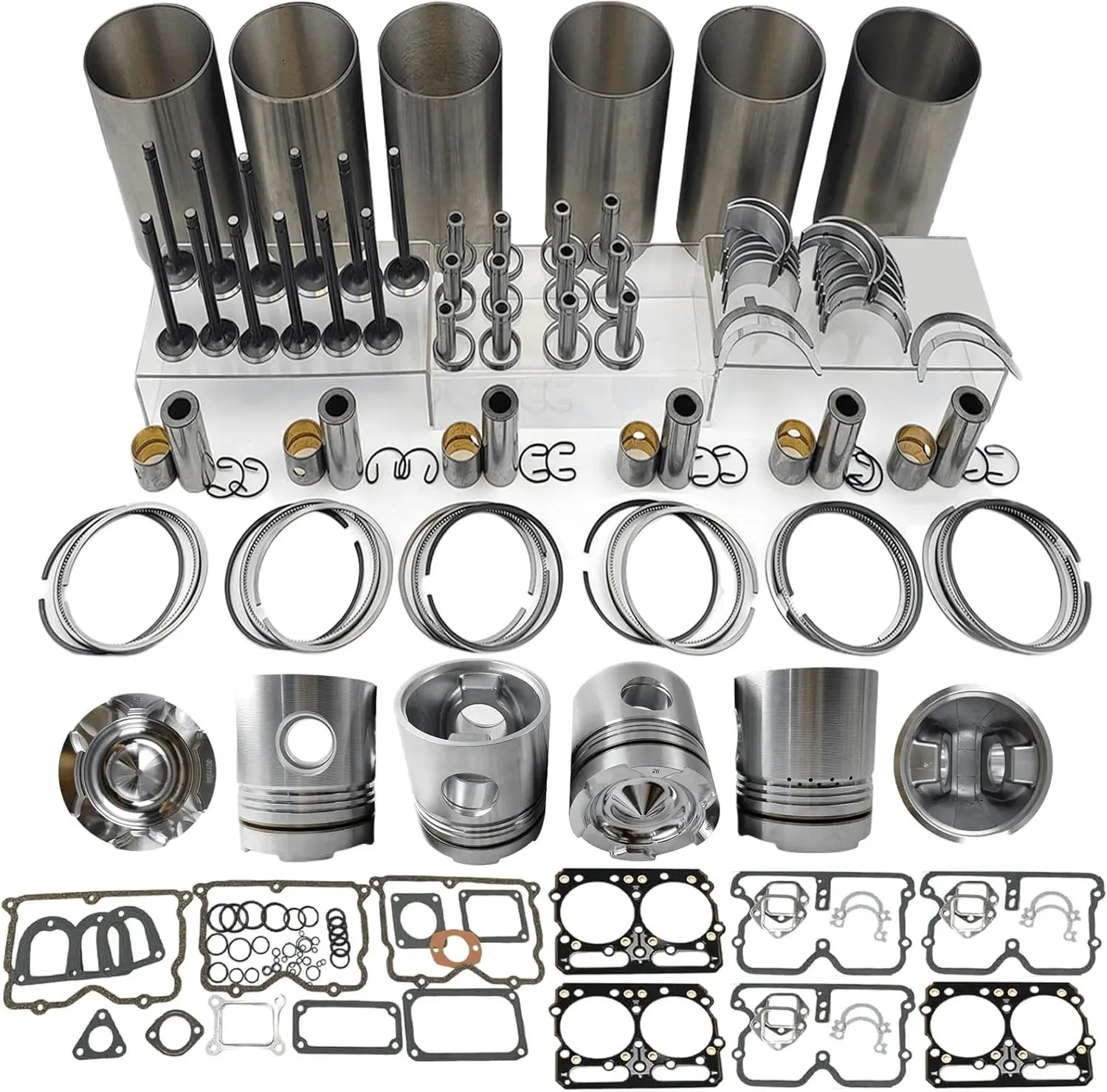
"Aftermarket" parts are made by third-party manufacturers to match the function and specification of the original part. Here's the key distinction: aftermarket doesn't mean counterfeit. A counterfeit part fakes the OEM branding and passes off inferior material as the real thing. A high-quality aftermarket part comes from a legitimate manufacturer, with verified materials and craftsmanship, developed specifically to match a given OEM part number. These are fundamentally different things — they just both fall outside "made by the OEM," which is where the confusion comes from.
Put another way: choosing between genuine and aftermarket is really a choice between the OEM's authorized supply chain and an established third-party supply chain — not a choice between real and fake.
Two Common Misconceptions
"Aftermarket means counterfeit"
This is the most common one. Low-quality knockoffs genuinely exist on the market, but that's a separate issue from high-quality aftermarket parts backed by a legitimate supply chain and verified materials. Conflating the two tends to push buyers toward one of two mistakes: avoiding solid, cost-effective aftermarket options out of fear of counterfeits, or swinging the other way and treating every cheap part as safe.
"Genuine means zero risk"
Genuine parts are more reliably matched by design, but "genuine" doesn't mean "safe to order without checking." The same OEM model can vary by CPL and production batch — genuine parts still need to be confirmed against the ESN and CPL. Choosing genuine doesn't let you skip that step.
Where the Real Differences Are: Cost, Lead Time, Warranty, Consistency
Breaking it into four factors makes this clearer:
Cost. Genuine part pricing typically bakes in brand licensing, OEM R&D, and certification costs. Aftermarket parts, when produced at scale by an established manufacturer, tend to show a real price advantage — but mainly for engine series with a mature supply chain. For less common models, aftermarket production volume may be too low for that price advantage to really show up.
Lead time. Genuine parts that require cross-border sourcing can mean longer waits. An established aftermarket supplier with local or regional stock is often faster — but this isn't a fixed rule; it comes down to the supplier's actual inventory.
Warranty. Genuine parts generally come with clearer warranty terms and a more traceable supply path. Aftermarket warranty terms depend entirely on the supplier's reputation and policy, and vary a lot — which is exactly why vetting a supplier matters so much (more on that below).
Consistency. Genuine parts, coming from the same authorized plant, tend to be more consistent batch to batch. Aftermarket consistency depends on the manufacturer's quality control — which is also why the gap between a good aftermarket supplier and a mediocre one can matter more than the gap between genuine and aftermarket in general.
Which Parts Are Reasonable Candidates for Aftermarket — and Which Aren't
| Part Category | Risk Level | Recommendation |
|---|---|---|
| Injectors, pistons, cylinder liners | High | Genuine preferred, or confirm strictly against ESN/CPL before considering aftermarket |
| Main bearings, rod bearings, thrust washers | High | Must confirm standard/oversized/special spec — don't decide on price alone |
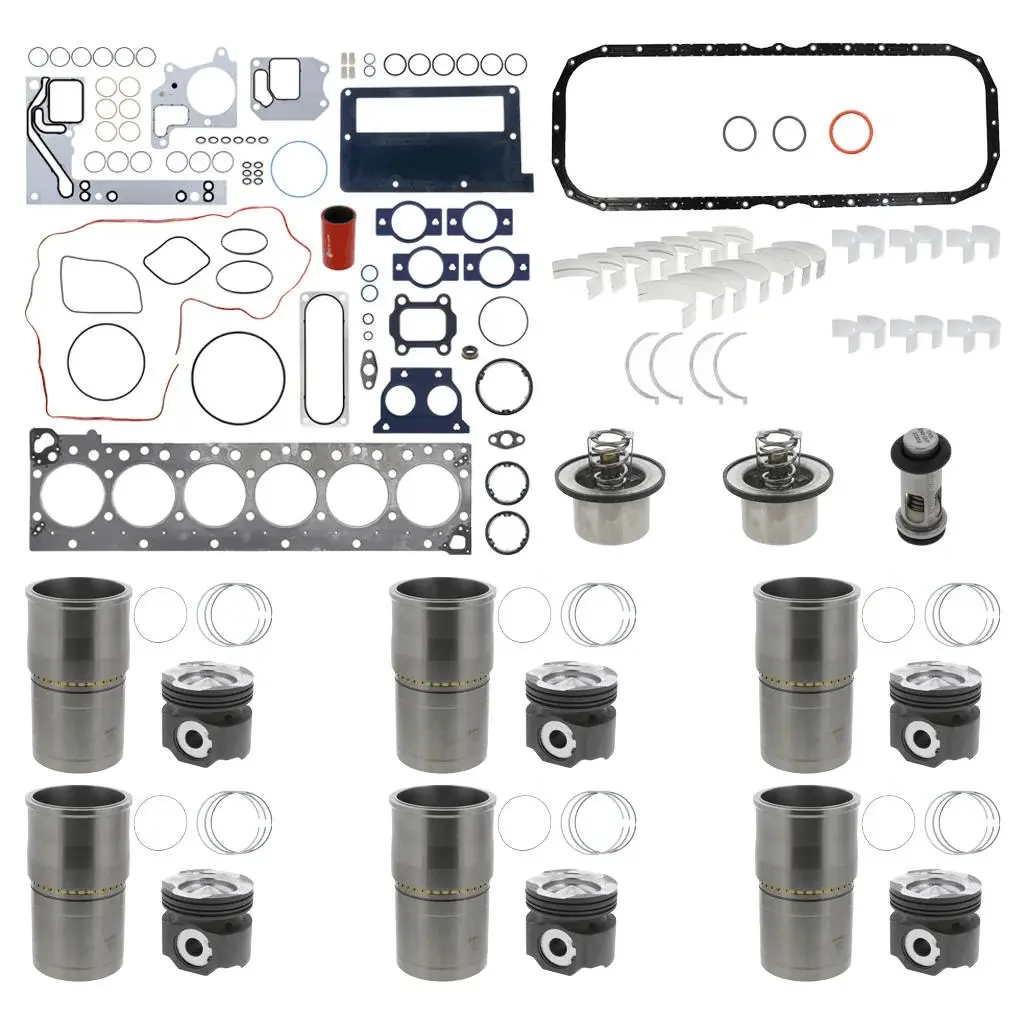
| Overhaul kit core internals | High | Confirm top/in-frame/complete scope and the specific parts list |
| Turbochargers, fuel pumps | Medium-high | Confirm fitment, model, and application |
| Head gaskets / gasket sets | Medium-high | Confirm engine configuration and kit scope |
| Water pumps, starter motors, alternators | Medium | Aftermarket is workable for mature models with a reliable supplier |
| Filters, belts, hoses, clamps | Lower | Part number is usually enough to confirm; aftermarket options tend to be reliable |
In short: the higher the cost of a part failing, and the tighter the fit tolerance, the more genuine makes sense. The more standardized a part is and the more mature its supply chain, the more aftermarket makes financial sense.
By engine series, some mid- and lower-displacement models (6BT, QSB6.7) have a mature market with a stable aftermarket supply chain, making them reasonable aftermarket candidates. Core moving parts on higher-output engines or critical equipment (a primary mining machine, critical standby power) generally call for genuine, or at minimum strict fitment confirmation, even for the same part category. And if a contract or project spec explicitly requires genuine parts, that's not a case for substitution regardless of cost.
Genuine and Aftermarket Aren't Mutually Exclusive — You Can Mix
A lot of buyers default to thinking in absolutes: either everything's genuine, or everything's aftermarket. In practice, mixing by risk level within a single job is often the more sensible approach:
- Critical internal components (injectors, pistons, liners, bearings) — genuine
- Maintenance consumables (filters, belts, hoses) — high-quality aftermarket
- Routine repair items on mature models — whichever fits the budget
- Within an overhaul kit — verify sourcing and spec closely on the high-risk items, stay flexible on the supporting ones
This gives workshops and traders more flexibility — no need to inflate the total cost by insisting on all-genuine, and no need to gamble on critical components to hit a budget target. For end users, it's a way to control overall cost while concentrating the risk budget where it actually matters.
The one condition: mixing sources doesn't lower the bar on fitment confirmation — every part still needs to be checked individually, regardless of which sourcing route it came from.
How to Vet an Aftermarket Cummins Parts Supplier
This is the most practical step in choosing aftermarket — and the one most often skipped. Worth checking:
- Material certification — can they provide material or composition test reports, especially for parts like pistons, liners, and bearings where material matters a lot
- Quality inspection reports — is there a third-party or internal QC report covering dimensions, hardness, wear resistance?
- A track record of consistent supply — has this supplier been shipping reliably over time, or are they taking one-off orders? Consistency is usually a decent proxy for whether their production scale and QC systems are actually mature
- Willingness to trace batches — if something goes wrong, can they trace it back to a specific production batch? That's a good signal of how disciplined the operation actually is
- Whether they understand your engine configuration — a serious supplier won't just say "this model is universal" — they'll confirm against your engine model, ESN, and CPL and explain the actual scope of fitment
If a supplier is vague on any of this, or won't provide anything in writing, that's worth taking seriously as a red flag. A legitimate high-quality aftermarket supplier usually doesn't shy away from these questions.
One more practical move: ask the supplier for both a genuine and an aftermarket quote up front (Option A: Genuine / Option B: High-quality aftermarket). That lets you compare price, lead time, and risk side by side, instead of having to commit to one route before you've even seen the numbers.
How Engine Series and Application Shape the Decision
Here's how the DCEC/CCEC/XCEC framing mentioned earlier actually plays out in practice:
- Higher-output engines built by CCEC (KTA38, QSK60, for example) commonly run in mining and critical standby power applications, where genuine tends to be the higher priority — not because aftermarket is necessarily unreliable, but because the downtime cost and failure consequences on this class of equipment justify paying for certainty
- Mid- and lower-displacement engines built by DCEC and XCEC (6BT, QSB6.7) have a large installed base and a more mature aftermarket supply chain — if budget and lead time are the priority, high-quality aftermarket is a reasonable call
- This is a general tendency, not a fixed rule — it still depends on actual use case. A mid-displacement engine running critical medical or data center standby power may still warrant a reliability-first approach over a cost-first one
Priorities shift a bit by buyer type too: end users generally care most about getting equipment running again quickly; workshops need to balance customer budget against callback risk; traders focus on inventory turnover and price competitiveness; mining and genset operators tend to lean genuine (or a strictly verified alternative) for critical parts and overhaul kits.
Not sure which approach fits your engine series? Send us the model and application, and we'll help you think it through.
What to Confirm Before Placing Either Type of Order
Whichever way you go, these are unavoidable:
- Engine model
- ESN (Engine Serial Number)
- CPL number
- Engine nameplate or old part photo
- The specific part number, if you have one
Genuine doesn't mean you can skip this — and aftermarket needs it even more, to confirm the right version. Worth repeating a point that's come up throughout this content series: choosing genuine vs. aftermarket answers the question "which supply chain am I using." Confirming ESN/CPL/part number answers a completely different question: "does this part actually fit my engine." One doesn't substitute for the other.
How ZEB Power Supports Both Genuine and Aftermarket Sourcing
ZEB Power supplies both genuine Cummins parts and high-quality aftermarket alternatives, covering several common DCEC, CCEC, and XCEC series — specific models and configurations are confirmed against your ESN, CPL, or engine nameplate.
For key aftermarket components and bulk orders, we can provide material certification, QC reports, or related quality documentation depending on the specific product and supply batch — which is exactly the kind of thing we'd suggest you check with any supplier, and we're glad to stand up to that same scrutiny. If you're not sure which route to take, you can also ask us for both a genuine and an aftermarket quote side by side.
Not sure whether to go genuine or aftermarket, or want a second opinion on a supplier? Send us your engine details and what's on your mind — we'll help you work through it.
FAQ
1. What's the difference between a high-quality aftermarket part and a counterfeit?
A counterfeit fakes the OEM branding and passes off inferior material as genuine. A high-quality aftermarket part comes from a legitimate manufacturer with verified materials and craftsmanship. The two are entirely different in both legality and quality assurance.
2. If I go with genuine parts, can I skip confirming the ESN/CPL?
No. The same OEM model can vary by CPL and production batch, so genuine parts still need to be confirmed against the ESN and CPL.
3. What's typical aftermarket warranty coverage like?
It varies by supplier — there's no industry standard, which is exactly why vetting a supplier's reputation and QC standards matters so much.
4. Which parts need extra caution when going aftermarket?
Injectors, pistons, liners, bearings, and overhaul kits need particularly careful vetting — especially for mining equipment, critical standby power, or high-output engines, where genuine or rigorously verified aftermarket parts are the safer call.
5. Can I mix genuine and aftermarket parts in the same repair?
Yes — and it's a fairly common approach. Genuine for critical internals, aftermarket for maintenance consumables, is a combination many workshops and end users already use, as long as each part is individually confirmed for fitment.
6. How do I quickly gauge whether an aftermarket supplier is trustworthy?
Ask directly whether they can provide material certification, QC reports, and evidence of a consistent supply history. If they dodge those questions, take that as a signal. You can also just ask them to quote both genuine and aftermarket options side by side.
7. What do DCEC, CCEC, and XCEC actually refer to?
They're joint-venture or licensed production groups for Cummins engines, generally covering different displacement and power ranges — though the actual model still determines what applies.
8. If budget is tight, can everything be aftermarket?
Not as a blanket rule. Routine consumables and maintenance parts for mature mid-displacement engines are reasonable aftermarket candidates. High-risk core components, especially on critical equipment, are still better served by genuine or carefully vetted alternatives.
Summary: This Isn't About Picking a Side
There's no one-size-fits-all answer to genuine vs. aftermarket, and it doesn't have to be all-or-nothing — mixing by risk level is often the more realistic approach. What actually drives the decision is the part category, the engine series, the application, your budget and lead time constraints, and whether you've found an aftermarket supplier willing to back up their parts with material certification, QC reports, and a consistent supply record.
Whichever route you take, one thing doesn't change: whether a part actually fits your engine comes down to the ESN, CPL, and part number — not the "genuine" or "aftermarket" label itself.
Still weighing genuine vs. aftermarket? Send us your engine details and what's on your mind — we'll help you sort it out.