

Cummins Upper Engine Gasket Kit: How to Match the Right Set

7508
Table of Contents
Generating table of contents
A Cummins Upper Engine Gasket Kit—also called an Upper Engine Gasket Set—is used to reseal the cylinder head and other upper-engine components after disassembly. These kits are commonly required during head gasket replacement, cylinder head repair, and engine overhaul work.
Ordering the correct kit is not simply a matter of choosing a set of gaskets and O-rings. Two problems occur frequently:
- The kit does not match the engine’s exact build configuration.
- The main kit is correct, but seals for the turbocharger, EGR system, injector sleeves, coolant connections, or other removed components are missing.
Many inquiries arrive with broad descriptions such as “6BT upper gasket kit,” “QSB6.7 head gasket set,” or “KTA19 top gasket kit.” These descriptions are useful for an initial search, but engines within the same family may use different Control Parts Lists (CPLs), emissions systems, cylinder head versions, and accessory arrangements.
As a result, two suppliers may both quote an “Upper Gasket Kit” while offering different kit part numbers and different contents.
Accurate purchasing requires more than the engine family name. The Engine Serial Number (ESN), CPL, existing kit and gasket part numbers, itemized kit contents, and the actual disassembly scope should all be checked before an order is confirmed.
This guide explains the difference between upper, lower, full, and head gasket sets; what is commonly included in an upper engine gasket kit; which seals are frequently overlooked; and how to match the correct kit to a Cummins engine.
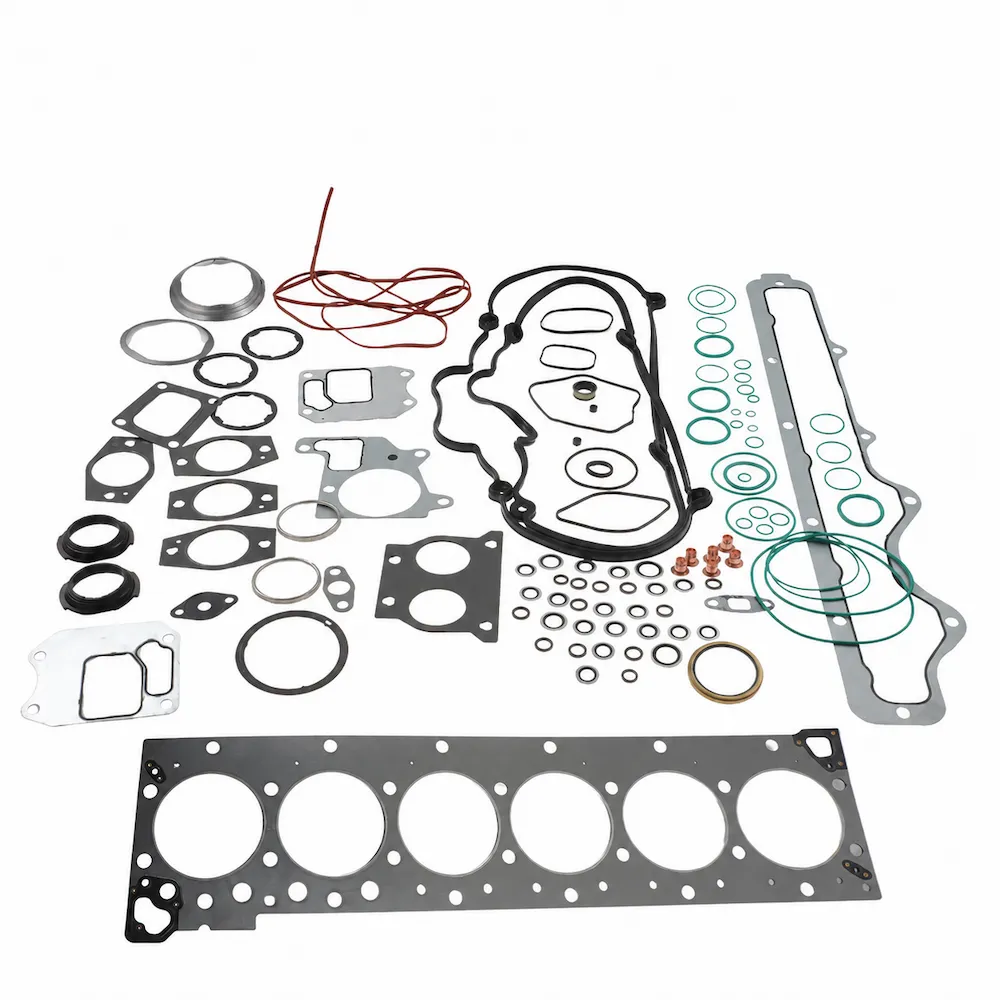
Upper vs. Lower vs. Full Gasket Sets—and Where a Head Gasket Kit Fits
Upper Gasket Set, Lower Gasket Set, Full Gasket Set, and Head Gasket Kit are common terms in the diesel-engine repair market. However, their exact use is not identical across every engine family or supplier.
The kit name only indicates the general repair area. The final scope must be confirmed against the kit part number and itemized parts list.
| Kit type | Typical coverage | What to verify |
|---|---|---|
| Upper Engine Gasket Kit / Set | Cylinder head, valve cover, rocker housing, intake and exhaust interfaces, and other upper-engine seals | Turbocharger, EGR, thermostat housing, and accessory seals may not be included |
| Head Gasket Kit | Usually centered on the head gasket and seals disturbed during cylinder head removal | The term is used differently by different suppliers |
| Lower Engine Gasket Set | Oil pan, lower crankcase, and other lower-engine sealing points | Normally does not cover cylinder head or valve cover work |
| Full / Complete Gasket Set | Usually combines upper- and lower-engine gaskets | Does not necessarily include every turbocharger, EGR, coolant, or external accessory seal |
| Top-End Overhaul Kit | May start with an upper gasket set and add bolts, seals, or selected repair parts | There is no universal contents list; compare the itemized package |
A Full Gasket Set may include both upper- and lower-engine seals, but that does not guarantee that every gasket used on the turbocharger, air-handling system, coolant accessories, or external piping is included.
Before requesting a quotation, determine whether the project requires:
- An Upper Gasket Set for upper-engine sealing work
- A Head Gasket Kit centered on cylinder head removal
- A Full Gasket Set covering both upper- and lower-engine sealing
- A supplier-configured Top-End Repair Package with additional parts
If a quotation contains a large number of lower-engine gaskets, confirm whether the supplier is quoting an Upper Gasket Set, a Full Gasket Set, or an expanded repair package. Otherwise, the quotations may not cover the same scope.
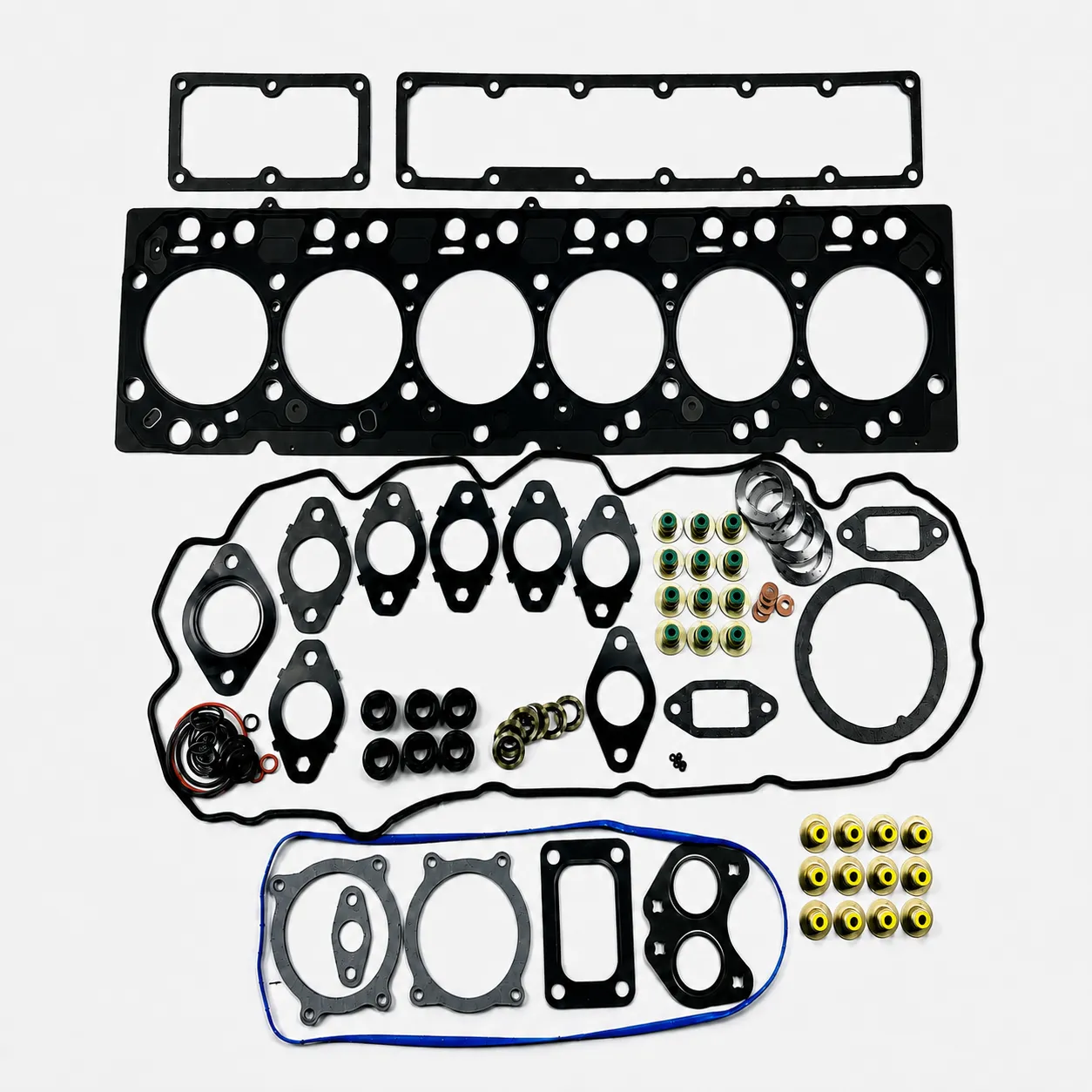
What Is Typically Included in a Cummins Upper Engine Gasket Kit?
Upper Engine Gasket Kit and Upper Engine Gasket Set are both common Cummins parts terms and are also widely used in the diesel-engine aftermarket.
The exact contents vary by engine family, CPL, emissions configuration, and kit part number. The table below is a purchasing reference only; it does not replace the itemized bill of materials (BOM) for a specific kit.
| Component | Typical inclusion status | What to verify before ordering |
|---|---|---|
| Head gasket | Often included, but verify separately | Part number, quantity, thickness, grade, and version |
| Valve cover gasket | Commonly included | Valve cover or rocker housing configuration |
| Rocker housing gasket | Engine-design dependent | Whether it is supplied separately from the valve cover gasket |
| Intake manifold gasket | Commonly included | Interface design, quantity, and port layout |
| Exhaust manifold gasket | Varies by kit | One-piece, grouped, or individual-port design |
| Injector copper washers | Often included | Quantity and injector installation design |
| Injector O-rings | Varies by kit | Material, quantity, and installation position |
| Injector sleeve seals | Configuration-dependent | Sleeve design and whether they are supplied separately |
| Valve stem seals | Varies by kit | Inclusion, quantity, and intake/exhaust specification |
| Upper oil and coolant passage O-rings | Partially included in many kits | Whether all disturbed connections are covered |
| Breather and small-interface seals | Varies by kit | Whether they belong to the main kit or a separate assembly |
Head Gasket: The Part That Should Never Be Matched Loosely
The head gasket is one of the most critical parts in the kit. Confirm:
- Whether it is included
- The correct part number
- The required quantity
- Thickness, grade, or version
- Combustion opening and sealing design
- Oil and coolant passage alignment
- Compatibility with the current cylinder head and block version
Two head gaskets can look similar while using different hole patterns, thicknesses, combustion sealing structures, or reinforced areas. Visual similarity does not make them interchangeable.
Valve Cover and Rocker Housing Gaskets: The Layout Varies by Engine
Cummins engines do not all divide the valve cover, rocker cover, and rocker housing in the same way.
Some engines use only a valve cover gasket. Others may also require:
- A rocker housing gasket
- Cover-bolt sealing washers
- Breather connection seals
- Small O-rings at upper-engine interfaces
The presence of one large cover gasket does not confirm that every valve cover and rocker housing sealing point is covered.
Intake and Exhaust Manifold Gaskets: Check the Design and Quantity
Intake manifold gaskets are usually straightforward to identify, but exhaust manifold gaskets may use:
- Individual-port sections
- Multi-cylinder grouped sections
- A one-piece design
- Different materials or construction versions
Confirm the required quantity and installation position so that the kit does not cover only part of the exhaust interface.
Injector Installation Seals and Valve Stem Seals: Do Not Assume They Are Standard
Injector removal usually requires new copper washers, O-rings, or related installation seals.
These parts seal the injector against the cylinder head, injector sleeve, or related passages. They are not complete fuel injectors. Injector repair or replacement should be determined separately through testing.
Valve stem seals also vary by kit part number. Even when they are included, confirm:
- The quantity
- Whether intake and exhaust valves use the same seal
- Compatibility with the current cylinder head version
- Whether valve guide wear remains within specification
If valve guide clearance is excessive, replacing the valve stem seals alone may not correct oil consumption or sealing problems.
Why EGR, Turbocharger, and Air-Handling Gaskets Require Separate Verification
EGR, turbocharger, and air-handling seals are among the most common sources of confusion when ordering an Upper Engine Gasket Kit.
These seals may be:
- Included in the main kit
- Supplied in a separate installation kit
- Sold as individual parts
- Not applicable to the engine configuration
Their inclusion cannot be determined from the words “Upper Gasket Kit” alone.
EGR System Seals
An EGR-equipped engine may also require:
- EGR valve gaskets
- EGR cooler gaskets
- EGR transfer-pipe seals
- Intake mixer gaskets
- Coolant connection O-rings
EGR and non-EGR engines may use different upper gasket kits. In other cases, the main upper kit remains the same while the EGR installation seals are supplied separately.
Turbocharger Seals
Cylinder head or exhaust manifold removal may also disturb:
- The turbocharger-to-exhaust-manifold gasket
- Turbocharger oil supply seals
- Turbocharger oil drain gaskets or O-rings
- Turbocharger coolant-line seals
- Turbocharger outlet gaskets
These parts may be included in a Turbocharger Installation Kit or supplied individually rather than as part of the standard upper gasket set.
Air-Handling System Seals
Depending on the engine, additional seals may be required for:
- Intake connection pipes
- Intake mixers
- Throttle or air-control components
- Air-handling system interfaces
Ask the supplier to check the engine configuration, the main kit BOM, and the actual disassembly scope. A general question such as “Is this a complete gasket kit?” is not precise enough.
Why the Same Kit Name Can Refer to Different Parts Lists
Two products may both be marketed as a “QSB6.7 Upper Gasket Set” without sharing the same part number or contents.
Common reasons include:
- Different CPLs
- Different emissions stages
- EGR and non-EGR configurations
- Different cylinder head versions
- Different injector or injector sleeve designs
- Different ratings and build configurations
- Industrial, generator-drive, automotive, or marine applications
- Different accessory arrangements
- Kit part-number supersession
- Cylinder heads or accessories installed during previous repairs
For example, two engines may carry the same base model designation while one uses EGR and a different air-handling arrangement and the other does not. Their main head gaskets may be similar, but the EGR, intake, coolant, and small O-ring requirements can differ.
The engine model narrows the search. The ESN, CPL, part numbers, and kit BOM confirm the final selection.
Commonly Missed Gaskets and Seals
Many incomplete orders are not caused by an incorrect head gasket. They occur because the repair involves components outside the standard kit scope.
| Commonly missed item | Why it is overlooked |
|---|---|
| Turbocharger oil supply and drain seals | May belong to a separate installation kit rather than the main BOM |
| Turbocharger-to-exhaust-manifold gasket | Disturbed during the repair but may be supplied separately |
| EGR valve, cooler, and transfer-pipe seals | Configuration-dependent and often require separate verification |
| Thermostat housing and coolant bypass seals | May fall outside the standard upper gasket set |
| Coolant-pipe and hose-connection O-rings | Small, distributed across several connection points |
| Injector sleeve seals | Depend on the injector and sleeve design |
| Valve cover bolt seals | Small and inexpensive, but easy to omit |
| Breather connection seals | May belong to a separate cover or breather assembly |
| Seals disturbed by sensor, fitting, or bracket removal | Created by the actual disassembly scope rather than the standard kit definition |
| Cylinder head bolts | Normally not part of a standard Upper Gasket Set and must be checked separately |
Whether cylinder head bolts may be reused, require measurement, or must be replaced should be confirmed from the service information for the specific ESN. Their appearance alone is not a sufficient reuse criterion.
The best way to avoid missing parts is not to buy a kit with a larger name. It is to compare the kit BOM with the actual disassembly plan.
Before reassembly, the workshop should identify:
- Which upper-engine components will be removed
- Which joints require new gaskets or seals after disassembly
- Which parts are already included in the main kit BOM
- Which parts belong to separate installation kits or individual part numbers
- Which items require confirmation from service information or inspection results
This reduces the risk of delaying reassembly because a small gasket or O-ring was not ordered.
How to Match the Correct Gasket Kit to a Cummins Engine
Do not rely only on the product title, kit photograph, or base engine model. Use the following six-step process.
1. Provide the Engine Model, ESN, CPL, and Nameplate Photo
The ESN identifies the engine’s specific build configuration. The CPL provides additional information about the parts combination.
Engines with the same base model may use different CPLs, emissions systems, cylinder heads, or accessory arrangements. A clear nameplate photo also helps prevent transcription errors.
2. Check the Existing Kit, Head Gasket, and Cylinder Head Part Numbers
When available, provide:
- The previous Upper Gasket Kit part number
- The removed head gasket part number
- The current cylinder head part number
- Photos of the removed parts and previous kit contents
If the cylinder head has been replaced during an earlier repair, the current head may differ from the original factory configuration. In that case, the ESN alone may not confirm every related seal.
3. Confirm Superseded and Replacement Part Numbers
Cummins parts may have old, current, or superseded part numbers.
A different number in the supplier’s quotation does not automatically mean the kit is incorrect, but the supplier should explain:
- The original part number
- The current replacement number
- The supersession relationship
- The applicable engine range
- Whether the kit contents changed
Do not order solely on the basis of descriptions such as “new number” or “upgraded version.”
4. Review the Main Kit BOM
Ask for an itemized parts list rather than relying on the product name and packaging image.
The BOM should help confirm:
- Head gasket
- Valve cover and rocker housing gaskets
- Intake and exhaust manifold gaskets
- Injector installation seals
- Valve stem seals
- Upper oil and coolant passage O-rings
- Items excluded from the kit
Photographs are useful for checking the general layout and approximate quantity, but they do not replace part-number and BOM verification.
5. Add Seals Required by the Actual Disassembly Scope
After the main kit has been matched, check whether the repair also requires:
- Turbocharger installation gaskets
- EGR system seals
- Air-handling system seals
- Thermostat housing gaskets
- Coolant-pipe O-rings
- Injector sleeve seals
- Cylinder head bolts
6. Use Old-Part Photos as Supporting Evidence
Photos of the old gaskets, cylinder head, kit contents, and engine nameplate can reveal configuration differences.
However, visually similar gaskets may use different hole patterns, thicknesses, materials, or part numbers. Photos should support—rather than replace—ESN, CPL, part-number, and BOM matching.
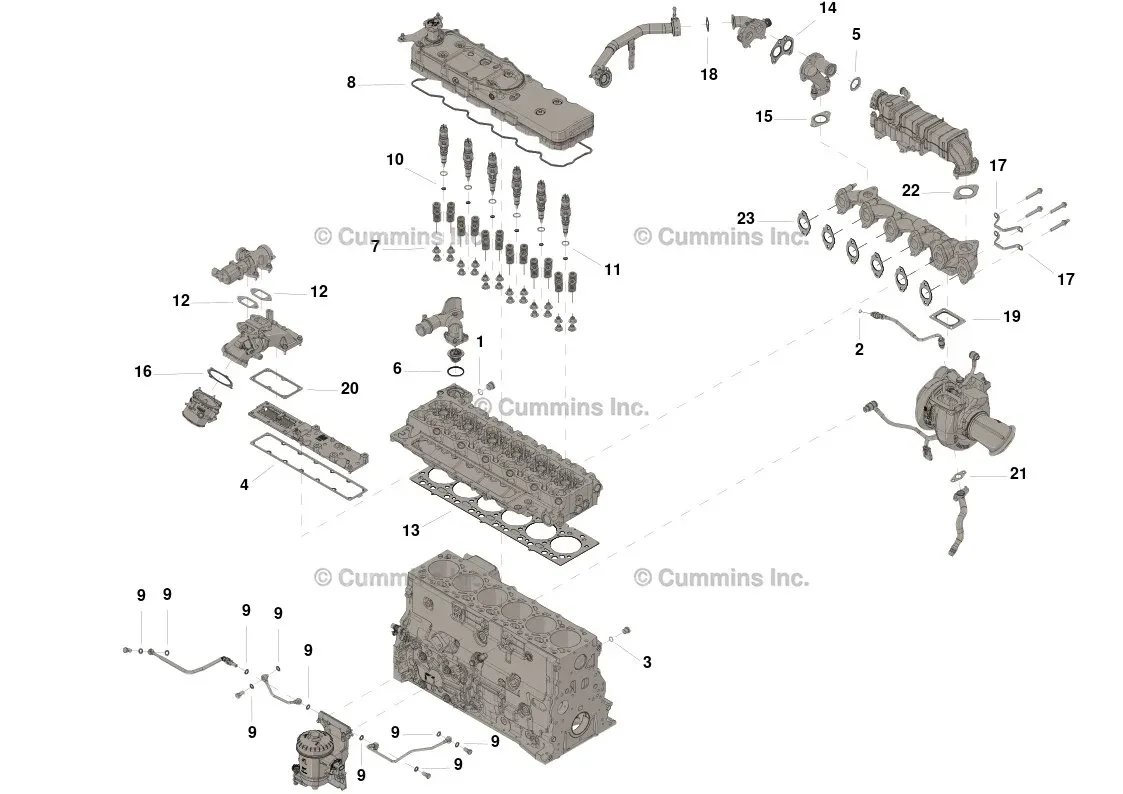
Genuine or Aftermarket: How to Evaluate Gaskets and Seals
Gaskets and seals should not be evaluated in the same way as pistons, bearings, or other metal engine components.
Focus on the following factors.
Material and Construction
Depending on the engine design, a head gasket may use:
- Multi-layer metal or composite construction
- Combustion sealing rings
- Local reinforcement
- Dedicated oil and coolant passage sealing features
Do not judge equivalence from shape, color, or packaging alone.
Sealing Coating
The coating on a metal gasket affects initial sealing, surface conformity, and temperature resistance.
Uneven coating, local peeling, or poor process consistency can reduce sealing reliability after installation.
Thickness and Hole Accuracy
Check:
- Overall thickness
- Locating holes
- Bolt holes
- Combustion openings
- Oil and coolant passages
- Local sealing features
Even a small hole-position error can affect installation, coolant flow, or localized sealing.
O-Ring and Oil-Seal Material
Different seals may contact:
- Engine oil
- Diesel fuel
- Coolant
- Hot intake air
- High-temperature areas near emissions components
Seal selection should be based on both dimensions and material compatibility with the fluid and operating temperature.
Kit Completeness and Traceability
A low-cost kit may include the major gaskets while omitting:
- Small O-rings
- Cover-bolt seals
- Injector installation seals
- Breather connection seals
- Other small parts required during assembly
Also check:
- Brand and packaging identification
- Batch information
- Individual part numbers
- Consistency of component sourcing
- Whether different quality levels are mixed in the same kit
For critical equipment, continuous-duty engines, applications with high downtime costs, or projects with strict warranty requirements, prioritize genuine kits or proven branded alternatives with clear sourcing and traceability.
High-quality aftermarket kits can also be suitable when material, thickness, hole accuracy, sealing coating, elastomer selection, completeness, and batch traceability can be verified.
The decision should be based on sealing-failure risk, supply reliability, and project requirements—not only on engine displacement or total kit price.
Buying Checklist and RFQ Information
The information can be provided in two stages. Buyers do not need to prepare every teardown detail before the first inquiry.
Initial Inquiry
Provide:
- Engine Model
- ESN
- CPL
- Engine Nameplate Photo
- Existing Kit Part Number, if available
- Required Kit Type
- Application
- Quantity
- Destination Country
The required kit type may be listed as:
- Upper Engine Gasket Kit
- Head Gasket Kit
- Lower Engine Gasket Set
- Full Engine Gasket Set
- Not sure—matching assistance required
After Disassembly
Provide when available:
- Head Gasket Part Number
- Cylinder Head Part Number
- Removed Gasket Photos
- Old Kit Contents Photos
- EGR or Non-EGR Configuration
- Turbocharger Gasket Requirement
- Additional Seals Required
- Cylinder Head Bolt Requirement
- Genuine or Aftermarket Preference
- Required Delivery Time
What the Quotation Should State
Ask the supplier to identify:
- Kit name
- Kit part number
- Applicable engine and configuration
- Whether the head gasket is included
- Itemized kit contents
- Genuine or aftermarket source
- Part-number supersession
- Excluded items
- Accessory seals that must be ordered separately
Avoid accepting a single “Upper Gasket Kit” price without a kit part number or contents list.
Not sure whether you need an Upper or Full Gasket Set, or whether the EGR and turbocharger seals are included? Start with the engine model, ESN/CPL, nameplate photo, and available part numbers.
How ZEB Power Supplies Cummins Upper Engine Gasket Kits
Based on the engine model, ESN, CPL, existing kit part number, head gasket part number, and available part photos, ZEB Power can help verify Cummins gasket sets and related seals, including:
- Cummins Upper Engine Gasket Kits
- Cummins Upper Engine Gasket Sets
- Head Gasket Kits
- Lower Engine Gasket Sets
- Full Engine Gasket Sets
- Injector installation seals
- Valve stem seals
- Intake and exhaust manifold gaskets
- Turbocharger and EGR gaskets
- Coolant connection seals
- Cylinder head bolts
- Other seals that must be ordered separately
Quotations can identify the kit part number, included parts, parts source, supersession information, and exclusions. This helps buyers compare equivalent packages rather than relying only on broad names such as “Upper Gasket Kit” or “Full Gasket Set.”
Depending on the confirmed purchasing scope, budget, and reliability requirements, ZEB Power can provide genuine and high-quality aftermarket quotation options.
ZEB Power matches parts from the engine information and confirmed disassembly scope supplied by the customer. Cylinder head inspection, engine diagnosis, and repair-scope decisions remain the responsibility of the customer’s local workshop.
Need a Cummins upper engine gasket kit? Send the engine model, ESN/CPL, nameplate photo, and available part numbers for kit verification and quotation.
Frequently Asked Questions
1. Does an Upper Engine Gasket Kit always include the head gasket?
Not always.
Many upper gasket kits include the head gasket, but the contents vary by engine, kit part number, and supplier. Confirm the head gasket part number, quantity, thickness, and version separately.
2. Are an Upper Engine Gasket Kit and a Head Gasket Kit the same thing?
Not necessarily.
An Upper Engine Gasket Kit generally covers a broader range of upper-engine seals. A Head Gasket Kit may focus more narrowly on parts disturbed during cylinder head removal. Market usage is not fully standardized, so compare the part number and itemized contents.
3. Does a Full Gasket Set include every gasket on the engine?
Not necessarily.
A Full or Complete Gasket Set usually covers more parts than an Upper or Lower Set, but turbocharger, EGR, air-handling, coolant-accessory, and external connection seals may still be supplied separately.
4. Are EGR gaskets included in an Upper Gasket Set?
It depends on the engine configuration and kit part number.
EGR valve, cooler, and transfer-pipe gaskets may be included in the main kit, supplied in a separate installation kit, or sold individually.
5. Do turbocharger gaskets need to be purchased separately?
They must be checked against the main kit BOM and the disassembly scope.
The turbocharger-to-manifold gasket and oil, drain, or coolant-line seals may not be included in the standard Upper Gasket Set.
6. Why can the same engine model use different gasket kits?
Engines may use different CPLs, emissions stages, cylinder head versions, injector arrangements, power ratings, or applications. The base model narrows the search, but the final kit should be confirmed by ESN, CPL, and part number.
7. Can I request a quotation without the ESN?
An initial search is possible, but matching accuracy will be lower.
Provide the CPL, nameplate photo, previous kit number, head gasket number, cylinder head number, and old-part photos whenever possible.
8. How can I avoid discovering missing gaskets during reassembly?
Compare the main kit BOM with the actual disassembly scope before ordering. Pay particular attention to turbocharger, EGR, thermostat housing, coolant-pipe, injector sleeve, and other accessory connection seals.
Confirm the Part Number and BOM Before Comparing Prices
There is no single Cummins Upper Engine Gasket Kit with a fixed contents list for every engine configuration.
Before ordering, distinguish between an Upper, Lower, Full, and Head Gasket Set. Then verify the required parts against the engine ESN, CPL, kit part number, head gasket part number, and actual disassembly scope.
The same kit name does not guarantee the same contents. Before comparing prices, confirm:
- The correct head gasket
- Complete intake, exhaust, valve cover, and rocker housing coverage
- Injector installation seals and valve stem seals
- Separately supplied turbocharger, EGR, and coolant-system seals
- Part-number supersession
- Clearly stated exclusions
Supplier quotations are directly comparable only when the part numbers, engine application, and itemized contents are equivalent.
Send ZEB Power the engine model, ESN/CPL, nameplate photo, old kit number, and actual disassembly scope to verify the applicable Cummins gasket kit and identify any additional seals.