

Cummins Top-End Overhaul Kit: What's Included & Buying Guide

1706
Table of Contents
Generating table of contents
Compared with an in-frame or complete overhaul, a top-end overhaul focuses on the cylinder head, valvetrain, and the gaskets and seals used in the upper section of the engine. In many applications, this work can be completed without removing the entire engine from the equipment.
However, the repair can still involve significant downtime and cost if the cylinder head requires pressure testing, crack inspection, resurfacing, valve seat work, or other machine-shop services.
The biggest sourcing challenge is often not identifying the engine model, but understanding what the supplier means by a “top-end overhaul kit.” One quotation may cover only upper-engine gaskets and seals, while another may include head bolts, valve stem seals, or selected valvetrain parts. If inspection reveals additional cylinder head wear, valves, guides, seat inserts, and other rebuild parts may need to be ordered separately.
This guide explains the common top-end repair scopes, how inspection findings affect the parts list, and what information buyers should provide before requesting a quotation.
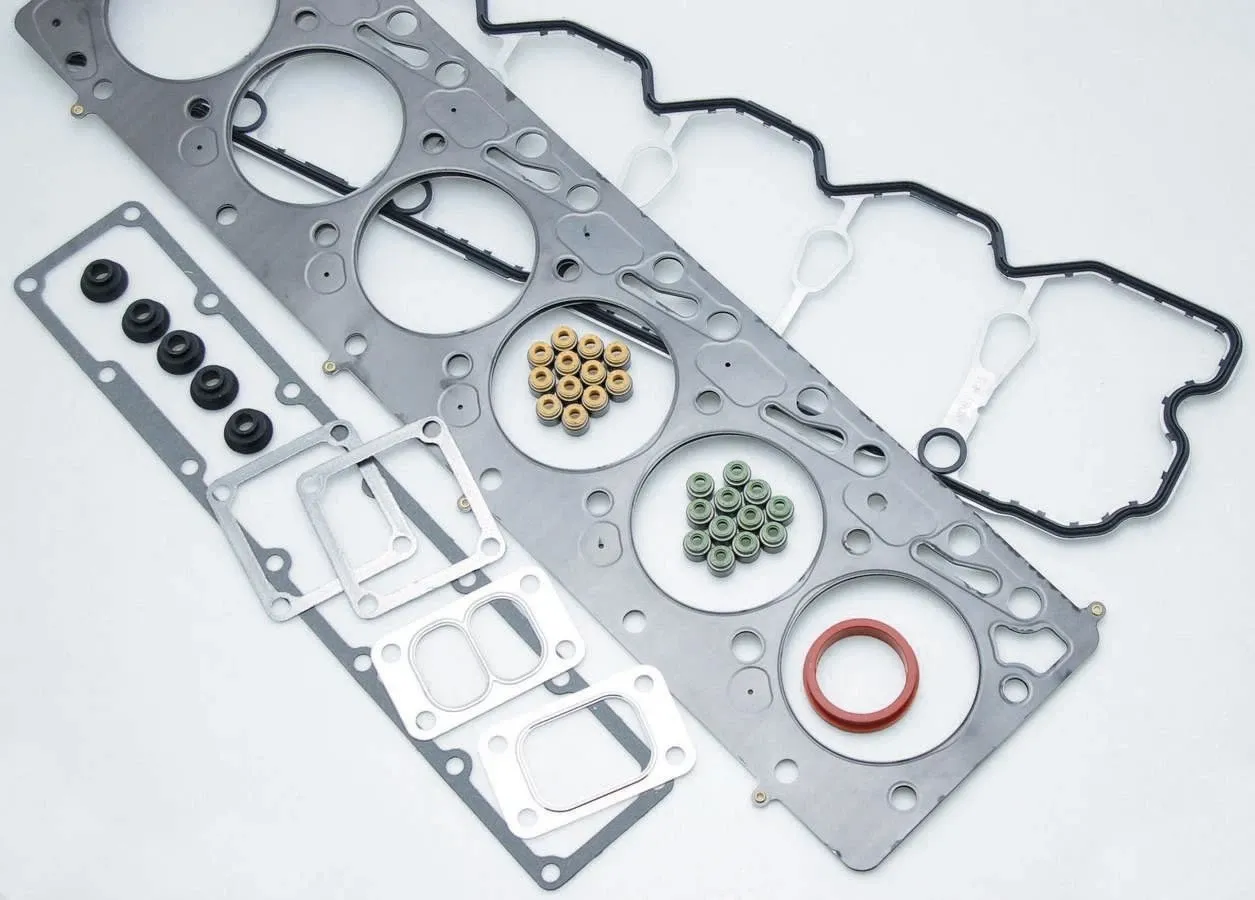
What Types of Parts Are Used in a Top-End Overhaul?
There is no universal definition of a Cummins top-end overhaul kit across every supplier and engine model. For sourcing and quotation purposes, top-end repair parts can generally be divided into three categories:
- Upper engine gasket kit
- Expanded top-end repair package
- Cylinder head rebuild parts or a model-specific rebuild kit
This classification is intended to simplify purchasing discussions. It does not mean that every Cummins engine or supplier follows the same package structure.
The final parts list should still be verified against the engine series, Engine Serial Number—ESN, Control Parts List—CPL, existing part numbers, and the confirmed repair scope.
1. Upper Engine Gasket Kit or Upper Engine Gasket Set
An upper engine gasket kit is primarily used to restore sealing after the cylinder head and related upper-engine components have been removed.
Depending on the engine configuration and kit part number, it may include:
- Head gasket
- Valve cover or rocker housing gaskets
- Intake and exhaust manifold gaskets
- Injector copper washers and O-rings
- Injector sleeve or injector installation seals, depending on engine design
- Valve stem seals, depending on the kit
- Other upper-engine O-rings and small seals
An upper gasket kit does not necessarily include every seal disturbed during cylinder head removal.
For some engine configurations, gaskets for the turbocharger, EGR system, air-handling components, or thermostat housing may be supplied separately. Buyers should therefore verify the kit part number and itemized contents instead of assuming that every related gasket is included.
An upper gasket kit may cover most of the required parts when inspection confirms that the cylinder head, block sealing surface, liner installation, and valvetrain remain serviceable, and the repair primarily involves replacing disturbed, damaged, or aged gaskets and seals.
A failed head gasket, however, is not always caused by the gasket alone. Cylinder head distortion, block sealing-surface damage, incorrect liner installation, overheating, or an improper tightening procedure may result in repeated leakage.
Replacing the gasket set should not be treated as a substitute for inspecting the cylinder head and related sealing surfaces.
2. Expanded Top-End Repair Package
Some supplier quotations add other commonly required parts to the upper engine gasket kit, such as:
- Cylinder head bolts
- A more complete set of injector installation seals
- Valve stem seals when not included in the base gasket kit
- Model-specific small valvetrain parts
- Additional gaskets, fasteners, and seals related to the planned disassembly
An expanded top-end package is usually a supplier-configured parts combination rather than a standardized Cummins package with a fixed contents list.
One supplier may use “Top-End Kit” to describe only an upper gasket set, while another may include head bolts, valve stem seals, or selected cylinder head parts under the same name.
Always compare the itemized parts list rather than relying on package names such as “Top-End Kit” or “Expanded Package.”
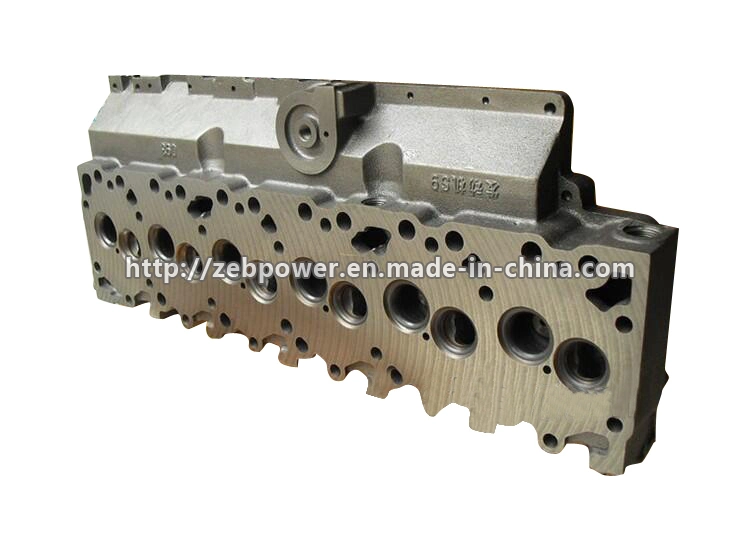
3. Cylinder Head Rebuild Parts or Model-Specific Cylinder Head Rebuild Kit
When inspection identifies wear in the valvetrain, injector sleeves, or other cylinder head components, additional rebuild parts may be required, including:
- Intake and exhaust valves
- Valve guides
- Valve seat inserts
- Valve springs and keepers
- Rocker arms, pushrods, or tappets, depending on the engine design and inspection findings
- Injector sleeves
Complete injectors should not automatically be included in a cylinder head rebuild package. If injector testing identifies incorrect flow, poor atomization, pressure problems, or other injection-performance faults, the injectors should be quoted separately as fuel-system repair parts.
Some Cummins engines have a Cylinder Head Rebuild Kit with a specific part number. For other engines, valves, guides, seat inserts, sleeves, and related parts may need to be selected individually based on inspection results.
An upper gasket kit restores sealing, an expanded package adds parts associated with the actual disassembly, and cylinder head rebuild parts are used when the existing head remains repairable. If the original cylinder head cannot be repaired economically, a new or remanufactured cylinder head assembly should be evaluated separately.
What Tests Help Define the Top-End Repair Scope?
A compression test can help identify abnormal cylinder sealing, but it is not required for every top-end repair. It also cannot, by itself, determine whether the problem comes from the valves and cylinder head or from the piston rings and liners.
The appropriate inspection process depends on the symptoms and the workshop’s diagnostic procedure.
| Inspection or test | Primary purpose |
|---|---|
| Compression or cylinder leak-down test | Identifies abnormal cylinder sealing and helps distinguish valve leakage from ring or liner leakage |
| Crankcase pressure or blow-by check | Helps identify excessive leakage past the pistons, rings, or liners |
| Cooling-system inspection | Checks for leakage involving the head gasket, cylinder head, or coolant passages |
| Cylinder head inspection | Confirms flatness, cracks, valve seat condition, valve guide wear, and other repair requirements |
A confirmed external leak from a valve cover, rocker housing, or manifold connection does not normally require every test listed above.
Additional investigation becomes more important when the engine also shows hard starting, low power, low compression, abnormal oil consumption, coolant loss, or signs of combustion leakage.
When Is a Top-End Overhaul More Likely to Be Appropriate?
A repair is more likely to remain within the top-end scope when inspection confirms conditions such as:
- Head gasket leakage with acceptable cylinder head and block sealing surfaces
- Poor sealing at the valves or valve seats
- Repairable cylinder head distortion or cracking
- Valve seat damage or injector sleeve leakage that can be corrected through machining, rebuilding, or cylinder head replacement
- Worn valve stem seals or valve guides
- Oil or air leakage from the valve cover, rocker housing, intake manifold, or exhaust manifold connections
- Acceptable condition of the pistons, liners, bearings, and crankshaft-related components
An in-frame or complete overhaul may need to be considered when inspection identifies:
- Confirmed piston ring or cylinder liner wear
- Excessive blow-by or abnormal crankcase pressure after crankcase ventilation and breather problems have been ruled out
- Oil consumption caused by the pistons, rings, or liners rather than the valve stem seals
- Main or connecting rod bearing clearances outside specification
- Crankshaft, cylinder block, or multiple engine systems requiring inspection and repair
- A recurring fault after previous top-end work, with the problem confirmed beyond the cylinder head or valvetrain
Injector faults such as poor atomization, incorrect fuel delivery, or injection-pressure problems belong to the fuel-system repair scope. They do not automatically mean that the engine requires a top-end overhaul.
These conditions should be treated as inspection guidance rather than a remote diagnosis. The final repair scope should be determined from testing and disassembly findings.
Top-End Overhaul vs. In-Frame Overhaul
| Comparison | Top-End Overhaul | In-Frame Overhaul |
|---|---|---|
| Main repair area | Cylinder head, valvetrain, and upper-engine sealing system | Pistons, piston rings, liners, bearings, and related seals |
| Common parts required | Upper gasket kit, valve stem seals, and cylinder head repair parts | Piston-liner assemblies, bearings, thrust washers, and related gaskets and seals |
| Main decision factors | Cylinder head inspection, valve sealing condition, and leak location | Liner and piston wear, blow-by, bearing condition, and crankshaft measurements |
| Engine removal | Usually does not require complete engine removal | Typically intended to be completed with the engine in the equipment, subject to equipment design and repair conditions |
| Main limitation | Does not correct confirmed piston, liner, or bearing wear | Does not cover crankshaft, block, or other repairs that require a more extensive teardown |
Top-end and in-frame overhauls are not simply different levels of the same repair. They address different engine areas and should be selected according to the confirmed failure location.
Why Can Engines in the Same Cummins Series Use Different Upper Gasket Kits?
Cummins top-end parts are used across a wide range of engine families, including:
- B Series: 4BT, 6BT, 6BTA and 6BTAA
- Mid-range engine families: QSB, QSC and QSL
- Heavy-duty engine families: NT855, NTA855, M11 and QSM11
- High-horsepower industrial engines: KTA19, KTA38, KTA50 and QSK series
These engines are used in construction machinery, mining equipment, generator sets, industrial power units, vehicles, and marine applications.
Even within the same engine family, the correct Upper Engine Gasket Kit may vary because of differences in:
- CPL
- Emissions configuration
- Cylinder head version
- Injector or injector sleeve design
- EGR or non-EGR configuration
- Industrial, generator-drive, automotive, or marine application
- Engine rating and build configuration
- Cylinder heads or related components installed during previous repairs
A broad description such as “KTA19 top overhaul kit” or “6BT upper gasket kit” may help begin a search, but it is not sufficient for final part selection.
For accurate matching, buyers should provide as much of the following information as possible:
- Engine model
- ESN
- CPL
- Engine nameplate photo
- Cylinder head part number
- Existing part numbers
- Photos of the removed parts
- Inspection or teardown findings
Parts with strict dimensional or configuration requirements—such as head gaskets, valves, valve guides, valve seat inserts, and injector sleeves—should not be ordered from the engine family name alone.
Injector Seals and Complete Injectors Are Not the Same Parts
Injector removal is often part of top-end work, so injector installation seals may appear in an upper gasket kit or an expanded repair package.
Common examples include:
- Injector copper washers
- Injector O-rings
- Injector sleeve seals
- Other seals used around the injector installation area
Complete injectors are generally not included in a basic upper engine gasket kit.
Whether the injectors require repair or replacement should be determined through injector testing and quoted separately. When comparing quotations, buyers should distinguish clearly between injector installation seals and complete fuel injectors.
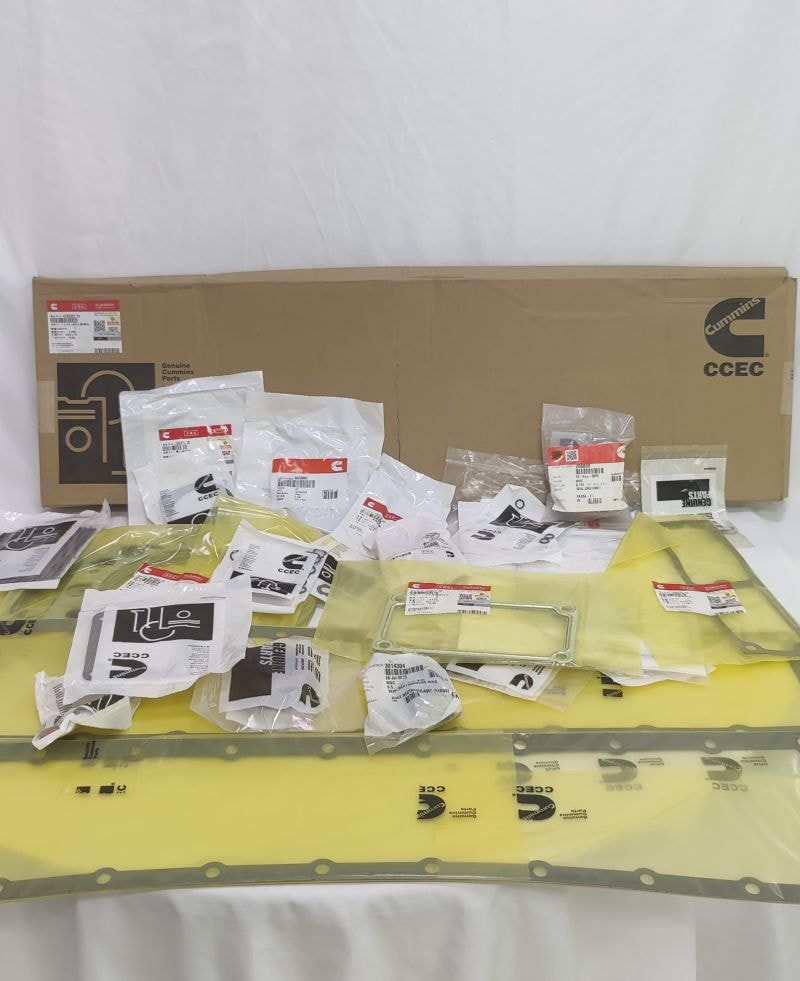
How to Evaluate Gaskets, Seals and Valvetrain Parts
Different part groups require different quality checks. Gaskets and seals depend heavily on material compatibility, construction, and dimensional accuracy, while valvetrain components require closer attention to metallurgy, heat treatment, and operating clearances.
Gaskets and Seals
Check the following before purchasing:
- Head gasket material and construction
- Sealing coating
- Correct thickness, hole pattern, and part-number match
- O-ring and oil-seal material
- Resistance to heat, oil, and coolant
- Completeness of the kit contents
- Availability of injector seals, valve stem seals, and small O-rings
- Brand and batch traceability
Valvetrain Components
Important points include:
- Valve and guide material
- Heat-treatment process
- Dimensional tolerances
- Valve stem-to-guide clearance
- Valve seat insert specification
- Compatibility with the cylinder head, ESN, and CPL
- Supplier batch consistency
- Brand identification and quality traceability
For critical equipment, continuously loaded engines, applications with high downtime costs, or projects with strict warranty requirements, buyers should prioritize genuine parts or proven branded alternatives with clear sourcing and traceability.
High-quality aftermarket parts may also be suitable for general repair projects, provided that the supplier can confirm material specifications, dimensional control, quality procedures, and batch traceability.
The decision should be based on part-failure risk, supply-chain reliability, and project requirements—not engine displacement or price alone.
How to Compare Cummins Top-End Parts Quotations
Before comparing total prices, verify that the suppliers are quoting the same repair scope.
| Quotation item | What to verify |
|---|---|
| Package type | Upper gasket kit, expanded top-end package, or cylinder head rebuild parts |
| Head gasket | Correct part number, thickness, and version |
| Upper-engine gaskets | Valve cover, rocker housing, intake manifold, and exhaust manifold coverage |
| Injector seals | Copper washers, O-rings, and injector sleeve seals |
| Valve stem seals | Whether included and whether the quantity matches the engine configuration |
| Cylinder head bolts | Whether included and whether the service procedure requires replacement or measurement |
| Valvetrain parts | Whether valves, guides, seat inserts, and springs are quoted separately |
| Complete injectors | Whether they are tested, repaired, replaced, and quoted separately |
| Matching basis | ESN, CPL, cylinder head part number, and information from existing parts |
| Parts source | Genuine, branded aftermarket, or a mixed sourcing option |
| Exclusions | Items that must be purchased separately |
An upper engine gasket kit and a cylinder head rebuild package containing valves and guides are not comparable products. Confirm the itemized contents before comparing the final quotation value.
Should Cylinder Head Bolts Be Replaced?
Cylinder head bolts are not included in every upper gasket kit or top-end repair package.
Cummins engines may use different tightening procedures and different criteria for determining whether head bolts can be reused. Some engines use a torque-plus-angle procedure, but this does not automatically mean that every bolt used with that procedure is a single-use torque-to-yield fastener.
Reuse requirements, length or stretch measurements, and discard limits should be verified in the service information for the specific ESN.
Before ordering, confirm:
- Whether the service procedure requires new bolts
- Whether a maximum length or stretch limit is specified
- Whether the threads, bolt head, or shank show damage
- Whether the previous usage and tightening history are known
- Whether new bolts are included in the quotation
A bolt should not be considered reusable solely because it appears undamaged.
Why Cylinder Head Inspection Matters—and Who Performs It
A top-end overhaul involves more than replacing gaskets. A new gasket set may not correct the problem if the cylinder head has:
- Surface distortion
- Cracks
- Poor valve seat sealing
- Worn valve guides
- Injector sleeve leakage
- Other defects requiring machining
Cylinder head inspection and machining are normally performed by a local engine workshop or specialist machine shop. They are not usually part of a parts supplier’s standard service.
The supplier’s role is to use the engine identification and inspection results to help verify the required gaskets, seals, valvetrain parts, and other repair components—not to replace the workshop’s diagnostic process based only on a description of symptoms.
Before placing the final order, obtain as much of the following information as possible:
- Cylinder head flatness
- Crack or pressure-test results
- Valve and valve seat condition
- Valve guide wear
- Injector sleeve condition
- Whether the head will be machined, rebuilt, or replaced
Information to Provide When Requesting a Quotation
Buyers do not need to provide every detail during the first inquiry. The information can be submitted in two stages.
Initial Inquiry
Provide:
- Engine model
- ESN and CPL
- Engine nameplate photo
- Required kit or parts type
- Equipment application
- Quantity
- Destination country
The requested scope may be described as:
- Upper Engine Gasket Kit
- Expanded Top-End Repair Package
- Cylinder Head Rebuild Parts
- Not yet confirmed—parts matching assistance required
After Disassembly or Inspection
Provide the following when available:
- Cylinder head part number
- Cylinder head inspection results
- Head gasket part number or specification
- Valve, guide, and seat condition
- Injector seal requirements
- Cylinder head bolt requirements
- Genuine or aftermarket preference
- Required delivery schedule
- Photos of the removed parts
More complete information makes it easier to verify the correct part numbers, package scope, and quotation.
How ZEB Power Supplies Cummins Top-End Overhaul Parts
The final top-end repair scope should be determined by the customer’s local workshop based on inspection and teardown findings.
Using the engine model, ESN, CPL, cylinder head part number, inspection findings, and old-part photos, ZEB Power can help verify and quote:
- Upper Engine Gasket Kits
- Top-end gaskets and seals
- Cylinder head bolts
- Valvetrain repair parts
- Cylinder Head Rebuild Parts
- Other cylinder head components that must be ordered separately
Quotations can identify the package contents, parts source, and excluded items so buyers are not comparing prices based only on the broad term “Top-End Kit.”
Depending on the confirmed repair scope, budget, equipment criticality, and reliability requirements, ZEB Power can provide genuine and aftermarket quotation options. Final selection should be made together with the recommendations of the customer’s local repair provider.
Need a Cummins upper engine gasket kit or top-end overhaul parts? Send ZEB Power the engine model, ESN/CPL, nameplate photo, and available inspection details for parts-list verification and quotation.
Frequently Asked Questions
1. What is the difference between a top-end overhaul and an in-frame overhaul?
A top-end overhaul focuses on the cylinder head, valvetrain, and upper-engine sealing system. An in-frame overhaul extends into the pistons, piston rings, cylinder liners, main bearings, connecting rod bearings, and related internal components.
The correct repair scope should be based on inspection and teardown findings.
2. Are an Upper Engine Gasket Kit and a Top-End Overhaul Kit the same thing?
Not necessarily.
An Upper Engine Gasket Kit mainly contains gaskets and seals used in the upper section of the engine. “Top-End Overhaul Kit” is a broader aftermarket term. Some suppliers use it for an upper gasket set, while others add head bolts, valve stem seals, or selected cylinder head repair parts.
Always compare the itemized contents rather than relying on the package name.
3. Does a Top-End Overhaul Kit always include valves and valve guides?
No.
A basic upper engine gasket kit normally contains gaskets and seals. Valves, valve guides, valve seat inserts, rocker arms, and other hardware are generally treated as cylinder head rebuild parts and should be selected according to inspection findings.
4. Can a compression test determine whether the engine needs a top-end or in-frame overhaul?
Not by itself.
A compression test may identify abnormal cylinder sealing, but further checks are required to determine whether the fault comes from the valves, head gasket, and cylinder head or from the pistons, rings, and liners.
5. Are complete injectors included in a top-end overhaul kit?
Usually not.
Injector copper washers, O-rings, and sleeve seals may be included because the injectors are removed during the repair. Complete injectors should be tested and quoted separately when repair or replacement is required.
6. Why must valves and valve guides be matched separately?
Different CPLs, cylinder head versions, and engine configurations may use different valve, guide, and seat specifications. These parts have strict dimensional and clearance requirements and should not be selected from the engine family name alone.
7. Must cylinder head bolts always be replaced?
Not always.
The decision depends on the applicable service procedure, tightening method, reuse criteria, and bolt condition. Buyers should also verify whether head bolts are included in the quoted package.
8. Does the parts supplier inspect the cylinder head?
Normally, no.
Cylinder head inspection and machining are generally completed by a local repair workshop or specialist machine shop. The parts supplier uses the confirmed engine information and inspection results to help identify the required components.
9. Should I choose genuine or aftermarket valvetrain parts?
The decision should reflect equipment criticality, downtime cost, warranty requirements, and supplier quality.
Genuine or proven branded parts are generally preferred for critical and continuously loaded equipment. High-quality aftermarket parts may be suitable for other repairs when material specifications, dimensional control, quality procedures, and batch traceability are available.
Confirm the Repair Scope Before Comparing Kit Prices
There is no single Cummins top-end overhaul kit that fits every engine and repair condition.
Before ordering, determine whether the project requires an upper engine gasket kit, an expanded supplier-configured repair package, or cylinder head rebuild parts selected from inspection findings. The final parts list should then be verified using the ESN, CPL, cylinder head part number, and information from the removed components.
Compare itemized contents, parts source, and exclusions—not only the total price shown for a “Top-End Kit.”
Send ZEB Power the engine information, nameplate photo, and available inspection results to verify the Cummins top-end repair scope and request a quotation.