

Cummins Short Block vs Long Block vs Complete Engine Guide

6554
Table of Contents
Generating table of contents
Two quotations may both be labeled “Long Block” and still differ significantly in price.
The lower-priced option may arrive without the turbocharger, fuel pump, oil pan, flywheel housing or wiring harness, leaving the buyer to remove and reinstall each of these parts from the old engine. The more expensive option may already include the cylinder head assembly, valve train, lubricating oil pump and selected cooling components, which greatly reduces the amount of work required on site.
Both suppliers may call their product a Long Block, yet the assembly level and included parts can be completely different. This is not simply a matter of one supplier exaggerating or another being incomplete. Cummins Long Block configurations also vary by engine platform. A vehicle-engine Long Block may exclude the turbocharger and fuel system, while some industrial ReCon Long Blocks may already include injectors, an oil cooler and other major components.
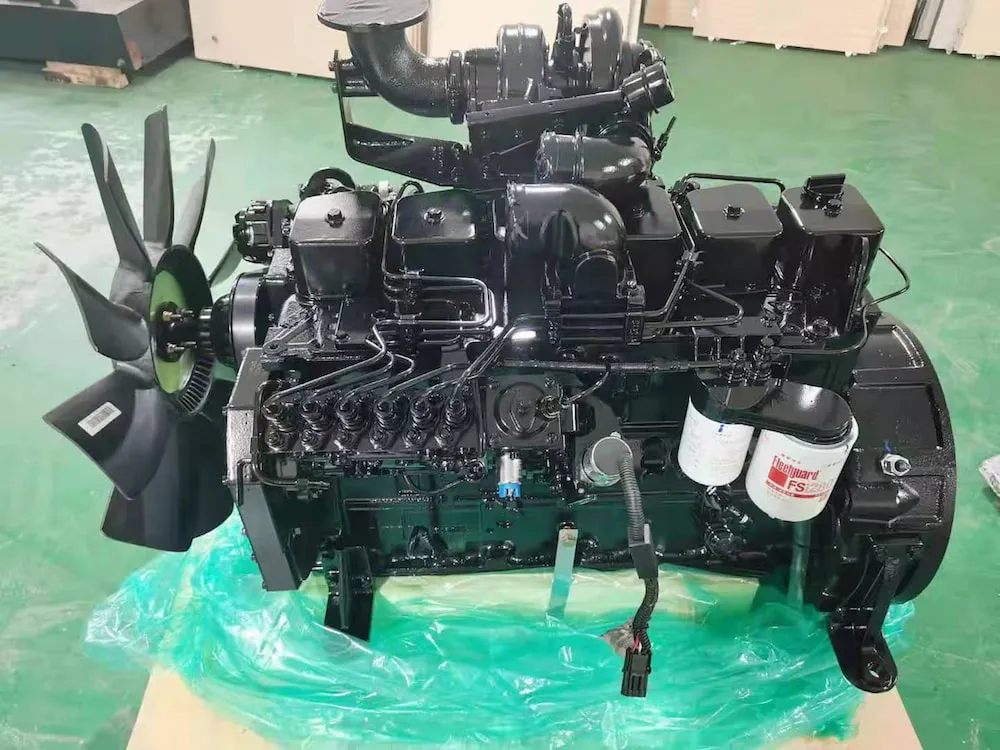
This means that the terms Short Block and Long Block provide only a general indication of assembly level. They should not be treated as fixed purchasing standards.
This guide is written for buyers sourcing Cummins Short Blocks, Long Blocks and Complete Engines. It explains what these assembly levels may contain, which systems will probably need to be transferred from the old engine, and how to evaluate Core Return requirements and product condition.
Engine damage assessment, reuse decisions and final assembly should remain with a qualified repair facility.
The Boundary Between a Short Block and a Long Block Is Not Fixed
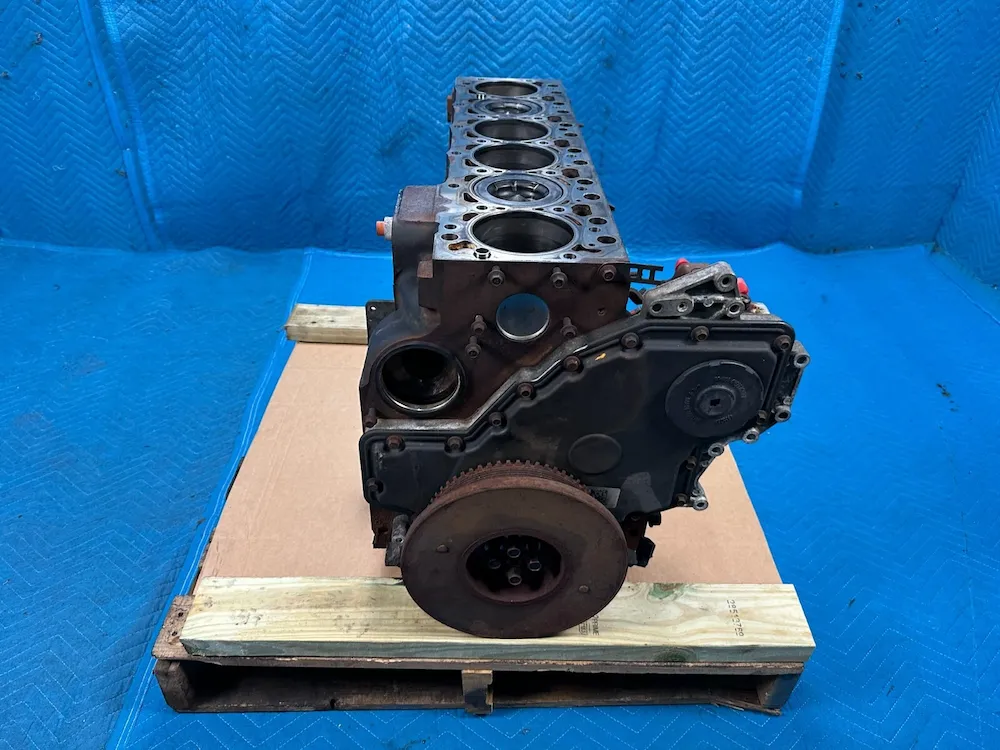
A Short Block normally consists mainly of the cylinder block and lower rotating assembly. The market generally does not include the Cylinder Head in this category, but the final scope must still be verified through the specific Part Number and BOM.
A Short Block is often suitable when the cylinder block or crankshaft has suffered major damage, but the existing cylinder head has been inspected and approved for reuse. The fuel system, turbocharger and other external components must also remain suitable for continued service.
In this situation, choosing a Short Block can avoid unnecessary replacement of usable parts. However, the conclusion that the old cylinder head can be reused must come from an actual inspection by a qualified repair facility.
A Long Block normally adds an assembled Cylinder Head, creating a more complete internal engine assembly that includes the lower rotating assembly, combustion chambers and major upper-engine components.
The exact boundary, however, is not standardized. Some Long Blocks add only the cylinder head and valve cover, while others may also include the lubricating oil pump, oil pan, water pump or even injectors.
The word Long does not define the actual supply scope. Only the specific Part Number, applicable CPL and itemized component list can do that.
The most useful question is therefore not:
Is this a Short Block or a Long Block?
Instead, ask the supplier to provide the assembly Part Number, applicable CPL and itemized installed-parts list.
Many External Components May Still Need to Be Transferred
Choosing a Long Block usually assumes that some external parts from the old engine are still worth reusing.
These may include the turbocharger, fuel system, intake and exhaust manifolds, ECM, wiring harness, starter motor, charging alternator, flywheel housing and oil pan. Even when the quotation is labeled Long Block, these systems may not be included.
A practical method is to assign every major system to one of several clear statuses:
- Installed on the assembly and included in the quotation;
- Supplied loose but not installed;
- To be transferred from the old engine;
- To be purchased separately;
- Not applicable to the current application.
If the supplier assigns each major system to one of these statuses before the order is accepted, the buyer can estimate how much work remains after delivery. This avoids discovering later that a component assumed to be included was never part of the quotation.
Any old component planned for reuse must still be inspected. The fact that it can be removed from the old engine does not prove that it is suitable for continued service.
A Complete Engine May Still Be Incomplete at the Equipment Interface
A Complete Engine normally has a broader supply scope than a Long Block, but this does not mean that all mechanical, electrical, cooling and control interfaces required by the equipment are included.
Even some official Complete Engine programs do not include the ECM or complete engine wiring harness. Equipment-specific items such as the starter motor, charging alternator, cooling fan, flywheel housing and engine mounting brackets must also be checked against the actual BOM.
Vehicles, construction equipment, mining machinery and generator sets have different interface requirements.
Buyers should not assume that the word Complete means the engine can connect directly to any machine without additional matching.
Installation Gaskets and Connection Kits May Be Separate
A completed Long Block is not automatically ready to reconnect to every external system removed from the old engine.
The intake, exhaust, turbocharger, fuel, cooling and lubricating-oil connections usually require new gaskets and seals during installation.
Some Cummins platforms offer an Installation Kit for a specific Long Block. These kits may cover many of the sealing parts required at the affected interfaces. However, the buyer must confirm whether such a kit exists and which Long Block Part Number it supports.
The purchase of the Long Block itself does not automatically mean that all installation gaskets and seals are included.
Core Return: Assembly-Level Cores Carry Higher Cost and Acceptance Risk
ReCon or Exchange Short Blocks and Long Blocks may involve an assembly-level Core Charge.
The required return may be a specified Short Block core, a Long Block core or a complete engine core. The exact requirement depends on the supplier’s Core Acceptance standard and should not be assumed.
A returned core may not receive full Core Credit if it is incomplete, missing original components, assembled with mismatched parts, or damaged further through improper disassembly, handling, storage or packaging.
Acceptance standards may vary by supply channel and assembly Part Number. Buyers should request the Core Acceptance conditions that apply to the specific quotation before placing the order.
Assembly-level cores also involve longer packaging, transport and inspection cycles than smaller parts.
For international purchases, if the return freight makes the core uneconomical to ship back, the Core Charge should be treated as part of the real purchasing cost rather than as a temporary amount that will definitely be refunded.
New, ReCon, Third-Party Remanufactured and Used Take-Out Are Different Conditions
Assembly level and product condition are two separate issues.
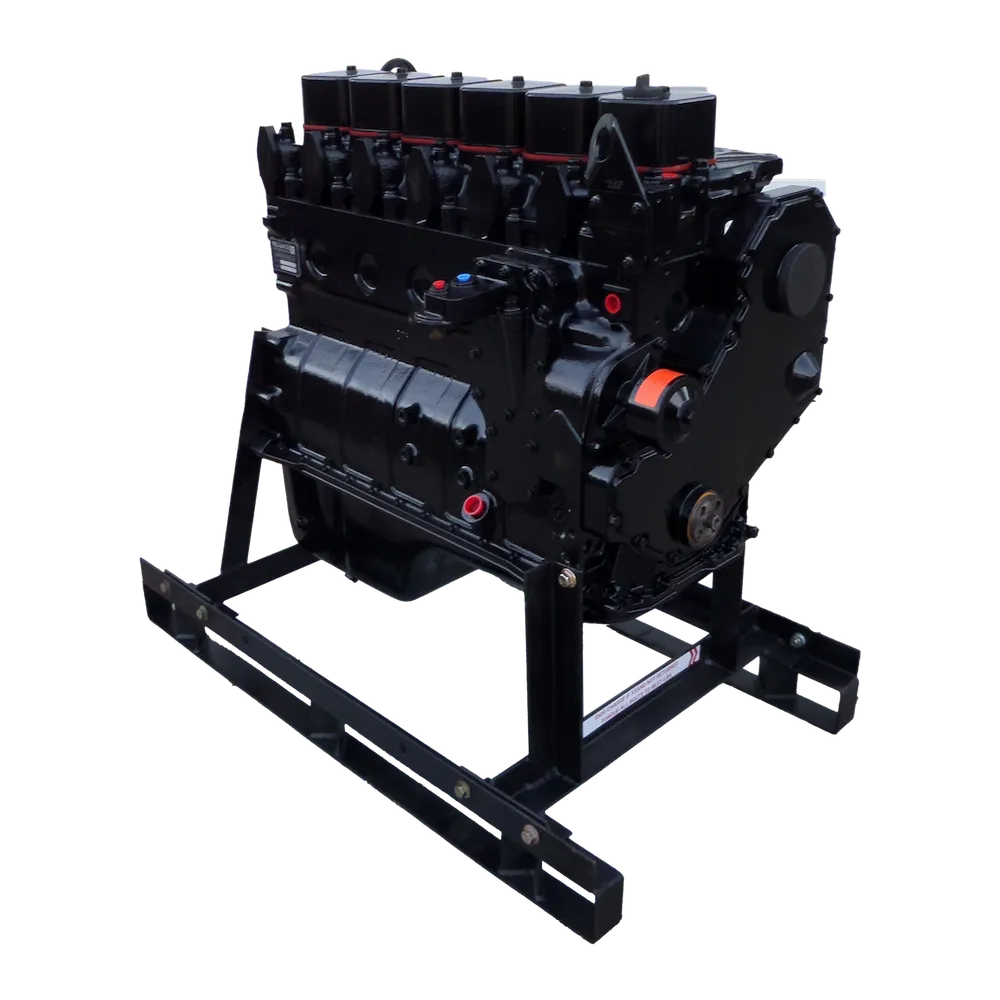
The same Long Block may be offered as a new assembly, a Cummins ReCon assembly, a third-party remanufactured assembly or a used take-out unit.
For a New Assembly, confirm whether it is Genuine Cummins New, an OEM-produced new assembly, or a third-party product assembled from new and used components. The Part Number, traceability records and warranty provider should be clearly identified.
Cummins ReCon products generally follow standardized disassembly, inspection, restoration and testing processes. However, ReCon availability is not guaranteed for every platform or region and must be confirmed for the current Part Number.
The two conditions requiring the most active buyer verification are third-party remanufactured and used take-out assemblies.
For a third-party remanufactured assembly, ask which components are new and which are reused or remanufactured, what inspections were completed on the cylinder block and crankshaft, whether assembly-test records are available, and who is responsible for warranty claims.
A used take-out assembly is usually less expensive, but the buyer should confirm the original equipment application, approximate operating hours, available running records, and whether the engine has been dismantled or modified.
A used assembly does not automatically eliminate the wear, configuration uncertainty or unknown service history that affected the original engine.
What a Test Record Proves Depends on the Test Level
Some remanufactured assemblies are supplied with test records, but these records may refer to very different procedures.
The record may cover dimensional and assembly inspection, rotation checks, lubricating-oil pressure or leakage testing, a cold test, or a complete-engine dynamometer test.
The buyer should first confirm which test was performed and whether the test object was the assembly itself or a complete engine fitted with external systems.
These records do not provide the same level of evidence.
Even a complete-engine dynamometer report only confirms performance under the stated test conditions. After installation in the actual equipment, the engine must still undergo the commissioning, inspection and initial operating procedures required by the applicable Service Information and equipment manufacturer.
How to Choose: Do Not Compare Assembly Price Alone
The lowest-priced Short Block is not necessarily the lowest-cost project.
A Short Block may require more old-part inspection, machining and on-site assembly. A higher-priced Complete Engine may reduce much of this work and may therefore have a lower total project cost in some situations.
The decision should compare:
- Assembly price;
- Inspection and repair cost for transferred parts;
- Additional components that must be purchased;
- On-site assembly workload;
- Machine-shop cost;
- Equipment downtime.
A Short Block may be suitable when many existing components remain usable, strong local rebuilding capability is available and downtime is less critical.
A Long Block may be more appropriate when the lower assembly and cylinder head both require replacement, but many external systems can still be reused.
A Complete Engine should be evaluated when several systems are damaged or when the project needs to minimize the number of components transferred on site.
Information to Provide Before Ordering
Engine identification — Engine model, ESN and CPL.
Equipment and current configuration — Equipment model, current engine photographs, and whether the engine has previously been transplanted or modified.
Required supply scope — Short Block, Long Block or Complete Engine, together with the external systems planned for reuse.
Commercial requirements — New Genuine, ReCon, third-party remanufactured or used take-out condition; Core Return requirements; quantity, destination and expected delivery schedule.
How ZEB Power Supplies Short Blocks and Long Blocks
ZEB Power uses the ESN, CPL, equipment configuration and current engine condition to confirm the applicable assembly Part Number and supply status.
The quotation identifies which parts are installed on the assembly, supplied loose, planned for transfer from the old engine, or required as separate purchases.
When Core Exchange applies, the Core Charge, acceptance standard, return deadline and transport responsibility are stated before the order is placed.
Engine damage assessment, reuse decisions and final assembly remain the responsibility of a qualified repair facility.
Send the engine ESN, CPL, equipment model and a list of the old-engine components you plan to reuse. We can help compare the actual supply scope of the Short Block, Long Block and Complete Engine options.
Frequently Asked Questions
Does a Long Block Always Include the Cylinder Head?
Long Blocks are generally distinguished by the inclusion of a Cylinder Head, but the exact upper-engine parts, lubricating oil pump, oil pan, water pump and injectors still depend on the Part Number, CPL and written BOM.
Can the Existing Turbocharger and Fuel Pump Be Installed Directly on the Long Block?
Their Part Numbers, interfaces and inspection results must be checked against the new Long Block configuration.
The fact that a component can be removed from the old engine only proves that it exists. It does not prove that its condition or configuration is suitable for reuse.
Can a Complete Engine Be Installed and Operated Immediately?
First confirm the ECM, complete wiring harness, flywheel housing, engine mounts, cooling-system arrangement and equipment interfaces.
A Complete Engine has a broader supply scope, but these equipment-side components may still need to be reused or matched separately.
What Costs Should Be Considered Beyond the Long Block Price?
The project may also require installation gaskets and seals, inspection and repair of transferred parts, possible machining costs, and—when Core Return applies—the Core Charge and return freight.
Why Are Current Engine Photographs Needed After the ESN Has Been Provided?
The ESN represents the original factory configuration. The engine may later have been transplanted, modified or fitted with replacement parts.
Current photographs help confirm the configuration actually installed in the equipment.