

Cummins Engine Oil Pump: Assembly or Repair Kit? What to Check Before Ordering

2353
Table of Contents
Generating table of contents
A Cummins engine oil pump—also referred to as a lubricating oil pump—is a core component of the engine lubrication system. However, one of the most common purchasing problems is that different suppliers may use similar product names for very different quotation scopes.
One supplier may quote only an Oil Pump Body or Pump Housing. Another may quote an assembled Oil Pump Assembly. A third quotation may actually cover a Repair Kit, a separate Drive Gear, a Drive Shaft, or another related component. The names may sound similar, but the products and prices are not directly comparable unless the exact scope has been confirmed.
Oil pumps also contain precision-matched components. The clearances between internal pumping elements, the condition of the pump body and working chamber, and the pressure-control arrangement all form part of the original engine design. Two pumps may look similar and appear to use the same drive arrangement while using different gear dimensions, internal chamber geometry, or pressure-control configurations.
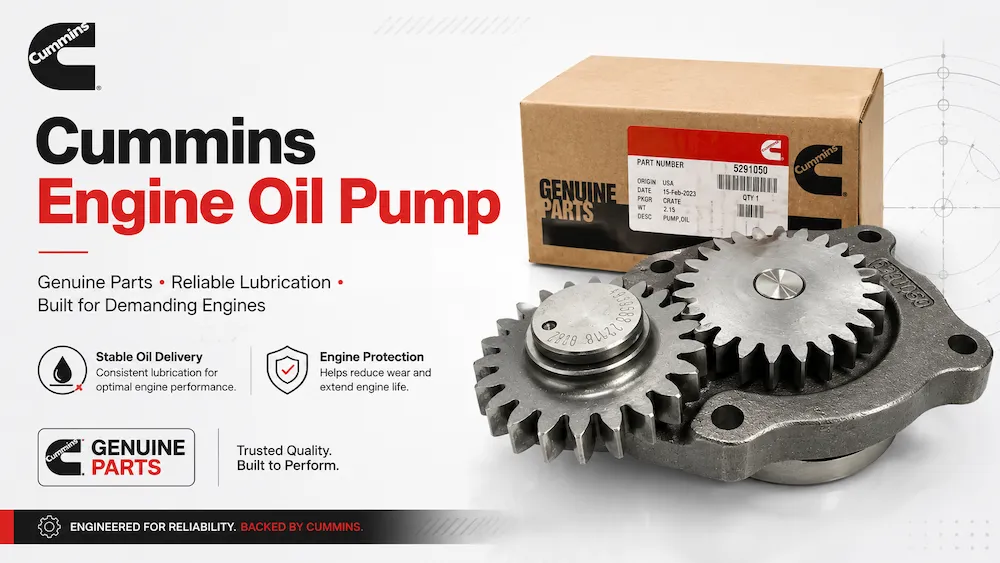
An incorrect replacement may cause abnormal oil pressure, poor gear engagement, installation problems, or lubrication-system performance outside the intended operating range.
This article explains:
- What Engine Oil Pump, Oil Pump Assembly, and Repair Kit normally mean
- What the oil pump does within the lubrication system
- Why drive components and internal pumping elements cannot be matched by appearance alone
- How pressure-control components are specified and why they should not be modified casually
- The difference between an oil pump and an oil-pressure sensor
- Why the engine model alone is not sufficient for final parts matching
- What information to provide before ordering
- How to compare quotations from different suppliers
Abnormal oil pressure, unusual engine noise, or metal debris does not prove by itself that the oil pump has failed. The actual cause should be confirmed by a qualified local workshop. This article focuses on how to identify and purchase the correct part after oil-pump replacement has been confirmed.
Who This Article Is For
- Repair shops and fleet maintenance buyers whose technicians have confirmed that an oil pump requires replacement and who need to verify fitment and quotation scope before ordering
- Parts dealers and distributors building or expanding Cummins engine-parts inventory and standardizing supplier quotation terms
- Engine remanufacturers sourcing oil-pump assemblies, pump bodies, gears, seals, and other lubrication-system components confirmed for replacement during an engine rebuild
- Purchasing teams in construction, mining, power generation, and industrial applications where equipment downtime and lead time matter
Engine Oil Pump, Oil Pump Assembly and Repair Kit: What Do They Mean?
The first step is to confirm exactly what the supplier is quoting.
| Product term | Common meaning | What to confirm before ordering |
|---|---|---|
| Engine Oil Pump / Lubricating Oil Pump | General term for the engine’s main lubricating oil pump | Whether the quotation covers a complete pump, an assembly, or only the pump body, and the formal part number |
| Oil Pump Assembly | An assembled oil-pump component | Whether internal pumping elements, the external drive gear, drive shaft, related pressure-control components, and installation parts are included |
| Oil Pump Body / Pump Housing | The pump body or housing containing the internal pumping chamber | Whether it is an empty housing or includes internal pumping elements |
| Oil Pump Repair Kit | A repair-parts package for a specific oil-pump version | Exact itemized contents, which vary by part number |
| Oil Pump Drive Gear | External gear that transfers power from the engine gear train to the oil pump | Tooth count, tooth form, width, bore, and compatibility with the original drive system |
| Oil Pump Drive Shaft | Shaft connecting the drive mechanism to the pump | Length, spline or connection design, and applicable pump version |
| Idler Gear | Intermediate gear used in an applicable engine gear train | Whether the engine uses this arrangement and whether the gear is part of the oil-pump quotation |
| Internal Pump Gear / Gerotor | Internal gear or rotor element that moves oil through the pump | Dimensions, working clearances, width, and rotation direction |
| Pressure Regulating Valve / Pressure Relief Valve | Component that regulates or limits lubrication-system pressure | Whether it belongs to the pump assembly and how the applicable engine documentation identifies it |
| Pickup Tube / Strainer | Suction pipe and screen supplying oil from the oil pan to the pump | Whether it is included and whether length, orientation, and interface match the equipment configuration |
In this article, Oil Pump Housing primarily refers to the oil pump’s own body and internal working chamber. If an inquiry involves the engine front gear housing, filter head, or a complete lubrication module, the formal component name and part number should be used instead. These are different products with very different quotation scopes and prices.
The same engine family may use several oil pumps, assemblies, or repair-kit configurations. Final selection should be based on the engine ESN and formal part number rather than a broad claim such as “universal for this engine series.”
A useful question to ask is:
Is this quotation for a separate Oil Pump Body or Pump Housing, a complete Oil Pump Assembly, or an Oil Pump Repair Kit? Does it include the Drive Gear, Drive Shaft, related pressure-control components, and installation seals?
What Does the Oil Pump Do in the Lubrication System?
The oil pump draws oil from the oil pan and continuously circulates it through the engine.
Oil normally passes through a pickup strainer before entering the pump. Depending on the design of the specific lubrication system, it may then pass through an oil cooler, filter, main oil gallery, or related bypass passages before reaching the crankshaft bearings, connecting-rod bearings, camshaft, valvetrain, turbocharger, and other lubrication points.
The exact order and arrangement of filters, coolers, and bypass circuits vary by engine.
The oil pump’s direct function is to supply oil flow. Actual lubrication-system pressure is determined by several factors working together, including:
- Oil-pump delivery capacity
- Engine speed
- Oil viscosity and temperature
- Oil-gallery resistance
- Bearing and other lubrication clearances
- Pressure-regulating or pressure-limiting components
This is why installing a new oil pump does not automatically restore oil pressure if excessive bearing clearance, a suction leak, incorrect oil viscosity, or another lubrication-system problem remains.
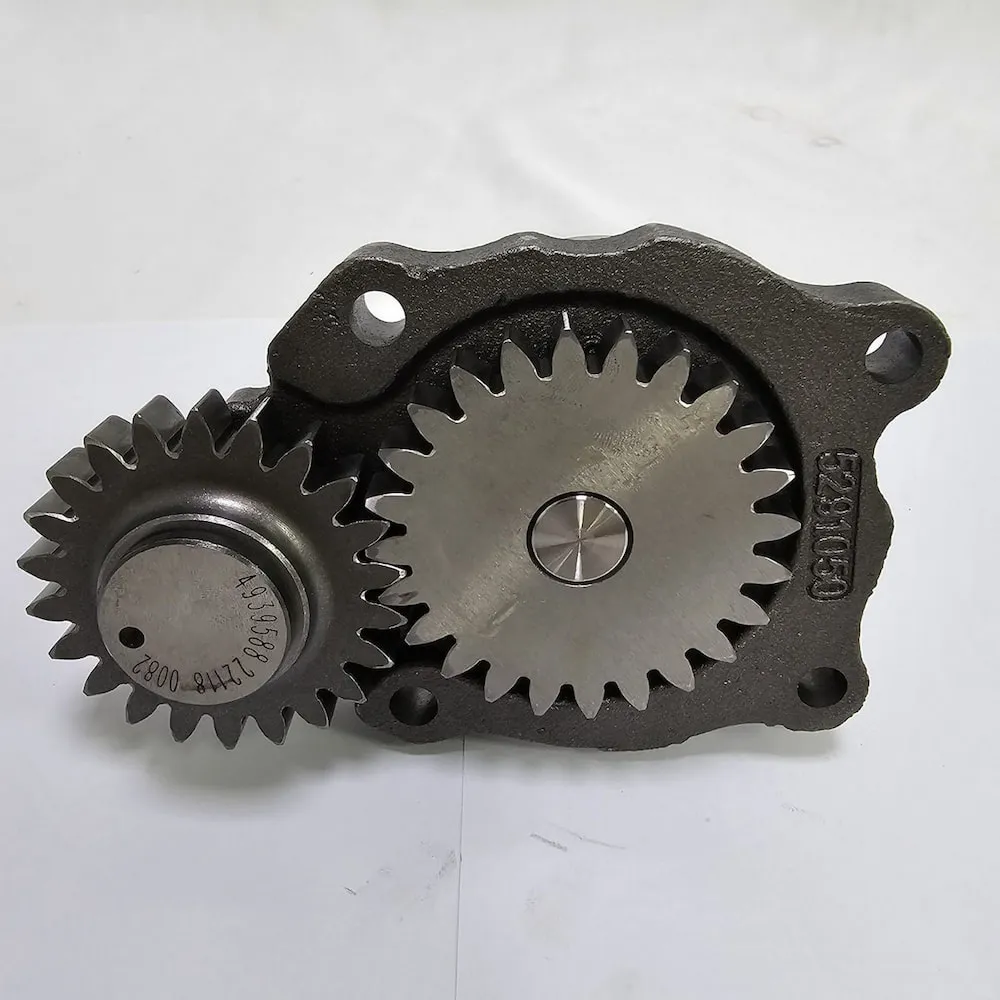
The oil pump may be driven by the engine gear train, a drive shaft, or another mechanical arrangement. The specific structure depends on the engine platform and configuration and cannot be confirmed from external appearance or the engine-family name alone.
Main Lubricating Oil Pump, Pre-Lube Pump and Oil Evacuation Pump Are Different Components
The term “oil pump” can refer to several completely different products.
Main Lubricating Oil Pump
The main lubricating oil pump is mechanically driven by the engine and circulates oil continuously while the engine is running. This is the primary subject of this article.
Pre-Lube Pump
Some large engines or applications with demanding start-up lubrication requirements use a separate pre-lubrication system. A Pre-Lube Pump circulates oil before the engine starts to reduce dry-contact risk after cold starts or extended shutdown periods.
It is an auxiliary system and should not be confused with the main engine-driven oil pump.
Oil Evacuation Pump
An Oil Evacuation Pump is used during maintenance to remove used oil from the oil pan. It supports oil-change servicing and does not provide lubrication while the engine is operating.
If an inquiry only states “Cummins oil pump,” clarify whether the requirement is for:
- A Main Lubricating Oil Pump
- A Pre-Lube Pump
- An Oil Evacuation Pump
- Another auxiliary oil-handling component
This prevents the supplier from quoting the wrong product category.
Drive Structure and Internal Pumping Elements: Why Appearance Is Not Enough
Oil-pump matching involves two different groups of components.
External Drive Components
Confirm:
- Drive-gear tooth count and tooth form
- Gear width
- Bore, key, or spline design
- Gear offset and installation position
- Relationship with the engine gear train
- Drive-shaft length and connection design
Internal Pumping Elements
Confirm:
- Gear-type or gerotor design
- Inner and outer rotor dimensions
- Working width
- Axial and radial clearances
- Fit within the pump chamber
- Rotation direction
These groups do not use the same matching parameters. For example, the tooth count and tooth form of an external drive gear do not describe the dimensions or working clearances of an internal gerotor element.
The oil pump may be driven directly by the engine gear train or through a drive shaft or intermediate gear. Drive systems from different engine platforms should not be assumed interchangeable.
The Drive Gear and Drive Shaft are also separate confirmation items. Do not assume that both are supplied with the pump.
Before ordering, confirm:
- Whether the external drive gear is included with the pump
- Whether the old drive gear must be reused
- Whether the drive shaft is supplied separately
- Whether the drive shaft matches the original length, spline, and connection design
Determining whether gear clearance, shaft fit, or pump-chamber wear remains within service limits requires proper measuring equipment and the applicable engine service specifications. These conditions should be evaluated by a qualified workshop rather than judged only from appearance.
Pickup Tube and Oil-Pan Configuration
The pickup tube and oil pan should also be checked separately.
The same engine family may be installed with different oil-pan depths, sump positions, or equipment mounting angles. As a result, pickup-tube length, orientation, and interface may vary.
A correct oil pump does not automatically guarantee that the original pickup tube will fit every installation. This is particularly important when:
- An engine has been converted from vehicle use to stationary industrial service
- The oil pan has been replaced or modified
- The equipment uses a special installation angle
- A different front or rear sump arrangement is installed
Recommended sourcing photos include:
- Front and rear views of the pump
- Mounting face
- External drive interface
- Internal working chamber, where safely accessible after removal
- Pickup-tube interface
- Formal part-number marking
Pressure-Control Arrangement: Who Specifies It and Can It Be Modified?
Engine lubrication systems normally include a pressure-regulating or pressure-limiting arrangement. Depending on the engine design, this component may be located:
- Inside the oil pump
- In the pump body
- In the oil-filter head
- In another lubrication module
- In a separate oil-gallery location
It is therefore incorrect to assume that every Oil Pump Assembly includes a Pressure Regulating Valve or Pressure Relief Valve.
The opening pressure, spring rate, valve geometry, and related calibration are specified as part of the engine lubrication-system design. They interact with oil-gallery dimensions, bearing clearances, filter specifications, oil viscosity, and other system characteristics.
Changing a spring or valve specification based on the assumption that “higher oil pressure is safer” is not recommended. An incorrect pressure-control setting may move the lubrication system outside its intended operating range.
When sourcing pressure-control parts, confirm:
- Whether the component is supplied separately
- Whether it is included with the Oil Pump Assembly
- Whether the spring, plunger, valve, and seat match the original design
- Whether a formal part number or approved supersession is available
- Whether the relevant service documentation permits separate replacement
Oil Pump and Oil-Pressure Sensor Are Not the Same Part
These components have completely different functions.
| Component | Main function |
|---|---|
| Oil Pump | Circulates lubricating oil and provides the required oil flow |
| Oil Pressure Sensor / Sender | Converts actual oil pressure into an electrical signal for the ECM, gauge, or control system |
| Oil Pressure Switch | Changes electrical state at a defined pressure condition for warning or control functions |
An abnormal gauge reading may involve the oil pump, sensor, wiring, gauge, ECM, or another lubrication-system condition.
A normal gauge reading also does not prove by itself that the pump’s mechanical condition is acceptable.
Before ordering, confirm whether the required replacement is:
- The oil pump
- The oil-pressure sensor or sender
- The oil-pressure switch
- A wiring or connector component
- Another lubrication-system part
Abnormal Oil Pressure Does Not Always Mean Oil-Pump Failure
Low oil pressure, unstable pressure, or slow pressure build-up after starting may involve the pump, but several other causes can produce similar symptoms.
| Possible area | What may need inspection |
|---|---|
| Engine oil condition | Oil level, viscosity, specification, and possible fuel or coolant dilution |
| Oil temperature | Excessive temperature reducing viscosity |
| Filtration system | Restricted filter, filter-head issue, or bypass-component problem |
| Suction side | Loose pickup tube, suction leak, damaged seal, or blocked strainer |
| Oil pump | Internal pumping elements, shaft, pump-chamber clearance, or drive condition |
| Internal engine clearances | Main-bearing, connecting-rod-bearing, camshaft-bearing, or other lubrication clearances |
| Pressure-control components | Sticking valve, damaged spring, worn bore, or incorrect component |
| Signal system | Sensor, switch, harness, ECM, gauge, or display issue |
Diagnosis should be completed by a qualified local workshop. Relevant checks may include confirming whether the actual oil pressure is abnormal, comparing cold and hot operating conditions, and evaluating whether abnormal noise, excessive oil temperature, or internal wear is also present.
The purchasing team should confirm that oil-pump replacement has already been recommended based on proper inspection. A gauge reading or fault code alone is not a sufficient basis for ordering a pump.
Pump-Body Condition: Repair Kit or Complete Assembly?
A Repair Kit or selected internal component may be considered only when:
- The applicable service information permits repair of that pump version
- The pump chamber, shaft bores, mounting face, and other critical fit areas remain within the permitted limits
- The internal components are available under a confirmed part number
- The workshop has the correct cleaning, inspection, measuring, and assembly capability
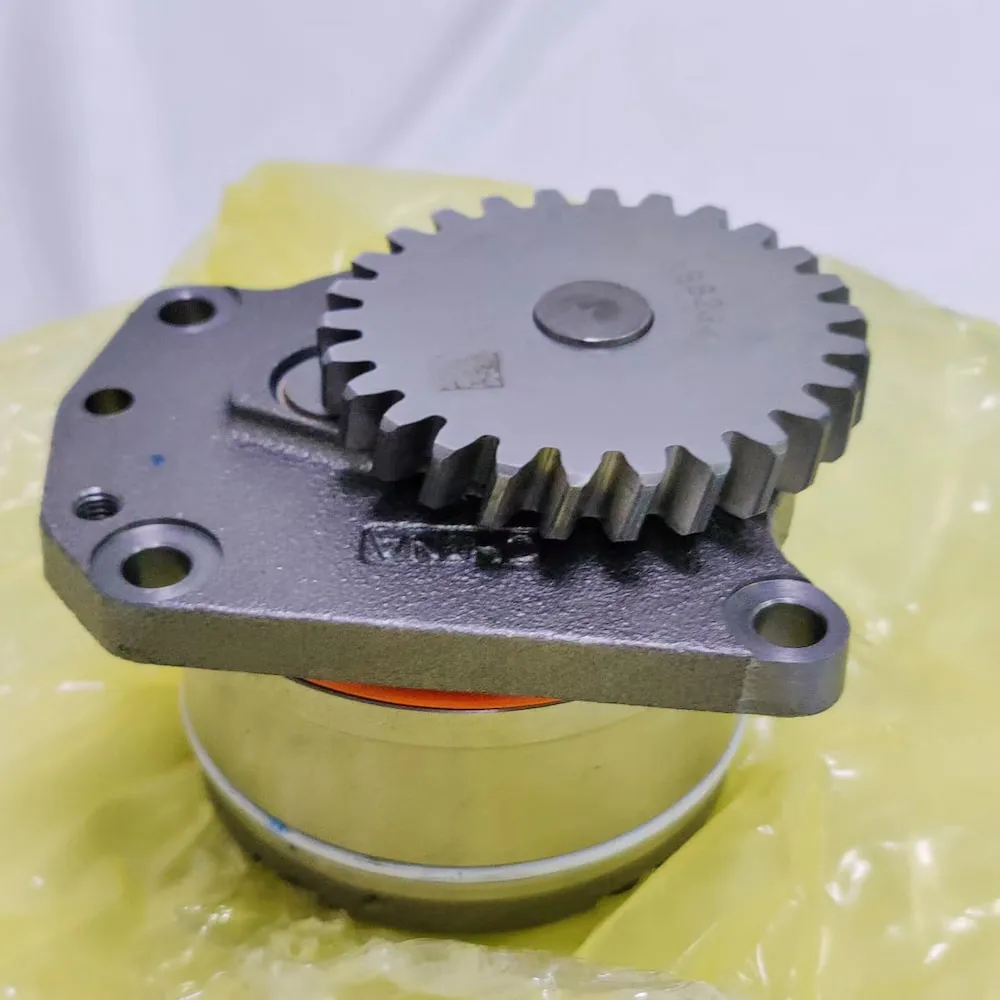
If the pump body or internal working chamber is worn, replacing only gears, rotors, seals, or a shaft may not restore the pump to the required condition.
The repair-or-replace decision should consider:
- Scoring or wear in the pump chamber
- Shaft and bore condition
- Gear or rotor wear, pitting, or damage
- Mounting-face distortion
- Drive-component damage
- Pressure-control bore or valve wear
- Availability of a formal Repair Kit
- Local workshop capability
A lower Repair Kit price is not, by itself, a reason to repair the old pump.
Why the Engine Model Alone Is Not Enough
An engine-family name identifies only the general platform. It does not confirm the exact oil-pump part number, drive arrangement, internal pumping element, or pressure-control configuration.
The same engine family may use different components because of:
- ESN and production configuration
- CPL
- Production year
- Rated power and speed
- Emissions configuration
- Vehicle, construction, mining, genset, marine, or industrial application
- Different gear-housing or lubrication-system layouts
- Different oil-pan and pickup-tube configurations
- Part-number supersession
- Previous repair or modification
Core Matching Information
The following information should be used together:
- Formal part number on the currently installed pump
- Engine ESN and clear nameplate photo
- Current official part number and supersession information
The ESN helps identify the factory configuration. The part number on the removed pump reflects what is currently installed.
These may not always be the same because an engine may have been repaired, converted, or modified during its service life. Relying on only one source can therefore create matching risk.
Supporting Information
- Overall pump photos
- Mounting-face photos
- Drive-interface photos
- Equipment make and model
- Application
- CPL
- Pump-body configuration
- Pickup-tube and oil-pan arrangement
Why an N14 Oil Pump Should Not Be Ordered by Model Name Alone
“N14 oil pump” is a useful search term and a reasonable starting point for an inquiry, but it is not a complete matching specification.
Different N14 configurations may use different:
- Oil pumps
- Oil-pump kits
- Pump bodies
- Drive shafts
- Drive gears
- Gaskets
- Related installation components
The correct part should still be confirmed by the engine ESN, CPL, current pump part number, and supersession information.
If the engine has been repaired previously, the currently installed pump may not match the original factory configuration exactly. In that case, compare both the installed part number and the engine’s original parts information before confirming the replacement.
Genuine New and Qualified Aftermarket Options
An oil pump is a precision-fit component and forms part of the engine’s overall lubrication and pressure-control design. It should not be selected by lowest price alone.
| Product option | Typical characteristics | What to confirm |
|---|---|---|
| Genuine Cummins new part | Clear part-number traceability and application reference | ESN, part number, packaging, supply source, and supersession |
| Qualified aftermarket new part with a documented cross-reference | May provide a balance between price and lead time | Cross-reference, pump design, drive arrangement, internal pumping elements, and compatibility with the original lubrication-system configuration |
| Product with unclear source or incomplete specifications | Insufficient basis to verify pump-element accuracy, pump-body tolerances, and pressure-control compatibility | Generally unsuitable for critical equipment or high-downtime-cost applications |
When considering an aftermarket option, request:
- A documented cross-reference
- Main product specifications
- Manufacturer or supply-source information
- Available inspection or quality records
- Warranty terms
- Confirmation of the supplied scope
For mining equipment, continuously operated gensets, and other critical applications, matching accuracy, batch consistency, traceability, and warranty conditions usually matter more than the lowest quotation.
Cummins Oil Pump RFQ Checklist
Basic Information
- Engine model
- Engine ESN
- Clear engine nameplate photo
- Current oil-pump part number, if available
- Required product scope:
- Oil Pump
- Oil Pump Assembly
- Oil Pump Body
- Repair Kit
- Drive Gear
- Drive Shaft
- Not yet confirmed
- Equipment make and model
- Application
- Required quantity
- Destination country
- Genuine or aftermarket preference
- Required delivery date
Supporting Photos and Information
- Front and rear views of the removed pump
- Mounting-face photo
- Drive-interface or drive-gear photo
- Pump-body and internal working-chamber photo, where available
- Pickup-tube photo
- Formal part-number marking
- Previous packaging, invoice, or service record, if available
Symptoms such as low oil pressure, delayed pressure build-up, or abnormal noise may be included as background information. They cannot determine the part number and do not replace local diagnosis.
How to Compare Supplier Quotations
Prices are directly comparable only when the part number, configuration, and quotation scope are equivalent.
| Comparison item | Supplier A | Supplier B |
|---|---|---|
| Product source: genuine or aftermarket | ||
| Formal part number and supersession | ||
| Applicable ESN or configuration | ||
| Product scope: complete pump, pump body, or repair kit | ||
| Internal pumping elements included | ||
| External drive gear included | ||
| Drive shaft included | ||
| Related pressure-control components included | ||
| Gasket and O-rings included | ||
| Pickup Tube / Strainer included | ||
| Quotation unit: individual part or kit | ||
| Warranty conditions | ||
| Lead time |
If two prices differ significantly, first confirm whether one supplier has quoted only the pump body while another has quoted a complete assembly.
In many cases, the difference is not simply product quality. The quotation scopes are different.
How ZEB Power Supports Cummins Oil Pump Sourcing
ZEB Power supplies Cummins engine oil pumps and related lubrication-system components for construction machinery, mining equipment, generator sets, and industrial applications.
Using the engine ESN, current pump part number, pump-body and drive-structure photos, and equipment application details, we can help review the applicable scope for:
- Oil Pump
- Oil Pump Assembly
- Oil Pump Repair Kit
- Oil Pump Body
- Drive Gear
- Drive Shaft
- Related installation seals
Available sourcing options depend on the exact part number and current supply channels.
Where possible, our quotation will clearly identify:
- Final part number
- Original and superseded part numbers
- Drive arrangement
- Relevant pressure-control components
- Kit contents
- Product source
- Lead time
- Warranty terms
ZEB Power supports parts matching and quotation confirmation. We do not replace the local workshop’s responsibility for lubrication-system diagnosis, installation, and post-installation testing.
Frequently Asked Questions
Is an oil pump the same as an oil-pressure sensor?
No. The oil pump circulates lubricating oil and provides oil flow. The sensor converts actual oil pressure into an electrical signal for the ECM or gauge.
Is a Pre-Lube Pump the same as the main engine oil pump?
No. A Pre-Lube Pump is an auxiliary system used on certain configurations to establish oil flow before engine start. The main oil pump provides continuous lubrication while the engine is running.
Can I install a different spring or pressure-control component to increase oil pressure?
This is not recommended. Pressure-control components are specified as part of the complete lubrication-system design. An incorrect change may move the system outside its intended operating range.
Can I replace only the internal gears instead of the complete oil pump?
Possibly, but only if the applicable service information permits the repair and the pump body, shaft bores, working chamber, and related components remain within the allowed limits.
Does low oil pressure always mean the oil pump has failed?
No. Other possible causes include incorrect oil level or viscosity, a restricted filter, a suction leak, excessive bearing clearance, a sensor issue, or a pressure-control problem.
Does an Oil Pump Assembly always include the pressure-control components?
No. Request an itemized list from the supplier.
Can a drive gear from another model be used?
Do not substitute a gear based only on tooth count or appearance. A replacement should be supported by a formal supersession, a reliable cross-reference, or completed technical confirmation.
Can I request a quotation without the old pump part number?
Yes. Provide the engine ESN, nameplate photo, old-pump photos, mounting face, drive structure, and equipment application so that an initial review can be completed.
What information is most important for an accurate quotation?
Provide the engine ESN, the formal part number on the currently installed pump, overall and mounting-face photos, drive-structure photos, and a clear description of the required product scope.
Conclusion
A Cummins engine oil pump should not be ordered only by engine family or external appearance.
After replacement has been confirmed, check:
- Engine ESN and current pump part number
- External drive arrangement
- Internal pumping elements
- Location and supply scope of related pressure-control components
- Pump body, drive components, and installation seals included in the quotation
- Whether the offer covers a pump body, Repair Kit, or complete Oil Pump Assembly
Ready to source a Cummins engine oil pump? Send the engine ESN, the current pump part number if available, and clear photos of the pump, mounting face, and drive structure. Our team will help review the applicable part and provide a clearly defined quotation scope.