

Cummins Governor, Actuator or Solenoid? Match the Symptom First

2363
Table of Contents
Generating table of contents
When engine speed rises and falls unexpectedly, or the engine continues running after the stop command is given, many enquiries begin with one of two statements:
“We need a new Cummins governor.”
or:
“Is the fuel shutoff solenoid faulty?”
That conclusion may be wrong.
A governor, actuator and fuel shutoff solenoid perform different control tasks.
Their functional boundaries can be summarized as follows:
- A mechanical governor senses changes in engine speed and responds through a mechanical regulating mechanism.
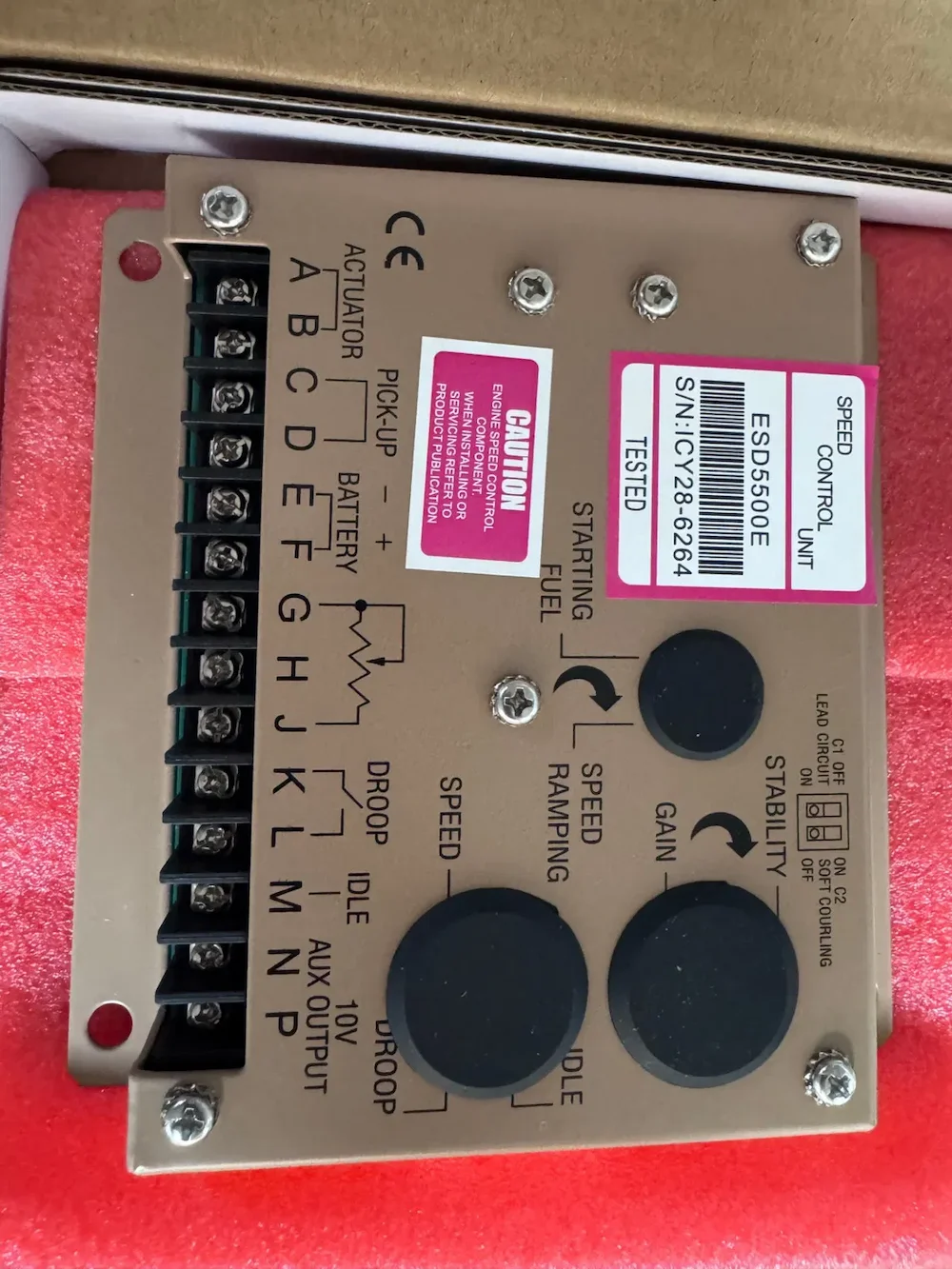
- An electronic governor or speed controller compares target speed with actual speed and sends a control command.
- An actuator converts that command into mechanical movement and operates the fuel-control mechanism.
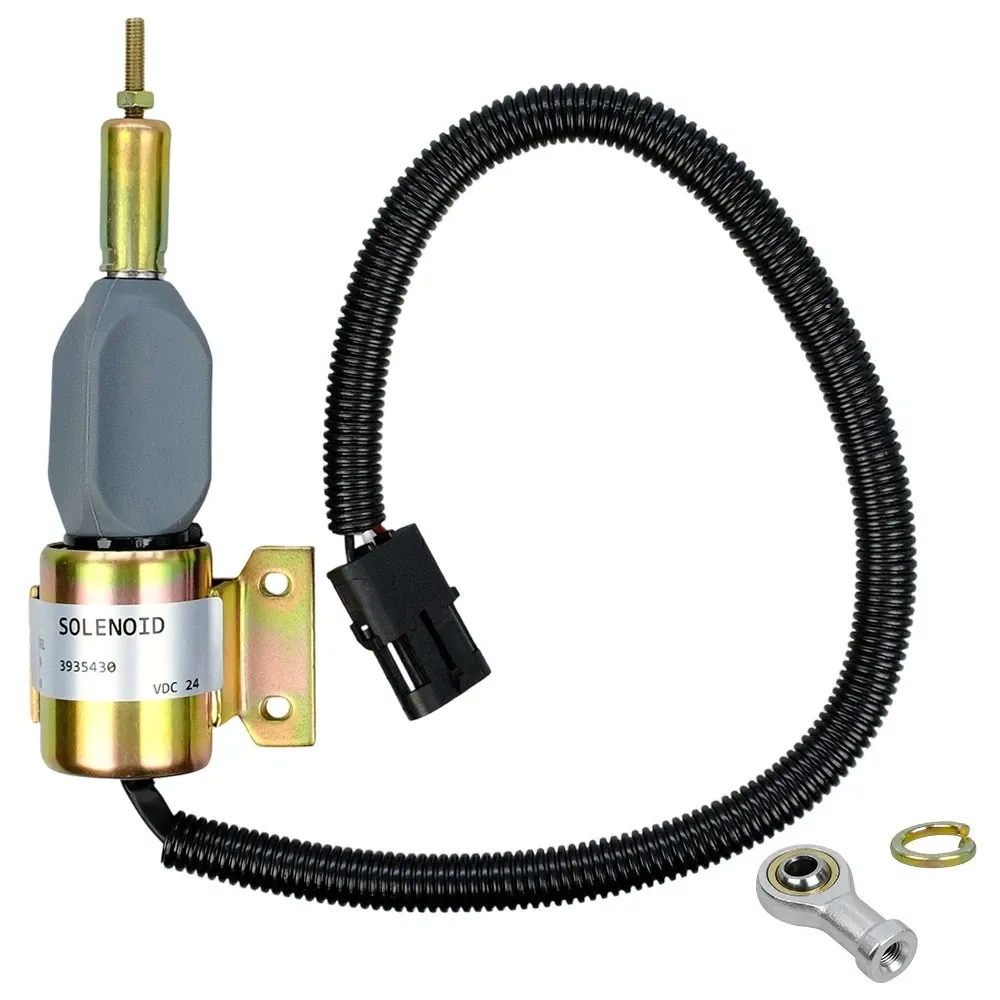
- A fuel shutoff solenoid—also called a stop solenoid or fuel cut-off solenoid in some markets—mainly switches the engine between run and stop positions rather than continuously regulating speed.
Unstable speed and an engine that will not stop are therefore two different fault conditions. Ordering a part based only on the statement “there is a governor problem” can easily send the buyer in the wrong direction.
This article is written for buyers sourcing Cummins governors, actuators, fuel shutoff solenoids and related control parts. It explains how these components differ, why several common symptoms are frequently confused, and why these parts should not be matched by appearance and interface alone.
This article does not provide diagnostic procedures, adjustment instructions or wiring-logic tests. Those tasks should be performed by a qualified service organization.
If an engine does not respond to the normal stop command, follow the emergency shutdown procedure specified by the equipment manufacturer and contact a qualified service provider immediately. Do not allow the equipment to continue operating while waiting for replacement parts. Do not disconnect wiring, block the air intake or approach moving components unless an approved procedure specifically requires it.
Confirm the Fuel and Speed-Control System Before Choosing a Governor or Actuator
A governor and actuator are not the same part, but they do not necessarily belong to completely separate fuel-system designs.
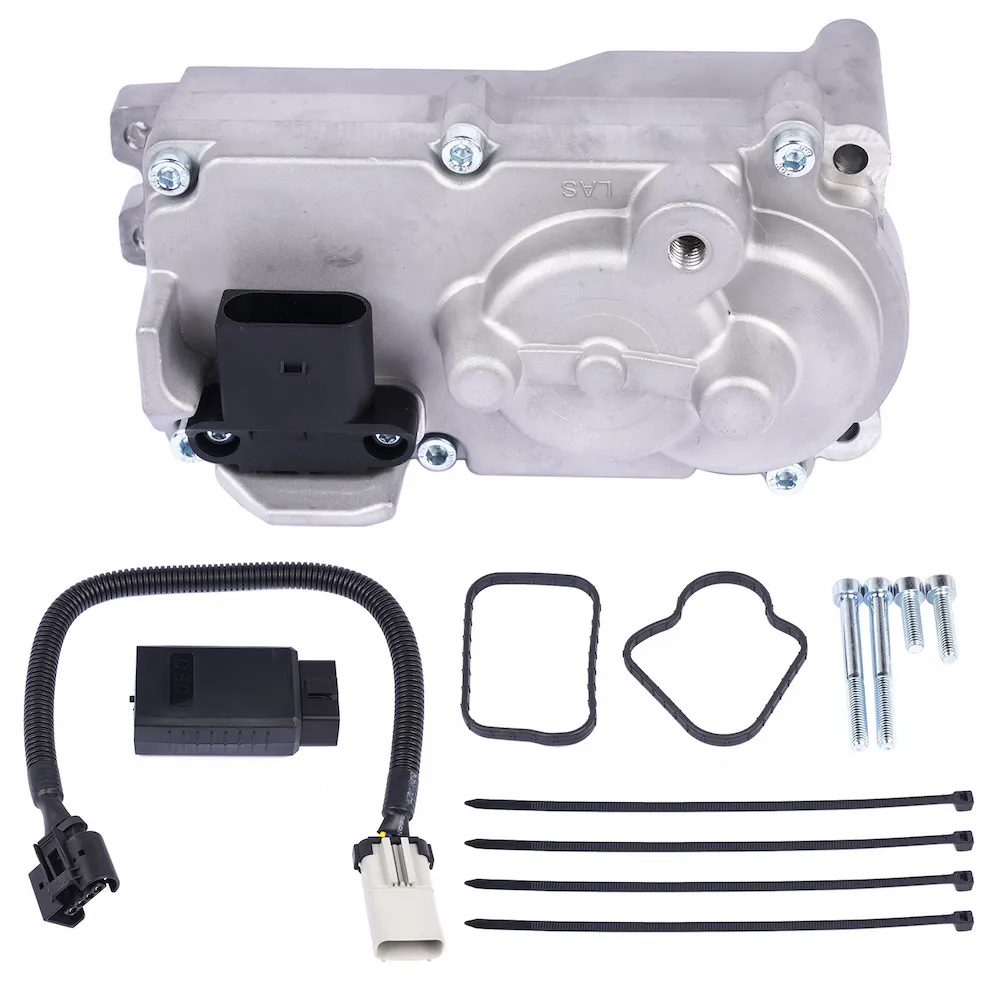
The term governor may refer to a mechanical speed-regulating mechanism or an electronic speed-control function. An actuator normally carries out the control command by moving the throttle shaft, control lever or another fuel-control mechanism on the fuel pump.
In a purely mechanical governing system, flyweights, springs and mechanical linkages sense and respond to changes in speed.
In an electronic governing system, the speed sensor, electronic governor or speed controller, and actuator must work together. The governor function and actuator may therefore exist within the same control system.
Other engines use fully electronic fuel systems such as CELECT, HPI or common rail. On these platforms, engine speed and injection control are generally managed by the ECM together with the electronic fuel system. Traditional mechanical-governor or external-speed-actuator assumptions should not be applied directly.
However, whether a specific electronically controlled system still contains a serviceable component named an actuator must be confirmed by ESN and parts catalog. The term “fully electronic” alone is not enough to determine the service-part structure.
Before requesting a quotation, identify the actual fuel and speed-control arrangement rather than searching for a part under the general term “governor.”
When the system type is unclear, use the ESN and current part number rather than describing the requirement only as “the speed-control part on the engine.”
Common Symptoms Are Often Assigned to the Wrong Component
The Starter Cranks the Engine, but the Engine Does Not Fire and Run
The fuel shutoff solenoid is one possible area to inspect.
If the solenoid does not move into the run position, the fuel pump may not reach the operating condition required for normal fuel delivery.
However, the same symptom can also result from:
- No run voltage reaching the solenoid
- No start command from the controller
- Wiring or relay faults
- The ECM not enabling fuel injection
- Fuel-supply problems
- Another control or protection condition preventing start-up
The quotation should not immediately be limited to a fuel shutoff solenoid.
The Engine Starts and Stops Again After a Few Seconds
This may look similar to a complete no-start condition, but the causes can be different.
Some solenoid designs use separate pull-in and hold functions. If the solenoid moves during cranking but cannot remain in the run position after the start signal disappears, the issue may involve the hold circuit, wiring or control supply rather than the solenoid body itself.
A frequently overlooked possibility is an intentional protective shutdown.
A generator set or industrial machine may stop the engine in response to:
- Low oil pressure
- Abnormal coolant temperature
- Overspeed protection
- Emergency-stop input
- Another safety interlock
On modern electronically controlled equipment, shutdown may also be coordinated between the OEM controller and the ECM.
In that situation, the fuel shutoff solenoid may simply be carrying out the correct stop command.
Before treating the solenoid as defective, determine whether it failed independently or whether it received a valid shutdown command from the control system.
Engine Speed Rises and Falls
Unstable engine speed is more likely to involve the governor, actuator or speed-feedback circuit than the fuel shutoff solenoid.
Possible causes may also include:
- Loose or worn control linkage
- Unstable fuel supply
- Speed-signal problems
- Controller-output faults
- Wiring or connector issues
The symptom does not automatically prove that the governor or actuator body is worn or defective.
The Engine Continues Running After a Stop Command
This is a safety-related condition that requires immediate attention.
Possible causes may include:
- A solenoid stuck in the run position
- Continued power from the controller
- Welded or sticking relay contacts
- Incorrect control wiring
- A mechanical stop linkage that does not return fully
The cause should not be diagnosed remotely. Follow the equipment manufacturer’s emergency shutdown procedure and contact a qualified service organization.
A Fuel Shutoff Solenoid Is Not a Part That Can Be Matched by Appearance Alone
A fuel shutoff solenoid has a defined energized state, de-energized state and mechanical return method.
Some applications use a design in which energizing the solenoid moves it into the run position and loss of power returns it to the stop position. Other control arrangements are also possible, depending on the engine, fuel pump and equipment control system.
Two solenoids may have a similar external shape and the same mounting interface but still differ in:
- Direction of movement
- Return method
- Effective stroke
- Energized position
- De-energized position
- Control logic
Installing the wrong solenoid can cause:
- A no-start condition
- Start-up followed by immediate shutdown
- Failure to stop on command
Because the solenoid affects both start-up and shutdown, it should not be selected only because the connector, thread or mounting shape looks correct.
The formal part number, ESN and the safety design of the current equipment should be checked together.
Linkage Design Also Determines Whether an Actuator Will Fit Correctly
A governor or actuator must transfer its movement through a linkage system, such as connecting rods, pull rods or control arms, to the throttle shaft, control lever or another fuel-control mechanism on the fuel pump.
This linkage depends on:
- Arm length
- Connection-point location
- Direction of movement
- Effective travel
- Mechanical geometry
Two governors or actuators may look almost identical, but the engine may still regulate speed incorrectly if the linkage geometry or travel does not match.
Before ordering, confirm:
- Whether the linkage must be replaced with the actuator
- Whether the connecting-arm length matches the original part
- Whether the connection-hole location is the same
- Whether the movement direction is correct
- Whether the effective stroke matches
- Whether the electronic actuator still drives the fuel-pump control mechanism through a mechanical linkage
The Same Engine Model May Use Different Control Components
The base engine model is normally not enough to identify a specific governor, actuator or fuel shutoff solenoid.
The final configuration may depend on:
- Fuel-system type
- Fuel-pump part number
- Mechanical or electronic governing
- Rated engine speed
- Controller type
- Equipment application
- Previous modification or retrofit work
Two actuators both marked 24 V may still differ in:
- Mounting-hole position
- Output-shaft direction
- Effective travel
- Control signal
- Fuel-pump application
Voltage and appearance are supporting information only. They do not replace the part number and configuration check.
Quotation Scope Is Not Standardized
Terms such as Governor Kit, Actuator Assembly and Fuel Shutoff Kit may describe different supply scopes from one supplier to another.
A quotation may cover only the main component, or it may also include:
- Brackets
- Linkages
- Seals
- Mounting hardware
- Electrical accessories
Before accepting a quotation, confirm exactly whether the listed price includes the linkage, installation parts and related seals.
If you have already received a quotation but are not sure what it includes, send the quotation together with the engine ESN for scope verification before ordering.
Genuine Parts or Verified Replacement Parts
Governors and actuators are precision control and execution components. Fuel shutoff solenoids are involved in switching the engine between run and stop states.
These parts should not be judged as interchangeable based only on external appearance and interface dimensions.
When evaluating a replacement option, verify:
- Direction of movement
- Effective stroke
- Control-signal compatibility
- Energized position
- De-energized position
- Return behavior
- Fuel-pump compatibility
- Controller compatibility
For continuously operating generator sets, mining equipment and critical standby-power systems, genuine parts or replacement options verified against the actual fuel-pump and controller configuration are normally the lower-risk choice.
Information to Provide Before Ordering
Provide the following basic information:
- Engine ESN
- CPL
- Equipment make and complete model
- Application
- Fuel-pump nameplate
- Fuel-pump part number
For an electronic governing system, also provide:
- ECM model
- Electronic governor or speed-controller model
- Generator-set controller model
- System voltage
- Original part number
- Photos of the installed part
- Connector photos
- Bracket photos
- Linkage photos
The fault description should clearly state whether the engine:
- Does not start
- Starts and then stops
- Runs at unstable speed
- Does not respond to the normal stop command
How ZEB Power Supports Parts Matching
ZEB Power uses the engine ESN, CPL, fuel-pump or controller information, current part number and physical photographs to verify the applicable part.
The reported symptom helps determine whether the enquiry relates mainly to speed control, actuation or shutdown control, but the symptom alone is not used to confirm a part number.
The final diagnosis of the fault source, verification of the fuel shutoff solenoid’s operating logic, and adjustment of the linkage remain the responsibility of the technician carrying out the on-site service work.
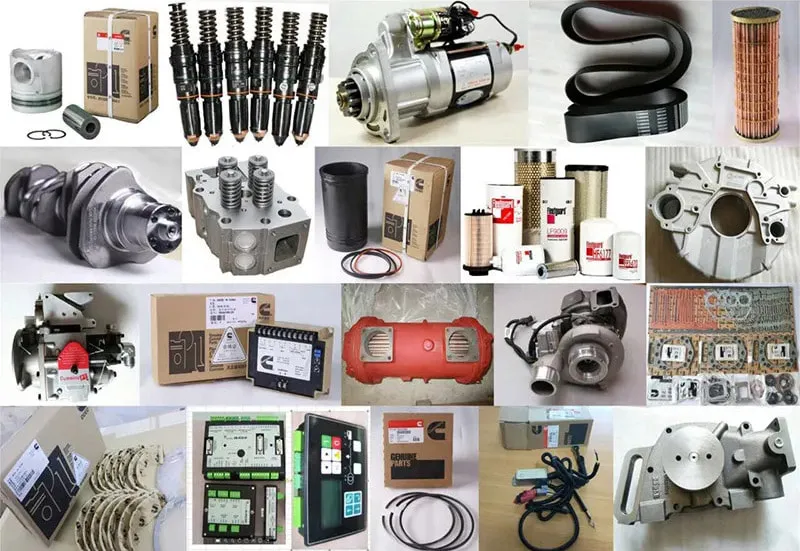
Send the engine ESN, CPL, fuel-pump nameplate, controller model, detailed fault description, visible markings and clear photographs of the current component. We will help confirm the correct part and kit scope.
Frequently Asked Questions
The starter cranks the engine but it does not fire and run. Does the fuel shutoff solenoid have to be replaced?
Not necessarily.
The fault may also involve the control power supply, wiring, relay, fuel supply or an ECM condition that is preventing injection. The technician should first confirm whether the solenoid is moving and whether it is receiving the correct command.
The engine starts and stops after a few seconds. Is the solenoid hold coil faulty?
Only some fuel shutoff solenoids use separate pull-in and hold coils.
This symptom alone does not prove that the hold coil has failed. The control power supply, wiring, relays and the possibility of an intentional safety shutdown should also be checked.
Does unstable speed mean the governor or actuator body is faulty?
Not necessarily.
The linkage, fuel supply, speed signal, controller output, wiring and connectors can produce similar symptoms. A qualified service organization should perform on-site testing and fault isolation.
Do fully electronic engines still need a traditional governor or external speed actuator?
They normally do not use the same control arrangement as a mechanical or independent electronic governing system.
On CELECT, HPI and common-rail platforms, speed and injection control are generally integrated through the ECM and electronic fuel system. However, the serviceable components for the specific engine must still be confirmed by ESN and parts catalog.
What should be done if the engine continues running after the stop command?
Treat it as a safety-related condition.
Follow the emergency shutdown procedure specified by the equipment manufacturer and contact a qualified service organization immediately. Do not disconnect wiring or attempt another unsafe manual intervention.
Can a fuel shutoff solenoid be replaced with a universal part that has the same interface?
It is not recommended.
The energized and de-energized positions, return method, movement direction and operating logic may differ even when the external interface looks the same.
Can one 24 V actuator directly replace another 24 V actuator?
Voltage alone is not enough.
The mounting pattern, output-shaft direction, stroke, control signal and applicable fuel pump must also match.