

Cummins Injector & Fuel Pump for Sale | Genuine, ReCon & Aftermarket

8566
Table of Contents
Generating table of contents
When a Cummins engine shows hard starting, black smoke, low power, unstable operation, or abnormal fuel consumption, the fuel system is often one of the areas that needs to be checked. Testing may eventually show that a fuel injector, injection pump, or another fuel-supply component requires repair or replacement.
However, fuel-system parts are more difficult to purchase correctly than ordinary gaskets or seals. The main reasons are:
- “Fuel pump” is a broad term. It may refer to a mechanical injection pump, PT fuel pump, high-pressure common-rail pump, lift pump, or transfer pump.
- Different generations, emissions stages, and applications within the same engine family may use different fuel-system technologies.
- Injectors and pumps must be suitable for the same engine configuration and fuel-system version, but this does not mean they must always be replaced together.
- Some injectors carry correction or calibration identifiers, but coding and calibration requirements vary by engine and control system.
- Black smoke, hard starting, or low power does not automatically prove that the injectors or pump are faulty.
Many inquiries still arrive as “6BT injector” or “QSB6.7 fuel pump.” These phrases are useful for an initial search, but the same engine family may use several fuel-system configurations and multiple part-number versions.
This guide explains what “fuel pump” may actually mean, the main Cummins fuel-system types, what information is required to match injectors and pumps correctly, and how to compare genuine new, Cummins ReCon, independent remanufactured, rebuilt, and aftermarket parts.
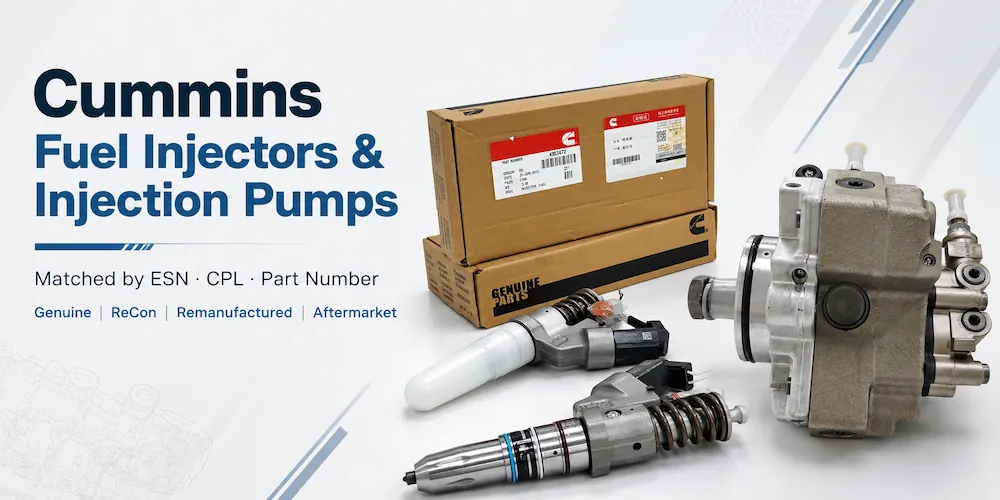
First, Clarify What “Fuel Pump” Means
Before requesting a quotation, identify the exact component required. This is the first step in preventing quotation errors and scope mismatches.
| Part type | Main function | Common purchasing confusion |
|---|---|---|
| Fuel Injector | Controls fuel delivery, atomization, and injection into the combustion chamber | A complete injector, nozzle, repair kit, solenoid, and seal kit are different products |
| Mechanical Injection Pump | Mechanically generates injection pressure and distributes fuel to the injectors | Inline and rotary pumps, governor types, and calibrated versions cannot be matched by appearance |
| PT Fuel Pump | Controls fuel supply and pressure in the Cummins PT system | Must match the applicable PT injectors, engine configuration, and pump part number |
| High-Pressure Common-Rail Pump | Supplies high-pressure fuel to the rail | Not the same as a low-pressure transfer pump; must match the engine and common-rail system |
| Lift / Transfer Pump | Moves fuel from the tank to the injection or high-pressure system | Operates at lower pressure and should not be confused with an injection or high-pressure pump |
| Injector Installation Parts | Includes copper washers, O-rings, sleeve seals, and connectors | May not be included in a complete injector quotation |
| Pump Installation Parts | Includes gaskets, O-rings, fittings, and drive components | A correct pump assembly does not guarantee that all installation parts are included |
If an inquiry simply says “I need a fuel pump,” the supplier cannot reliably know whether the customer needs a mechanical injection pump, PT pump, high-pressure pump, lift pump, or transfer pump.
Using the correct component name and providing the old part number and nameplate photo can greatly reduce quotation delays.
Common Cummins Fuel-System Types
Cummins has used several fuel-system technologies across different product lines, production periods, emissions stages, and applications.
Common examples include:
- PT fuel systems (Pressure-Time): used on certain NT855, K19, K38, and related engines
- Mechanical injection-pump systems: used on certain B-series, C-series, and other earlier or application-specific engines
- Electronically controlled injection systems: including systems such as CELECT and HPI, with system-specific injection and control architecture
- CAPS and other dedicated electronically controlled fuel systems
- High-pressure common-rail systems (HPCR): including technology names such as XPI and MCRS, used on certain later QSB, ISB, QSL, and other engine configurations
This article does not attempt to explain the internal operation of every fuel system.
For purchasing purposes, the important point is:
Injectors, pumps, and control components from different fuel systems cannot be interchanged based only on appearance, connector style, or engine displacement.
Final part selection should be confirmed by the engine ESN, CPL, existing part number, supersession information, and applicable Cummins parts data.
The buyer does not always need to identify the fuel-system type independently. However, providing the engine model, ESN, CPL, nameplate photo, old part number, and old-part photos gives the supplier a much stronger basis for matching.
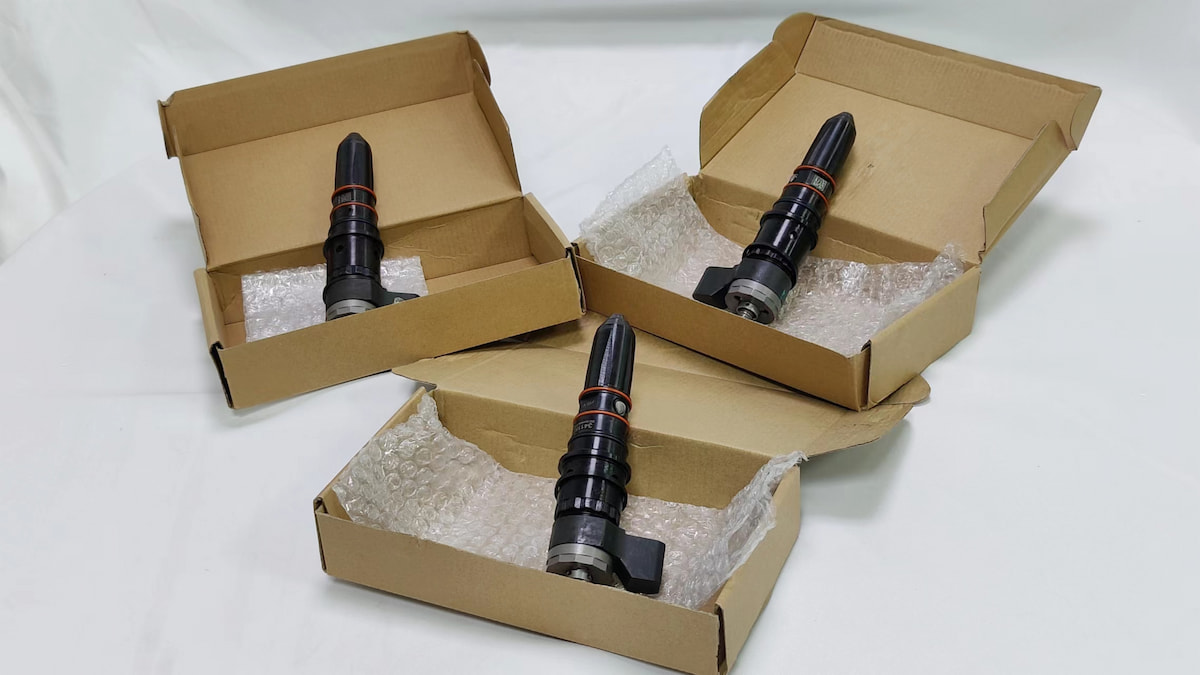
Why Parts Must Be Matched by Engine Configuration, Not Product Name
The base engine model identifies the general family but does not fully define the engine build.
Injectors and pumps may vary because of:
- Different CPLs
- Different production years or build batches
- Different rated power and speed
- Different emissions stages
- Industrial, construction, generator-drive, marine, or automotive applications
- Different fuel-system suppliers or system versions
- Different ECM and electronic-control configurations
- Part-number supersession
- Previous repairs involving non-original fuel-system components
For this reason, “6BT injector” or “QSB6.7 fuel pump” should be treated only as a starting point.
Final matching should consider:
- Engine ESN
- CPL
- Current injector or pump part number
- Old-part nameplate information
- Original and superseded part numbers
- Actual fuel-system type
If the engine has already received replacement injectors or a replacement pump, the installed parts may no longer match the original factory configuration exactly. In that case, both the ESN and the current part numbers should be checked.
Cummins Fuel Injector Matching Checklist
| Item to verify | Priority |
|---|---|
| Engine ESN, CPL, and nameplate photo | Highest |
| Current injector part number | Highest |
| Part-number supersession | Highest |
| Fuel-system type | High |
| Electrical connector and old-part photos | Supporting evidence only |
| Calibration or correction identifier, if applicable | Configuration-dependent |
| Complete injector, nozzle, repair kit, solenoid, or installation parts | Quotation-scope confirmation |
Matching should begin with the Cummins part number, supersession history, and engine application.
A similar appearance or connector does not prove that an injector is suitable.
For injectors carrying a calibration or correction identifier, confirm:
- Whether the identifier is complete and readable
- Whether the installation procedure requires ECM entry
- Whether calibration or diagnostic equipment is required
- Whether the code supplied belongs to the actual new or remanufactured injector
Do not assume that the code on the removed injector remains valid for the replacement unit.
Some electronically controlled or common-rail injectors may use identifiers such as:
- Trim Code
- Calibration Code
- Flow Code
- Other correction markings
Not all Cummins common-rail injectors use the same coding procedure. Requirements must be confirmed from the service information for the specific engine and ESN.
Confirm What Product Is Being Quoted
Specify whether the inquiry is for:
- Complete Fuel Injector
- Injector Nozzle
- Injector Repair Kit
- Injector Solenoid
- Injector Copper Washer
- Injector O-Ring Kit
- Injector Sleeve Seal
- Other installation parts
A quotation for a complete injector cannot be compared directly with a quotation for a nozzle or repair kit.
Cummins Injection Pump Matching Checklist
Before matching a pump, first identify the pump type.
“Cummins fuel pump” may refer to:
- PT Fuel Pump
- Mechanical Injection Pump
- High-Pressure Common-Rail Pump
- CAPS Pump
- Lift Pump
- Transfer Pump
These components differ substantially in function, pressure, internal design, and price.
Mechanical Injection Pumps
Check:
- Cummins pump part number
- Pump manufacturer part number
- Pump model
- Governor type and control method
- Rated engine power
- Rated engine speed
- Equipment application
- Original and superseded part numbers
Governor and control configurations should not be selected from pump appearance alone.
Whether fuel timing must be checked, set, or adjusted after installation should be confirmed from the applicable service procedure.
PT Fuel Systems
PT pumps and PT injectors must be suitable for the same engine configuration.
Check:
- Engine ESN
- CPL
- PT pump part number
- PT injector part number
- Pump nameplate or calibration information
- Engine rating and application
The PT system uses a different metering principle from a conventional inline mechanical injection-pump system. PT pump selection should therefore be based on the applicable engine and parts data rather than on inline-pump design assumptions.
High-Pressure Common-Rail Pumps
Prioritize:
- Pump assembly part number
- Engine ESN and CPL
- Old pump nameplate and manufacturer part number
- Original and superseded part numbers
- Engine application, rated power, and speed
- Any additional installation, piping, connector, or control requirements
If the replacement pump part number differs from the removed pump number, confirm whether the supersession instructions include:
- Additional installation requirements
- Fitting or pipe changes
- Harness or electrical connector changes
- Control-software or service-procedure requirements
- Additional parts that must be replaced
Do not assume that every updated pump requires new ECM software. Equally, do not order only on descriptions such as “new model,” “updated pump,” or “replacement pump.”
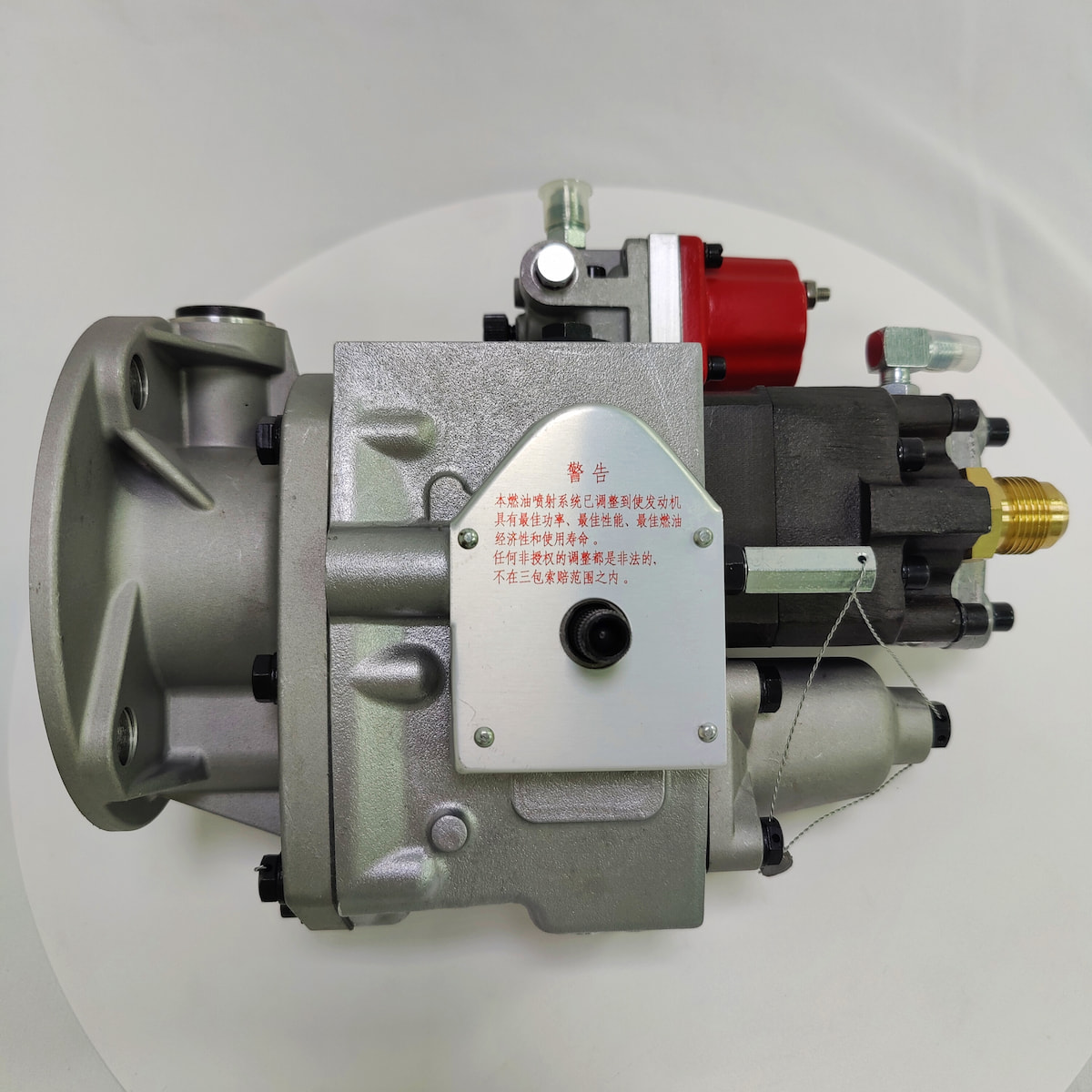
Installation Parts and Fuel-Contamination Risk
Correctly matching the main component does not complete the order. Installation parts must also be checked against the actual disassembly scope.
Injector-Related Installation Parts
These may include:
- Injector copper washers
- Injector O-rings
- Injector sleeve seals
- Injector connector tubes
- High-pressure fuel lines
- Return-line seals
- Electrical connectors
- Valve cover or rocker housing gaskets
Pump-Related Installation Parts
These may include:
- Pump mounting gasket
- Installation O-rings
- Supply and return fitting seals
- Drive components
- Gears or couplings
- Low-pressure fuel lines
- High-pressure fuel lines
- Harness and sensor interfaces
Some parts may be included with the main component, while others are supplied as separate installation kits or individual part numbers.
High-pressure fuel pipes and similar components should be reused only when the applicable service procedure allows it. Their appearance alone is not a sufficient reuse criterion.
When a High-Pressure Pump Failure Involves Metal Debris
If a high-pressure pump failure is accompanied by metal debris or contaminated fuel, the workshop should follow the applicable contamination inspection and repair procedure.
Depending on the inspection results, the following may require cleaning, testing, or replacement:
- Fuel rail
- High- and low-pressure fuel lines
- Control valves
- Injectors
- Fuel filters and related supply components
The required repair scope should be based on inspection and service information. It should not be assumed in advance that the entire high-pressure system must always be replaced.
Do Black Smoke and Low Power Always Mean the Injectors or Pump Are Faulty?
No.
Fuel injectors or pumps may be involved when an engine shows:
- Hard starting
- Low power
- Unstable idle
- Black or white smoke
- Abnormal fuel consumption
- Cylinder imbalance
- Incorrect fuel pressure
- Fuel-system fault codes
However, similar symptoms may also result from:
- Clogged fuel filters
- Air or water in the fuel
- Insufficient low-pressure supply
- Leaking pipes or fittings
- Sensor or wiring faults
- Intake restriction
- Turbocharger problems
- Low cylinder compression
- ECM control or calibration issues
This guide addresses part matching after the need for replacement has already been confirmed. It does not replace fuel-system diagnosis by a qualified workshop.
Ordering a complete set of injectors or an injection pump based only on smoke, hard starting, or low power can result in an expensive purchase that does not solve the actual problem.
Genuine New, Cummins ReCon, Remanufactured, Rebuilt, or Aftermarket?
Fuel-system components require close control of testing, calibration, traceability, and warranty. Appearance alone is not a reliable quality indicator.
Genuine New Parts
Genuine new parts are often selected for:
- Critical equipment
- Continuous-duty applications
- Projects with strict warranty requirements
- Applications requiring strong traceability
- Equipment with high downtime costs
Verify:
- Part number
- Packaging and labels
- Batch or serial identification
- Supply source
- Warranty terms
Cummins ReCon
Cummins ReCon is Cummins’ own remanufactured-parts program. It should not be treated as equivalent to an unspecified third-party remanufactured, rebuilt, or repaired component.
When purchasing Cummins ReCon, confirm:
- ReCon part number
- Engine application and supersession
- Supply source
- Warranty terms
- Core Charge
- Core-return requirements
- Packaging and identification
A product described only as “reman” should not automatically be assumed to be Cummins ReCon.
Independent Remanufactured Parts
A properly remanufactured injector or pump is not simply a cleaned used component.
A formal remanufacturing process may include:
- Complete disassembly
- Cleaning and inspection
- Replacement of specified wear parts
- Reassembly
- Flow, pressure, leakage, or response testing
- Batch or serial traceability
Ask for:
- Remanufacturer name and brand
- Main parts replaced
- Applicable test records
- Serial or batch traceability
- Core Charge conditions
- Warranty terms
- Installation and calibration information
For injectors requiring correction codes or test data, confirm that the supplier provides the appropriate identifier, test result, and installation instructions.
Rebuilt or Repaired Parts
Rebuilt or repaired parts may address only the failed area and may not undergo a full remanufacturing process.
Do not treat “rebuilt,” “repaired,” and “remanufactured” as automatically equivalent.
Ask:
- What work was actually performed
- Which parts were replaced
- Whether the unit was tested
- Whether test records are available
- Warranty terms
- Whether batch or serial traceability is provided
High-Quality Aftermarket Parts
Aftermarket parts can satisfy certain budget and lead-time requirements, but buyers should evaluate:
- Part-number and application matching
- Injector flow consistency
- Pressure and leakage testing
- Electronic-component performance, if applicable
- Pump output and test records
- Seal material
- Batch traceability
- Warranty and after-sales support
For critical equipment, continuous-duty applications, or projects with high downtime costs, priority should be given to genuine new parts, Cummins ReCon, or proven remanufactured brands with stable test records and warranty support.
For general repair projects, high-quality aftermarket parts may also be suitable when complete test data, batch records, and warranty terms are available.
Avoid low-cost “refurbished” products that provide no test records and rely mainly on cleaned appearance.
How to Compare Supplier Quotations
Before comparing prices, confirm that each supplier is quoting the same product and scope.
| Comparison item | What to confirm |
|---|---|
| Product type | Complete injector, nozzle, repair kit, complete pump assembly, or pump repair component |
| Part number | Original number, superseded number, and final quoted number |
| Product condition | Genuine new, Cummins ReCon, independent remanufactured, rebuilt, aftermarket new, or used |
| Matching basis | ESN, CPL, pump nameplate, old part number, or engine model only |
| Installation parts | Copper washers, O-rings, connector tubes, gaskets, and fittings |
| Core Charge | Whether a core deposit or old-part return is required |
| Testing and traceability | Batch, serial number, and applicable test records |
| Warranty | Duration, scope, and claim conditions |
| Quotation unit | One injector, one set, one pump, or one repair kit |
| Exclusions | Installation parts, lines, connectors, or accessories quoted separately |
Prices are directly comparable only when the part number, product condition, matching basis, accessory scope, and quotation unit are equivalent.
RFQ Checklist: Provide Information in Two Stages
Initial Inquiry
Provide:
- Engine Model
- ESN
- CPL
- Engine Nameplate Photo
- Required Part: Injector / Injection Pump / PT Pump / High-Pressure Pump / Lift Pump
- Existing Part Number, if available
- Old Part Photo
- Quantity
- Application
- Destination Country
- Genuine / ReCon / Reman / Aftermarket Preference
After the Old Part Has Been Removed
Add:
- Injector or pump nameplate photo
- Manufacturer part number
- Overall and connector photos
- Rated engine power and speed
- Known fuel-system type
- Failure symptoms, as supporting information
- Required installation parts
- Whether superseded numbers are acceptable
- Required delivery time
What the Quotation Should State
Ask the supplier to identify:
- Final quoted part number
- Original and superseded numbers
- Applicable engine and fuel system
- Complete assembly or repair component
- Genuine new, ReCon, remanufactured, rebuilt, or aftermarket condition
- Quantity and quotation unit
- Installation parts included
- Core Charge
- Warranty and lead time
- Excluded items
Not sure which fuel system your engine uses, or whether the injector and pump need to be replaced together? Start with the engine model, ESN/CPL, engine nameplate photo, old injector or pump part number, and old-part photos.
How ZEB Power Supplies Cummins Fuel Injectors and Injection Pumps
Based on the engine model, ESN, CPL, existing part number, old-part nameplate, and available photos, ZEB Power can help verify fuel injectors, fuel pumps, and installation parts used in PT, mechanical injection, electronically controlled injection, and common-rail systems.
Typical applications include:
- Construction equipment
- Mining machinery
- Generator sets
- Industrial power equipment
ZEB Power can help confirm:
- Required component type
- Applicable part number
- Original and superseded part numbers
- Product condition and quotation scope
- Installation parts included
- Additional installation or calibration requirements identified in the applicable service information
Software procedures, injector coding, pump calibration, injector testing, and fuel-timing work should be completed by the customer’s local workshop using the correct equipment and service information.
Depending on the confirmed part scope, equipment criticality, budget, and warranty requirements, quotation options may include:
- Genuine new parts
- Cummins ReCon
- Independent remanufactured parts
- High-quality aftermarket new parts
ZEB Power supports part-number matching and quotation verification. It does not replace the customer’s workshop in fuel-system diagnosis, injector testing, pump calibration, or repair-scope decisions.
Need Cummins fuel injectors or an injection pump? Send the engine model, ESN/CPL, engine nameplate photo, old injector or pump part number, and old-part photos for matching and quotation.
Frequently Asked Questions
1. Why can the same Cummins engine model use different injectors?
The same engine family may have different CPLs, ratings, emissions configurations, fuel systems, and applications. Confirm the injector by ESN, CPL, current part number, and supersession.
2. Are an injection pump and a fuel pump the same thing?
Not necessarily.
“Fuel pump” may refer to a mechanical injection pump, PT pump, high-pressure common-rail pump, lift pump, or transfer pump.
3. Must injectors and the injection pump be replaced together?
No.
They may be replaced separately based on test results, but the replacement parts must be suitable for the same engine configuration and fuel-system version.
4. Should one injector or the complete set be replaced?
The decision depends on test results, operating hours, contamination, failure cause, downtime risk, and workshop recommendations.
For fleets, mining equipment, or critical generator sets, the cost of repeat downtime may also influence the decision.
5. Do all Cummins common-rail injectors require coding?
No.
Coding and calibration procedures vary by engine, control module, and injector system. Confirm the requirement from the applicable service information.
6. Do black smoke and low power prove that the injectors or pump are faulty?
No.
Fuel filters, contaminated fuel, sensors, wiring, turbocharger problems, low compression, or ECM issues may cause similar symptoms.
7. Is replacing only the common-rail pump enough after a pump failure?
Not always.
If metal debris or contamination is present, the workshop should inspect the rail, lines, control valves, injectors, and related components according to the applicable repair procedure.
8. Is Cummins ReCon the same as any remanufactured part?
No.
Cummins ReCon is Cummins’ own remanufactured-parts program. Third-party remanufactured parts come from independent remanufacturers and may use different testing, traceability, Core Charge, and warranty systems.
9. Do remanufactured injectors require a core return?
Some Cummins ReCon and third-party remanufactured programs require a Core Charge or old-part return. Confirm the terms before ordering.
10. Can I request a quotation without the old part number?
Yes, an initial search may be possible using the engine model, ESN, CPL, and nameplate photo.
However, matching accuracy improves significantly when the old part number, nameplate, and clear photos are available.
Confirm the Fuel System and Part Number Before Ordering
Cummins fuel injectors and injection pumps should not be selected only by the base engine model, product name, or appearance.
Before ordering, confirm:
- Which type of pump is required
- Which fuel system the engine uses
- Engine ESN and CPL
- Current injector or pump part number
- Original and superseded numbers
- Complete assembly or repair component
- Installation parts included
- Genuine, ReCon, remanufactured, rebuilt, or aftermarket requirement
Do not order a complete fuel-system package based only on black smoke, hard starting, or low power without test results.
If only the injector or pump is being replaced, confirm that the remaining components are still suitable for the same engine and fuel-system configuration. Coding, calibration, contamination handling, and fuel-timing procedures should follow the applicable service information rather than being decided during purchasing.
Send ZEB Power the engine model, ESN/CPL, engine nameplate photo, old injector or pump part number, and old-part photos to verify the applicable Cummins fuel-system parts, supersession, and quotation scope.