

Cummins Gear Housing: Is Your Gear Train Front or Rear-Mounted?

9095
Table of Contents
Generating table of contents
First Confirm Whether the Cummins Gear Train Is Front- or Rear-Mounted
A diesel engine in a mining machine was scheduled for timing-system repairs. The technician reported that the “front gear housing” needed to be removed and inspected, so the purchasing team requested a quotation accordingly. The supplier replied with a simple correction:
“The timing gear train on this engine is located at the flywheel end. There is no front gear housing of the type you are asking for.”
This is not an isolated case. Some Cummins engine platforms use a rear-mounted gear train, with the main timing gears located at the flywheel end of the engine. On these platforms, the front of the engine may still have a front cover, front crankshaft seal, vibration damper, belt drive, and other accessories, but it may not have a Front Gear Housing that carries the main timing gear train.
Even after confirming that the gear train is located at the front, there is another distinction to make:
- The Gear Housing is normally installed closer to the cylinder block and may contain gear-supporting structures.
- The Gear Cover closes the gear compartment from the outside and often carries the crankshaft oil seal.
Buyers may also refer to the Gear Cover as a Timing Cover, but quotation and part-number verification should always follow the terminology used in the applicable Cummins parts catalog. On many engine platforms, the Gear Housing and Gear Cover are separate service parts and can be purchased independently.
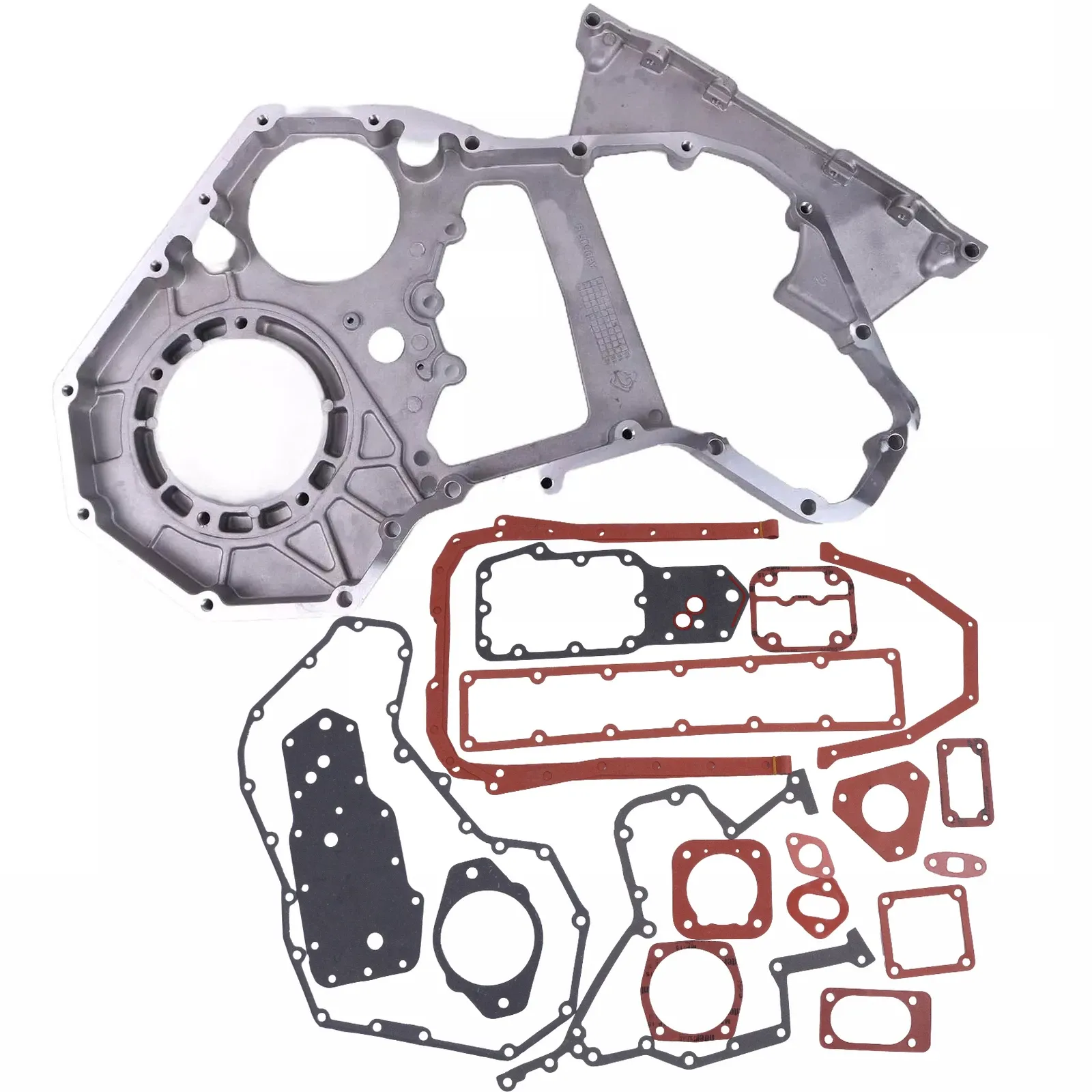
If the gear train is located at the flywheel end, the applicable parts catalog should be used to distinguish the Rear Gear Housing, Rear Gear Cover, and Flywheel Housing. These names may refer to different components, and the Flywheel Housing should not automatically be treated as another name for the rear Gear Housing.
The sections below concerning gear support and oil pump drive interfaces mainly apply to configurations in which the timing gear train is installed inside a front-mounted Gear Housing.
Why Matching Bolt Holes Do Not Confirm Gear Housing Compatibility
A Gear Housing may fit against the cylinder block and have matching perimeter bolt holes, but this only confirms that the external mounting interface appears compatible.
Other features must also be checked, including:
- Idler gear support-hole positions
- Machined gear-support surfaces
- Dowel-pin locations
- Accessory-drive openings
- Bushing bores
- The relative alignment between the crankshaft centerline and the seal bore
Matching external bolt holes only means that the housing may physically attach to the cylinder block. It does not prove that the internal gear train, accessory drives, and sealing centerlines are correctly aligned.
Gear backlash, end clearance, housing alignment, and whether the existing gears can be reused must be determined by the repair workshop through inspection and measurement.
How to Check the Cummins Gear Housing and Oil Pump Interface
On some Cummins engine platforms, the oil pump drive location, mounting face, or lubrication passages are directly related to the Gear Housing and gear-train configuration.
However, the oil pump is not mounted to the Gear Housing on every engine platform. The two components should only be treated as part of the same configuration when the applicable parts catalog or service information shows a direct relationship.
For engines with this type of arrangement, the following items should be verified:
- Oil pump part number
- Oil pump mounting face
- Drive gear or drive-shaft interface
- Lubrication passages
- Gasket or sealing locations
- Pressure-regulating component configuration
An oil pump that physically bolts to the housing is not necessarily compatible with the housing drive system, oil passages, or pressure-control arrangement.
What to Inspect When a Front Crankshaft Seal Keeps Leaking
The performance of a front crankshaft seal depends on more than the seal part number. It is also affected by:
- The installed position of the seal
- The condition of the seal bore in the Gear Cover or Gear Housing
- The sealing surface on the crankshaft nose, hub, or wear sleeve
When repeated front-end oil leakage occurs, buyers often replace the seal again. However, if the rotating sealing surface has developed a wear groove, the lip of the new seal may continue to run on the same damaged area.
The rotating sealing surface is the part that turns with the crankshaft and makes direct contact with the seal lip. Depending on the engine configuration, this may be the crankshaft nose, a hub, or a wear sleeve.
The repair workshop should inspect the rotating sealing surface, the seal bore, the actual seal installation depth, and other possible leakage paths. The correct repair may involve a new seal, a compatible wear sleeve, or another procedure specified in the applicable Cummins service information.
Why PTO, Accessory-Drive, and Machined Openings Create Multiple Versions
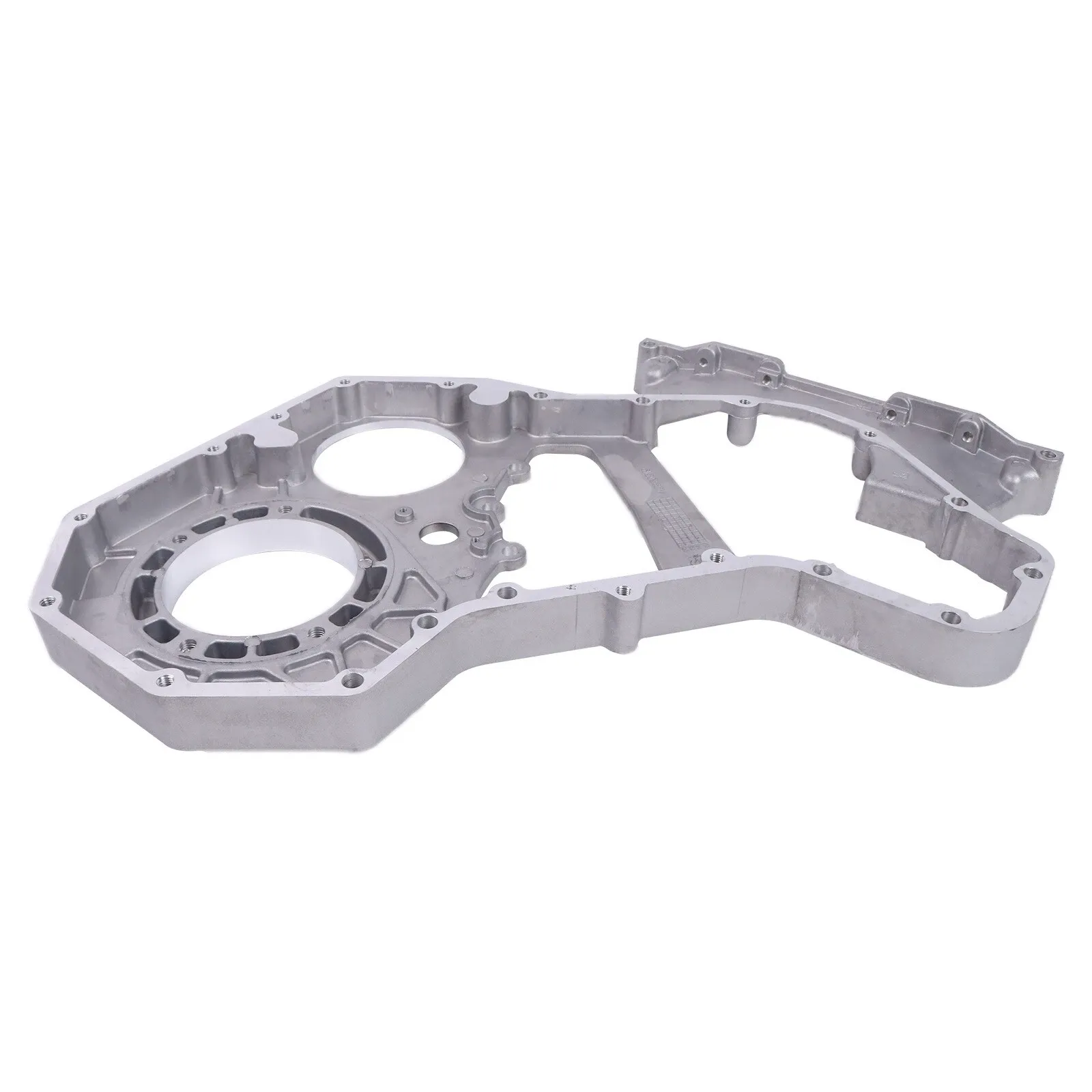
Two Gear Housings or Gear Covers may look almost identical and may even share the same basic casting design, yet still be non-interchangeable.
Different versions can result from differences in:
- Final machined openings
- PTO provisions
- Accessory-drive openings
- Plug configurations
- Breather connections
- Sensor interfaces
- Other equipment-specific connections
This is why the assumption that “the engine model is the same, so the part must be interchangeable” often fails in this product category.
The safer approach is to verify the part using the Engine Serial Number, CPL, visible markings on the existing component, and the applicable parts catalog rather than relying on appearance or approximate dimensions.
If a supplier advises that an old part number has been superseded by a new number, do not assume that every accessory from the original component can be transferred directly. The supersession should still be verified against the current ESN and engine configuration.
It is also important to confirm whether the replacement part requires compatible gaskets, plugs, seals, brackets, or other updated components.
What to Inspect After a Gear Housing Cracks
When a Gear Housing develops a crack or damaged mounting surface, the buyer’s first reaction is often to replace only the housing.
On relevant engine platforms, however, the housing may have a direct mounting or drive relationship with the gear train, oil pump, accessory drive, and sealing area. If the housing has cracked, shifted, or suffered an impact, adjacent components should be inspected to determine the full extent of the damage.
This does not mean that all related parts must automatically be replaced. The repair workshop should determine what can be reused and what must be replaced after inspection and measurement.
Are You Buying a Raw Casting, a Machined Part, or a Complete Assembly?
This is one of the most frequently overlooked differences in Gear Housing and Gear Cover quotations.
A supplier may quote:
- A raw casting
- A fully machined housing
- A housing fitted with bushings, dowel pins, plugs, seal-bore components, or other small parts
- A complete service assembly or repair kit
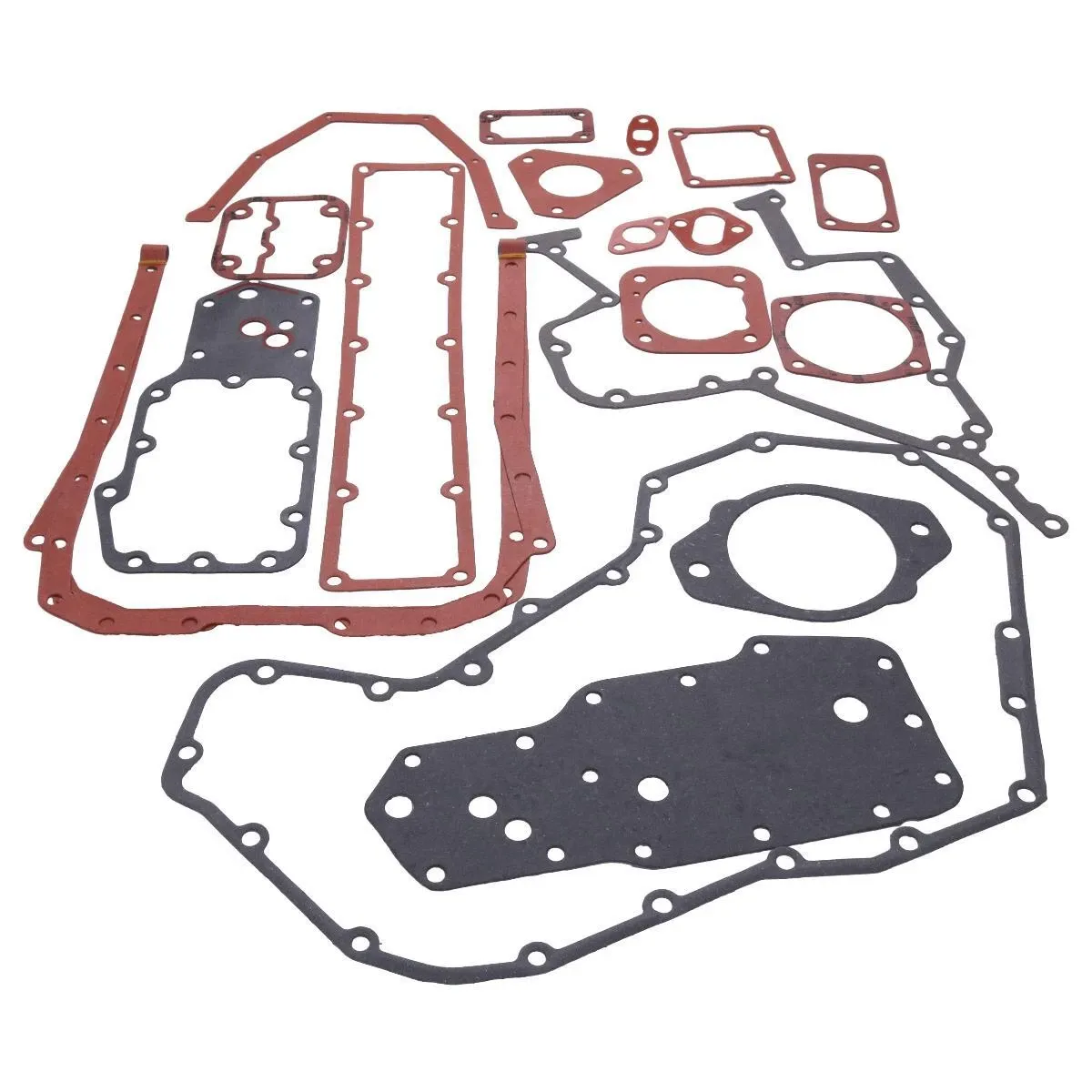
For example, one Gear Cover Kit may include the cover, oil seal, plugs, and sealing strips, while a Gear Housing Kit may include only the housing and its corresponding gasket.
Two quotations with similar product names may therefore contain very different scopes of supply.
Before comparing prices, confirm:
- Whether the part is a raw casting or fully machined
- Whether the quotation covers the housing or cover only
- Whether it is an assembly or repair kit
- Whether oil seals are included
- Whether gaskets and O-rings are included
- Whether plugs, bushings, and dowel pins are included
- Whether fasteners are included
When replacing a Gear Housing or Gear Cover, the corresponding housing gasket, cover gasket, O-rings, sealing strips, and specified sealant may also need to be checked.
Whether these items must be replaced, and whether the engine uses a formed gasket or liquid sealant, should be confirmed from the service information applicable to the current ESN.
Many buyers order only the main casting and discover after disassembly that the required gasket, oil seal, or small installation parts were not included, creating another round of quotation requests and delivery delays.
What Information Is Needed for a Cummins Gear Housing Quotation?
Provide as much of the following information as possible:
- Whether the gear train is front- or rear-mounted
- Whether you need the Gear Housing, Gear Cover, or a complete kit
- The accessories currently installed at the front of the engine
- PTO configuration
- Current service part number
- Visible casting, mold, or production markings
- Oil pump part number, but only where the parts catalog shows a direct relationship between the oil pump and the Gear Housing or gear train
- Condition of the front crankshaft seal, hub, or wear sleeve if front-end oil leakage is also being repaired
Casting numbers, mold numbers, and production markings are not always orderable service part numbers. They should be used as supporting identification information only. Final part-number confirmation should be based on the parts catalog associated with the engine ESN.
If the gear-train location is uncertain, provide clear photographs of both the front and flywheel ends of the engine.
Photos can help identify the accessory layout, visible covers, and flywheel housing structure. However, when the gear train is hidden behind the flywheel housing, transmission, or other components, photographs may not be sufficient to confirm its actual location.
Final confirmation should still be based on the ESN-specific parts catalog and service information.
How ZEB Power Verifies Cummins Gear Housings and Gear Covers
After receiving the Engine Serial Number, ZEB Power first checks the applicable parts catalog to determine whether the engine uses a front- or rear-mounted gear train and to identify the original configuration.
If the CPL, existing part number, equipment model, and PTO configuration are also available, we can further identify differences caused by equipment options, previous modifications, superseded parts, or accessory-drive arrangements.
For engines with a front-mounted gear train, we can also verify:
- Current part number and supersession history
- PTO and accessory-drive openings
- Oil pump-related interfaces
- Seal-bore configuration
- Whether the quotation covers the housing or cover only
- Whether seals, gaskets, plugs, and other kit components are included
The parts catalog can confirm the original configuration, applicable part number, supersession information, and scope of supply.
It cannot remotely confirm whether the existing housing is distorted, whether the gears can be reused, whether the rotating sealing surface is worn, or whether adjacent components must also be replaced. These decisions must be made by the repair workshop after disassembly, inspection, and measurement.
Please send the engine ESN. If available, also provide the CPL, clear photographs of both sides of the old part, and all visible part numbers. We will use this information to begin verification. If the available information is still insufficient, the equipment model, accessory layout, or relevant parts-catalog information may also be required.
Frequently Asked Questions
Is the Gear Housing always the same on engines with the same Cummins model designation?
No. The same commercial engine model or engine family may include different ESNs, CPLs, PTO options, fuel-pump configurations, and accessory-drive arrangements.
The part should be verified through the parts catalog associated with the ESN rather than purchased according to the engine model alone.
Why do Gear Housing quotations vary so much?
First determine whether the quotation is for a raw casting, a fully machined housing, an assembly, or a complete kit containing gaskets, seals, and small installation parts.
The scope of supply, machining status, material and inspection requirements, and whether the part is new, remanufactured, or used can all significantly affect the price.
The front seal has been replaced three times, but the engine still leaks. Does this mean the seals are counterfeit?
Not necessarily.
The crankshaft nose, hub, or wear sleeve may have developed a wear groove. The repair workshop should also inspect the seal bore, installation position, and other possible leakage paths before attributing the problem to the seal itself.
The Gear Housing is cracked, and the workshop wants to inspect the oil pump and seal. Are they trying to sell unnecessary parts?
The inspection request alone does not prove that unnecessary parts are being promoted.
On relevant engine platforms, the Gear Housing may have a direct mounting or drive relationship with the gear train, oil pump, and sealing area. Inspecting these parts helps determine the full extent of the damage, but it does not mean they must all be replaced.
How can I tell whether the engine has a front- or rear-mounted gear train?
Start by sending clear photographs of the front and flywheel ends of the engine to the supplier for preliminary identification.
If the gear train is hidden behind the flywheel housing or other components, photographs may not be conclusive. Final confirmation should be made through the parts catalog associated with the engine ESN.