

Cummins Exhaust Manifold Buying Guide: Turbo Position, Bank & EGR

4519
Table of Contents
Generating table of contents
When an engine develops an exhaust leak, abnormal noise or a cracked manifold, the first request is often simply for “a Cummins exhaust manifold.” Some buyers add that the turbo is mounted at the rear, but that still leaves many possible configurations.
A small change in turbo position can move the oil-feed line, oil-drain line, intake connection and exhaust outlet away from their original locations. The manifold may still bolt to the cylinder head, yet the surrounding pipes and brackets no longer align. This is not just a matter of whether the part can be installed; it is a question of whether the complete exhaust layout remains correct.
V-type engines add another layer of complexity. Each cylinder bank normally uses its own exhaust manifold, and the two sides may look similar while using different port directions, collector connections or part numbers. A buyer therefore needs to identify the exact bank rather than assume the left- and right-side manifolds are interchangeable.
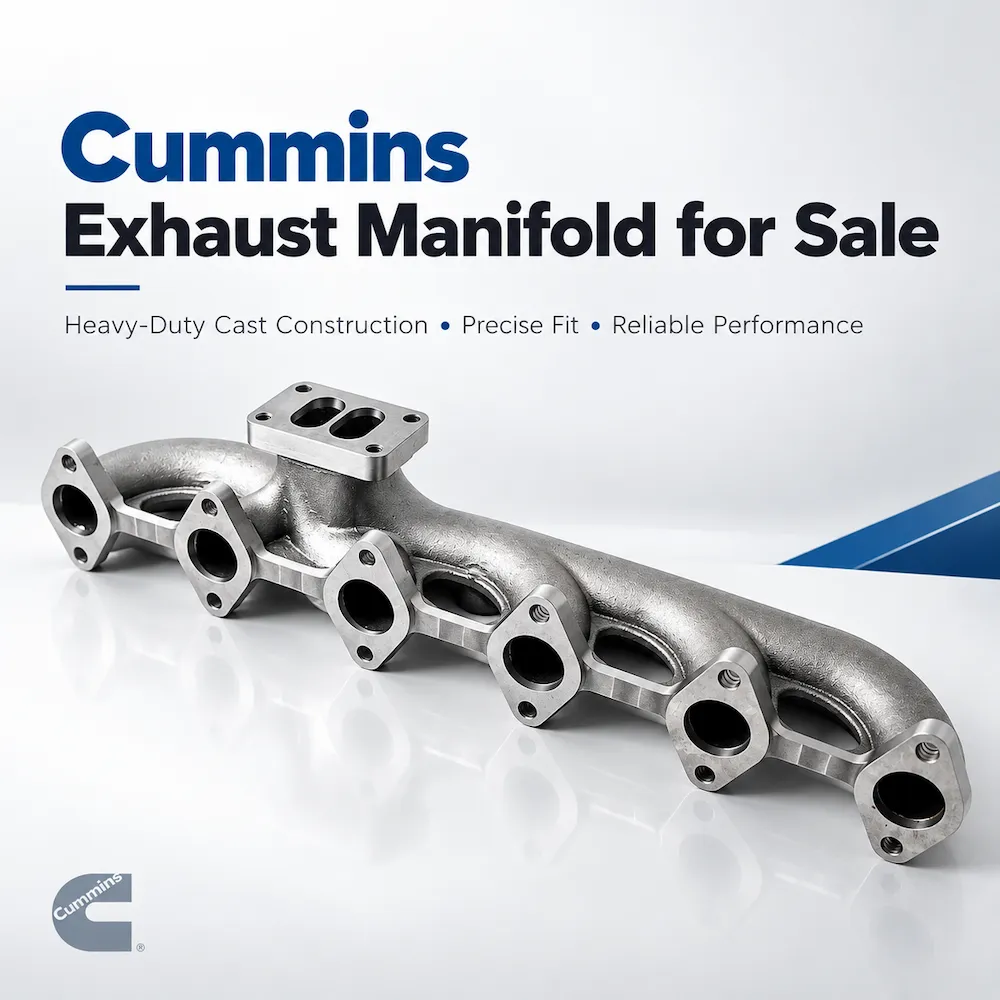
This guide is written for buyers sourcing Cummins exhaust manifolds and related exhaust-side hardware. It explains how turbo position, bank location, EGR configuration, sectional design and flange condition affect the correct part match.
Crack diagnosis, flange correction, bolt torque, leak testing and reuse decisions are outside the scope of this article and should be handled by a qualified repair facility using the applicable service information.
A general turbo position does not confirm the actual offset
Descriptions such as front-mounted, rear-mounted or center-mounted turbo indicate only the general location.
The actual match also depends on the height, fore-and-aft position, lateral offset, outlet direction and mounting angle of the turbo flange, as well as whether the turbo connects directly to the manifold or through a separate adapter.
These differences may appear small, but they can shift the turbo enough to affect the oil-feed line, oil-drain line, compressor inlet, exhaust outlet and surrounding brackets.
A replacement manifold may bolt correctly to the cylinder head and still place the turbo in the wrong location for the existing equipment layout.
For this reason, an inquiry should include more than a photo of the cylinder-head side. The most useful images show the complete manifold, the turbo connection from the front and side, and the turbo with its surrounding pipes and brackets still installed.
Those views provide far more information than a description such as “rear turbo.”
V-type engines require the correct bank identification
On a V-type engine, each cylinder bank normally collects exhaust gas through a separate manifold before the flow reaches its own or a shared turbocharger, collector or downstream exhaust system.
The two manifolds may use different part numbers because of differences in port direction, collector or turbo connection, EGR routing, pipe location, bracket position or available installation space.
Left and right therefore should never be assumed to be interchangeable.
The exact bank should be identified from the applicable parts catalog, equipment marking or service information. Bank 1 and Bank 2 do not always correspond to the same left-right orientation across all engines, so the side should not be determined only by standing in front of the machine and describing what appears to be left or right.
Inline engines do not have a left-bank and right-bank issue, but the current installation still matters if the turbo, exhaust pipe or support brackets have previously been modified.
An EGR port belongs to the full emissions configuration
Some Cummins engines use cooled EGR, a variable-geometry turbocharger and an aftertreatment system as part of one coordinated emissions strategy.
In these configurations, an EGR take-off on the exhaust manifold or related exhaust connection is part of the complete air-handling and emissions path. It is not an isolated hole that can be added, blocked or removed based on appearance alone.
The same engine family may have several manifold versions because of emissions level, equipment application and CPL. One version may have an EGR connection, another may not, while a third may place the EGR take-off in a separate pipe or adapter.
Sensor and pressure-port locations can also differ.
An unused boss or port should not automatically be treated as an unnecessary EGR opening. It may serve an exhaust-pressure, exhaust-temperature, sensor, tube, plug, adapter or other monitoring function.
Two manifolds that look similar should therefore not be converted from one configuration to another by drilling or plugging ports. The buyer should confirm whether the engine uses EGR and identify what is connected to each port on the original part.
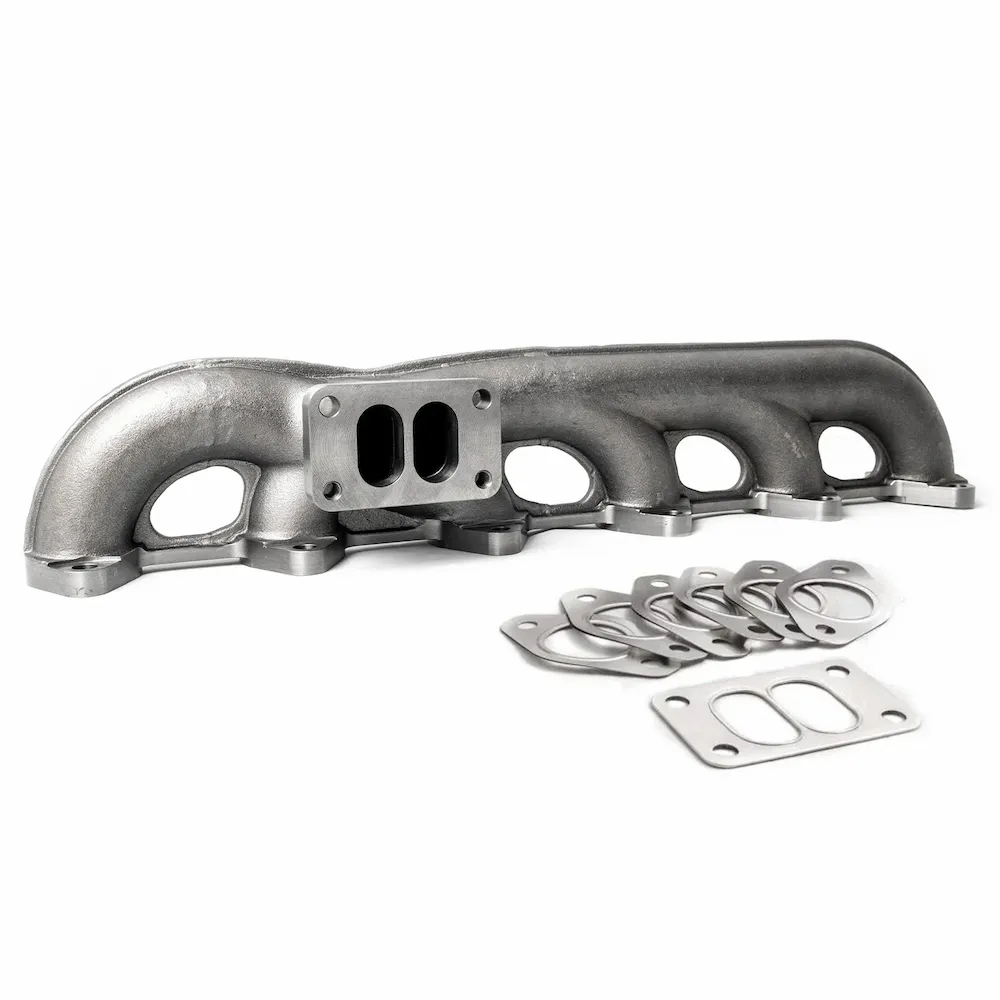
A sectional manifold does not guarantee that every section is sold separately
Cummins exhaust manifolds may use a one-piece design or a sectional construction.
A sectional manifold can include front, center, rear or other sections. Adjacent sections may use a flange, slip joint, sleeve, seal or another connection that maintains sealing while allowing relative movement during thermal expansion.
When one section cracks, it does not automatically follow that only that casting should be ordered.
The buyer still needs to confirm whether that section is available as an individual service part, whether the adjacent sections remain usable, whether the joint or slip fit is in acceptable condition, whether the inter-section seals must be replaced, and whether the turbo-mounted section matches the original configuration.
A sectional design simply means that the manifold is made from multiple pieces. It does not guarantee that every piece can be purchased independently or that replacing one section will restore the entire sealing system.
Before disassembly, retain photos of the complete assembly and mark the front, rear, turbo and bank directions. Once the manifold has been separated, a photo of one loose section can easily lose the installation context needed for identification.
Flange condition can matter as much as an obvious crack
An exhaust manifold is repeatedly exposed to hot exhaust gas and thermal cycling.
Visible cracking is one failure mode, but the cylinder-head and turbo flange surfaces may also distort in ways that are difficult to judge from appearance alone. This can affect gasket loading and sealing.
The result may be an exhaust leak, black soot marks, premature gasket failure, recurring stud or bolt problems, or continued leakage after a new manifold is installed.
A visual crack does not by itself prove that the casting material was the only cause. Installation stress, turbo support, adjacent pipe position, stud condition and previous repair machining may also contribute.
The actual cause and the condition of the sealing surfaces should be determined by the repair facility after disassembly and inspection.
A casting number helps with identification, but it is not always the order part number
Exhaust manifolds often have a large and visible casting number, so many inquiries use that number as though it were the service part number.
The two are not always the same.
One base casting can receive different machining, port, thread, EGR, sensor or turbo-flange treatments. The same casting may therefore support more than one service configuration.
Other visible markings may be supplier marks, pattern codes, production codes or batch marks.
A casting number is useful for narrowing the search, but the final order should still be checked against the ESN, current configuration, complete photos and the formal parts record.
When no old service part number is available, provide the casting number as supporting information rather than copying it directly onto the purchase order.
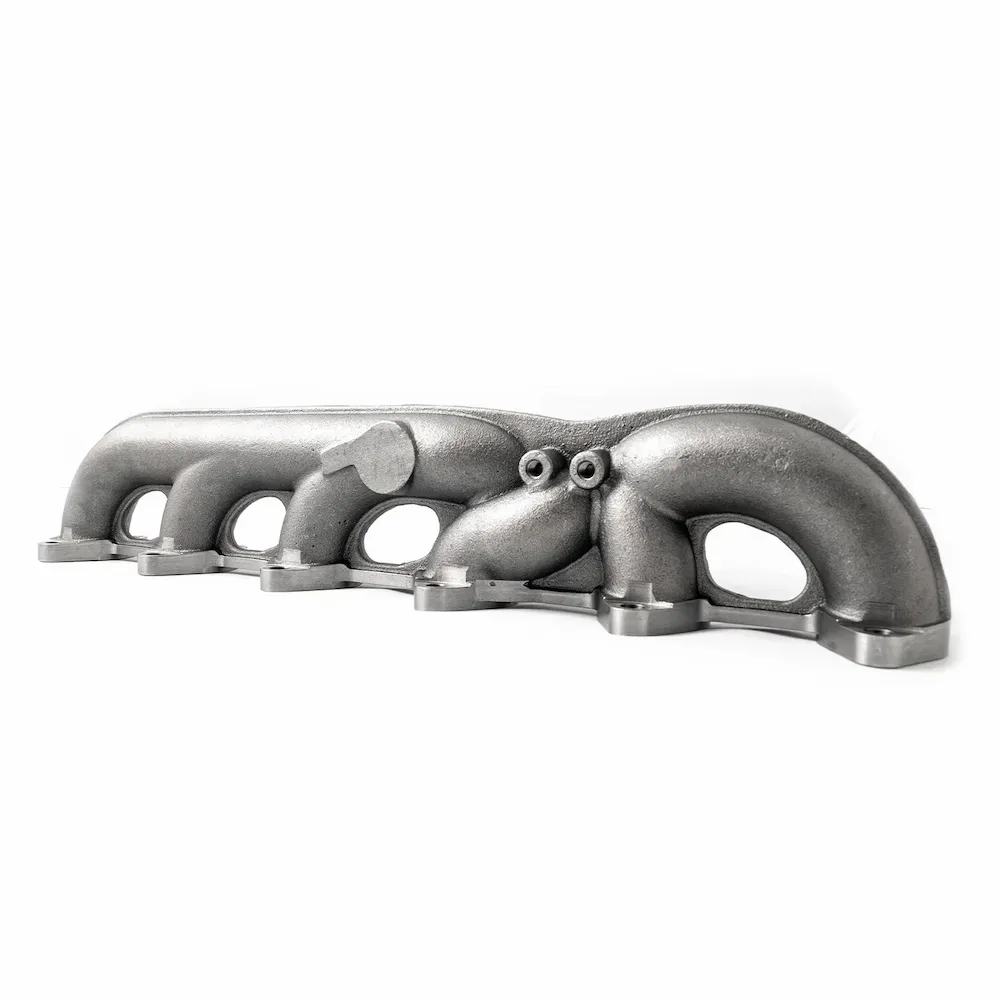
A manifold quotation is not automatically a complete repair scope
Suppliers do not always use the terms Exhaust Manifold, Manifold Assembly and Manifold Kit in the same way.
One quotation may include only the manifold body. Another may also include the cylinder-head gasket, section-joint seal, studs, nuts, spacers or turbo-side hardware.
Before accepting the quotation, confirm whether the requirement is for the left or right bank, one section or the complete assembly, the correct EGR and sensor-port version, and whether the gaskets, seals and mounting hardware are included.
If the repair also involves the turbo support, exhaust pipe, clamp or another connecting part, treat those as separate items unless the quotation clearly lists them.
Clarifying this scope before ordering reduces the risk of receiving the manifold while still missing the parts required to complete the installation.
If you already have a quotation but cannot tell what it covers, send the quotation, ESN, CPL and original-part photos to ZEB Power for a line-by-line BOM review before placing the order.
A quality alternative must match more than the bolt pattern
Configuration matching is only the first stage when evaluating a quality alternative exhaust manifold.
The supplier should be able to identify the corresponding service part number or cross-reference, the confirmed engine or application range, and whether the current ESN, CPL, bank and EGR configuration have been checked.
Even if the mounting holes and turbo position appear correct, long-term performance can still differ.
An exhaust manifold operates under high temperature and repeated thermal cycling. Relevant quality factors include casting-material and wall-thickness consistency, cylinder-head flange machining, turbo-flange position and angle, exhaust-port alignment, sectional-joint or slip-fit quality, EGR and sensor-port thread accuracy, dimensional consistency between batches, and the supplier’s warranty and claim process.
These differences may not appear on the installation day, but they can affect sealing, thermal stress and crack resistance over time.
For continuously operated generator sets, mining equipment and machines with high access cost, the cost of repeated disassembly, turbo realignment and downtime can be much greater than the initial price difference between manifolds.
If you are comparing new genuine and quality alternative options, provide the ESN, CPL, bank, EGR configuration and operating conditions. ZEB Power can help review the currently available supply options.
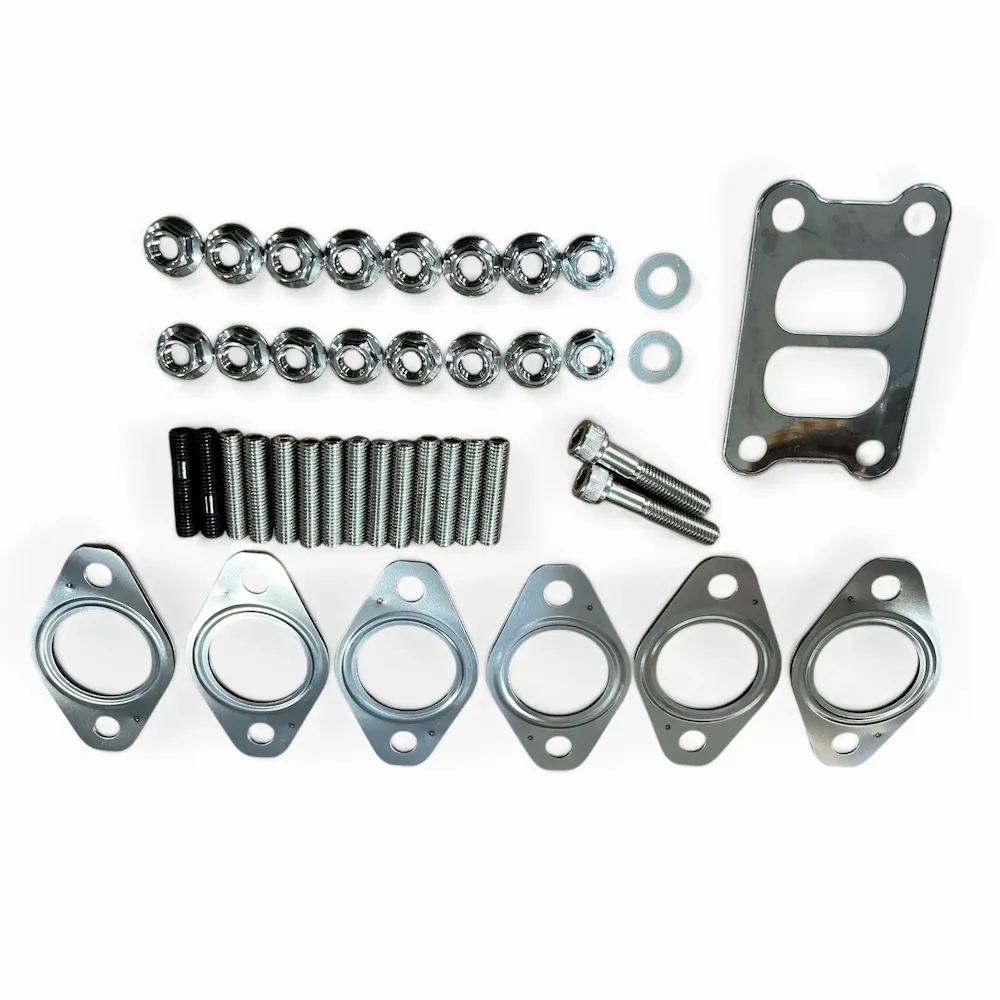
How ZEB Power supports exhaust manifold sourcing
ZEB Power supplies Cummins exhaust manifolds and related exhaust-side connection parts for construction machinery, mining equipment, generator sets and industrial equipment.
Based on the ESN, CPL, engine configuration, bank, turbo position, EGR configuration, old service part number or casting number, and complete installation photos, we can help verify:
- One-piece and sectional exhaust manifolds;
- Front, center and rear manifold sections;
- Left- and right-bank manifolds;
- Turbo-mounting manifold versions;
- EGR-related manifold versions;
- Exhaust manifold gaskets and seals;
- Studs, nuts, spacers and joint parts;
- Turbo-side connection hardware;
- Repair-kit or assembly scope;
- New genuine and confirmed quality alternative options.
Crack-cause analysis, flange evaluation, section reuse and repair scope should be decided by the service technician after inspection.
ZEB Power’s role is to make sure the manifold, bank, turbo position, EGR ports and related hardware belong to the same configuration once the repair requirement is defined.
Send the engine ESN, CPL, full equipment model, exact bank, EGR configuration, old part number or casting number, and complete installation photos. ZEB Power can help confirm the correct manifold part number and quotation scope.
Frequently asked questions
Can the left- and right-bank exhaust manifolds on a V-type engine be interchanged?
They should not be assumed to be interchangeable. Port direction, turbo or collector connection and available installation space may differ. Confirm the exact bank by ESN and parts record.
Why is “rear turbo” not enough to identify the manifold?
Rear-mounted only describes the general position. Flange height, offset, outlet direction and adapter design can still move the turbo and surrounding lines.
Can only the damaged section of a sectional manifold be replaced?
That depends on the service-part supply level and the condition of the adjacent joints, seals and sections. A sectional design does not guarantee that every section is sold separately.
Can the casting number on the old manifold be used directly for ordering?
It is useful for narrowing the search, but it may not be the service part number. Verify it against the ESN, full structure and formal parts record.
Does continued leakage after installation prove that the new manifold is defective?
The leak may also involve the gasket, stud, flange surface, section joint, turbo support or installation stress. The repair facility should inspect the complete sealing system.
Can a quotation be prepared without the old part number?
Yes. An initial match can be made from the ESN, CPL, exact bank, turbo position, EGR configuration, casting number and complete photos. Additional interface or dimensional information may still be required when several versions exist.