

Cummins Wiring Harness Guide | Which Harness Do You Actually Need?

8610
Table of Contents
Generating table of contents
When an engine experiences a no-start condition, intermittent fault codes, unstable sensor signals or loss of ECM communication, many enquiries begin with the same request:
“We need a replacement Cummins wiring harness.”
However, an “engine wiring harness” is rarely one simple cable. It may refer to the main engine harness, an injector sub-harness, an aftertreatment harness or an OEM-designed interface harness connecting the engine to the machine control system. These harnesses are often identified and purchased separately.
A practical matching priority is:
Original harness part number → Engine ESN → ECM dataplate → All connectors → Engine application and equipment model
This guide explains why each item matters, what buyers should confirm before accepting a quotation, and where harness scope is most often misunderstood. It does not provide fault-code diagnosis, electrical testing procedures or harness repair instructions. Those tasks should be completed by qualified service technicians.
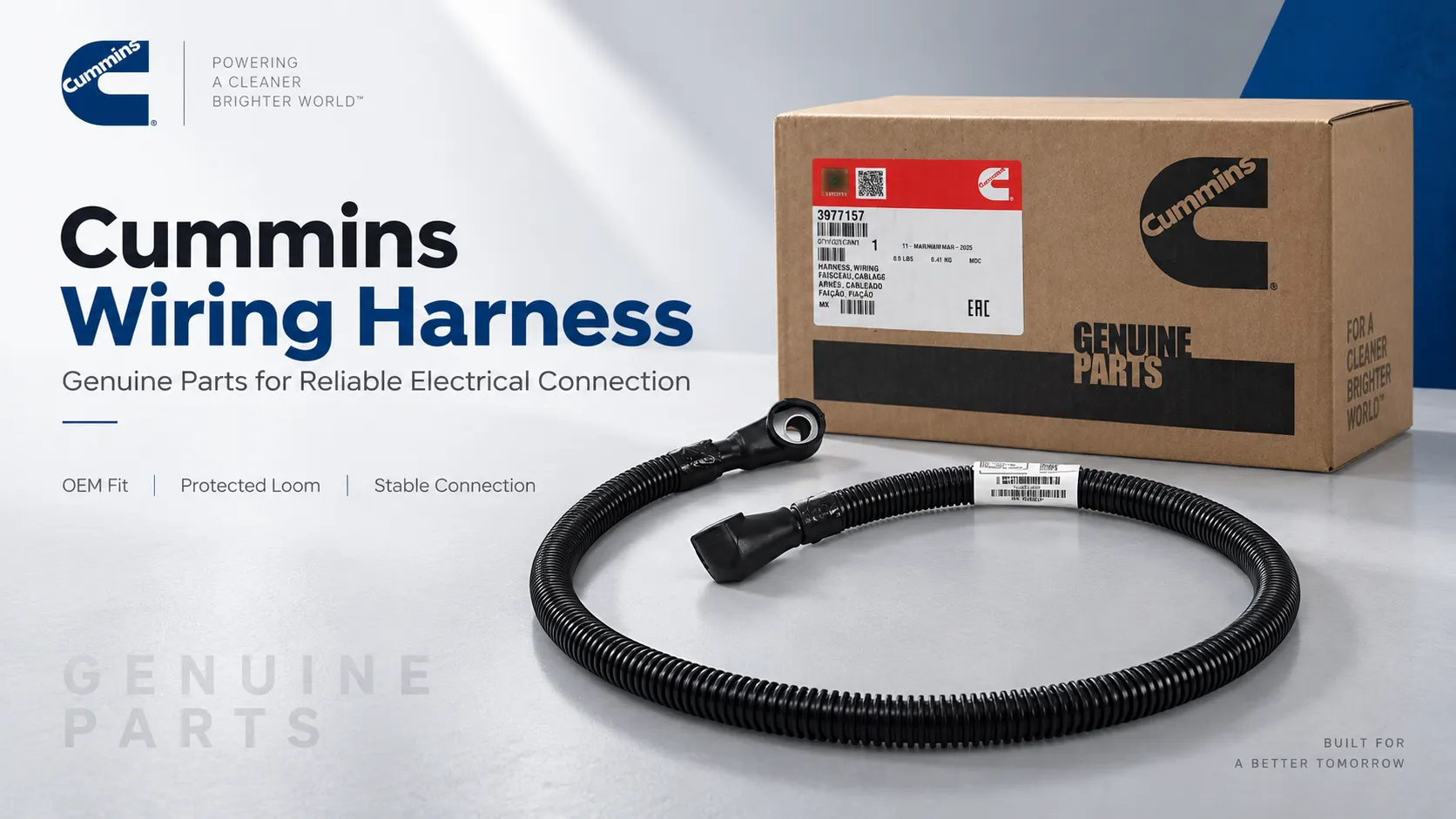
An Engine Wiring Harness Is Not a Single Cable
An engine wiring harness carries power, ground and control signals between the ECM, sensors, actuators, fuel system and equipment control system. In actual procurement, however, the term “engine wiring harness” may refer to only one section of the complete electrical system.
The table below uses common purchasing terms. Exact names, assembly boundaries and part scope vary by engine platform and parts catalogue.
| Harness Type | Typical Connections |
|---|---|
| Main Engine Harness | ECM, engine sensors and major actuators |
| ECM Harness | ECM to the engine-side or equipment-side interface |
| Injector Harness | ECM or main harness to the fuel injectors |
| Sensor Harness | Temperature, pressure, speed and position sensors |
| Valve-Cover Harness | Passes through the valve cover to internal injectors or related components |
| Aftertreatment Harness | Emissions-system sensors and actuators |
| OEM Interface Harness | Engine to machine instruments, controllers and protection systems |
Main power cables for the batteries, starter motor and charging alternator are also part of the wider engine electrical system, but they are usually treated as separate power cables. They may not be included in an engine harness quotation and should be confirmed separately.
On many electronically controlled engines and equipment-integration projects, the engine-side harness and OEM interface harness are designed and supplied separately, then connected through a main connector. This is not a universal arrangement for every Cummins engine. The actual supply boundary depends on the engine platform, equipment manufacturer and electrical architecture, so the ESN-based parts catalogue and equipment documentation should be checked.
Generator-set applications require an additional distinction. The internal engine harness is often within the Cummins parts scope, while wiring between the engine, genset controller, control cabinet and main AC alternator may belong to the generator-set manufacturer.
What Does a “Wiring Harness” Quotation Actually Include?
Terms such as “engine wiring harness” and “complete harness kit” do not always describe the same supply scope.
A quotation may include:
- Only the main engine harness
- The main harness together with the ECM
- An injector or sensor sub-harness
- An OEM interface harness
- A short repair lead between a sensor and connector
- A connector repair kit rather than a complete harness assembly
Before accepting a quotation, confirm exactly which harness section is included, whether the ECM is part of the package, and whether any connector repair item is clearly identified.
If you already have a harness quotation but cannot determine whether it covers the main engine harness, ECM, OEM interface harness or only a connector repair item, send the quotation together with the engine identification details for verification.
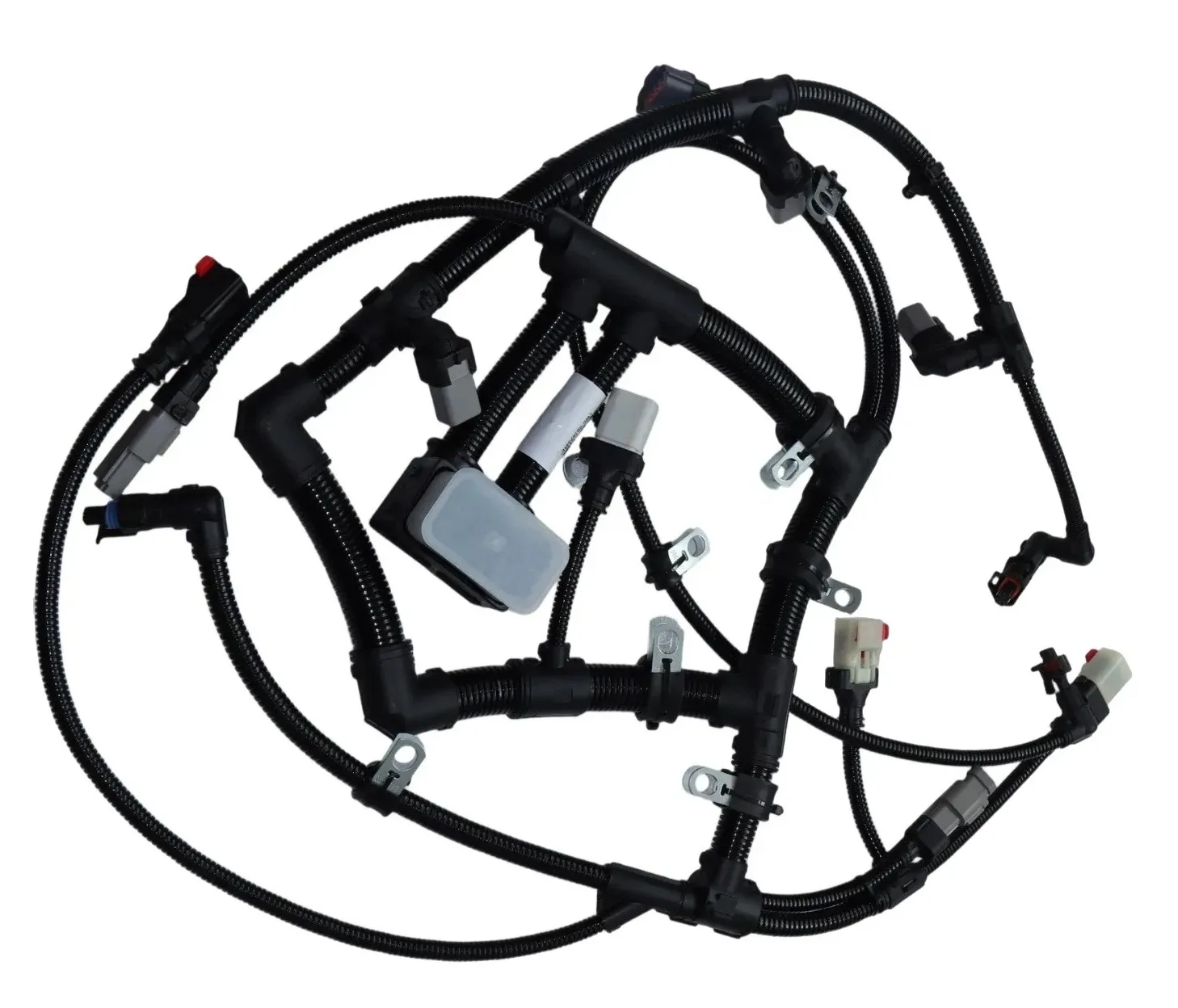
Why the Engine Model Is Not Enough
An engine model identifies the basic engine family, but it rarely identifies one unique wiring harness.
Two engines with the same model designation may use different harnesses because of:
- Mechanical or electronically controlled fuel systems
- Different ECM platforms or calibrations
- Different power and speed ratings
- Industrial, construction or generator applications
- Different sensor and actuator arrangements
- Previous ECM replacement or harness modification
- OEM-specific machine interfaces
A 12 V or 24 V equipment system may affect starter circuits, charging circuits, relays and some OEM interfaces. However, voltage alone does not determine whether the main engine harness is different.
Three Common Harness Mismatch Scenarios
1. The Engine Was Replaced, but the Equipment Records Were Not Updated
The equipment dataplate still identifies the original engine, while the installed engine has a different ESN and ECM. A harness selected only from the machine model may therefore not match the engine currently installed.
2. The Old Harness Label Uses an OEM Number
The buyer provides a harness number from an excavator, loader or generator-set manufacturer and expects it to appear in the Cummins parts catalogue.
If the number belongs to the equipment manufacturer, the first step is to determine whether the harness is engine-side or equipment-side.
3. The Main Connector Fits, but the Branch Layout Is Different
Two harnesses may use a physically compatible ECM connector while differing in:
- Sensor branch count
- Lead length
- Clip and bracket positions
- Terminal assignment
- Connector keying
- OEM interface functions
A connector that physically fits is not necessarily electrically compatible.
Five-Step Cummins Harness Matching Process
Step 1: Find the Original Harness Part Number
The original harness label may be located:
- Near the ECM connector
- At a main branch point
- Near a mounting bracket
- On the outer protective sleeve
- Close to the equipment interface connector
Photograph the complete label rather than recording only part of the number.
The old part number is an important search starting point, but it may no longer be the current ordering number. Check whether it has been:
- Superseded by a newer part number
- Replaced by an upgraded assembly
- Split into a harness and separate connector repair item
- Included in a larger service kit
A difference between the old and current part numbers does not automatically mean the replacement is incompatible.
Step 2: Provide the Engine Serial Number
The engine serial number, or ESN, is the main reference for confirming the engine’s original build configuration.
Cummins QuickServe Online can be used to access ESN-specific parts information, dataplate details and available service documentation. Wiring diagrams may also be available when relevant documents exist for that engine.
The ESN reflects the original factory configuration. If the engine has been modified, rebuilt or fitted with a different ECM, the physical harness and connectors must still be checked.
Step 3: Record the ECM Information When Available
For electronically controlled engines, photograph the ECM dataplate and record available information such as:
- ECM part number
- ECM serial number
- ECM model
- Calibration or ECM code, when available
- Number and orientation of ECM connectors
ECM information is useful for complex configuration checks, but calibration data should not be treated as a mandatory requirement for every enquiry. Many buyers do not have diagnostic software available.
An ECM part number alone is not enough to identify a harness. The same ECM hardware may be used across different engine configurations.
Step 4: Compare Every Connector, Not Only the Main Plug
Provide clear photographs of:
- All ECM-side connectors
- Injector or valve-cover connections
- Engine sensor connectors
- Equipment-side main connectors
- Ground points
- Harness clips, brackets and mounting locations
Compare:
- Connector housing shape
- Keying features
- Pin count and arrangement
- Locking direction
- Branch count
- Lead length
- Clip and bracket positions
Do not change pin positions or combine two similar-looking harnesses without the correct circuit and terminal information.
If only one connector is damaged, a complete harness replacement may not always be necessary. Some platforms have connector repair parts that can be identified through the ESN, harness number or related sensor part number. Whether a local repair is suitable must still be confirmed by the technician responsible for inspection and electrical testing.
Step 5: Confirm the Actual Engine Application
The same engine family may use different machine-side interfaces depending on the application.
Construction and mining equipment may need to communicate with:
- Machine controllers
- Instrument panels
- Safety interlocks
- Hydraulic or transmission systems
- Equipment protection functions
Generator engines may connect to:
- Genset controllers
- Remote monitoring systems
- Start and stop circuits
- Protection and shutdown systems
The same base engine model does not guarantee the same equipment-side connector or control logic.
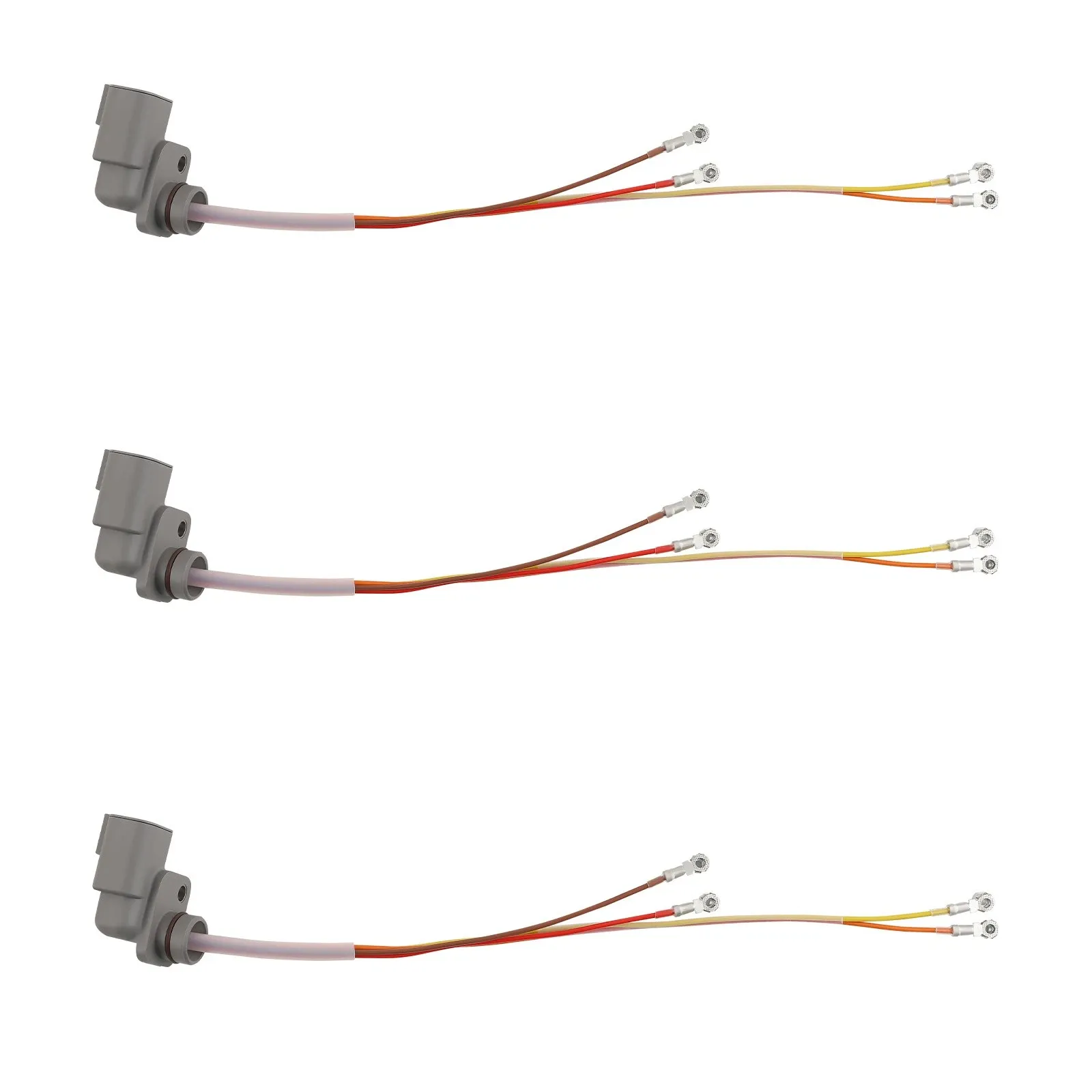
Symptoms That May—or May Not—Indicate a Harness Problem
Possible wiring harness symptoms include:
- Intermittent no-start conditions
- Unexpected shutdown during operation
- Several sensor fault codes appearing together
- Sensor readings that come and go
- Loss of ECM diagnostic communication
- Engine derating
- Fault behaviour changing when the harness moves or vibrates
- Alarms appearing after rain or pressure washing
- Repeated fuse failure
- Localised heating around a connector
These symptoms do not prove that the harness is defective.
Similar problems may be caused by:
- A failed sensor
- Poor ECM power supply
- Weak or unstable battery voltage
- Poor grounding
- ECM failure
- OEM-side harness faults
- Moisture or corrosion inside connectors
- Faulty fuses, relays or switches
The fault codes, power supply, grounds and related circuits should be checked before a complete harness is ordered.
Common causes of actual harness damage include:
- Long-term vibration and conductor fatigue
- Abrasion against metal edges or brackets
- Heat exposure near the exhaust system
- Oil, fuel or coolant contamination
- Water entering connectors during pressure washing
- Missing clips that leave the harness unsupported
- Repeated non-standard splicing or repairs
- Incorrect routing after engine service
A harness may look undamaged from the outside while containing a broken conductor at a repeated bending point. Such faults may appear only during vibration, temperature changes or harness movement.
Repair the Connector or Replace the Complete Harness Assembly?
Local connector repair may be considered when:
- Only one connector housing is damaged
- A small number of terminals are loose or corroded
- The damaged location is clearly identified
- The rest of the harness remains in good condition
- Correct terminals, seals and repair materials are available
- Continuity and functional testing can be completed after repair
Complete harness replacement is usually more appropriate when:
- Several branches are ageing at the same time
- Large sections have been exposed to excessive heat
- The protective covering has hardened or cracked
- The harness contains several non-standard splices
- Oil contamination has travelled into multiple connectors
- Intermittent internal open circuits are suspected
- Corrosion affects a wider section of the assembly
- The cost of repeated downtime is unacceptable
For mining equipment, data-centre standby power and other critical applications, repeated repairs to a severely aged harness may create more operational risk than replacing the correct assembly.
The final repair decision should be made by the service organisation responsible for inspection and electrical testing.
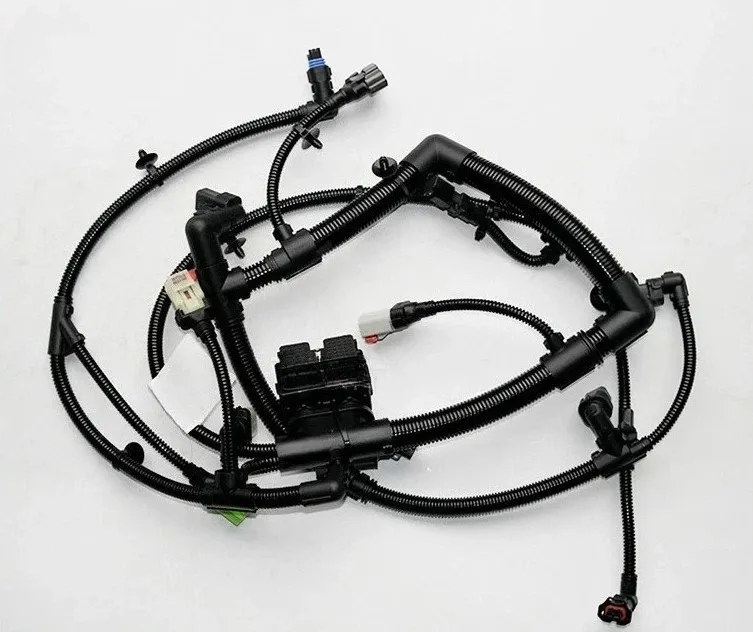
Genuine Harnesses and Verified Replacement Options
A replacement harness should not be judged only by whether the connectors fit or whether the price is attractive.
Important verification points include:
- Part-number cross-reference
- Connector manufacturer and specification
- Terminal assignment
- Seal design
- Wire size and protective materials
- Branch count and lead length
- Clip and bracket locations
- Heat and fluid resistance
- Factory continuity test records
For high-output engines, complex electronic systems, aftertreatment harnesses and critical standby-power projects, a genuine harness or a fully verified replacement option is often the lower-risk choice.
Replacement availability and suitability should be evaluated against the actual engine platform and operating application.
Information to Provide Before Ordering
Priority Information
- Engine ESN
- Original harness part number, when available
- Clear photographs of all important connectors
- Engine application
- Equipment make and model
- ECM dataplate photograph for electronically controlled engines
Supporting Information, When Available
- ECM calibration information
- Fault codes
- Harness repair or modification history
- Equipment wiring documentation
- Diagnostic scan results
If the original harness label is unreadable, photograph the complete installed routing before removal and number each connector. Removing or cutting the harness too early may destroy important identification evidence.
How ZEB Power Supports Cummins Harness Sourcing
ZEB Power supplies Cummins engine wiring harnesses, connector repair parts and related electrical interface components for construction machinery, mining equipment, generator sets and industrial equipment.
The availability of control-cabinet wiring or OEM-specific interface harnesses must be confirmed separately using the equipment make, model and original part number.
Based on the ESN, harness number and connector information, we can help verify:
- Applicable harness assemblies
- Superseding part numbers
- Available connector repair parts
- Genuine or verified replacement options
- The exact supply scope of a quotation
Whether a damaged harness is suitable for local repair should be decided by the technician responsible for inspection and electrical testing.
Send the engine ESN, original harness number, ECM dataplate and clear connector photographs for parts verification. Keep the original harness intact until the replacement configuration has been confirmed.
Frequently Asked Questions
Can I buy a Cummins engine harness using only the engine model?
It is not recommended. Engines with the same model designation may have different ESNs, ECM configurations and equipment interfaces. The original part number and physical connectors should also be checked.
Which is more important: the ESN or the original harness part number?
They serve different purposes. The original harness number identifies the current component, while the ESN identifies the engine’s original factory configuration. If the engine or harness has been modified, the ECM, connectors and installed arrangement must also be checked.
What should I do if the old harness part number has been discontinued?
Check whether the number has an official supersession, upgraded replacement or related repair kit. Do not select an unverified universal harness based only on physical appearance.
Does the same ECM part number always use the same wiring harness?
No. The same ECM hardware may be used across different engine configurations, while sensors, actuators and OEM interfaces can still differ.
If the connector housing is identical, is the harness interchangeable?
Not necessarily. Pin arrangement, circuit function, branch layout and lead length may be different even when the connector housings physically fit.
Can I replace only a damaged connector instead of the complete harness?
A local repair may be possible when the damage is limited, the rest of the harness is in good condition and the correct terminals, seals and repair materials are available. A complete replacement may be more reliable when the harness has widespread ageing or intermittent internal faults.
Is the generator-set control-cabinet harness part of the Cummins engine harness?
Not always. The internal engine harness may be a Cummins component, while wiring to the genset controller or inside the control cabinet may belong to the generator-set manufacturer.
Should the old harness be removed before ordering?
Avoid removing it too early. Photograph the routing, branches and connector locations while the harness is still installed. Cutting or removing it before identification may eliminate useful matching information.
What if the original harness label is unreadable?
Provide the ESN, ECM dataplate, equipment model, installed harness routing and clear photographs of every connector. The original engine record and physical configuration can then be checked together.