

Cummins Cylinder Head Assemblies: Bare vs Assembled vs Complete

3361
Table of Contents
Generating table of contents
Two suppliers may both describe their quotation as a Complete Cylinder Head, yet the prices can be very different.
The lower-priced head may already have the intake and exhaust valves and springs installed, but still require injector-sleeve work. The higher-priced option may include more internal assembly and pre-delivery inspection while still excluding the rocker assembly. Both product photos can look “complete,” even though the amount of work remaining after delivery is not the same.
This is one of the most common misunderstandings in Cummins cylinder head assembly sourcing:
Bare,AssembledandCompletedescribe levels of assembly, not standardized bills of material shared by every supplier.
This guide assumes that the engine model, ESN, CPL and cylinder head application have already been verified. The focus is the actual delivery condition: what has been installed, what work has already been completed, and what will still be required before the engine can return to service.
Crack inspection, pressure testing, sealing-surface machining, valve-seat repair and reuse decisions should remain with a qualified repair facility using the applicable service information.
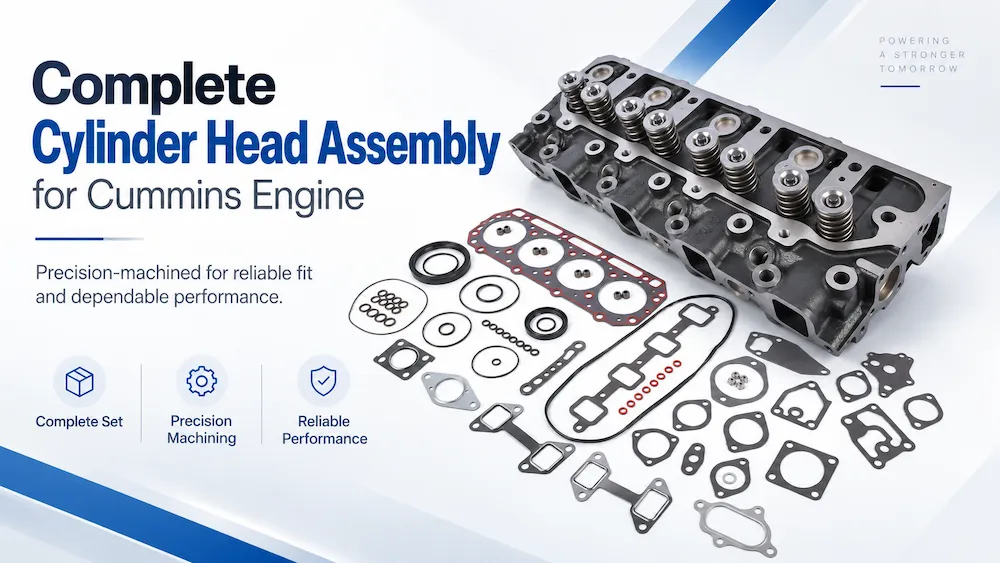
Compare the Remaining Work, Not the Product Label
A bare cylinder head normally consists mainly of the head body without the principal valve-train assembly. However, Bare Head does not necessarily mean an unmachined casting.
A commercially supplied bare head may already have its basic bores and sealing surfaces machined. Valve seats, valve guides, plugs or other basic components may also be installed to different levels. On engine platforms that use separate injector sleeves or injector cups, the sleeves may already be fitted, supplied loose or omitted after only the relevant bore has been machined.
Whether a bare head is the economical choice therefore depends on the repair facility’s machining, inspection and assembly capabilities. A lower purchase price can quickly lose its advantage when additional components, specialist work and assembly time are added.
An assembled cylinder head raises a different question. The important point is not how many parts appear to be installed, but which parts they are.
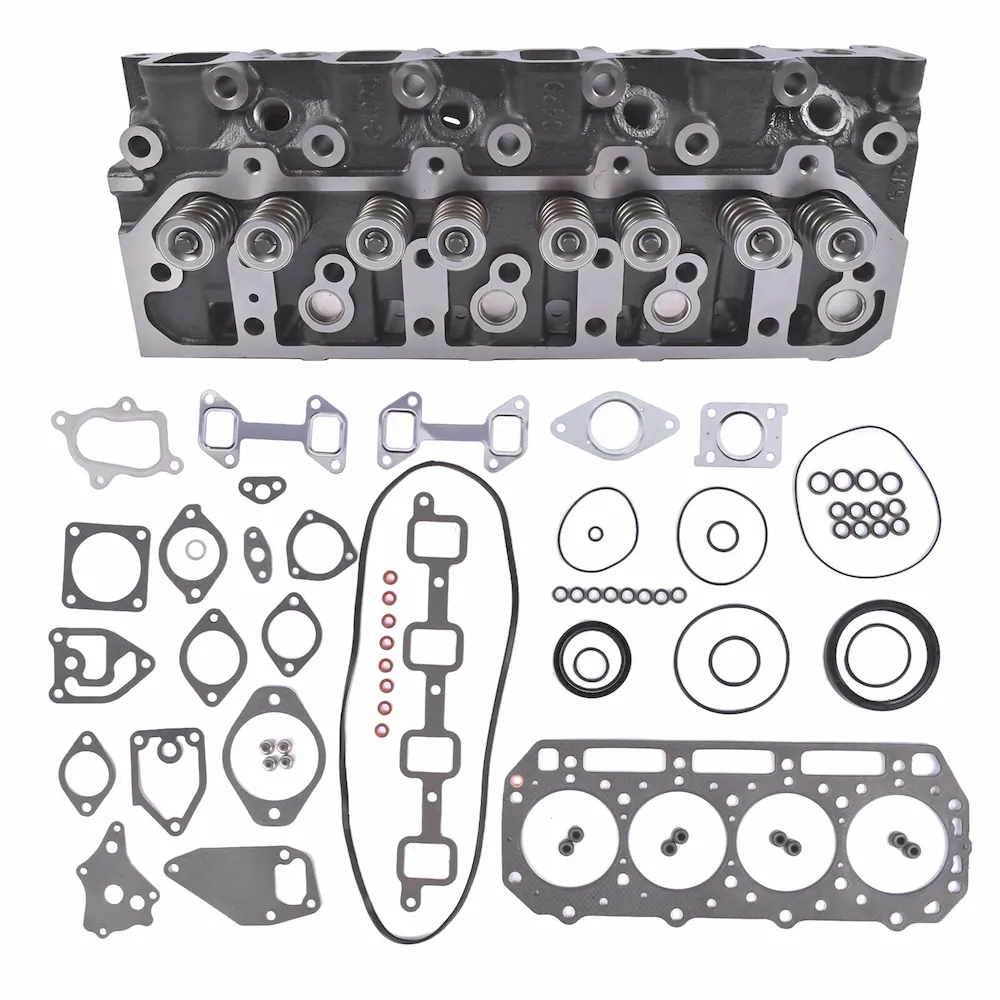
One assembled head may include intake and exhaust valves, valve springs, retainers and keepers. Another may include only seats, guides or injector-related components. A third may have most of the valve train installed but still require rocker components or injector-related parts from the old head.
Complete Cylinder Head creates the greatest risk of misunderstanding. A supplier may use Complete to mean that the main internal cylinder-head components have been assembled. It does not automatically mean that every component visible above the cylinder block is included.
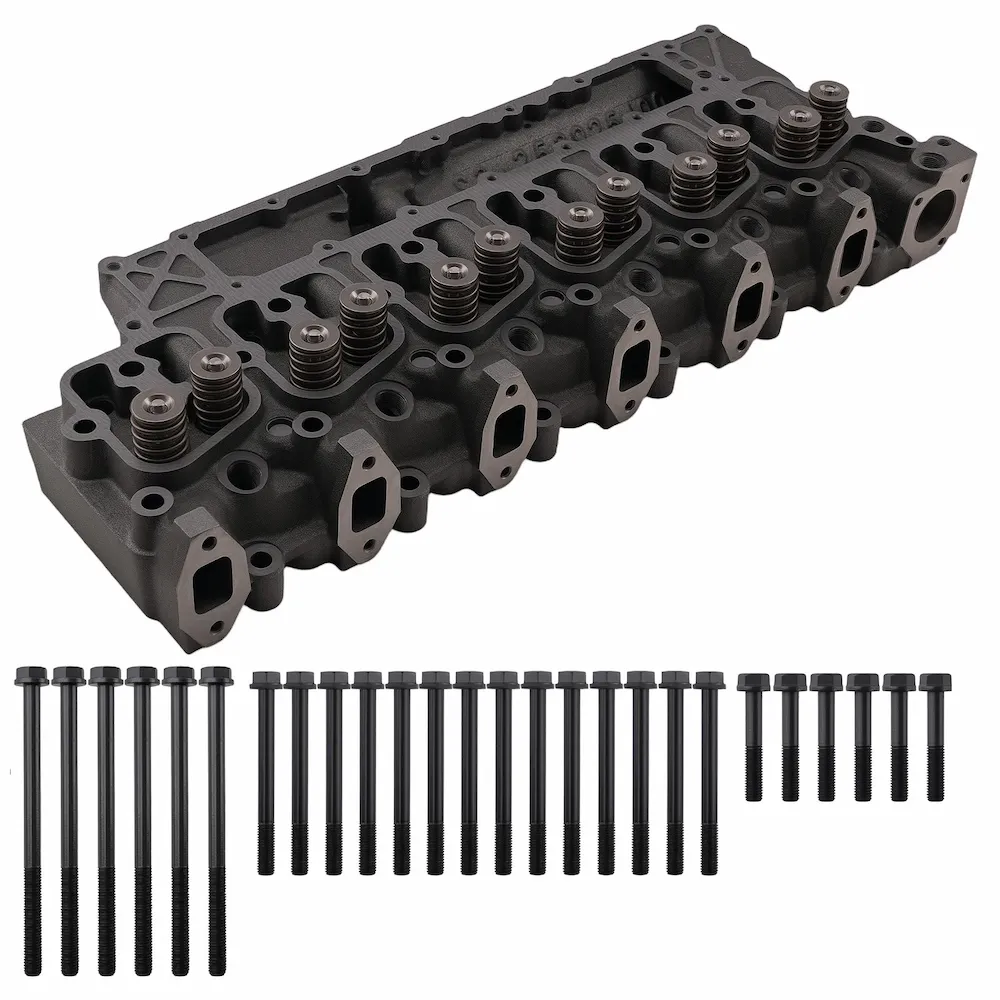
Rocker assemblies, injectors, injector harnesses, valve covers, sensors, intake and exhaust manifolds, cylinder head gaskets and mounting bolts may still be supplied separately.
The most useful question is therefore not, “Is this a complete head?” It is:
“After this head arrives, which components will still have to be transferred from the old head?”
That question immediately exposes the amount of work, reuse and additional purchasing that remains.
Put Competing Quotations on the Same Parts Diagram
Product titles and total prices are poor tools for comparing cylinder head assemblies. A clearer method is to ask every supplier to mark the same exploded view, parts diagram or BOM.
The comparison should identify five delivery states:
- Components already installed and included in the quotation;
- Components supplied loose but not installed;
- Components expected to be reused from the old head;
- Components excluded and requiring separate purchase;
- Inspections or tests completed before shipment.
This does not require an elaborate technical report. A clearly marked parts diagram is often enough to reveal why one quotation is cheaper than another.
A lower-priced option may shift more assembly, inspection and parts-transfer work to the buyer. A higher-priced option may already include more controlled assembly and testing. The meaningful comparison is the total cost of returning the equipment to service, not the cylinder head price alone.
Old Part Numbers, Casting Marks and Current Service Parts Are Different Layers of Information
A part number, casting number or other marking on the old cylinder head can help identify the component, but it may not be the current orderable service part.
Product improvements and supply-system updates can lead to part-number supersession. A currently available new or ReCon head may therefore use a later service part number and incorporate applicable design or manufacturing updates.
The old head should not be matched only by finding another casting that looks similar. The correct comparison should bring together the ESN, CPL, old service part number, casting mark, equipment application and current supersession record.
This check is especially important before comparing bare, assembled and complete options. Otherwise, the buyer may believe several quotations describe different assembly levels of the same head when they actually refer to different service parts.
The Same “Assembled” Label Can Hide Different Manufacturing Paths
An assembled cylinder head may be a new factory assembly, a Cummins ReCon product, or a third-party assembly built from a new, reconditioned or mixed-source head body and internal components.
The finished products may look equally clean in photographs, but their manufacturing histories are not equivalent.
An applicable Cummins ReCon cylinder head follows a controlled remanufacturing process that can include disassembly, cleaning, inspection, machining, component replacement, reassembly and testing. A third-party assembled head may follow a different process using its own sources for the head body, valve-train components, injector sleeves and inspection methods.
This does not mean that a third-party assembly is automatically unsuitable. It means the buyer should understand how that particular head reached its current delivery condition.
Useful evidence includes the condition of the head body, the source of the internal components, who performed the assembly, what inspections were completed and whether the product can be traced to a production or assembly record.
Those details usually reveal more about the actual supply quality than the words New, ReCon or Aftermarket by themselves.
A Machined Injector Bore Is Not the Same as an Installed Injector Sleeve
On Cummins engine platforms that use separate injector sleeves or injector cups, sleeve status can significantly change the work required after delivery.
A description such as Injector Bore Completed may mean only that the installation location has been machined. It does not necessarily mean that a new sleeve has been installed.
Three different delivery states should be distinguished:
- The bore or sleeve location has been machined only;
- The sleeve is supplied loose but not installed;
- The sleeve has been installed and the relevant checks have been completed.
For an assembled or complete head, the supplier should state whether the injector sleeves are new, whether they have been installed and whether they are included in the quotation.
Valve-train assembly does not answer this question. A head can arrive with valves and springs installed while still requiring injector-sleeve work.
A Reconditioned Head Should Come with a Clear Machining History
When purchasing a reconditioned or third-party rebuilt cylinder head, the condition of the combustion-side or deck sealing surface also matters.
A surface can look clean and flat while the head no longer remains within the applicable thickness or geometry limits. Excessive machining may affect gasket sealing and valve-, injector- or assembly-related geometry, although the specific consequences depend on the engine design.
It is therefore not accurate to make a universal claim that resurfacing will always change compression ratio. The more useful information is the current head thickness or relevant measurement, the service limit used by the supplier and the machining completed during the current or previous repair.
Final acceptance should be based on the service data for the specific engine platform and the repair facility’s measurements.
Core Charge Can Change the Real Cost of a ReCon Head
Some ReCon cylinder head quotations use a core-exchange system and include a Core Charge.
The buyer receives a credit or refund only after returning an acceptable old head within the required period. Core-acceptance rules vary by product and supply channel.
A program may check whether the returned core is the correct type, whether its major structure is complete, whether damage resulted from improper removal, storage or transport, and whether it was returned within the required time and packaging conditions.
Previous experience with another ReCon component should not be used to assume that the current cylinder head core will be accepted under the same rules.
For larger orders, core charges can create significant temporary cash exposure. The comparison between new, ReCon and third-party assemblies should therefore include the core deposit, return freight, acceptance risk and credit timing rather than only the net product price.
Product Photos Are Not Proof of the Delivery BOM
Cylinder head sales pages often use highly assembled product photographs.
A valve cover, rocker housing, sensor or other external component may be fitted temporarily for display, even though it is not included in the final quotation. The reverse can also occur: an included component may not appear in the photo because of the camera angle or packaging method.
Photographs are useful for confirming general structure and interfaces, but they should not be treated as BOM evidence.
The delivery scope should be established through the formal quotation, confirmed BOM, marked parts diagram, or written list of included and excluded components. Any difference between the quotation and the product image should be resolved before payment.
How ZEB Power Structures Cylinder Head Assembly Quotations
ZEB Power does not rely only on the labels Bare, Assembled or Complete when preparing a cylinder head quotation.
After verifying the ESN, CPL and current service part, we present each option by its actual delivery condition: the condition of the head body, the components already installed, the components supplied loose, and the parts outside the quotation.
A buyer can then compare a new genuine, ReCon or confirmed quality-alternative solution according to the work that remains after delivery. Projects that require the shortest possible downtime may favor a more extensively assembled and inspected head. Repair shops with in-house machining and assembly capability may find better value in a bare or partially assembled option.
Decisions about reusing the old head or transferred components, as well as acceptance of sealing surfaces and internal geometry, should remain with the repair facility after inspection.
Send the engine ESN, CPL, current cylinder head part number and photos of the old head. Also state whether core exchange is acceptable and which existing components the repair facility expects to reuse. ZEB Power will prepare a marked BOM and a directly comparable bare, assembled or complete head quotation.
Frequently Asked Questions
What should I request when a supplier describes the product as a complete head?
Ask for a marked parts diagram or BOM showing installed components, loose components, excluded parts and completed inspections. This is more reliable than the word Complete.
Why can a lower-priced assembled head cost more by the end of the repair?
It may require injector-sleeve installation, transfer of rocker components, additional gaskets, machining and more assembly time. Compare the total cost to return the engine to service.
Why might a valve cover shown in the product photo be missing from the quotation?
Display photos do not define the delivery scope. Valve-cover inclusion should be confirmed in the quotation or BOM.
Does a completed injector bore mean that the sleeve is already installed?
No. The bore may only have been machined. Sleeve supply, installation and inspection must be confirmed separately.
Why can the final core credit differ from the expected amount?
The result depends on the applicable core policy, returned-core type, completeness, condition, return deadline and shipping or packaging status.
How can quotations be compared when the old head does not have a complete parts list?
Use the ESN-based parts diagram and ask each supplier to mark its delivery scope on the same drawing. This creates a common basis for comparison.