

Cummins Thermostat: How to Choose the Correct Replacement

1168
Table of Contents
Generating table of contents
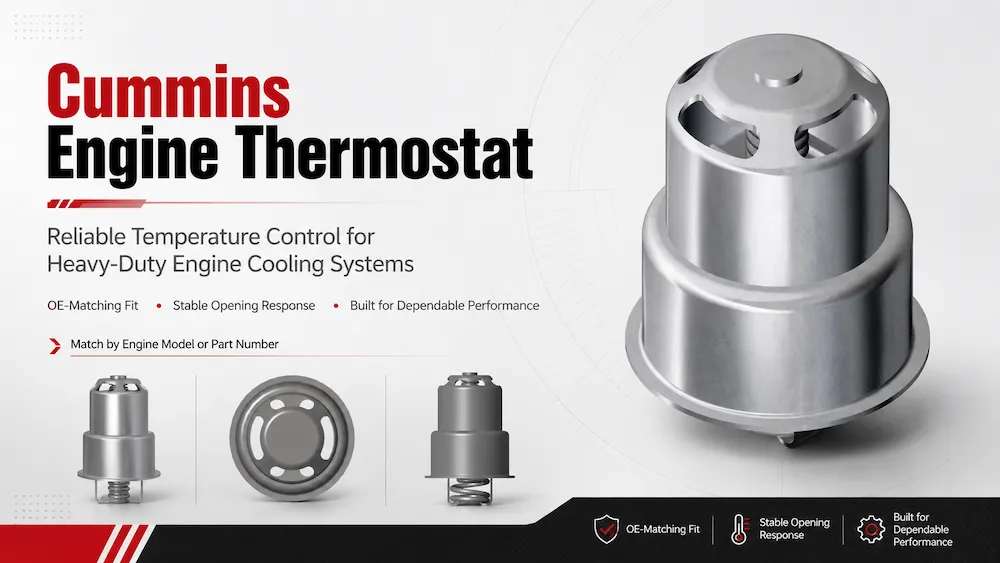
A Cummins engine thermostat is a relatively small cooling-system component and normally costs less than a water pump or fan drive assembly. However, it is not a universal part that can be selected from outside diameter or opening temperature alone.
Two thermostats may look similar and carry the same temperature marking while using different valve designs, lifts, installation depths, seals, and housings. An incorrect replacement may cause slow warm-up, unstable coolant circulation, abnormal operating temperature, or an installation and sealing problem inside the original housing.
Quotation scope creates another common purchasing risk. One supplier may quote a single thermostat element, another may quote a thermostat kit with seals, while a third quotation may cover a thermostat housing or complete housing assembly. Similar product names do not mean that the quoted products and prices are directly comparable.
This guide explains:
- What a thermostat, thermostat kit, and thermostat housing normally include
- The difference between opening temperature and fully open temperature
- How single-thermostat, dual-thermostat, and dual-valve designs differ
- Why valve design cannot be matched from appearance alone
- How to confirm the housing, cover, seals, and quotation scope
- How to choose between genuine and qualified aftermarket parts
- What information to prepare before ordering
- How to compare supplier quotations
Overheating, low operating temperature, or temperature fluctuation does not by itself prove that the thermostat has failed. A qualified local workshop should confirm the cause. This article focuses on how to purchase the correct part after thermostat replacement has been confirmed.
Who This Guide Is For
- Repair shops and fleet maintenance buyers who need to confirm the correct replacement and quotation scope before ordering
- Parts distributors and dealers building or expanding Cummins cooling-system inventory
- Engine remanufacturers purchasing thermostats, housings, and seals for engine rebuilding, testing, and release
- Purchasing teams for construction machinery, mining equipment, generator sets, and industrial equipment where matching accuracy, downtime, and lead time matter
Thermostat, Thermostat Kit and Housing: Confirm the Product Scope
Before comparing prices, confirm exactly what the supplier is quoting.
| Product term | Common meaning | What to confirm |
|---|---|---|
| Engine Coolant Thermostat | Temperature-controlled valve installed in the coolant circuit | Opening temperature, valve design, dimensions, installation direction, and part number |
| Thermostat Kit | Replacement or service kit | Number of thermostats and whether O-rings, seals, or gaskets are included |
| Thermostat Housing | Housing that holds the thermostat and connects coolant passages | Empty housing or assembly with thermostat, cover, or fittings |
| Thermostat Housing Assembly | Preassembled thermostat-housing unit | Whether it includes the thermostat, sensors, fittings, seals, and cover |
| Thermostat Housing Cover | Cover that retains the thermostat and closes the coolant passage | Applicable housing, port direction, and sealing method |
| Thermostat Housing Gasket | Gasket between the housing, cover, or engine surface | Material, profile, thickness, and applicable part number |
| Thermostat Seal / O-ring | Seal fitted around the thermostat or inside the housing | Inside and outside dimensions, cross-section, location, and kit inclusion |
| Bypass Valve / Sleeve Valve | Valve plate or sleeve controlling the bypass passage | Whether it is integrated into the thermostat and required by the housing design |
The same Cummins engine family may use different thermostat, kit, and housing configurations. Final selection should be based on the engine ESN and formal part number rather than a broad description such as “fits the B Series.”
Start by asking:
Is this quotation for one thermostat, a thermostat kit, a housing, or a complete thermostat housing assembly?
Then confirm:
- How many thermostats are required per engine
- Whether the seal, O-ring, or gasket is included
- Whether the housing is empty or supplied as an assembly
- Whether a temperature sensor or fitting is included
- Whether the quotation unit is one part, one kit, or one complete engine set
What the Thermostat Does in the Cooling System
A mechanical thermostat normally uses a wax element. As coolant temperature rises, the wax expands and moves the valve, gradually opening the radiator circuit. As temperature falls, the return spring closes the valve or reduces its opening.
In cooling systems with a bypass arrangement, a second valve plate or sleeve may also close or restrict the bypass passage as the radiator circuit opens. The exact arrangement depends on the engine design.
The thermostat does more than prevent overheating. It helps the cooling system maintain the intended thermal condition by:
- Reducing unnecessary heat rejection during cold start
- Helping the engine reach operating temperature
- Gradually opening the radiator circuit as temperature rises
- Stabilizing engine operating temperature
- Controlling the bypass circuit where the design requires it
- Working with the fan, water pump, and other cooling components
Removing the thermostat does not automatically improve cooling. It may change the intended coolant flow path, particularly in a bypass-type system. Any modification should be handled by a qualified workshop using the correct Cummins service information.
Opening Temperature and Fully Open Temperature
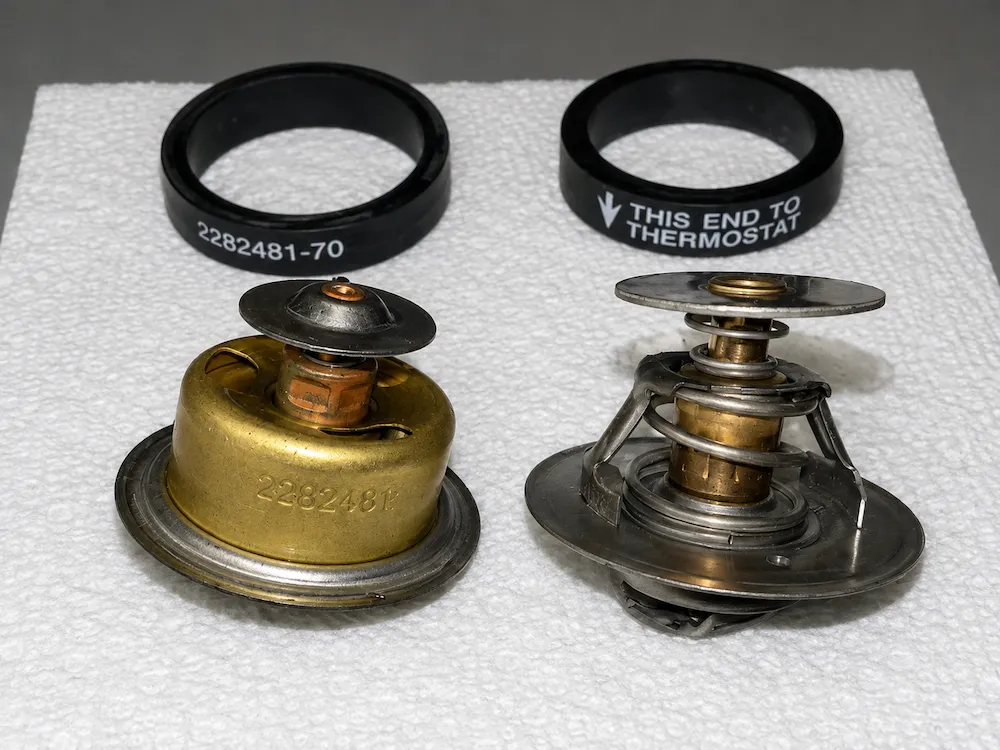
The temperature stamped on a thermostat normally refers to its specified opening or nominal temperature. It does not normally indicate the temperature at which the valve has reached maximum lift.
| Specification | Common meaning | Purchasing relevance |
|---|---|---|
| Opening Temperature | Temperature at which the thermostat begins the specified valve movement | Commonly marked on the part or listed in the product specification |
| Fully Open Temperature | Temperature at which the thermostat reaches the specified maximum or near-maximum lift | Normally higher than the opening temperature; confirm from the applicable specification |
| Valve Lift | Distance the valve moves at a specified temperature | Affects available coolant-flow area |
Two thermostats carrying the same temperature marking may still differ in:
- Outside diameter and installed height
- Main valve diameter
- Bypass valve or sleeve length
- Valve lift
- Spring and wax-element calibration
- Seal position
- Single-valve or dual-valve construction
- Applicable engine and housing configuration
The temperature marking is only one matching parameter. It cannot replace the formal part number and physical configuration.
Opening temperature is part of the engine thermal-management design and may affect warm-up time, stable operating temperature, emissions control, and ECM temperature logic. When purchasing:
- Match from the engine ESN and formal part number first
- Use the original temperature marking as supporting information
- Request formal supersession evidence when a replacement uses a different temperature
- Do not change the opening temperature based only on local climate
- Do not assume that a lower-temperature thermostat is automatically better for a hot environment
Single Thermostat, Dual Thermostats and Dual-Valve Designs
Different Cummins engine configurations may use one thermostat or two separate thermostats. The quantity and housing arrangement should be confirmed from the engine ESN, housing, and formal part number rather than inferred from engine displacement.
One Thermostat per Engine
The engine uses one thermostat. The housing design, bypass arrangement, and installation location depend on the specific engine configuration.
Two Separate Thermostats per Engine
Two thermostats may operate in parallel inside a common or divided housing. A replacement kit may include both thermostat elements and their seals, or it may contain only one.
Confirm:
- Actual quantity required per engine
- Whether both thermostats use the same part number
- Whether the kit contains one or two thermostats
- Whether the applicable service information requires replacement as a set
One Thermostat with Main and Bypass Valves
Some thermostats incorporate both a main valve and a bypass valve or use a sleeve design. Although it is one physical thermostat, it controls both the radiator and bypass circuits and is not equivalent to a simple single-valve unit.
These configurations should not be confused. For matching, provide:
- Photos of the opened housing
- Number of thermostats removed
- Photos of the internal housing arrangement
- Evidence of a bypass sleeve or second valve plate
- Part numbers from each removed thermostat, where available
Valve Design: Why Appearance Alone Is Not Enough
Thermostats are not all built around one simple round valve plate. Common constructions may include:
- Standard poppet
- Reverse poppet
- Sleeve valve
- Thermostat with bypass valve
In addition to the temperature marking, confirm the valve plate, sleeve, bypass arrangement, and installed depth. These differences can affect:
- Opening direction
- How the bypass passage is closed
- Positioning inside the housing
- Coolant flow path
- Sealing surface
- Maximum valve lift
A thermostat with a long sleeve, lower bypass plate, or special locating feature should not be replaced by a simple thermostat merely because the outside diameter is similar.
Useful inquiry photos include:
- Top view
- Bottom and bypass-valve view
- Side view showing total height
- Temperature marking
- Part number or manufacturer marking
- Internal thermostat-housing location
Thermostat and Coolant Temperature Sensor Are Different Parts
These products are frequently confused in inquiries.
| Component | Primary function |
|---|---|
| Thermostat | Mechanically controls the coolant circuit according to temperature |
| Coolant Temperature Sensor | Converts coolant temperature into an electrical signal for the ECM or gauge |
| Temperature Switch / Sender | Switches a circuit or supplies a gauge signal, depending on the system design |
An incorrect temperature display may involve the thermostat, sensor, wiring, or gauge. A normal display also does not prove that the thermostat is moving correctly. Confirm which product is required before requesting a quotation.
Overheating, Low Temperature or Fluctuation May Have Other Causes
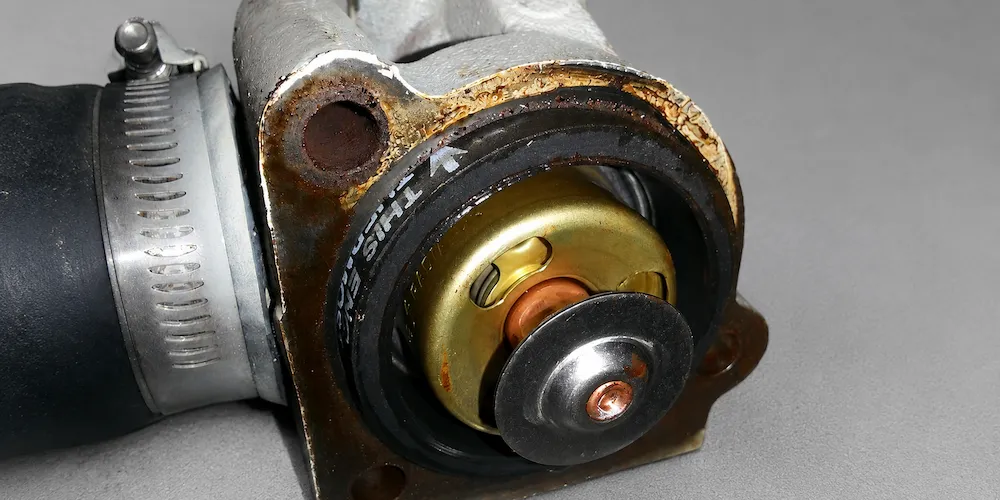
Slow warm-up, failure to reach operating temperature, a rapid temperature rise, load-related fluctuation, or poor heating performance may involve the thermostat. Similar symptoms may also result from:
- Coolant level or concentration
- Water pump condition
- Fan clutch operation
- Restricted radiator
- Belt or tensioner condition
- Coolant temperature sensor
- Housing leakage
- Air trapped in the cooling system
- Another engine or cooling-system fault
A qualified local workshop should diagnose the actual cause. For purchasing purposes, confirm whether thermostat replacement has been recommended and whether the housing, cover, or seals also require replacement.
Thermostat Housing, Housing Cover and Seals
The thermostat housing is the operating environment for the thermostat, not merely a shell. It may incorporate:
- Coolant inlet and outlet passages
- Bypass passage
- Sensor ports
- Housing cover
- O-ring groove
- Hose connection
- One or more thermostat cavities
When requesting a housing quotation, confirm:
- Empty housing or complete assembly
- Thermostat included or excluded
- Cover included or excluded
- Gasket or O-ring included
- Sensors and fittings included
- Hose-port direction
- Number and position of mounting holes
- Housing material
- Whether the old housing is cracked, corroded, or damaged at the sealing surface
If the original housing remains serviceable, a thermostat or thermostat kit may be sufficient. If the housing is damaged, replacing the thermostat alone will not correct the housing problem.
Seals also need to be included in the quotation scope. Designs may use a paper or composite gasket, metal-composite gasket, O-ring, molded seal, or housing-cover gasket.
The quotation should state:
| Item | Included? |
|---|---|
| Thermostat | Yes / No |
| Thermostat Seal | Yes / No |
| Housing Gasket | Yes / No |
| Housing Cover Gasket | Yes / No |
| O-ring | Yes / No |
| Installation Hardware | Yes / No |
When only the thermostat element is supplied, confirm whether the original seal can be reused. In most cases, the correct new seal should be prepared according to the applicable service information rather than replaced with a visually similar O-ring.
Why the Engine Model Alone Is Not Enough
An engine-family description identifies only the general platform. It does not identify the exact thermostat part number, opening temperature, or valve design.
The same engine family may use different thermostats because of:
- Emissions level
- Rated output and application
- Production year and build configuration
- Single- or dual-thermostat design
- Housing version
- Opening temperature
- Vehicle, generator-set, construction-equipment, or other OEM application
- Part-number supersession
- Previous housing-assembly replacement
Treat the engine ESN and formal old thermostat part number as the highest-priority references. Where available, also provide:
- Thermostat kit number
- Housing and housing-cover part numbers
- Original and superseded part-number relationship
- Temperature marking
- Old-part and housing photos
- Quantity required per engine
- Equipment make and application
- CPL, as supporting information only
Genuine and Qualified Aftermarket Thermostats
A thermostat is a calibrated thermal-control component. It should not be selected from the lowest price alone.
| Product type | General characteristics | What to confirm |
|---|---|---|
| Genuine Cummins new | Part number, application, and traceability are normally clear | Correct ESN, part number, packaging, and supersession |
| Qualified aftermarket new with a defined cross-reference and specification | May balance price and lead time | Cross-reference, opening temperature, dimensions, valve design, seals, batch information, and warranty |
| Product with unknown source or incomplete specification | Temperature calibration, valve design, material, and batch consistency cannot be fully verified | Not recommended for critical or high-downtime applications |
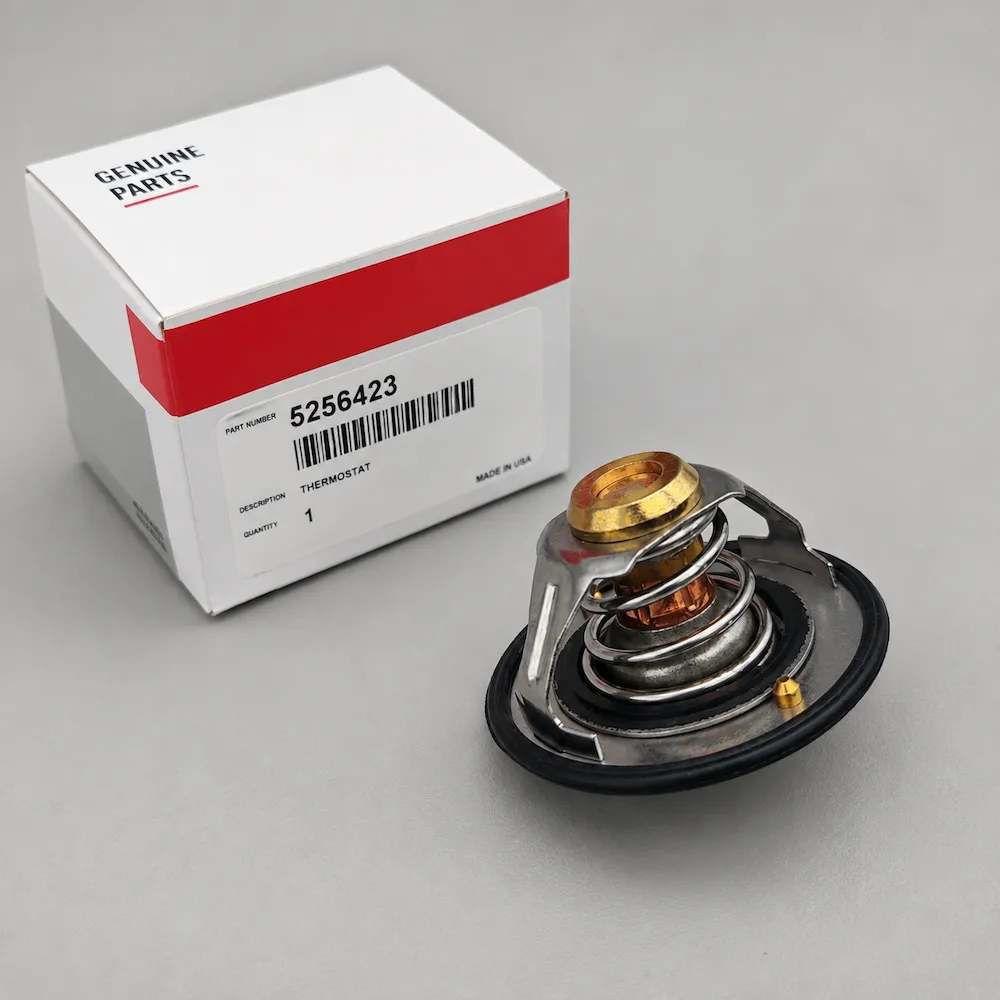
For an aftermarket part, request a defined cross-reference, main product specifications, and any available quality or test documentation. A broad claim such as “fits Cummins B Series” is not enough for final matching.
For mining equipment, continuously operated generator sets, and other high-downtime applications, prioritize part-number accuracy, batch consistency, supply channel, and warranty over the lowest quoted price.
Information Required for a Cummins Thermostat Inquiry
Basic Inquiry Information
- Engine Model
- Engine ESN
- CPL, if available, for supporting reference only
- Existing Thermostat Part Number, if available
- Thermostat Kit Number, if available
- Opening Temperature Marking
- Quantity per Engine
- Required Product: Thermostat / Kit / Housing / Housing Assembly / Unsure
- Application: Construction / Mining / Generator / Industrial
- Order Quantity
- Destination Country
- Genuine / Aftermarket Preference
Additional Photos and Dimensions
- Top, bottom, and side photos of the old thermostat
- Temperature marking and part-number photos
- Housing part number and overall photos
- Internal housing photos
- Thermostat outside diameter and total height
- Number of thermostats removed from one engine
- Whether an approved supersession is acceptable
- Required lead time
Fault descriptions such as slow warm-up, overheating, fluctuation, or leakage at the housing may be provided as background information. They cannot identify the thermostat part number by themselves and do not replace local diagnosis.
How to Compare Supplier Quotations
Prices are directly comparable only when the part number, temperature specification, valve design, and product scope are equivalent.
| Comparison item | What to confirm |
|---|---|
| Final part number | Relationship among the old number, superseded number, and quoted number |
| Product scope | Thermostat / Kit / Housing / Housing Assembly |
| Quantity per engine | One or two thermostats and quantity included in the kit |
| Opening temperature | Temperature marking and applicable specification |
| Valve design | Poppet, sleeve, bypass arrangement, and installation direction |
| Dimensions | Outside diameter, total height, installed depth, and valve dimensions |
| Housing compatibility | Correct positioning, valve movement, and sealing in the original housing |
| Seals and accessories | Seal, gasket, cover, sensor, or hardware included or excluded |
| Matching basis | ESN, old part number, and confirmed supersession |
| Product source | Genuine Cummins or qualified aftermarket new |
| Warranty and quotation unit | Warranty terms and whether the price is per part, per kit, or per engine set |
When quotations differ significantly, check whether:
- One supplier quoted one thermostat and another quoted a two-piece kit
- Seals and gaskets are included
- One quotation is for a thermostat element and another is for a housing assembly
- Opening temperature and valve design are equivalent
- The quotation unit is the same
A large price difference often reflects a different quotation scope rather than only a quality difference.
How ZEB Power Supplies Cummins Thermostats
ZEB Power supplies Cummins thermostats and related cooling-system parts for construction machinery, mining equipment, generator sets, and industrial equipment.
Using the engine ESN, old part number, opening-temperature marking, housing number, and physical photos, we can help verify:
- Thermostat
- Thermostat kit
- Thermostat housing
- Thermostat housing cover
- Thermostat housing assembly
- Thermostat seal
- O-ring and housing gasket
- Original and superseded part numbers
Available supply options depend on the exact part number and current supply channel.
Where available, the quotation will clarify:
- Final part number
- Original and superseded numbers
- Opening temperature
- Quantity required per engine
- Kit contents
- Included seals
- Product source
- Lead time
- Warranty terms
ZEB Power supports part matching and quotation-scope confirmation. Cooling-system diagnosis, thermostat testing, installation, and post-installation inspection should be completed by a qualified local workshop.
Frequently Asked Questions
1. Is the temperature marked on the thermostat the fully open temperature?
Usually not. It normally indicates the opening or nominal temperature. The fully open temperature is higher and should be evaluated together with the valve-lift specification.
2. Can two thermostats with the same opening temperature be interchanged?
Not from the temperature marking alone. Outside diameter, total height, valve design, sleeve or bypass construction, seals, and formal part number must also be checked.
3. Should a lower-temperature thermostat be used in a hot climate?
Not without an approved specification. Opening temperature is part of the engine thermal-management design and should be confirmed from the ESN, formal part number, and approved supersession.
4. Will removing the thermostat prevent overheating?
Not necessarily. Removing it may change the intended coolant flow path. Follow the correct engine service information rather than operating without the thermostat.
5. Does one engine use one thermostat or two?
It depends on the engine build and housing configuration. Confirm from the ESN, old part number, thermostat kit, and housing.
6. Does a thermostat kit always include the housing?
No. A kit may contain one or more thermostats and selected seals only. Request the exact kit contents.
7. Does a thermostat housing assembly always include the thermostat?
Do not assume that it does. Confirm whether the assembly includes the thermostat, cover, seal, sensor, fittings, and installation hardware.
8. Is a thermostat the same as a coolant temperature sensor?
No. The thermostat mechanically controls the coolant circuit, while the sensor converts coolant temperature into an electrical signal for the ECM or gauge.
9. Can I request a quotation without the old thermostat part number?
Yes. Send the engine ESN, housing number, opening-temperature marking, and clear old-part photos for an initial check.
10. What information is most important for an accurate quotation?
Prioritize the engine ESN, formal old thermostat part number, opening-temperature marking, quantity required per engine, and clear photos of the thermostat and housing.
Confirm the Configuration, Not Only the Temperature Marking
A Cummins thermostat should not be purchased only from the engine family, outside diameter, or one opening-temperature number.
After replacement has been confirmed, verify four groups of information:
- Engine ESN and old part number
- Opening temperature and valve design
- Single-, dual-thermostat, or dual-valve configuration
- Housing, seals, and quotation scope
Need a Cummins thermostat quotation? Send the engine ESN, old part number, opening-temperature marking, and clear photos of the thermostat and housing. ZEB Power can help verify the applicable part, supersession, and quotation scope.