

Does Your Diesel Engine Really Need a Major Overhaul?

4689
Table of Contents
Generating table of contents
High operating hours, exhaust smoke or reduced power do not automatically mean that a diesel engine needs a major overhaul. A leaking injector, restricted air intake, turbocharger fault, incorrect valve clearance, cooling-system problem, or even a sensor or control-system fault can produce symptoms that closely resemble severe internal wear.
The more reliable question is not:
How many hours has this engine operated?
It is:
What evidence shows that the engine’s internal condition has deteriorated, and how far must the engine be opened to restore reliable operation?
This article follows one decision sequence throughout:
Symptoms trigger inspection, test data supports the diagnosis, and teardown findings determine the final repair scope.
The guide is intended for diesel engine users, fleet managers, maintenance buyers and equipment-management teams. Final diagnosis, wear limits and repair procedures should follow the applicable engine service information and should be handled by a repair facility with the necessary inspection, measurement and assembly capability.
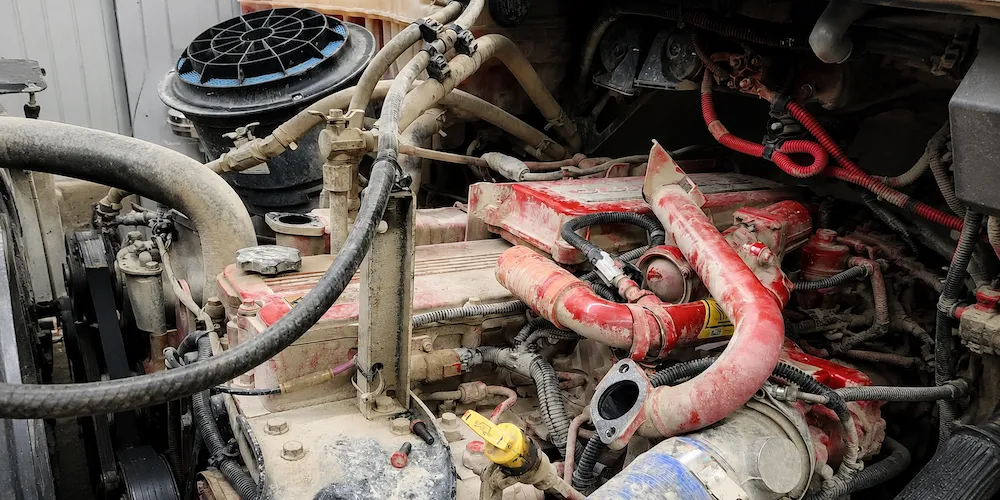
A Major Overhaul Is an Evidence-Based Decision, Not a Fixed Hour Number
Operating hours are useful for maintenance planning, but they should not be treated as a universal overhaul limit.
Two engines of the same model with similar operating hours may be in very different condition. One may have operated under stable load with properly controlled fuel quality, lubrication and cooling. The other may have spent its service life in heavy dust, repeated overload or poorly controlled maintenance. The hours may be similar while the internal wear is not.
Application also changes what operating hours mean.
A standby generator may accumulate relatively few hours, yet long storage periods, repeated cold starts and condensation can still create risk. Mining equipment may build hours quickly under heavy load and severe dust exposure. Marine engines may operate at relatively stable load but face cooling-system and fuel-quality problems.
When an engine reaches a round-number service interval, the more reasonable response is to schedule condition checks and trend analysis—not to order an overhaul kit based on hours alone.
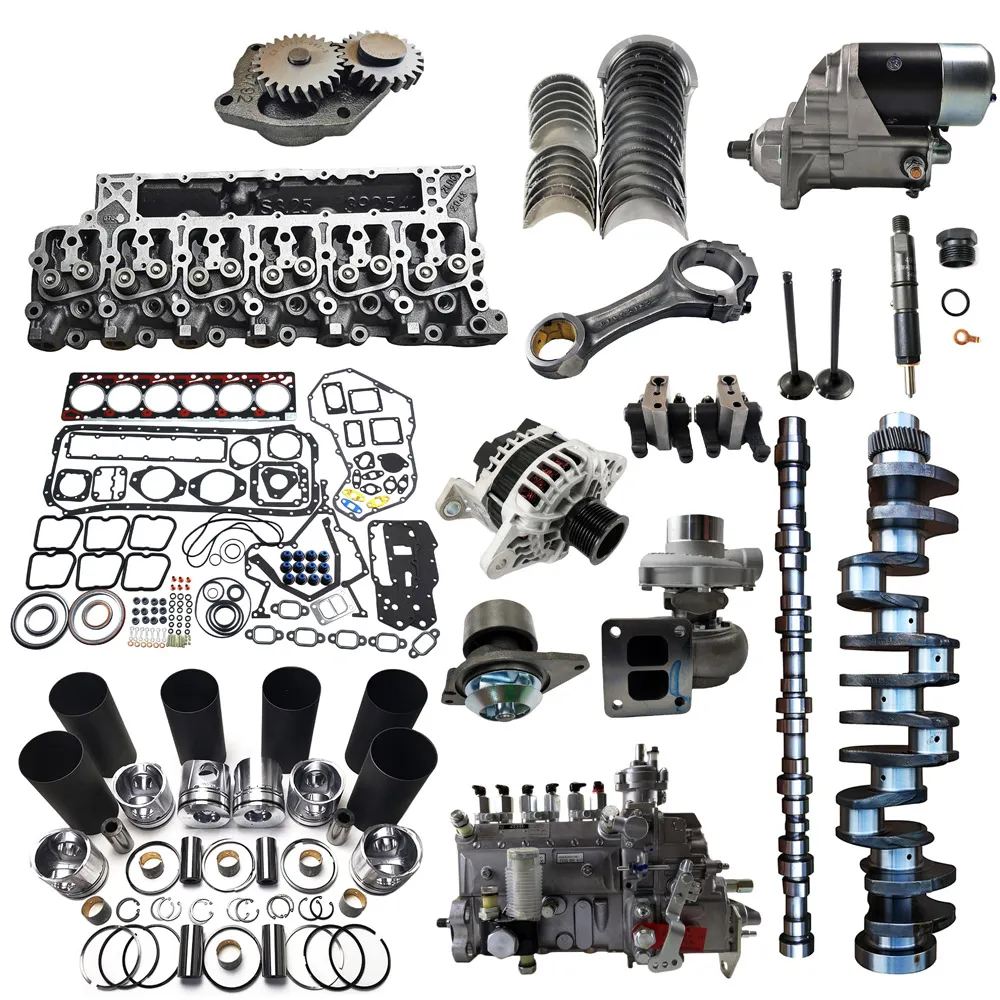
Common Symptoms Should Trigger Inspection, but They May Also Come from External Faults
The following symptoms often appear in heavily worn engines, but nearly every one of them can also be caused by an external or localized system fault. That is why a single symptom is not enough to support a major-overhaul decision.
Rising oil consumption may involve worn piston rings, liners, valve guides or turbocharger seals. It may also result from external leakage, incorrect oil grade, overfilling, restricted crankcase ventilation or an engine that rarely reaches normal operating temperature. The more useful questions are whether consumption is continuing to rise, whether the oil is entering the combustion chamber or leaking elsewhere, and whether the condition is accompanied by blue smoke, increasing blow-by or abnormal compression. Several related indicators appearing together carry more weight than one symptom in isolation.
Some blow-by is normal in a diesel engine. The concern is whether blow-by flow or crankcase pressure has increased beyond the allowable range for that engine. Excessive crankcase pressure may be associated with worn rings, damaged pistons or liner wear, but a restricted crankcase breather can also force oil mist through seals and gaskets and create symptoms that look like severe internal wear. Before blow-by is used as overhaul evidence, the breather and ventilation system should be checked.
Low power under load may involve poor compression and internal wear, but it may also result from a restricted intake, boost-air leakage, fuel-supply restriction, incorrect injection timing, incorrect valve clearance, or sensor and ECM faults. Before the engine is opened, performance testing should help determine whether the loss comes from combustion, air, fuel or the control system.
Abnormal exhaust smoke can help direct the inspection, but it cannot determine repair depth on its own. Blue smoke commonly suggests oil entering the combustion process. Black smoke is more often associated with excess fuel or insufficient air. White smoke may involve unburned fuel, coolant entering the cylinder or timing problems. The interpretation should also consider whether the engine is cold or hot, unloaded or under load, and whether it has recently been repaired.
Low oil pressure, repeated overheating, hard starting or one weak cylinder follow the same logic. Low pressure may indicate bearing wear, but it may also come from low oil level or a pressure-regulator fault. Repeated overheating may damage internal components, yet the original cause may be a restricted radiator or failed water pump. Hard starting may involve compression loss, but battery condition, intake heating and fuel drain-back can produce similar symptoms. When one cylinder behaves abnormally, the fault should first be isolated to that cylinder and system rather than immediately treating the entire engine as an overhaul candidate.
If the same engine develops similar failures repeatedly within a short period, and each limited repair restores operation only briefly, that pattern deserves attention. The underlying problem may no longer be confined to one component.
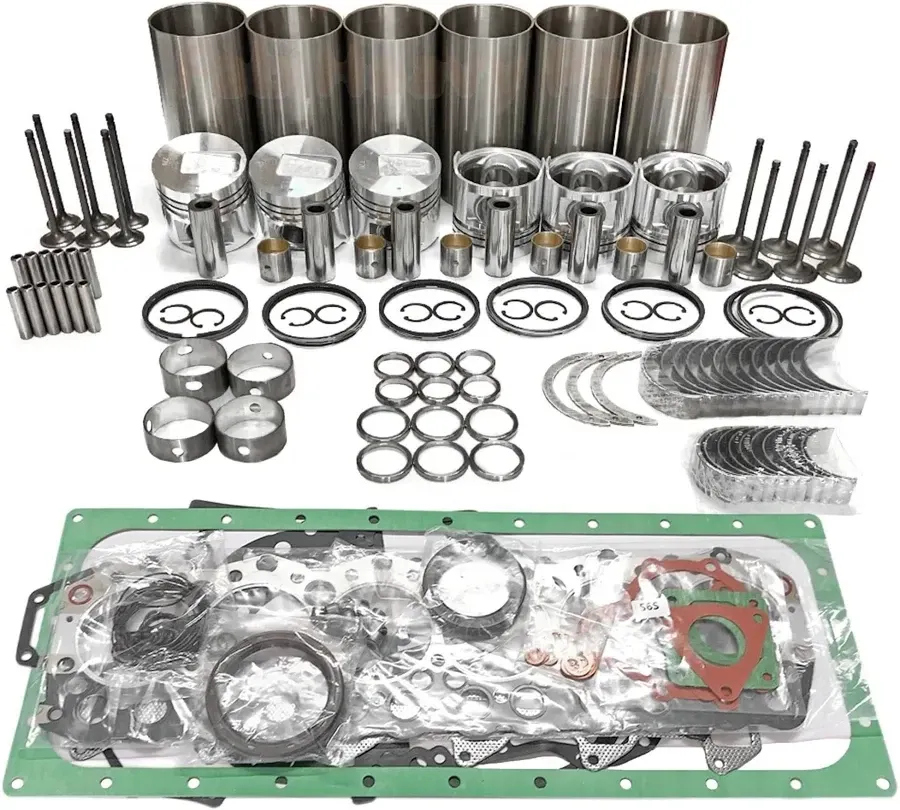
Trend Data Is More Persuasive Than One Abnormal Reading
A single result can be misleading when test conditions are inconsistent.
A stronger overhaul decision is normally based on several indicators pointing toward internal wear and showing a continuing decline over time. Useful trends may include oil consumption per operating period, coolant top-up volume, oil pressure at comparable oil temperature and engine speed, fuel consumption under similar load, and the history of oil-analysis and compression-test results.
Several indicators deteriorating together are more meaningful than one isolated complaint such as “the engine is smoking.”
Testing Methods: Turning Symptoms into Evidence
No single test can define every overhaul project. The test plan should reflect the engine design, reported symptoms and application.
Compression testing or cylinder-leakage testing can indicate sealing condition. The key questions are whether the cylinders are significantly unbalanced and whether the abnormal result is limited to one cylinder. One low cylinder may indicate a localized problem. Several low cylinders combined with high blow-by and rising oil consumption provide stronger support for widespread internal wear.
Used-oil analysis can identify wear metals, fuel dilution and coolant contamination. Its greatest value comes from comparing the result with the same engine’s earlier samples, not from one isolated reading. Cutting open and inspecting the used oil filter is also useful. Visible metallic debris normally justifies prompt further inspection. Oil analysis may show that internal risk is rising, but it generally cannot identify the complete replacement scope by itself.
Blow-by testing should be performed at the specified engine speed, load and temperature. A restricted breather should be excluded first, and the result should be compared with the service limit for the specific engine rather than with a generic number.
Oil-pressure verification should be completed at the specified oil temperature and engine speed. Oil level, filters, the pressure-control system and other external causes should be ruled out before the reading is used as evidence of bearing or lubrication-system wear.
Borescope inspection can provide a direct view of cylinder walls and piston crowns without immediately removing the cylinder head. It provides visual evidence, but it does not replace dimensional measurement. A liner may show little visible scoring while already being outside the allowable wear limit.
Performance and load testing can help separate an internal mechanical problem from a fuel, intake, turbocharger, cooling or control-system fault. Generator sets may be tested under an appropriate load where conditions allow. Construction equipment and vehicles should be tested using a procedure suited to the actual application.
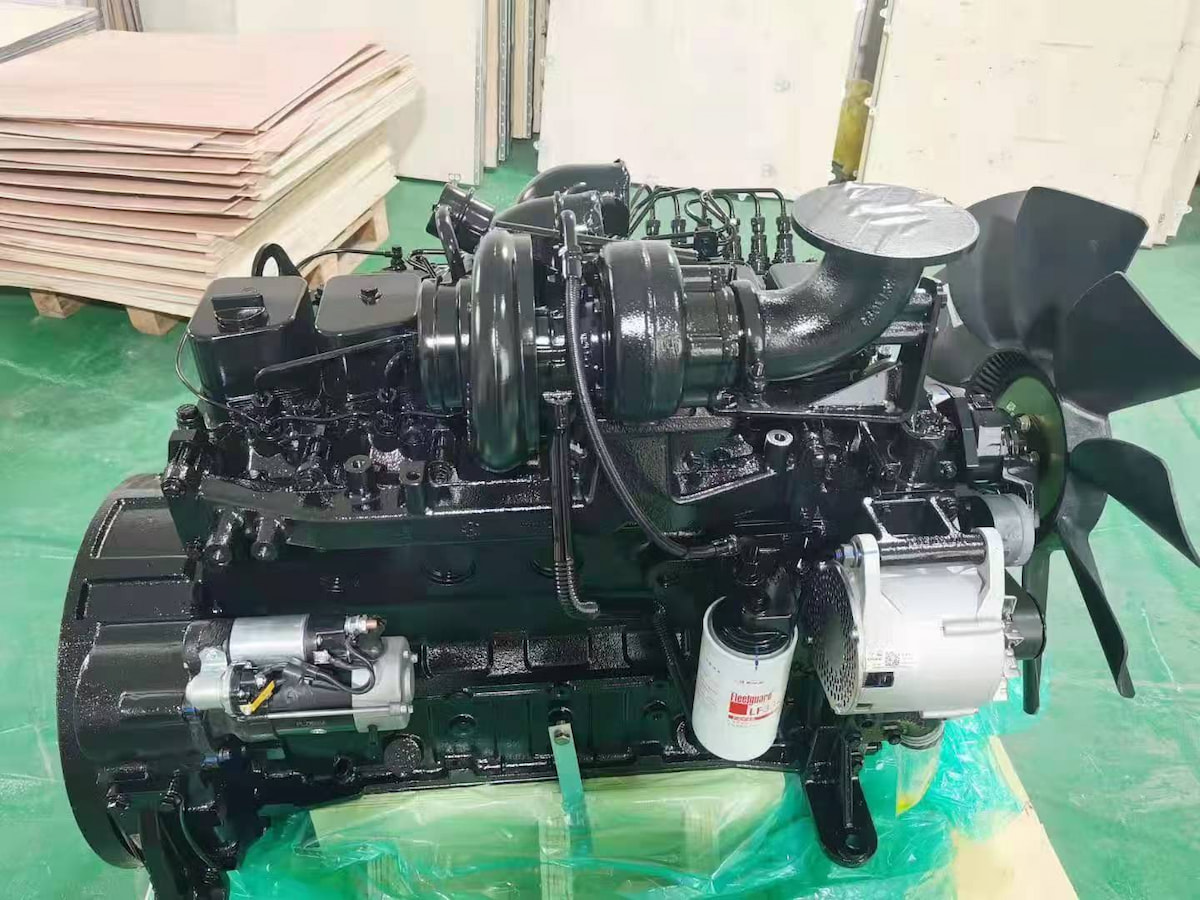
Correct External Faults Before Approving a Major Overhaul
When the available evidence still points to one external or localized system, a major overhaul is usually premature.
A single failed injector may cause smoke and uneven running. A turbocharger or boost-pipe leak may cause power loss. A restricted breather may cause oil leakage. A cooling-system fault may cause overheating. A sensor or ECM power problem may cause derating.
Correcting these faults may restore normal operation without opening the lower engine.
The purpose of testing is not to delay a necessary overhaul. It is to prevent a repairable local fault from being mistaken for widespread internal wear.
Teardown Findings Determine the Final Repair Scope
Non-intrusive testing can indicate that internal damage is likely, but the final repair scope is normally determined only after the engine has been opened and measured.
The repair facility may need to inspect the cylinder block, cylinder bores or liners, piston and connecting-rod assemblies, main and connecting-rod bearings, crankshaft journals and runout, and the cylinder-head and valve system. The applicable service manual should be used to determine which dimensions and clearances remain acceptable.
Teardown commonly leads to one of three outcomes:
- A localized cylinder-head or cylinder repair is sufficient;
- The engine can be restored through an In-Frame Overhaul;
- The engine requires an Out-of-Frame Overhaul, a Long Block or complete replacement.
One point is often overlooked:
In-Frame does not automatically mean Major Overhaul.
In-Frame describes the repair location and method—the engine remains installed in the equipment and the block normally stays in place. If the repair requires crankshaft removal, main-bearing-bore inspection, block machining, or complete internal oil-passage cleaning after a severe lubrication failure, it has usually moved beyond the reasonable scope of a conventional In-Frame Repair. An Out-of-Frame Overhaul, Long Block or another replacement option should then be evaluated.
The repair method should follow the actual damage, not the name of a supplier’s kit. Kit names also do not guarantee a fixed supply scope, as explained in Engine Overhaul Kit vs. Rebuild Kit: Are They the Same?
Continue Operating, Overhaul or Replace the Engine?
Even when testing confirms wear, a major overhaul is not the only possible decision. However, continued operation has strict limits.
Continued monitored operation should be considered only after a professional inspection confirms that the engine has no immediate failure risk, the critical test results remain within the applicable manufacturer limits, and a defined reinspection interval has been established.
The engine should not simply be “watched” if it suddenly loses oil pressure, develops severe abnormal noise, produces visible metal in the oil filter, shows coolant and oil cross-contamination, or continues to overheat severely. In these situations, operation should stop and the engine should be inspected.
A major overhaul is more appropriate when the block, crankshaft and other main structures remain reusable or economically repairable, but the pistons, liners, bearings, seals and other internal systems show broader wear that cannot be corrected reliably through a limited repair. The overhaul preserves valuable main structures while restoring the internal running clearances and sealing condition more systematically.
Engine replacement—through a Long Block, remanufactured engine or new engine—may be more practical when the block or crankshaft has severe structural damage, reliable machining is unavailable, downtime cannot be accepted, or the total overhaul cost approaches the cost of a dependable replacement assembly.
The comparison should include labor, machining, downtime and expected post-repair service life, not only the price of the overhaul kit.
Information to Prepare Before Requesting a Quotation
Complete information significantly improves quotation accuracy.
Prepare the full engine model and serial number, actual test results rather than a general statement such as “the engine is smoking,” oil-analysis reports, compression-test data, borescope records, and the preliminary repair direction: Top-End, In-Frame, Complete Overhaul or Long Block.
For Cummins engines, identification may also involve the ESN and CPL. Other manufacturers require their own serial-number and configuration references.
The more complete the information, the lower the risk of later returns or replacement orders caused by configuration mismatch. After the repair direction has been established, the quotation can be reviewed using the checks in How to Compare Diesel Engine Overhaul Kit Quotes: 10 Checks Before Ordering.
How ZEB Power Supports Overhaul Decisions and Parts Sourcing
ZEB Power supplies diesel engine overhaul kits, internal engine parts, Short Blocks, Long Blocks and complete engines for construction equipment, mining machinery, generator sets and industrial-engine projects.
Using the engine model, full serial number, configuration information and teardown report, ZEB Power can help review the applicable overhaul-kit options, piston, liner and bearing configuration, Genuine and verified replacement alternatives, and the choice between a Short Block, Long Block and complete engine.
The decision that an engine genuinely requires a major overhaul, and the judgment that an existing component remains reusable, should still be made by the repair facility responsible for measurement and assembly.
Provide the engine data-plate information, full serial number, test results and teardown findings. ZEB Power can help verify the required parts and compare overhaul, Long Block and complete-engine replacement options.
Frequently Asked Questions
Do High Operating Hours Automatically Mean That an Engine Needs a Major Overhaul?
No. Operating hours are useful for scheduling inspection, but maintenance quality, load, temperature and application conditions can leave engines with the same hours in very different condition.
Does Blue Smoke Prove That the Piston Rings Are Worn?
No. Blue smoke may involve piston-ring and cylinder wear, but it may also come from turbocharger seals, valve guides, oil level or crankcase-breather problems.
Does One Low-Compression Cylinder Require a Complete Overhaul?
Not necessarily. One low cylinder may involve an injector, valve or localized cylinder problem. A complete overhaul has stronger support when several cylinders are abnormal and other wear evidence is also present.
Is High Blow-By Enough to Approve a Major Overhaul?
No. A restricted crankcase breather should be ruled out, and the test result should be compared with the service limit for the specific engine.
Is an In-Frame Overhaul the Same as a Major Overhaul?
Not necessarily. In-Frame describes where and how the repair is performed. The actual repair depth depends on whether the crankshaft must be removed or the block requires inspection or machining.
When Should the Engine Be Replaced Instead of Overhauled Again?
Replacement may be more reasonable when the block or crankshaft is severely damaged, machining capability is inadequate, downtime is critical, or the total overhaul cost approaches the cost of a reliable Long Block or complete replacement engine.