

Diesel Engine Overhaul Kit Quotes: 10 Checks Before You Compare

1266
Table of Contents
Generating table of contents
Two suppliers quote overhaul kits for the same diesel engine, and one price is 30% or even 40% lower than the other.
The lower price is not necessarily the better offer, because the two quotations may not be based on the same requirement. They may refer to different engine configurations, overhaul levels, piston and liner specifications, bearing sizes, gasket coverage, product brands, conditions or trade terms.
A meaningful comparison does not begin by placing two totals side by side. It begins with one question:
Are both suppliers quoting for the same engine, the same repair scope and the same bill of materials?
If the engine identity, overhaul level, kit scope, critical specifications, product condition, brand or trade terms are different, the price gap may come from the supply scope itself rather than from the supplier’s profit margin.
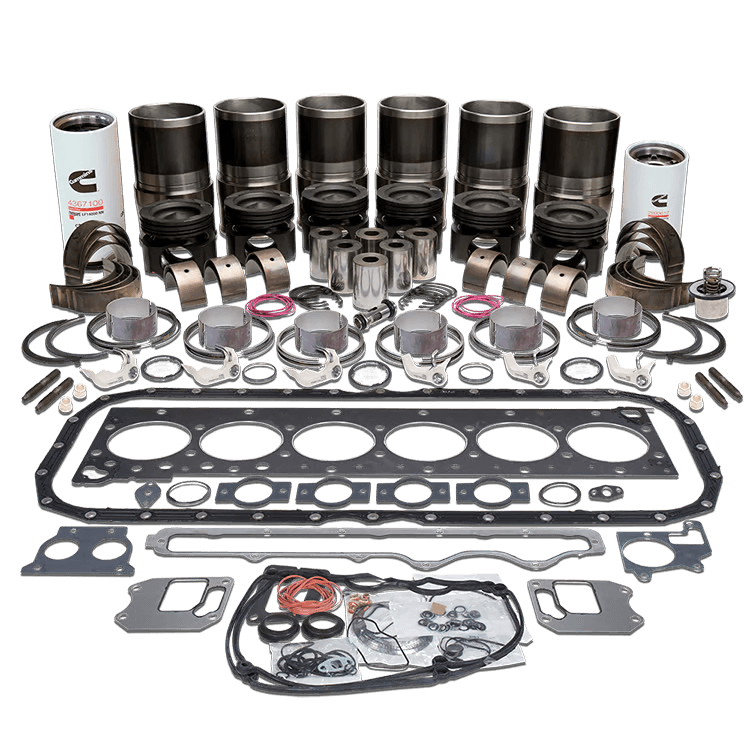
This guide explains the 10 most important checks when comparing diesel engine overhaul kit quotations. It is not limited to one brand and is mainly intended for overhaul-parts purchasing in construction equipment, mining machinery, generator sets and industrial diesel engines.
Engine configuration and repair specifications should follow the applicable technical documentation. The final repair scope, reuse of existing components, crankshaft machining requirements, and the choice between standard-size and repair-size parts should be confirmed by a qualified repair facility with the necessary inspection and measurement capability.
1. Are the Engine Model, Serial Number and Configuration Exactly the Same?
One engine model may include multiple power ratings, emissions levels, piston designs, liner types and application versions. A shortened model name is usually not enough to identify a complete overhaul kit.
Before quotation, the buyer should at least verify the full serial number and the applicable configuration references.
Different manufacturers use different identification systems. Cummins commonly uses a CPL. Caterpillar normally requires the Serial Number Prefix, full serial number and Arrangement Number to be reviewed together. Other manufacturers may use a Build List, configuration number or similar reference.
If two suppliers use different configuration information, they may quote different pistons, liners, bearings or gaskets even when both quotations show the same engine model.
A quotation should therefore not only say “suitable for model X.” It should also state which information the supplier used to confirm applicability.
2. Do Both Quotations Cover the Same Overhaul Level?
The market does not use completely standardized boundaries for terms such as Overhaul Kit, Rebuild Kit, In-Frame Kit and Major Repair Kit.
One quotation may cover only a basic piston-and-liner repair. Another may use a similar name while extending to the cylinder head and valve train, crankshaft inspection and machining, or the camshaft and gear train.
The buyer should first confirm:
How deeply into the engine does this quotation intend to repair?
If the overhaul levels are different, the totals cannot be compared directly.
This article does not redefine every overhaul type, but the quotation should make clear whether it covers:
- Cylinder-head and valve-train work;
- Pistons, piston rings and liners;
- Main bearings, connecting-rod bearings and thrust components;
- Crankshaft removal, inspection or machining;
- Camshaft and gear-train work;
- Oil pump, water pump or other external components.
3. Does the Quotation Include an Itemized Bill of Materials?
“Complete Overhaul Kit” is not a fixed international bill of materials.
Different manufacturers, engine platforms and suppliers may use the word “Complete” for very different kit contents.
A comparable quotation should at least identify:
- Part name;
- Part number;
- Quantity;
- Brand or manufacturer;
- Product condition.
Quantity units require particular attention.
A quotation may list “Piston Kit” without stating whether it means one cylinder set or a complete engine quantity. It may list “Bearing Set” without explaining whether this means main bearings, connecting-rod bearings or both.
These vague descriptions frequently lead to missing parts, duplicated purchases or disputes after delivery.
Without an itemized list, the buyer cannot identify the source of the price difference or properly check the shipment for shortages.
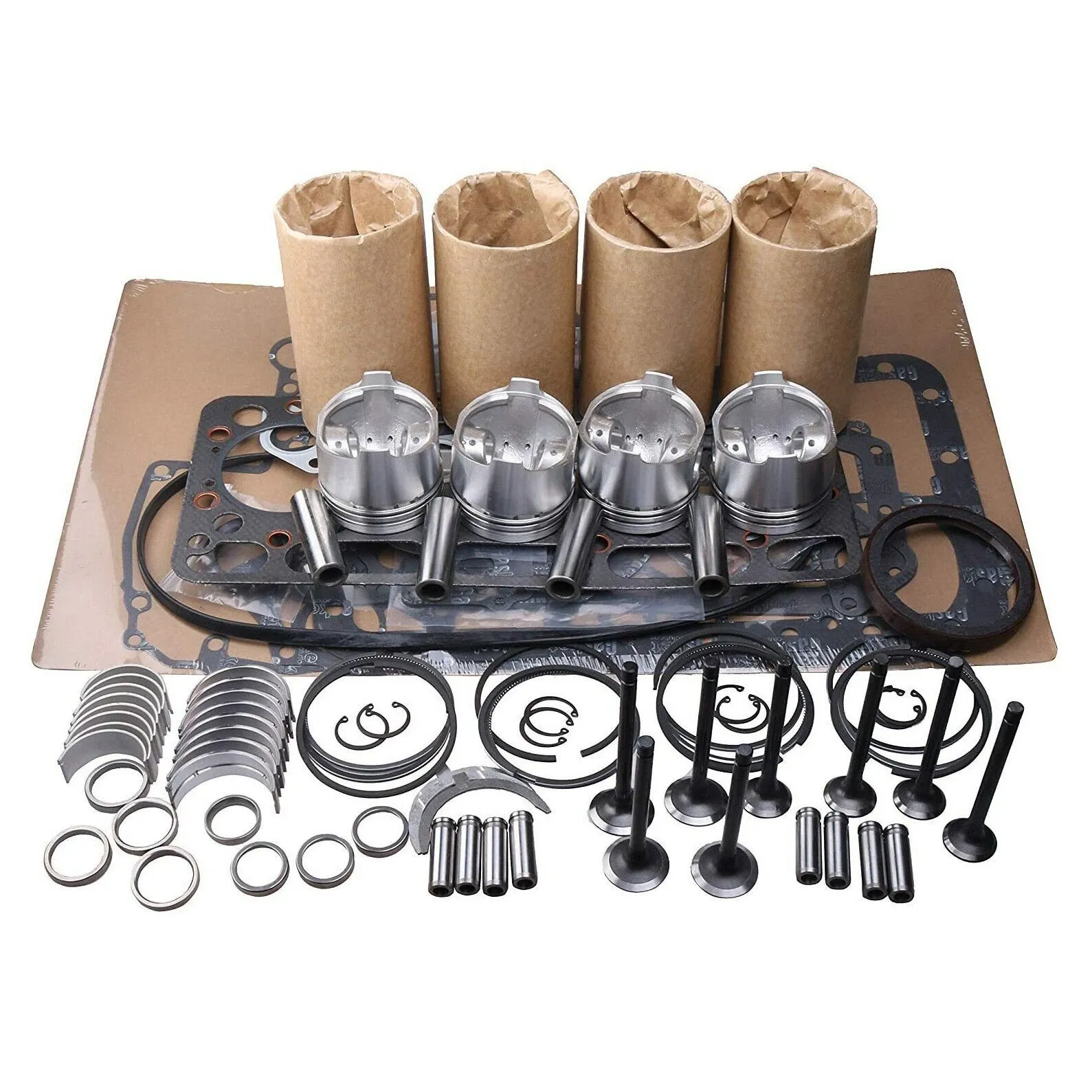
4. Are the Piston, Piston Ring and Liner Specifications the Same?
Even within the same engine model, there may be differences in piston crown design, combustion-bowl geometry, piston-ring arrangement, dry or wet liner construction, standard size, repair size or selection grade.
The correct option depends on the engine design and the manufacturer’s repair program. Not every replaceable-liner engine uses oversize liners. Some platforms are restored mainly by installing new standard-size liners.
The buyer should not only check whether pistons and liners are included. The exact specifications must also match.
If the engine has already been disassembled, provide the supplier with as much of the following information as possible:
- Photographs of the old pistons;
- Existing piston or liner part numbers;
- Measured dimensions;
- Teardown findings.
A lower-priced quotation may use a more basic piston package. One quotation may include the piston only, while another may include the piston, pin, retainers and ring set.
The price becomes comparable only after the component scope and specifications are clear.
5. Have the Bearing Sizes and Thrust Components Been Confirmed?
Buyers often assume that main bearings, connecting-rod bearings and thrust washers are automatically included in an overhaul kit. This is not always the case, and not every engine uses standard-size bearings during overhaul.
If the crankshaft is worn or requires machining, repair-size bearings may be required.
Before quotation, confirm:
- Whether the crankshaft has been measured;
- Whether the quotation is based on standard-size or repair-size bearings;
- Whether the main bearings are included;
- Whether the connecting-rod bearings are included;
- Whether thrust washers or thrust bearings are included;
- Whether each quantity covers the complete engine.
If the repair facility has not completed its measurements, the supplier may issue a preliminary quotation based on standard-size bearings. The quotation should then clearly state:
Final bearing sizes are subject to crankshaft measurement or machining results.
Without this qualification, the buyer may receive a correctly priced bearing set that cannot be installed on the actual crankshaft.
6. What Is Actually Included in the Gasket and Seal Package?
Gasket packages are among the most common sources of quotation misunderstanding.
Terms such as Upper Gasket Kit, Full Gasket Set and Complete Gasket Kit do not always refer to the same contents across different engine platforms and suppliers.
The buyer should confirm whether the quotation includes core engine gaskets such as:
- Cylinder-head gaskets;
- Valve-cover gaskets;
- Oil-pan gaskets.
The buyer should also check installation seals required when reconnecting the engine, including:
- Turbocharger connection gaskets;
- Water-pump and oil-pump connection gaskets;
- Intake and exhaust manifold gaskets;
- Oil and coolant connection seals;
- Required O-rings and small sealing components.
Some lower-priced kits include only the basic internal-engine gaskets and exclude the seals required to reconnect the turbocharger, lubrication circuit, cooling circuit and intake or exhaust systems.
If these items must be purchased separately during the repair, the final project cost will exceed the original quotation.
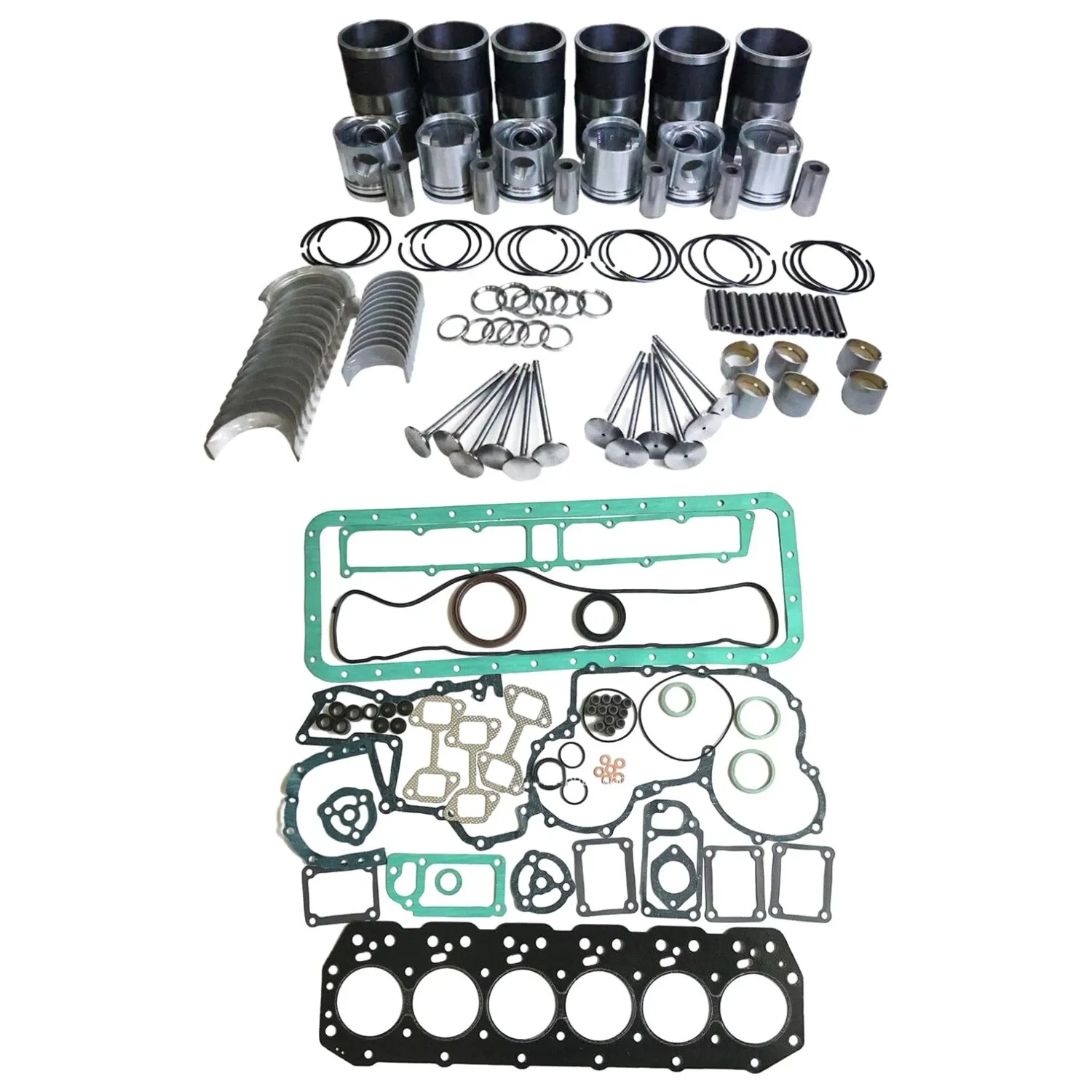
7. Which Components Commonly Assumed to Be Included Must Be Quoted Separately?
When buyers see “Complete Overhaul Kit,” they may assume that the oil pump, water pump, injectors, cylinder-head assembly or turbocharger are included.
In practice, many overhaul kits mainly cover internal wear components and gaskets. They do not automatically include:
- Lubricating-oil pump;
- Water pump;
- Injectors;
- Fuel pump;
- Turbocharger;
- Complete cylinder head;
- Valves, guides and seats;
- Camshaft;
- Connecting rods;
- Crankshaft;
- Vibration damper;
- Thermostats;
- Sensors or electronic-control components.
Whether these components require replacement should be determined by the fault condition and teardown results. They should not be added automatically merely to make a kit appear more complete.
However, the supplier should clearly identify which items are:
- Included;
- Excluded;
- Available as optional items;
- Subject to teardown confirmation.
This allows the buyer to calculate the full repair budget instead of repeatedly adding parts after the engine has already been opened.
8. Are the Brand and Product Condition on the Same Comparison Level?
Two quotations may list the same component names but use different brands and product conditions.
One quotation may contain Genuine New parts. Another may contain official remanufactured parts, third-party aftermarket parts or a mixed-brand kit.
If the brand and condition are different, a price difference is normal.
This article does not repeat the definitions of genuine, remanufactured and aftermarket products, but the quotation should at least state:
- The brand of each critical component;
- Whether the component is new;
- Whether it is remanufactured;
- Who provides the warranty.
Marketing terms such as “German Technology,” “OEM Quality,” “Original Standard” or “Premium Grade” do not replace the name of the actual manufacturer or a clear product-condition statement.
For a mixed-brand overhaul kit, the buyer should also know which brands are used for the critical components and which are used for smaller supporting parts. The brand printed on the outer box does not necessarily identify every item inside.
9. Are the Testing, Traceability and Warranty Terms Equivalent?
A higher quotation may reflect more than a brand premium. It may also include stronger quality control and clearer after-sales responsibility.
Buyers should compare:
- Whether the production batch can be traced;
- Whether inspection records are available for critical components;
- When the warranty period begins;
- Which components the warranty covers;
- Whether the warranty covers parts only;
- Whether labor, transport and consequential losses are excluded;
- What evidence is required for a claim;
- Which company carries the final warranty responsibility.
A “12-month warranty” may look straightforward, but its actual value can vary significantly if the starting date, operating conditions and scope of responsibility are not defined.
Inspection photographs also do not prove that every component has undergone functional testing. The evidence requested should match the type of part rather than applying the same documentation requirement to every item.
10. Have Packaging, Lead Time, Trade Terms and Additional Charges Been Standardized?
This final check is often overlooked, but it can directly change both landed cost and project timing.
The buyer should confirm:
- Quotation currency;
- Quotation validity period;
- Stock-reservation period;
- EXW, FOB, CIF, DDP or other trade terms;
- Whether taxes are included;
- Packaging method;
- Gross weight and volume;
- Production lead time;
- Expected shipping date;
- Whether customs-clearance and destination charges are included.
If the quotation includes Reman or Exchange components, also confirm whether the Core Charge is additional and whether the displayed price is:
- The price before the core deposit is paid; or
- The net price after an acceptable core has been returned.
The detailed core-acceptance process is outside the scope of this article, but the quotation-stage cost basis must be clear.
An EXW quotation and a DDP quotation cannot be compared by total price alone.
Similarly, “in stock” should be verified. The supplier may have the complete kit available, or only some of the items while the remaining parts still require production or sourcing. The buyer should also confirm how long the quoted price and stock status will remain valid.
For a machine that is already out of service, lead time is not additional information. It is part of the purchasing decision.
A Quotation Comparison Table Buyers Can Use Directly
After receiving multiple quotations, buyers should avoid comparing only the original quotation documents. A standardized comparison table makes the differences visible.
| Check Item | Supplier A | Supplier B | Question to Resolve |
|---|---|---|---|
| Engine identification basis | Model + serial number | Model only | Did Supplier B quote the correct configuration? |
| Overhaul level | In-Frame | Complete | The two scopes are different |
| Pistons and liners | Complete-engine quantity | Quantity not stated | Supplier B must confirm quantity |
| Main/rod bearings | Both included | Rod bearings only | Add the price of main bearings |
| Gasket scope | Full Set | Upper Kit | Supplier B does not include lower seals |
| Major parts often assumed included | Exclusions clearly stated | Not stated | Confirm each item with Supplier B |
| Brand and condition | Third-party new | Mixed brands | Identify the brands of critical parts |
| Core Charge | Not applicable | Net price after core return | Confirm deposit and non-return total |
| Warranty | 12 months | 6 months | Confirm start date and responsibility |
| Trade terms | FOB | EXW | Convert both to the same basis |
| Lead time | 20 days | In stock | Confirm whether the full kit is available |
The purpose of this table is not to force every supplier to provide the same proposal. It is to make clear what each quotation actually covers.
Only after these fields are reasonably aligned does a comparison of total price become meaningful.
When Can the Lowest Quotation Become the Most Expensive?
A low quotation may become more expensive later when:
- The quantities are insufficient and additional cylinder kits must be purchased;
- The bearing size is incorrect and a replacement set is required;
- An incomplete gasket package stops the repair while small parts are sourced;
- Installation seals or critical accessories are excluded;
- The actual brand or product condition differs from the buyer’s understanding;
- Delayed delivery increases equipment downtime;
- Warranty-claim conditions are unclear;
- Different trade terms create additional freight, customs or tax costs.
The correct comparison is:
What is the total cost of completing the repair and returning the engine to service?
It is not:
What is the purchase price of this box of overhaul parts?
Information to Provide When Requesting a Quotation
To reduce repeated communication and inaccurate quotations, provide the following information at the beginning:
- Engine manufacturer and full model;
- Full serial number;
- CPL, Arrangement Number or other configuration reference;
- Equipment make, model and application;
- Engine data-plate photographs;
- Photographs of the old pistons, liners, bearings and gaskets;
- Confirmed old-part numbers;
- Teardown and measurement results, if available;
- Required overhaul level;
- Whether Genuine, Reman or aftermarket options are acceptable;
- Target lead time;
- Required trade terms.
If the bearing sizes, liner specification or crankshaft-machining results are not yet confirmed, tell the supplier that the quotation is preliminary and that the final specifications remain subject to teardown and measurement.
How ZEB Power Helps Compare Overhaul Kit Quotations
ZEB Power uses the engine model, full serial number, configuration information and teardown findings to help buyers determine whether overhaul kit quotations are based on the same comparison scope.
We can help review:
- Whether each quotation applies to the same engine configuration;
- Which overhaul level the kit covers;
- Whether the piston, liner and bearing specifications are consistent;
- Whether the gasket and seal coverage is complete;
- Which parts are included and which require separate quotation;
- Whether the brands and product conditions are clearly stated.
We do not judge a supplier only by the total price. A meaningful comparison should be made after the critical specifications and supply scope have been aligned.
Final teardown, measurement and repair procedures should remain with a qualified repair facility.
Send us the engine data plate, full serial number, teardown information and existing quotations. We can help organize them into a standardized parts-and-price comparison table.
Frequently Asked Questions
Why Can Two Diesel Engine Overhaul Kit Quotations Differ So Much?
Common reasons include different engine configurations, overhaul levels, component quantities, piston and liner specifications, missing bearings or gaskets, different brands and product conditions, and different trade terms or lead times.
Does “Complete Overhaul Kit” Always Include Every Part Required for a Full Overhaul?
No. “Complete” is not a standardized international bill of materials. Buyers must review the itemized list, quantities and exclusions instead of relying on the kit name alone.
Must the Engine Be Disassembled Before an Overhaul Kit Can Be Quoted?
Not always. A preliminary quotation can be prepared from the engine model and serial number. However, bearing sizes, crankshaft repair sizes and some piston or liner configurations may still require teardown and measurement before final confirmation.
Why Are the Oil Pump, Water Pump and Injectors Not Automatically Included?
These components should be replaced according to the actual fault condition and inspection results. Adding them automatically may increase the quotation and cause the buyer to purchase parts that are not required. Listing them as optional items is often more practical.
Is the Lowest-Priced Overhaul Kit the Best Choice?
Only when the engine configuration, overhaul level, bill of materials, specifications, brand, warranty, lead time and trade terms are substantially equivalent does the lowest price become directly comparable.
How Is the Correct Standard or Repair-Size Bearing Confirmed?
The bearing size should be selected according to crankshaft-journal measurements and machining results. A supplier cannot confirm the final repair size from the engine model alone.
Why Can Seals Still Be Missing When the Quotation Includes a Gasket Kit?
The quoted package may include only the basic internal-engine seals. It may not include every gasket and O-ring required for the turbocharger, oil circuit, cooling circuit and other installation interfaces.