

Perkins Injector Parts: Match by Serial Number, Not Just Fit

8725
Table of Contents
Generating table of contents
A fuel injector can fit perfectly into the original bore, clamp down correctly, connect to the fuel lines and electrical system, and even allow the engine to start—yet still be the wrong injector.
What must be matched is not only the installation interface. The injector must deliver the required quantity of fuel at the correct time, in the correct spray pattern, and then seal reliably when injection ends.
This guide assumes that the engine’s injection-system architecture has already been identified, whether it uses a conventional pump-line-nozzle system, an MEUI or HEUI unit-injector system, or electronically controlled common rail. Those system-level differences are covered in the Perkins Fuel Pump, Injection Pump and Lift Pump Guide and are not repeated here.
Once the architecture is known, the purchasing task moves to the injector itself: nozzle version, opening characteristics, individual compensation data and installation sealing. Together, these factors determine whether the injector is the correct version, whether it can produce the intended injection event, whether the ECM can apply the correct compensation, and whether the installed assembly will seal reliably.
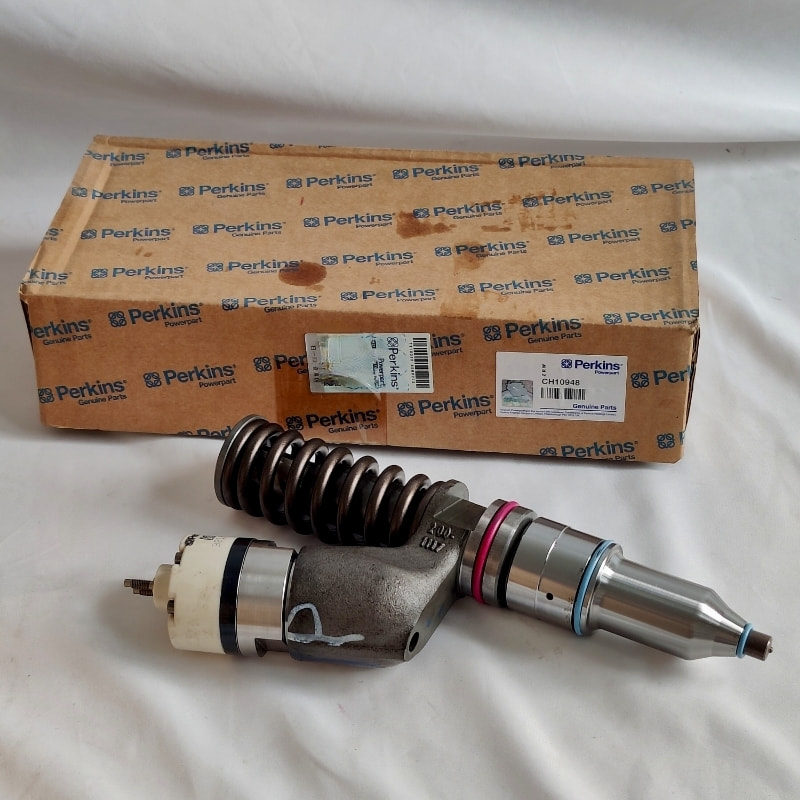
The Same Engine Series May Use Different Injector Versions
An engine series narrows the search range, but it does not identify one final injector part number.
Engines within the same series may use different injectors because of engine prefix, power rating, injection-system type, production stage or application. The formal service part number and the injector manufacturer’s assembly number on the old unit provide important evidence, but they should still be cross-checked against the complete Engine Serial Number and Build List.
If the old injector has previously been repaired, had its nozzle replaced, or is itself a non-original replacement unit, the numbers currently visible on its subcomponents may no longer represent the complete injector originally specified for that engine.
One number on the old part is therefore not a substitute for the engine identity.
Opening Pressure Is Not Injection Quantity, but the Two Are Not Completely Unrelated
On adjustable mechanical Nozzle and Holder Assemblies, Nozzle Opening Pressure, or NOP, is one of the conditions that determines when the needle begins to lift.
Depending on the design, spring preload may be adjusted with specified shims and verified using an appropriate nozzle tester. Whether adjustment is permitted, and the approved range and procedure, must be confirmed from the service information for the exact injector. Not every injector design allows this work.
The relationship governing the final injection event is more complex.
Nozzle hole quantity, hole diameter, spray angle and internal geometry define hydraulic flow capacity and spray characteristics. The quantity of fuel actually entering the cylinder is the result of pump or rail delivery, pressure development, injection duration and the injector’s own hydraulic behaviour.
Opening Pressure cannot be converted directly into injection quantity. Changing it may affect the start and development of the injection event, so it is also inaccurate to say that pressure setting has no influence beyond the instant of opening. Nozzle specification is important, but it is not the only variable governing delivered fuel.
Several different markings may appear on an old injector, and they do not serve the same purpose.
| Marking Type | Main Purpose | What It Does Not Prove |
|---|---|---|
| Formal service part number | Identifies the supplied service version and application range | Does not prove the current unit’s condition or test result |
| Injector manufacturer’s assembly number | Identifies the underlying injector family or manufacturing version | Cannot confirm the Perkins application without engine configuration data |
| E-Trim or other compensation code | Describes the individual characteristics of one specific injector | Is not a part number and does not define the complete supply scope |
| Nozzle, body or subcomponent number | Identifies a local component or manufacturing source | May not identify the complete Injector Assembly |
| Batch or date code | Supports manufacturing traceability | Normally cannot be used alone for application matching |
Photographs should show where each marking is located—on the label, body or nozzle end—rather than isolating only the clearest group of characters.
Individual Compensation Codes Belong to the Injector, Not to a Preset Cylinder
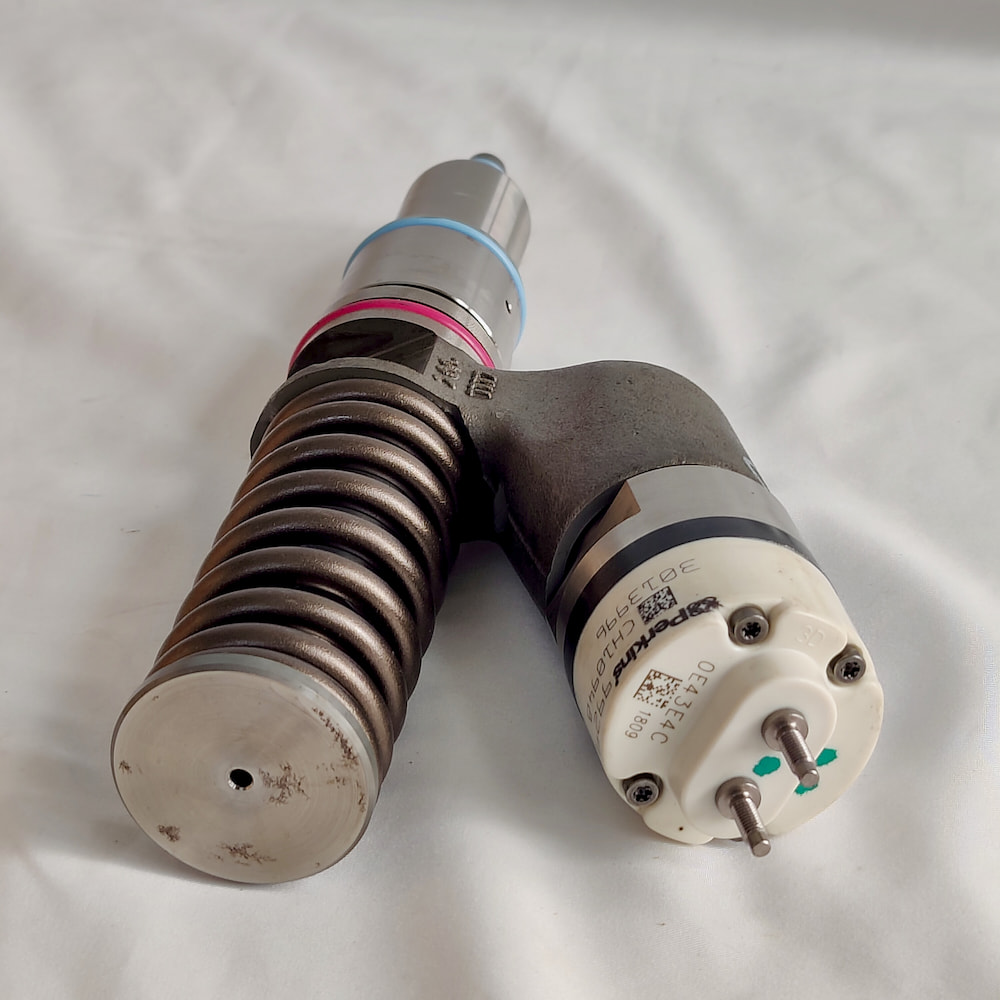
For electronic injectors whose service procedure requires an individual compensation code, two units with the same formal part number may still have manufacturing differences that the ECM must compensate for.
Applicable Perkins electronic injectors may use an individual E-Trim code. Other systems may use names such as C2i, IMA or IQA. Code format and entry procedure depend on the injector and control system and cannot be transferred across platforms.
The important distinction is that the code belongs to the physical injector. The injector is not manufactured for one permanently assigned cylinder.
What must remain correct is the relationship between:
- the physical injector;
- its individual code;
- the cylinder in which that injector is actually installed.
That mapping is established during installation.
Before assembly, each injector’s code should be recorded clearly and linked to its planned cylinder position. If the relevant service procedure and diagnostic system allow code entry before installation, it may be completed at that stage.
However, acceptance or rejection of a code by the diagnostic system does not prove that the injector’s part number, nozzle version or hydraulic performance is correct. Compatibility must first be established from the Engine Serial Number, Build List and formal service part number. Code entry is part of the installation process, not a substitute for injector identification and testing.
Installation Can Ruin a Correct New Injector
On injector designs that use replaceable seat washers, O-rings or other sealing components, the old seals specified for disposal must be removed and replaced with the correct new parts.
Seat-washer material, shape, thickness and installation direction belong to the specific injector and cylinder-head design. A universal washer with a similar outside diameter is not an acceptable substitute. Whether the washer is copper, and whether it relies on a particular deformation mechanism, depends on the design and must be confirmed from the relevant service information.
Supply scope also varies. Some injectors are delivered with a new seat washer or sealing ring; others are supplied without installation seals.
If the new injector includes a seat washer, the old washer must still be confirmed as fully removed from the cylinder head. If the injector does not include the required seals, they must be ordered separately against the correct part scope.
A double-washer error is especially difficult to detect. The clamp can tighten and the pipes can connect normally, while the injector sits at the wrong depth because the old washer remains underneath the new one. The nozzle is then positioned incorrectly relative to the combustion chamber even though the assembly appears complete from the outside.
Cleanliness during removal and installation is equally important.
The injector area should be cleaned before any fuel connection is opened. High-pressure pipes, return connections and injector ports should be capped immediately with suitable protective plugs. Dust, fibres or metal particles introduced during installation can quickly damage an otherwise correct new injector.
The high-pressure lines, their clamps and sealing surfaces should also be inspected according to the service procedure to confirm whether they remain suitable for reuse.
After assembly, the fuel system should be vented using the procedure in the applicable Operation and Maintenance Manual or service information. High-pressure pipes should not be loosened as a bleeding method, and the engine should not be cranked repeatedly for long periods without establishing the required fuel supply.
The approved bleeding process varies by system.
Operating Symptoms Do Not Identify One Injector by Themselves
Rough idle, black or white smoke and loss of power may be associated with an injector problem, but they may also result from poor compression, intake restriction, boost-system faults or inadequate fuel pressure.
A single symptom does not prove that one injector is the root cause.
A more reliable decision combines on-engine diagnosis, physical inspection and injector test results.
Rhythmic gas leakage around the injector, visible combustion deposits or clear leakage marks can make the seat washer and injector seating surface priority inspection areas. These signs still require cleaning, inspection and, where necessary, removal of the injector. Sound alone should not be used to identify the failure location or finalise a parts order.
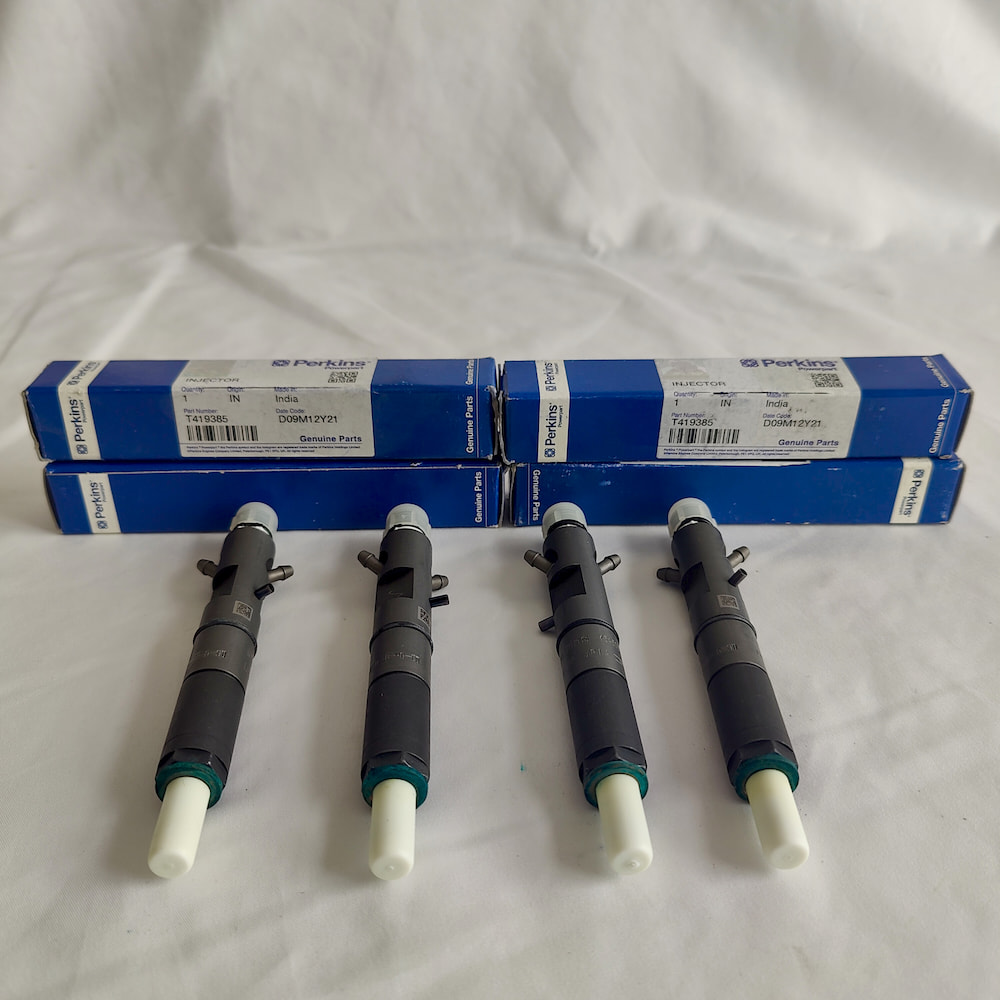
New, Remanufactured and Replacement Injectors: Testing Is the Dividing Line
The quality of a remanufactured injector depends heavily on how it has been tested.
Depending on injector type and the applicable test specification, the test scope may include:
- Opening Pressure, seat sealing and spray condition for applicable mechanical injectors;
- injection quantity, return flow, leakage and control response at specified test points for common-rail injectors;
- confirmation that valid compensation data has been generated or retained for applicable repaired electronic injectors, together with traceable test results.
The exact test sequence depends on the product and the test bench. Not every bench follows the same procedure.
Professional common-rail testing should use the test fluid specified by the equipment and test procedure, with controlled temperature, pressure and return-side conditions. Ordinary diesel fuel does not provide a consistent test reference because its viscosity, temperature and cleanliness vary.
A statement such as:
Bench Tested — Good
does not explain what was tested, which equipment was used, which specification applied, which test points were measured, or whether the test took place before or after repair.
A useful inspection record should identify the injector tested, the equipment and procedure used, and the specific results supporting the conclusion.
New genuine injectors normally offer the clearest source and product consistency, although cost and lead time may be higher. The value of a remanufactured injector depends on the repair and test process actually completed. A validated replacement injector can also be a reasonable option, but the supplier should be able to explain the cross-reference, test status and manufacturing source.
Should One Failed Injector or the Entire Set Be Replaced?
Two opposite rules are often repeated:
Replace only the failed injector.
or:
If one injector fails, replace the complete set.
Neither rule applies universally.
If an applicable test has identified one failed injector and the condition of the remaining injectors is supported by evidence, replacing one unit may be a reasonable option. The final decision should still follow the engine service procedure and the required reliability level.
If water, metal particles or significant fuel contamination are found, the risk may extend beyond one injector. That does not mean that every injector, pump and fuel line must be replaced automatically without inspection.
The more accurate principle is:
A failure found in one injector does not prove that the risk is limited to one injector; contamination affecting the system does not prove that every component must automatically be replaced.
Replacement scope should follow the test results and the source of the failure rather than a fixed rule.
Align the Quotation Scope Before Comparing Prices
An injector quotation may cover one unit or a complete set based on cylinder count. Some quotations include new seat washers, O-rings and return-line seals; others require these parts to be ordered separately.
The terms Injector, Atomiser, Nozzle and Injector Assembly may also represent different supply scopes in different catalogues. The name alone does not prove that the quotation covers a complete assembly rather than a partial component.
Before comparing price, confirm:
- whether the quotation covers one injector or a complete set;
- whether the product is a complete assembly or a partial component;
- which installation seals and return-line components are included;
- whether clear individual code information is supplied for injectors that require compensation coding.
Which Evidence Links the Injector, Its Code and the Installed Cylinder?
A directly verifiable inquiry normally includes:
- complete Engine Serial Number and Build List;
- the old injector’s formal service part number and manufacturer’s assembly number;
- each injector’s individual code and its original cylinder position before removal;
- available bench-test results;
- evidence of water, metal particles or other fuel contamination;
- confirmation of whether seat washers, O-rings and return-line seals are included in the quotation.
Once this information is organised, a general request for “Perkins injectors” can be converted into a specific order that can be checked, quoted and inspected on receipt.
The engine identity, formal part number, injector-specific code, test status and installation-seal scope should correspond clearly.
Whether an injector has genuinely failed, whether its test result is acceptable, how the code must be entered and whether the cylinder-head seating bore requires repair must still be determined by a service organisation with the appropriate equipment and technical information.
Frequently Asked Questions
Does Increasing Opening Pressure Increase Injection Quantity?
There is no direct one-to-one relationship. Nozzle specification determines hydraulic flow capacity and spray characteristics, while actual injection quantity results from pump or rail delivery, pressure, injection duration and injector hydraulic behaviour. Changing Opening Pressure may affect the injection process, but it cannot be converted directly into a predictable change in fuel quantity.
Can Common-Rail Injectors with the Same Part Number Be Installed in Any Cylinder?
Injectors are not normally manufactured for one permanently assigned cylinder. For systems requiring individual coding, each injector’s code must be mapped to the cylinder in which that injector is actually installed. An incorrect mapping causes the ECM to apply compensation data to the wrong cylinder and may affect idle quality, performance or emissions.
Must Injector Seals Be Replaced During Installation?
Every seat washer, O-ring or other installation seal that the applicable service procedure requires to be discarded or replaced should be renewed with the correct part number. The required seals depend on the injector and cylinder-head design. Universal washers of similar dimensions should not be substituted, and a complete seal set should not be assumed to be included with every injector.
Are Remanufactured Injectors Reliable?
That depends on the repair and test process. Confirm the test equipment, test specification, specified test medium and the items included in the test. For electronic injectors requiring an individual compensation code, also confirm that a clear code and test record correspond to each physical injector. The labels “Reman” and “Bench Tested — Good” do not define the actual process.
Can a Common-Rail Injector Without Code Information Be Put Into Service?
Physical fit alone is not enough. For systems whose service procedure requires an individual compensation code, the code must be clear and usable before installation and must be mapped to the actual cylinder as specified. Other systems may use a different compensation or learning method, so the correct procedure must be confirmed from the engine service information.
Does One Failed Injector Mean the Complete Set Must Be Replaced?
Not automatically. If testing has identified one failed unit and the remaining injectors have documented acceptable condition, individual replacement may be reasonable. If contamination is present, the wider system should be inspected and the final replacement scope determined from the findings rather than from a fixed rule.