

Perkins Fuel Pump: Lift, Priming or Injection—Which One?

8988
Table of Contents
Generating table of contents
“I need a fuel pump for my Perkins 1104.”
At first glance, the request appears complete: it identifies the brand, engine family and required component. For a supplier, however, it usually creates more questions than answers.
“Fuel pump” is not the name of one single component within a diesel fuel system. The buyer may be referring to a low-pressure Lift or Transfer Pump, a Priming Pump used to restore fuel supply after servicing or air entry, or an Injection Pump that generates injection pressure. On a common-rail engine, a reported “fuel pump problem” may only be a general description of a high-pressure-side fault. The actual component requiring inspection could be the high-pressure pump, a pressure-control component, the rail or an electronically controlled injector.
An injector is not a pump, but it is the component that finally meters and delivers fuel into the cylinder. Without test results, a general description such as “fuel pump failure” should not be converted directly into an order for one specific component.
This is one of the main differences between fuel-system purchasing and overhaul-kit purchasing. An overhaul-kit error often begins with an unclear supply scope. A fuel-system error may begin even earlier, because the buyer and supplier are not discussing the same component.
The purchasing logic therefore has three stages:
Identify the actual component, confirm the fuel-system architecture, and then verify the calibration, coding or installation requirements.
If any of these stages is missing, the supplied part may physically fit but fail to operate correctly—or it may not be the required component at all.
Final fault diagnosis, pressure testing, calibration, coding and installation should be handled by a repair facility with the appropriate tools and service information.
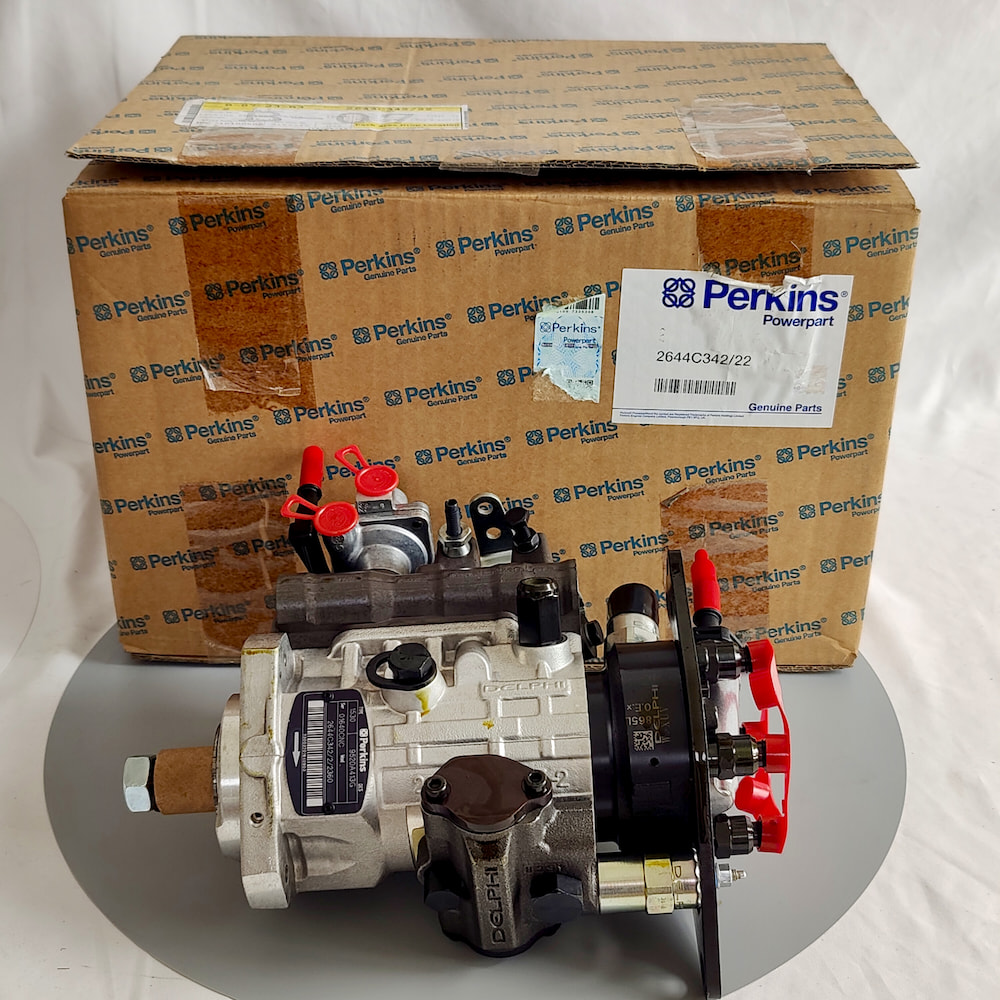
Start by Separating the Low-Pressure and High-Pressure Sides
A reliable way to clarify a fuel-pump inquiry is to divide the system into the low-pressure supply side and the high-pressure injection side before comparing part numbers.
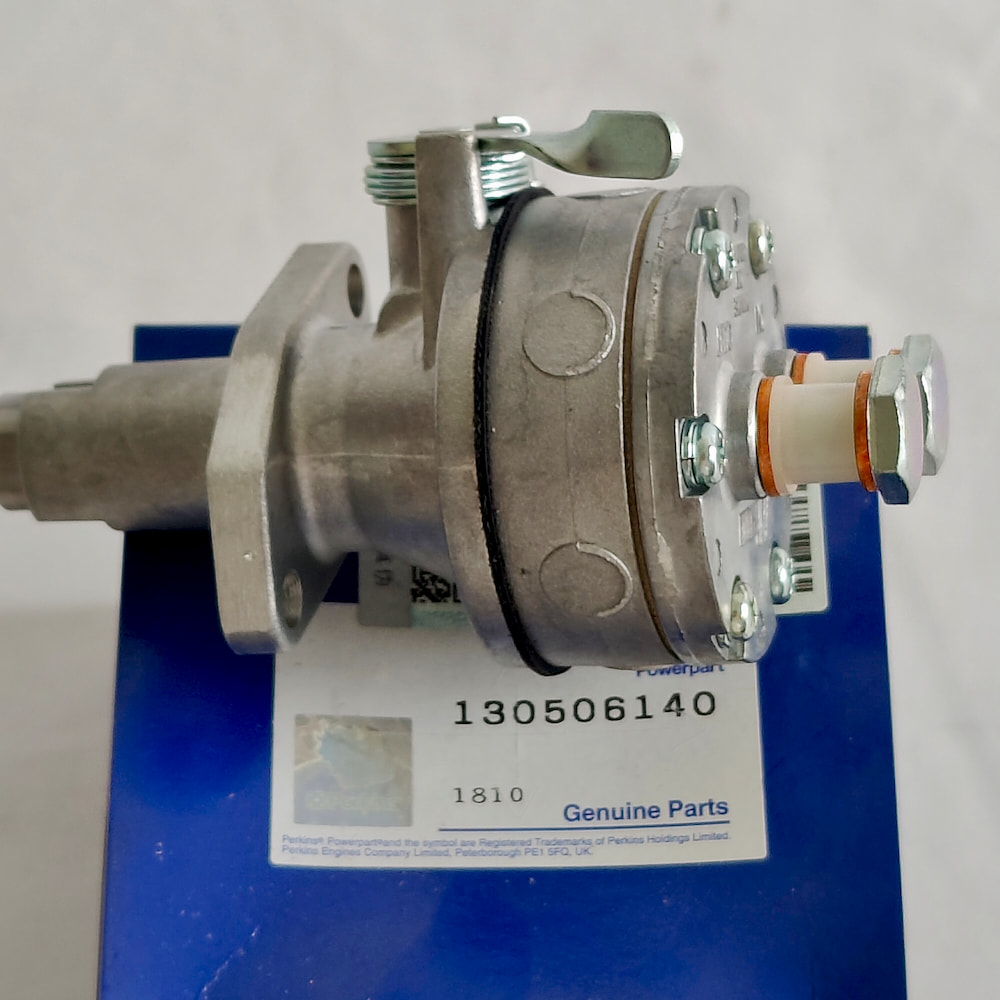
The main low-pressure component is the Lift Pump, also called a Transfer Pump in some applications. It moves fuel from the tank, through the filtration system and toward the injection pump or high-pressure system at the required supply pressure and flow. It does not control injection timing or meter fuel into individual cylinders.
The low-pressure side may also include a Priming Pump. Its purpose is to pressurise or prime the fuel circuit after extended storage, filter replacement, fuel-line disconnection or air entry. Depending on the engine and fuel-module design, priming may be performed by a hand-operated pump, an electric pump, a transfer pump or another approved method. A Priming Pump is not automatically the same as the pump that provides continuous low-pressure fuel flow during normal engine operation.
The high-pressure side may use a central Injection Pump or a High-Pressure Pump, depending on the system architecture. In a mechanical system, a rotary or inline pump controls the delivery of pressurised fuel to the cylinders. In a high-pressure common-rail system, the high-pressure pump feeds the rail, while rail pressure and injection timing are managed electronically and the injectors control the fuel delivered to each cylinder.
This first distinction defines the inquiry direction. It should not be made from symptoms alone.
Hard starting, low power, unstable running and abnormal exhaust smoke may arise from low-pressure supply problems, high-pressure faults, injector issues, air-system restrictions or electronic-control problems. These symptoms are useful diagnostic background, but they do not prove that one particular pump has failed.
The supplier should therefore use the component location, fuel-line arrangement, existing numbers, data-plate photographs and repair test results to determine which part the buyer is actually trying to replace.
A Lift Pump Is Simpler, but It Is Not a Universal Part
Lift and priming pumps are generally less complex than injection pumps, but “simpler” does not mean “interchangeable.”
A mechanically driven diaphragm pump and an electric pump cannot be substituted merely because their nominal flow appears similar. The mounting position, flange design, inlet and outlet orientation, thread specification, supply pressure and operating flow all affect whether the pump is suitable for the engine.
A mismatched Lift Pump may not create an obvious “will not fit” problem. It may install physically but deliver fuel outside the required pressure or flow range, causing unstable supply to the injection pump or common-rail system. Because attention is often focused on the high-pressure side, an incorrect low-pressure pump can complicate later diagnosis.
Fuel-System Architecture Determines How Deep the Matching Process Must Go
Perkins engines cover many generations and emissions stages. The high-pressure side can be organised into three main purchasing architectures.
Mechanical Injection-Pump Systems
Traditional systems use a rotary or inline Injection Pump. A rotary pump uses a central pumping and distributing mechanism to deliver fuel to each cylinder in sequence. An inline pump uses individual pumping elements for the cylinders.
Mechanical systems use a direct mechanical relationship between the pump, engine timing and governor mechanism. Some later central-pump designs added electronic control through actuators and electrical connections while retaining a pump body that resembles an earlier mechanical design.
For purchasing purposes, these still need to be identified first as central injection-pump systems. The buyer must then determine whether the exact pump is fully mechanical or electronically controlled.
Electronically Controlled Unit-Injector Systems
MEUI and HEUI systems represent a different high-pressure architecture. These systems replace the central mechanical injection pump, high-pressure fuel lines and conventional nozzles with an electronically triggered unit injector at each cylinder.
MEUI injectors are mechanically actuated and electronically controlled. HEUI injectors use pressurised engine oil to actuate the injector while the ECM controls fuel delivery. In either case, a buyer asking for a “fuel injection pump” may actually be dealing with a unit injector or another system-specific component rather than one central pump assembly.
High-Pressure Common-Rail Systems
A common-rail system separates pressure generation from injection control. The high-pressure pump supplies the rail, and electronically controlled injectors deliver the required fuel to the cylinders. Rail pressure and injection timing are electronically managed.
These architectures are not a simple linear progression that applies uniformly across every engine size and production year. Mechanical pumps, electronically controlled central pumps, unit injectors and common-rail components may appear across different Perkins platforms and applications.
Before matching a high-pressure fuel component, the supplier must identify the architecture. Comparing parts only by appearance is not reliable.
Calibration, Coding and Installation Requirements Complete the Match
Matching the housing, flange and connections does not prove that a fuel-system component is ready to operate correctly.
Mechanical and early electronically controlled injection pumps may be configured for a particular fuel-delivery rate, timing requirement, governor response, rated speed, power output or emissions application. The same basic pump family may therefore exist in more than one calibrated version.
A pump configured for an industrial application may not have the same governing characteristics as one intended for a generator set, where speed stability under changing load is particularly important. A physically compatible but incorrectly calibrated pump may cause power, fuel-consumption, speed-control or emissions performance to differ from the engine’s intended specification.
Electronic systems introduce an additional coding consideration, but its scope must be stated accurately.
Perkins new and remanufactured electronic injectors include a factory-established E-Trim code. The code helps compensate for injector-to-injector manufacturing variation and supports correct engine calibration. On applicable engines, the replacement injector’s E-Trim or other compensation data must be entered according to the service procedure.
This does not mean that every high-pressure pump, actuator or electronic fuel-system component requires ECU coding after replacement. Whether parameter programming, a learning routine or diagnostic-tool work is required depends on the exact engine and control system.
Mechanical injection pumps do not require electronic coding, but replacement is still not a simple remove-and-install operation. The procedure may involve establishing number-one cylinder at compression top dead centre, locking and timing the pump and gear correctly, installing new seals, reconnecting the fuel system and purging air before operation.
Fuel-system purchasing therefore involves three separate confirmations:
Physical compatibility, calibration or coding compatibility, and the required installation procedure.
The quotation should make clear whether the supplied product is already configured for the identified engine and whether specialist calibration, coding or commissioning remains necessary after delivery.
The Old Pump Data Plate and Engine Identity Must Be Checked Together
Perkins fuel injection pumps and injectors may be available as new, New-for-Old or remanufactured products. Where an exchange or remanufactured option applies, the old unit may be managed as a Core, so its identity, completeness and return condition can directly affect the quotation and delivery terms.
A pump body may carry several kinds of numbers.
One may be a Perkins service part number used to identify a supplied component and valid supersession. Another may be the pump manufacturer’s assembly or data-plate number, which can identify the pump version and calibration more precisely than the housing shape. A third may be a casting, housing or subcomponent number that does not identify the complete pump assembly.
A photograph of one unclear number on the housing may therefore be misleading.
The better evidence package includes the complete pump data plate, a full view of the pump, the mounting flange, fuel ports, electrical connectors and the engine data plate or configuration information.
If the old pump is severely damaged, its plate is unreadable or it was previously replaced with an unidentified aftermarket unit, matching becomes more difficult. The supplier may need to work back from the engine identity and application, and that process may not always produce one unique answer without additional physical evidence.
Product condition should also be compared carefully.
A new unit generally offers clearer origin and fitment information but may have a higher price or longer lead time. A remanufactured unit should identify the remanufacturer, inspection and replacement scope, test or calibration records, warranty responsibility and Core conditions. A verified replacement unit should have a reliable manufacturer, cross-reference and after-sales responsibility.
For Injection Pumps and injectors, manufacturing source, calibration and test information carry greater weight than they normally do for a simpler low-pressure Lift Pump.
Align the Quotation Scope Before Comparing Price
Two quotations both labelled “Perkins fuel pump” may cover completely different products.
One may be a complete calibrated Injection Pump assembly. Another may be an unverified base pump, a repair kit, a control valve or a sealing component.
Before comparing total price, the buyer should confirm whether each quotation covers a complete assembly or a partial component, whether the same engine identity and system architecture were used, and whether the calibration or electronic configuration matches the same application.
The quotation should also state whether it includes installation seals, test or calibration documentation, Core Return conditions, warranty terms and any required control or actuator components.
A quotation that says only:
Perkins fuel pump × 1
does not identify the actual component or provide a reliable basis for receiving inspection.
The correct comparison is not between two prices. It is between two quotations intended to complete the same replacement task.
Fuel Contamination Expands the Inspection Scope, Not Automatically the Replacement Scope
Pump or injector failure is not always an isolated event.
Water, particulate contamination, unsuitable fuel storage or inadequate filtration can accelerate wear in precision fuel-system components.
If inspection reveals metal particles, water or abnormal contamination, the repair facility may need to follow the fuel path through the tank, supply lines, filters and filter head, Lift Pump, Injection or High-Pressure Pump, rail and high-pressure lines, and injectors.
This does not mean that every component must automatically be replaced.
The correct principle is:
Contamination evidence expands the inspection scope; it does not automatically expand the replacement scope.
The replacement decision should follow inspection and test results. If only the visibly damaged pump is replaced while the contamination source remains in the system, the replacement unit may be exposed to the same failure mechanism.
Information to Provide Before Ordering
A fuel-system inquiry that can be checked and quoted accurately should include the complete engine model and serial number, available configuration information, equipment application, rated power and speed, and the actual position of the required component within the fuel circuit.
The buyer should state whether the requirement concerns a low-pressure Lift or Priming Pump, a central mechanical or electronically controlled Injection Pump, a unit injector, or a common-rail High-Pressure Pump.
Before removing the old component, photograph the complete data plate, pump or injector body, mounting interface, fuel ports and electrical connections. Do not rely on a number recalled after the part has been removed or discarded.
For electronic or common-rail systems, state whether the repair facility has the required diagnostic, calibration or coding capability, or who will complete those procedures. Any contamination, water or metal debris found during inspection should also be reported.
Hard starting, black smoke, low power and increased fuel consumption can provide diagnostic context, but they cannot replace positive component identification and testing.
When Can the Order Be Finalised?
Fuel-injection components depend heavily on exact matching.
Until the component type, old-unit identification and application information have been confirmed, a supplier’s response should be treated as an estimated quotation and lead time rather than a final order confirmation.
A more reliable sequence is to identify the component and fuel-system architecture, confirm the calibration, coding and installation requirements, and then agree any Core Return or remanufacturing conditions.
For applicable electronic injectors or control components, the buyer should also confirm whether E-Trim entry, parameter setup or another service procedure is required after installation and who will perform it.
Once these points are clear, the order can be frozen against a specific component, configuration and supply scope.
How ZEB Power Helps Review Perkins Fuel-System Components
ZEB Power uses the engine model, full serial number, application, old pump or injector data-plate photographs, component location and available inspection results to help buyers clarify whether the inquiry concerns a Lift Pump, Priming Pump, Injection Pump, High-Pressure Pump or injector.
ZEB Power can help review part-number relationships, physical interfaces, product condition and the quotation scope, including whether the offer covers a complete assembly, an exchange unit or a partial component.
The exact fuel-system architecture, final fault diagnosis, pressure testing, calibration, E-Trim or other coding procedures, Core acceptance and final replacement scope should remain subject to the applicable service information and the repair organisation responsible for the work.
Provide the Perkins engine data plate, full serial number, old pump or injector data plate, complete component photographs and available test findings. ZEB Power can help convert a general “fuel pump” request into a specific component scope that can be checked, quoted and ordered.
Frequently Asked Questions
Are a Lift Pump, Priming Pump and Injection Pump the Same Component?
No. A Lift Pump provides continuous low-pressure fuel supply during engine operation. A Priming Pump pressurises or primes the low-pressure circuit after servicing, storage or air entry and may be manually or electrically operated. An Injection Pump or High-Pressure Pump provides the pressure required by the injection system.
What Usually Needs to Be Replaced When a Common-Rail Engine Has a “Fuel Pump” Problem?
The fault must first be identified. The high-pressure pump, pressure-control components, rail, injectors or another part of the system may be involved. A general symptom such as hard starting or low power is not enough to identify the required replacement.
Can the Same Injection-Pump Model Be Used on Different Engines?
Not automatically. The same basic pump family may have different calibrations for different power ratings, speeds or applications. The complete pump data-plate information and engine configuration should be checked.
Is Additional Work Required After Replacing an Injection Pump or Injector?
Usually, but the work depends on the fuel-system type. A mechanical Injection Pump requires correct timing, gear installation, lock release, sealing and fuel-system purging. Applicable electronic injectors may require E-Trim or other compensation data to be entered. Whether a High-Pressure Pump or control component requires parameter setup or a learning procedure depends on the exact engine service instructions.
Does Fuel Contamination Mean the Pump and Injectors Must All Be Replaced?
No. Contamination should expand the inspection scope across the fuel system, but each replacement decision should be based on the inspection and test results.
Can a Universal Replacement Lift Pump Be Used?
Only after confirming the drive method, mounting arrangement, port orientation, thread specifications, flow and pressure requirements. A pump that appears similar may still supply the wrong pressure or flow for the engine.