

Perkins Gasket & Seal Kit: Match Your Repair Boundaries

5628
Table of Contents
Generating table of contents
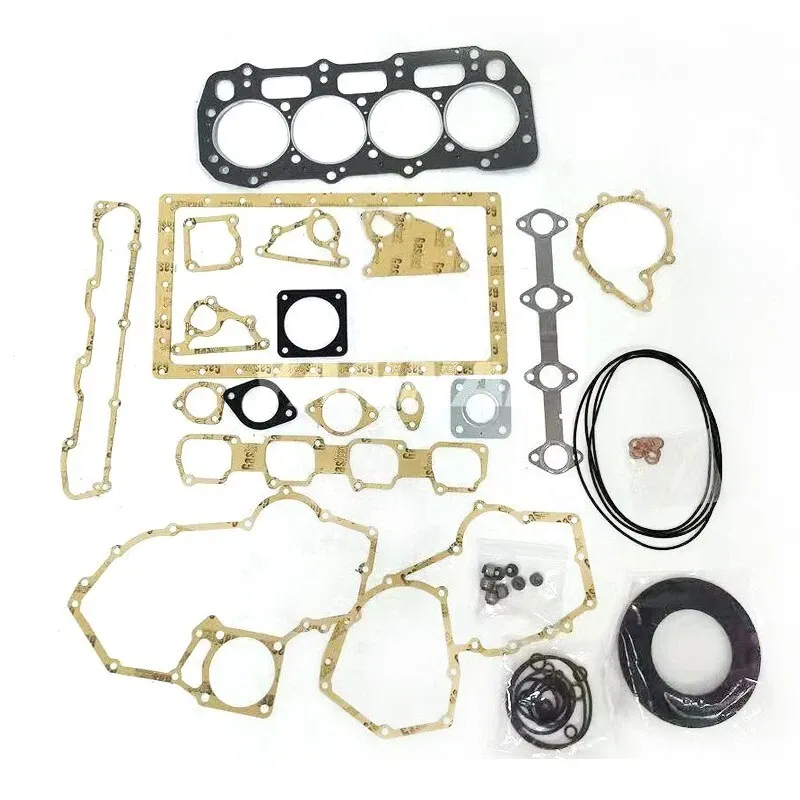
A Perkins engine was opened for cylinder-head repair, and the workshop ordered a “Complete Gasket Kit” based on the supplier’s recommendation.
When the package arrived, the kit did not contain the correct head-gasket version for the engine. At the same time, it included a number of lower-engine sealing parts that the repair had never exposed: timing-case gaskets, oil-pan gaskets and a front crankshaft seal.
This may be more than a simple warehouse picking error. The more fundamental problem may be that the kit scope used for the quotation did not match the sealing boundaries opened during the repair. A kit may belong to the correct engine family and still fail to complete the actual job.
Asking whether the buyer needs a Top, Bottom or Complete Kit does not fully solve the problem. Those names do not guarantee that different suppliers are quoting the same bill of materials.
A more reliable method is to establish a sealing-boundary map before ordering:
- Which joints and interfaces were opened?
- What type of seal is used at each interface?
- Which sealing parts must be replaced because the joint was disturbed?
- Which specifications depend on the engine version, machining history or inspection results?
This guide does not diagnose a failed gasket or seal from oil leakage, coolant loss, combustion leakage or crankcase symptoms alone. Leak tracing, mating-surface inspection, crankcase-pressure testing, cylinder-head and block measurement, and final assembly should be completed by a repair organisation with the appropriate service information and test capability.
Start by Mapping the Sealing Boundaries Opened During the Repair
A gasket kit should be selected by working backwards from the repair operation. The process should not begin by choosing the largest-looking kit and then trying to use its contents to complete the job.
When the cylinder head is removed, the opened sealing boundaries may include the head gasket, rocker or valve-cover seal, intake and exhaust manifold gaskets, injector-related seals, valve-stem seals, and O-rings or connection seals disturbed during disassembly.
When the repair involves the lower or front section of the engine, the opened boundaries may include the oil pan, timing case, front cover, water-pump interface, oil cooler, front and rear crankshaft seals, related O-rings and single-use installation parts.
If the repair is limited to a turbocharger, oil cooler, water pump or filter housing, local gaskets and seals may be sufficient. Purchasing a full Top or Bottom Kit for one isolated joint may add cost, create unnecessary stock and increase the chance of mismatch.
The most useful purchasing question is therefore not:
Which gasket kit should I buy?
It is:
Which sealing boundaries were opened during this repair, and how must each one be sealed again?
Kit Names Are Labels, Not Bills of Materials
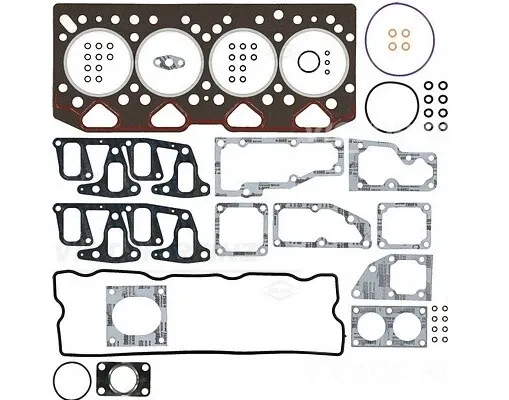
On some Perkins 1100D applications, a Top Kit may be organised around upper-engine work after cylinder-head removal and may include the head gasket, rocker-cover gasket, intake and exhaust gaskets, valve-stem seals and injector seals.
A Bottom Kit may instead be organised around work involving the oil pan, timing case, front cover, water pump, oil cooler and crankshaft end seals.
This example shows that Top and Bottom kits are organised around repair tasks rather than simply around the physical height of the parts on the engine.
It should not, however, be treated as the default BOM for every Perkins series. Kit names, coverage and contents can vary by engine family, Build List and supplier.
“Complete Gasket Kit” also has no universal cross-supplier BOM standard.
For one supplier, Complete may mean Top plus Bottom. Another supplier may exclude the head gasket. A third may include the front and rear crankshaft seals but exclude injector seals, head bolts or certain system-specific gaskets.
The kit name should therefore come second. The itemised BOM should come first.
At minimum, confirm whether the quotation includes:
- the head gasket;
- front and rear crankshaft seals;
- valve-stem seals;
- injector O-rings or sealing washers;
- water-pump and oil-cooler gaskets;
- single-use bolts, clips, dust caps and installation accessories.
Three Sealing Principles Require Three Matching Methods
Gaskets, O-rings and shaft seals all control leakage, but they do not work in the same way. They should not be grouped together under a vague description such as “rubber seals.”
Static Face Seals
A gasket is normally compressed between two non-rotating components. It seals gas or liquid through its material, surface coating, embossed sealing features and the specified clamping load.
Compatibility depends on more than outline and hole position. Material, thickness, surface treatment, temperature, pressure and the condition of both mating surfaces can all affect sealing performance.
Groove-Compression Seals
An O-ring seals by being compressed within a defined groove.
Two O-rings that appear to have the same inside diameter may still differ in cross-section, compound, hardness, temperature resistance, fluid compatibility and intended compression.
A near match is not necessarily a usable match. An incorrect section or compound may lead to under-compression, cutting during assembly, extrusion or early deterioration.
Dynamic Shaft Seals
A shaft oil seal operates between a rotating shaft and a fixed housing while also limiting the entry of external contamination.
It must match the shaft diameter, housing bore, lip design and direction, spring arrangement, running surface, installation depth and shaft-to-housing alignment.
The quotation should therefore identify whether the part is a static gasket, a groove O-ring or a dynamic shaft seal rather than describing all three simply as “Seal.”
A Head Gasket Is Not Just Another Item in the Kit
A head gasket must seal combustion pressure, coolant passages and lubricating-oil passages while maintaining the geometric sealing relationship between the cylinder head, block and combustion chambers.
It is one of the least suitable components for visual matching.
The purchasing decision should not rely only on cylinder-hole count, external outline or approximately matching bolt holes.
The correct head gasket may depend on:
- the formal part number;
- engine prefix and Build List;
- combustion sealing areas;
- oil and coolant passage layout;
- gasket thickness or version;
- whether the cylinder head or block has been machined;
- the installation method specified for the engine.
On applicable Perkins engines, gasket thickness can be an order-level specification. That does not mean every Perkins engine uses the same notch, hole or marking system to identify thickness.
The correct identification method must come from the parts and service information for the specific engine.
If the cylinder head or block has been machined, a supplier should not remotely decide to compensate by supplying “one thickness up.” Whether another thickness is permitted, whether the machined dimensions remain within limits, and which sealing solution is acceptable should be determined by the organisation responsible for measurement and assembly.
Crankshaft Oil Seals Cannot Be Selected by Inside and Outside Diameter Alone
The front and rear crankshaft seals are among the engine’s most important dynamic seals.
Matching inside and outside diameters are not enough to prove interchangeability.
The following may also need confirmation:
- formal part number;
- sealing-lip design and direction;
- spring arrangement;
- seal carrier or housing version;
- installation depth;
- crankshaft sealing-surface condition;
- installation tool or carrier requirements;
- availability of an approved repair-sleeve solution.
If the crankshaft running surface has developed a wear groove, fitting a new seal may not restore reliable sealing. If the new lip runs on the same damaged track, leakage may return quickly.
Abnormal crankcase pressure can also force oil past a correctly selected and installed seal. Crankcase ventilation, blow-by and internal pressure therefore belong to the leakage investigation.
Purchasing a new oil seal solves the parts-supply requirement. It does not replace diagnosis of the leakage mechanism or inspection of the shaft surface.
Oil Traces Show Where the Fluid Travelled, Not Where the Seal Failed
The point where oil becomes visible is not necessarily the original leak source.
Oil can travel down the block, front cover, flywheel housing or machine structure and collect far from the failed joint. A leak that appears to come from the oil-pan gasket may actually originate at the timing case, rocker cover, oil cooler or crankshaft seal.
Oil found near the flywheel housing does not automatically prove that the rear crankshaft seal has failed. It may also come from the rear of the oil pan, an upper joint or a nearby oil passage.
The leakage path should be traced before the parts scope is decided.
Cleaning the area, observing the engine in operation, using an appropriate leak-detection method and checking crankcase pressure are usually more reliable than ordering the gasket closest to the visible oil trace.
Why Disturbed Sealing Parts Usually Need Replacement
Many used gaskets and O-rings appear undamaged after removal and are therefore assumed to be reusable.
Modern metal gaskets, elastomer seals and O-rings often rely on surface coatings, local compression and controlled deformation to create the original seal. Once disturbed, their previous compression state and sealing ability may not be recoverable even when the part still looks intact.
Reusing a disturbed seal may result in:
- insufficient compression;
- a coating that cannot reseal;
- permanent O-ring deformation;
- reduced oil-seal lip elasticity;
- leakage shortly after the repair is completed.
Whether a specific sealing part may be reused should be determined from the service information for the engine, not from appearance alone.
Leftover Seals Do Not Automatically Mean the Wrong Kit Was Supplied
Finding unused sealing parts after assembly does not immediately prove that the kit was incorrect.
The kit may cover several engine prefixes or configuration variants. Some parts may apply only to a particular installation. The repair may not have opened every joint covered by the kit, or certain seals may already have been supplied pre-installed in another assembly.
The opposite assumption is also unsafe:
Extra parts are normal, so there is nothing to check.
Leftover parts may indicate an omitted installation step or a kit that does not match the engine configuration.
The safer method is to compare the kit BOM, Build List, disassembly record and actual installation points item by item.
Unidentified seals should not be discarded casually, and they should not be fitted somewhere uncertain merely to “use every part in the kit.”
Compare Genuine and Replacement Products by Validation, Not by Label
The suitability of a Replacement kit does not depend on the word “aftermarket” alone. It depends on whether the critical sealing parts are supported by sufficient material, dimensional, batch and application validation.
For gaskets, useful evidence may include:
- material specification;
- thickness;
- surface coating;
- metal-layer count where applicable;
- embossed sealing-bead geometry.
For O-rings, confirm:
- cross-section;
- compound;
- hardness;
- temperature capability;
- fluid compatibility.
For oil seals, confirm:
- lip design;
- spring configuration;
- seal material;
- rotation requirements where applicable;
- shaft-surface compatibility.
For batch purchasing, also review whether the kit BOM is stable, whether parts may change between batches without notice, whether batch traceability is available, whether the head-gasket packaging prevents bending or compression damage, and how mismatch or sealing complaints are handled.
The main advantage of Genuine products is that the design source, material standards, application relationship and traceability are usually clearer. This can reduce the buyer’s burden when validating material and manufacturing consistency.
A Genuine label still does not replace checking the engine identity, part number and kit scope.
The higher the repair risk and the greater the cost of repeat disassembly, the stronger the validation required for a Replacement product. A head gasket or rear crankshaft seal should not necessarily be assessed by the same standard as a small external cover gasket.

Quotations Are Comparable Only When They Cover the Same Sealing Boundaries
One quotation may include Top and Bottom kits, the head gasket and both crankshaft seals. Another may contain static gaskets only and exclude valve-stem and injector seals. A third may include single-use bolts and installation accessories.
A quotation that states only:
does not show whether the kit can close every joint opened during the repair. It also provides no reliable basis for receiving inspection.
Before comparing price, confirm that both quotations use the same engine identity and repair boundaries.
Then compare:
- head-gasket part number or version;
- front and rear crankshaft seals;
- valve-stem seals;
- injector seals;
- O-rings;
- local system gaskets;
- single-use installation parts;
- product condition and brand source;
- packaging and batch traceability;
- return responsibility for mismatch or sealing problems.
The real comparison is not the number of parts in two boxes. It is whether both quotations are intended to close the same set of opened joints.
What Must Be Confirmed Before a Budgetary Quote Becomes a Final Order
When information is incomplete, a supplier may sometimes provide a budgetary price or range from the engine family and preliminary repair scope. That quotation is useful for cost planning, but it does not prove compatibility.
Before the quotation becomes a final order, the following usually need to be confirmed:
- the actual components removed during the repair;
- the complete Engine Serial Number;
- the Build List, where available;
- the itemised kit BOM;
- the exact head-gasket and oil-seal versions;
- measurement records if the head or block has been machined;
- the condition of the crankshaft sealing surfaces;
- the results of leak tracing.
A request such as:
The engine is leaking oil. I need a complete gasket set.
provides useful repair background, but it does not define the repair boundaries or identify the required parts.
If the repair scope may expand after further disassembly, a budgetary quotation can still be used for cost planning. The estimated Complete Kit should not be treated as an unchangeable final order.
How ZEB Power Helps Review Perkins Gasket and Seal Kits
ZEB Power uses the engine model, full serial number, Build List, equipment application, planned repair scope and inspection information to convert a general request for a “complete gasket kit” into a defined sealing-boundary list.
The review can cover which joints were opened, which sealing principles apply, which head-gasket and crankshaft-seal versions are required, and whether different quotations cover the same repair boundaries.
Final identification of the leak source, mating-surface inspection, cylinder-head and block measurement, crankshaft-surface repair and on-site assembly should remain with a repair organisation that has the appropriate test and service capability.
Provide the Perkins engine data plate, full serial number, Build List, removed-component list and photographs of the existing sealing parts. ZEB Power can help define the required sealing scope, compare quotations and establish receiving-inspection criteria.
Frequently Asked Questions
Does a Complete Gasket Kit Always Include the Head Gasket?
No. “Complete” has no universal cross-supplier BOM standard. The itemised quotation must confirm whether the head gasket is included.
Can a Head Gasket Be Selected Because the Hole Pattern Matches?
No. The formal part number, thickness or version, combustion sealing area, oil and coolant passages, and engine configuration must also be confirmed.
Can Crankshaft Oil Seals with the Same Dimensions Be Interchanged?
Not automatically. Lip design, seal carrier, installation depth, shaft-surface condition and the formal application relationship may also differ.
Can an Undamaged Used Gasket Be Reused?
Appearance alone is not enough. Many gaskets, O-rings and oil seals depend on one-time compression, coating or controlled deformation to seal reliably.
Do Leftover O-Rings Prove That the Wrong Kit Was Supplied?
Not necessarily, but they must be investigated. They may belong to another configuration, or they may indicate an omitted part or a kit mismatch. Compare them with the BOM, Build List and disassembly record.