

Cummins Fan Clutch: How to Match the Correct Fan Drive

1778
Table of Contents
Generating table of contents
A Cummins fan clutch—also commonly referred to as a fan drive—is not a universal component that can be replaced simply because the bolt holes appear to line up.
Two fan drives may look nearly identical while using different operating modes, control designs, rotation directions and mounting interfaces. Even when the replacement can be physically installed, a mismatch in fan load, control logic or pulley position may cause the fan to run at high speed continuously, fail to engage correctly, deliver insufficient cooling, create excess noise or shorten bearing and fan-system life.
Quotation scope creates another common purchasing problem. One supplier may quote a complete fan drive, another may quote only the clutch body, while a third quotation may actually cover a fan hub, repair kit or solenoid. Similar product names do not mean that the quoted items or prices are directly comparable.
After fan-drive replacement has been confirmed, the buyer should answer four questions:
- Is the quotation for a complete assembly or an individual component?
- What operating mode and control design does the original equipment use?
- Do the mounting interface, rotation and fan-load capacity match?
- Has the final part number been verified from the old unit, equipment model and engine ESN?
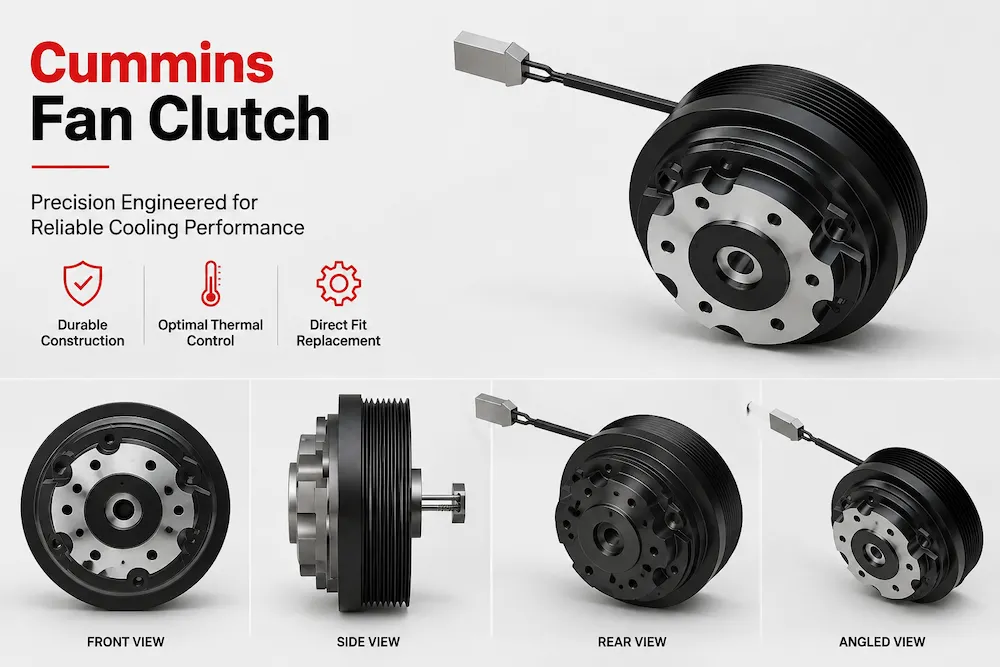
Confirm the Quotation Scope First
Fan Clutch, Fan Drive and Fan Hub are not used consistently across all manufacturer catalogs. The final scope should be confirmed from the formal part number, drawing, product photos and quotation details rather than from the product name alone.
| Product term | Common meaning | What to confirm |
|---|---|---|
| Fan Clutch / Fan Clutch Assembly | Clutch body or assembly that controls fan engagement or fan speed | Whether the control valve, mounting components and pulley are included |
| Fan Drive | May refer to the clutch body or to a larger assembly including the hub, pulley, bracket or other drive components | Exact included components and whether the unit is ready for installation |
| Fan Hub | Hub that supports and drives the fan; may be independent or integrated into the fan drive | Whether the bearing, pulley or bracket is included |
| Fan Clutch Repair Kit | Seals, bearings, friction components or control parts used to repair a specific fan drive | Applicable formal part number, kit scope and local repair capability |
| Solenoid / Air Control Valve | Control component for a pneumatic fan drive | Voltage, port type, engagement logic and whether it is supplied with the assembly |
| Fan Spacer / Adapter | Component used to adjust the fan’s axial position | Thickness, pilot, bolt circle and mounting holes |
Before comparing prices, ask:
Is this quotation for a complete fan drive, clutch body, fan hub, repair kit or control component?
Then confirm whether the pulley, bearing, bracket, solenoid and spacer are included.
Operating Mode and Control Design Are Different Questions
A fan drive should be understood from two separate perspectives: how the fan operates, and how torque and control are provided.
Operating Modes
On/Off Fan Drive
An on/off fan drive switches between a higher engaged fan speed and a disengaged or low-drag condition. It is used where cooling demand is managed primarily through engagement and disengagement.
Two-Speed Fan Drive
A two-speed fan drive provides two principal fan-speed conditions: a lower speed and a higher engaged speed. The low-speed mechanism and drag speed vary by design, so two products described as “two-speed” are not automatically interchangeable.
Variable-Speed Fan Drive
A variable-speed fan drive adjusts fan speed over a range according to actual cooling demand. Matching normally requires confirmation of the equipment controller, connector and control-signal compatibility.
Torque-Transmission and Control Designs
Pneumatic Friction Fan Drive
A pneumatic friction fan drive uses air pressure, springs, pistons and friction components to control engagement.
The buyer should confirm:
- Normal working air pressure
- Air-port size and thread
- Solenoid voltage
- Whether the unit engages or disengages when air is applied
Some products are air-engaged. Others are spring-engaged and air-disengaged. The engagement logic cannot be identified from the air fitting alone.
Thermal Viscous Fan Drive
A thermal viscous fan drive transfers torque through an internal viscous medium and uses a bimetal temperature element to adjust engagement according to the air temperature behind the radiator.
Confirm:
- Formal part number
- Temperature calibration
- Design rotation
- Fan pilot and bolt circle
- Applicable fan specification
Outside dimensions and center mounting alone are not enough to confirm interchangeability.
Electronically Controlled Viscous Fan Drive
An electronically controlled viscous fan drive also transfers torque through a viscous medium, but an ECM or equipment controller regulates internal fluid flow to provide staged or variable-speed operation.
At purchasing stage, confirm:
- Control voltage
- Connector and harness
- Switching or modulated control signal
- Compatibility with the equipment controller and calibration
Detailed pinout, PWM frequency and feedback specifications should be verified from manufacturer documentation during final technical confirmation rather than guessed from appearance.
Some applications may also use an electromagnetic engagement design. These should be matched from the original part number and equipment control system.
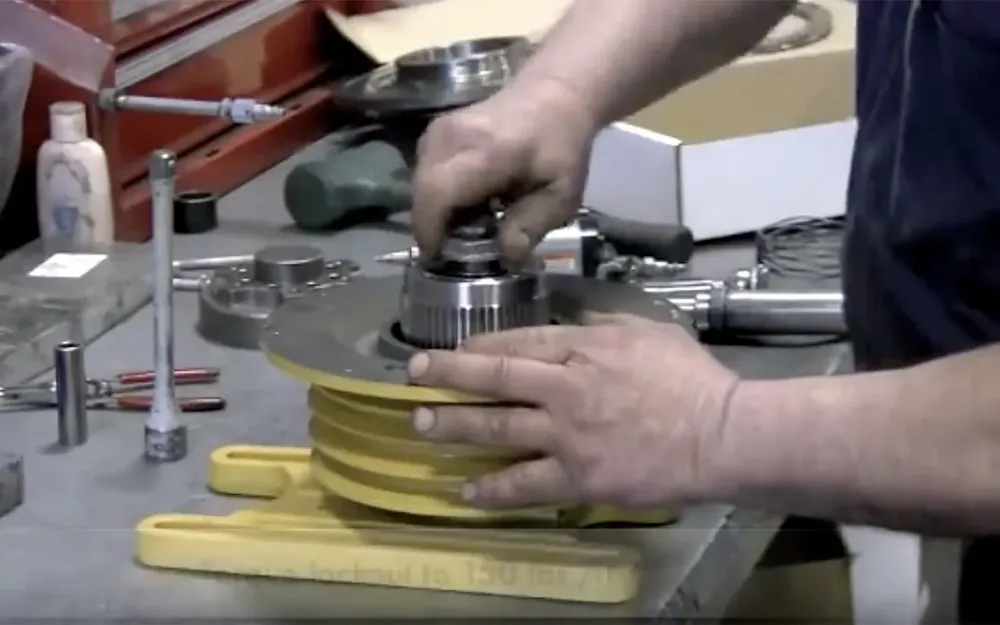
Mounting Interface: Bolt Count Is Not Enough
Matching requires confirmation of both the fan side and the drive side.
Fan-Side Interface
- Fan Pilot Diameter
- Fan Bolt Circle Diameter
- Bolt quantity and hole diameter
- Fan Mounting Disc
- Spacer or adapter thickness
Drive-Side Interface
- Mounting shaft, thread, flange or bracket design
- Drive pilot and drive bolt circle, where applicable
- Overall length and installed depth
- Pulley or sheave position
- Bearing-support design
Pulley and Installation Space
- Pulley diameter, groove profile and groove count
- Pulley offset
- Compatibility with the original belt routing
- Fan-to-radiator clearance
- Fan-to-shroud clearance
A difference in pilot, bolt circle, thread, offset or installed depth can prevent installation or create alignment, belt-routing and bearing-load problems.
Confirm Fan-Drive Rotation and Fan-Blade Rotation Separately
Fan-drive rotation and fan-blade rotation are related, but they are not the same matching parameter.
A fan drive may be identified as clockwise or counterclockwise, but manufacturers may define rotation from different viewing sides. A statement such as “clockwise from the front” can easily be misunderstood if the observation side is not defined.
When the rotation is uncertain, provide:
- Overall photos of the old fan drive
- Installed-position photos
- Fan-side and drive-side photos
- Manufacturer label or part number
Fan-blade rotation and blade pitch determine airflow direction and fan load. Even when the fan-drive rotation is correct, an incorrect blade direction, pitch or installation orientation may cause poor cooling, noise, vibration or abnormal load.
Fan Specifications Directly Affect Fan-Drive Load
The fan drive must handle both aerodynamic and mechanical load.
Key fan information includes:
- Fan diameter
- Blade count
- Blade pitch
- Fan speed
- Fan material and weight
- Spacer length
- Balance condition and axial offset
A larger diameter, steeper pitch or higher speed increases aerodynamic load. A heavier fan, longer spacer or greater axial offset increases bearing and support load.
When replacing only the fan drive and retaining the original fan, provide the fan dimensions and photos.
When changing to a larger fan, adding blades or increasing pitch to improve cooling, the fan drive, fan blade, spacer, shroud and radiator should be reviewed as one cooling system rather than purchased separately and combined without verification.
Pulley, Bearing and Bracket Content Often Explains Price Differences
The term “complete fan drive” does not always mean the same thing from one supplier to another.
One quotation may include the pulley, bearing and bracket, while another may cover only the clutch body. A repair kit may also exclude the bearing or some internal service parts.
The quotation should state whether it includes:
- Pulley or sheave
- Bearing
- Bracket
- Fan Mounting Disc
- Spacer
- Solenoid or control valve
- Seal Kit, Bearing Kit or Major Repair Kit
Do not judge price from the product name alone.
Engine ESN May Not Be Enough
The fan drive installed on a Cummins-powered machine may originate from:
- The original Cummins engine configuration
- The equipment OEM cooling module
- The fan-drive manufacturer
- A later retrofit or replacement assembly
For this reason, the old fan-drive part number and equipment make and model may be more useful than the engine CPL when identifying the final product.
| Number type | Primary use |
|---|---|
| Cummins Part Number | Service part number used in Cummins documentation |
| Fan Drive Manufacturer Number | Horton, BorgWarner, Kysor or another manufacturer number |
| Equipment OEM Number | Machine-manufacturer or cooling-module part number |
| Reman Part Number | Separate part number assigned to a remanufactured product |
| Repair Kit Number | Kit number assigned to a specific fan-drive model |
| Serial Number | Production and traceability reference |
| Casting Number | Housing or casting identifier; normally not enough to order a complete fan drive |
| Bearing Number | Bearing specification; does not replace the complete fan-drive part number |
Use the following references in order of importance:
- Formal old fan-drive part number
- Equipment make and model
- Engine ESN
- Fan-drive manufacturer number
- Mounting and control information
- Confirmed original-to-superseded part-number relationship
CPL should be treated as supporting engine-configuration information only.
Fan Problems Do Not Always Mean Fan-Drive Failure
The following symptoms may involve the fan drive:
- Fan runs at high speed continuously
- Fan does not engage correctly
- Fan speed remains too low
- Engine temperature rises under high load
- Fan noise or vibration is abnormal
Similar symptoms may also result from a temperature sensor, ECM, solenoid, air leak, harness, belt, tensioner, radiator, thermostat or water pump.
A qualified local workshop should diagnose the actual cause. For purchasing purposes, confirm whether fan-drive replacement has been recommended and whether the pulley, bearing, bracket, solenoid or fan blade also needs replacement.
Genuine New, Reman, Aftermarket or Repair Kit?
| Purchasing option | Typical use | What to confirm |
|---|---|---|
| Genuine or fan-drive manufacturer new | Part number, source and configuration are normally clear | Correct cross-reference, supply channel and warranty |
| Manufacturer remanufactured | Rebuilt through defined disassembly, inspection, component replacement, assembly and testing processes | Reman part number, core charge, test scope and warranty |
| Qualified aftermarket new with a defined cross-reference | May balance budget and lead time | Operating mode, control design, interface, fan-load range and batch traceability |
| Repair Kit | Retains the original body and replaces selected internal components | Formal applicable part number, kit contents and local repair capability |
A manufacturer remanufactured product is not the same as an unidentified rebuilt unit. Confirm the remanufacturer, testing scope and warranty.
A repair kit should not be selected only because it is described as fitting the same fan-drive family. Bearings, seals, friction components and control parts may differ between models, and a complete repair may require more than one kit.
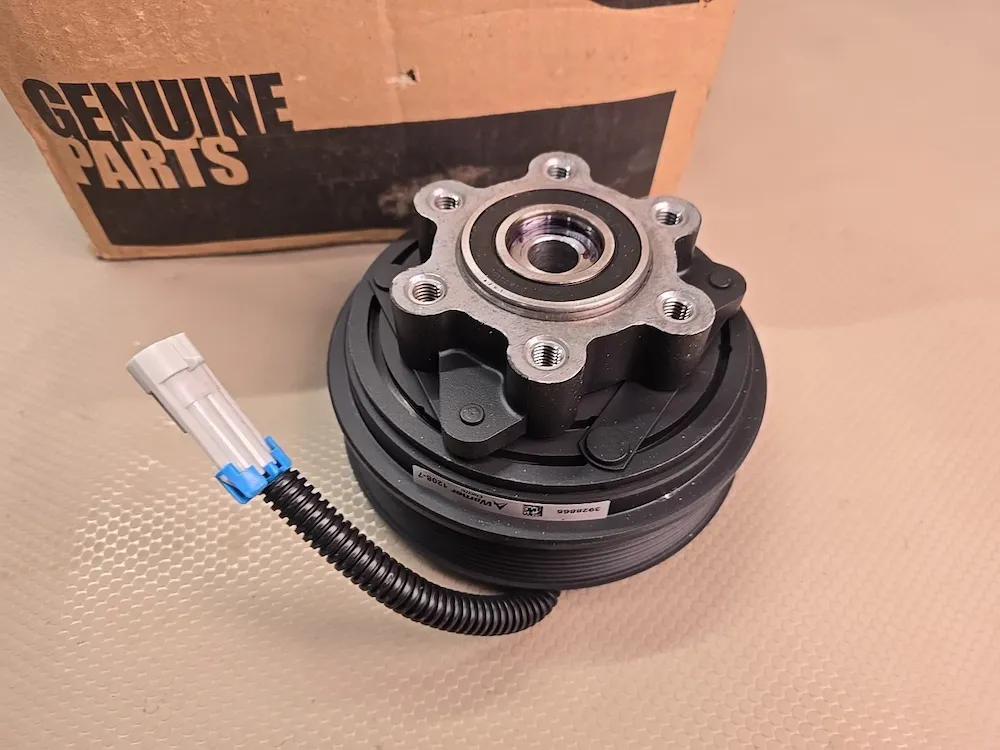
Information to Prepare Before Requesting a Quotation
The buyer does not need to identify every technical parameter before making contact. Start with the information that provides the highest matching value.
Provide First
- Formal old fan-drive part number
- Old-unit label, stamped-number and overall photos
- Equipment make and model
- Engine model and ESN
- Fan-side and drive-side installation photos
- Application and required quantity
- Destination country
Add Where Available
- On/Off, Two-Speed or Variable-Speed
- Pneumatic, Thermal Viscous or Electronic Viscous
- Fan pilot and bolt circle
- Whether the pulley, bearing and bracket are required
- CW or CCW together with the viewing side
- Fan diameter, blade count and spacer
- Pneumatic port and engagement logic
- Voltage, connector and harness
- Acceptance of an approved superseded part number
- Genuine, remanufactured or aftermarket preference
How to Compare Supplier Quotations
Prices are directly comparable only when the formal part number, operating mode, control design, mounting interface, product scope and product condition are equivalent.
| Comparison item | What to verify |
|---|---|
| Final part number | Relationship among the old number, manufacturer number, OEM number, superseded number and quoted number |
| Product scope | Complete Fan Drive, Fan Clutch, Fan Hub or Repair Kit |
| Operating mode and control design | On/Off, Two-Speed, Variable-Speed and Pneumatic, Viscous or Electronic Control |
| Mounting interface | Fan pilot, bolt circle, shaft, thread, flange and installed depth |
| Pulley, bearing and bracket | Included or excluded, with matching specification and position |
| Rotation | Fan-drive and fan-blade rotation together with the viewing side |
| Fan load | Compatibility with the original fan specification |
| Product condition | New, Reman, Aftermarket or Repair Kit |
| Warranty and quotation unit | Per component, per kit or complete assembly |
When two prices differ significantly, first confirm that both suppliers are quoting the same product scope and condition before judging quality from price.
How ZEB Power Supplies Cummins Fan Drives
ZEB Power supplies Cummins fan drives and related cooling-system parts for construction machinery, mining equipment, generator sets and industrial equipment.
Using the old formal part number, equipment make and model, engine ESN, manufacturer number, mounting interface and physical photos, we can help verify:
- Complete Fan Drive
- Fan Clutch
- Fan Hub
- Pulley, Bearing and Bracket
- Solenoid and Control Valve
- Fan Spacer
- Repair Kit
- Original, manufacturer, OEM and superseded part-number relationships
Available supply options depend on the exact part number and current supply channel. Where available, the quotation will clarify the product scope, operating mode, control design, mounting interface, included components, product condition, lead time and warranty.
ZEB Power supports part matching and quotation-scope confirmation. Fault diagnosis, control-system testing and post-installation cooling-system validation should be completed by a qualified local workshop.
Frequently Asked Questions
Can the engine ESN alone identify the fan drive?
Not always. Some fan drives belong to the equipment OEM cooling module, so the equipment model, old part number and manufacturer number may also be required.
Is a fan drive always either viscous, pneumatic or electronic?
No. Operating mode, torque-transmission design and control method are separate concepts. An electronically controlled viscous fan drive uses both viscous torque transfer and electronic control.
Does a pneumatic fan drive engage or disengage when air is applied?
It depends on the model. Some are air-engaged, while others are spring-engaged and air-disengaged.
Can I install a larger fan to improve cooling?
Not without system verification. A larger fan changes both aerodynamic and mechanical load and should be checked together with the fan drive, spacer and shroud.
Is a remanufactured fan drive reliable?
It depends on the remanufacturer, testing process and warranty. Manufacturer or authorized-channel reman units are different from unidentified rebuilt products.
Can a repair kit replace the complete fan drive?
Only when the original body is repairable, the damage is understood and the workshop has the required assembly and testing capability.
Why do two “Cummins fan clutch” quotations differ so much?
The product scope or condition may be different. One quotation may include the pulley and solenoid, while another may cover only the clutch body or repair kit.
What information is most important for an accurate quotation?
Prioritize the old formal part number, label and overall photos, equipment make and model, engine ESN and mounting-interface photos.
Summary
A Cummins fan drive should not be purchased from the engine model, outside appearance or bolt count alone.
After replacement has been confirmed, verify:
- Old fan-drive part number and manufacturer number
- Equipment make, model and engine ESN
- Operating mode and control design
- Fan pilot, bolt circle and drive-side interface
- Fan-drive and fan-blade rotation
- Original fan specification and load
- Included pulley, bearing, bracket, solenoid and repair-kit scope
Need a Cummins fan-drive quotation? Send the old formal part number, label and overall photos, equipment make and model, and engine ESN. When the operating mode, control design or mounting details are unclear, ZEB Power can help verify the available information step by step and provide a clear quotation scope.