

Cummins Charging Alternator vs Main AC Alternator: What Buyers Must Know

5363
Table of Contents
Generating table of contents
A customer may send an inquiry that simply says:
I need a Cummins generator alternator.
The request appears clear, but it may refer to two completely different products.
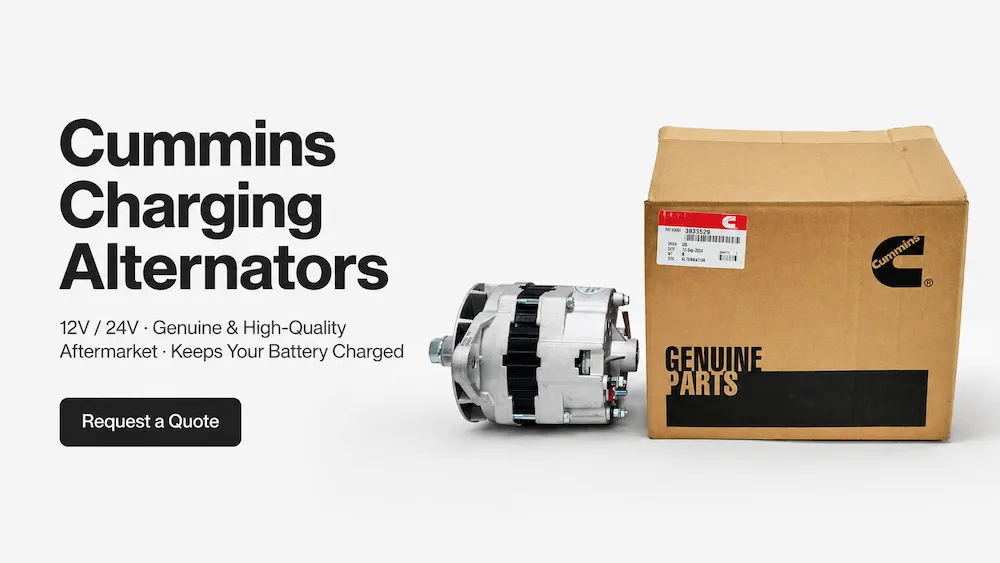
The first is an engine-mounted Battery-Charging Alternator, which charges the starting batteries and supports the engine ECM, instruments and low-voltage electrical system.
The second is the Main AC Alternator, also called the Generator End, which is coupled to the engine flywheel and supplies AC power to the external load.
Both products may be shortened to “alternator,” but their functions, voltage levels, mounting positions and purchasing specifications are entirely different. Clarifying this distinction is the first step in preventing an incorrect quotation.
After the correct product type has been identified, a Battery-Charging Alternator still needs to be matched by several application-specific details. Approved rotation, quotation scope, output rating, mounting geometry, pulley alignment, electrical interfaces, polarity and grounding arrangement can all determine whether the replacement fits and operates correctly.
First Confirm Which Alternator the Customer Needs
| Comparison | Battery-Charging Alternator | Main AC Alternator / Generator End |
|---|---|---|
| Primary function | Charges starting batteries and supports the low-voltage DC electrical system | Converts engine mechanical power into AC power for external loads |
| Typical electrical system | Nominal 12V or 24V DC charging system | AC voltage and frequency specified by the generator-set design |
| Common rating | Amperes (A) | Alternator commonly rated in kVA; complete generator sets commonly stated in kW and kVA |
| Installation position | Engine front-end or accessory-drive system, normally belt-driven | Coupled to the flywheel, coupling and flywheel housing |
| Typical matching information | ESN, old part number, voltage, rated output, pulley, mounting and terminals | Genset model, kVA, frequency, voltage, speed, excitation system and mechanical interfaces |
When the customer needs the Main AC Alternator, the inquiry should focus on:
- Generator-set rated output;
- Standby, Prime or Continuous duty;
- Frequency;
- Rated speed;
- Output voltage and phase;
- Alternator model;
- Excitation and AVR arrangement;
- Flywheel, housing and coupling interfaces;
- Insulation, temperature-rise and site requirements.
These parameters cannot be replaced by the part number of the engine-mounted charging alternator.
The rest of this article focuses on the Cummins engine Battery-Charging Alternator. When the requirement is for the generator end, state Main AC Alternator or Generator End clearly in the inquiry.
Approved Rotation Must Be Confirmed by Part Number
Charging-alternator rotation may be listed as Clockwise (CW), Counterclockwise (CCW), or approved for both directions.
The applicable direction is not universal. Some alternator models are approved for only one rotation direction, while other heavy-duty product families support both. The requirement may be related to:
- Internal cooling airflow;
- Fan design;
- Pulley design;
- Overrunning Alternator Pulley or Decoupler construction;
- Manufacturer-specific product configuration.
For a model with a defined rotation requirement, using it outside the approved application may affect cooling performance, pulley operation, temperature control, wear and service life.
This does not mean that every alternator rotating in the opposite direction will automatically stop generating power. The actual effect depends on the alternator design.
The reference direction for CW or CCW must also follow the alternator manufacturer’s drawing or catalog definition. Do not assume that every manufacturer defines rotation from the pulley side.
The most reliable approach is to provide the complete manufacturer part number from the old alternator and verify its approved rotation in the manufacturer’s catalog.
Do not identify CW or CCW only by watching the engine run. The observation point may not match the manufacturer’s reference definition.
“Complete Alternator” Does Not Always Mean the Same Supply Scope
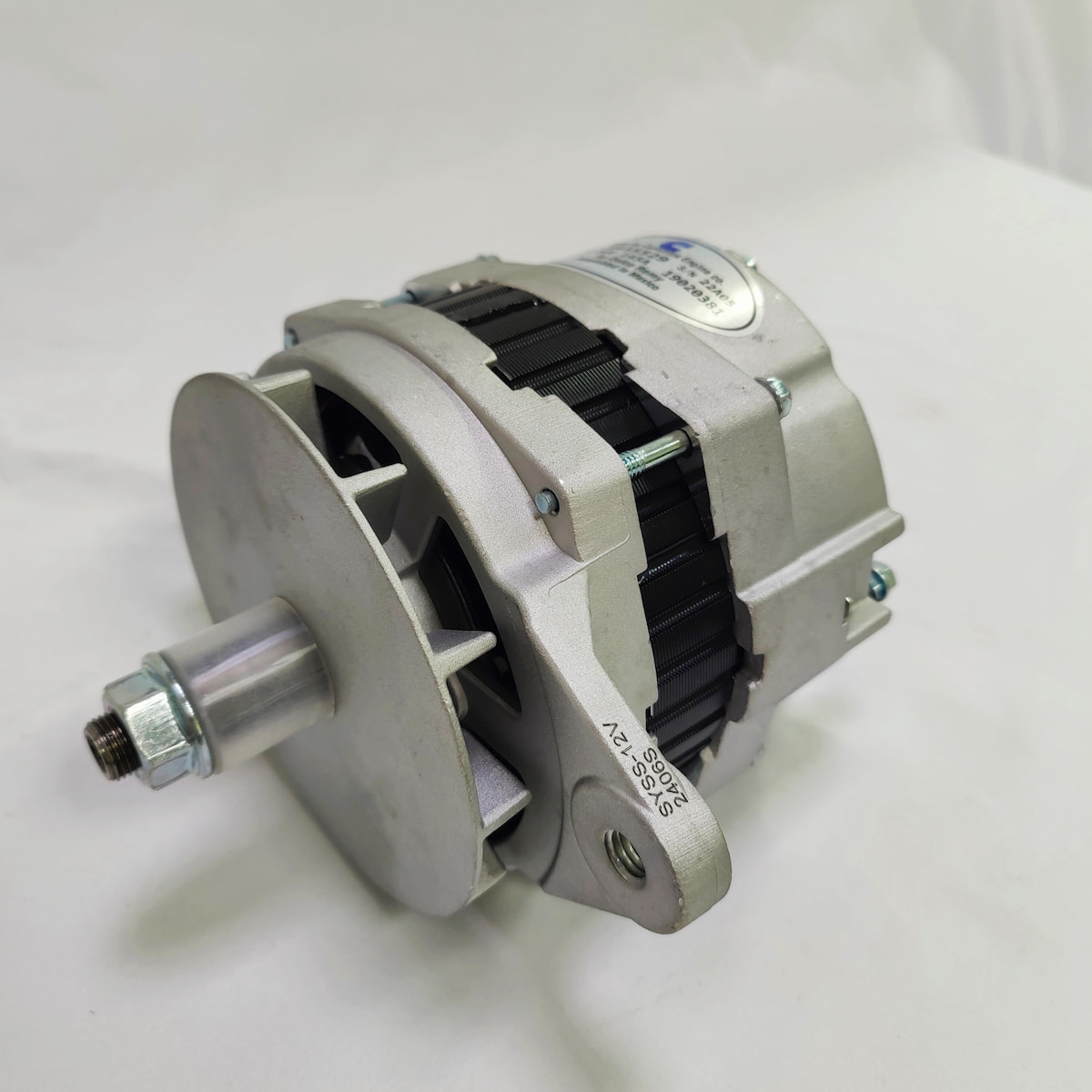
Different suppliers may use the term Complete Alternator for different quotation scopes.
A complete alternator assembly normally contains its internal generating and regulating components, but the following items still need to be confirmed separately:
- Pulley;
- Fan, where externally fitted;
- Voltage Regulator arrangement;
- Rectifier;
- Mounting Bracket;
- Installation bolts;
- Electrical terminals;
- Connector or pigtail;
- Spacers;
- Ground lead;
- Other application-specific installation parts.
The Pulley may be included, omitted or supplied in a different specification. Some replacements require the old Pulley to be reused.
A quotation may also cover only an individual service component, such as:
- Voltage Regulator;
- Rectifier Bridge;
- Brush Holder or Brush Kit;
- Bearing Kit;
- Pulley;
- Mounting Bracket;
- Connector;
- Repair Kit.
Before comparing prices, ask:
Is this a complete Battery-Charging Alternator Assembly or an individual service part? Is the Pulley included? Is the Voltage Regulator integrated into the alternator or supplied as an external equipment component? Are the Bracket, mounting hardware, Connector and Cable Terminals included?
Two quotations should not be compared by price until the supplied scope has been defined.
Rated Output: A Higher Amp Rating Is Not Automatically Better or Worse
A common question is whether an original alternator can be replaced with a higher-output model.
A higher-rated alternator does not continuously force its maximum nameplate current into the equipment. Actual output changes according to system voltage, alternator speed, temperature and the electrical load being supplied.
Therefore, a higher Amp rating is not automatically harmful. It is also not automatically a suitable upgrade.
A higher-output replacement should preferably follow an approved cross-reference or upgrade path from the alternator manufacturer or equipment OEM.
Confirm:
- Nominal system voltage;
- Original and replacement rated output;
- Low-speed output performance;
- Mounting compatibility;
- Pulley and belt compatibility;
- Cable capacity;
- Terminal size;
- Fuse and circuit-protection capacity;
- Ground return path;
- Belt-drive mechanical capacity;
- Installation space;
- Cooling conditions;
- Regulator and control-interface compatibility;
- Equipment OEM approval, where required.
Without a verified upgrade reference, do not select a higher-output alternator only because the voltage is the same and the mounting holes appear similar.
This article does not provide instructions for upgrading cables, changing protection devices or modifying the charging system.
Regulator and Control Interfaces: Remote Sense Is Not an External Regulator
A Battery-Charging Alternator may use an internally integrated Voltage Regulator or belong to a system that uses an external regulator or equipment-specific control arrangement.
Even when two alternators both use internal regulation, their terminal and control configurations may still differ.
Depending on the model, an alternator may include:
- B+ Output;
- Ground Terminal;
- Remote Sense;
- Ignition or Enable input;
- Lamp terminal;
- R Terminal;
- I Terminal;
- OEM-specific Connector;
- Other application-specific signal interfaces.
Remote Sense is not the same as an external Voltage Regulator.
Remote Sense uses a separate wire to monitor voltage at the battery or main distribution point. The voltage-regulation system can then compensate for voltage loss between the alternator and the sensing point.
In common internally regulated alternators, the Remote Sense signal is used by the internal Regulator. A Remote Sense wire should therefore not be described as an external regulator.
Alternators with different terminal or control configurations should not be treated as interchangeable based only on Connector shape or pin count.
Confirm the old part number, terminal markings, Connector arrangement and equipment wiring configuration. Wiring, jumper and terminal-function verification should follow the alternator and equipment manufacturer’s information.
This article does not provide wiring or bypass procedures.
Mounting Structure and Pulley Alignment Must Both Match
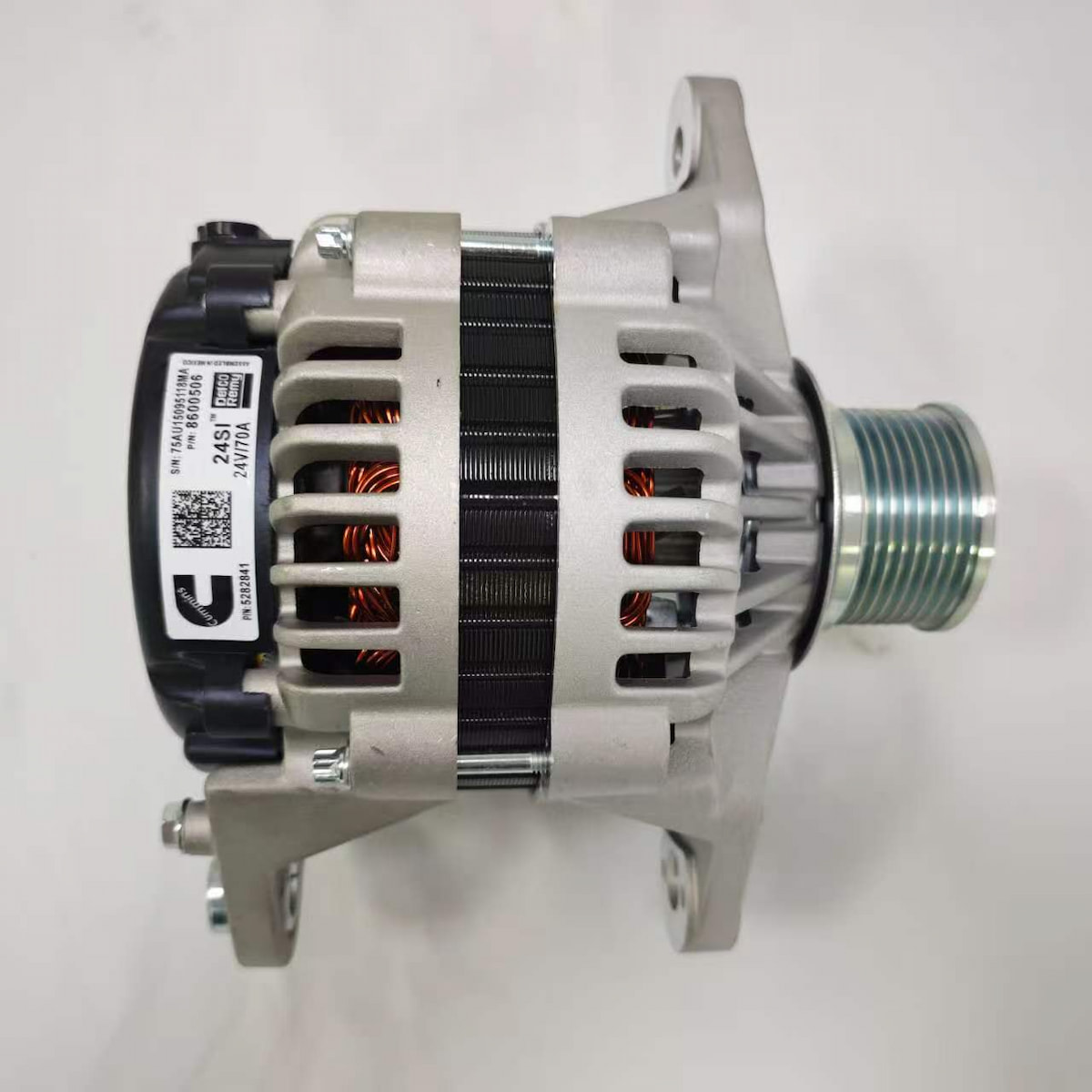
Heavy-duty charging alternators may use several mounting arrangements, including:
- J180 Hinge Mount;
- Short Hinge;
- Long Hinge;
- Pad Mount;
- OEM-specific Bracket systems;
- Other application-specific mounting structures.
Matching requires more than confirming that the bolt holes appear to line up.
Check:
- Mount Type;
- Mounting-foot width;
- Hole diameter;
- Hole center distance;
- Pivot position;
- Adjusting-arm position;
- Bracket geometry;
- Front-to-rear installation depth;
- Pulley centerline;
- Clearance around the alternator;
- Belt-routing compatibility.
Two alternators may have similar mounting feet but place the Pulley at different axial positions.
If the Pulley centerline does not align with the other accessory-drive pulleys, the belt may run out of plane. This can cause:
- Abnormal belt wear;
- Noise;
- Belt tracking problems;
- Tension instability;
- Belt loss;
- Premature bearing or accessory-drive wear.
Provide clear photos of the old alternator, Pulley, mounting feet, Bracket and complete belt-routing path.
The Pulley Must Be Confirmed Separately
A correct alternator body does not guarantee that the supplied Pulley is correct.
Confirm:
- Whether the Pulley is included;
- V-Belt or V-Ribbed Belt;
- Groove quantity;
- Pulley diameter;
- Groove profile;
- Pulley width;
- Shaft interface;
- Pulley offset;
- Spacer arrangement;
- Standard Pulley or Overrunning Pulley / Decoupler;
- Compatibility with the existing belt system.
The quotation should state one of the following clearly:
- Alternator supplied with Pulley;
- Alternator supplied without Pulley;
- Existing Pulley must be reused;
- Replacement Pulley supplied under a separate part number.
Do not wait until installation to discover that the original Pulley does not fit the replacement alternator or that the supplied Pulley does not match the belt.
Polarity and Grounding Arrangement Must Also Be Verified
In addition to voltage, output, mounting and control interfaces, confirm the alternator’s Polarity and Grounding Arrangement.
Many applications use a Negative-Ground configuration. Some industrial, marine or special-equipment systems may use an Isolated Ground arrangement, where the electrical return path is isolated from the alternator housing and may use a dedicated Ground Terminal.
These terms should not be treated as a simple interchangeable label.
Even when Voltage, Rated Output and Mounting match, alternators with different Grounding Arrangements or negative-terminal configurations should not be assumed to be direct replacements.
Confirm:
- Polarity;
- Negative-Ground or Isolated-Ground arrangement;
- Dedicated Ground Terminal, where fitted;
- Housing-ground relationship;
- Equipment electrical-system requirements.
Final selection should be based on the old alternator part number and the applicable product specification.
The Same Cummins Engine May Use Different Alternators in Different Equipment
A Cummins base engine can be installed in equipment from many different OEMs.
The equipment manufacturer may select the alternator according to:
- Electrical load;
- Battery-bank configuration;
- Instrument and controller requirements;
- Auxiliary electrical equipment;
- Available mounting space;
- Accessory-drive layout;
- Pulley and belt system;
- Environmental conditions;
- Equipment-specific Bracket design.
As a result, the same Cummins engine family may be fitted with different:
- Alternator brands;
- Voltage systems;
- Output ratings;
- Mounting arrangements;
- Pulleys;
- Regulators;
- Connectors;
- Grounding configurations.
The engine model and ESN are important starting points, but they may not identify every equipment-OEM accessory.
For construction machinery, mining equipment and generator sets, also provide:
- Equipment manufacturer;
- Complete equipment model;
- Machine serial number or generator-set model;
- Old alternator manufacturer;
- Complete old alternator part number;
- Alternator nameplate photo;
- Pulley and mounting photos;
- Terminal and Connector photos.
The old manufacturer part number is normally more reliable than appearance alone.
A Charging Problem Does Not Automatically Prove Alternator Failure
A discharged battery, charging warning lamp or low voltage reading may involve the alternator, but it does not confirm that the alternator itself has failed.
Similar symptoms may be related to:
- Worn or slipping belt;
- Incorrect belt tension;
- Belt Tensioner problem;
- Damaged Pulley;
- Weak or failed battery;
- Corroded battery connections;
- Poor Ground connection;
- Excessive voltage drop in the B+ Cable;
- Voltage Regulator fault;
- Remote Sense wiring or fuse problem;
- Connector or Harness fault;
- Circuit-protection problem;
- Electrical load exceeding available output;
- Another equipment-control issue.
A qualified technician should inspect the charging system using the appropriate equipment documentation and test tools.
This article focuses on identifying and purchasing the correct alternator after replacement has been confirmed. It does not provide a complete charging-system diagnostic procedure.
Genuine New, Formal Remanufactured or Ordinary Rebuilt?
Charging alternators contain rotating components, electromagnetic assemblies, bearings, rectifiers and regulation electronics. Product condition should therefore be clearly defined in the quotation.
Common supply conditions include:
- Genuine New;
- OEM or Manufacturer New;
- Formal Manufacturer Remanufactured;
- Independent Remanufactured;
- Aftermarket New;
- Rebuilt or Refurbished;
- Used.
Genuine or Manufacturer New
The product should have a clear part number, defined specification, traceability and applicable warranty terms.
Formal Remanufactured
A formal remanufactured alternator should be identified as Reman and supplied under a defined remanufacturing and testing process. Core-return requirements may apply.
Ordinary Rebuilt, Refurbished or Used
These units may have had only selected failed parts replaced. Internal condition, actual output and remaining service life may be difficult to judge from external appearance.
For mining equipment, continuous-duty generator engines and other high-downtime-cost applications, traceability, testing and matching accuracy normally matter more than the lowest initial price.
When selecting a replacement or aftermarket option, request a formal Cross Reference and confirm that the following are compatible with the original equipment:
- System voltage;
- Approved rotation;
- Mounting;
- Pulley;
- Regulator and control interfaces;
- Polarity;
- Grounding Arrangement.
When the Rated Output differs from the original unit, confirm that the manufacturer or equipment OEM recognizes the replacement as an approved alternative or output upgrade.
Information to Provide Before Ordering
Engine and Equipment Information
- Cummins engine model;
- ESN — Engine Serial Number;
- CPL, where available;
- Equipment manufacturer;
- Complete equipment model;
- Machine serial number or generator-set model;
- Application type.
Old Alternator Information
- Alternator manufacturer;
- Complete manufacturer part number;
- Equipment OEM part number, where available;
- Serial number, where shown;
- Nameplate photo;
- Complete alternator photos.
Electrical Specification
- Nominal system voltage, such as 12V or 24V;
- Rated output in Amps;
- Polarity;
- Grounding Arrangement;
- Dedicated Ground Terminal, where fitted;
- Remote Sense, where fitted;
- B+, R, I, Lamp, Ignition or other terminal markings;
- Connector photos.
Mechanical Interface
- Mount Type;
- Mounting-foot and bolt-hole photos;
- Pivot and adjusting positions;
- Pulley front and side photos;
- Belt type;
- Pulley groove quantity;
- Pulley offset, where available;
- Belt-routing photo;
- Bracket and installation-clearance photos.
Required Supply Scope
- Complete Alternator Assembly;
- Alternator without Pulley;
- Pulley;
- Voltage Regulator;
- Rectifier;
- Brush or Bearing Kit;
- Bracket;
- Connector or Pigtail;
- New, Remanufactured or Aftermarket option;
- Quantity;
- Destination;
- Required delivery schedule;
- Core-return requirement, where applicable.
For a generator-set application, state clearly whether the requirement is for the engine-mounted Battery-Charging Alternator or the Main AC Alternator / Generator End.
How ZEB Power Supports Cummins Alternator Sourcing
ZEB Power supplies Cummins engine Battery-Charging Alternators and related electrical components for construction machinery, mining equipment, generator sets and industrial applications.
Using the available engine ESN, equipment model, old alternator part number and interface photos, we can help verify:
- Nominal system voltage;
- Rated output;
- Approved rotation;
- Formal part number and Cross Reference;
- Mounting arrangement;
- Pulley and belt compatibility;
- Regulator and control interfaces;
- Polarity and Grounding Arrangement;
- New, Remanufactured and aftermarket supply options;
- Complete assembly or individual service-part scope.
Available options depend on the confirmed part number and current supply channel.
ZEB Power supports part-number verification, product-condition clarification, quotation scope and parts supply. Charging-system diagnosis, electrical modification, wiring changes and on-site installation should be completed by qualified technicians using the applicable equipment and manufacturer information.
Frequently Asked Questions
Is a Battery-Charging Alternator the same as the generator set’s Main AC Alternator?
No.
The Battery-Charging Alternator supports the starting batteries and low-voltage DC electrical system. The Main AC Alternator supplies AC power to the external load.
They use completely different matching and quotation parameters.
Can an alternator with a different rotation direction still be used?
It depends on the specific model.
Some alternators are approved for one direction, while other product families support both CW and CCW rotation. A mismatch may affect cooling, Pulley operation, temperature and service life.
Confirm the approved rotation from the formal part number and manufacturer specification.
Is a higher Amp rating always better?
No.
A higher rating does not mean the alternator continuously outputs its maximum current, but it also does not guarantee compatibility.
Confirm an approved replacement or upgrade relationship, along with Mounting, Pulley, cable, protection and control-interface compatibility.
Is Remote Sense the same as an external Voltage Regulator?
No.
Remote Sense is a voltage-sensing circuit that reads voltage at the battery or distribution point. In a common internally regulated alternator, the signal is used by the internal Regulator.
Why is a complete alternator much more expensive than a Regulator?
They are different products.
A complete alternator is the full generating assembly. The Regulator is only one control component. Compare quotations by formal part number and supplied scope.
Does a charging warning lamp prove that the alternator has failed?
No.
Battery condition, Belt, Tensioner, Pulley, Ground connection, Cable voltage drop, Regulator, Remote Sense circuit and Harness faults may produce similar symptoms.
Can I request a quotation without the old alternator part number?
An initial search may be possible using the engine ESN, equipment model and clear photos.
However, accurate confirmation of rotation, output, terminals, Mounting, Grounding Arrangement and other specifications usually requires the complete manufacturer part number.
Request a Cummins Charging Alternator Quotation
To verify the correct Cummins engine charging alternator, provide:
- Engine model and ESN;
- Equipment manufacturer and complete model;
- Old alternator manufacturer and complete part number;
- Nameplate, Pulley, Mounting and Terminal photos;
- Nominal voltage and Rated Output;
- Required quantity and destination.
ZEB Power can help confirm the applicable part number, product condition and clearly defined quotation scope.