

Diesel Engine Overhaul Kit Purchase Order: Avoid These Errors

558
Table of Contents
Generating table of contents
Many overhaul-kit purchasing problems begin with the very first inquiry email:
“Need a complete overhaul kit for this engine.”
The supplier prepares a quotation from one engine model. The buyer assumes that “Complete Kit” means every required part is already included. The repair facility then opens the engine and discovers that the piston version, bearing size or gasket scope does not match the actual repair requirement.
At that point, the original price difference no longer matters. The real cost comes from interrupted work, additional orders, returns, replacement shipments and repeated freight.
These problems are rarely caused by one person alone. More often, the equipment owner, repair facility, purchasing team and supplier are working with different information at different stages.
This article explains the most common mistakes that occur between the first inquiry and final receiving inspection, and how each one can push an overhaul project away from its original plan.
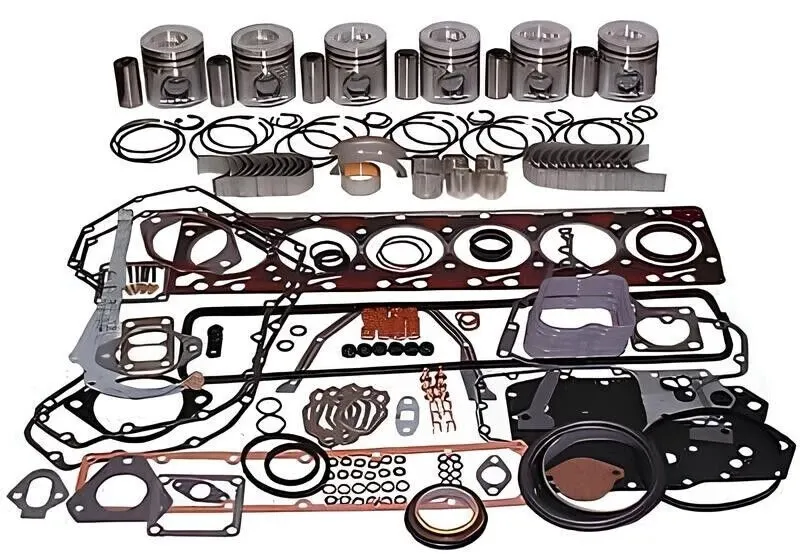
A Budgetary Quotation Is Not the Same as a Final Order
When equipment is out of service, buyers naturally want to confirm price and lead time as early as possible.
There is nothing wrong with requesting an early quotation. The problem begins when an engine has not yet been properly inspected—or when the repair level has not even been identified as Top-End, In-Frame or Complete Overhaul—and the preliminary quotation is treated as an unchangeable final order.
A better process separates the project into two stages.
Before teardown, the buyer can use the engine identity and initial fault information to obtain a budgetary price, expected availability and estimated lead time. After the repair scope and critical specifications have been confirmed, the final bill of materials can be approved and frozen.
Requesting a quotation early and placing an order too early are not the same thing.
Incomplete Engine Identification Is a Common Source of Wrong Parts
One engine model may include different power ratings, emissions calibrations, piston designs, liner configurations and fuel-system arrangements.
A shortened model name is usually not enough to confirm the correct overhaul kit.
Accurate quotations normally require the full serial number and the configuration references used by the relevant engine manufacturer. For Cummins engines, this may include the ESN and CPL. Other manufacturers use their own serial-number, build-list or configuration systems.
Old part numbers and photographs can support the identification process, but they should not replace the engine identity. An older engine may have been repaired, modified or fitted with replacement components that no longer represent its original configuration.
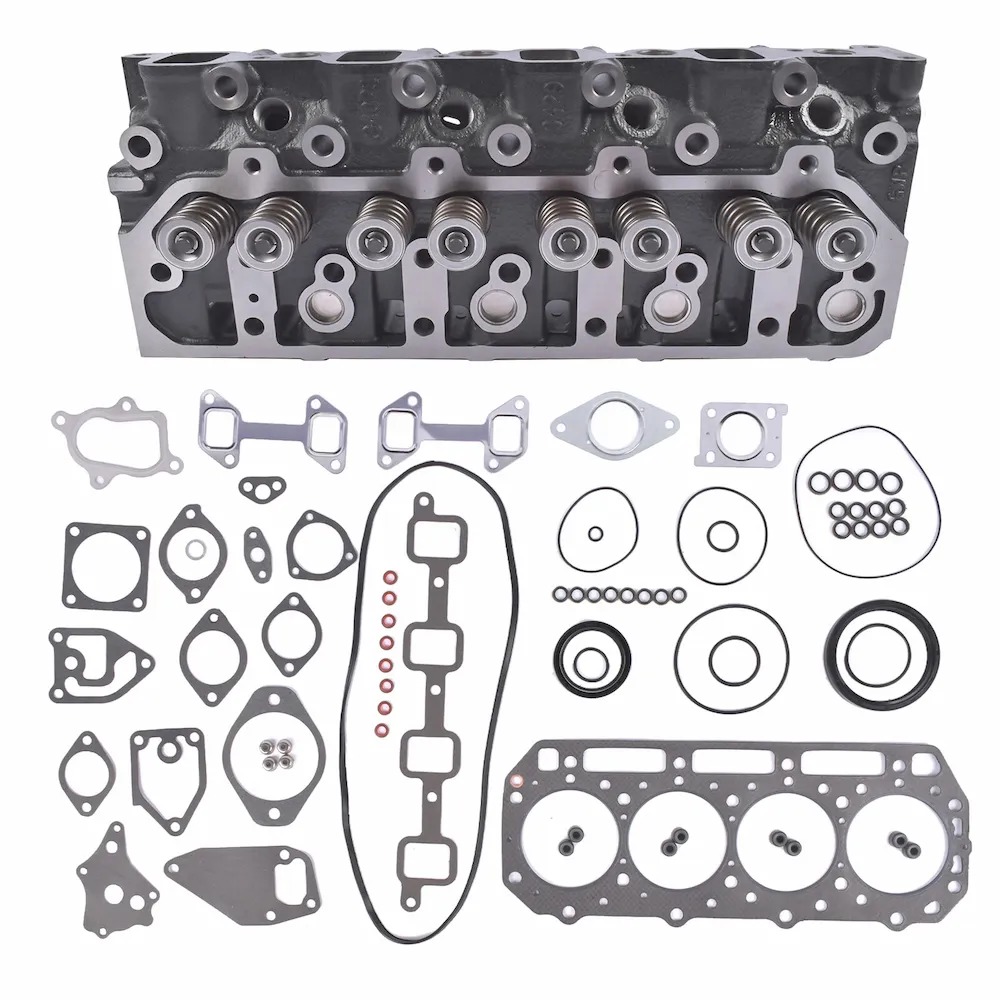
Accepting a Kit Name Instead of an Itemized BOM
Overhaul Kit, Rebuild Kit and Complete Kit are not standardized bills of materials across all brands and suppliers.
Two quotations may both say “Complete Overhaul Kit” while covering very different parts. One may contain pistons, piston rings, liners and basic gaskets. Another may also include main bearings, connecting-rod bearings, thrust components, upper and lower gasket kits, and selected installation seals.
The reasons behind this naming inconsistency are explained in Engine Overhaul Kit vs. Rebuild Kit: Are They the Same?
For ordering purposes, the important point is straightforward: the final order should be based on an itemized BOM showing the part name, part number, quantity, brand and product condition—not only a kit name and a total price.
A quotation that contains only a product label and a total amount is also difficult to verify properly when the shipment arrives.
Ordering Before Critical Sizes and Quantities Are Confirmed
Pistons, liners and bearings are not simply “included” or “not included.” Their exact versions, selection grades and repair sizes may determine whether they can actually be installed.
Confirming standard-size bearings before the crankshaft has been measured, or ordering from an unclear size marking on an old bearing shell, can turn the repair facility’s later measurements into an emergency purchasing change.
Any specification that has not yet been confirmed should be clearly marked in the order, for example:
Quoted on a standard-size basis; final specification is subject to measurement or machining results.
It should not be left ambiguous.
The supplier cannot remotely determine the final crankshaft repair size on behalf of the repair facility, and the buyer should not remove that condition merely to accelerate shipment.
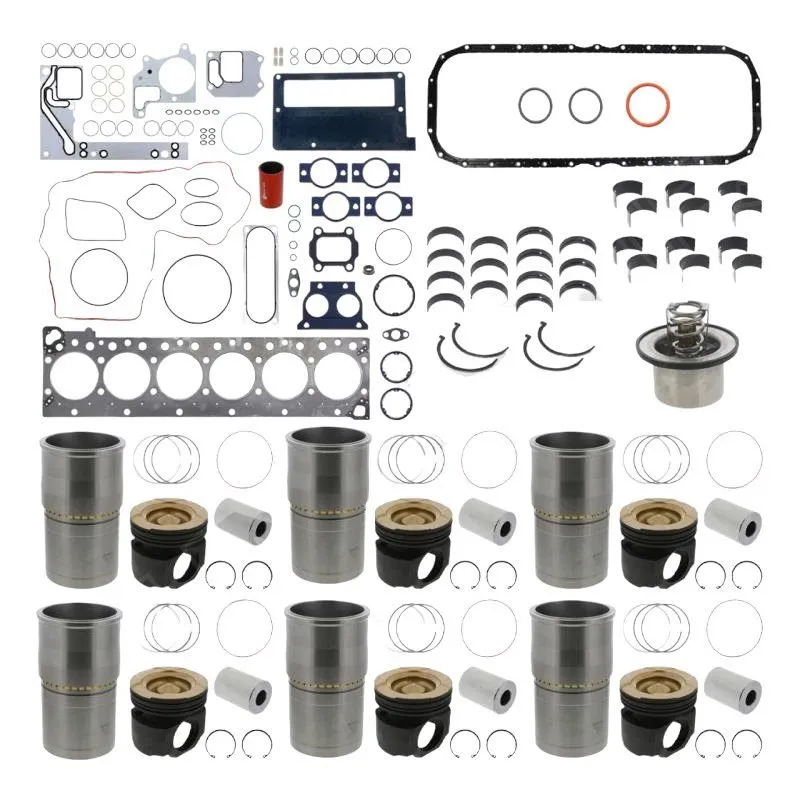
“Complete” Does Not Mean the Repair Project Will Need No Other Parts
An overhaul kit normally covers a predefined group of internal wear components and seals. It does not mean that every part discovered during teardown is already included.
Components such as the lubricating-oil pump, water pump, injectors, turbocharger, cylinder head and other assemblies may still require separate inspection and purchasing decisions.
Instead of adding every possible component to make the quotation appear more complete, the project should classify each item into four statuses:
- Included;
- Explicitly excluded;
- Available as an optional quotation;
- To be confirmed after teardown.
A complete kit and a complete repair project are not the same thing.
Choosing the Lowest Price First and Justifying It Afterwards
When one quotation is significantly lower than the others, buyers may treat it as the correct market benchmark and then ask every other supplier to explain why their prices are higher.
That order of reasoning can hide the real issue.
The lower quotation may refer to a different engine configuration, a shallower repair level, fewer units, a more limited gasket package or different trade terms.
Price should be compared only after the supply scopes are reasonably aligned. It should not be used to prove that an unclear scope must be correct.
Otherwise, the buyer saves only on the visible order value while later paying more for additional parts, repeated shipping and equipment downtime.
Assuming Old Components Can Be Reused Without Recording the Decision
Many overhaul plans assume that selected existing components—such as the oil pump, water pump, turbocharger or cylinder-head assembly—will be reused.
However, a component being removable from the old engine does not prove that it is suitable for further service.
If these items are not classified before the order is finalized, the repair site may face one of two outcomes: assembly stops because an old component fails inspection and must be ordered urgently, or the component is reused without proper confirmation because the project is already behind schedule.
A more reliable approach is to create a simple system-status record. Each major assembly should be marked as:
- New part to be supplied;
- Existing part approved for reuse;
- Subject to inspection;
- Mandatory replacement;
- Pending decision.
The purchasing boundary becomes complete only when the new-part supply scope and the old-part reuse plan appear in the same status record.
Specifications Changed, but the Change Was Never Formally Recorded
Specification changes are normal in an overhaul project.
Crankshaft measurement may change the bearing size. Teardown may add an oil pump or cylinder-head component. A supplier may propose a superseding part number.
The risk is not the change itself. The risk is allowing the change to exist only in a chat message, voice call or one person’s memory.
The final order should preserve one approved BOM that records:
- Original and superseding part numbers;
- Quantities;
- Final specifications;
- Brand or manufacturer;
- Product condition;
- Reason for the change.
Receiving inspection should be performed against this final version—not by counting cartons or checking only the outer labels.
When parts are first checked line by line at the assembly stage, every shortage, wrong specification or version mismatch becomes immediate downtime.
When Can the Order Be Finalized?
An overhaul-kit order does not need to wait until every engine component has been completely disassembled. However, three conditions should be met before the order is treated as final.
First, the engine identity has been confirmed. The supplier has the full model, complete serial number and applicable configuration references.
Second, the repair level is reasonably clear. The equipment owner, repair facility and supplier have the same understanding of whether the project is Top-End, In-Frame or Complete Overhaul.
Third, the critical specifications affecting fitment have either been confirmed or are clearly marked as subject to final measurement and machining results.
When these conditions are still missing, a quotation can support budgeting, stock planning and lead-time evaluation. It should not be treated as an unchangeable final order.
How ZEB Power Helps Reduce Overhaul Kit Ordering Errors
ZEB Power uses the engine model, full serial number, configuration information, teardown findings and planned repair scope to help buyers review the actual supply range of an overhaul kit.
ZEB Power can help confirm whether the kit matches the correct configuration, whether piston, liner and bearing specifications are ready for ordering, whether the quantities cover the complete engine, and which components are included, optional or still subject to teardown confirmation.
The repair level, reuse of existing parts and final assembly dimensions should still be determined by the repair facility responsible for inspection and assembly.
Provide the engine data plate, full serial number, intended repair direction, teardown information and existing quotation. ZEB Power can help organize them into a final material scope that can be ordered and verified on receipt.
Frequently Asked Questions
Can an Overhaul Kit Be Ordered Before the Engine Is Disassembled?
A budgetary quotation and stock preparation can begin before teardown. However, when piston, liner and bearing specifications or the actual repair level remain unconfirmed, the preliminary quotation should not be frozen as the final order.
Why Can a Complete Overhaul Kit Still Be Missing Parts?
“Complete” normally describes a supplier-defined kit level. It does not mean that every pump, fuel-system component, turbocharger, cylinder-head part or installation seal that may be needed during the repair is automatically included.
Should a Buyer Order If the Supplier Will Not Provide an Itemized BOM?
The risk is high. Without part numbers, quantities, specifications and product conditions, the buyer cannot properly assess the quotation or verify the shipment after delivery.
Is Counting the Number of Cartons Enough During Receiving Inspection?
No. Receiving inspection should compare the delivered part numbers, quantities, specifications, brands and supersession relationships with the final approved BOM.
What Should Be Done If the Specification Changes After Parts Have Already Been Ordered?
Unshipped items should be paused while a written change order updates the part number, size, quantity and supersession relationship. Parts that have already shipped should be checked immediately to determine whether they remain suitable for the revised repair plan. The change should not exist only in informal chat records.
Who Decides Whether an Existing Component Can Be Reused?
The repair facility responsible for inspection and assembly should make that decision based on the actual condition of the component. The purchasing process should not assume that a part is reusable simply because it can be removed from the old engine.