

Caterpillar Engine Parts: Types, Selection & Buying Guide

7910
Table of Contents
Generating table of contents
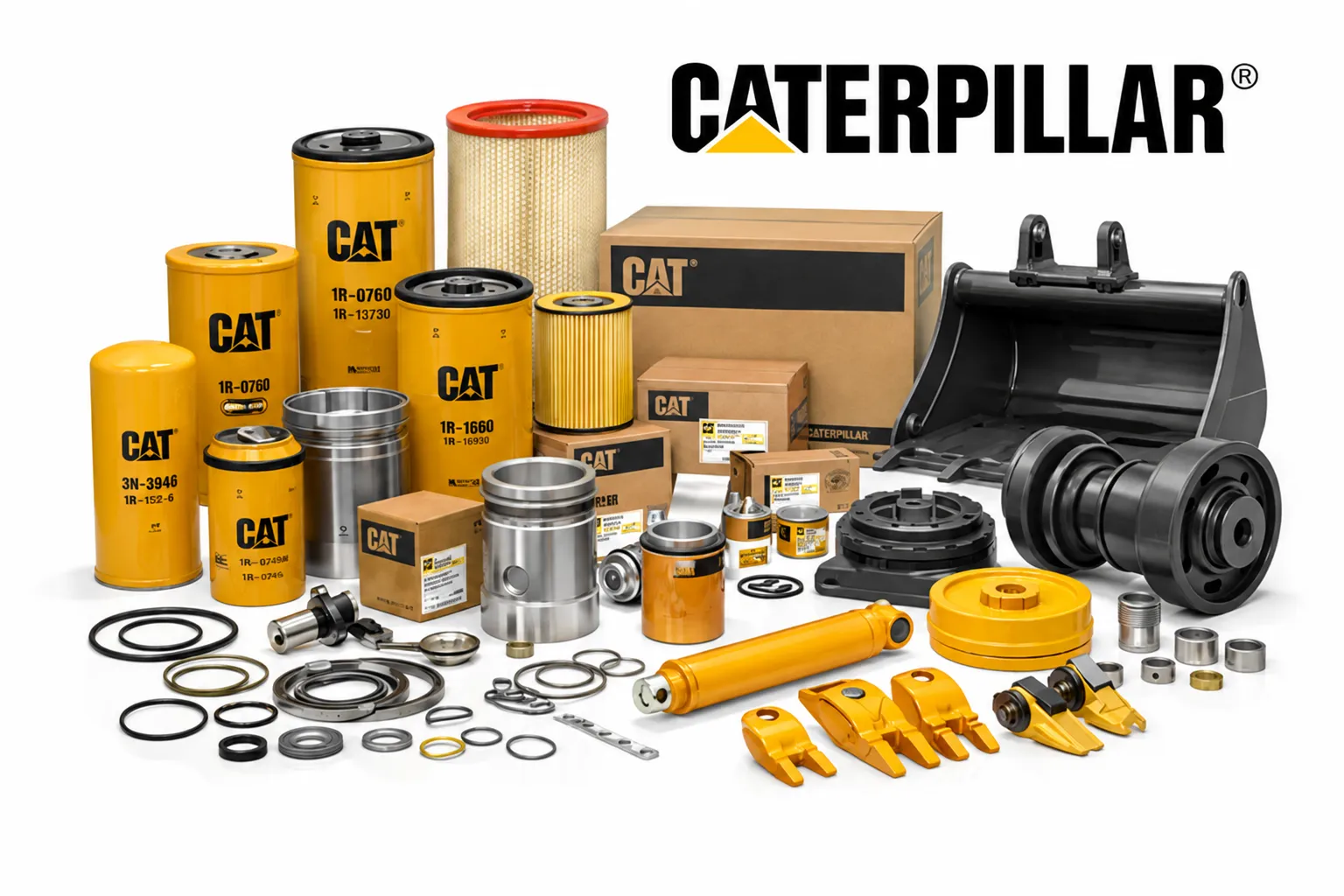
Caterpillar engine parts cover everything from filters and fuel system components to pistons, bearings, cylinder heads, turbochargers, cooling system components, gaskets, and seals. These parts are used in routine maintenance, individual component repairs, and major engine overhauls.
For repair shops, parts distributors, equipment maintenance teams, and purchasing professionals, finding a replacement part is only part of the challenge. What matters just as much is confirming that the part fits the specific engine, understanding exactly what the quotation includes, and identifying any additional components needed for the repair.
This guide explains the main types of Caterpillar engine parts, how to select the right components, and what to check before placing an order.
1. What Types of Caterpillar Engine Parts Are Available?
Caterpillar engine parts can be grouped into several categories according to their functions within the engine.
| Engine System | Common Parts | Primary Function | What to Check Before Buying |
|---|---|---|---|
| Filtration System | Engine oil filters, fuel filters, fuel/water separators, air filters | Remove contaminants from engine oil, fuel, and intake air | Engine compatibility, filtration specifications, connection types, and sealing arrangements |
| Fuel System | Fuel injectors, fuel transfer pumps, fuel injection pumps, fuel lines | Deliver, meter, and inject fuel | Individual components versus complete sets; any programming, adjustment, or calibration required after installation |
| Engine Block and Internal Moving Parts | Engine blocks, cylinder liners, pistons, piston rings, connecting rods, crankshafts, engine bearings | Withstand combustion forces and transmit mechanical power | Standard versus repair sizes; quantities for a single cylinder or the entire engine |
| Cylinder Head and Valvetrain | Cylinder heads, valves, valve guides, valve springs, rocker arms, lifters | Form the upper part of the combustion chamber and control intake and exhaust flow | Bare versus assembled cylinder heads; which components are included |
| Air Intake, Exhaust, and Turbocharging System | Turbochargers, turbocharger cartridges, intake and exhaust manifolds, connecting pipes | Manage intake and exhaust flow and provide turbocharging | Complete turbocharger versus cartridge; housing orientation and connection points |
| Cooling System | Water pumps, thermostats, housings, radiators, hoses, and pipes | Circulate coolant and regulate engine operating temperature | Whether the assembly includes the housing; drive type and coolant connections |
| Lubrication System | Oil pumps, oil coolers, oil filter bases, oil pans | Circulate, cool, and store engine oil | Fitment and connections with related components, including oil coolers and oil pans |
| Starting, Charging, and Electronic Control System | Starter motors, alternators, engine control modules (ECMs), sensors, wiring harnesses | Support engine starting, battery charging, monitoring, and electronic control | Voltage, mounting configuration, connectors, and any ECM programming or configuration requirements |
| Gaskets and Seals | Head gaskets, valve cover gaskets, oil seals, O-rings, gasket and seal kits | Prevent leakage of combustion gases, engine oil, and coolant | Kit contents and any additional seals or fasteners that must be ordered separately |
This breakdown helps identify which category of parts a repair may require. Before ordering, however, it is also important to understand how those parts are supplied.
Individual Parts, Complete Assemblies, or Repair Kits?
The same repair job may call for different purchasing options.
Individual parts are generally the most straightforward option when a specific component has already been identified for replacement, such as a sensor, water pump, or filter. The key is to confirm the exact specifications, required quantity, and whether any additional installation hardware is needed.
Assemblies combine several related components into a preassembled unit. Examples include cylinder head assemblies and complete turbocharger assemblies. When buying an assembly, check the actual components included rather than relying on the product description alone.
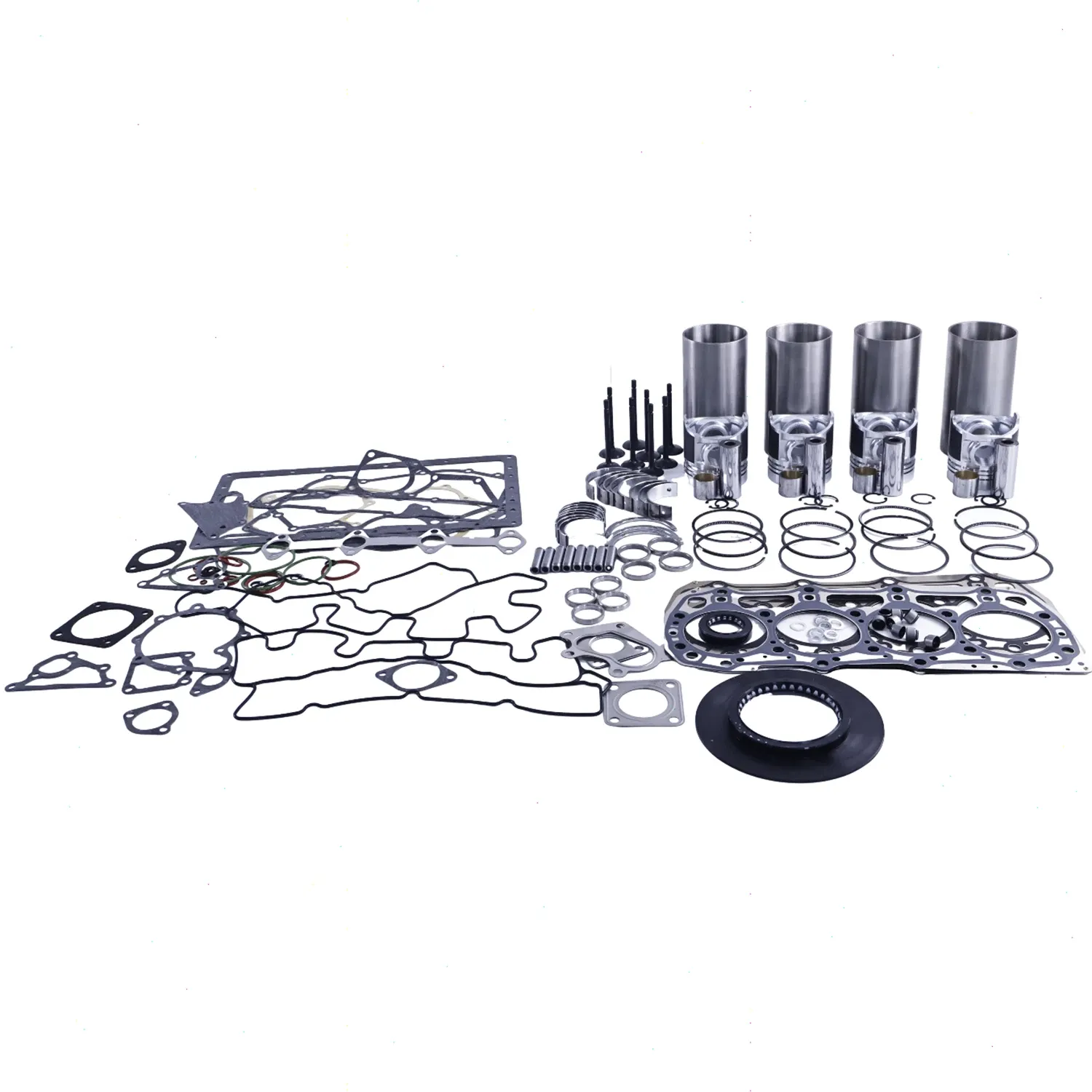
Repair kits and overhaul kits group together multiple parts needed for a particular repair. The important detail is the itemized parts list, not simply whether the package is labeled "Complete Kit" or "Overhaul Kit." Kit contents can vary by engine model, repair scope, and supplier. Always review the bill of materials (BOM), and do not assume that a kit includes cylinder heads, fuel injectors, or turbochargers.
Cylinder heads are a good example. A bare cylinder head generally refers to the head itself, while an assembled cylinder head may include some valvetrain components. Even the term "Complete Cylinder Head" can mean different things to different suppliers. Turbochargers present a similar choice: a complete turbocharger and a turbocharger cartridge, also known as the center housing rotating assembly (CHRA), cover different repair needs. If you are replacing only the cartridge, make sure the existing housings can still be used. If you are purchasing a complete turbocharger, check its mounting orientation, connections, and configuration.
Before comparing prices, make sure each quotation covers the same parts and scope of supply.
2. How to Choose the Right Caterpillar Engine Parts
1. Start With the Repair Requirements
Before searching for part numbers, establish what type of maintenance or repair is being carried out:
- Routine maintenance: This typically involves engine oil, fuel and air filters, and other scheduled service items. The specific requirements should be checked against the Operation and Maintenance Manual for the engine.
- Component repairs: If a water pump, fuel injector, starter motor, sensor, or turbocharger has developed a fault, identify the problem and define the repair scope before preparing the parts list.
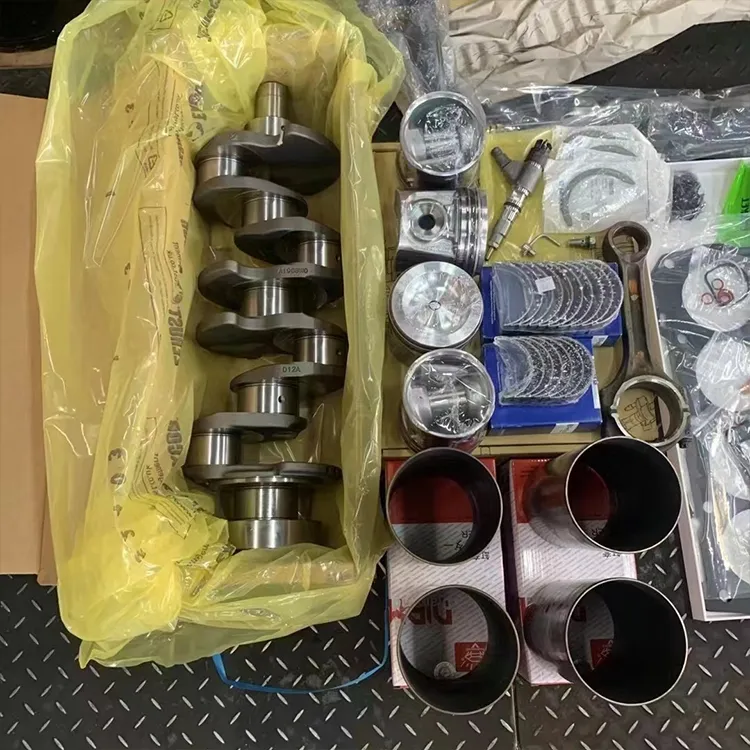
- Engine overhauls: An overhaul may involve internal components such as pistons, cylinder liners, bearings, and gaskets, along with cylinder heads, fuel injectors, turbochargers, or other engine systems. The full parts list usually cannot be finalized until the engine has been inspected and the relevant components measured.
Symptoms such as hard starting, black exhaust smoke, loss of power, or abnormal oil pressure can help narrow down a problem. However, these symptoms alone are not enough to justify replacing a particular part.
2. Gather the Engine Identification Details
To identify the correct replacement parts, it is generally helpful to have the following information:
- Engine model, such as C7, C13, C15, 3406, or 3512
- Full engine serial number (ESN)
- Engine Arrangement Number, if applicable
- Equipment type and installation details
- Existing part numbers and photos of the old parts
The engine model is a useful starting point, but it may not identify the exact replacement part. The serial number and configuration details help narrow the selection further. Engines within the same model family can use different components depending on their production period, configuration, or application. For this reason, descriptions such as "C15 water pump" or "3406 fuel injector" may not provide enough information to place an accurate order.
The equipment's application and operating environment also matter. For generator sets, specify whether the engine is used for standby or continuous operation. Equipment working in dusty environments, such as mining sites, may require more frequent attention to the air intake system. Marine and coastal applications also call for consideration of cooling arrangements and exposure to corrosive conditions. Actual maintenance requirements should still be based on the relevant engine manuals and inspection findings.
3. Check Part Numbers and Supersession Information
An existing part number is one of the most useful references when sourcing replacement parts. Caterpillar part numbers commonly follow a short alphanumeric format with a hyphen, such as 1R-0750 or 326-1643 (shown here as format examples only). When checking a part number, confirm:
- Whether the original part number is still current or has been superseded by a newer number
- Whether the superseding part is suitable for the engine's serial number and configuration
- Whether the replacement requires additional fittings, seals, or other related components
Third-party aftermarket suppliers often provide cross-reference numbers to help buyers identify possible replacements. These references are useful for finding candidate parts, but they should not be treated as final confirmation of fitment.
Repair dimensions are especially important for internal engine components such as pistons, bearings, and crankshafts. If an engine has undergone machining, certain parts may require specific undersize or oversize dimensions, depending on the component and repair work performed. These parts should be selected according to the measurements and machining specifications provided by the repair technician, rather than the engine model alone.
4. Understand the Difference Between Brand, Condition, and Supply Terms
Terms such as "genuine," "remanufactured," and "aftermarket" are sometimes used as though they represent three different quality grades. In fact, they describe different aspects of a product. When evaluating an offer, consider each separately:
- Brand and source: Whether the part is a Genuine Cat product or a third-party replacement supplied under an identifiable brand
- Product condition: Whether the part is new, remanufactured, or used
- Transaction terms: Whether a remanufactured assembly is sold with a core return requirement, core charge, or exchange arrangement
Genuine brands may also supply remanufactured products, so "genuine" and "remanufactured" are not mutually exclusive. "Aftermarket" generally refers to the source of a replacement part, while "remanufactured" describes its condition and how it has been restored.
A clear quotation should identify the brand, product condition, part number, any core return requirements or charges, and the applicable warranty and return terms. If the equipment is still under warranty, check with the warranty provider before installing aftermarket parts. Whether a replacement affects warranty coverage depends on the terms of the relevant warranty agreement.
3. How to Buy Caterpillar Engine Parts
1. Prepare a Clear Request for Quotation (RFQ)
A well-prepared RFQ helps suppliers identify the required parts and provide quotations that are easier to compare. Include at least the following information:
- Engine model and serial number, plus the Arrangement Number if available
- Part numbers and part descriptions
- Required quantities
- Preferred brand or product condition
- Equipment type
- Destination country or region and required delivery schedule
If you do not have the part number, include photos of the engine identification plate and the existing part. Make it clear in your inquiry that you need help identifying the correct replacement.
2. Compare More Than Just the Unit Price
To make a meaningful price comparison, first confirm that the quotations cover equivalent parts, quantities, and supply scopes.
| Comparison Point | What to Verify |
|---|---|
| Part Number | Whether both quotations refer to the same part or a verified superseding replacement |
| Quantity and Unit of Supply | Whether the price is for an individual part, a single-cylinder kit, a complete engine kit, or an assembly |
| Scope of Supply | Whether gaskets, installation hardware, and other related components are included |
| Brand and Condition | Whether the quoted brand and product condition match your requirements |
| Availability and Lead Time | Whether the parts are in stock and when they can be shipped |
| Shipping | Freight costs, agreed trade terms, and estimated transit time |
| Warranty and Core Returns | Warranty duration and coverage, core return conditions, applicable charges, and return deadlines |
For example, a lower-priced cylinder head might be a bare head, while a more expensive option could already include part of the valvetrain. Comparing the two unit prices alone would be misleading. A better approach is to compare the total cost of all the parts required to complete the same repair.
Shipping dates and delivery dates are also not the same. For urgent repairs, make sure both are clearly stated.
Need to source Caterpillar engine parts? Send us your engine model, serial number, parts list, quantities, and delivery destination. We can help check part compatibility and prepare a quotation.
3. Verify the Source and Condition of the Parts
Packaging, labels, and part numbers are useful starting points for checking a product, but they do not prove its origin on their own.
For critical or high-value components, ask the supplier to confirm the actual brand and product condition, provide available batch or identification details, and explain what inspection documents and warranty terms can be supplied.
If a price is unusually low compared with the prevailing market price and the supplier cannot clearly explain where the parts came from or what condition they are in, further checks are advisable.
4. Inspect the Parts Before Installation
Once the parts arrive, carry out the following checks before installation:
- Match the part numbers and quantities against the purchase order
- Check the packaging and parts for visible shipping damage
- Confirm the brand and product condition
- Check the actual contents of any kits or assemblies
- Verify key dimensions and connections on critical components
- Keep the packaging, labels, purchasing documents, and photos taken upon receipt
If a part number does not match, components are missing, or the condition of a part is questionable, contact the supplier before installation. Returns and warranty claims can become more complicated once a part has been installed, particularly when responsibility for a problem needs to be established. Incoming inspection is therefore an important step that should not be skipped.
Conclusion
Buying the right Caterpillar engine parts starts with matching the parts order to the actual repair requirements. Define the repair scope, confirm the engine identification details and part numbers, and compare quotations on a like-for-like basis, taking brand, condition, and scope of supply into account. Finally, inspect the parts before installation to make sure the order meets the repair requirements.
Frequently Asked Questions (FAQ)
1. How Do I Find the Correct Caterpillar Engine Part Number?
You can refer to the appropriate parts catalog, use Cat parts lookup resources, or ask a supplier to identify the part using the engine model, serial number, and information from the existing component. A part description alone is usually not enough to confirm the exact replacement.
2. Can I Order Caterpillar Engine Parts Using Only the Engine Model?
Not always. The engine model helps narrow down the options, but different serial number ranges and configurations may use different parts. For critical components, it is advisable to check the engine serial number and relevant configuration details before ordering.
3. Can I Use a New Part Number If the Original Number Has Been Superseded?
First, verify that the superseding part number applies to your engine's specific configuration. You should also check whether the replacement requires additional fittings, seals, or other related parts.
4. Are Remanufactured Parts the Same as Aftermarket Parts?
No. "Remanufactured" refers to a product's condition and the process used to restore it, while "aftermarket" generally refers to its brand or source. Genuine equipment manufacturers can also offer remanufactured parts.
5. Does an Engine Overhaul Kit Include Every Part Needed for a Complete Rebuild?
Not necessarily. Overhaul kit contents vary depending on the engine model, repair scope, and supplier. Check the detailed bill of materials against the repair plan to see which parts are included and which must be ordered separately.
6. Should I Buy Fuel Injectors Individually or as a Complete Set?
This depends on the technician's diagnosis and the repair requirements. When requesting a quotation, specify the number of injectors needed and confirm whether the price is per injector or per set. Also check whether programming, adjustment, or calibration is required after installation.
7. Should I Replace the Entire Turbocharger or Just the Cartridge?
The choice depends on the condition of the turbocharger housings and surrounding components, which should be assessed by a repair technician. If you are replacing only the cartridge, confirm that the existing housings can be reused. If you are buying a complete turbocharger, check the mounting orientation, connections, and exact configuration.