

Caterpillar Engine Overhaul Kits: What's Included & How to Choose

1528
Table of Contents
Generating table of contents
When a Caterpillar engine reaches the overhaul stage, the purchasing challenge is no longer simply finding individual replacement parts. It is determining exactly which components the repair requires and how much of that work can be covered by an available engine overhaul kit.
An overhaul kit brings together related parts based on a defined repair scope, helping workshops prepare a consistent parts list and reduce the risk of missing components. However, an "overhaul kit" does not necessarily contain everything needed to rebuild an engine. Kit contents can vary considerably depending on the engine model, type of overhaul, and supplier.
This guide explains what Caterpillar engine overhaul kits typically include, how to select the right kit, and how to compare quotations. It is intended to help repair shops, parts distributors, and equipment maintenance buyers make more informed purchasing decisions.
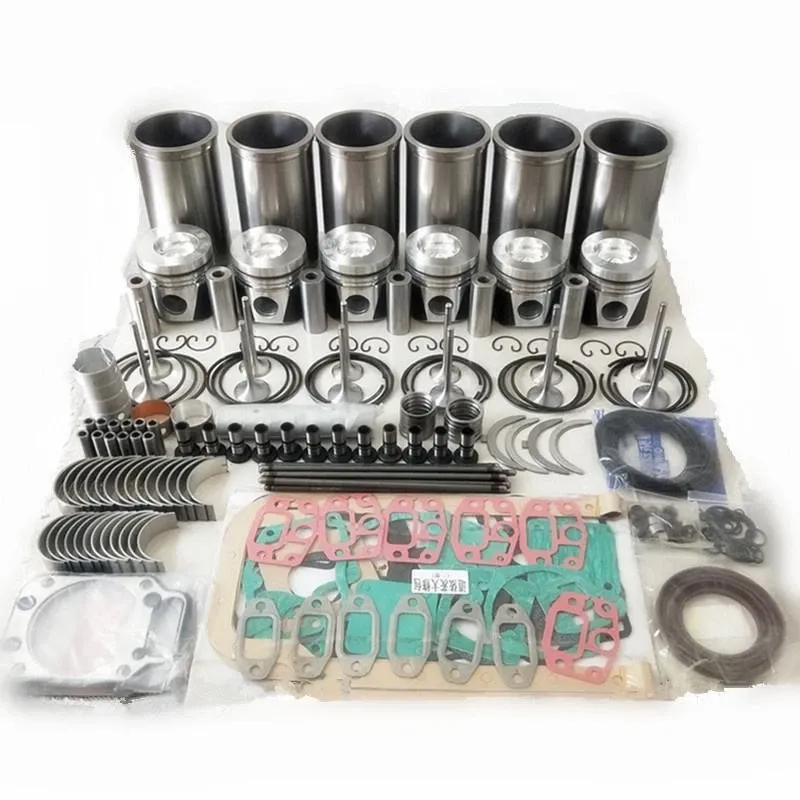
1. What Does a Caterpillar Engine Overhaul Kit Include?
The table below outlines components commonly found in engine overhaul kits. It is provided as a general reference only. The actual contents should always be verified against the bill of materials (BOM) for the specific kit being quoted.
| Component Category | Commonly Included Parts | What to Verify |
|---|---|---|
| Engine Bearings | Main bearings, connecting rod bearings, thrust washers | Standard or repair sizes; whether camshaft bearings are included |
| Pistons and Cylinder Liners | Pistons, piston rings, piston pins, retaining clips, cylinder liners | Whether the parts are supplied individually or as preassembled cylinder packs |
| Gaskets and Seals | Cylinder head gaskets, oil pan gaskets, oil seals, O-rings | Whether the kit covers all sealing points affected by the planned disassembly and reassembly |
| Fasteners and Installation Hardware | Bolts, nuts, washers, retaining clips, plugs | Whether fasteners and other installation components that require replacement after use are included |
| Auxiliary and Related Components | Filters, thermostats, hoses, and other items, depending on the kit | Whether these items are standard kit contents and whether the quantities are sufficient |
Major components such as cylinder heads, fuel injectors, turbochargers, water pumps, oil pumps, and crankshafts are generally not included in basic overhaul kits. Some more comprehensive kits may include certain items from this list. Never assume they are included without checking the actual kit contents.
2. Overhaul Kit Names and Categories: Why the Label Alone Is Not Enough
When sourcing engine parts, you may encounter terms such as Overhaul Kit, Rebuild Kit, In-Frame Kit, Major Overhaul Kit, and Complete Kit. These names are not used consistently across all suppliers. The same term can refer to substantially different parts packages.
For a general understanding, overhaul kits can be grouped into the following categories based on their scope of supply. However, these are descriptive categories rather than a universal industry classification:
- Internal component kits: Primarily cover key internal parts such as piston assemblies, cylinder liners, and engine bearings.
- Internal component and gasket kits: Include the main internal components along with gaskets, oil seals, and installation hardware.
- Extended overhaul kits: May also include related components such as water pumps and oil pumps, or certain remanufactured assemblies.
Original equipment manufacturers and some suppliers also use different kit levels or package names to distinguish their offerings. These labels can help indicate the intended repair scope, but the final selection should always be based on the specific kit part number and bill of materials. Available kit levels and their contents vary by engine model and product. Refer to the official documentation for the particular kit to confirm what each package includes.
3. In-Frame vs. Out-of-Frame Overhaul: Different Repairs Require Different Parts
An in-frame overhaul generally involves repairing certain internal engine components while the engine remains installed in the equipment. Depending on the engine design and site conditions, the work may include replacing pistons, cylinder liners, bearings, and related seals.
An out-of-frame overhaul, also referred to in some contexts as a major overhaul, generally involves removing the engine from the equipment to allow more extensive inspection and repair. Depending on the inspection results, the parts requirements may extend to cylinder heads, fuel injectors, water pumps, oil pumps, and other assemblies that need to be repaired, replaced, or remanufactured.
The extent of work that can be completed with the engine still installed depends on the engine model and repair plan. This should be assessed by the repair workshop. Instead of simply asking, "Do you have a C15 overhaul kit?", a more useful question is: "Exactly which parts are included in this overhaul kit, and which major components need to be purchased separately?"
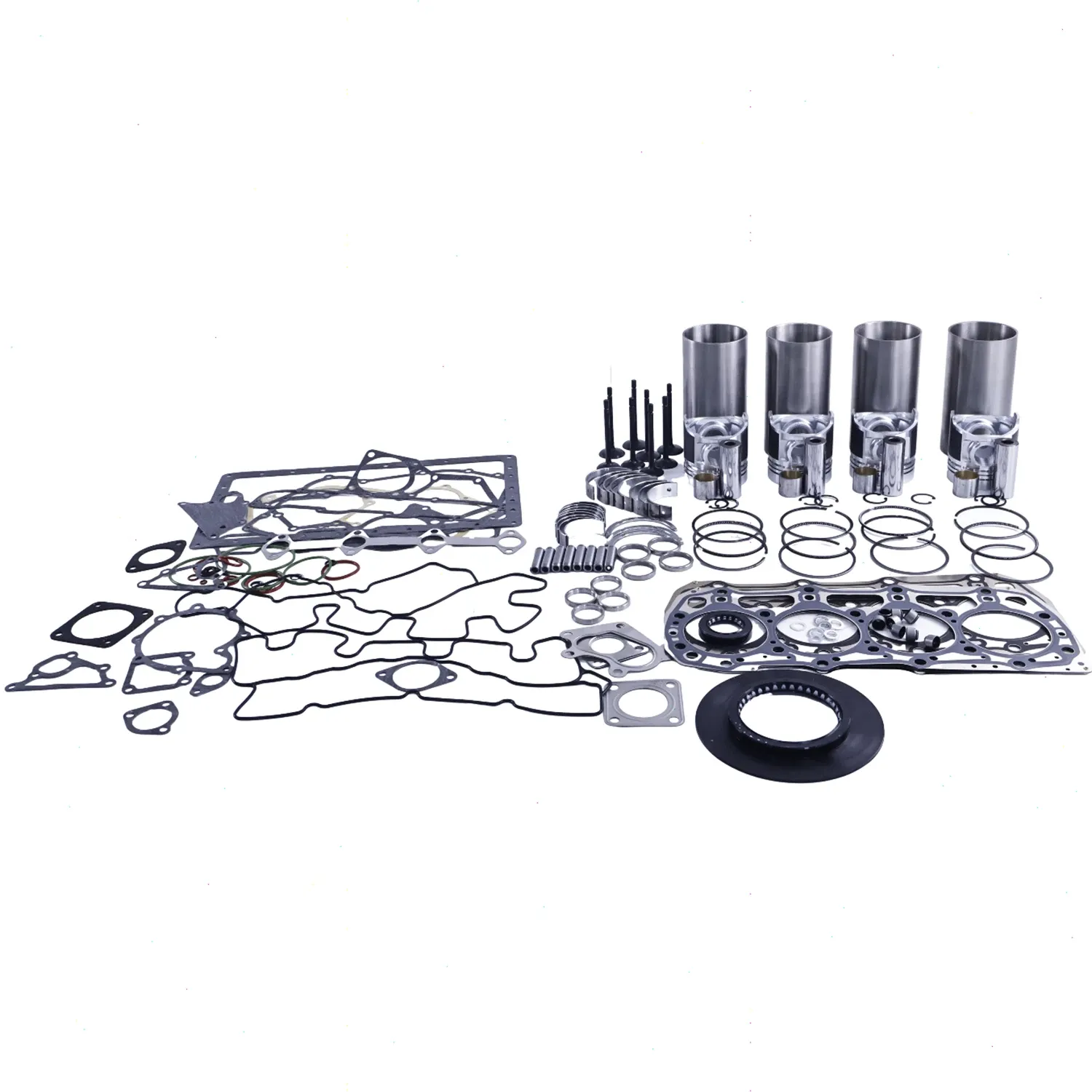
4. Define the Repair Scope Before Choosing an Overhaul Kit
This is one of the most important steps when purchasing an engine overhaul kit. Ordering a so-called "complete overhaul kit" based only on the engine model, before the repair scope has been established, can lead to two common problems:
- Ordering more than you need: Some existing components may still be serviceable after inspection, even though replacements have already been purchased as part of the kit. This adds unnecessary cost.
- Ordering too little: During the repair, the workshop may discover that the cylinder head, fuel injectors, pumps, or other components also need attention. If these parts are not included in the kit, additional orders may be required, extending equipment downtime.
A better approach is to have the repair technician inspect the engine first, then divide the parts requirements into three groups.
Components confirmed for replacement: Parts that inspection has shown are no longer serviceable, along with related components that must be replaced under the applicable repair procedures.
Components requiring measurement before the correct size can be selected: These may include engine bearings, crankshaft-related parts, and other internal components affected by machining dimensions. Their specifications should be determined from the workshop's measurements and machining results for the crankshaft and cylinder bores, rather than assumed from the engine model.
Components requiring further assessment: Major items such as cylinder heads, fuel injectors, turbochargers, water pumps, and oil pumps are generally evaluated separately. Their condition determines whether they need to be included in the purchasing list.
Once these requirements are clear, compare the repair parts list against the overhaul kit's bill of materials item by item. This is far more reliable than selecting a kit based on its name alone.
5. How to Verify Overhaul Kit Compatibility
Do Not Rely on the Engine Model Alone
A request for a "C15 overhaul kit" is too broad to identify the correct parts with confidence. Engines within the same family may have different serial number prefixes, configurations, and application versions. Some official overhaul kits also specify the applicable engine serial number ranges.
The engine model helps narrow down the options, while the complete engine serial number and Arrangement Number provide the information needed for more precise fitment checks. Final selection should be based on verified compatibility information.
Check the Kit Part Number and Bill of Materials
Do not rely solely on descriptions such as "Full Kit for [Engine Model]" or "Complete Kit for [Engine Model]." Ask the supplier for the specific kit part number or, at minimum, a detailed bill of materials (BOM) identifying the included components.
Ask for Detailed Information on Aftermarket Overhaul Kits
When evaluating an aftermarket overhaul kit, asking whether the quality is good is not enough. More useful questions include:
- Does the kit contain components from a single brand, or is it assembled using parts from multiple brands?
- Can the brands and part numbers of the major components be clearly identified in the quotation or packing list, rather than being covered by a generic "Complete Kit" description?
- Who manufactures the pistons, cylinder liners, and bearings?
- Which OEM reference numbers correspond to the supplied parts?
- How many of each major component are included?
- Are the required gaskets, seals, and installation hardware included?
- What warranty terms apply, and how are incorrect fitment or product quality issues handled?
The term "aftermarket" does not, by itself, establish a product's quality. A meaningful assessment should be based on the actual manufacturers, specifications, and components being supplied.
6. How to Compare Caterpillar Engine Overhaul Kit Quotations
When two overhaul kit quotations differ significantly in price, the first step is not to decide which supplier is more expensive. It is to determine whether both quotations actually cover equivalent products and repair requirements.
Use the following checklist to compare the offers:
| Comparison Point | What to Verify |
|---|---|
| Engine Compatibility | Whether the engine model, applicable serial number range, and configuration match |
| Repair Scope | Whether the kit is intended for an in-frame or out-of-frame overhaul |
| Bill of Materials | Itemized component descriptions, part numbers, and quantities |
| Pistons and Cylinder Liners | Whether parts are supplied individually or as preassembled cylinder packs |
| Engine Bearings | Whether main bearings, connecting rod bearings, and thrust washers are included, and whether their dimensions match |
| Gaskets and Installation Hardware | Whether a complete itemized list is provided |
| Cylinder Heads, Injectors, and Pumps | Whether these components are included, their quantities and condition, and whether cylinder heads are bare or assembled units |
| Component Brands and Condition | Whether all components are from one brand or multiple brands, and whether they are new or remanufactured |
| Packaging and Identification | Whether individual parts have separate packaging and part number labels, and whether a packing list is supplied for incoming inspection |
| Availability and Shipping | Stock availability, estimated shipping date, freight charges, and transit time |
| Warranty and Core Returns | Warranty period and coverage; where an exchange program applies, core return conditions, charges, and deadlines |
Consider two quotations for the same engine. Quote A includes pistons, cylinder liners, piston rings, bearings, and gaskets. Quote B includes those components, plus preassembled cylinder packs, remanufactured fuel injectors, and a cylinder head assembly.
These two prices cannot be compared directly. The better question is: "What additional parts would each option require to complete this particular overhaul?" Once those additional requirements are identified, calculate the total parts cost for the complete repair scope.
Core return conditions only need to be considered when the kit or its remanufactured assemblies are supplied under an exchange arrangement. In such cases, confirm the core charge, acceptance criteria, return deadline, who pays the return freight, and the conditions for receiving a refund.
Genuine equipment brands may also offer remanufactured products, so brand and product condition should be recorded separately. If the equipment is still under warranty, check with the warranty provider before installing aftermarket parts, as the effect on warranty coverage depends on the terms of the applicable warranty agreement.
7. Requesting Quotations and Inspecting Parts Upon Delivery
What Information Should You Include in an RFQ?
To reduce unnecessary back-and-forth with suppliers, prepare three groups of information when requesting a quotation.
- Engine information: Engine model, complete serial number, and Arrangement Number if available.
- Repair information: Whether the work is an in-frame or out-of-frame overhaul; whether bearings and other components require standard or repair sizes, if already confirmed; whether the cylinder head and fuel injectors need replacing; and whether the turbocharger, water pump, and oil pump are included in the repair plan.
- Purchasing requirements: Preferred brands or product condition, required quantities, destination country or region, and expected delivery schedule. Any specific trade terms, packaging labels, or shipping documentation requirements should also be stated at the quotation stage.
If the engine has already been dismantled, include photos of the engine identification plate, existing part numbers, measurement results, and the technician's parts list.
These details give the supplier a much better basis for preparing an accurate quotation than a simple request such as "I need a C15 overhaul kit."
Planning a Caterpillar engine overhaul? Send us your engine model, serial number, repair scope, confirmed repair sizes or machining results, existing parts list, and delivery destination. We can help review the kit contents against your requirements and prepare a quotation.
Inspect Every Component Against the Parts List
Before installation, check the delivered parts against the bill of materials agreed upon during the quotation process. Simply confirming that a box labeled "Overhaul Kit" has arrived is not enough.
Pay particular attention to the following:
- Verify the kit part number and engine details. Check the packaging labels and part numbers of individual components against the BOM rather than relying only on the kit name printed on the outer carton.
- Count the pistons, cylinder liners, and bearings.
- Check that components with specified repair dimensions, such as bearings, match the sizes stated in the purchase order.
- Confirm that all required gaskets, seals, and installation hardware are present.
- Check that any cylinder heads, fuel injectors, or pumps included in the agreed quotation have been supplied.
- Verify the brands and product condition, and inspect the parts for shipping damage or corrosion.
If any components are missing or do not meet the agreed specifications, contact the supplier before installation. Keep the packaging, labels, purchase documents, and photos taken upon delivery for reference.
Conclusion
Choosing the right Caterpillar engine overhaul kit is not about finding the package with the most comprehensive-sounding name. It is about matching the repair scope, engine configuration, and actual kit contents. Have the repair technician establish what the overhaul requires, then compare those requirements against the kit's bill of materials. This turns kit selection from a decision based on product labels into a purchasing process driven by the actual repair work.
Frequently Asked Questions (FAQ)
1. Are Overhaul Kits and Rebuild Kits the Same Thing?
The terms "Overhaul Kit" and "Rebuild Kit" are often used interchangeably, but their exact meanings can vary between suppliers and product ranges. Always compare the intended repair scope and detailed bill of materials rather than relying on the kit name.
2. Do Engine Overhaul Kits Include Cylinder Heads, Fuel Injectors, and Turbochargers?
Not necessarily. Some comprehensive kits may include certain major components, but these should never be assumed to be part of a basic kit. Request the supplier's bill of materials, compare it against the repair plan, and list any major components not included as separate purchasing requirements.
3. What Is a Cylinder Pack?
A cylinder pack generally refers to a set of components associated with one engine cylinder, such as a piston, piston rings, piston pin, and cylinder liner, supplied together or in a partially or fully preassembled form. The exact components and product condition should be confirmed from the specific product documentation.
4. Why Are Parts Sometimes Missing Even After an Overhaul Kit Has Been Delivered?
There are four common reasons: the repair scope changes after engine disassembly and inspection; the kit does not include certain external assemblies; suppliers define a "complete kit" differently; or the correct sizes of some components cannot be determined until the engine has been dismantled and measured.
To avoid these problems, obtain the kit's bill of materials before ordering. List major components not covered by the kit separately, along with any size-dependent parts that require inspection and measurement before their specifications can be confirmed.
5. Are Aftermarket Engine Overhaul Kits Worth Considering?
Aftermarket overhaul kits can be evaluated based on the specific repair requirements. The important factors are the manufacturers of the major components, the basis for compatibility, the detailed parts list, and the warranty terms. The word "aftermarket" alone does not establish whether a kit is suitable.
6. Why Do Overhaul Kit Prices Vary So Much Between Suppliers?
Price differences often reflect variations in kit contents, such as whether preassembled cylinder packs, cylinder heads, or fuel injectors are included. The brands and condition of the main components, warranty coverage, and delivery terms can also affect the quotation. Before comparing prices, make sure the scope of supply is consistent.