

Perkins Piston & Liner Kit: Confirm Size, Version & Bore

5522
Table of Contents
Generating table of contents
Experienced workshop technicians often encounter the same situation: a Perkins engine may receive more than one set of pistons during its service life.
The first replacement may use standard-size parts. Several years later, a damaged cylinder may be bored and fitted with an oversize piston. That repair history may exist only in a technician’s notebook—or may never have been recorded at all. It will not automatically appear on the engine data plate or in the serial-number records.
The problem becomes apparent during the next repair. A buyer checks the engine model in the parts catalogue, orders a standard-size piston set and then discovers that the new parts do not fit because the cylinder bores are no longer at their original dimensions.
This type of mismatch is not necessarily caused by checking the wrong catalogue. More often, the purchasing information is missing one critical element: the engine’s current physical condition.
The engine model, serial number and Build List help identify the original piston version, cylinder-bore architecture and factory configuration. Measurements determine whether the engine can still use that specification today.
Both types of information are necessary, and they answer different questions.
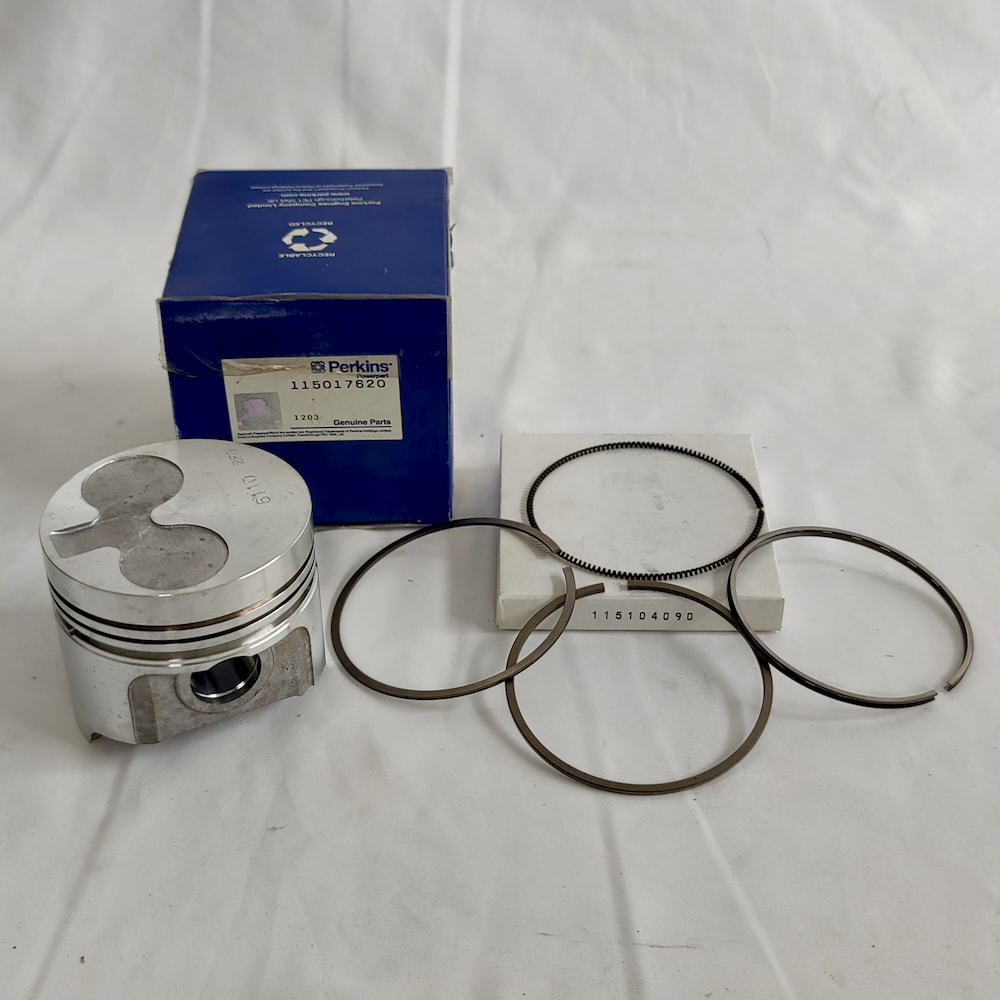
A Piston Is Not an Isolated Cylinder—It Is Part of the Combustion Chamber
A piston is sometimes treated as a cylindrical component that only needs to fit inside the bore. In reality, the piston crown—especially the combustion bowl in a direct-injection diesel engine—forms part of the combustion-chamber geometry.
Perkins engines within the same series and with the same nominal bore may still use different piston designs because of production stage, power rating or engine configuration.
Possible differences include:
- combustion-bowl shape and depth;
- piston-pin bore position;
- number and position of the ring grooves;
- compression height;
- skirt profile;
- surface treatment.
These differences are often easier to identify from the old piston than from a general model description.
Clear photographs of the piston crown, ring-groove area, pin bore and underside markings, together with the formal part number, usually provide far more useful information than a request for a “standard-size piston.”
The complete Engine Serial Number or Build List should still be used to confirm the correct piston and ring version because one engine model or family may contain more than one parts configuration.
The Current Bore Condition Cannot Be Determined from the Catalogue Alone
The catalogue tells the buyer what the engine used when it was built. Measurement tells the repairer what the engine can use now.
Once an engine has undergone cylinder boring, oversize-piston installation or a repair-sleeve procedure, its current bore dimensions may no longer match the original catalogue specification. In some cases, only one cylinder may have been altered.
This is why piston and liner purchasing depends more heavily on workshop information than the purchasing of many external engine parts.
A gasket is mainly matched to the engine configuration. A piston, liner or repair sleeve must also reflect the repair history and current bore condition of the individual engine.
The practical sequence is:
- Review any available repair history.
- Check the old pistons, liners and sleeves for size or repair markings.
- Measure the current bore diameter, roundness and taper.
- Determine whether the engine remains at standard size, requires an approved oversize or needs another repair route.
When measurements are not yet available, a supplier may provide a preliminary budgetary price based on the catalogue specification. That price is a starting point, not final confirmation of compatibility.
Three Cylinder-Bore Repair Architectures Must Not Be Treated as Interchangeable
Perkins engines span several generations and applications, so their cylinder-bore structures and approved repair methods are not uniform.
Replaceable Cylinder Liners
On engines designed with replaceable liners, normal cylinder wear can often be addressed by replacing the liner rather than machining the complete cylinder-block bore.
That does not mean the condition of the block can be ignored.
The liner seat, counterbore, installation bore and sealing grooves may still suffer from corrosion, distortion or physical damage. If these areas are outside specification, installing a new liner alone will not restore the correct assembly geometry.
Parent-Bore Cylinders
In a parent-bore engine, the piston runs directly in the machined cylinder-block bore.
For certain traditional repair procedures on some Perkins 1100 Series engines, the cylinders may be machined and a matched set of oversize pistons installed to maintain a consistent configuration across the engine.
This must not be treated as a universal rule for every parent-bore Perkins engine. Whether one cylinder can be machined independently or the complete set must be processed together depends on the engine series and its approved service procedure.
Repair Sleeves
Perkins has also introduced repair-sleeve solutions for applicable 1100 Series engines.
Under this type of procedure, the damaged bore is enlarged, an unfinished sleeve is installed, and the sleeve is then bored and honed to restore the required standard-size working surface.
On applicable engines, this provides an alternative to machining the complete cylinder set and installing oversize pistons.
A replaceable production liner, an unfinished repair sleeve and an oversize piston solve different repair problems. They must not be treated as interchangeable products.
The purchasing process should first establish the engine’s original bore architecture and then confirm which repair route has been approved by the workshop.
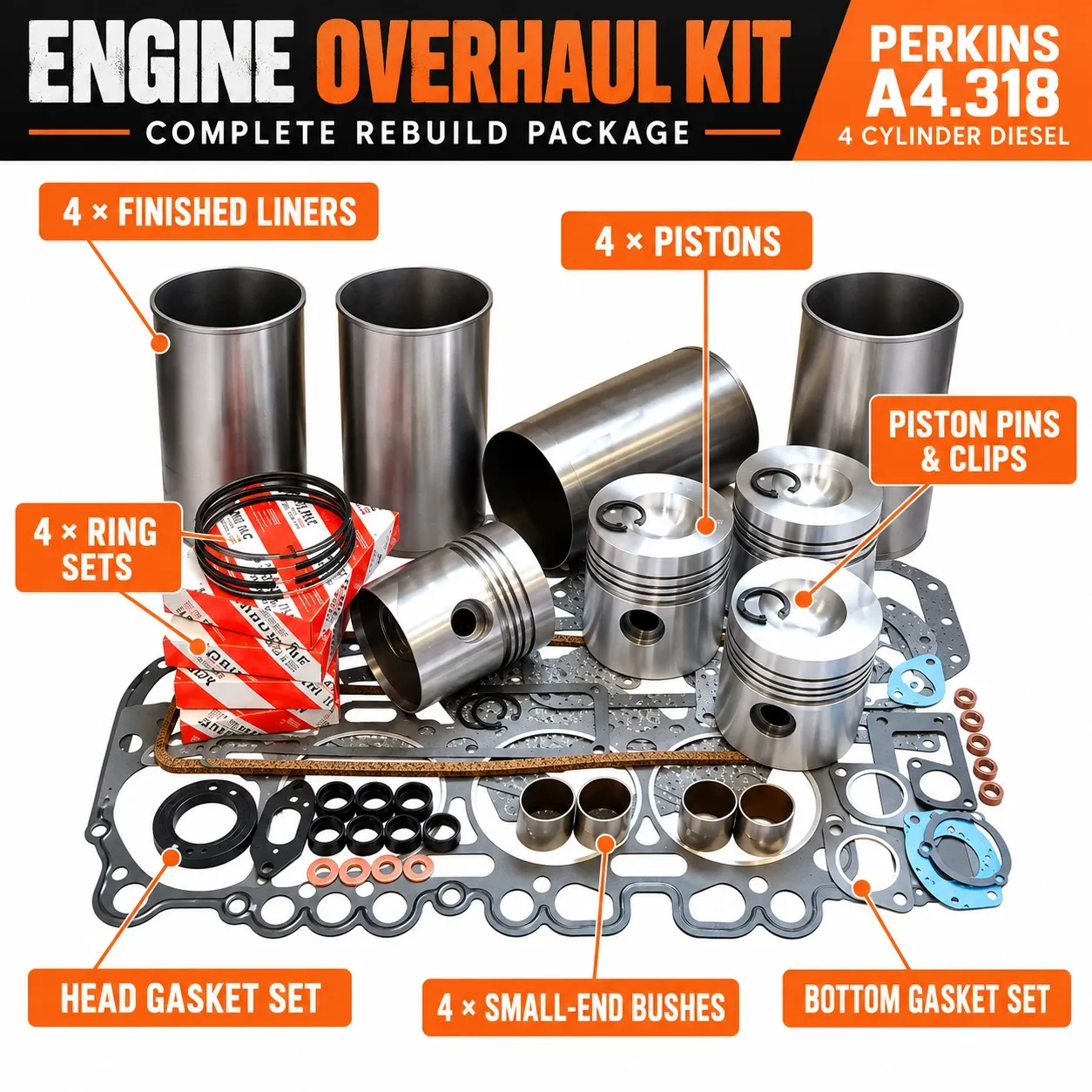
Piston Rings Connect the Ring Grooves to the Cylinder-Wall Surface
If the piston and cylinder wall are viewed as two separately manufactured working surfaces, the piston rings form the functional connection between them.
They provide combustion sealing, transfer heat from the piston to the cylinder wall and control the lubricating-oil film.
A ring set must therefore match both sides of the relationship—not only the nominal bore diameter.
The ring width, thickness, profile, coating and installation orientation must correspond to the grooves in the specific piston. At the same time, the cylinder wall must have the correct size, roundness, taper and surface finish for that ring package.
A new liner or re-machined bore should be finished to the dimensions and honing requirements specified in the relevant service procedure.
When an existing liner is retained, its wear, roundness, taper and surface condition must first be inspected.
The ring package should be selected according to the piston version and formal application—not according to a general workshop rule such as “new liners use one type of ring and used liners use another.”
A correct ring set still requires the correct cylinder-wall surface. A correct honing surface cannot compensate for an incorrect ring profile or incorrect ring-groove dimensions.
A New Cylinder Liner Is Not Always Ready to Install
The phrase “new cylinder liner” can describe several different supply conditions.
A liner may be:
- fully finished and honed for assembly;
- semi-finished and still require final machining;
- an unfinished repair sleeve intended to be bored and honed after installation.
If the supplier and repair workshop understand the machining condition differently, the result may be delayed assembly.
A more serious risk is that a piston and ring set may be installed in a liner that has not received the required final machining. An incorrect bore size or surface finish can prevent the rings from operating and bedding correctly.
The ordering question should therefore be:
What is the liner’s current machining condition, and is it ready for final assembly?
It should not be assumed that every new liner can be used directly from the package.
For wet or flanged liner designs whose service procedures require liner-protrusion measurement, the installed height above the block deck is also an important assembly-control item.
Liner protrusion affects how the head gasket is clamped around the cylinder. Insufficient protrusion, excessive variation between measuring points or damage to the liner seat can contribute to sealing problems.
These problems should not automatically be blamed on head-gasket quality, nor should they be corrected by adding unapproved shims or gasket layers.
The measurement method, measurement points and permitted limits must come from the service information for the specific engine. Not every Perkins cylinder structure requires this measurement.
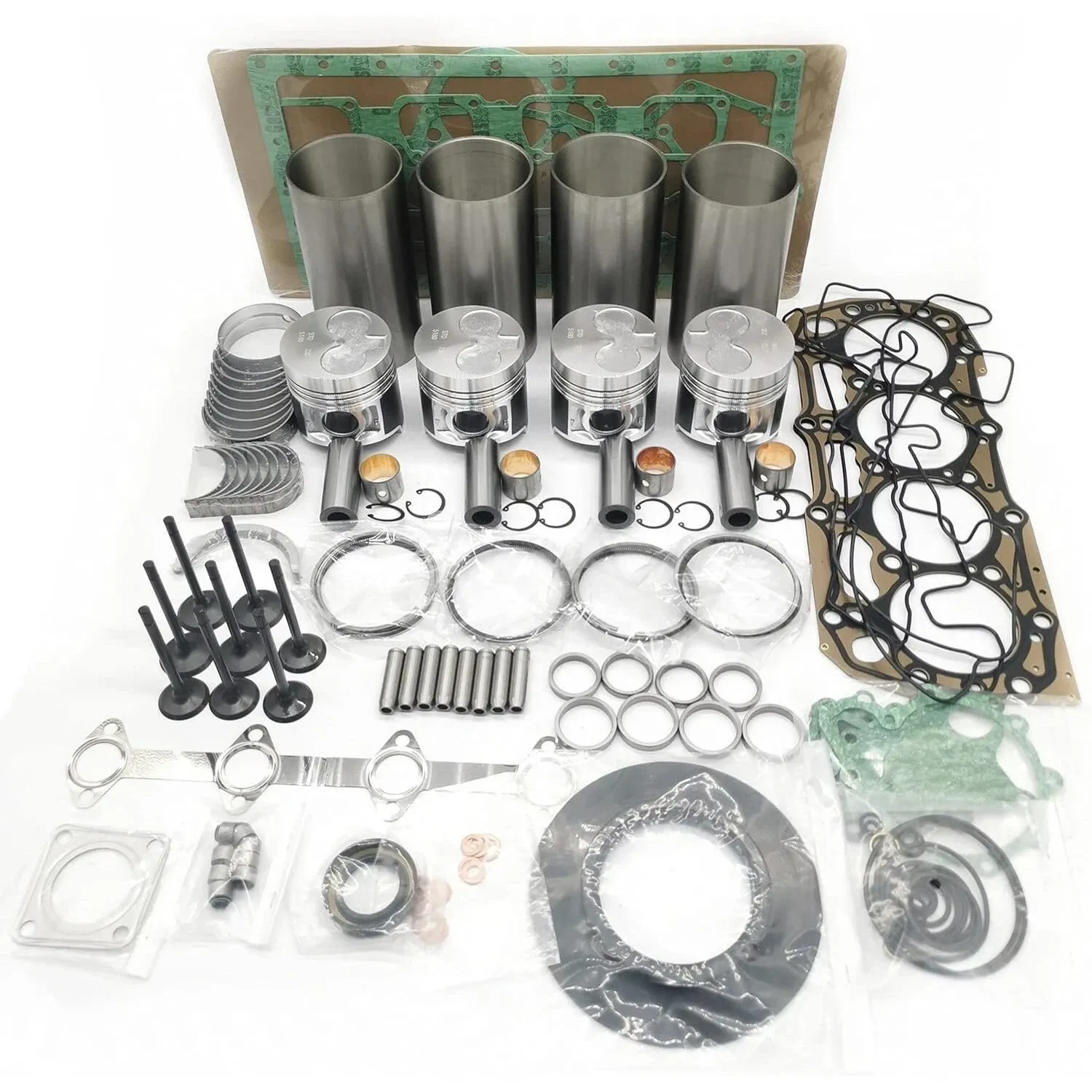
One Damaged Cylinder Does Not Automatically Mean Repairing One Cylinder—or Rebuilding Them All
The repair scope depends not only on how many cylinders appear damaged, but also on why the damage occurred.
If the engine structure supports independent liner or repair-sleeve work and the damage is clearly local—such as scoring caused by a foreign object—a single-cylinder repair may be appropriate, subject to the approved service procedure.
If the cause is systemic, the decision changes.
Filtration failure, lubrication loss, overheating or combustion problems may affect more than the cylinder showing the most obvious symptoms. Repairing only the worst cylinder may leave developing damage elsewhere in the engine.
A parent-bore engine may also have a repair procedure that requires a consistent oversize specification across the piston set, even when the original damage began in only one cylinder.
The decision should therefore consider:
- the cylinder-bore architecture;
- measurements from the remaining cylinders;
- whether the failure cause is local or systemic;
- the approved repair procedure for the engine.
Counting the visibly damaged cylinders is not enough.
“Piston Kit” Can Describe Completely Different Supply Scopes
The term “Piston Kit” does not represent one universal cross-supplier BOM.
One quotation may include:
- the piston;
- piston rings;
- piston pin;
- retaining clips.
Another quotation may cover the piston only. Some suppliers quote one kit per cylinder, while others quote a full-engine quantity.
Before comparing prices, confirm:
- how many cylinders each kit covers;
- whether the piston rings are included;
- whether the piston pin and retaining clips are included;
- whether the liner or repair sleeve is included;
- whether the parts are standard or repair size;
- the machining condition of the liner;
- whether liner seals or other installation parts are included.
Two quotations cannot be compared simply because both use the words “Perkins Piston Kit.”
Three Information Sources Answer Three Different Questions
The engine records tell you what the engine was built with.
The old parts tell you what is installed now.
The measurements tell you what the engine can still use.
Any one of these information sources can be misleading when used alone.
Relying only on the factory configuration may overlook later repairs and dimensional changes.
Copying the old part number may repeat a previous incorrect repair.
Using measurements without engine-identification data may result in the wrong piston design being selected for the engine configuration or application.
The most reliable decision comes from cross-checking all three:
- Engine Serial Number and Build List;
- old piston, liner and ring identification;
- current bore and component measurements.
Compare Genuine and Replacement Parts by Their Validation Capability
Pistons, rings and cylinder liners are core engine components exposed to high thermal and mechanical loads.
The value of Genuine components is that material selection, dimensional relationships, weight consistency, combustion-bowl geometry and application compatibility are normally supported by a defined design and quality-control system.
This can reduce the buyer’s validation burden. It does not remove the need to confirm the serial number, repair size, current bore condition or required quantity.
A Replacement component should be evaluated by the evidence the supplier can provide, not by the aftermarket label alone.
Relevant validation points may include:
- piston alloy and heat treatment;
- piston weight consistency;
- combustion-bowl geometry and compression height;
- pin-bore and ring-groove dimensions;
- skirt profile and surface treatment;
- liner material, hardness and dimensional tolerances;
- final honing condition;
- ring profile, material and coating;
- batch traceability and inspection records.
The greater the repair risk and the cost of repeat disassembly, the stronger the required validation should be.
Information to Provide When Reviewing a Repair Plan
Useful information includes:
- engine model;
- complete Engine Serial Number;
- Build List, where available;
- known repair history, including previous boring or oversize-piston installation;
- visible numbers and markings on the old pistons and liners;
- photographs of the piston crown, ring grooves and liner;
- measured bore diameter, roundness and taper, if available;
- proposed repair route;
- required number of cylinders.
Equipment application, power rating and rated speed are also useful because they help confirm whether the current piston version is consistent with the original application.
They cannot replace the serial number, old-part identification or formal parts data.
When information is incomplete, ZEB Power can provide a budgetary quotation based on the catalogue specification. Both parties should understand that this is the beginning of the review, not the final order.
How ZEB Power Helps Review Perkins Pistons and Cylinder Liners
ZEB Power uses the engine model, complete serial number, Build List, old-part identification, photographs, measurements and proposed repair method to help review:
- piston version and combustion-bowl design;
- cylinder-bore architecture;
- standard or repair size;
- piston-ring compatibility;
- liner or repair-sleeve machining condition;
- kit contents and required quantity;
- whether competing quotations cover the same repair plan.
Whether the block remains suitable for machining, which repair route should be used, the final piston-to-bore clearance, and whether the repair should cover one cylinder or the full engine must be decided by the workshop responsible for inspection, machining and assembly.
Provide the Perkins engine data plate, complete serial number, Build List, old piston and liner photographs, available bore measurements and the proposed repair method. ZEB Power can help turn a general request for a “piston and liner kit” into a defined parts scope that can be quoted, compared and inspected on arrival.
Frequently Asked Questions
Why Can Two Engines with the Same Model Use Different Pistons?
The same model name does not always guarantee an identical factory Build List or piston version.
Even when two engines were originally built with the same parts, later machining, oversize-piston installation or sleeve repairs may leave them with different current specifications.
Can a New Liner Be Used Immediately with a Piston and Ring Set?
Not always.
First confirm whether the liner is fully finished, semi-finished or an unfinished repair sleeve that still requires boring and honing after installation.
Even a finished liner must be used with the correct piston version, ring package and specified cylinder-wall surface.
Can Only One Cylinder Be Repaired After a Bore Is Scored?
It depends on the bore architecture, approved service procedure and cause of the damage.
A local failure on an engine that supports independent liner or sleeve repair may allow a single-cylinder repair. A systemic lubrication, filtration, overheating or combustion problem may require inspection of the remaining cylinders.
What Happens If Liner Protrusion Is Too Low?
On engines whose service procedures specify liner protrusion, insufficient height can reduce head-gasket clamping around the cylinder and contribute to sealing problems.
This measurement does not apply to every Perkins cylinder design. The correct method and limits must come from the service information for the engine.
Can Piston Rings Be Selected by Bore Diameter Alone?
No.
The ring width, profile, material and coating must correspond to the specific piston grooves, while the cylinder wall must have the correct dimensions and surface finish. The same nominal bore diameter does not prove interchangeability.