

Perkins Crankshaft: Match Condition to Repair or Replace

3217
Table of Contents
Generating table of contents
Determining whether an existing Perkins crankshaft can remain in service and finding a crankshaft that can replace it are two different decisions. Many purchasing mistakes begin when those decisions are treated as one.
The first depends on the condition of the old crankshaft: whether the journals still have an approved repair route, whether the surface condition can be restored, and whether the crankshaft shows cracks, excessive runout or another structural risk. The second depends on the engine configuration: whether the replacement crankshaft has the correct crank layout, counterweight design, front and rear interfaces, and the required relationship with the engine’s balance and torsional-vibration-control system.
A crankshaft may need replacement because its condition is no longer acceptable, but that does not mean any crankshaft with the same model description and journal count will fit. Conversely, a crankshaft that has already been reground is not automatically scrap. If its inspection results and approved repair dimensions remain acceptable, it may still be a viable repair candidate.
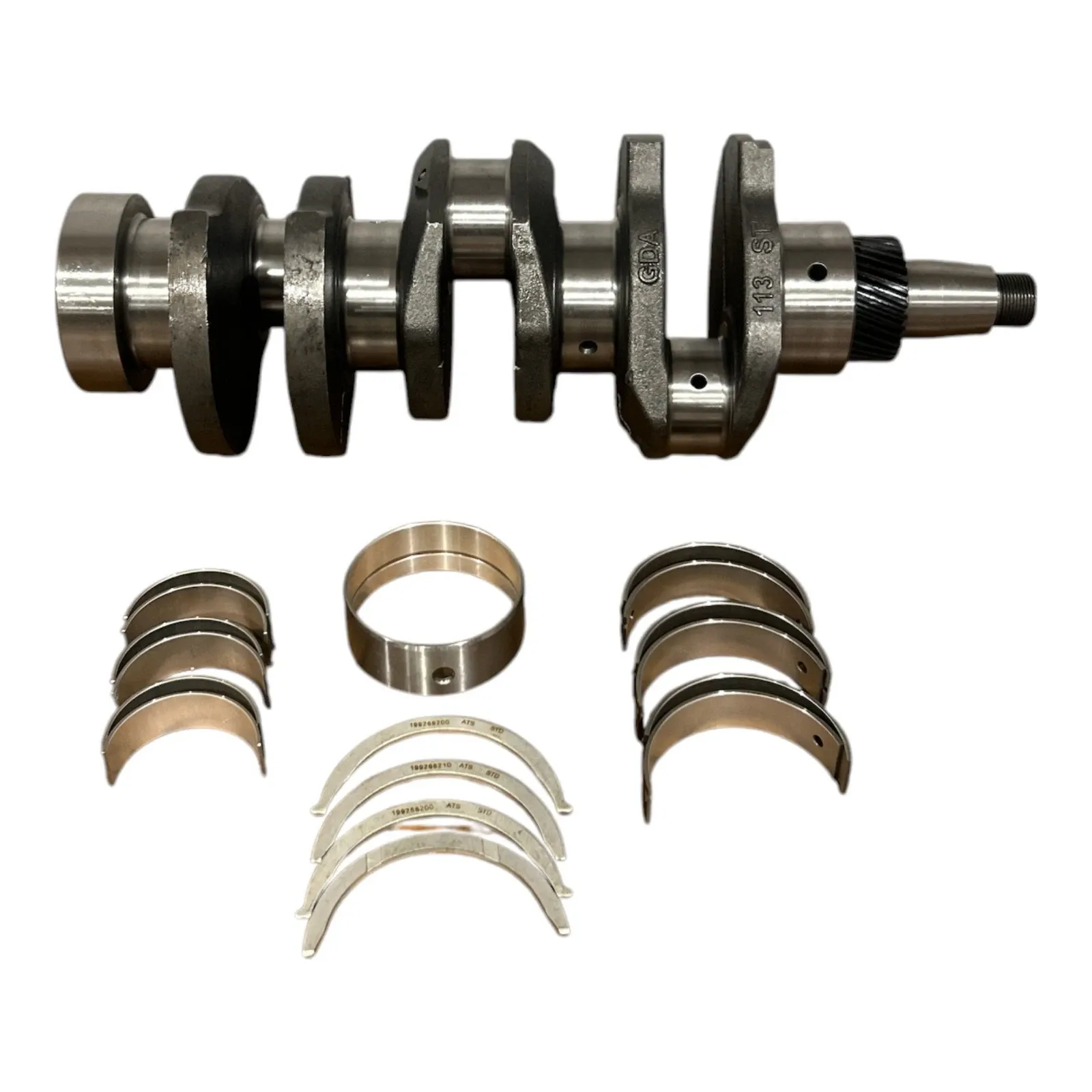
Remaining Repair Size Is Only One Part of the Repair-or-Replace Decision
The easiest question to answer is often whether another Undersize grade is listed for the crankshaft. That only shows whether another dimensional repair path may exist in theory. It does not show whether using that path is technically justified.
A crankshaft may still have a nominal repair grade available and yet be unsuitable for further machining because journal scoring is too deep, a crack indication is present, or a fillet area has been damaged. The more useful question is whether the material removal needed to eliminate the existing damage, the remaining material condition and the final structural strength can all remain within the approved repair requirements.
The existence of another catalogue repair size is therefore not, by itself, approval to grind the crankshaft again.
Material and Surface-Strengthening Condition May Limit Repair Before the Dimensional Range Does
Perkins crankshafts may use different materials, heat treatments and surface-strengthening methods. They should not all be assessed as though they share the same material or the same hardened-layer design.
Where the applicable repair procedure requires journal-hardness checks, effective hardening-depth verification or confirmation of a restored surface condition, the remaining Undersize grade is only one input. Grinding removes surface material. If the hardness, strengthened condition or functional surface properties remaining after machining do not meet the requirements for that crankshaft, acceptable diameter, roundness and taper alone are not enough to approve continued use.
These conditions normally require appropriate inspection methods. They cannot be confirmed from appearance or journal diameter alone.
Journal Diameter Measurements Cannot Reveal Every Rotational-Datum Problem
Journal diameter, roundness and taper are local measurements. Every individual journal can appear acceptable while the crankshaft still has a problem with straightness, rotational datum or the relationship between journals.
Runout must be checked using the support points and measurement locations specified for the crankshaft and the applicable inspection procedure. Those reference points may vary by crankshaft design and service method.
If radial runout exceeds the allowable value, it indicates an abnormality involving the crankshaft’s rotational datum, straightness or journal geometry. It does not automatically prove that the crankshaft itself is bent. The support surfaces, reference journals, setup method, contamination and local geometric condition should first be excluded as possible influences before the cause is identified.
Whatever the final cause, this type of abnormality cannot be corrected simply by fitting new bearings or regrinding one journal in isolation. Journal dimensions and crankshaft runout are separate inspection categories, and both need to meet the relevant requirements.
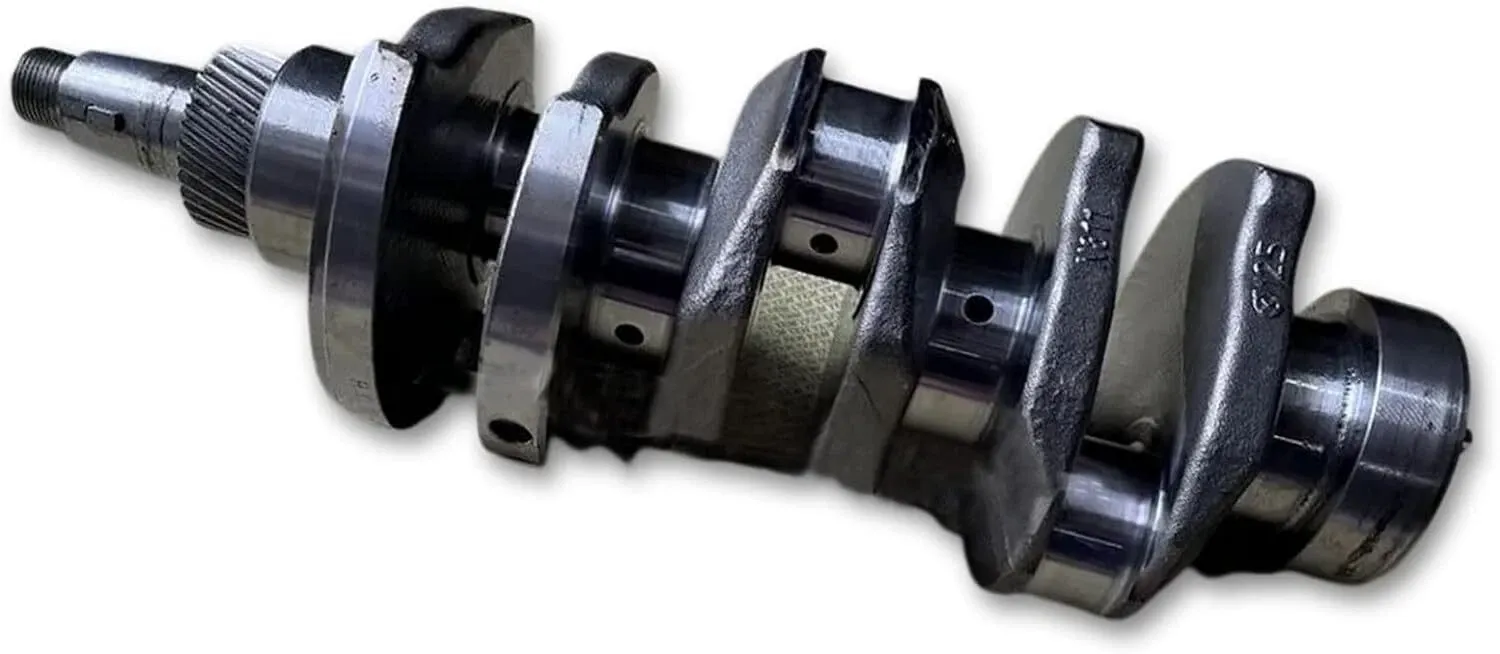
Fillets, Cracks and Oil-Hole Condition Determine Whether a Grinding Plan Is Practical
The fillet between a journal and crank web carries alternating stress and is a critical transition area. A fillet that is too small can increase stress concentration. A fillet that is too large may interfere with the bearing edge and prevent the bearing from carrying load across the intended surface.
A grinding plan therefore has to control more than final journal diameter. Fillet radius, surface finish and oil-hole edge treatment must remain compatible with the crankshaft and bearing design.
Crack inspection cannot be replaced by dimensional measurement. If a crack indication is found, the presence of remaining repair size does not justify simply grinding deeper. Whether the crankshaft can be straightened, machined further or returned to service depends on the crack location, material, inspection result and approved repair procedure.
The Crankshaft Layout Is Part of Its Identity
Piston and bearing selection is strongly influenced by dimensions and working surfaces. Crankshaft selection adds another fixed layer: the crankshaft’s own structural layout.
The number and position of main and connecting-rod journals, crank angles and stroke form the basic motion geometry of the crankshaft. They define piston motion phases and the crankshaft’s rotational behaviour. These are fixed design features that cannot be changed through normal repair machining.
The thrust location, front drive interface and rear flywheel flange are equally important parts of the crankshaft identity. Two crankshafts may have similar overall length and journal diameters but still be incompatible because of a different stroke, crank layout, thrust arrangement or end interface.
This is why crankshaft matching should be based on the complete Engine Serial Number and Build List rather than a broad description such as “Perkins four-cylinder crankshaft.”
Front-end mismatch is particularly easy to overlook. The crankshaft nose diameter is only one detail. Keyway width and direction, stepped diameters, locating surfaces and threaded features must correspond to the existing timing gear, pulley and torsional vibration damper. A crankshaft with correct central journals may still be unusable if those components cannot be installed in their original positions.
The rear interface also requires more than counting flywheel-bolt holes. Flange diameter, locating register, bolt-circle diameter, thread form and flywheel seating position all affect compatibility. Engines within the same series may use different rear interfaces because of application, production stage or configuration.
A Replacement Crankshaft Must Preserve Both Balance Relationships and Torsional-Vibration Control
Replacing a crankshaft involves more than restoring geometric fit. Two different system relationships may also need review.
The first is the balance relationship of rotating and reciprocating masses. This includes the crankshaft counterweights and, where the engine design requires it, the flywheel or other externally balanced components. The flywheel primarily stores rotational energy, smooths power delivery and transmits torque. It must also meet the specified mass, interface and balance requirements. That does not mean every engine uses the flywheel for external balancing, but some designs do include it in that relationship.
The second issue is torsional-vibration control. Periodic combustion loads twist the crankshaft dynamically during operation. The torsional vibration damper or another specified balancing device must correspond to the engine’s torsional design. Mass balance and torsional-vibration control both influence engine behaviour, but they are not the same engineering problem and cannot be verified by the same conclusion.
Different Perkins engines may use different arrangements. Some components are manufactured to independent balance requirements; other engines use a dedicated balancing unit or a configuration-specific flywheel and damper. It is therefore incorrect to assume that every crankshaft, flywheel and damper must always be rebalanced as one fixed assembly. It is equally unsafe to assume that installing a crankshaft with a similar part description automatically preserves the original balance and torsional-control relationships.
The Engine Serial Number, Build List, crankshaft version, flywheel and damper configuration should be used to determine whether the replacement requires individual inspection, component matching or wider rotating-system verification. The fact that the engine turns without mechanical interference does not prove that either relationship is correct.
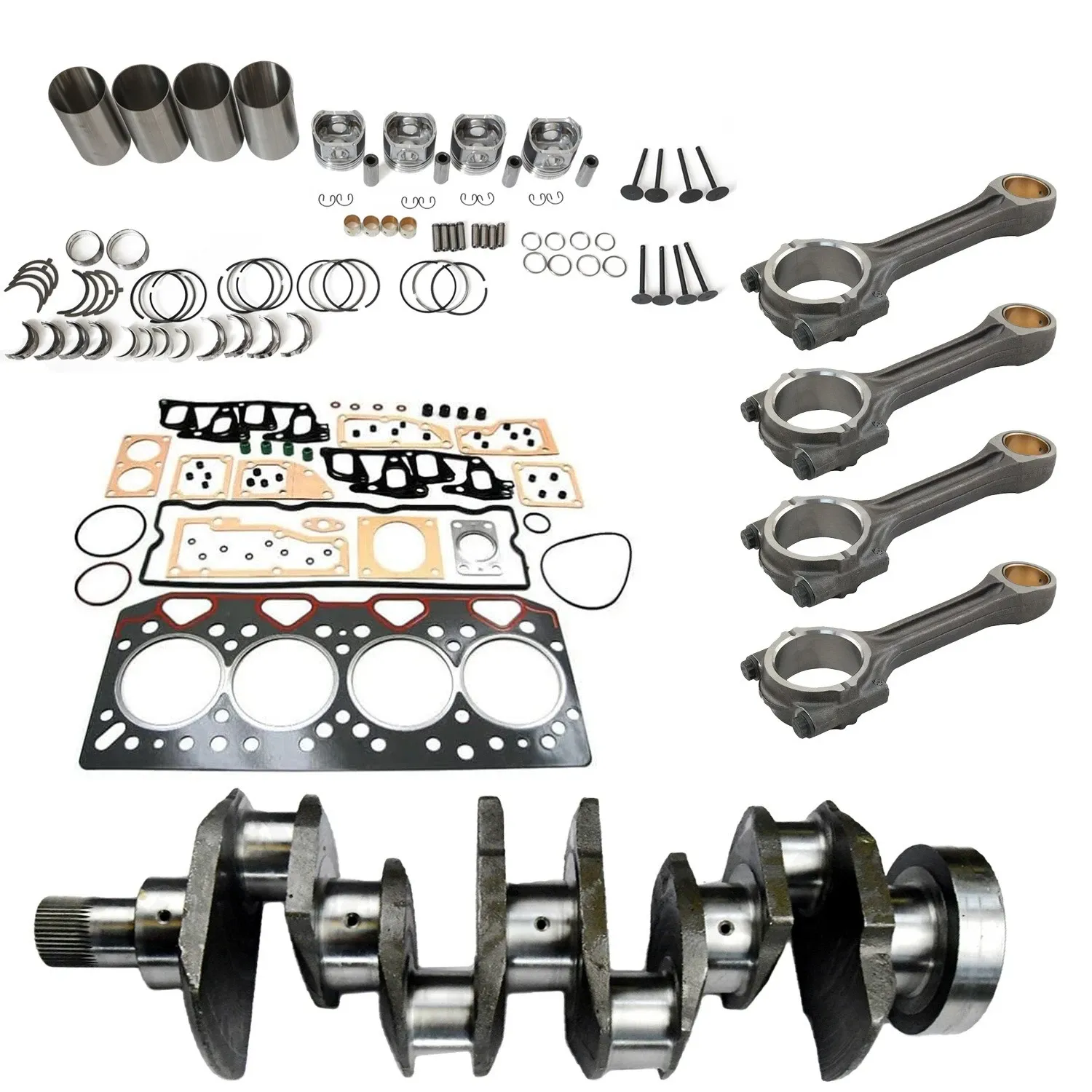
The Same Engine Series May Use More Than One Crankshaft Version
A Perkins engine series, and sometimes even one engine model description, may contain multiple crankshaft part versions. The differences may relate to production stage, structural revision, emissions configuration, application, front or rear interface, or balancing-system arrangement.
Many of these differences are not obvious from external appearance or basic journal dimensions. Two crankshafts should not be considered interchangeable merely because they come from engines with the same model name, cylinder count or nominal journal size.
The complete Engine Serial Number and Build List identify the intended design version. The old crankshaft part number and clear photographs of both ends help confirm the configuration currently installed in the engine.
Repairing the Existing Crankshaft or Choosing New, Remanufactured or Used Has No Automatic Default
The remaining repair size, material and surface condition, runout and crack inspection must be considered together before deciding whether the old crankshaft is still worth repairing.
If the damage can be removed within the approved repair size, inspection results are acceptable and the final surface and structural conditions can be restored, regrinding may be a reasonable route. If the surface-strengthening condition no longer meets requirements, an unacceptable crack is present or the geometry cannot be restored reliably, replacement may be the lower-risk decision.
Replacement condition also needs to be described accurately.
A new crankshaft should be identified as Genuine New or Replacement New, and the supplier should state whether it is a bare crankshaft or includes gears or other attached components.
“Remanufactured” does not represent one universal process across all suppliers. The buyer should ask which operations were actually completed, such as cleaning, crack inspection, straightness checking, straightening, journal grinding, polishing, material or surface-condition inspection, oil-passage cleaning, and final dimensional and runout verification. Where the relevant repair procedure requires hardness testing or a surface-strengthening process, the associated records should also be reviewed. It should not be assumed that every remanufactured crankshaft receives the same surface-restoration treatment.
A used crankshaft generally needs the same fundamental inspections discussed earlier. The fact that it can be rotated or appears visually clean does not establish that it is suitable for service.
For all three supply conditions, the main-journal and connecting-rod-journal grades should be stated separately. One crankshaft may have Standard main journals and Undersize connecting-rod journals, which directly affects the bearing sets required for assembly.
Information That Helps Define the Correct Crankshaft Plan
Useful information includes the complete engine model, Engine Serial Number and Build List; the existing crankshaft part number; clear photographs of the complete crankshaft and both end interfaces; measured main- and connecting-rod-journal diameters; known grinding or repair history; and available crack, runout, surface or material-condition inspection results.
The current flywheel and torsional vibration damper references are also useful. Equipment application, power rating and rated speed can support the configuration review, but they cannot replace the serial number, Build List or formal parts relationship.
When inspection is not yet complete, a budgetary quotation can be prepared from the original engine configuration. The final repair or replacement decision should still be based on the condition of the old crankshaft and the documented configuration of the proposed replacement.
ZEB Power can use this information to review the formal crankshaft version, counterweight and structural configuration, front and rear interfaces, journal grades, and the suitability of new, remanufactured or used supply options.
Whether the remaining grinding range is acceptable, the material and surface condition meets the repair requirement, the crankshaft datum and crack inspection are satisfactory, and the engine’s balance and torsional-control relationships require further verification must be established from the physical inspection and the applicable service procedure.
Provide the Perkins engine data plate, complete serial number, Build List, existing crankshaft part number, photographs of both end interfaces, journal measurements and available inspection records. ZEB Power can help convert a general request for a Perkins crankshaft into a defined repair or replacement plan that can be quoted and reviewed.
Frequently Asked Questions
If Another Undersize Grade Is Available, Can the Crankshaft Always Be Ground Again?
No. Remaining repair size is only one condition. The decision also depends on journal damage, material and surface condition, cracks, runout, fillets and the amount of material that must be removed to restore the journal.
Can Crankshaft Straightness Be Confirmed from Journal Diameter Measurements?
No. Journal measurements describe local diameter, roundness and taper. Overall straightness or rotational-datum abnormalities require radial runout inspection under the support and measurement conditions specified for the crankshaft. A runout result outside the limit must still be investigated before the exact cause is assigned.
Can the Existing Flywheel and Torsional Vibration Damper Be Reused with a New Crankshaft?
The decision cannot be made from mounting dimensions alone. The flywheel must match the flange interface, mass and balance requirements. The torsional vibration damper must match the engine’s torsional-vibration-control design. Some engines may also use an external balance relationship or a separate balancing unit. The complete Engine Serial Number, Build List and service procedure should be checked.
Are Crankshafts Interchangeable Between Engines with the Same Model Name?
Not automatically. One engine series or model description may include multiple crankshaft versions because of production stage, structural revision, application or interface differences. Confirm the complete Engine Serial Number, Build List and crankshaft part number.
Is Every Remanufactured Crankshaft Re-Hardened?
No universal assumption can be made. Materials, repair procedures and remanufacturing processes vary. Review the actual operations and inspection records, including crack testing, straightness, journal dimensions, surface condition, oil-passage cleaning and, where required, hardness or surface-treatment verification.