

Cómo encontrar el número de serie Perkins (ESN y Build List)

7599
Índice
Generando índice...
A recurring request appears in almost every Perkins parts enquiry:
Please provide the complete engine serial number and Build List.
The important question is not only why this information is required, but what each item represents, where it can be found, and when it may no longer describe the engine's current configuration accurately.
The Engine Serial Number, or ESN, identifies the engine's original identity. The Build List is used to retrieve its original manufacturing configuration and parts range. If the engine has since been overhauled, modified, repowered, or fitted with replacement assemblies, the current parts, interfaces, and service records must also be checked.
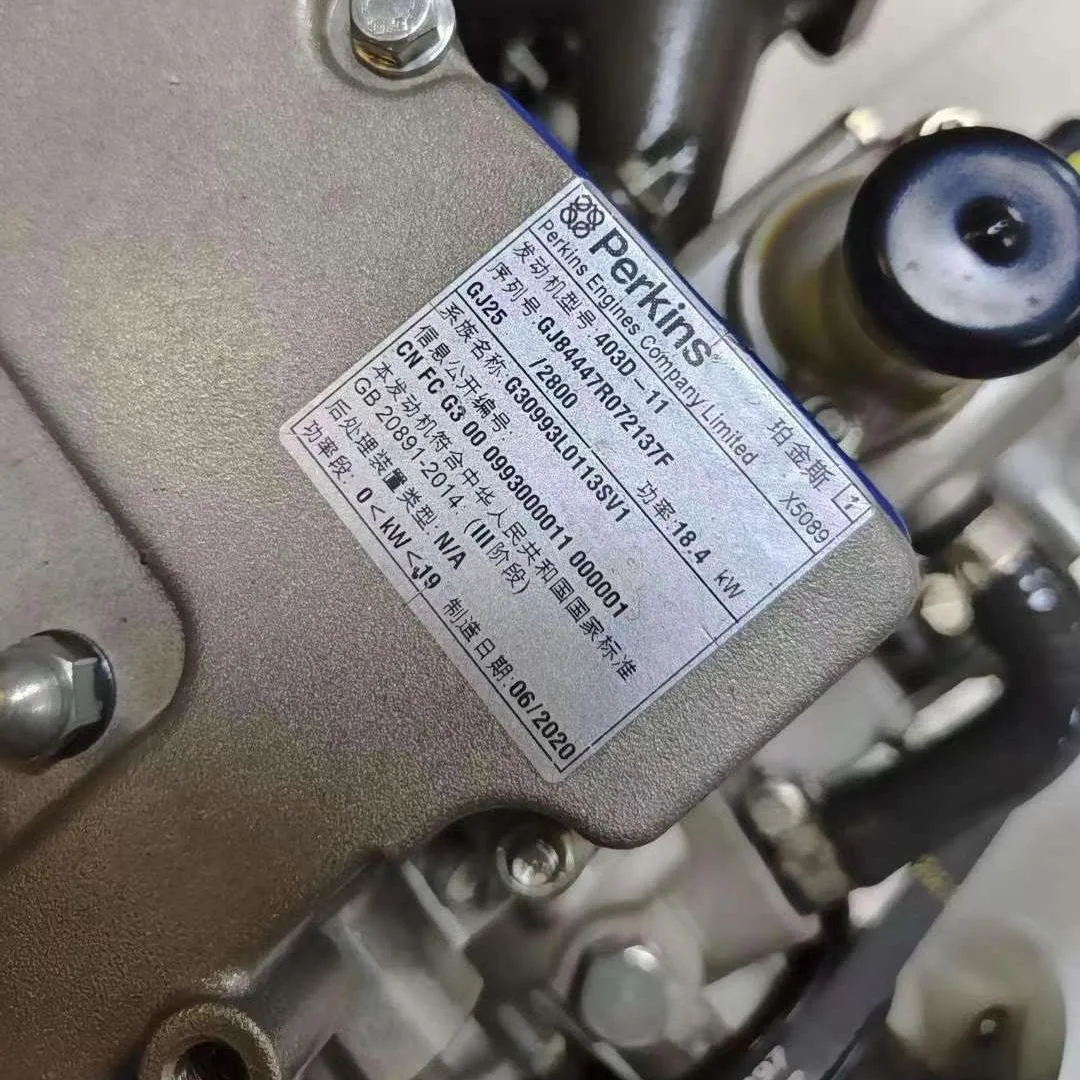
Reliable parts matching therefore has three levels:
- Confirm the original engine identity from the nameplate and complete ESN.
- Use the Build List to retrieve the original manufacturing configuration.
- Inspect the current engine to determine whether it still matches that original configuration.
1. How Are the ESN and Build List Related?
The Build List is not a separate number outside the complete engine serial number. It normally forms the first section of the Engine Serial Number.
A commonly used example is:
PJ12345U123456P
| Code section | Example | Main purpose |
|---|---|---|
| Engine family code | PJ | Identifies the engine family |
| Build type or order reference | 12345 | Further identifies the manufacturing specification |
| Build List | PJ12345 | Combines the first two sections and acts as the configuration lookup reference |
| Country or region of manufacture code | U | Identifies the manufacturing location |
| Unique serial sequence | 123456 | Identifies the individual engine |
| Year of manufacture code | P | Indicates the manufacturing year |
In this example:
-
PJ12345is the Build List. -
PJ12345U123456Pis the complete ESN.
The Build List is displayed within the complete serial number and also acts as an important index for engine and parts information. It is not a readable parts bill of materials by itself. It is the reference used to locate the corresponding configuration records.
Perkins engine families and production periods may use different serial-number lengths and formats. The example above illustrates the relationship between the main code sections; it should not be treated as the only format used across all Perkins engines.
2. The Nameplate Is the Primary Identification Source, but Not the Entire Current Configuration
The Perkins engine serial number is normally shown on a metal identification plate attached to the engine block. The left side of the engine is a common location, although the exact position varies by engine family.
The nameplate can help identify:
- The engine family;
- The Build List;
- The complete ESN;
- The manufacturing location;
- The unique engine sequence;
- The year code.
It is the most important starting point for a parts enquiry.
However, the nameplate is also a physical component. Its readability can be affected by oil, dirt, repainting, corrosion, vibration, damage, or restricted access behind pipes, wiring, guards, and equipment frames.
More importantly, the nameplate records the engine's original identity. It does not update automatically when the engine is repaired or modified.
The nameplate answers, “What was this engine when it left production?” The installed parts and service history answer, “What configuration does it have now?”
An engine may later receive a different ECM, wiring harness, starting system, filter head, oil cooler assembly, fuel-system component, flywheel housing, sensor, controller, long block, or other major assembly.
The nameplate should therefore remain the primary identification source, but it cannot replace inspection of the current engine configuration.
3. Do Not Treat Every Number on the Block as an ESN
When the nameplate is missing or unreadable, technicians often search the block, cylinder head, or other castings for stamped numbers.
A single engine may carry several different types of markings.
| Number found on the engine | What it may represent | How it should be handled |
|---|---|---|
| Long alphanumeric sequence | Possibly an ESN or production tracking code | Confirm the location and format against documentation for the engine family |
| Number cast into a block or housing | Casting number or component part number | Do not use it directly as the engine identity |
| Short number on a machined surface | Machining batch or production tracking code | Confirm its purpose from service documentation |
| Remanufacturing label or stamp | Internal identifier used by the remanufacturer | Continue searching for original engine records |
| Number on a removed component | Perkins part number, supplier number, or aftermarket cross-reference | Compare it with the ESN, Build List, brand, and installation position |
A number is not automatically more authoritative simply because it is stamped directly into metal.
A stamped location should be treated as the engine serial number only when documentation for that engine family identifies it as such. Otherwise, the marking may be a casting number, machining number, component part number, or internal tracking code.
If the nameplate and another marking disagree, record both. Then review the service history, equipment records, and current installed configuration rather than choosing one solely because it looks older or appears more permanent.
4. An ESN Cannot Be Recorded as “Approximately Correct”
An ESN is a structured identifier, not a general model description that can tolerate missing or guessed characters.
One incorrect character may:
- Produce no lookup result;
- Lead to the wrong engine family;
- Identify the wrong Build List;
- Retrieve the record of another engine;
- Produce an incorrect part number or supersession chain.
Commonly confused characters include:
-
Oand0; -
I,L, and1; -
Sand5; -
Band8; -
Zand2; -
Gand6.
An unclear character should be marked as uncertain and verified through additional photographs or historical records. It should not be completed from memory or assumption.
Keep Two Forms of the Serial Number
Original nameplate record:
PJ 12345 U 123456 P
This preserves the spacing and arrangement shown on the physical plate for manual review.
Lookup format:
PJ12345U123456P
This removes spaces, asterisks, hyphens, and other non-code characters for system lookup.
5. How to Photograph a Nameplate for Parts Identification
A tightly cropped but blurred photograph is often less useful than several clear images that preserve context.
Step 1: Photograph the Complete Engine
Take an overall image of the engine from the relevant side. This helps establish the application, accessory arrangement, and location of the identification plate.
Step 2: Photograph the Nameplate Location
Take a medium-distance photograph showing the plate together with the surrounding block, pipes, wiring, and accessories. This helps distinguish the engine nameplate from an equipment plate, emissions label, or component tag.
Step 3: Photograph the Full Plate and the ESN Area
The full-plate photograph should include all edges. A separate close-up should make the serial-number characters readable.
Where glare is present, change the light source or camera angle rather than relying only on a strong flash.
Step 4: Preserve the Original Files
Send the original-resolution images where possible. Before photographing, remove loose dirt and oil carefully, but do not use abrasive tools that could damage the characters.
A useful identification set should show both the number and the physical location where it was found.
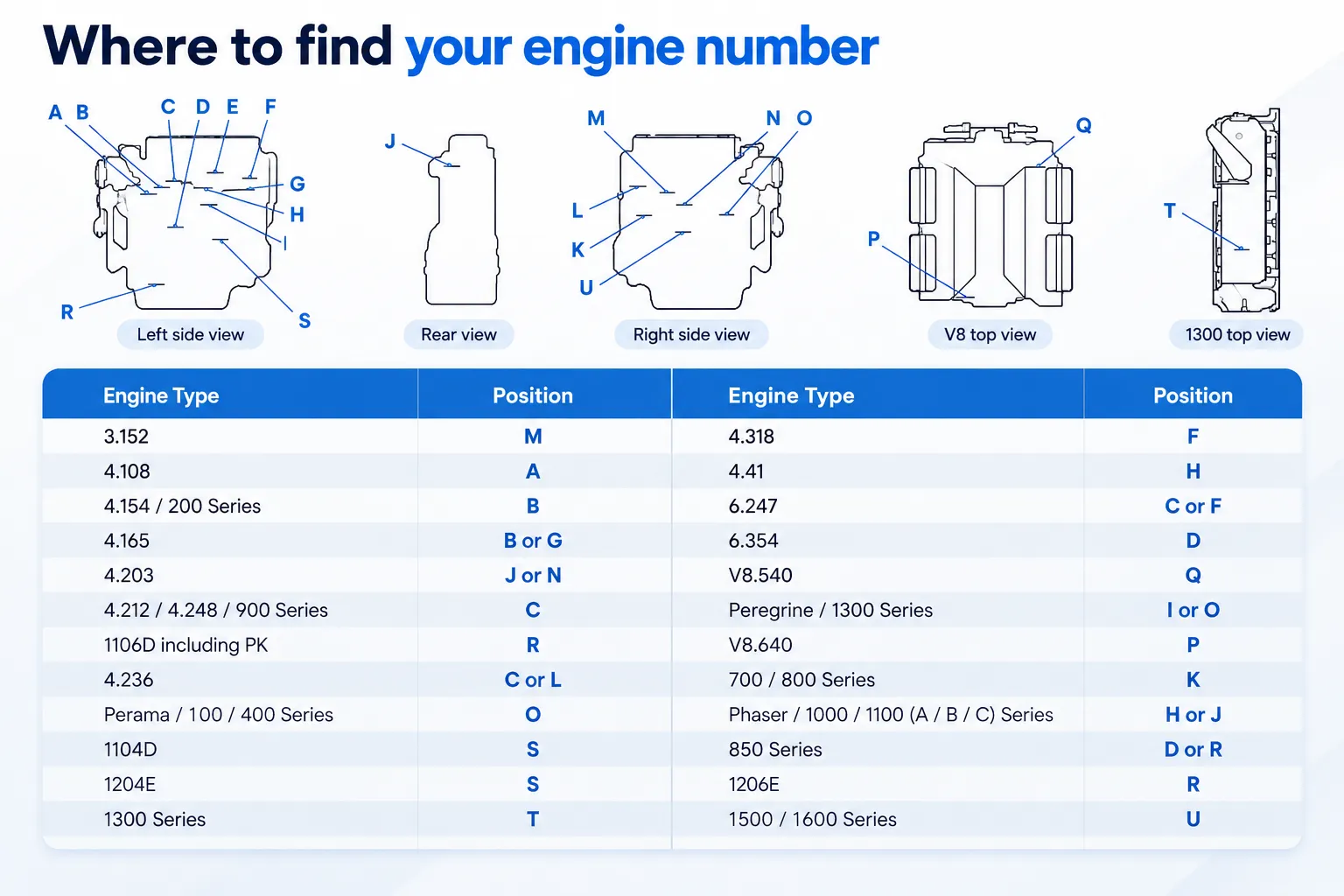
6. Original Identity and Current Configuration May No Longer Match
The ESN and Build List identify the engine's original manufacturing configuration. They do not prove that every installed component remains unchanged.
A long-service engine may have received:
- A replacement ECM or wiring harness;
- A different starting-system voltage;
- A replacement oil filter head or cooler assembly;
- Different fuel-system components;
- A replacement flywheel or flywheel housing;
- Equipment-specific sensors or controllers;
- A remanufactured long block or short block;
- Repair-size pistons, bearings, crankshaft journals, or cylinder liners;
- Accessories from another engine or application.
In these situations, parts matching should not become a choice between “trust the nameplate” and “trust the removed part.”
A better process is:
- Use the ESN and Build List to establish the original engine configuration.
- Identify which assemblies still remain original.
- Verify modified or replaced areas using current part numbers, interfaces, wiring, and dimensions.
- State clearly whether the quotation is based on the original specification or the current installed configuration.
For internal overhaul parts, the ESN can establish the original specification but cannot replace physical inspection and measurement.
Examples include:
- Standard, undersize, or oversize bearings;
- Components for a reground crankshaft;
- Pistons with different bowl geometry or protrusion;
- Different liner repair grades;
- The actual kit bill of materials and quantity per cylinder.
7. What Should Be Done When the Nameplate Is Missing or the ESN Cannot Be Found?
An engine serial number should not be reconstructed from appearance when the nameplate is unreadable.
A more reliable process is to recover evidence in stages.
Step 1: Reinspect the Engine
Check the engine block on all accessible sides, front-cover labels, emissions labels, and areas hidden by pipes, harnesses, guards, paint, oil, or dirt.
Step 2: Search Historical Records
Useful records may include:
- The original equipment manual;
- Engine service records;
- Generator-set delivery documents;
- Previous purchase orders and quotations;
- Equipment-manufacturer records;
- Old parts packaging or labels.
Step 3: Submit Engine and Equipment Photographs
Helpful images include both sides of the engine, the fuel system, turbocharger, intake and exhaust side, flywheel housing, accessory drive, equipment plate, and any known removed-part numbers.
Step 4: Separate Preliminary Identification from Final Confirmation
Incomplete information may support:
- A probable engine family;
- A possible Build List range;
- Candidate part numbers;
- A budgetary quotation.
It does not automatically establish:
- A unique engine identity;
- Final fitment;
- A part number that is ready for shipment.
8. What Can Each Type of Information Confirm?
| Information source | What it can help confirm | What it cannot confirm by itself |
|---|---|---|
| Engine family or general model | Engine family, broad construction, and initial parts range | Unique part version and full configuration |
| Build List | Original build type, basic lookup range, and related parts records | Later modifications and internal repair sizes |
| Complete ESN | Individual engine identity and original-configuration lookup | Whether all installed parts remain as built |
| Number on the removed part | Candidate current or historical component version | Whether it is an aftermarket cross-reference, casting number, or incorrect previous part |
| Removed-part photographs and installation position | Interfaces, connectors, visible version, and quotation scope | Hidden internal specification and repair size |
| Disassembly and dimensional inspection | Actual condition and repair size of internal components | Original engine identity |
| Equipment-manufacturer records | Complete-machine configuration and equipment-side accessories | Whether the Perkins engine has since been replaced |
Accurate identification normally comes from combining these sources rather than selecting only one.
An Equipment Plate Does Not Replace the Engine Nameplate
The equipment serial number identifies the generator set, mining machine, construction machine, or other complete unit. The Perkins ESN identifies the engine itself.
The same equipment model may use different engine Build Lists, emissions levels, starting systems, accessories, controllers, or external sensors across different production years and projects.
Use the Perkins ESN for engine components. Use the equipment plate as an additional reference for equipment controllers, external sensors, and machine-specific accessories.
9. Budgetary Quotation and Final Order Confirmation Must Be Kept Separate
Incomplete information may support a budgetary quotation, but the part should be clearly marked as not yet fully confirmed.
| Stage | Information that may be used | Appropriate result |
|---|---|---|
| Initial budget | General engine model, partial Build List, part description, old-part photograph, estimated quantity | Candidate parts range, budgetary price, and indicative lead time |
| Configuration review | Complete ESN, Build List, old-part number, installation interface, and modification history | Narrowed part version and a list of remaining evidence required |
| Final order confirmation | Verified part number, current configuration, supply scope, and necessary dimensional data | Confirmed part version, bill of materials, quantity, and delivery scope |
Where the ESN, removed component, and current installation contradict one another, final confirmation should stop until the discrepancy is resolved.
The following parts should not normally be released solely from the ESN:
- Standard or repair-size bearings;
- Parts for a reground crankshaft;
- Pistons with different combustion-bowl or protrusion specifications;
- Liners in different repair grades;
- Sensors fitted after an ECM or harness change;
- Starter motors after a starting-voltage conversion;
- Controls or sensors added by the equipment manufacturer.
Information to Provide ZEB POWER
For an engine or parts identification review, provide:
- The complete engine model, ESN, and Build List;
- Clear photographs of the nameplate, front-cover label, or emissions label;
- The equipment or generator-set brand, model, and serial number;
- The required part description and estimated quantity;
- The Perkins part number, manufacturer number, casting number, or other visible marking on the removed part;
- Photographs of the complete part, interfaces, and installation position;
- Any known overhaul, repower, modification, or engine-replacement history;
- The delivery country and required lead time.
ZEB POWER can use the available information to:
- Check whether the ESN format appears complete;
- Identify the Build List section within the ESN;
- Review the original engine configuration and candidate parts range;
- Check historical part numbers and current supersessions;
- Identify which areas still require verification against the current engine;
- Organise the missing information required for quotation and final confirmation.
The following matters cannot be confirmed conclusively from remote photographs alone:
- Whether a nameplate has been replaced;
- Whether an undocumented number on the block is the ESN;
- Whether internal engine components remain at their original sizes;
- Whether a modified wiring or control system still matches the original specification;
- Whether every installed assembly remains as built.
Final confirmation should therefore be based on verified identity information, the current installed configuration, service records, and any required onsite inspection.
Frequently Asked Questions
Is the Build List a Separate Number Outside the Nameplate?
No. The Build List normally forms the first section of the complete ESN and also serves as the lookup reference for the engine's original configuration and parts records.
Can Parts Be Identified Using Only the Build List?
The Build List can normally be used to begin a lookup, but the complete ESN identifies the individual engine more accurately. High-value components and final orders should use the full serial number whenever possible.
Is a Number Stamped on the Block Always More Authoritative Than the Nameplate?
No. A stamped number should be treated as an ESN only when documentation for that engine family identifies its location and format. Other block markings may be casting numbers, machining numbers, part numbers, or production tracking codes.
Does the Nameplate Always Represent the Engine's Current Configuration?
No. The nameplate and ESN identify the original manufacturing identity. Parts that were later replaced or modified must be checked against the current engine.
Can One Incorrect Character Affect the Lookup?
Yes. An incorrect character may produce no result or lead to the wrong engine family, Build List, or another engine record. Unclear characters should not be guessed.
Can the Equipment Serial Number Replace the Perkins ESN?
Normally not. The equipment serial number identifies the complete machine, while the Perkins ESN identifies the engine. They can be used together but are not interchangeable.
Can Parts Be Ordered from Engine Appearance When the Nameplate Is Unreadable?
This is not recommended. Appearance may help identify the engine family, but it rarely confirms the exact Build List or part version. It can support a candidate range or budgetary quotation, but not final fitment.
Can the Number on the Removed Part Replace the ESN?
Not completely. The removed-part number may be a Perkins part number, manufacturer number, aftermarket cross-reference, casting number, or batch code. It should be reviewed together with the ESN, Build List, photographs, and installation position.