

Piezas del filtro de aceite Perkins: ¿válvula de derivación o filtro de derivación?

8366
Índice
Generando índice...
An engine oil filter may appear to be a relatively simple service component. Confirm the outside dimensions, find the same thread, screw the replacement into place, and the matching process seems complete.
In reality, an oil filter is not an isolated canister that only traps contaminants. It is part of the engine lubrication circuit.
Its filter media, flow capacity, and internal valve arrangement must match the engine’s oil-flow demand, pressure conditions, and installation orientation. The filter head may also provide oil-passage connections, sealing surfaces, bypass functions, and interfaces for sensors or the engine oil cooler.
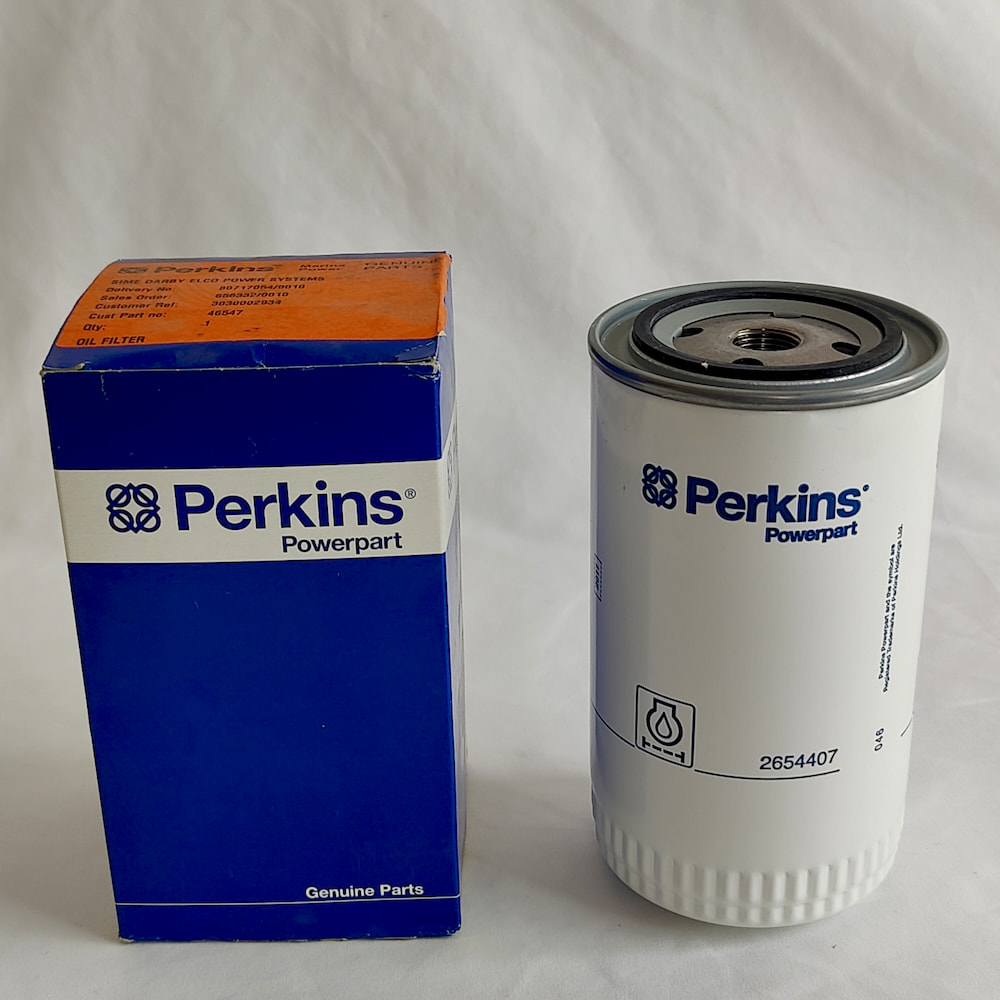
This means that two filters with identical mounting threads are not necessarily interchangeable.
When a customer asks for a “Perkins oil filter,” the required component may also be:
- A spin-on oil filter;
- A replaceable filter element;
- An oil filter head;
- A sealing kit;
- A complete oil filtration assembly.
This guide explains the technical differences that should be checked when selecting Perkins engine oil filters and filter heads, with particular attention to flow paths, bypass valves, anti-drainback protection, sealing, and assembly scope.
1. Full-Flow Filtration Is the Normal Lubrication Path
Most engine main-lubrication circuits use full-flow filtration.
Under normal operating conditions, while the filter bypass valve remains closed, oil entering the main gallery normally passes through the full-flow filter media first.
The filter must therefore do more than capture contaminants. It must also maintain an acceptable pressure differential at the oil-flow rate required by the engine.
A filter with insufficient flow capacity may become a restriction within the lubrication circuit.
The correct full-flow filter must balance:
- Particle-removal efficiency;
- Oil-flow capacity;
- Cold-start performance;
- Pressure differential;
- Contaminant-holding capacity;
- Required service life.
A filter should not be selected only because it has the same thread or claims a finer filtration rating.
2. A Filter Bypass Valve and a Bypass Filter Are Not the Same Component
In lubrication systems, the terms filter bypass valve and bypass filter are sometimes confused because both contain the word “bypass.”
They describe two different components.
- Filter bypass valve: A protective valve that opens when the pressure differential across the filter media reaches a specified condition. It allows oil to temporarily bypass the media in order to maintain lubrication-oil flow.
- Bypass filter: A separate, high-efficiency filtration unit installed in a secondary oil-flow branch. It processes only part of the total system flow and is used to improve fine-particle contamination control.
The following sections first explain the filter bypass valve and then address the separate bypass filtration system.
3. The Filter Bypass Valve Maintains Oil Flow When Restriction Rises
When the pressure differential across the filter media reaches its specified opening condition, the filter bypass valve opens and allows oil to continue into the downstream lubrication circuit without passing through the media.
Its purpose is to maintain oil-supply continuity. It does not maintain normal filtration performance while the valve is open.
This represents a deliberate engineering trade-off.
Compared with complete loss of lubrication flow, allowing a limited amount of unfiltered oil to reach the downstream lubrication circuit for a short period is normally the more manageable risk.
Contaminant particles may still reach lubricated surfaces during bypass operation. The bypass valve therefore does not make filtration unimportant, and it does not mean that any resulting wear can later be reversed.
It simply protects the engine from the more immediate risk of interrupted oil supply.
A bypass valve may open briefly under conditions such as:
- Low oil temperature;
- High oil viscosity;
- Rapid changes in oil flow during starting;
- Excessive filter restriction;
- A filter specification that does not suit the engine.
Brief bypass operation under some cold-start conditions may be consistent with the system design. However, frequent bypass operation or unusually long bypass duration should lead to further checks of the filter specification, oil condition, and lubrication circuit.
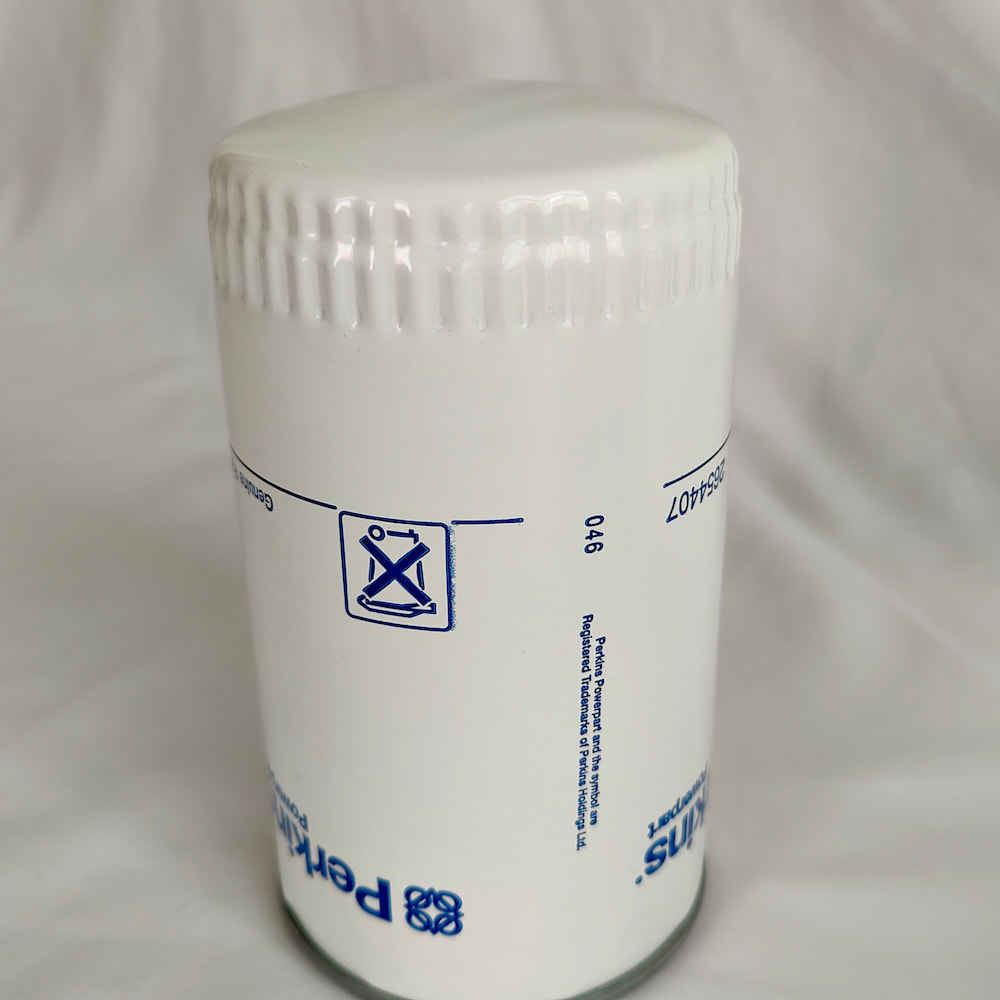
4. The Anti-Drainback Valve Controls Oil Movement After Shutdown
An anti-drainback valve performs a different function from a filter bypass valve.
After the engine stops, oil inside the filter may drain back because of the filter orientation and the design of the lubrication circuit.
An anti-drainback valve uses a flexible valve element or another one-way sealing arrangement to limit this reverse flow. Helping the filter canister remain filled can reduce the time required to re-establish oil movement and pressure during the next start.
Significant oil drainback may delay lubrication during the initial starting period. However, the absence of an anti-drainback valve does not automatically prove that the engine will experience a completely dry start.
The importance of the valve also depends on installation orientation.
- Threaded opening facing upward, with the filter canister hanging below: Gravity generally helps retain oil inside the canister.
- Horizontal, angled, or threaded opening facing downward: Anti-drainback performance may require closer verification.
The two valves solve different problems:
- The anti-drainback valve controls oil movement between shutdown and the next start.
- The filter bypass valve maintains flow when filter restriction becomes excessive during operation.
Not every oil filter contains both valves, and their presence should be confirmed separately.
5. The Bypass Valve May Not Be Inside the Filter
The bypass-valve opening differential is determined by the complete valve design, including:
- Spring calibration;
- Effective pressure area;
- Valve-seat geometry;
- Internal valve arrangement;
- The intended engine application.
It is not a fixed property of the filter canister size or mounting thread.
Two filters with identical outside dimensions and threads may use different bypass-valve opening specifications.
The physical location of the bypass valve can also vary.
It may be:
- Integrated into the spin-on filter;
- Installed in the oil filter head;
- Built into another lubrication-system housing;
- Located within the engine oil circuit.
If the bypass configuration of a replacement filter differs from the original design, the actual bypass behavior of the system may change.
Depending on the complete oil-circuit design, valve arrangement, and opening differentials:
- Oil may begin bypassing the filter media earlier than intended;
- The bypass path may open later than required;
- An effective bypass path may be unavailable when filter restriction rises;
- Multiple pressure-control components may interact differently from the original configuration.
It is therefore not enough to confirm whether a replacement filter “has a bypass valve.”
The following must also be verified:
- Where the bypass valve is located;
- Whether the filter or engine provides the bypass function;
- The specified opening differential, where documented;
- How the valve relates to other bypass or pressure-control components in the engine.
6. A Bypass Filter Is a Separate Fine-Filtration System
Some heavy-duty applications use an additional bypass filtration circuit.
This type of system normally diverts only a small portion of the total oil flow through a higher-efficiency filter with greater flow resistance. The oil circulates through this secondary filter repeatedly, allowing it to remove fine particles and sludge that may pass through the primary full-flow filter.
Because the bypass filter processes only part of the total oil flow, it can use finer media without restricting the main lubrication circuit.
A bypass filter and a filter bypass valve perform opposite functions:
- A filter bypass valve allows oil to avoid the filter media when restriction becomes excessive.
- A bypass filter deliberately adds a second, finer filtration path.
A bypass filtration system is primarily used to improve fine-particle and contamination control.
Where supported by:
- Oil-analysis data;
- Engine-manufacturer requirements;
- A formally approved maintenance programme;
it may form part of an extended oil-drain strategy.
Installing a bypass filter alone, however, does not automatically justify extending the engine oil-change interval.
When requesting a quotation, do not use only the word bypass or the vague description “bypass component.”
Use the correct term:
-
Filter bypass valvefor the protective valve located in the filter or lubrication circuit; -
Bypass filterorbypass filtration systemfor the separate fine-filtration branch.
The two have different functions, installation locations, and procurement requirements.
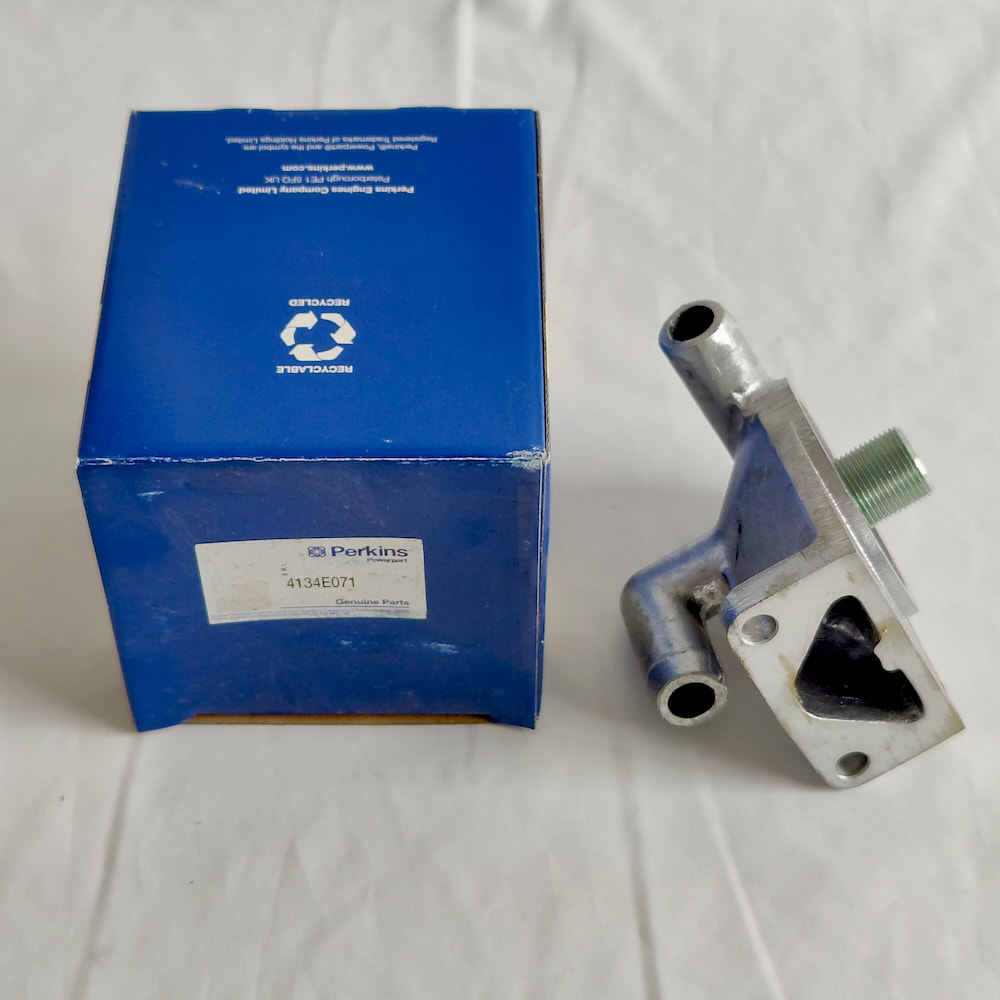
7. Filter-Head Functions May Be Distributed Across Several Components
Depending on the engine design, the oil filter head, adapter, or adjacent lubrication-system housing may include:
- Oil pressure or temperature measurement ports;
- Plugs and external oil-circuit connections;
- Oil-cooler connection passages;
- Filter-related bypass structures;
- Oil-cooler bypass structures.
These functions are not necessarily integrated into a single filter-head component.
They may be distributed across:
- The filter head;
- An adjacent adapter;
- The oil-cooler housing;
- Another lubrication-system casting;
- The engine oil passages.
The parts drawing and engine Build List should therefore be checked before assuming that every oil filter head includes the same additional functions.
The general description “oil filter” may refer to very different supply scopes.
For example:
- One quotation may cover only a spin-on filter;
- Another may cover a filter head with sensor ports but without the sensors;
- Another may include an oil-cooler connection or related bypass structure;
- A complete assembly may require separate gaskets, O-rings, plugs, or fittings.
Before ordering a filter head, confirm which additional functions belong to the original assembly and which components are included in the quotation.
8. Spin-On Filters Are Normally Tightened a Specified Number of Turns After Gasket Contact
Most spin-on oil filters are installed by first turning the filter until the sealing gasket contacts the filter-head surface.
The filter is then tightened by the number of additional turns specified on the filter canister or in the installation instructions.
It should not be tightened continuously by feel.
The exact number of turns or any specified torque requirement must follow the instructions for the relevant filter and engine.
Insufficient tightening may result in:
- Inadequate gasket compression;
- Oil seepage during vibration;
- Leakage as the filter and housing expand and contract with temperature.
Excessive tightening may:
- Damage the sealing gasket;
- Deform the filter canister or base plate;
- Make future removal difficult;
- Damage the filter-head mounting thread.
The sealing surface should be cleaned and inspected before installation, and the new gasket should be prepared according to the filter manufacturer’s instructions.
9. Oil Leakage After Filter Replacement Is Not Always a Filter Defect
The visible leak location and the underlying cause may not be the same.
Common causes include the following.
- The old gasket was not removed: The original gasket remains attached to the filter-head sealing surface, and the new filter is installed with a second gasket. This double-gasket condition can shift under pressure and cause rapid leakage.
- The gasket position or dimensions are incorrect: The filter may tighten onto the thread while the gasket does not contact the correct sealing surface.
- The filter-head sealing surface is damaged: Scratches, corrosion, dents, distortion, or old sealing material can prevent the new gasket from sealing correctly.
- The mounting thread or filter head is damaged: Worn or distorted threads may prevent the filter from compressing the gasket evenly. Additional tightening may make the damage worse.
When leakage appears after filter replacement:
- Clean the filter and surrounding area;
- Run the engine only under appropriate and controlled conditions;
- Identify the actual point where oil first appears;
- Inspect the gasket, sealing surface, thread, and filter base.
Repeatedly replacing the filter without locating the true leak source may not solve the problem.
10. Finer Filtration Is Not Always Better, and Filter Restriction Is Not the Only Cause of Low Oil Pressure
A bypass filter can use very fine media because it processes only a small part of the total oil flow.
A full-flow filter must handle most of the oil flow entering the main lubrication circuit.
If a full-flow filter uses high-resistance media that is not suitable for the engine’s flow demand and oil-viscosity conditions, the pressure differential across the media may rise more quickly.
This may cause the bypass valve to open:
- More frequently;
- For longer periods;
- Under conditions where the original filter would remain in normal filtration mode.
More oil may then flow around the filter media, reducing the real filtration benefit.
Full-flow filtration efficiency is therefore a balance among:
- Particle-removal performance;
- Oil-flow capacity;
- Cold-start behaviour;
- Contaminant-holding capacity;
- Pressure differential;
- Bypass-valve operation.
The correct filter should be confirmed using the Perkins part number, the engine Build List, and the specified filter requirements.
Low engine oil pressure should also not be attributed automatically to filter restriction.
Similar symptoms or readings may result from:
- Incorrect oil viscosity;
- Low oil level;
- Oil-pump condition;
- Excessive bearing clearances;
- Internal lubrication-system leakage;
- Pressure-regulating or bypass components;
- An oil pressure sensor or switch;
- Wiring or instrument problems;
- The location at which pressure is being measured.
Actual oil pressure should be verified using the appropriate test procedure. Replacing the filter should not be used as a substitute for complete lubrication-system diagnosis.
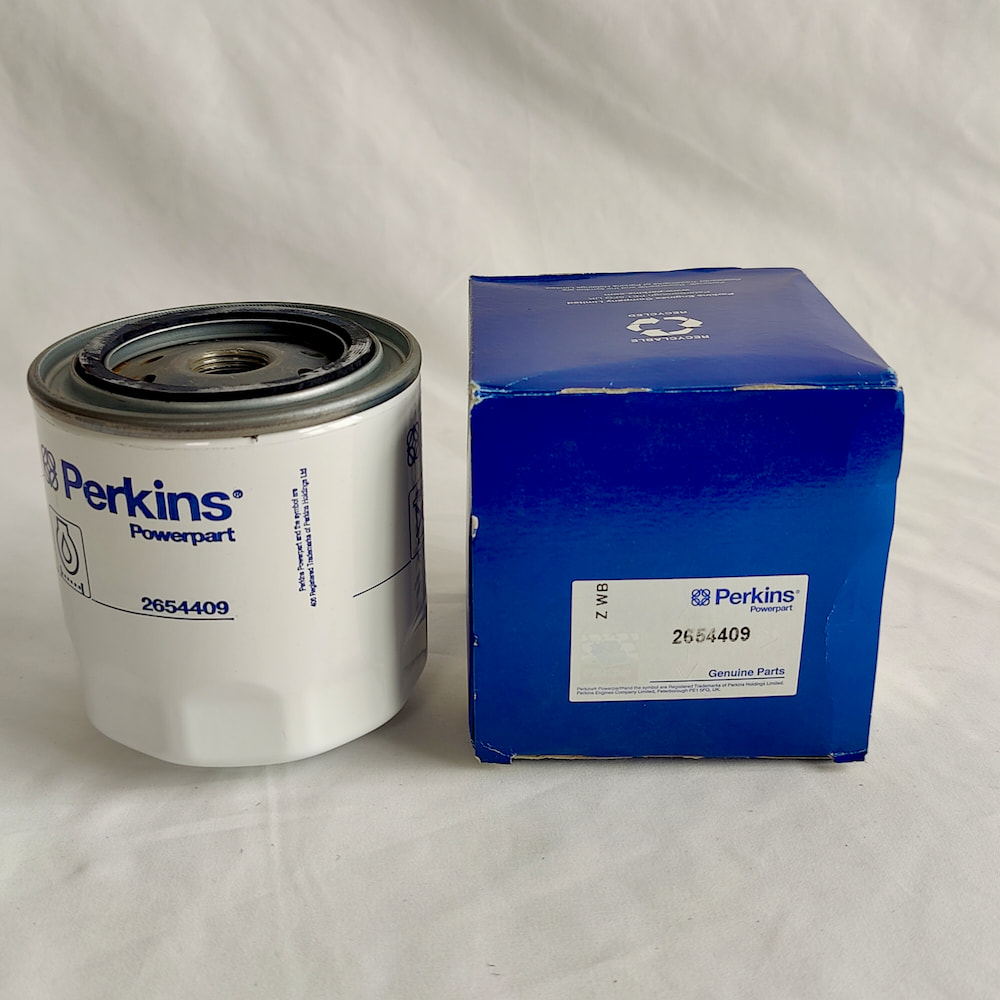
Information Required for Oil Filter or Filter-Head Verification
To support accurate product matching, provide:
- The complete engine model;
- The Engine Serial Number;
- The engine Build List;
- The Perkins part number, manufacturer number, or other identifiable markings on the old filter or filter head;
- Whether the requirement is for a filter only or a complete assembly including the filter head;
- Whether the filter head or adjacent housing includes sensor ports, oil-cooler connections, or bypass components;
- Whether the engine uses a separate bypass filtration circuit;
- The actual filter installation orientation, including whether the threaded opening faces upward or downward and whether the canister is installed vertically, horizontally, or at an angle;
- Photographs of the old filter, filter base, thread, gasket position, filter head, and oil-passage connections;
- Details of any oil leakage, abnormal wear, or oil-analysis findings.
More complete information allows the correct configuration to be identified more efficiently.
Where some information is unavailable, a budgetary reference may be prepared from the engine model. Final confirmation should be based on:
- A verified Perkins part number;
- The current valid superseding number;
- The engine Build List;
- The actual assembly configuration.
ZEB POWER can use the engine serial number, Build List, removed-component information, and available parts documentation to assist with confirming:
- The correct oil filter or filter-head version;
- The bypass arrangement used in the original design;
- The relevant mounting and oil-passage interfaces;
- The actual quotation and delivery scope.
The specific bypass-valve opening differential must be confirmed from the official technical information for the relevant filter and engine.
Where this information is not documented, it should not be inferred from the external appearance of the filter or from a general cross-reference number.
Sealing quality, actual bypass-valve operation, and onsite diagnosis of abnormal oil pressure should be verified by a qualified service provider with the appropriate equipment and engine documentation.
Frequently Asked Questions
Are a Filter Bypass Valve and a Bypass Filter the Same Component?
No.
A filter bypass valve is a protective valve that opens when the pressure differential across the filter media reaches a specified condition. Its purpose is to maintain lubrication-oil flow.
A bypass filter is a separate fine-filtration unit installed in a secondary oil-flow branch. It processes only part of the system flow to improve fine-particle contamination control.
Their functions, installation locations, and procurement requirements are different.
Does an Open Bypass Valve Mean the Oil Filter System Has Failed?
Not necessarily.
A bypass valve may open briefly under low-temperature, high-viscosity, or changing-flow conditions. This can be consistent with the system design.
However, frequent bypass operation or unusually long bypass duration may indicate an incorrect filter specification, excessive filter restriction, unsuitable oil condition, or another lubrication-system problem.
Are the Bypass Valve and Anti-Drainback Valve the Same Thing?
No.
The bypass valve maintains oil flow when filter restriction becomes excessive during engine operation.
The anti-drainback valve limits oil movement out of the filter after shutdown, helping the lubrication circuit re-establish oil flow more quickly during the next start.
Not every filter contains both valves.
Is the Bypass Valve Always Inside the Oil Filter?
No.
The bypass valve may be:
- Integrated into the filter;
- Located in the filter head;
- Installed in another lubrication-system housing;
- Built into the engine oil circuit.
A replacement filter with a different bypass configuration may alter the actual bypass opening behaviour of the system.
Is Oil Leakage After Filter Replacement Always Caused by a Defective Filter?
No.
Leakage may result from:
- An old gasket left on the sealing surface;
- An incorrectly sized or positioned gasket;
- Damage to the filter-head sealing surface;
- Worn or distorted mounting threads;
- Incorrect installation.
The actual leak source should be identified before another filter is installed.
Can Low Engine Oil Pressure Be Corrected by Replacing the Oil Filter?
Not necessarily.
Filter restriction is only one possible cause of low oil pressure.
Other causes may include:
- Incorrect oil viscosity;
- Oil-pump wear;
- Excessive bearing clearances;
- Internal oil leakage;
- Pressure-regulating components;
- A faulty pressure sensor;
- An incorrect pressure reading.
Actual oil pressure should be measured and the complete lubrication system should be assessed before the filter is treated as the confirmed cause.