

Cummins KTA19-C600 Engine for Belaz Mining Dump Trucks — Specs, Fault Diagnosis, Parts & Replacement Guide

4179
Table of Contents
Generating table of contents
A haul truck sitting idle is a production problem, not just a maintenance one. If your KTA19-C600 is down — or you're trying to get ahead of a failure — this guide covers the full picture: what the engine is built for, how to read the symptoms, when to repair and when to replace, and what to have ready before you call a supplier.
Written for maintenance engineers, fleet managers and procurement teams running Belaz medium-class dump trucks in open-pit mining and quarrying operations.
Engine Overview and Specifications
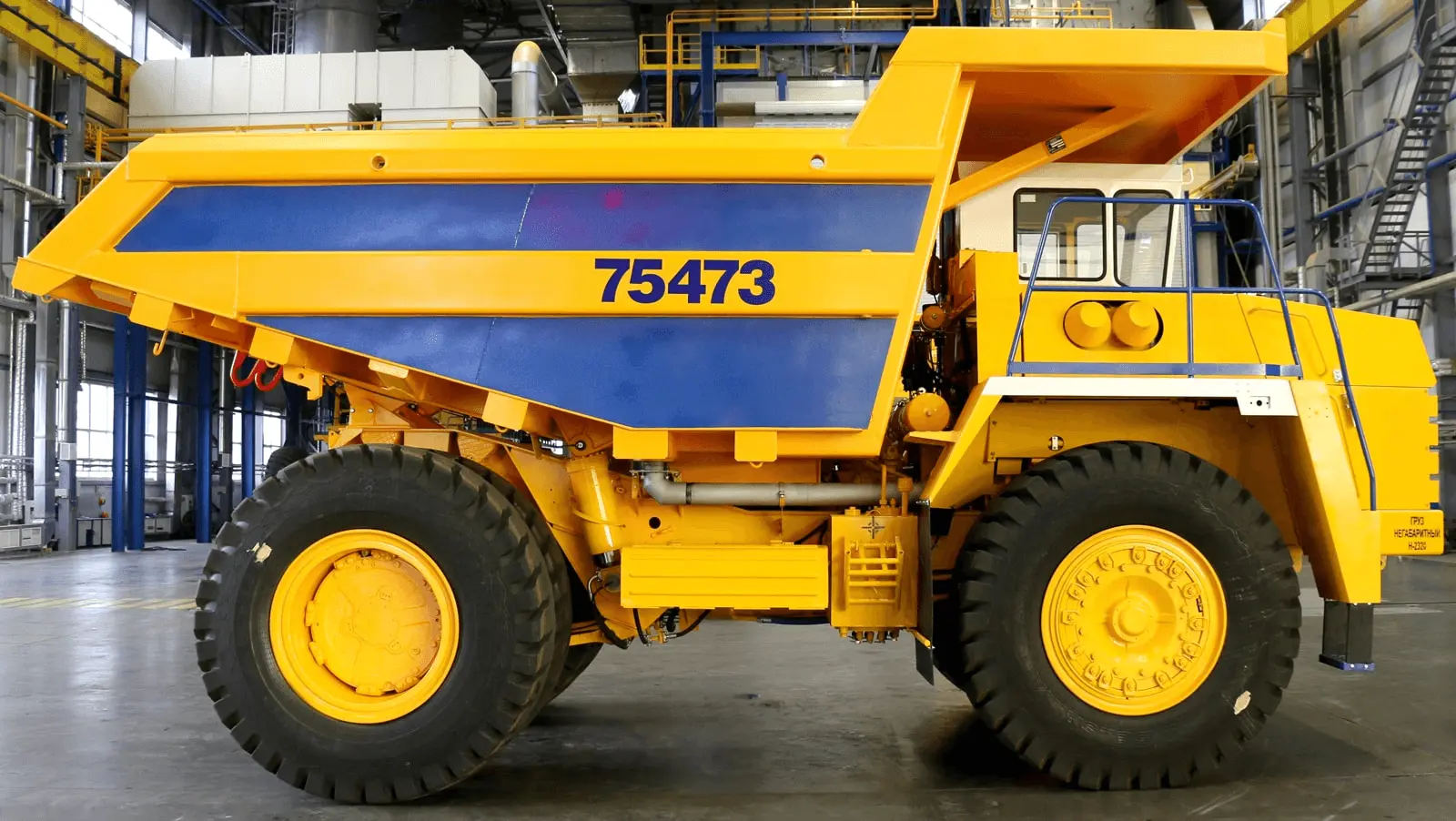
The Cummins KTA19-C600 is a 19-liter inline six-cylinder diesel producing 600 HP at 2,100 rpm. It's the engine you'll find in a significant portion of the Belaz 75473, 75450 and 75453 fleet — trucks built for the kind of work that doesn't stop: repeated loaded haul cycles, steep grades, high dust, long shifts.
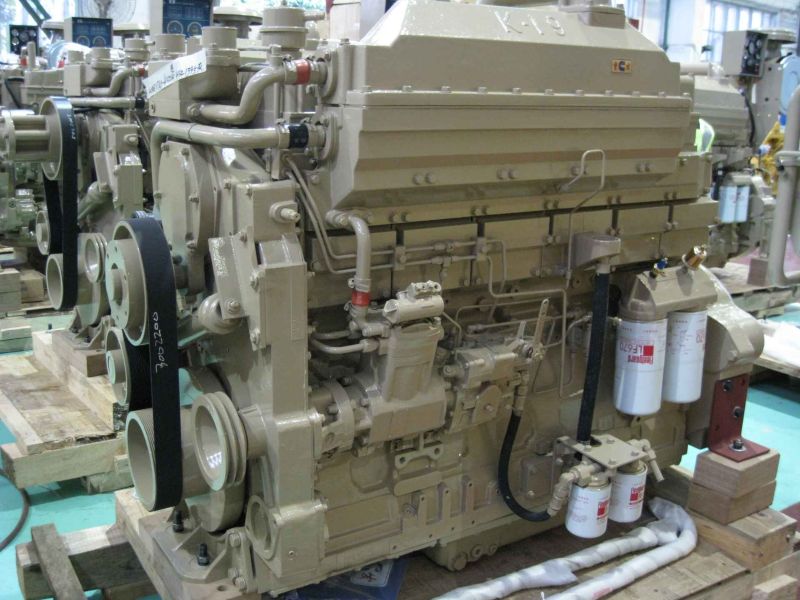
One thing that sets the KTA19 apart from more modern engine platforms is its mechanical PT fuel system. There are no CAN bus diagnostics, no ECM fault codes, no proprietary scan tools required. A trained mechanic with a pressure gauge and a set of hand tools can diagnose and adjust the fuel system on-site. For mines operating in remote locations far from authorized service centers, that's not a minor point.
| Parameter | Specification | Why It Matters in Mining |
|---|---|---|
| Engine type | Inline 6-cylinder, 4-stroke diesel | Mature, well-documented platform with global parts and service support |
| Displacement | 18.9 L | Enough displacement to produce strong low-rpm torque without flogging the engine |
| Rated power | 448 kW / 600 HP @ 2,100 rpm | Sized for Belaz medium-class payload duty cycles |
| Peak torque | ~2,237 N·m @ 1,500 rpm | Pulls well at low rpm — important for loaded starts and grade climbing |
| Bore × stroke | 159 mm × 159 mm | Square bore-stroke keeps torque broad across the working range |
| Fuel system | Mechanical PT (pressure-time) fuel system | Serviceable in the field without electronic diagnostic equipment |
| Aspiration | Turbocharged and aftercooled | Maintains combustion efficiency under sustained load |
| Fuel consumption (rated) | ~210 g/kW·h | Benchmark figure for fleet operating cost calculations |
Fault Diagnosis — What the Symptoms Are Telling You
Most KTA19-C600 problems in mining service don't come out of nowhere. They follow patterns — and reading them correctly early is the difference between a parts swap and an engine replacement.
Power Loss on the Haul Road
This is the most common complaint, and it has a fairly short list of culprits. Start with the cheap and easy checks before assuming the engine is worn out.
Start here: Air filter restriction indicator. A clogged air filter in a dusty mine environment is one of the most common causes of apparent power loss — and it's a five-minute fix. Check it first.
Next: Fuel filter condition and PT pump output pressure. Restricted fuel supply and low PT pump pressure both produce gradual power loss that gets worse under load.
If those check out: Measure boost pressure. A turbocharger that's worn or damaged won't make full boost, which caps power output regardless of how the rest of the engine is performing.
When it's something more serious: Progressive power loss that doesn't respond to filter replacement and shows normal boost pressure points toward internal wear — PT pump calibration, injector condition, or low cylinder compression. At that point you're looking at a compression test across all six cylinders to understand what you're dealing with.
Mine site note: if the truck has been moved to a higher-elevation site without recalibrating the PT pump for altitude, power loss is expected and correctable — it's not a sign of engine wear.
Overheating Under Load
Overheating in a mining dump truck almost always has an external cause before it has an internal one. Work through this list before pulling anything apart.
Radiator fouling is the first thing to check on any mine site. Fine dust and mineral particles build up quickly and kill cooling capacity. A radiator that looks clean from the front can be severely restricted from the back.
Then check: Coolant level and SCA (supplemental coolant additive) concentration. Low SCA accelerates liner pitting and reduces the cooling system's ability to handle heat load. Many overheating issues in the field trace back to coolant that hasn't been maintained properly.
Also inspect: Thermostat function, fan drive engagement, and coolant hose condition.
When it becomes a structural problem: Repeated overheating events damage head gaskets and warp cylinder heads. If the engine has a history of overheating and cooling system service doesn't fix it, the damage may already be internal. White smoke or coolant loss without visible external leaks are the signs to watch for.
Exhaust Smoke — Reading the Color
| Smoke color | What it usually means | What to do |
|---|---|---|
| Black smoke | Over-fueling or restricted air — the engine is burning more fuel than the air supply supports | Check air filter and intake sealing first; then boost pressure; then PT pump calibration |
| White smoke (persistent, under load) | Coolant entering the combustion chamber — head gasket failure or cracked liner | Stop the truck. Check for coolant in the oil. This needs investigation before further operation. |
| Blue smoke | Oil burning — turbocharger oil seal, worn piston rings, or valve stem seals | Check the turbocharger first — it's the most common source and the most replaceable one |
High Oil Consumption
Rule out the turbocharger before assuming internal engine wear. Turbocharger oil seal failure is a common cause of oil consumption in engines that see sustained high-load operation, and a turbocharger is a component-level repair — not an engine replacement.
If the turbocharger seals are intact, high oil consumption points to piston rings, cylinder liners or valve stem seals. Run a compression test. If you're also seeing metal particles in oil analysis, the picture changes — that's evidence of internal wear that warrants an overhaul assessment.
Excessive Blow-by (Crankcase Pressure)
High crankcase pressure means combustion gases are getting past the piston rings — a sign of ring or liner wear. Left unchecked, it contaminates the oil, increases oil consumption, and puts additional load on the turbocharger seals. Compression testing across all cylinders will show how widespread the wear is and whether it's worth overhauling or replacing.
PT Fuel System Issues
The PT system is robust, but it does wear. The most common field issues are reduced PT pump output pressure (causes gradual power loss), injector cup erosion (causes rough running and uneven cylinder contribution), and throttle shaft wear (causes fuel delivery inconsistency). All of these are diagnosable with a pressure gauge and addressable without pulling the engine — which is exactly why the PT system works well for remote mine operations.
Spare Parts and Overhaul Kits
A lot of KTA19-C600 downtime gets resolved at the parts level. Before you start thinking about a replacement engine, it's worth knowing what's available and what each part addresses.
Routine Maintenance Parts
| Part | When to replace | Mine-site note |
|---|---|---|
| Air filter element | Restriction indicator or scheduled interval | Shorten the interval. In heavy dust, the standard schedule isn't aggressive enough. |
| Fuel filters (primary and secondary) | Scheduled interval or fuel restriction symptoms | Fuel quality varies significantly across CIS and African markets — check condition, don't just follow the calendar |
| Engine oil and filter | Scheduled interval or oil analysis trigger | Run oil analysis — it catches bearing wear and coolant ingress before they cause serious damage |
| Coolant filter and SCA | SCA test or scheduled interval | Low SCA is a leading cause of liner pitting and head gasket failure; test it, don't guess |
| Thermostat | Overheating investigation or proactive replacement | Cheap enough to replace whenever you're already in the cooling system for another reason |
| Fan drive belts | Inspection interval or slip symptoms | A slipping fan drive is a common hidden cause of overheating |
Component Replacement Parts
| Component | Fault indication |
|---|---|
| Turbocharger assembly | Blue smoke, oil consumption, under-boost, shaft play or bearing noise |
| PT pump | Power loss, black smoke, low fuel pressure measurement |
| Injectors and injector cups | Rough running, black smoke, uneven cylinder contribution on compression test |
| Water pump | Coolant leak at the pump, overheating |
| Head gasket set | White smoke, coolant in oil, coolant loss with no visible external leak |
| Cylinder head | Confirmed cracking or warping following overheating events |
Overhaul Kits
When compression testing shows wear across multiple cylinders — or when the engine is approaching a high-hour service interval and several components are near the end of their service life — a K19 overhaul kit is usually more cost-effective than sourcing individual parts. A standard K19 major overhaul kit covers pistons and rings, connecting rod and main bearings, cylinder liners, head gaskets, and seal and o-ring sets.
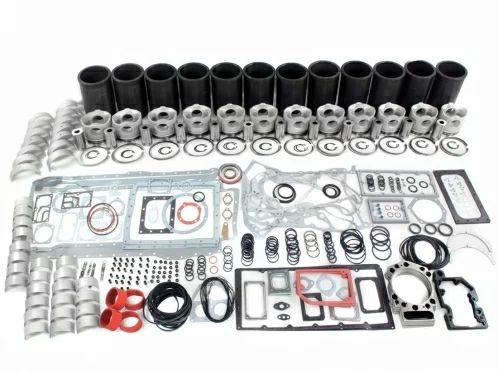
The math is straightforward: if you're going to be in the engine anyway to replace liners and bearings, you're better off doing it all at once than pulling it apart again six months later for the next item on the list.
Need parts or an overhaul kit? Send us your engine serial number and a description of the fault — we'll confirm what's available and what fits your application.
Overhaul or Replace? How to Make the Call
There's no formula that works in every situation, but there are some clear decision points that cut through most of the ambiguity.
| Your situation | Likely right call | Reasoning |
|---|---|---|
| Single component failure, engine hours are still reasonable | Replace the component | No point pulling an engine that has plenty of life left |
| High hours, compression dropping across multiple cylinders, oil consumption up — but no metal in the oil | Planned overhaul with overhaul kit | Engine is worn but not damaged; overhaul restores it at lower cost than replacement if you have the workshop capacity |
| Metal particles showing up in oil analysis | Full strip-down inspection before committing either way | Metal in the oil means something has already broken down internally — you need to know what before you decide |
| Overhaul parts have a long lead time and the truck is on a critical circuit | Replacement engine | Downtime cost over a long wait often exceeds the cost difference between overhaul and replacement |
| Remote site, limited workshop capability | Replacement engine | A thorough in-field overhaul on a severely worn engine is harder to do well than it looks on paper; a replacement gives you a known starting point |
| Overhaul cost estimate is approaching 50–60% of a replacement engine | Replacement engine | At that ratio, you're paying most of the cost of a replacement and getting an overhauled engine with some remaining wear — not a fresh one |
| Overheating damage has distorted the bores or heads | Replacement, or major overhaul with machining | Distorted bores need line boring; if that capability isn't local, you're shipping the block — at which point a replacement engine often makes more sense |
The factor that tips most production-critical decisions toward replacement isn't the engine cost — it's the downtime clock. Every day the truck sits is lost production. A replacement engine with a defined lead time and a known condition often makes more operational sense than an overhaul that runs long or comes back with problems.
Not sure what you're looking at? Share the engine condition details with our team — we can help you think through whether parts, an overhaul kit or a replacement engine makes the most sense for your situation.
Getting the Right Engine — What to Check Before You Order
Here's where procurement mistakes happen: someone orders a KTA19-C600 by name, it arrives, and it doesn't fit — wrong cooling configuration, different mounting layout, missing ancillaries. The truck stays down while the sourcing process starts over.
The Belaz 75473, 75450 and 75453 are not identical trucks, and even the same model can leave the factory with different engine configurations depending on build year, destination market and the original order specification. The engine nameplate and SO number are what tell you which version you actually have.
Before you request a quote, have this ready:
- Belaz truck model number
- Engine model as shown on the nameplate (not what you think it is — what the plate says)
- Engine serial number
- SO number (the factory order number stamped on the engine)
- Power rating from the nameplate
- Mine site altitude
- Photos: full engine bay, turbocharger side, cooling connections, mounting area
- Destination country and how quickly you need it
| Belaz model | Engine configuration note | What to verify |
|---|---|---|
| 75473 | Commonly equipped with KTA19-C600 | Still confirm SO number, serial number and cooling layout — don't assume |
| 75450 | May use KTA19-C600 or a related K19 variant depending on build | Check the nameplate — the truck model alone doesn't tell you which engine you have |
| 75453 | KTA19-C600 or related K19 configuration depending on factory spec | Serial number and SO number are essential before ordering anything |
The more complete the information you provide upfront, the faster the confirmation and the lower the chance of getting something that doesn't fit.
Sourcing Mistakes That Cost You Twice
These are the procurement errors that show up repeatedly in mining engine sourcing — and each one adds delay and cost on top of the original downtime.
- Ordering by model name without the SO number. The KTA19-C600 designation covers multiple configurations. Without the SO number, you can't be certain which one you're getting.
- Assuming trucks of the same model have identical engines. Build year, export market and original order specifications all affect the engine configuration. Don't order for "a 75473" — order for your specific 75473.
- Missing installation hardware. A replacement engine that arrives without the correct cooling connections, exhaust flanges or mounting brackets isn't going in the truck until those parts show up. Confirm the scope of supply before the order is placed.
- Mixing up K19 series variants. KTA19-C450, KTA19-C525 and KTA19-C600 are different engines. They are not drop-in interchangeable without reconfiguration.
- Not accounting for altitude. If your mine is at significant elevation, you may need an altitude-calibrated engine or a PT pump recalibration after installation. Ignoring this means the engine won't perform to spec from day one.
- Buying rebuilt engines without documentation. A rebuilt engine without clear records of what was replaced, to what standard, and with what parts is a gamble. Ask for the rebuild scope and parts documentation before committing.
- Underestimating delivery complexity. International shipment of a heavy engine to a remote mining region involves export packing, customs clearance, inland freight and sometimes in-country logistics challenges. Build realistic timelines before the truck goes down, not after.
Keeping the KTA19-C600 Running in Mining Conditions
Mine service is harder on a diesel engine than the standard maintenance intervals assume. Dust, sustained high load, steep grades and temperature extremes all compress the time between problems if the basics aren't being managed consistently.
| System | What to stay on top of | What goes wrong when you don't |
|---|---|---|
| Air filtration | Check the restriction indicator every shift in high-dust environments; inspect intake ducting for cracks or loose clamps | Dust ingestion is one of the fastest ways to wear out cylinders, rings and the turbocharger |
| Cooling system | Keep the radiator clean, maintain SCA levels, check fan drive engagement and thermostat function regularly | Fouled radiators and low SCA are responsible for a disproportionate share of head gasket failures and liner damage in mine service |
| Fuel system | Monitor fuel filter condition; check PT pump output pressure at major service intervals; ensure clean fuel supply | Water contamination erodes injector cups; low pump pressure causes power loss that gets misdiagnosed as internal wear |
| Lubrication | Run oil analysis — don't just change on a fixed interval | Oil analysis catches coolant ingress and early bearing wear before they become expensive; skipping it means the first sign of a problem is often the last warning you get |
| Turbocharger | Check boost pressure periodically; inspect for oil leaks at the seals; listen for abnormal noise | A worn turbocharger reduces power and dumps oil into the intake — by the time it's obvious, it's often already caused secondary damage |
| Exhaust smoke | Know what your truck's baseline smoke looks like; investigate any change | Smoke color changes are early warnings — most experienced mine mechanics can read them accurately, but only if they're paying attention |
| PT system calibration | Check pump output and throttle shaft clearance at scheduled overhaul intervals | An out-of-calibration PT system causes progressive power loss and increased fuel burn with no fault code to tip you off |
How ZEB Power Can Help
We supply Cummins KTA19-C600 engines, K19 series spare parts and overhaul kits for mining and industrial applications. Our team works with maintenance managers and procurement teams across CIS, African, Asian and other international markets — including remote and logistics-complex destinations.
We're not just a parts catalog. If you're trying to work out whether your engine needs a component, an overhaul kit or a full replacement, send us the details — engine serial number, SO number, fault description, and photos if you have them — and we'll give you a straight answer on what fits and what's available.
| What you need | What we provide |
|---|---|
| Fault assessment | Help reading the symptoms and working out whether parts, overhaul or replacement is the right move |
| Spare parts | K19 series maintenance parts, component replacement parts and overhaul kits |
| Replacement engine | KTA19-C600 engines confirmed to spec for your specific Belaz application |
| Specification confirmation | Nameplate, serial number and SO number review before any order is placed |
| Export logistics | Packing and shipping coordination for international delivery, including remote mining regions |
Get in touch — tell us what you're dealing with and we'll take it from there
FAQ
Is the KTA19-C600 the right engine for a Belaz 75473?
Usually, yes — but check the nameplate before you order anything. The same truck model can leave the Belaz factory with different engine configurations depending on build year and specification. Send us your serial number and SO number and we'll confirm whether KTA19-C600 is what you need and which configuration matches your truck.
Can I use the same KTA19-C600 in a Belaz 75450 or 75453?
Possibly, but not automatically. The 75450 and 75453 can have different engine configurations depending on when and how they were built. The truck model number is not sufficient on its own to specify the correct replacement — you need the nameplate details from the engine that's actually in your truck.
What are the most common KTA19-C600 problems in mine service?
Power loss under load (usually air filtration or PT system related), overheating (typically cooling system maintenance issues — fouled radiators, low SCA), high oil consumption (turbocharger seals first, then rings and liners), and black exhaust smoke (air or fuel system). Most of these are diagnosable and fixable at the component level without pulling the engine — if you catch them early.
Do I need a full replacement engine, or can I just get the parts?
Depends on what's actually wrong. For a turbocharger, a PT pump or a head gasket — parts. For an engine with metal in the oil, multiple cylinders showing low compression, and a history of overheating damage — that's a different conversation. Tell us what you're seeing and we'll help you work out what makes sense.
Why does the mechanical PT fuel system matter for mine site operations?
Because you can fix it in the field. No proprietary scan tools, no ECM, no need for an authorized service center. A mechanic with a pressure gauge and the right training can diagnose a PT pump problem, adjust the fuel system and get the truck moving again on-site. For a remote mine that's three days from the nearest Cummins dealer, that matters a great deal.
Does altitude affect the KTA19-C600's power output?
Yes. At high altitude, lower air density means less oxygen available for combustion, and the engine produces less power than its rated output. If your mine is above roughly 1,500 m, this is worth discussing when you spec out a replacement engine — some configurations handle high-altitude operation better than others, and PT pump calibration for altitude is something that can be addressed during installation.
How do I know whether to overhaul or replace?
The practical tipping points: if overhaul parts have a long lead time and the truck is on a critical circuit, replacement often wins on total downtime cost. If the estimated overhaul cost is getting close to 50–60% of a replacement engine price, the economics of replacement start to look better. If the mine site doesn't have the workshop capability to do a proper overhaul, replacement gives you a known result. And if there's metal in the oil, get a strip-down inspection before you commit to either option.
How do I avoid ordering the wrong engine configuration?
Provide the engine serial number, the SO number and a photo of the nameplate before confirming any order. The KTA19-C600 designation covers multiple configurations — different cooling arrangements, different installation setups, different ancillary specifications. The nameplate and SO number are what tell you which one you have. Without them, you're guessing.
Ready to Sort This Out?
Whether you need a replacement KTA19-C600, an overhaul kit or spare parts for a Belaz mining truck, we can help confirm the right specification and get it moving. Have your engine serial number and SO number (or nameplate photo) ready — it's the fastest way to get an accurate answer.
Talk to the ZEB Power team — KTA19-C600 engines and K19 parts for Belaz mining trucks