

Cummins Coolant Sensor for Sale | Temperature & Level Sensors

5159
Table of Contents
Generating table of contents
When a Cummins engine shows a coolant-temperature warning, an abnormal gauge reading, a low-coolant alarm, or a related fault code, buyers often assume that the sensor has failed and immediately request a replacement.
Typical questions include:
- Is the coolant-temperature sensor faulty?
- Does a low-level alarm mean the level sensor must be replaced?
- Are a coolant sensor and water-temperature sensor the same part?
- Can the correct sensor be identified from the engine model alone?
- Can a replacement be used if the connector and thread appear to fit?
The first step is not simply to find “a sensor.” It is to identify which sensor or switch the system uses and whether a qualified local workshop has confirmed that the component itself requires replacement.
A fault code may indicate an actual temperature or coolant-level condition, or it may indicate a sensor-signal or circuit problem. It helps define the area that requires inspection, but it does not prove by itself that the sensor has failed.
Parts matching can also be confusing because the market term “coolant sensor” may refer to:
- An ECM coolant-temperature sensor
- A gauge sender
- A temperature switch
- A coolant-level sensor
- A low-coolant switch
- A connector or pigtail harness
These parts do not have the same function, mounting position, signal type, or part number.
This guide explains the differences between Cummins coolant-temperature and coolant-level sensors, the purchasing boundaries among sensors, senders, and switches, why a fault code should not be used as the only basis for ordering a part, and how to match the correct component by ESN, existing part number, connector, mounting position, and equipment cooling-system details.
Identify the Sensor Type First
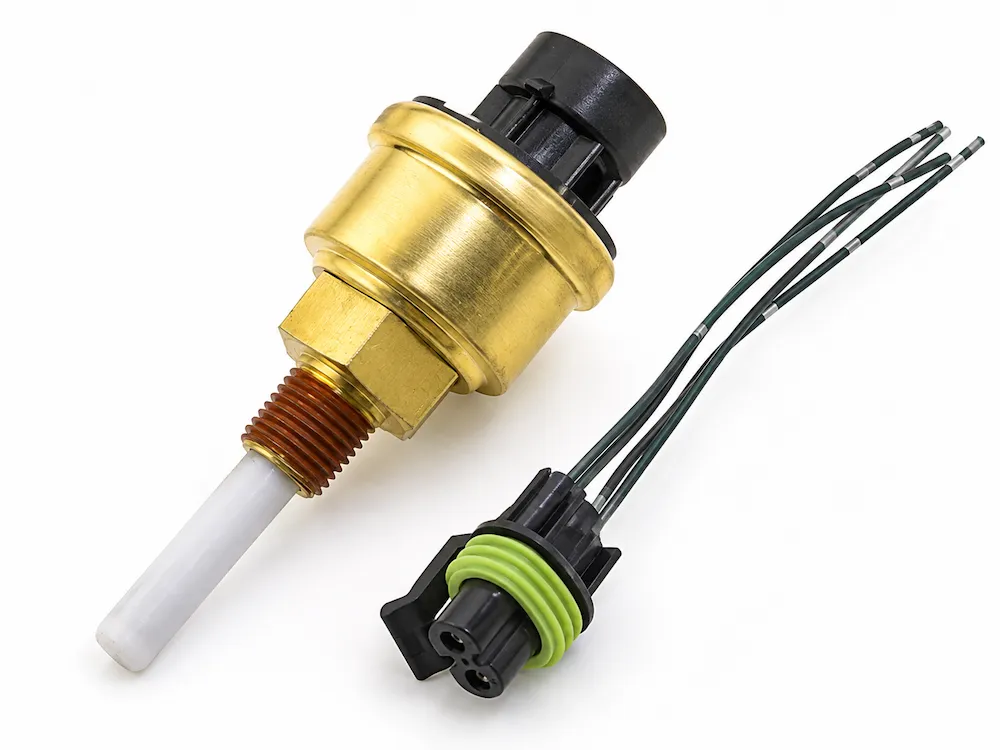
Different engines, generator sets, and equipment packages may use several types of cooling-system sensors or switches.
| Component | Main function | What to confirm before ordering |
|---|---|---|
| ECM Coolant Temperature Sensor | Sends coolant-temperature data to the ECM or electronic control system | Part number, connector, thread, probe, signal characteristics, and ECM compatibility |
| Gauge Sender / Temperature Sender | Sends a temperature signal to an independent gauge or control panel | Matching gauge, part number, signal characteristics, terminal design, and mounting position |
| Temperature Switch | Changes switch state at a specified temperature for an alarm or protection function | Switching temperature, normally open or normally closed logic, terminals, and mounting dimensions |
| Coolant Level Sensor | Detects coolant level or a low-level condition | Tank application, probe design, signal type, and equipment control system |
| Low Coolant Switch | Changes switch state when coolant falls below a defined point | Operating logic, orientation, mounting interface, and sealing method |
| Sensor Connector / Pigtail | Connects the sensor to the engine or equipment harness | Pin count, keying, wiring order, lock design, and applicable sensor |
Some engines or equipment use a separate gauge sender and ECM coolant-temperature sensor.
The gauge sender normally supplies a signal to an independent gauge or control panel, while the ECM sensor supplies data to the electronic control system. They may use different connectors, signal characteristics, and mounting locations, so they should not be treated as interchangeable simply because both are sold as “water-temperature sensors.”
An inquiry should identify whether the requirement is for:
- ECM Coolant Temperature Sensor
- Gauge Sender / Temperature Sender
- Temperature Switch
- Coolant Level Sensor
- Low Coolant Switch
- Connector or Pigtail
Coolant Temperature Sensor vs. Coolant Level Sensor
| Comparison | Coolant Temperature Sensor | Coolant Level Sensor |
|---|---|---|
| What it detects | Coolant temperature | Coolant level or a low-level condition |
| Typical mounting area | Cylinder block, cylinder head, thermostat housing, or another coolant passage, depending on the engine | Expansion tank, reservoir, radiator, or cooling module, depending on the equipment |
| Signal use | ECM, gauge, warning, or engine-protection function, depending on configuration | Low-level warning, protection, or shutdown function, depending on configuration |
| Common matching errors | Similar connector but different thread, probe, signal curve, or ECM application | Different tank interface, probe height, orientation, or OEM control logic |
| Interchangeable | No | No |
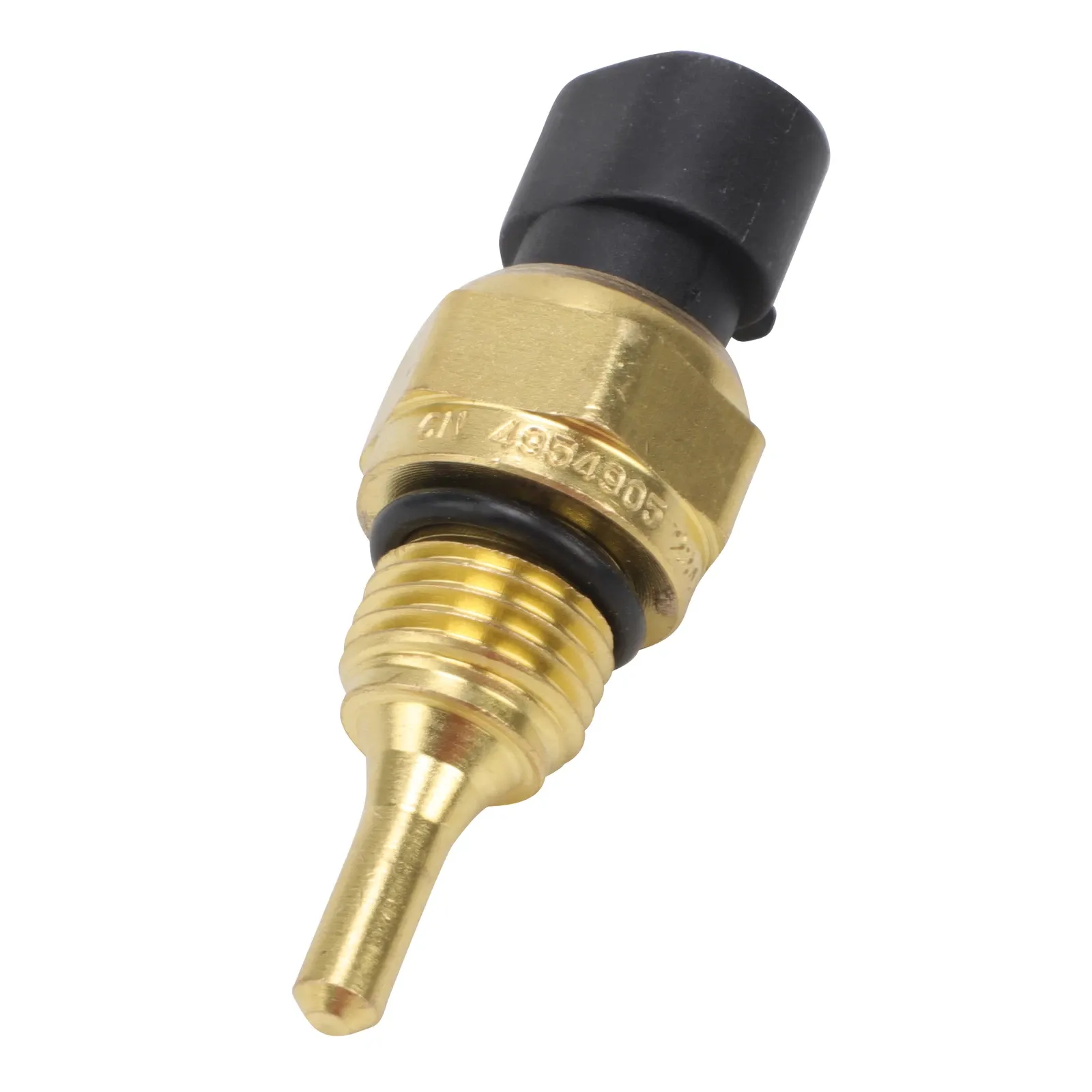
A coolant-temperature sensor is usually closely tied to the engine and its electronic control system.
A coolant-level sensor may instead belong to:
- A Cummins engine configuration
- A Cummins generator-set control system
- An expansion-tank assembly
- A radiator or cooling module
- A vehicle, construction machine, or other OEM equipment system
For this reason, an engine ESN may help identify an engine-mounted temperature sensor but may not uniquely identify a level sensor installed in an OEM expansion tank or radiator.
Does a Fault Code Prove That the Sensor Has Failed?
No.
Coolant-temperature and coolant-level warnings or fault codes generally point in one of several directions.
| Warning or code direction | What it may indicate | What to do before ordering |
|---|---|---|
| Temperature or level outside the normal range | The coolant may actually be too hot or too low | Have the actual cooling-system condition confirmed locally |
| Sensor signal or circuit abnormal | The issue may involve the sensor, connector, harness, or control system | Do not order a sensor from the code alone |
| Gauge or display abnormal | The issue may involve a gauge sender, display, or data transmission | Confirm which component actually requires replacement |
| Intermittent warning | The issue may involve connection quality, signal stability, or the sensor itself | Complete on-site inspection before confirming the part requirement |
Therefore:
- A high-temperature warning does not prove that the temperature sensor has failed.
- A low-coolant warning does not prove that the level sensor has failed.
- A sensor-circuit code does not automatically mean that replacing the sensor will solve the problem.
- Fault-code information does not replace the ESN, existing part number, and on-site inspection.
This article addresses how to match the correct replacement after a qualified workshop has confirmed that a sensor or switch requires replacement.
Fault-code interpretation, circuit testing, and control-system inspection should be completed according to the service information for the specific engine and equipment.
Separate an Actual Condition From a False Signal
High Coolant-Temperature Indication
A high temperature reading may indicate actual engine overheating, or it may be a false signal from a sensor, gauge, or related signal system.
Replacing a sensor will not correct a genuine cooling-system or operating problem.
A false indication may show an unreasonable temperature even when the actual coolant temperature has not reached the warning level.
Before ordering a temperature sensor, confirm:
- Whether the warning comes from the ECM or an independent gauge
- Whether ECM data and gauge readings agree
- Whether the fault has been traced to the sensor itself
- Whether the required part is an ECM sensor or gauge sender
Low Coolant-Level Warning
A low-level warning may indicate:
- Coolant is actually below the specified level
- The level sensor or low-coolant switch is faulty
- The tank interface or probe condition is abnormal
- The equipment controller is receiving an incorrect level signal
If the actual level is correct but the equipment continues to alarm, the sensor and related system should be checked locally rather than repeatedly replacing parts based on the warning alone.
Some Configurations May Use Low-Level Protection
Some Cummins electronic engines, generator sets, or equipment control systems include high-temperature or low-coolant-level conditions in the engine-protection strategy.
Depending on the engine, ECM calibration, and equipment configuration, an abnormal condition may trigger:
- Warning
- Derate
- Delayed protection
- Shutdown
This does not mean that every Cummins engine uses the same protection strategy.
When a low-level warning appears together with reduced power or shutdown, confirm:
- Actual coolant level
- The warning or fault code
- Whether the engine and equipment are configured for low-level protection
- Whether the signal comes from the engine ECM or an equipment controller
ZEB Power can support part-number and quotation verification, but the operating logic and cause of the warning should be confirmed by the local service provider.
Why a Sensor That Fits May Still Be Incorrect
Many coolant-temperature sensors provide an electrical signal that changes with temperature. The ECM or gauge interprets that signal according to the characteristics expected for the application.
Two sensors may have:
- The same or similar thread
- A similar hex size
- The same number of pins
- A connector that appears identical
and still have different signal characteristics.
An incorrect replacement may cause:
- Temperature readings that are consistently too high or too low
- Larger errors in a certain temperature range
- Unreasonable cold-engine readings
- False warning activation
- Failure to warn correctly during a real abnormal condition
- An implausible signal at the ECM or gauge
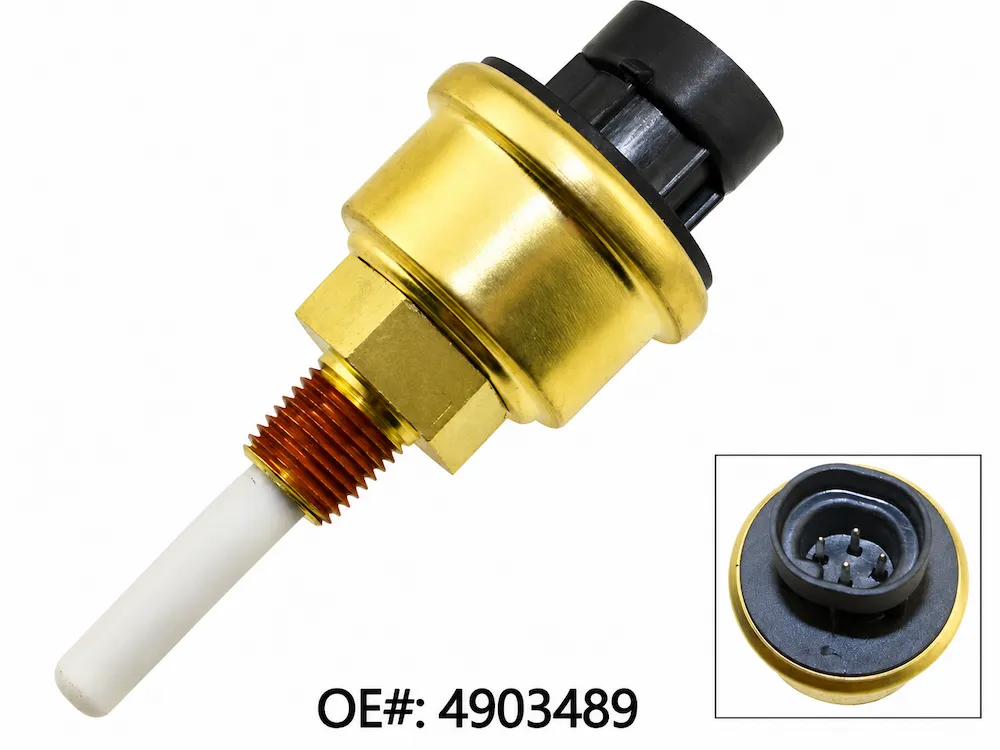
A coolant-level sensor may also be incorrect even when it physically fits the tank because of differences in:
- Probe height
- Sensing position
- Installation orientation
- Signal logic
- Tank internal structure
- Controller compatibility
Sensor selection should not be based only on whether the connector plugs in or the thread fits.
The more important references are:
- Correct part number
- Valid supersession
- Applicable engine or equipment
- Signal function
- Probe and mounting design
Why the Engine Model Alone Is Not Enough
Descriptions such as “6BT coolant temperature sensor,” “QSB6.7 coolant sensor,” or “ISX coolant level sensor” identify only a general product direction.
The same engine family may use different components because of:
- Mechanical or electronic control configuration
- Different ECM or controller
- Emissions level
- Production date
- Industrial, construction, generator-drive, automotive, or marine application
- Independent gauge or ECM signal system
- Engine harness or equipment OEM harness
- Connector and pin configuration
- Thread and sealing design
- Signal characteristics
- Part-number supersession
For coolant-level sensors, additional variables may include:
- Expansion-tank or radiator manufacturer
- Cooling-module version
- Equipment make and model
- Probe height
- Tank interface
- Warning, derate, or shutdown logic
Temperature sensors should normally be checked by engine ESN and existing part number.
Level sensors may also require the equipment model, tank part number, and installation details.
Cummins Coolant Sensor Matching Checklist
| Information | Recommended priority | Why it matters |
|---|---|---|
| Existing sensor part number | Highest | Most direct matching reference |
| Engine ESN | Highest | Identifies the engine build and engine-mounted sensor application |
| Sensor type | Highest | Distinguishes ECM sensor, sender, switch, and level sensor |
| Original and superseded numbers | Highest | Confirms whether the quoted part is a valid replacement |
| Engine nameplate photo | High | Confirms model, ESN, CPL, rating, and application |
| Mounting-position photo | High | Shows whether the part is engine-mounted, gauge-related, tank-mounted, or equipment-mounted |
| Front and side connector photos | High | Confirms pin count, keying, lock, and harness connection |
| Thread or tank mounting interface | High | Confirms thread, flange, bayonet, clip, and sealing method |
| Equipment make and model | High for level sensors | A level sensor may belong to the OEM cooling system |
| Tank or cooling-module part number | High for level sensors | Helps identify the correct tank interface and sensor |
| Probe length and shape | Supporting | Prevents matching by appearance alone |
| CPL | Supporting | Helps confirm configuration but should not be used alone |
| Fault code and symptoms | Supporting | Explains the inquiry background but does not identify the part number |
Photos help compare the connector, thread, probe, and installation arrangement, but they do not replace the formal part number or confirmed supersession.
What to Confirm for a Coolant-Temperature Sensor
1. Sensor Function
First identify whether the part is an:
- ECM Coolant Temperature Sensor
- Gauge Sender / Temperature Sender
- Temperature Switch
- Generator-set controller temperature sensor
- Equipment OEM gauge sensor
Similar names do not guarantee the same function or signal.
2. Part Number and Supersession
Confirm:
- Cummins part number
- Existing part number
- Current replacement number
- Whether the replacement is direct
- Whether a connector or pigtail must also be changed
3. Connector and Pins
Check:
- Pin count
- Connector shape
- Keying
- Lock position
- Terminal orientation
- Whether a replacement connector is required
A connector that fits does not prove signal compatibility.
4. Thread, Probe and Seal
Check:
- Thread diameter and pitch
- Tapered or straight thread
- Probe length
- Installation depth
- O-ring or sealing washer
- Required sealing method
What to Confirm for a Coolant-Level Sensor
1. The Component on Which It Is Installed
Identify whether the sensor is installed in an:
- Expansion tank
- Radiator top tank
- Reservoir
- Generator-set cooling module
- Construction-equipment or vehicle OEM tank
When the sensor belongs to an OEM tank, the engine ESN may be only a supporting reference.
2. Mounting Design
Check:
- Threaded mounting
- Bayonet mounting
- Flange mounting
- Inserted probe
- Integrated tank design
- Seal and tank interface
3. Probe Position and Height
A sensor may physically fit but trigger at the wrong level if the probe position differs.
Confirm:
- Overall sensor length
- Effective sensing point
- Installation direction
- Original tank design
- Tank or cooling-module part number
4. Control System
Confirm:
- Engine ECM or equipment controller
- Switch signal or another signal type
- Required interface module
- Required harness or pigtail
- Whether the sensor is an OEM equipment component
Confirm the Installation Parts and Quotation Scope
A sensor quotation may not include:
- O-ring
- Sealing washer
- Connector
- Pigtail
- Adapter harness
- Mounting base
- Complete expansion tank or reservoir
The quotation should state whether it covers:
- Sensor only
- Sensor with seals
- Sensor with connector or pigtail
- Low-coolant switch assembly
- Complete tank assembly with sensor
Installation and tightening requirements should follow the service information for the specific engine or equipment. Generic sealing materials and torque values should not be applied to every sensor.
Harness modification, additional gauges, and signal branching should also be handled by personnel familiar with the original electrical system.
Genuine or Aftermarket Sensor?
Sensors normally cost less than water pumps, injectors, and other major components, but signal accuracy and stability can directly affect warnings, protection functions, and equipment operation.
Important purchasing points include:
- Correct part number
- Applicable engine and control system
- Signal compatibility
- Connector and terminal quality
- Probe and thread dimensions
- Sealing performance
- Resistance to heat, vibration, and moisture
- Batch traceability
- Warranty terms
Genuine New Parts
Often preferred for:
- Critical equipment
- Mining and continuous-duty machinery
- Generator sets
- Sensors involved in engine-protection logic
- Projects requiring clear source and traceability
High-Quality Aftermarket New Parts
May meet budget or lead-time requirements, provided that the buyer confirms:
- Cross-reference to the genuine part number
- Valid application
- Matching by more than appearance, connector, or thread
- Signal compatibility with the ECM, gauge, or controller
- Batch identification and warranty
Used or “Reconditioned” Sensors
Electronic sensors are generally not good candidates for simple cosmetic refurbishment.
For sensors involved in warning, derate, or shutdown functions, unknown used parts should not be selected only because of a lower price.
How to Compare Supplier Quotations
| Comparison item | What to confirm |
|---|---|
| Sensor type | ECM temperature sensor, gauge sender, switch, or level sensor |
| Final part number | Existing number, superseded number, and quoted number |
| Application | Engine side, gauge side, or OEM equipment side |
| Connector | Pin count, keying, lock, and whether a pigtail is included |
| Mounting design | Thread, flange, bayonet, clip, or tank interface |
| Probe | Length, shape, and sensing position |
| Signal system | ECM, independent gauge, switch circuit, or equipment controller |
| Seals | O-ring, washer, or other seal included |
| Harness | Connector, pigtail, or adapter included |
| Product condition | Genuine new, aftermarket new, used, or another condition |
| Matching basis | ESN, existing part number, and equipment details, or engine model only |
| Warranty | Duration, scope, and claim conditions |
| Quotation unit | Sensor only, sensor with harness, or complete tank assembly |
Supplier prices are directly comparable only when the sensor type, part number, signal system, connector, and mounting arrangement are equivalent.
Information Required for a Cummins Coolant-Sensor Inquiry
Initial Inquiry
Provide:
- Engine Model
- ESN
- CPL, if available
- Engine Nameplate Photo
- Sensor Type: ECM Temperature Sensor / Gauge Sender / Temperature Switch / Coolant Level Sensor / Unsure
- Existing Part Number
- Quantity
- Application: construction equipment, mining machinery, generator set, or industrial equipment
- Destination Country
- Genuine or Aftermarket Preference
After the Old Part Has Been Removed
Add:
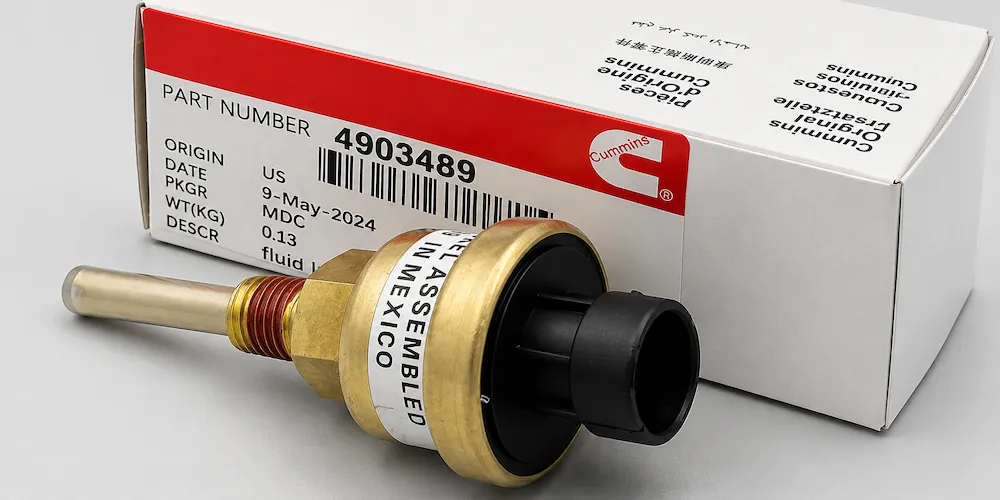
- Part-number and manufacturer-mark photos
- Front and side connector photos
- Pin count
- Mounting-position photo
- Thread and probe photos
- Fault code and warning message as supporting information
- Whether superseded numbers are acceptable
- Required lead time
Additional Information for a Level Sensor
Also provide:
- Equipment make and model
- Expansion-tank, radiator, or cooling-module photos
- Tank or cooling-module part number
- Sensor mounting interface
- Probe position and orientation
- Whether seals, harness, or the complete tank assembly are required
Not sure whether the part is an ECM temperature sensor, gauge sender, temperature switch, or level sensor? Provide the ESN, nameplate, existing part number, connector, and mounting-position photos so the applicable part can be checked. Fault-code interpretation and circuit testing should be completed by the local service provider.
How ZEB Power Supplies Cummins Coolant Sensors
Based on the engine ESN, existing sensor part number, nameplate, mounting position, and connector photos, ZEB Power can help verify Cummins coolant-temperature sensors, gauge senders, temperature switches, and related connectors.
For coolant-level sensors, the equipment make, expansion tank, radiator, or cooling-module information may also be required to determine whether the part belongs to:
- The Cummins engine system
- A Cummins generator set
- An equipment OEM cooling system
Depending on the specific part number and current supply channel, the quotation may cover:
- ECM Coolant Temperature Sensor
- Water Temperature Sensor
- Gauge Sender / Temperature Sender
- Temperature Switch
- Coolant Level Sensor
- Low Coolant Switch
- Sensor Connector / Pigtail
- Installation seals
- Related tank or cooling-module parts
The quotation can identify:
- Final part number
- Original and superseded numbers
- Applicable engine or equipment
- Sensor function
- Connector and mounting design
- Seals and harness included
- Genuine or aftermarket condition
- Lead time
- Excluded items
ZEB Power supports parts matching and quotation verification. Cooling-system diagnosis, sensor-circuit testing, fault-code analysis, and ECM inspection should be completed by the local workshop.
Need a Cummins coolant-temperature or coolant-level sensor? Send the engine ESN, nameplate photo, existing part number, connector, and mounting-position photos. For a level sensor, also provide the equipment model and expansion-tank, radiator, or cooling-module details.
Frequently Asked Questions
1. Are a coolant-temperature sensor and water-temperature sensor the same part?
Suppliers may use both names for a coolant-temperature component, but similar names do not guarantee the same part. Confirm the part number, mounting position, connector, and signal function.
2. Are a gauge sender and ECM temperature sensor the same component?
Not always.
Some engines or equipment use a separate gauge sender and ECM temperature sensor. They may have different connectors, signal characteristics, and mounting positions.
3. Does a sensor-circuit fault code mean the sensor must be replaced?
No.
The issue may also involve the connector, harness, or control system. The local workshop should confirm the failed component before replacement.
4. Will replacing the temperature sensor solve a high-temperature reading?
Not necessarily.
First separate actual overheating from a false indication caused by the sensor, gauge, or signal system.
5. Does a low-coolant warning always mean the coolant is low?
No.
Check the actual level first. If the level is correct, the level sensor and related system should be inspected.
6. Can a level-sensor fault cause derate or shutdown?
Some engine or generator-set configurations include low coolant level in warning, derate, or shutdown protection. The exact logic depends on the engine, ECM calibration, and equipment configuration.
7. Can a sensor be substituted when the connector and thread are the same?
Not from physical fit alone.
Confirm the part number, supersession, signal characteristics, probe length, and control-system application.
8. Is every coolant-level sensor a Cummins engine part?
No.
It may belong to the expansion tank, radiator, generator-set cooling module, or equipment OEM system.
9. Can I request a quotation without the old part number?
An initial check may be possible using the engine ESN, nameplate, mounting position, and connector photos. A level-sensor inquiry should also include equipment and tank details.
10. Does the sensor quotation include the connector and seals?
Not always.
Pigtails, connectors, O-rings, and sealing washers may be supplied separately and should be confirmed in the quotation.
Confirm the Sensor Type, Then Match by ESN and Part Number
A Cummins coolant-temperature or low-level warning does not prove that the sensor itself has failed. The actual cause should be confirmed by a qualified local workshop, while fault codes and warning information should be treated as supporting information for the parts inquiry.
After replacement has been confirmed, focus on:
- Whether the required component is an ECM temperature sensor, gauge sender, temperature switch, or level sensor
- Engine ESN, existing part number, and valid supersession
- Connector, mounting position, thread, or tank interface
For a coolant-level sensor, also confirm whether the part belongs to the engine system, generator set, or an OEM expansion tank, radiator, or cooling module.
Send ZEB Power the engine ESN, nameplate photo, existing sensor part number, connector, and mounting-position photos. For a level sensor, also provide the equipment model and tank or cooling-module details to verify the applicable part and quotation scope.