

Предложения по запчастям Perkins: оригинал, аналог или восстановленные

2112
Оглавление
Создание содержания...
A buyer may receive several quotations for the same Perkins part number, with substantial differences in price. The products behind those quotations, however, may not have the same identity, condition, supply route, warranty, or expected service life.
Procurement teams often simplify the market into two categories: “genuine” and “not genuine.” That distinction is not sufficient on its own.
The ESN, Build List, and part number establish what should be purchased. The supply source, packaging, and traceability records establish what is actually being supplied.
Correct fitment does not prove genuine identity. Packaging that looks authentic does not prove that the part is correct for the engine. A reliable purchasing decision requires both fitment verification and product-identity verification.
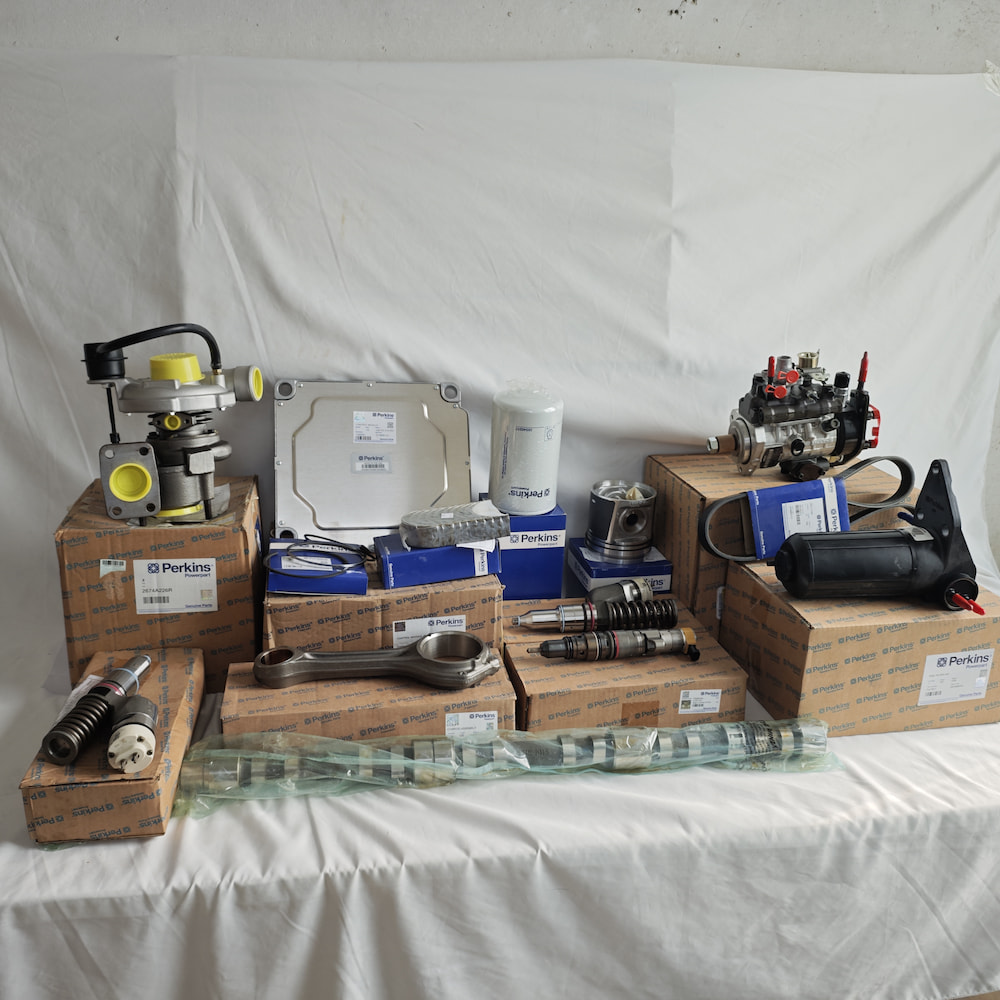
1. Confirm the Product Condition Before Comparing Prices
Before comparing quotations, require each supplier to state the product condition clearly.
| Product condition | How it is produced or restored | Identity and transaction characteristics | Main procurement risk |
|---|---|---|---|
| Genuine Perkins | Manufactured to Perkins technical requirements and supplied through a Perkins-recognised supply system | Purchases through authorised distribution channels may qualify for Perkins support and parts warranty | Usually carries a higher initial purchase price |
| Perkins Reman | A used core is dismantled, inspected, processed, and rebuilt through an official programme such as Perkins Power Exchange | Commonly involves core return, core inspection, and related charges | Core charges, return conditions, and warranty scope must be confirmed |
| Aftermarket | Manufactured and sold by a third party under its own brand or as a replacement part, without claiming to be Genuine Perkins | A legitimate market option when its identity is disclosed accurately | Manufacturing, validation, and quality-control standards vary between suppliers |
| Rebuilt | A used component is dismantled, cleaned, machined, and partially renewed by a third party | Not part of the official Perkins remanufacturing programme | The original core condition, rebuilding scope, testing, and warranty may be unclear |
| Used | Removed from a used engine or machine and resold without being restored to new or remanufactured condition | Must be identified clearly as used or take-off stock | Wear history and remaining service life are uncertain |
| Counterfeit | Imitates Perkins branding, packaging, or labels and is sold as genuine | May involve trademark infringement, counterfeit-goods offences, or other legal violations depending on jurisdiction | Source, material, manufacturing process, and quality control cannot be verified |
A legitimate aftermarket part and a counterfeit part are not the same type of product.
A legitimate aftermarket manufacturer sells under its own name or states clearly that the product is a replacement. A counterfeit supplier misrepresents the product as Genuine Perkins, preventing the buyer from knowing who made it, what materials were used, or what testing was performed.
A lower price also does not automatically indicate a counterfeit product. Legitimate aftermarket parts, official remanufactured parts, volume purchasing, or older stock can all create reasonable price differences. The stronger warning sign is a product presented as Genuine Perkins when the supplier cannot explain its source or provide information that can be checked independently.
“OEM” Is Not a Clear Product Condition
The term “OEM” is used inconsistently in the parts trade. It may mean that a factory has supplied an equipment manufacturer in the past, that a replacement was made to original-equipment dimensions, that the product is claimed to meet original-equipment quality, or simply that it carries no visible third-party brand.
None of these statements automatically proves that the product is Genuine Perkins.
Even where a manufacturer supplies components to several engine brands, products sold independently by that manufacturer do not automatically become genuine branded parts. Genuine status also depends on the specified product version, manufacturing requirements, and recognised supply route.
A quotation should state one of the following clearly:
- Genuine Perkins;
- Perkins Reman;
- Aftermarket;
- Rebuilt;
- Used.
A description such as “100% OEM” or “OEM quality” is not specific enough for a purchasing decision.
2. Fitment Evidence and Authenticity Evidence Are Separate
The Engine Serial Number, Build List, and part number are used primarily to verify fitment. They help determine which component belonged to the original engine configuration, whether an earlier part number has been superseded, and whether the quoted version is relevant to the customer’s engine.
They do not prove that the physical product being supplied is genuine.
Product identity must be reviewed using packaging, supply records, and a clear written statement from the supplier.
Packaging, Labels, and the Perkins Hologram
Perkins states that Genuine Perkins parts packaging carries a Perkins hologram. Packaging without that hologram should not be treated as standard genuine packaging with the associated Perkins warranty conditions.
A packaging inspection should check:
- Whether the part number matches the order;
- Whether the label information is complete and readable;
- Whether the Perkins name and trademarks contain spelling errors;
- Whether the hologram shows obvious irregularities;
- Whether labels appear to have been covered, repositioned, or applied more than once;
- Whether the packaging label and markings on the physical part are consistent.
The hologram should not be treated as the only evidence. Counterfeit products are deliberately made to imitate branded packaging and labels. A convincing hologram or label may not be possible to authenticate from a photograph alone, so packaging should be assessed together with the supply route and transaction records.
Transaction and Supply Records
A supplier’s ability to explain the upstream supply route is an important part of identity verification, provided commercially sensitive information is handled appropriately.
Upstream invoices, packing records, original packaging labels, visible batch or tracking marks, supplier identity, and applicable warranty conditions can help establish a traceable transaction chain.
Customs documents can show that a shipment crossed a border, but they cannot prove that the contents were never changed, that the label belongs to the physical part, or that every item originated from a Perkins-recognised supply system. They should therefore be treated as supporting documents rather than conclusive evidence.
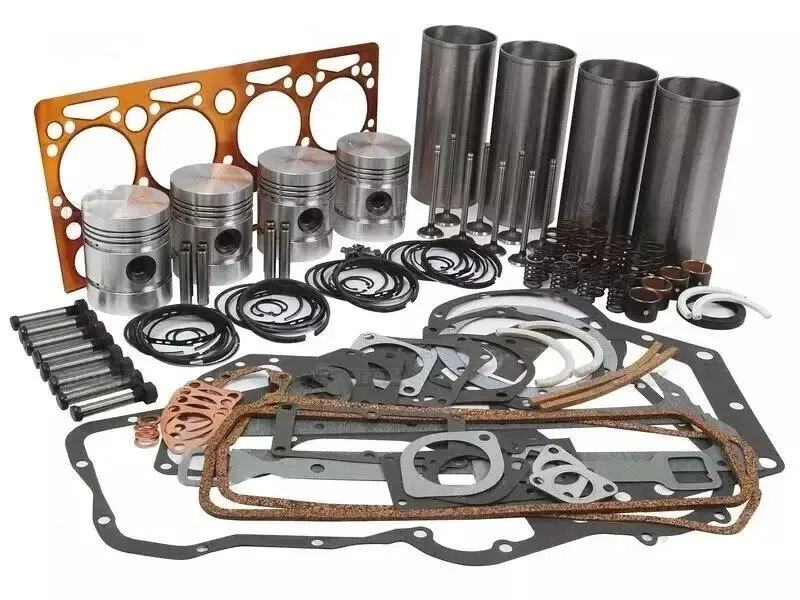
Written Product-Condition Statement
The quotation should state whether the product is Genuine, Reman, Aftermarket, Rebuilt, or Used.
A written statement does not prove authenticity by itself, but it establishes a clear commercial description and accountability. If a supplier claims “100% Genuine Perkins” while refusing to identify the product condition, supply route, or warranty terms, the contradiction requires further review.
Different forms of evidence answer different questions.
| Evidence | What it can help confirm | What it cannot prove by itself |
|---|---|---|
| ESN and Build List | Which part the original engine configuration should use | Whether the product delivered is genuine |
| Perkins part number and supersession | Product version and catalogue relationship | Supply source and authenticity |
| Packaging, label, and hologram | The brand identity claimed by the packaging | Whether the label was copied or the product was substituted |
| Invoice and supply records | The transaction and upstream supply route | Whether the physical item corresponds perfectly to every record |
| Supplier’s written product description | The product condition being claimed | Whether the claim is true |
| Warranty documentation | Who accepts after-sales responsibility | Whether a later engine problem was caused by that part |
The correct process is to use the ESN, Build List, and part number to determine what should be purchased, then use the supply source, packaging, transaction records, and warranty terms to determine what is actually being offered.
3. Counterfeit Risk Comes From an Unverifiable Manufacturing Process
The risk of a counterfeit part is not simply that it is “not made by the original brand.” The more serious problem is that the buyer cannot verify who manufactured it, which materials were used, whether critical dimensions and surface treatments are correct, which tests were performed, or who will accept responsibility if the component fails.
Perkins has published details of more than 1,600 counterfeit parts seized during police operations in Sri Lanka, including copied rear-end oil seals. Its testing identified misshapen seals, incorrect materials, and rust on internal springs. Perkins warned that these defects could contribute to oil leakage, abnormal wear at the crankshaft rear sealing surface, and premature replacement of related parts.
The example demonstrates why authenticity verification cannot stop at the logo. The critical uncertainty lies inside the product—in its design, materials, processing, and quality control.
4. Procurement Risk Depends on Three Questions
The decision to use a legitimate aftermarket replacement should not be based only on the component category. Three questions provide a more useful risk framework.
1. What Happens If the Part Fails?
Consider whether failure could cause sudden shutdown, collateral damage, contamination of another system, high removal and installation costs, or prolonged project downtime.
Crankshaft components, piston-and-liner systems, fuel-injection parts, and turbocharging components can create substantial secondary costs when they fail. However, consumables should not automatically be treated as low-risk. An incorrect fuel filter may damage the fuel system; an oil filter with unsuitable flow or bypass characteristics can affect lubrication; a failed belt may stop the water pump, fan, or charging system; and a relatively simple crankshaft seal can still require expensive labour to replace.
2. Can the Specification Be Verified Independently?
Products with well-defined manufacturer data and mature cross-reference systems are generally easier to validate than components whose performance depends on hidden manufacturing details.
Verification becomes more difficult where the product depends on individual compensation data, precision clearances, material and heat treatment, surface condition, high-speed balancing, or internal machining that cannot be inspected visually.
Some electronically controlled common-rail injectors may carry compensation or calibration information associated with the individual injector. Turbocharger life depends heavily on the quality of the high-speed rotating assembly, bearings, and balancing. Pistons, liners, bearings, and crankshaft components depend on material, dimensions, surface condition, and their relationship with adjoining parts.
3. Can the Application Tolerate the Validation Risk?
The same part number may justify a different purchasing decision when installed in a general standby machine instead of a critical data-centre generator set.
Traceability usually becomes more important in applications such as:
- Data-centre standby power;
- Continuously operated mining equipment;
- Remote projects;
- Industrial facilities with high downtime costs;
- Emergency-power systems;
- High-value engine overhauls.
The more severe the failure consequence, the harder the specification is to verify, and the lower the application’s tolerance for downtime, the more important a traceable supply route becomes.
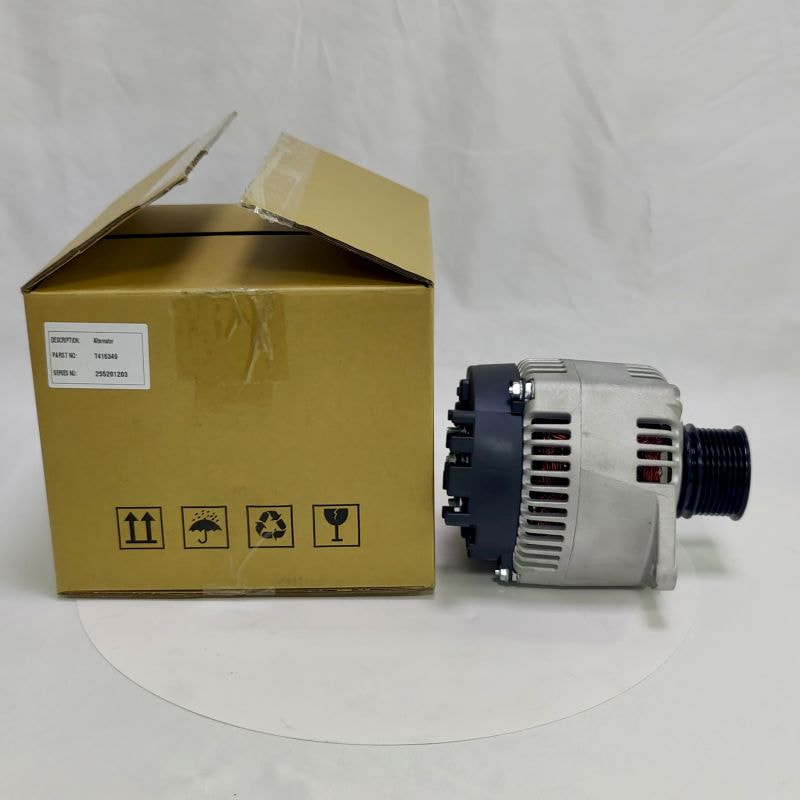
5. How Should Quotations for the Same Part Number Be Compared?
Quotations carrying the same Perkins part number may still represent different product conditions and supply scopes.
Before comparing price, align four areas:
- Product identity: Genuine, Reman, Aftermarket, Rebuilt, or Used;
- Part version: Perkins part number, historical number, current supersession, and compatibility with the current ESN and Build List;
- Supply scope: Individual component, repair kit, or complete assembly, including any seals, sensors, fittings, valves, or installation hardware;
- Commercial conditions: Warranty, core exchange, stock status, lead time, return terms, packaging, and transport method.
Until these areas are aligned, the unit prices are not directly comparable.
A low price does not prove that a product is counterfeit. Volume purchasing, older stock, currency movements, official remanufacturing, differences between a single component and a complete assembly, and different delivery arrangements may all create legitimate price differences.
However, if a product uses Perkins branding and genuine-style packaging, cannot be supported by any verifiable source information, and is offered at a price far outside the normal channel range, the purchase should be paused for further verification.
Until the product identity, supply route, and transaction records are explained satisfactorily, it should not be accepted as genuine or installed in critical equipment.
6. How to Verify the Supply Source
Source verification is a sequence rather than a single visual check.
- Verify the seller’s identity or upstream supply route. If the seller claims to be an authorised Perkins distributor, the claim can be checked using the Perkins distributor locator. An independent trader does not need to present itself as authorised, but it should describe its identity and upstream supply route accurately.
- Cross-check product and transaction information. The Perkins part number, historical number, supersession, packaging label, physical markings, product condition, upstream purchase record, and warranty terms should be consistent.
- Request an explanation for an unusual price difference. Legitimate reasons such as volume discount, older stock, official remanufacturing, or reduced supply scope can normally be explained through the product condition and transaction details.
- Use controlled sample validation for legitimate aftermarket suppliers. Where the product is clearly identified as Aftermarket, pre-qualification may include document review, dimensional inspection, material or surface checks, bench testing, and batch-consistency assessment.
Critical equipment should not become a test platform for products of unknown origin. Short-term operation does not prove long-term reliability.
Sample validation is a method for evaluating an aftermarket supplier and its product capability. It is not a method for proving genuine identity. Genuine status still depends on source and traceability evidence.
7. How ZEB POWER Provides Comparable Perkins Parts Quotations
ZEB POWER sources Perkins engines and parts through established first-tier agent supply channels.
Our quotations aim to state the product condition clearly, such as Genuine Perkins or Perkins Reman where applicable. If another product condition is involved, it is identified separately rather than being grouped under a vague description such as “OEM Perkins Part.”
Customers can provide the complete engine model, ESN, Build List, required part description, current part number or markings on the removed component, purchase quantity, and required delivery date.
ZEB POWER will first review the applicable part version and, based on the information available, state:
- The Perkins part number, historical number, and current supersession;
- The declared product condition and upstream supply route;
- Whether the quotation covers an individual part, repair kit, or complete assembly;
- The warranty conditions applicable to the order;
- Stock status and expected lead time.
If the customer has received quotations from other suppliers, the product condition, part number, accessory scope, core-exchange terms, warranty, and delivery conditions can also be provided to determine whether the quotations are directly comparable.
ZEB POWER cannot authenticate every third-party product of unknown origin conclusively from remote photographs. Where packaging, labels, or supply routes remain highly questionable, final verification may require original transaction records, support from an authorised distributor or Perkins channel, or physical inspection.
Frequently Asked Questions
Are Legitimate Aftermarket Parts the Same as Counterfeit Parts?
No. A legitimate aftermarket part is sold under a third-party brand or clearly described as a replacement. A counterfeit product imitates and misuses Perkins brand identity and may involve trademark infringement or other legal violations depending on local law.
Does “OEM” Mean the Part Is Genuine Perkins?
No. “OEM” may refer to manufacturing history, original-equipment dimensions, replacement specifications, or an unbranded aftermarket product. Require the supplier to state whether the product is Genuine, Reman, Aftermarket, Rebuilt, or Used.
Is Perkins Reman the Same as a Third-Party Rebuilt Part?
No. Perkins Power Exchange components are remanufactured to defined Perkins specifications and may involve core-return and warranty conditions. A third-party rebuilt product requires separate review of the rebuilding scope, testing, and warranty.
Does a Perkins Hologram Prove That the Part Is Genuine?
Not by itself. The hologram is an important feature of standard genuine packaging, but it should be reviewed together with the supply source, packaging label, physical markings, transaction records, and warranty terms.
Does a Low Price Mean the Product Is Counterfeit?
Not necessarily. Legitimate aftermarket products, official remanufactured parts, volume purchasing, and older stock may all create reasonable price differences. The stronger warning sign is Perkins branding combined with an unexplained source, unclear product condition, and an abnormal price.
How Can an Independent Supplier Demonstrate Product Source?
An independent supplier does not need to claim authorised-distributor status. It should describe its identity and upstream supply route accurately and, where practical, provide part-number information, packaging labels, product-condition statements, transaction records, and applicable warranty terms that can be cross-checked.