

Perkins Water Pump Replacement Guide: Circuit & Scope

2049
Table of Contents
Generating table of contents
“The Perkins water pump is leaking. Please quote a replacement.”
The request appears to identify both the component and the problem. For a supplier, however, it is still not enough to issue a final quotation.
The first question is whether the buyer means the engine coolant circulation pump or a pump serving a separate cooling circuit. On a conventional radiator-cooled industrial engine, “water pump” usually refers to the engine coolant pump. Some marine configurations, however, may use both an engine coolant circulation pump and a separate Raw Water Pump. Whether a specific engine has a second pump—and how each pump is driven and connected—must be confirmed from the engine and equipment configuration rather than assumed from the model name alone.
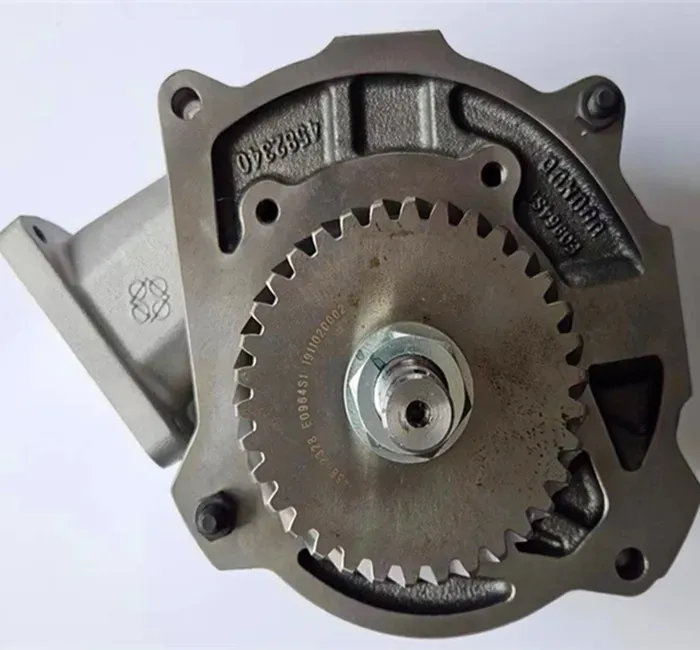
Even after the cooling circuit has been identified, “Water Pump” may describe different supply scopes. The quotation may cover a basic pump assembly, a complete assembly with a pulley, a water-pump kit, or a pump that requires the buyer to reuse the existing housing or drive components.
Finally, a pump that physically fits the engine may still fail to provide the correct coolant flow. The drive method, pulley or gear configuration, impeller design, internal coolant passages and original cooling-system arrangement all influence how the pump performs.
Perkins water-pump purchasing therefore involves three levels of verification:
Confirm which cooling circuit the pump serves, determine the assembly scope and housing interface being supplied, and then verify the drive configuration and its compatibility with the original cooling system.
Only when these three conditions are aligned does a quotation provide a reliable basis for ordering and receiving inspection.
This guide does not diagnose a failed water pump from overheating, coolant loss or operating noise alone. Leak tracing, cooling-system testing, drive inspection and installation should be completed by a repair organisation with the appropriate service information and test capability.
First Level: Identify the Cooling Circuit Served by the Pump
In most conventional industrial equipment and generator-set applications, the water pump is the engine coolant circulation pump. It moves coolant through the cylinder block and cylinder head and transfers engine heat to the radiator or another heat exchanger.
In specialised applications, however, one engine installation may contain more than one pump. Some heat-exchanger-cooled marine configurations may use both an engine coolant circulation pump and a Raw Water Pump. The first circulates coolant through the closed engine circuit, while the second moves external water through the heat exchanger.
The same search term—“Perkins Water Pump”—can therefore refer to completely different cooling circuits. Equipment manufacturers may also design systems with a separate low-temperature circuit, an auxiliary circulation pump or another application-specific cooling arrangement. These are not standard features across all Perkins engines and must be confirmed from the completed machine or vessel cooling design.
Before requesting a quotation, the buyer should establish whether the pump is installed in the main engine coolant circuit or an external raw-water circuit, whether the equipment uses a radiator, heat exchanger or another cooling arrangement, whether a second cooling pump is present, and which pipes connect to the pump being replaced.
The engine model narrows the search, but it does not replace cooling-circuit identification.
Second Level: Confirm the Water-Pump Assembly Scope
“Water Pump” is a product category, not a fixed bill of materials.
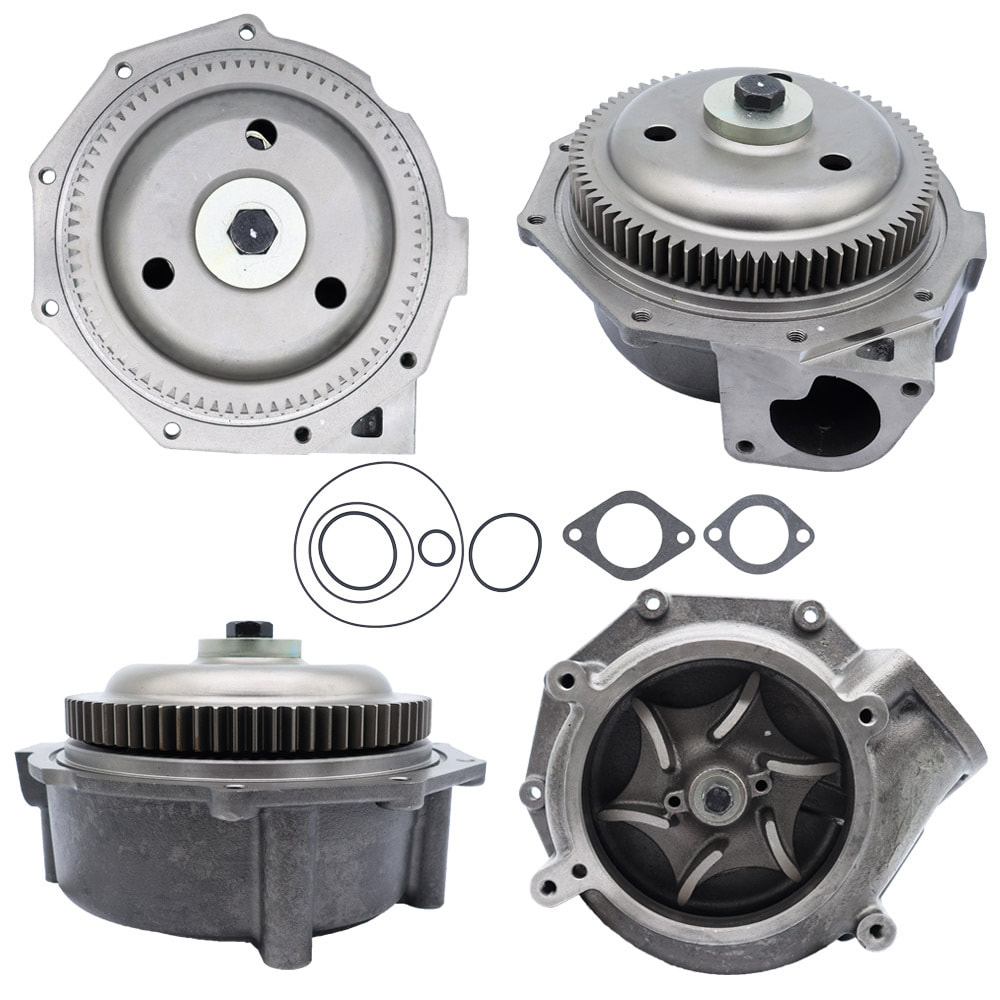
Perkins water pumps may be supplied as a Water Pump, Water Pump Assembly, Water Pump & Pulley or Water Pump Kit. Although all of these products may be described informally as water pumps, the contents of the package are not necessarily the same.
One quotation may cover a basic assembly containing the shaft, bearings, impeller and seals. Another may also include a pulley, drive gear, part of the housing, installation gasket or O-rings. A third may require the buyer to transfer drive or connection components from the old pump.
The key purchasing question is:
Will the quoted supply scope complete the required water-pump replacement?
It is less useful to ask whether the product is a “complete water pump.”
If the existing pulley, gear and housing have been inspected and can be reused, a basic pump assembly may be sufficient. If those components are corroded, loose, damaged or cannot be removed intact, the same quotation may be incomplete for the actual repair.
A formal quotation should identify the components supplied with the new pump, the items explicitly excluded, the old components that must be reused, the optional pulley, housing or sealing parts available, and any assembly work that remains the responsibility of the repair facility.
Housing and Coolant Passages Matter More Than Overall Appearance
A water pump connects to the engine’s internal coolant passages through its housing. It is not a universal circulation pump that can be selected from flange dimensions alone.
Two pumps with a similar overall appearance may differ in their mounting flange, bolt-hole pattern, installation depth, coolant inlet and outlet positions, bypass passages, hose-connection direction, or connection to the front cover or thermostat housing.
A front-view photograph or a rough visual comparison is therefore not enough.
The numbers found on the old pump also require interpretation. A casting number may identify only the base housing and may not be the formal service part number for the complete pump assembly.
More reliable identification combines the complete Engine Serial Number, Build List where available, other configuration information, the formal service part number, and photographs showing the complete old pump, mounting face, drive end and coolant connections.
More than one pump version may exist under the same broad engine model, so compatibility must be checked against the exact engine identity and the current installed configuration.
Third Level: The Drive Configuration Determines Whether the Pump Can Work as Designed
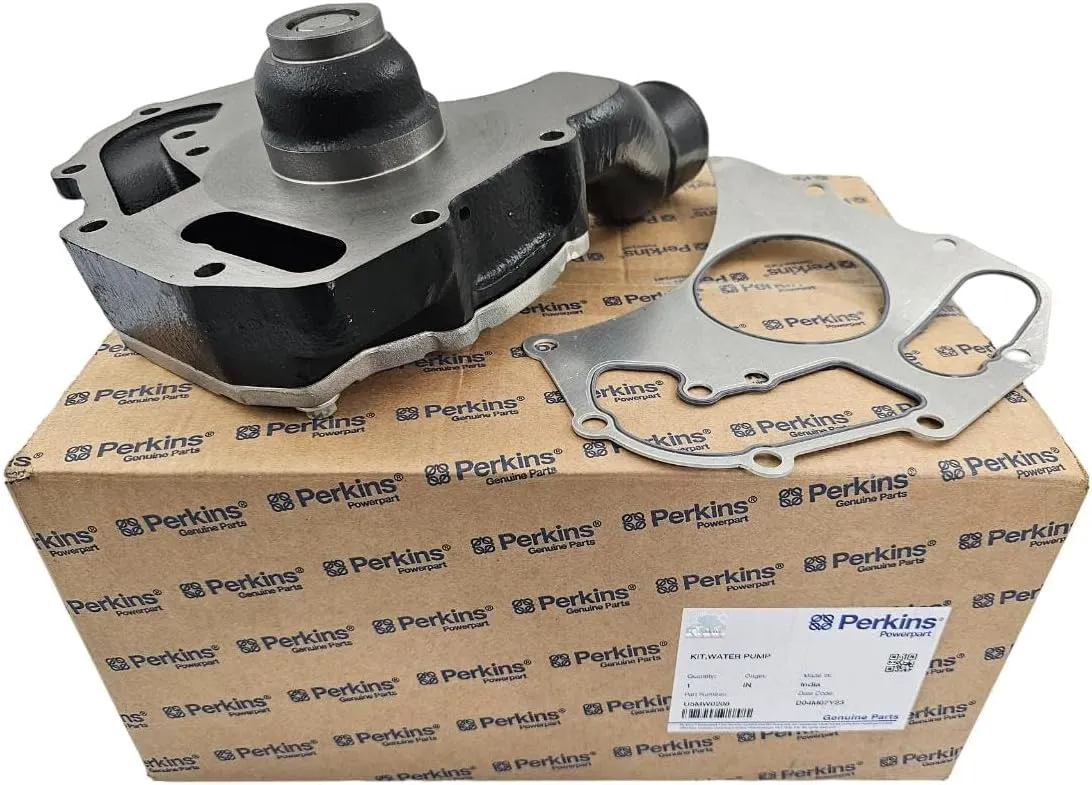
A Perkins water pump may be belt driven or gear driven, depending on the engine and application.
For a belt-driven pump, the buyer must confirm whether the pulley is included, as well as the pulley diameter, groove profile and number of grooves, hub-to-shaft connection and pulley offset. The installed pulley must remain aligned with the other driven accessories.
Two pumps may bolt into the same location but still cause belt misalignment, incorrect pump speed or accessory-drive problems if the pulley diameter or offset is different.
For a gear-driven pump, the gear, hub, shaft connection, installation depth and meshing conditions must be checked. The engine model alone does not prove that the old gear can be transferred to the replacement pump. Any special installation position or assembly procedure should be confirmed from the applicable service information.
The pump’s actual flow and pressure depend on more than the housing shape. Impeller design, internal passages and drive configuration also affect performance.
A rotating pump only proves that a drive connection has been established. It does not prove that the pump is delivering the flow and pressure required by the engine.
The Pump Must Be Evaluated Within the Original Cooling System
The water pump does not determine cooling capacity by itself. It works together with the thermostat, radiator, fan, belts, hoses and other parts of the cooling system.
For an engine that retains its original cooling configuration, the normal approach is to identify the correct pump from the full engine identity and current parts information rather than redesigning the required coolant flow.
A different level of review is needed when the equipment has been modified—for example, when the radiator has been moved away from the engine, coolant pipes have been substantially lengthened, an external heat exchanger has been added, the cooling circuit has been changed, or the original OEM cooling package has been replaced by a non-standard system.
In these cases, selecting a pump only because it has the same external dimensions is not sufficient. The complete cooling system must still provide the flow, pressure and heat-rejection performance required by the engine.
That assessment belongs to cooling-system and application engineering. It should not be decided remotely by a parts supplier from one pump photograph.
Coolant Leakage and Overheating Do Not Prove That the Pump Has Failed
Coolant traces near the pump, increased operating noise, pulley movement or engine overheating are valid reasons to inspect the water pump. They do not prove that the pump is the only failed component.
Coolant found around the pump may come from the internal pump seal, the gasket between the pump and housing, an O-ring, a hose clamp, the thermostat housing or another nearby coolant connection.
Persistent coolant traces around the pump should not be dismissed as harmless leakage. The repair facility should identify the exact source, leakage rate and condition of the bearing and drive end.
Engine overheating may also be related to coolant level, thermostat operation, radiator condition, fan performance, belt condition, trapped air or equipment-compartment ventilation.
A replacement water pump should not be ordered solely because the engine is running hot.
Expand the Inspection Scope, Not Automatically the Replacement Scope
A failed water pump may be related to the condition of surrounding components.
When replacing a belt-driven pump, the repair facility should inspect belt wear and tension, pulley looseness or runout, tensioner condition and accessory alignment. It should also consider whether the old pump bearing was exposed to abnormal side loading.
For a gear-driven pump, the drive gear, hub, meshing area, related housing and mounting surfaces should be inspected.
Checking hoses for leakage and confirming thermostat operation at the same time is also reasonable.
This does not mean that the belt, thermostat, hoses and all drive components must automatically be replaced with the pump.
The correct principle is:
A water-pump failure expands the inspection scope; it does not automatically expand the replacement scope.
The final parts order should follow the inspection results rather than a general “replace everything nearby” rule.
Two Water-Pump Quotations Must Cover the Same Installation Task
Two quotations labelled “Perkins Water Pump” may not be directly comparable.
One may cover a pump-and-pulley assembly, while another may include only the core pump. One may include the installation gasket, while another requires the gasket to be ordered separately. In a marine application, one quotation may refer to the engine coolant pump and another to the Raw Water Pump.
Before comparing price, the buyer should align the complete engine identity and application, the cooling circuit served, the formal part number, the assembly scope, the drive method, the pulley or gear coverage, the housing and sealing components included, the old parts that must be reused, and the product source and warranty boundary.
A quotation that says only:
Perkins Water Pump × 1
does not identify which pump will be supplied or whether it will complete the required installation.
Information to Provide Before Ordering
A Perkins water-pump inquiry that can be checked accurately should include the complete engine model, full Engine Serial Number, Build List where available and any other relevant configuration information.
The buyer should also provide the equipment make, model and application; whether the system is radiator cooled, heat-exchanger cooled or uses another arrangement; which cooling circuit contains the pump; the formal and visible numbers on the old pump; and photographs showing the complete pump, mounting flange, inlet and outlet connections and drive end.
The inquiry should state whether the pump is belt driven or gear driven, whether the pulley, gear, hub and housing will be reused, whether gaskets and O-rings must be included, and whether the original cooling system has been modified.
If the old pump has not yet been removed, photographs should be taken of its installed position, hose directions and drive arrangement. A single front-view photograph after removal is usually not enough to reconstruct the complete installation.
When Can the Order Be Finalised?
A Perkins water-pump order should meet three conditions before it is treated as final.
First, the specific cooling circuit served by the pump has been identified.
Second, the quoted assembly scope is clear, including which housing, drive and sealing components are included.
Third, the drive method, mounting interface and original cooling-system configuration have been checked.
If the engine identity, cooling circuit or supply scope remains unclear, the supplier may provide an estimated price and lead time, but the quotation should not be treated as an unchangeable final order.
How ZEB Power Helps Review Perkins Water Pumps
ZEB Power uses the engine model, full serial number, application equipment, cooling-system arrangement, old pump numbers and installation photographs to help buyers identify whether they require the engine coolant circulation pump, a marine Raw Water Pump or another application-specific cooling pump.
ZEB Power can help review the water-pump part number, supply scope, housing interface, drive method and valid supersession, and can compare whether different quotations cover the same installation task.
The final diagnosis of water-pump failure, the cause of engine overheating, the flow assessment for a modified cooling system and the final installation and commissioning should remain with a repair or engineering organisation that has the appropriate test capability.
Provide the engine data plate, full serial number, old water-pump number, installed location and photographs of the drive end and coolant connections. ZEB Power can help convert a general “Water Pump” request into a specific supply scope that can be checked, quoted and inspected on receipt.
Frequently Asked Questions
How Many Water Pumps Can a Perkins Engine Have?
It depends on the engine and application. A conventional radiator-cooled installation normally uses an engine coolant circulation pump. Some heat-exchanger-cooled marine configurations may also use a separate Raw Water Pump. The complete equipment cooling design should be checked.
Can an Engine Coolant Pump and a Marine Raw Water Pump Be Interchanged?
No. They serve different cooling circuits and may use different drive, connection and pump configurations. Matching must be based on the specific engine and marine installation.
Does a Perkins Water Pump Always Include the Pulley?
No. A pump may be supplied as a basic assembly, a pump-and-pulley combination or another assembly level. The quotation and part description must state what is included.
Can Belt-Driven and Gear-Driven Water Pumps Be Interchanged?
Not directly. They use different drive structures, mounting interfaces and application configurations. The full engine identity and current installation must be checked.
Can a Pump with Minor Coolant Traces Continue to Be Used?
The decision should not be based only on the quantity of visible coolant. Traces near the pump may indicate a developing seal problem or may come from a gasket, hose or nearby connection. The leak source should be identified first.
Why Does the Engine Still Run Hot After a Similar-Sized Pump Is Installed?
The same dimensions do not guarantee the same flow, pressure, impeller or drive configuration. If the cooling system has also been modified with a remote radiator, heat exchanger or longer pipework, the complete cooling design must be reviewed rather than comparing pump appearance alone.