

Perkins Fuel Filter Parts: Confirm Position Before You Order

9315
Table of Contents
Generating table of contents
Primary and secondary fuel filters are not assigned according to which one has the smaller micron number or appears to be the “higher-grade” filter.
Installing a finer filter in the primary position can cause a rapid rise in restriction and premature blockage if its flow capacity and dirt-holding capacity are unsuitable for that location. Installing a filter with inadequate efficiency in the secondary position may allow more fine contamination to reach precision fuel-injection components.
The question is not whether finer is always better or coarser is always worse. The real issue is whether the filter media and complete assembly are suitable for the task assigned to that position in the fuel system.
This guide explains the roles of primary and secondary filters, how fuel/water separation actually works, what should be checked behind a micron rating, and which priming requirements and auxiliary components are commonly overlooked during filter replacement.
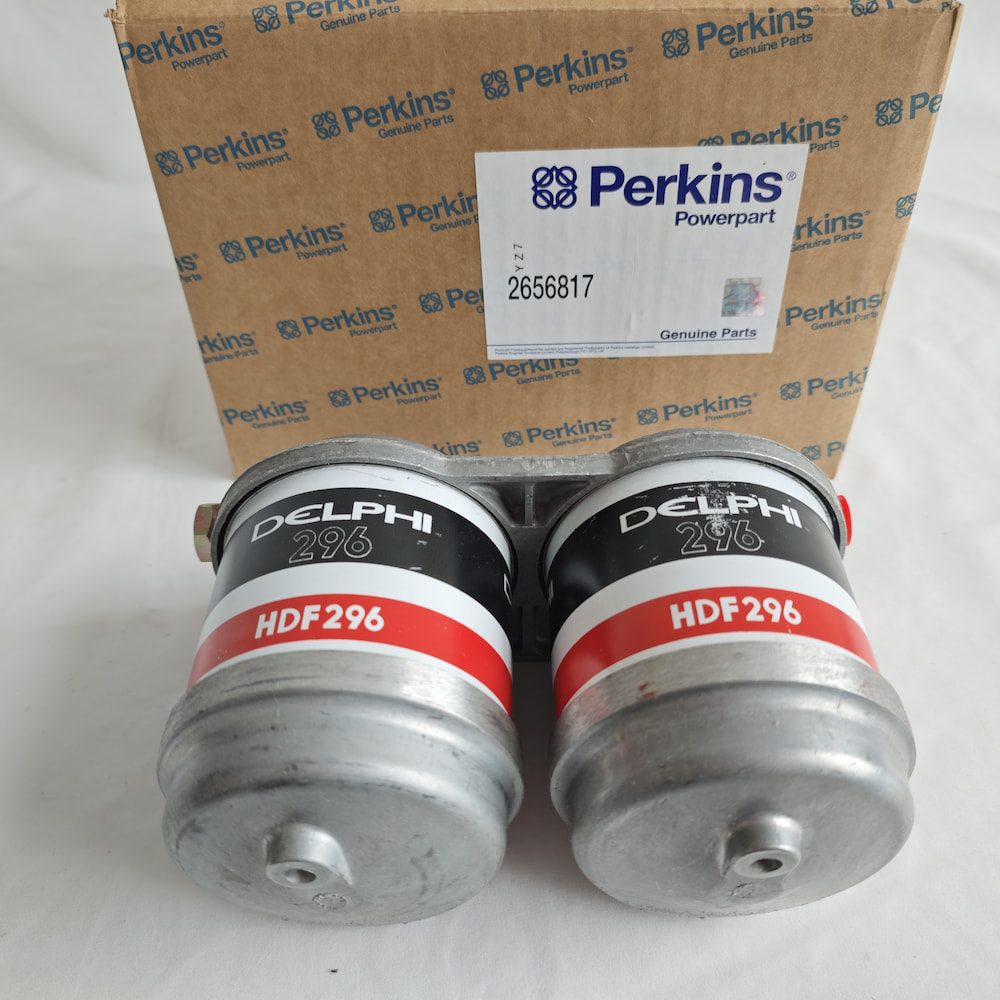
1. Primary Filter: Confirm the Upstream Task, Flow and Dirt-Holding Requirement
In many multi-stage fuel systems, the primary filter performs upstream contamination control, while some designs also integrate water separation at this position. The secondary filter often provides the final particle-control stage before fuel reaches precision injection equipment.
This arrangement is not universal across all Perkins engines. Primary and secondary stages may or may not use different micron ratings. Water separation may be integrated into the primary assembly, located elsewhere in the circuit or provided by a separate separator.
The actual layout must be confirmed from the fuel-flow path, Engine Serial Number, Build List and formal part numbers. It should not be assumed that every Perkins engine uses the same filtration hierarchy.
Where the primary filter performs upstream contamination control, it normally needs sufficient flow capacity and dirt-holding capacity to reduce the contamination load entering downstream low-pressure fuel components.
Whether it also protects the transfer pump, includes water separation or sits ahead of specific components depends on the actual fuel circuit.
A filter with a smaller micron number may still be unsuitable if its flow capacity, pressure-drop characteristics, dirt-holding capacity or water-separation design do not match the primary position. It may reach its service limit too quickly or restrict fuel supply.
Water-separation capability must be checked separately. It cannot be inferred from the micron number alone.
2. Secondary Filter: Protecting Contamination-Sensitive Injection Equipment
In many staged filtration systems, the secondary filter is positioned closer to the precision fuel-injection equipment and provides the filtration efficiency required at that location.
Its role may include removing finer particles that have passed through the upstream stage before fuel reaches injectors, high-pressure pumps and other contamination-sensitive components.
Modern common-rail injectors and high-pressure pumps contain precision working interfaces that operate at micrometre-scale tolerances. Fine particles entering these components can increase the risk of wear, sticking and fuel-metering irregularities.
However, the relationship between primary and secondary micron ratings, and the position of any water-separation assembly, must still be confirmed for the exact engine configuration.
If the secondary position is fitted with a filter that does not provide the required efficiency, fine contamination may enter the injection system. The resulting damage may not appear immediately. Uneven injection, internal leakage or performance changes may develop only after extended operation.
3. One Micron Number Does Not Define Filtration Performance
Micron rating is one of the most commonly compared fuel-filter specifications, but the number alone does not prove that two filters provide equivalent performance.
A stated micron value may be described as nominal or absolute, and different suppliers may not apply identical efficiency thresholds to those terms.
A more useful comparison asks for:
- actual capture efficiency at the specified particle size;
- an equivalent efficiency ratio, such as a Beta Ratio where applicable;
- the test method used;
- effective media area and dirt-holding capacity;
- the way flow resistance changes as contamination accumulates.
A replacement filter should not be considered superior only because it carries a smaller micron number. Finer media with inadequate dirt-holding capacity or unsuitable flow characteristics may create premature restriction.
The opposite shortcut is equally unsafe. If a filter blocks repeatedly, replacing it with a coarser filter simply to extend service life may allow more contamination to reach downstream precision components.
Repeated restriction should trigger an investigation into the fuel tank, stored fuel and upstream contamination sources rather than an unverified reduction in filtration efficiency.
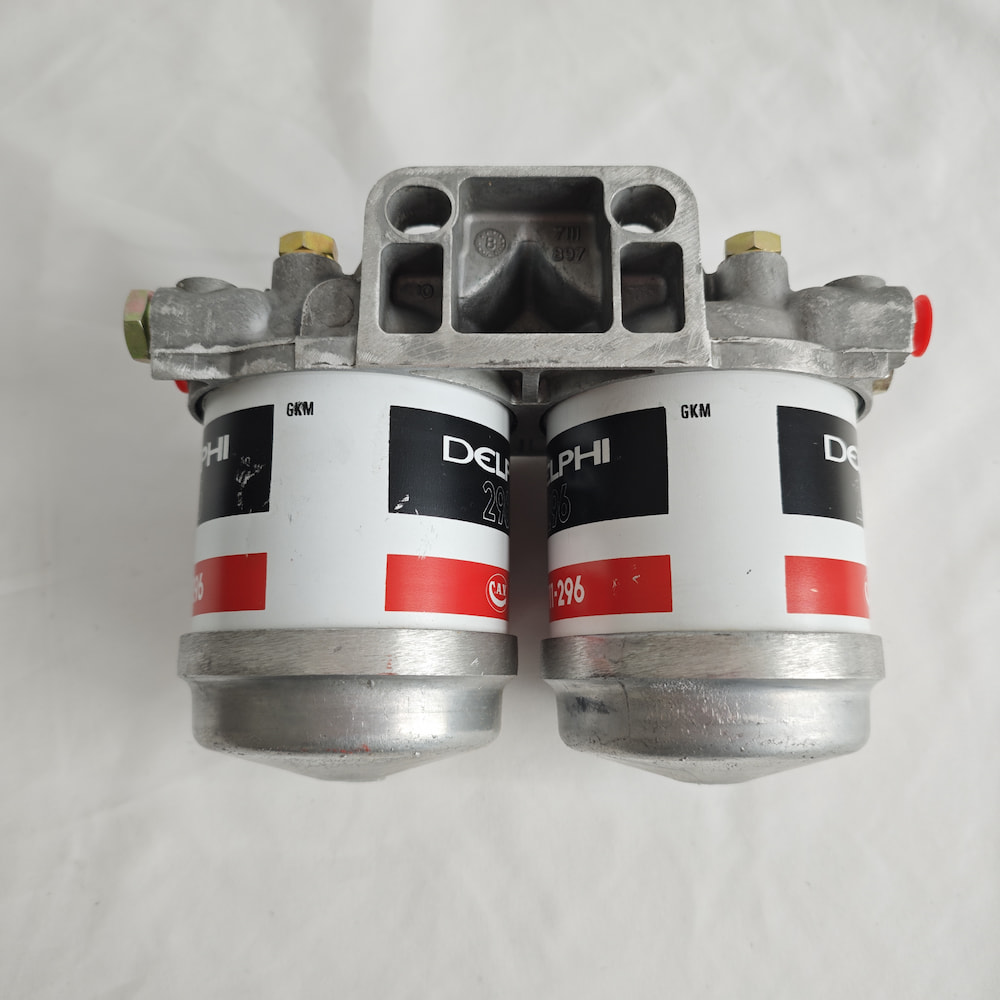
4. Water Separation Is More Than Settling: The Media Changes the Droplet State First
Fuel/water separation and solid-particle filtration are not the same process, but a separator should not be understood as a device that relies only on slow settling inside a collection bowl.
Depending on the product, the assembly may use hydrophobic barrier media or a multi-stage coalescing design. Larger free-water droplets may move directly into the collection zone, while smaller droplets may first combine on or within the media before falling into the bowl.
Some advanced multi-stage coalescing media can also handle a limited range of emulsified water. That capability depends on the media technology, fuel composition and test conditions. Not every water separator provides the same emulsified-water performance.
Water-removal efficiency is influenced by:
- media technology;
- housing flow path;
- fuel condition;
- rated processing flow;
- changes in media performance over its service life.
It cannot be judged from bowl size or micron rating alone.
If the actual flow through the assembly exceeds its rated range, clean pressure drop and system restriction may increase, while water-separation performance can move outside its validated operating range.
The exact mechanism of performance loss depends on the media type, housing design and fuel condition. It should not be explained universally as nothing more than insufficient settling time.
A common selection error is to size the separator from the engine’s net fuel consumption.
The flow through the filter assembly may be significantly higher than the quantity of fuel ultimately burned by the engine, particularly in systems with fuel return, recirculation or a high-capacity transfer pump.
The separator should therefore be selected against the actual fuel-circuit flow or the formal specification of the original assembly.
In addition to maximum flow, confirm:
- clean pressure drop at the required flow;
- allowable system restriction;
- connection size;
- whether the assembly operates on the suction side or pressure side;
- the corresponding working-pressure or vacuum conditions.
An assembly installed before the transfer pump operates under different conditions from one installed on the pressure side. Two assemblies with the same nominal flow rating may still be incompatible because their pressure-drop characteristics differ.
The original assembly specification should be used wherever possible instead of relying on an estimated flow figure.
5. Matching Threads and Seal Diameters Do Not Prove Internal Compatibility
Spin-on filters are especially vulnerable to the assumption that matching threads mean interchangeability.
Even when the centre thread, outside diameter and gasket size appear similar, filters may differ internally in:
- flow paths;
- centre-support tube construction;
- end-cap sealing;
- applicable bypass, anti-drainback or other control features;
- filter-media design;
- overall flow resistance.
These differences are difficult or impossible to identify from external appearance alone.
Cartridge elements create a similar risk. Elements with comparable dimensions may use different end-cap designs, locating features or seal positions. An incorrect element may fail to separate the unfiltered and filtered sides correctly inside the housing.
A cross-reference list is therefore a search aid, not final application approval.
Final confirmation should include:
- complete Engine Serial Number and Build List;
- formal filter-element part number;
- formal Filter Head or housing part number;
- all readable markings on the old filter;
- sealing configuration;
- relevant bowl, drain and sensor interfaces.
6. Prime the Fuel System Using the Procedure for the Exact Engine
Air entering the low-pressure fuel circuit during filter replacement can prevent the system from establishing stable fuel delivery, causing difficult starting or unstable operation.
There is no single priming procedure that applies to every Perkins engine.
Depending on the design, the engine may use:
- a manual priming pump and bleed screw;
- an integrated electric priming pump;
- the transfer pump to establish fuel supply;
- gravity filling or another approved procedure.
The correct method must be taken from the service information for the specific engine.
High-pressure fuel pipes must not be loosened as a fuel-system bleeding method, especially on common-rail systems. This creates a safety risk and is not an approved priming procedure.
If the engine becomes difficult to start or runs unevenly after filter replacement, priming status should be one of the first checks.
The inspection should also include:
- whether the filter seals are installed correctly;
- whether the Filter Head, bowl or drain is drawing air;
- whether the low-pressure circuit can establish normal fuel supply;
- whether the correct filter and assembly configuration has been installed.
The fault should not be attributed automatically to either incomplete priming or filter quality.
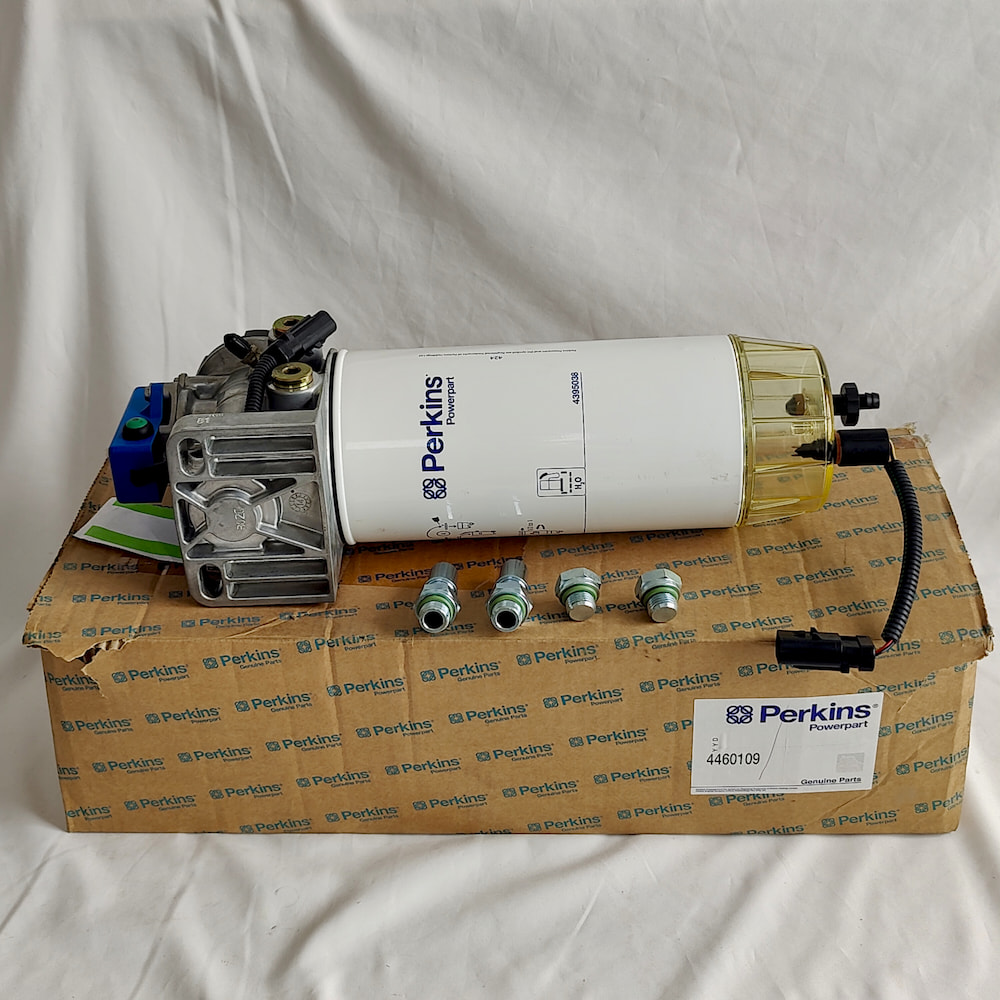
7. Drain Collected Water Before the Next Filter Change, but Do Not Apply One Universal Interval
Water collected in the separator bowl should be drained as required rather than left until the next scheduled filter replacement.
Modern fuels may contain bio-components, and operating conditions can increase the rate at which water accumulates. Water remaining in the system can increase the risk of corrosion and fuel-system damage.
There is no single drainage interval that applies to every Perkins engine.
The required inspection and drainage frequency depends on:
- fuel quality;
- ambient humidity and temperature changes;
- bowl capacity;
- equipment utilisation;
- storage and tank conditions;
- whether a Water-in-Fuel sensor is fitted;
- the requirements in the applicable Operation and Maintenance Manual.
The absence of a universal hour interval does not mean that the bowl should be ignored until visible water accumulation becomes severe. Some applications include water-separator inspection or drainage in daily checks.
After draining, the valve must be closed and sealed correctly to prevent fuel leakage or air entry into the low-pressure circuit.
8. The Filter Assembly May Include Auxiliary Components That Are Easy to Overlook
Depending on the engine, auxiliary components may be integrated into or connected to the Filter Assembly, Filter Head or water-collection bowl.
These may include:
- Water-in-Fuel sensor: Monitors accumulated water and provides a warning to the instrument panel or control system.
- Fuel heater: Supports cold starting or reduces the effects of wax formation in low-temperature fuel. Some electric heaters are primarily cold-start aids and may not provide sufficient heating at the maximum continuous fuel-flow rate. A heating connection alone does not prove that the assembly can support every low-temperature operating condition.
- Priming pump: May be manual or electric and may be integrated into the Filter Head or supplied as another part of the complete assembly.
These components are easily overlooked during service.
A sensor connector or heater plug may be damaged during removal and not checked afterward. During procurement, a supposedly complete assembly may arrive without the sensor, heater or priming component if those items were excluded from the quoted scope.
9. Align the Quotation Scope: Element, Head, Bowl and Sensors
The description “Perkins fuel filter” may refer to different supply scopes.
One quotation may include only the replacement element, while the Filter Head, bowl, sensor and drain are reused or ordered separately.
Another quotation may cover a Filter Head and bowl assembly, while the Water-in-Fuel sensor or heater remains a separately priced item.
A replacement bowl alone should not be understood as a complete water-separator assembly.
Before comparing quotations, confirm:
- whether the product is for the primary or secondary position;
- whether its filtration efficiency matches the approved application;
- whether water-separator flow and pressure-drop characteristics suit the actual fuel-circuit conditions;
- whether sensors, heaters, drains, seals and priming components are included.
Information Required to Confirm the Correct Filter Arrangement
Useful information includes:
- complete engine model, Engine Serial Number and Build List;
- formal part numbers on the old filter element and Filter Head, where readable;
- whether the requirement is for a Primary Filter, Secondary Filter, independent Water Separator or integrated Primary Filter/Water Separator Assembly;
- the original assembly’s rated flow, clean pressure drop and working-pressure or suction-side restriction requirements;
- whether a Water-in-Fuel sensor, heater or priming pump is fitted;
- photographs of the complete assembly, Filter Head, bowl, drain, sensor interface, heater connection and fuel-line connections;
- whether the equipment has experienced difficult starting, unstable running or unusually rapid filter restriction.
The closer this information is to the actual installation and measured operating conditions, the faster the supply scope can be confirmed.
Where the information is incomplete, an engine model may support a budgetary reference, but final confirmation should follow the original assembly specification and the actual fuel-circuit requirements.
ZEB Power can use this information to help identify the formal filter version, verify that primary and secondary filtration requirements correspond to the correct positions, confirm whether water-separator flow and pressure-drop characteristics suit the application, and clarify the actual quotation scope.
Priming after replacement, on-site verification of water-separation performance and diagnosis of possible contamination damage to the injection system should still be completed by a qualified service organisation.
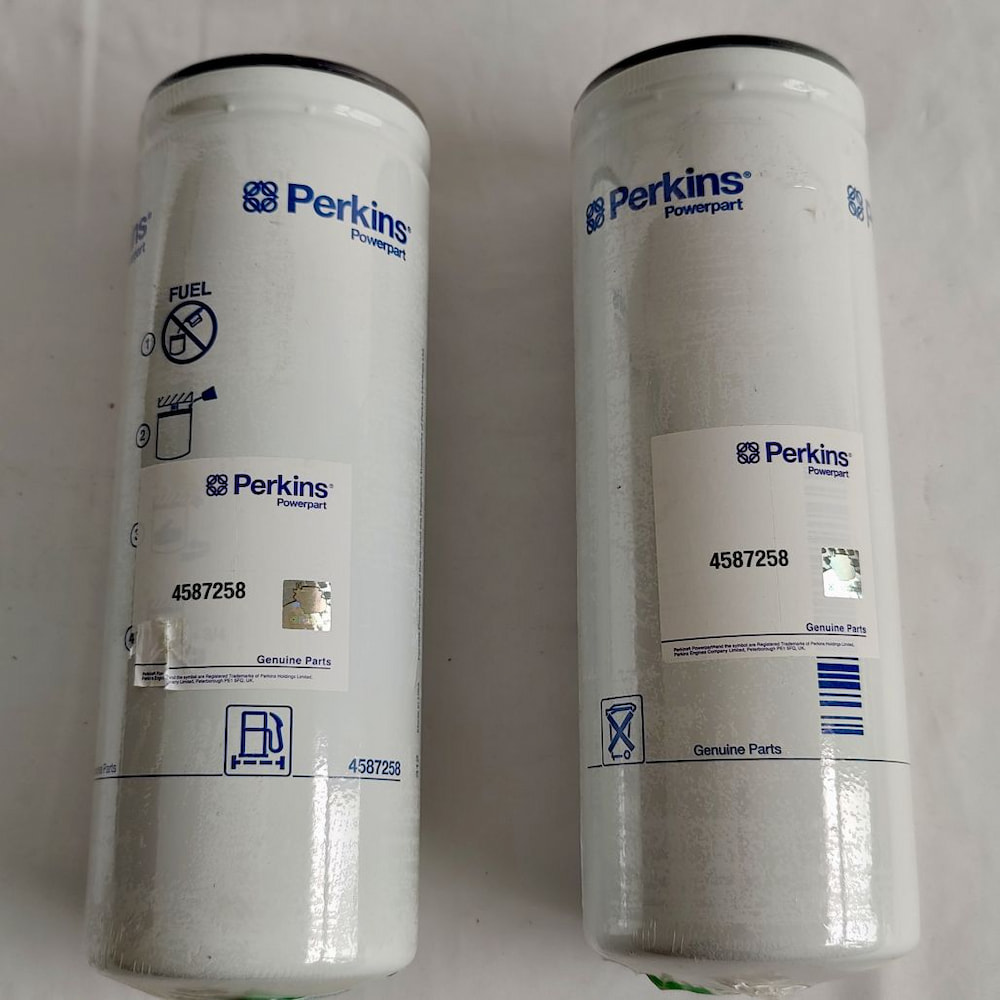
Frequently Asked Questions
Can Primary and Secondary Fuel Filters Be Interchanged?
This cannot be determined from the words “primary” and “secondary” alone.
Replacement is appropriate only when the formal Perkins parts information, equipment-manufacturer documentation or another validated source confirms that the product is suitable for that position, and when filtration efficiency, flow, pressure drop, sealing configuration and water-separation function all meet the application requirements.
Matching installation dimensions or apparently similar specifications do not prove interchangeability.
Does Difficult Starting After Filter Replacement Mean the New Filter Is Defective?
Not necessarily.
Confirm that the engine has been primed according to the service procedure. Also inspect the seals, Filter Head, bowl and drain for air leakage, and confirm that the low-pressure circuit can establish normal fuel supply.
The symptom should not be attributed automatically to the filter itself.
Can Filters Be Interchanged When the Thread and Gasket Dimensions Match?
Not necessarily.
Internal flow paths, support-tube design, end-cap sealing and applicable control features may still differ. These details cannot be confirmed from external appearance alone.
The formal part number, Engine Serial Number, Build List and housing configuration should be checked.
How Should the Flow Rating of a Water Separator Be Selected?
Selection should be based on the actual fuel-circuit flow and the pressure-drop requirements of the original assembly, not on net engine fuel consumption.
Fuel return, recirculation and transfer-pump delivery can make the flow through the filter substantially higher than the quantity ultimately burned by the engine.
Two assemblies with the same nominal flow rating may still be incompatible because their clean pressure drop, allowable restriction or suction-side operating conditions differ.
Is There One Fuel-Filter Replacement Interval for All Perkins Engines?
No.
The interval should follow the Operation and Maintenance Manual for the specific engine and should also account for fuel quality, water accumulation, pressure-drop or supply-restriction indications and operating environment.
If filters reach restriction unusually early, investigate the contamination source rather than only shortening the replacement interval or installing a coarser filter.