

Perkins Thermostat Parts Selection: Coolant or Oil?

1747
Table of Contents
Generating table of contents
“I need a Perkins thermostat.”
That request may refer to two completely different components.
Take the 2606 Series Fluids Module as an example. Perkins lists Dual Coolant Thermostats and a Single Oil Thermostat as separate components. The coolant thermostats and oil thermostat belong to different temperature-management circuits. Before requesting a quotation, confirm which thermostat you actually need.
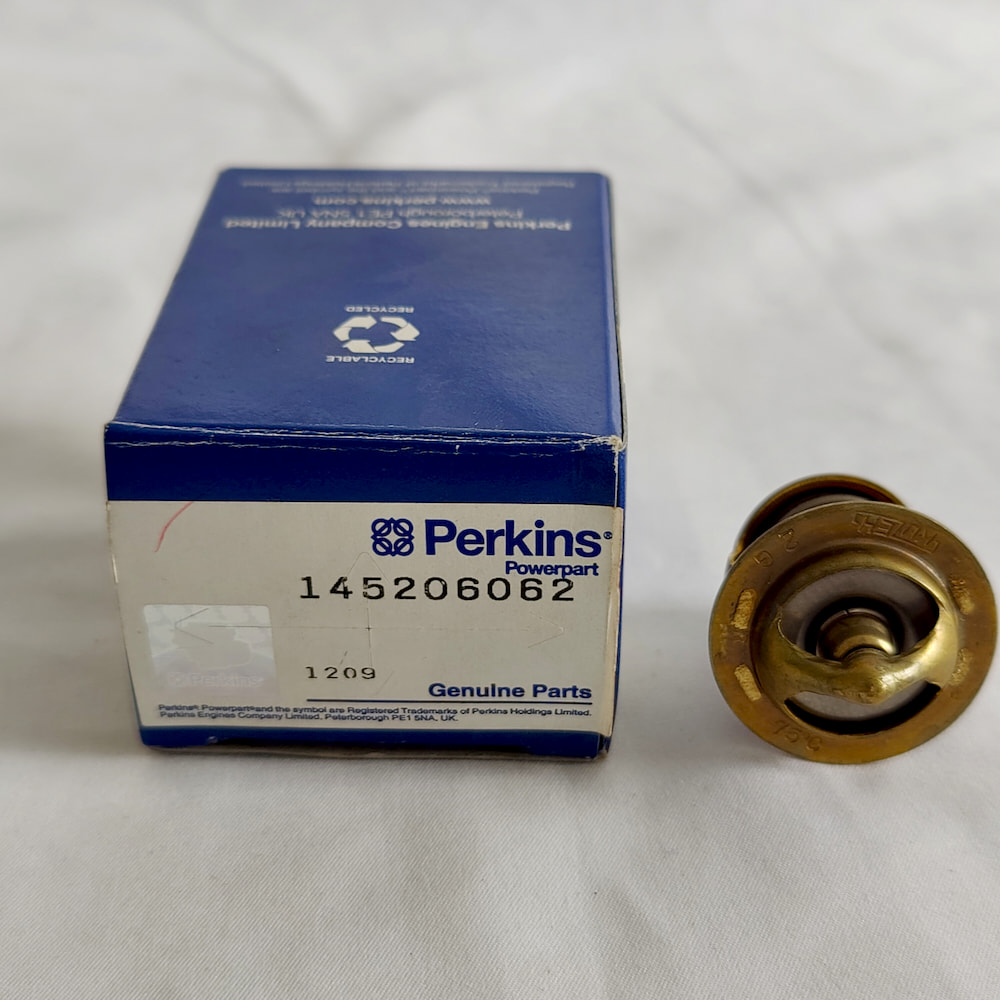
The Rated Temperature Is the Start-to-Open Point, Not the Fully Open Temperature
A coolant thermostat progressively changes valve position as coolant temperature changes. When the engine is cold, coolant is routed mainly through the bypass circuit rather than the radiator, helping the engine reach its operating temperature more quickly. As temperature rises, the thermostat progressively changes the flow path and directs more coolant through the main cooling circuit.
The temperature marked on a thermostat refers to the temperature at which it starts to open, not the temperature at which it is fully open.
For example, an 82°C thermostat begins opening at approximately 82°C and continues opening as coolant temperature rises. Perkins states that a thermostat should normally be fully open about 15–20°F, or approximately 8–11°C, above its rated temperature.
The range therefore applies to the movement from initial opening to fully open. The rated temperature itself remains the specified start-to-open point.
Using a thermostat with a different temperature rating changes the point at which coolant-flow regulation begins. That may move the engine away from its intended operating-temperature range and affect normal power output and fuel economy. A replacement should not be selected simply because its dimensions look similar.
“Dual Coolant Thermostats” Describes Quantity, Not Necessarily Two Different Parts
The Perkins 2606 Series Fluids Module uses Dual Coolant Thermostats together with a separate Single Oil Thermostat.
However, the word “Dual” alone does not tell you whether the two coolant thermostats use the same part number, the same temperature rating, or a particular staged-control strategy.
Do not assume that one is a “primary thermostat” for light load and the other a “secondary thermostat” for heavy load. Likewise, do not assume that a dual-thermostat arrangement simply means ordering two pieces of the same part number.
The required quantity, part numbers, and temperature ratings should be confirmed from the specific engine’s ESN, Build List, and BOM rather than inferred from the word “Dual.”
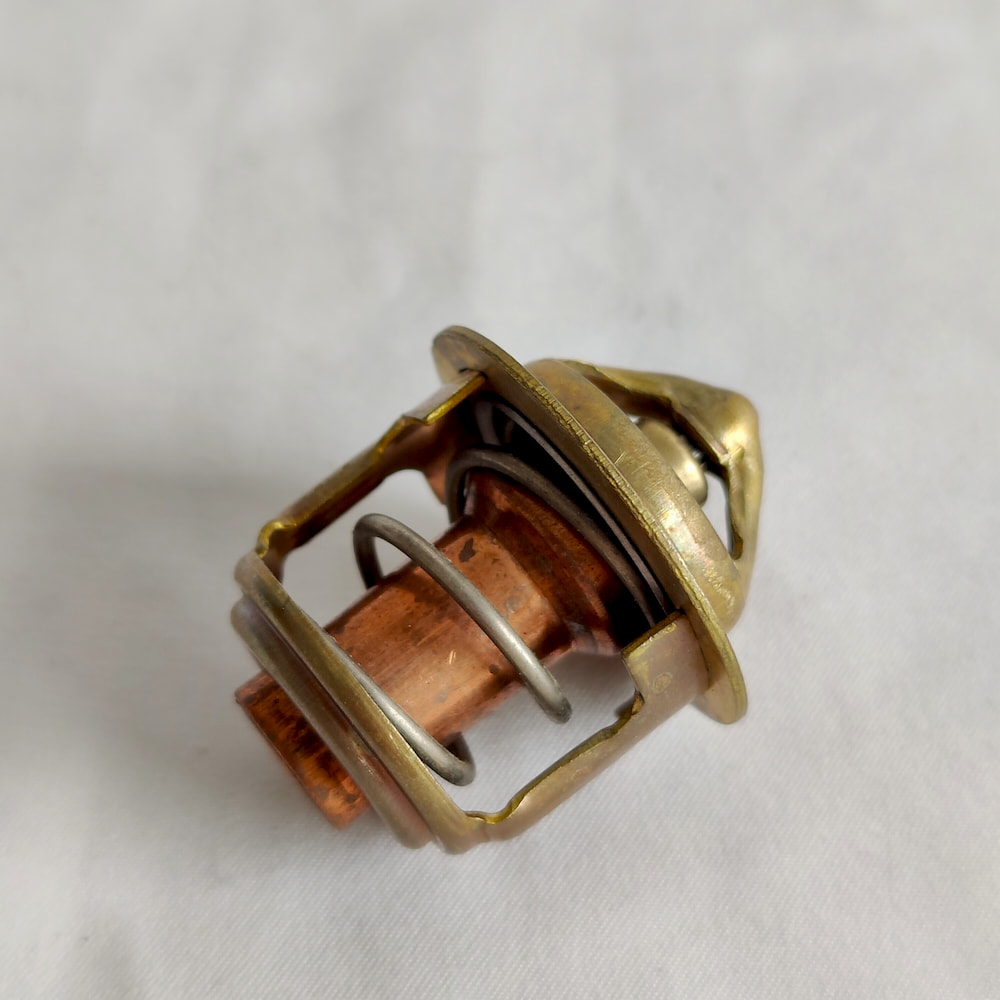
Removing the Thermostat Does Not Mean Maximum Cooling
When an engine overheats, one common but unsuitable response is to remove the thermostat completely.
A thermostat does more than decide when coolant is allowed through the main cooling circuit. It also participates in bypass-flow control. At lower temperatures, coolant is routed through the bypass path. As engine temperature rises, the thermostat changes the flow path and closes the bypass as required by the cooling-system design.
Removing the thermostat therefore does not simply create a permanent “full-flow through the radiator” condition.
Instead, it disrupts the designed balance between the bypass and main cooling circuits. The result depends on the engine’s cooling-system layout. The engine may operate below its intended temperature, or coolant may be distributed incorrectly between the bypass and radiator circuits. Either condition can move the engine away from its designed operating-temperature range and affect normal power output and fuel economy.
More importantly, removing the thermostat does not correct the actual cause of overheating.
Possible causes can include:
- Insufficient water-pump flow;
- Reduced radiator or heat-exchanger performance;
- Fan or fan-drive problems;
- A slipping or broken belt;
- Incorrect coolant level or poor coolant condition.
An overheating engine therefore does not automatically prove that the thermostat is stuck closed. The cooling system should be evaluated as a complete circuit before a replacement thermostat is ordered or the thermostat is removed as a supposed preventive measure.
Do Not Overlook the Housing and Seals
The thermostat housing does more than hold the thermostat in position. It also forms part of the coolant-flow path.
Two separate questions therefore need to be answered when sourcing parts:
Is the thermostat itself the correct temperature-rated version?
And:
Is the housing correct for this engine configuration, including its interfaces and installation orientation?
On some Perkins engines, the thermostat housing is available as a separate service component. On some newer platforms, the thermostat itself may instead be part of a larger Fluids Module that also contains components such as the water pump, engine oil cooler, and oil filter.
This is another example of why supply scope must be confirmed before prices are compared. A quotation for a “Thermostat” may refer only to the thermostat itself, to an assembly containing additional components, or to a service part within a larger integrated module.
Seals, O-rings, and gaskets should also be checked during service. Some Perkins thermostat seals are available as separate service parts, while some thermostat assemblies already include the relevant seal. Before ordering, confirm whether the required sealing parts are included and whether the service information calls for them to be replaced.
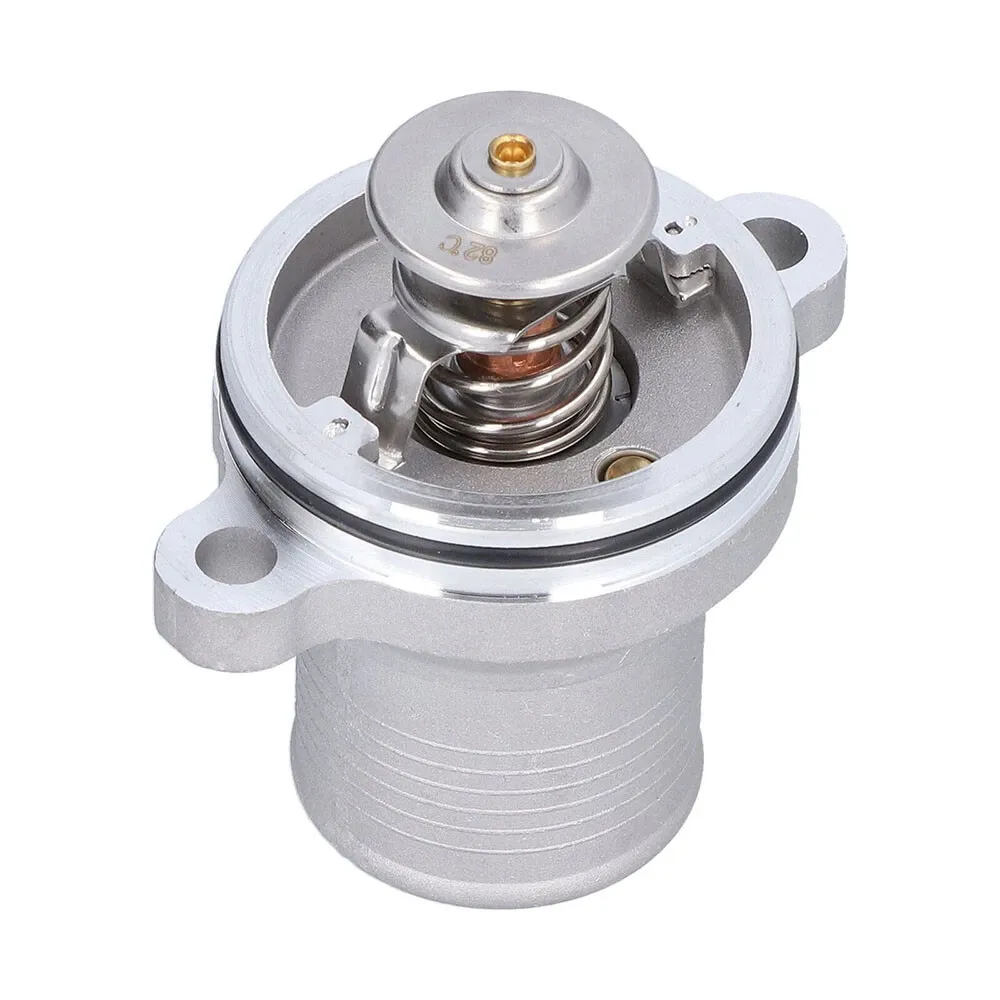
Align the Supply Scope Before Comparing Quotations
A quotation for a “thermostat” can refer to several different supply scopes:
| Supply Scope | What It Usually Means |
|---|---|
| Thermostat | Thermostat component only |
| Thermostat Assembly | Thermostat plus specified connection, seal, or other components; confirm the exact BOM |
| Thermostat Housing | Housing used to mount, protect, and direct coolant flow; do not assume the thermostat is included |
| Seal / O-ring | Separate sealing service part; confirm whether it is already supplied with the assembly |
Prices can differ significantly depending on whether the quotation covers a thermostat only, a thermostat assembly, a housing, or separate sealing parts.
If the engine uses a dual-thermostat configuration, that is a quantity and configuration issue, not a separate supply category. You still need to confirm the required quantity, the part number for each position, and whether the sealing scope covers both thermostat locations.
Information to Provide Before Ordering
A parts enquiry that can be checked directly should include:
- Complete engine model;
- Engine Serial Number;
- Build List;
- Whether you need a coolant thermostat or an oil thermostat;
- For a dual-thermostat system, photographs of the removed parts and their installation positions;
- If the thermostat was removed because of overheating or abnormal coolant temperature, what other causes have already been checked.
Old part numbers and clear photographs are also useful whenever they are available.
The supplier should use this information to confirm the currently applicable service part rather than simply copying the specification from an old component. Part-number supersessions and configuration changes can affect which thermostat is currently correct for the engine.
How ZEB POWER Helps Confirm Perkins Thermostats
Send us the engine information and photographs of the removed parts.
ZEB POWER can help confirm whether the engine requires a coolant thermostat or oil thermostat, whether it uses a single- or dual-thermostat configuration, and which temperature rating and supply scope apply.
The quotation can then identify the relevant part number and expected lead time, together with any housing or sealing components that need separate confirmation.
Frequently Asked Questions
Are a Coolant Thermostat and an Oil Thermostat the Same Part?
No.
On the Perkins 2606 Series, for example, the Fluids Module lists coolant thermostats and an oil thermostat as separate components belonging to different temperature-management circuits. The enquiry should therefore specify which one is required.
Is the Temperature Marked on a Thermostat Its Fully Open Temperature?
No.
The marked temperature is the thermostat’s start-to-open temperature. Perkins states that full opening normally occurs about 15–20°F, or approximately 8–11°C, above the rated temperature.
When selecting a replacement, the temperature rating and current applicable part specification should match the engine configuration rather than simply copying an old component without checking for part-number supersession.
Can Both Thermostats in a Dual-Thermostat System Be the Same?
That cannot be determined from the word “Dual” alone.
Whether the two thermostats use the same part number and temperature rating should be confirmed from the engine’s ESN, Build List, and BOM. Do not assume either that the system uses different “primary” and “secondary” thermostats or that two identical parts should automatically be ordered.
Will Removing the Thermostat Fix an Engine That Keeps Overheating?
No.
The thermostat also participates in bypass-flow control, so removing it does not simply create permanent full flow through the radiator. It changes the designed coolant-flow relationship between the bypass and main cooling circuits.
The actual cause of overheating—such as radiator restriction, poor water-pump performance, fan problems, belt issues, or coolant condition—still needs to be identified.
What Should Be Confirmed in a Thermostat Quotation?
Confirm whether the quotation covers:
- The thermostat only;
- A thermostat assembly;
- A housing;
- Required seals or O-rings.
For dual-thermostat configurations, also confirm the required quantity and the part number and temperature rating for each thermostat position.