

Perkins Overhaul Kit: What Does "Complete" Actually Include?

6321
Table of Contents
Generating table of contents
Many Perkins overhaul-kit inquiries begin with a request that appears specific:
“I need a complete Perkins 1104 overhaul kit.”
The buyer has already provided the brand, engine series and the requirement for a “complete” kit. Yet several questions that determine whether the order will be correct remain unanswered.
Which exact engine configuration is involved? Is the planned work a top-end service, an in-frame repair or a full rebuild? Has the crankshaft already been measured or reground? Does “Complete” mean the same thing to the buyer and the supplier?
This is where many Perkins overhaul-kit purchases become unclear.
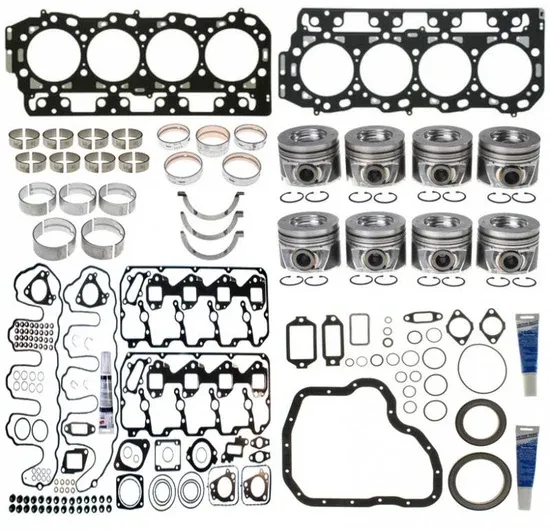
The engine series determines the search direction, the repair task determines the kit level, and teardown and measurement results determine the final specifications. An overhaul kit is ready for final ordering only when these three conditions are aligned.
This guide does not repeat how to decide whether an engine needs an overhaul, nor does it revisit the general naming difference between an Overhaul Kit and a Rebuild Kit. Its focus is how the actual supply scope of a Perkins overhaul kit is formed and what must be confirmed before the order is finalized.
The final repair depth, machining plan, reuse decisions and assembly dimensions should remain with the repair facility responsible for inspection, measurement and assembly.
“Complete” Only Has Meaning When the Repair Task Is Defined
“Complete” is not an independent material standard. Its meaning depends on the repair task the kit is intended to complete.
For a top-end repair, complete may mean that the cylinder-head gasket, valve-train seals and related installation parts are covered. For a single-cylinder repair, it may mean that the piston, rings, liner, seals and connecting-rod bolts for that cylinder are included. For a core-engine overhaul, it may refer to multi-cylinder internal parts together with upper and lower gasket packages.
The first purchasing question should therefore be:
What specific repair task is this kit intended to complete?
It should not be:
Is this the largest kit available?
A larger kit is not automatically a better purchase. When the repair scope is still uncertain, buying more components can increase inventory, mismatch and return risk without improving the repair plan.
Different Perkins Engine Families Use Different Kit Strategies
Perkins engines cover a wide range of sizes, generations and applications. The overhaul approach used for one engine family should not be transferred automatically to another.
For heritage engines and long-service platforms with replaceable liners, the main purchasing difficulty is often not whether the kit contains liners. The more important questions are whether the engine still retains its original configuration, whether previous repairs changed the piston-and-liner arrangement, and whether older part numbers have been superseded.
Some smaller and medium engine families use a parent-bore design. Depending on the exact engine and measured condition, the repair solution may involve standard or oversize pistons. Whether an oversize option is approved, and which size is applicable, must be confirmed against current technical information for the exact engine.
Perkins’ current 2000 Series overhaul programme provides progressively deeper kit levels, ranging from top-end work to broader basic, comprehensive and complete overhaul scopes. The 4000 Series follows a more modular strategy, allowing the repair scope to be organised around tasks such as cylinder-head replacement or overhaul, valvetrain work, single-cylinder repair, re-ringing or bottom-end overhaul.
These two approaches reinforce the same purchasing principle: the kit should be selected for the actual engine platform and repair task, rather than from the word “Complete” alone.
These differences show that a Perkins Overhaul Kit is not a single product definition shared across all series. It is a supply solution designed around a particular engine structure and repair task.
For a specific engine, the available kit levels and their actual coverage should be confirmed against current parts data rather than inferred from another series.
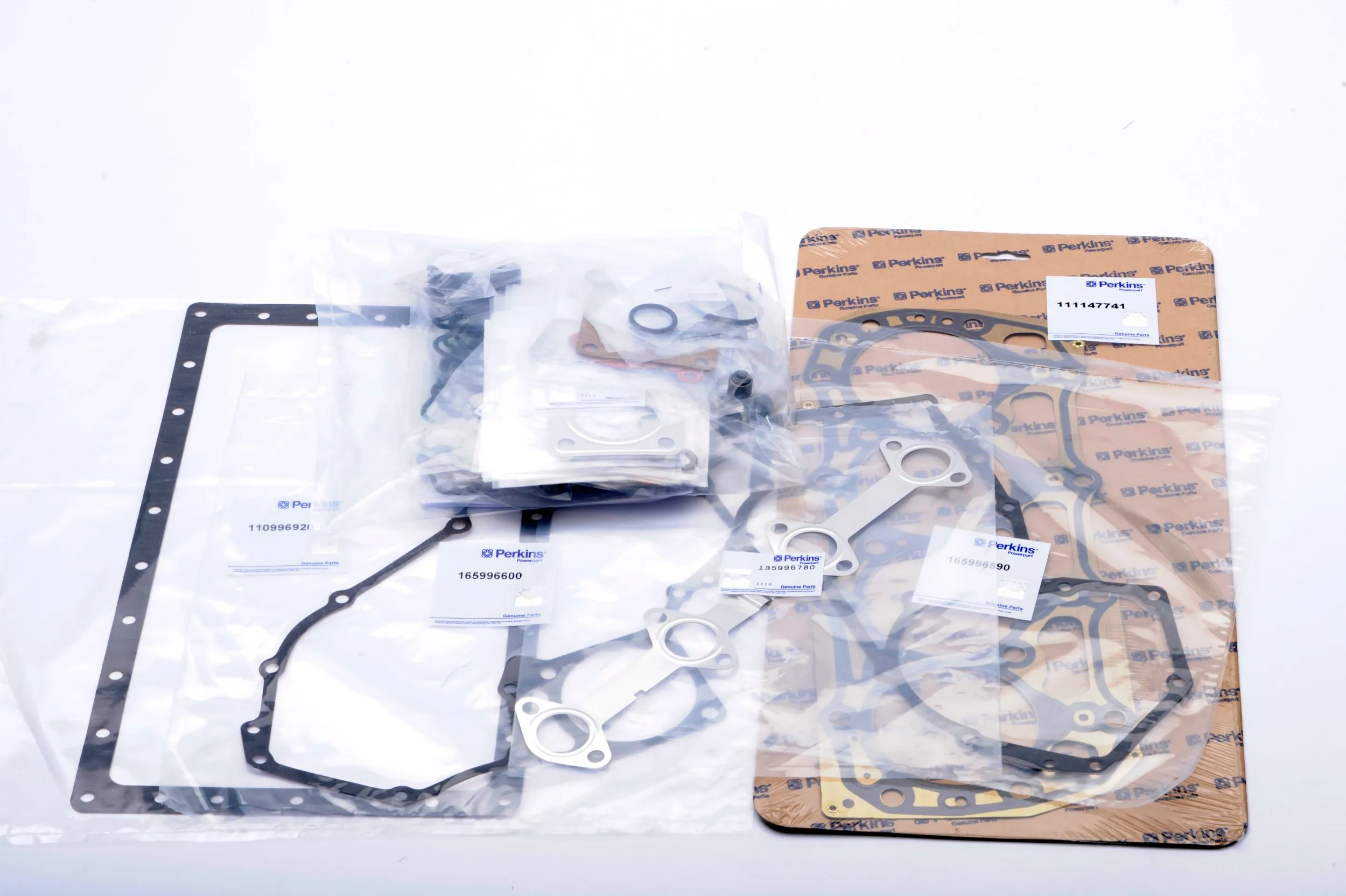
Wet-Liner Engines: Confirm the Required Sealing Parts
Some Perkins engines use wet cylinder liners. The exact liner design must be confirmed from the engine configuration and applicable service information.
A wet liner is exposed directly to the engine coolant on its outer surface and therefore relies on sealing components matched to the liner and cylinder-block design.
When a supplier quotes a cylinder liner, the buyer should confirm whether the offer covers only the bare liner or also includes the required seals and installation parts.
For an engine confirmed to use wet liners, the related sealing components are normally part of the installation requirement and should be identified according to the service information for that engine. Assuming that every liner quote automatically includes the seals can lead to missing parts at assembly.
Worn, damaged or incorrectly matched seals may allow coolant to enter the crankcase. The cylinder-block sealing surfaces also require inspection. New liners and seals cannot correct corrosion or damage in the block sealing area by themselves.
That condition belongs to teardown and inspection, not to parts purchasing alone.
Components That Should Not Be Assumed Included Because the Kit Says “Complete”
An overhaul kit is usually organised around internal engine parts and sealing requirements. It does not automatically contain every component that may be needed during the complete repair project.
Fuel pumps, injectors, turbochargers, water pumps, oil pumps, cylinder-head assemblies, starter motors and similar components may need separate confirmation based on inspection results and the supplier’s bill of materials.
Internal engine wear does not automatically prove that the injectors must be replaced. Likewise, the presence of pistons and gaskets in the kit does not prove that the existing oil pump can be reused without inspection.
A more reliable way to control the purchasing scope is to divide the project into four groups:
- Included in the kit;
- Explicitly excluded;
- Available as an optional quotation;
- To be decided after teardown or testing.
This prevents “possibly required” from being interpreted as “automatically included” and reduces repeated additional orders during the overhaul.
Why Pistons, Bearings and Other Internal Parts Can Vary Within One Series
An engine-series name only narrows the search to a platform. The full engine serial number and corresponding configuration information are required to confirm the exact version and compatible components.
One series may contain different piston versions, liner or bore designs, gasket combinations, production stages and superseded service parts.
Bearing-set quantity should not be calculated directly from cylinder count. The quantity and arrangement of main bearings, connecting-rod bearings and thrust components should be confirmed from the parts information for the exact engine.
Thrust designs may also vary. Some engines use separate thrust washers, while others combine the thrust function with a main-bearing design.
If the crankshaft has been reground, the bearing specification must be selected according to the finished journal dimensions. This normally means a corresponding undersize bearing specification; it should not be treated simply as “a thicker bearing that will fit.”
A supplier may initially quote standard-size components for budgeting. That is reasonable, provided the quotation is not treated as the final specification before the crankshaft and related parts have been measured.
The final order should distinguish among specifications that have already been measured and confirmed, items quoted provisionally at standard size, and items whose final specification remains subject to machining results.
The supplier should not be expected to guess the final repair size remotely.

Older Perkins Engines Require Both Original Identity and Current Physical Evidence
Many older Perkins engines remain in active service, but these projects are often more difficult to identify than newer platforms.
The data plate may be worn or missing, original records may no longer be available, and the cylinder head, pistons, fuel system or cooling components may have been changed during previous repairs. Older part numbers may also have been replaced by newer service numbers.
An inquiry for a legacy engine should therefore include more than:
“[Engine model] complete overhaul kit.”
A stronger information package includes the available engine data plate or serial number, existing part numbers, clear photographs of removed components, cylinder and crankshaft measurements, and any known repair history.
For an older engine, identity records indicate how the engine was originally built. Physical parts and measurement results show its current condition. Both are needed.
Two Quotations Must Cover the Same Repair Scope Before Their Prices Can Be Compared
Two quotations may both say “Complete Overhaul Kit” and still be unsuitable for direct price comparison.
One offer may contain pistons, rings, liners and a complete gasket package. Another may add main and connecting-rod bearings, thrust components and connecting-rod bolts. A third may refer to a different engine prefix, different product condition or different quantity basis.
Before comparing total prices, buyers should align the engine identity, kit part number, repair level and itemised bill of materials. The piston, liner and bearing specifications must match, and the quotation should identify the brand or product condition, upper and lower gasket coverage, necessary installation parts, optional items, lead time and warranty boundary.
A quotation that says only:
Perkins overhaul kit × 1
does not show which repair task the kit covers. It also provides little basis for receiving inspection.
Information to Prepare Before Ordering
In addition to the complete engine model and serial number, buyers should prepare the planned repair level, such as top-end service, in-frame repair or complete overhaul.
The inquiry should state whether the crankshaft has already been reground and, if so, provide the finished repair-size information. The liner design should also be identified where possible; when it is unclear, the supplier or repair facility should verify it against the engine data.
Photographs or service part numbers from the existing pistons and liners can help confirm the installed version. Teardown findings and measurement records should be included when they affect the final specification.
When Can the Order Be Finalized?
A Perkins overhaul-kit order does not need to wait until every external engine component has been tested. However, three conditions should be met before the order is treated as final.
First, the engine identity has been confirmed through the full serial number or other reliable configuration information.
Second, the repair task is clear. The buyer, repair facility and supplier share the same understanding of the repair level.
Third, the specifications affecting fitment have either been measured and confirmed or are clearly marked as subject to final machining results.
If these conditions are still missing, the supplier may provide a budgetary quotation and expected lead time. The quotation should not be treated as an unchangeable final order.
How ZEB Power Helps Review Perkins Overhaul Kits
ZEB Power uses the engine model, full serial number, equipment application, teardown findings and planned repair scope to help buyers review the actual supply content of Perkins overhaul kits.
ZEB Power can help confirm whether the kit matches the correct engine configuration, which repair level the quotation covers, whether piston, liner and bearing specifications are ready for ordering, and which components are included, optional or still subject to teardown confirmation.
The decision that an engine needs an overhaul, the reuse of existing parts, the machining plan for the crankshaft and cylinder block, and the final assembly dimensions should remain with the repair facility responsible for inspection and assembly.
Provide the engine data plate, full serial number, teardown findings, measurement results and planned repair scope. ZEB Power can help organise the overhaul-kit quotation into a material scope that can be reviewed, ordered and checked on receipt.
Frequently Asked Questions
What Does a Perkins Engine Overhaul Kit Usually Include?
Common contents may include pistons, piston rings, gaskets and seals, together with cylinder liners on applicable engines. The actual content varies by engine family and repair task and should be confirmed from the itemised bill of materials.
Does a Complete Perkins Overhaul Kit Include the Cylinder Head, Injectors and Turbocharger?
Not necessarily. “Complete” usually refers to a defined repair task. Cylinder-head assemblies, injectors, fuel pumps, turbochargers and other external systems often require separate confirmation.
Can an Overhaul Kit Be Ordered Using Only the Engine Model?
Usually not. One engine family may contain multiple configurations and component versions. The full serial number or corresponding configuration information should be provided.
How Do I Know Whether the Bearings Should Be Standard or Repair Size?
The specification should be determined from crankshaft journal measurements and machining results. It should not be selected from the engine model or the appearance of the old bearings alone.
Can an Overhaul Kit Be Ordered Before the Engine Is Disassembled?
A budgetary price and availability check can be requested before teardown. However, the estimated kit should not be frozen as the final order while piston, liner and bearing specifications or the repair scope remain unconfirmed.
Do Cylinder Liners in an Overhaul Kit Always Include Seals?
Not always. Some offers may cover bare liners only. The buyer should ask the supplier to state clearly whether the matching liner seals and installation parts are included.