

Cummins Generator Engine Parts: Maintenance & Spare Parts Guide

4940
Table of Contents
Generating table of contents
Maintaining a Cummins engine in a generator set follows a completely different logic than mining equipment. Mining is "sustained heavy load → accelerated wear → downtime means lost production." A generator set needs a different starting question first: which operating mode does it actually run in — because the two modes face fundamentally different risks:
- Standby — backup generators for data centers, hospitals, and factories sit idle most of the time. The real risk isn't wear from heavy use — it's hidden deterioration from sitting unused: fuel degrading and gelling, batteries losing charge, seals aging from prolonged inactivity. The failure mode that matters is "won't start when you need it most"
- Prime Power — remote sites and long-term off-grid applications where the engine runs continuously. This is logically closer to mining equipment: sustained load drives wear, and downtime means lost output
This distinction matters because a lot of people default to "service by running hours" as the maintenance logic — that's fine for prime power, but it misses the biggest risk factor for standby applications.
A quick side-by-side comparison:
| Operating Mode | Core Risk | Maintenance Focus | Parts Focus |
|---|---|---|---|
| Standby | Hidden deterioration from extended idle time, failure to start when needed | Regular test runs, load testing, fuel and starting system checks | Filters, belts, starter motors, alternators, sensors, seals |
| Prime Power | Wear from continuous operation | Service and overhaul planned by running hours | Filters, cooling system parts, injectors, bearings, piston/liner sets, overhaul kits |
Why a Generator That's "Barely Been Used" Can Still Fail
Here's the counterintuitive part about standby generators: even with very low running hours, extended idle time alone can create hidden problems. This shows up in a few ways:
- Fuel degradation and gelling — diesel left in storage for extended periods oxidizes and gels, clogging injectors and filters — a problem that only surfaces once you actually try to start the unit
- Battery discharge — a battery left idle without regular charge maintenance can leave you without enough charge to start when it counts
- Seal aging — seals left in a static state for long periods can develop leak risk from age, temperature fluctuation, insufficient lubrication, or rubber hardening — not simply "drying out"
- Moisture and dust intrusion — without proper environmental control, an idle unit's intake system and electrical connections are more prone to moisture or dust buildup, affecting start reliability
One thing that's easy to overlook: an unloaded test start only confirms the unit "can start" — it doesn't confirm the cooling system is fine under real load. Water pumps, cooling lines, and hoses can only really be validated under a load test, which is exactly why load testing matters, not just start testing.
What all of these have in common: the unit looks fine on paper precisely because it isn't running — and the problem only surfaces the moment it's actually needed, which is usually right when grid power fails and backup power is the only thing standing between operations and an outage.
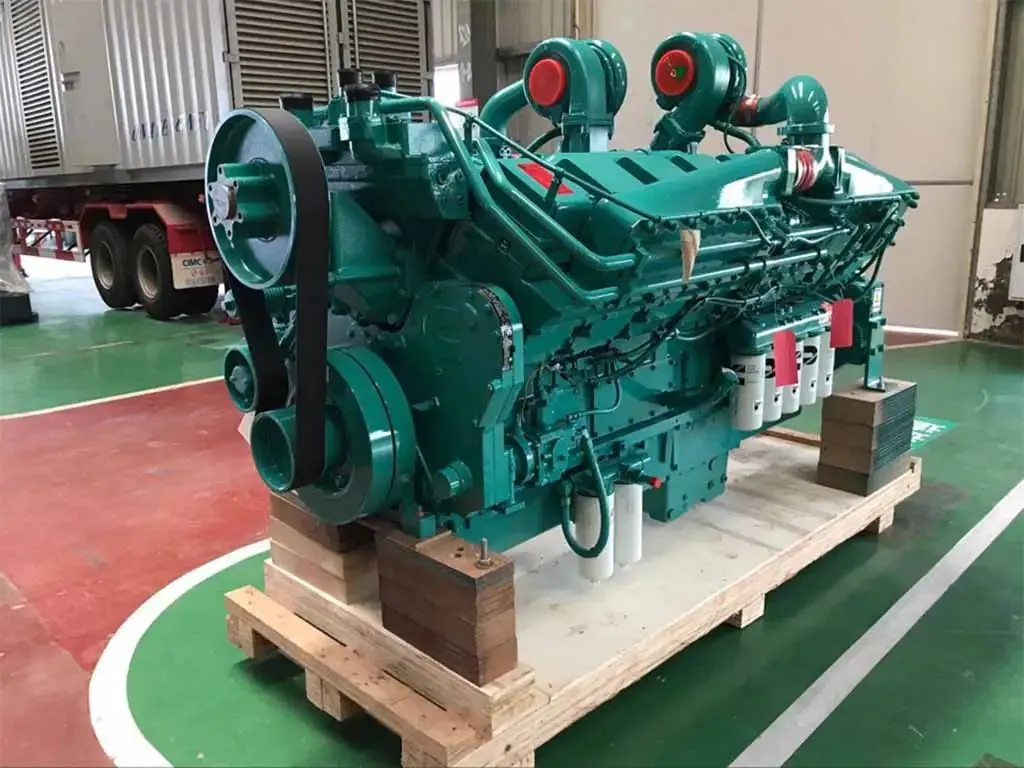
Preventive Maintenance for Standby Gensets
Since the core risk here is idle deterioration rather than wear, standby maintenance should center on regular test runs and load testing, not a schedule built purely around running hours:
- Regular unloaded test starts — on a calendar schedule (not running hours), confirming the unit starts cleanly and runs smoothly
- Regular load testing — an unloaded test only confirms it can start, not that it can deliver stable output under real load; schedule load tests regularly
- Fuel system management — check fuel quality periodically, and cycle or stabilize fuel as needed to prevent gelling from extended storage
- Battery maintenance — check battery charge and health as part of routine inspection, rather than discovering a battery problem only after a failed start
The core idea here: proactively "wake up" the unit to catch problems, instead of discovering them reactively at the one moment backup power is actually needed.
Preventive Maintenance for Prime Power Gensets
If the genset runs continuously as a prime power source, the logic looks a lot more like mining equipment's wear model:
- Schedule service and overhauls by running hours, not calendar time
- Cooling system components and core moving parts (pistons, liners, bearings) wear at a rate tied directly to load and run time, and need more frequent inspection
- Planned overhaul windows can be scheduled ahead of time around load dispatch, minimizing unplanned downtime
This part of the logic lines up with mining equipment maintenance — for continuously running equipment, the risk comes from wear, not idle deterioration.
Parts Most Affected by Extended Idle Time
For standby gensets, the following parts are most exposed to "sitting idle" and are worth watching closely:
- Fuel system — injectors, fuel filters, fuel pumps; fuel left in storage for extended periods is prone to clogging or corrosion
- Electrical starting system — starter motors, batteries, alternators; the most likely spot for charge loss or poor contact during idle periods
- Seals — O-rings and oil seals (including cooling system-related seals) prone to aging and cracking in a static environment
- Sensors and control modules — electrical components left idle for long stretches, where connectors are more prone to moisture or oxidation affecting reliability
These parts don't necessarily fail from use — they fail from sitting. Sourcing and replacement should account for idle duration and environmental conditions, not just running hours.
Parts Most Affected by Continuous Operation
For prime power gensets, the logic is closer to mining equipment:
- Cooling system — water pumps, thermostats, cooling lines carry a much higher thermal load under sustained operation
- Core moving parts — pistons, piston rings, liners, bearings, where continuous heavy load is the primary driver of wear
- Maintenance consumables — oil, fuel, and air filters, replaced on a running-hours schedule
Genuine or Aftermarket for Critical Standby Power
For data centers, hospitals, and critical facilities where "the backup power absolutely cannot fail," the genuine-vs-aftermarket decision isn't really about displacement or cost — it comes down to whether you can absorb the consequence of a failed start at the moment it matters most.
In these scenarios, even if the engine itself is a mid- or lower-displacement model, the fact that it's a critical standby application pushes genuine parts higher in priority for core components (injectors, starting-system-related parts) — not because aftermarket is inherently unreliable, but because a failure in this context typically costs far more than the price difference on the part itself. For consumables like filters and belts, high-quality aftermarket remains a reasonable choice — there's no need to default to genuine across the board just because it's a "critical standby" label.
Whichever route you take, genuine parts still need to be confirmed against the ESN and CPL for the specific version — "critical application" doesn't mean you can skip fitment confirmation.
Standby Genset Stocking Tiers
Condensing stocking priority into a quick-reference table:
| Tier | Part Type | Guidance |
|---|---|---|
| A: Recommended to stock | Oil/fuel/air filters, belts, common gaskets, O-rings | Stock by maintenance cycle and unit count |
| B: Stock in moderation | Starter motors, alternators, water pumps, thermostats, common sensors | Directly affect starting or stable operation — stock based on unit criticality |
| C: Planned purchase | Injectors, fuel pumps, gasket sets, crankshaft oil seals, key cooling system parts | Confirm against running hours, idle status, fault history, and maintenance plan |
| D: Confirm per order | Pistons, liners, bearings, overhaul kits, special-spec injectors | Confirm against ESN/CPL, overhaul scope, and engine configuration |
A note on batteries: while a battery isn't technically a Cummins engine part, it's critical to standby genset start reliability and should still be part of routine inspection and condition monitoring — don't overlook it just because it's not on this parts list.
For critical standby applications — data centers, hospitals, mine sites, factories — Tier A and B items deserve extra attention, since a failed starter motor, alternator, water pump, or sensor directly affects unit availability.
Not sure what pace to maintain and stock at for your standby genset program? Send us the genset model, idle duration, and test run frequency, and we'll help work out specific recommendations.
Common Cummins Engine Series Used in Gensets
Genset projects commonly involve the 4BT/6BT series, QSB/QSC/QSL, NT855/NTA855, M11/QSM11, KTA19, KTA38, KTA50, and the QSK series, spanning a wide range of power outputs. The specific parts still can't be judged from the engine series alone — even for the same KTA19 genset, different power ratings and CPLs can mean different injectors, gasket sets, bearings, or overhaul kit contents, which still needs to be confirmed against the engine nameplate, ESN, and CPL.
Building a Parts Record for Your Genset Fleet
If you're managing multiple generator sets, keeping a unit and engine record is more efficient than re-verifying information from scratch on every job. The record can include:
- Genset model, engine model, ESN, CPL
- Rated power, standby or prime use
- Running hours, last maintenance date
- Last load test date
- Engine nameplate photo
- Common and emergency spare parts list
- Overhaul history
- Genuine vs. aftermarket usage history
This is especially valuable for multi-unit programs — data centers, hospitals, mine sites, factories, telecom sites — since a supplier can give more relevant stocking suggestions based on unit type and operating history, and it cuts down the time spent re-verifying information on every inquiry.
What to Send for an Accurate Quote
Use this format and a supplier can confirm parts and lead time faster:
Genset Parts Inquiry Format:
- Genset Model:
- Engine Model:
- ESN / CPL:
- Standby or Prime Power:
- Part Number:
- Quantity:
- Genuine or Aftermarket:
- Destination Country:
- Required Delivery Time:
For a standby power project, add:
- Idle Duration:
- Test Run Frequency:
For an overhaul kit inquiry, add:
- Overhaul Type: Top / In-Frame / Complete
- Running Hours:
How ZEB Power Supports Generator Maintenance Programs
ZEB Power supplies parts for Cummins generator engines, covering critical standby applications for data centers, hospitals, and factories, as well as long-term off-grid prime power applications in remote locations.
For genset customers, we can help with:
- Planning different maintenance and stocking priorities depending on whether the unit is standby or prime power
- Offering genuine parts or rigorously verified high-quality aftermarket options for critical standby applications
- Confirming which parts are most exposed under extended idle conditions
- Confirming part versions and lead time ahead of planned maintenance windows
Specifically: for standby projects, we focus on starting system, fuel system, filters, belts, sensors, and seals — the parts most likely to affect start reliability. For prime power projects, we help confirm cooling system parts, injectors, bearings, piston/liner sets, and overhaul kits based on running hours and planned maintenance windows.
Ready to plan maintenance and spare parts for your genset program? Send ZEB Power the genset model, operating mode, and maintenance schedule, and we'll help you work it out.

FAQ
1. Should standby generator maintenance be scheduled by running hours or calendar time?
Both matter, but since the core risk for standby gensets is idle deterioration, lean on calendar-based scheduling (regular test runs, regular load tests) with running hours as a secondary reference.
2. Why does a standby generator that's barely been used still need maintenance?
Because the core risk isn't wear — it's hidden problems from extended inactivity: fuel gelling, battery discharge, seal aging. These only surface once the unit actually needs to start.
3. What should a standby power project prioritize stocking?
Filters, belts, common gaskets, O-rings, starter motors, alternators, and common sensors are good candidates to stock. Batteries, while not a Cummins engine part, should still be part of routine starting-system checks. Injectors, fuel pumps, and overhaul components carry higher matching risk and should be confirmed against ESN/CPL, running hours, and the maintenance plan before ordering — not treated as top stocking priorities.
4. Does a critical standby application always require genuine parts?
Not as an absolute rule, but core components (injectors, starting-system parts) do warrant genuine parts more strongly in critical standby applications, since the cost of a failure typically far exceeds the price difference on the part. Filters and belts remain reasonable candidates for high-quality aftermarket.
5. Is prime power genset maintenance the same as mining equipment maintenance?
The logic is quite similar — both are driven by wear from continuous operation, with service and overhauls scheduled by running hours rather than calendar time.
6. What does a proper test run actually involve?
Distinguish between an unloaded test start and a load test — the former confirms the unit starts and runs cleanly, the latter confirms it delivers stable output under real load. Both should be part of a regular maintenance plan.
Summary: Generator Maintenance Starts With Knowing Whether It's Idle or Running
Cummins generator engine maintenance isn't one-size-fits-all. Standby units face hidden deterioration from extended idle time, so maintenance should center on regular test runs and load testing, with parts stocking built around the starting system, fuel system, and seals. Prime power units face wear from sustained load — logically closer to mining equipment — and should be planned by running hours for service and overhauls.
Not sure how to plan maintenance and spare parts for your genset program? Send ZEB Power the genset model, operating mode, and maintenance schedule, and we'll help you work out a specific plan.