

Cummins Diesel Engine Parts List: Common Replacement Parts by System

7173
Table of Contents
Generating table of contents
When you're planning a parts budget, checking current stock, or putting together a bulk quote request, what's usually missing isn't a rough idea of what parts exist — it's a list organized by system, thorough enough to actually check against.
This list groups common Cummins parts by engine system and by common purchasing category, with a rough replacement reference for each (routine maintenance, tied to an overhaul, or check-and-replace-if-needed) and a matching risk level — whether you can order it by name alone, or whether you'll need to confirm it against the ESN, CPL, or part number first.
One note before diving in: the "replacement reference" column is directional, not diagnostic. Whether a specific part actually needs replacing still comes down to inspection results, plus the engine model, ESN, and CPL.
How to Use This List
- Building an annual or phased parts budget — go system by system and flag where stock is thin
- Checking current inventory — cross-reference against the list to catch gaps before they cause delays
- Putting together a quote request — pull what you need from the list, add engine model and quantities, and send it to a supplier
This list isn't a substitute for proper diagnostics. If the engine is already showing symptoms, get those confirmed first, then use the list to pin down which specific parts are involved.
Fuel System Parts
| Part | Function | Replacement Reference | Matching Risk |
|---|---|---|---|
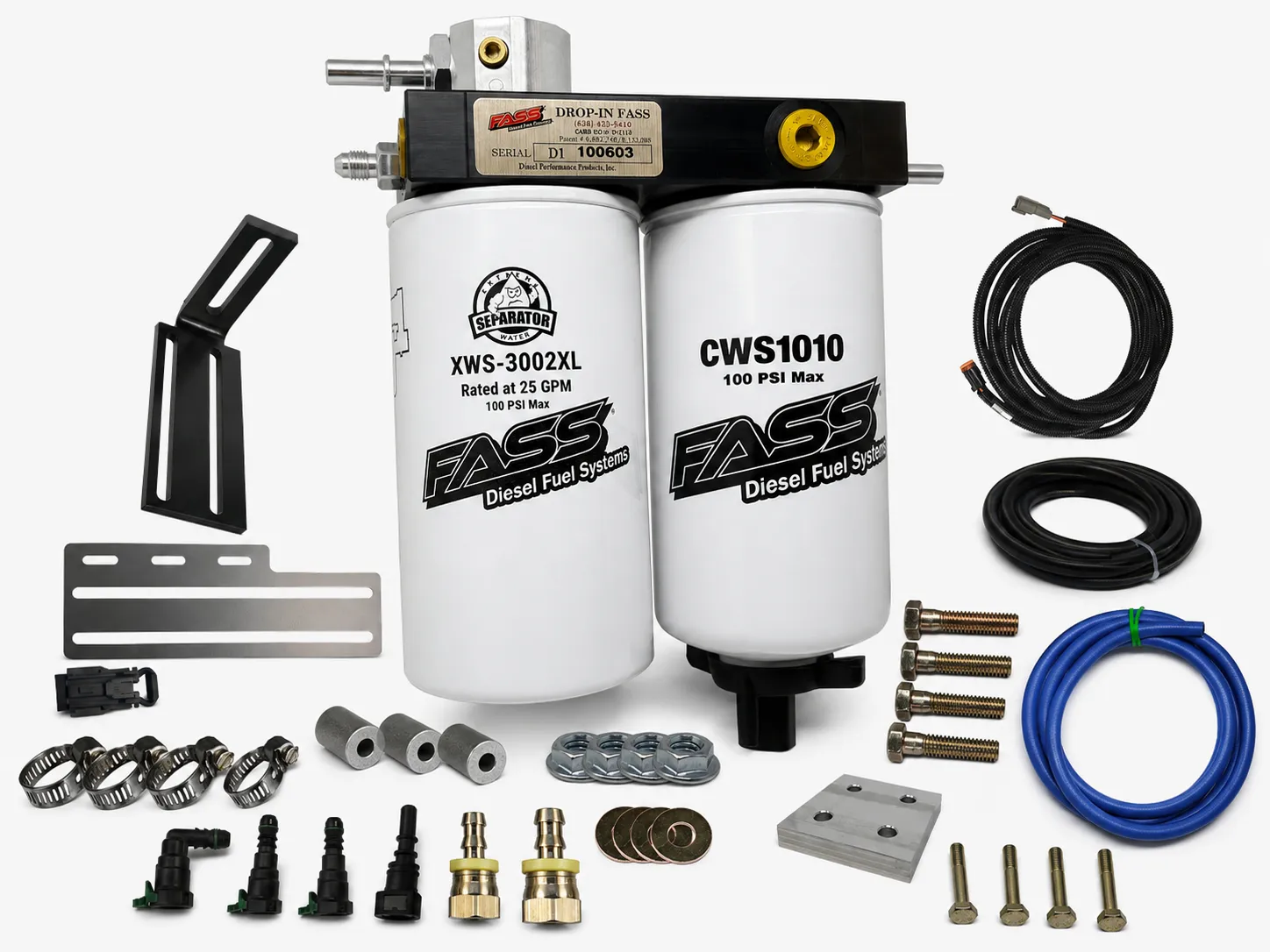
| Injector | Controls fuel atomization and injection timing — directly affects combustion | Check for power loss, black smoke, or hard starting; worth inspecting during an in-frame/complete overhaul, with replacement depending on condition and repair scope | High — provide ESN/CPL/part number |
| High-pressure fuel pump | Supplies high-pressure fuel to the injectors | Check for abnormal supply pressure; replace based on wear found during overhaul | High — provide ESN/CPL/part number |
| Low-pressure transfer pump | Moves fuel from the tank to the high-pressure system | Inspect periodically; replace on low supply, pressure irregularities, or age-related failure | Medium — provide part number or old part photo |
| Fuel filters (primary/secondary) | Filters contaminants, protects the injection system | High-frequency item, replaced on a routine maintenance schedule | Low — part number is usually enough |
| High-pressure fuel lines | Connect the high-pressure pump to the injectors | Replace on visible leaks; inspect during overhaul | Medium — provide part number |
Air Intake & Turbocharger Parts
| Part | Function | Replacement Reference | Matching Risk |
|---|---|---|---|
| Turbocharger | Raises intake pressure, boosting combustion efficiency and power output | Check for power loss, unusual noise, or insufficient boost | High — provide ESN/CPL/part number |
| Air filter | Filters incoming air | High-frequency item, routine schedule; more often in dusty environments | Low — part number is usually enough |
| Intake manifold | Distributes intake air to each cylinder | Inspect for leaks or heavy carbon buildup | Medium — provide part number |
| Intercooler | Cools compressed intake air before combustion | Check for poor cooling performance or leaks | Medium — provide part number |
| Intake hoses/clamps | Connect intake components, secure piping | Replace on aging or leaks | Low — part number is usually enough |
Exhaust System Parts
| Part | Function | Replacement Reference | Matching Risk |
|---|---|---|---|
| Exhaust manifold | Directs exhaust gas out or into the turbo | Check for cracks or leaks | Medium — provide part number |
| Exhaust pipe | Carries exhaust gas out of the system | Replace on damage or leaks | Low — part number is usually enough |
| Muffler | Reduces exhaust noise | Check on damage or blockage | Low — part number is usually enough |
| Exhaust gaskets | Seal exhaust connections | Replace during teardown or when leaking | Medium — provide part number |
Cylinder & Piston Components
| Part | Function | Replacement Reference | Matching Risk |
|---|---|---|---|
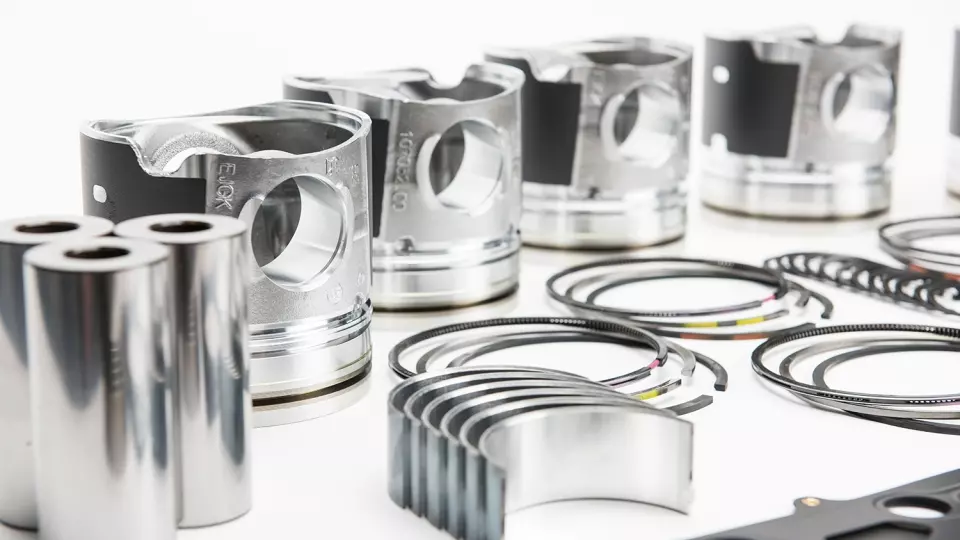
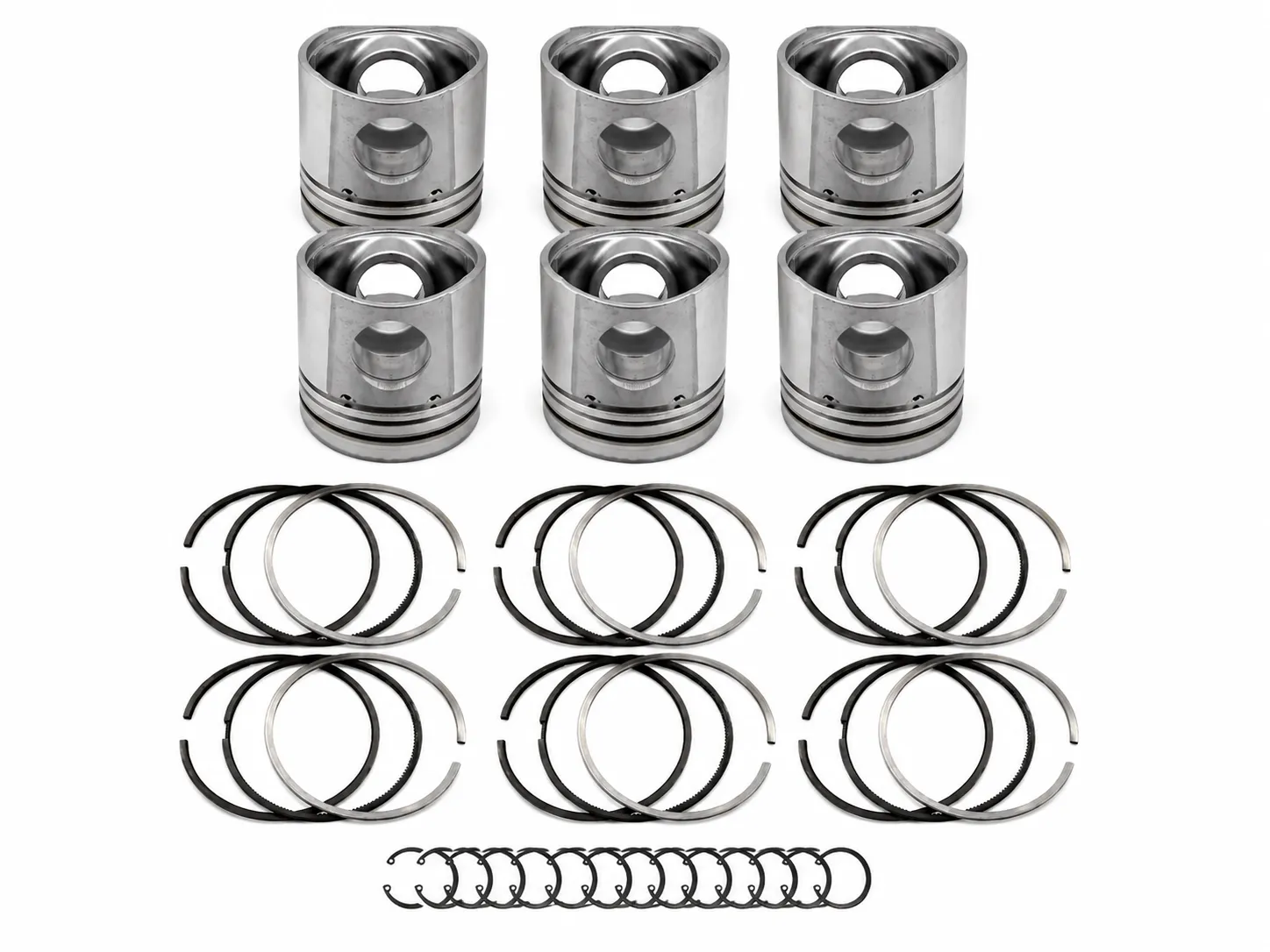
| Piston | Core moving component of the combustion chamber | Replaced during in-frame or complete overhaul | High — provide ESN/CPL/part number |
| Piston rings | Seal the combustion chamber, control oil consumption | Routine in-frame overhaul item; check first if oil consumption is noticeable | High — provide ESN/CPL/part number |
| Piston pin | Connects piston to connecting rod | Replaced along with the piston assembly | High — provide ESN/CPL/part number |
| Piston retaining ring | Holds the piston pin in place | Replaced along with the piston assembly | Medium — provide part number |
| Cylinder liner | Forms the cylinder wall surface for the piston | Routine in-frame overhaul item; check first for wear or scoring | High — provide ESN/CPL/part number |
Bearing System Parts
| Part | Function | Replacement Reference | Matching Risk |
|---|---|---|---|
| Connecting rod bearing | Supports the rod-to-crankshaft connection | Routine in-frame overhaul item; check first for abnormal oil pressure or noise | High — confirm standard or oversized version |
| Main/crankshaft bearing | Supports the crankshaft's main journals | Routine in-frame overhaul item | High — confirm standard or oversized version |
| Thrust washer | Controls crankshaft axial play | Routine in-frame overhaul item | High — confirm standard or oversized version |
Cylinder Head Components
| Part | Function | Replacement Reference | Matching Risk |
|---|---|---|---|
| Cylinder head | Seals the top of the combustion chamber, houses the valve train | Key inspection point in a top overhaul; replace on cracks, warping, or seal failure | High — provide ESN/CPL/part number |
| Valves | Control intake and exhaust flow | Routine top overhaul item; check first for poor sealing | High — provide ESN/CPL/part number |
| Valve guides | Guide valve movement | Routine top overhaul item | Medium — provide part number |
| Valve seats | Form the sealing surface with the valve | Routine top overhaul item | Medium — provide part number |
| Rocker arms & related components | Drive valve opening/closing | Check on unusual noise or valve clearance issues | Medium — provide part number |
Sealing Components
| Part | Function | Replacement Reference | Matching Risk |
|---|---|---|---|
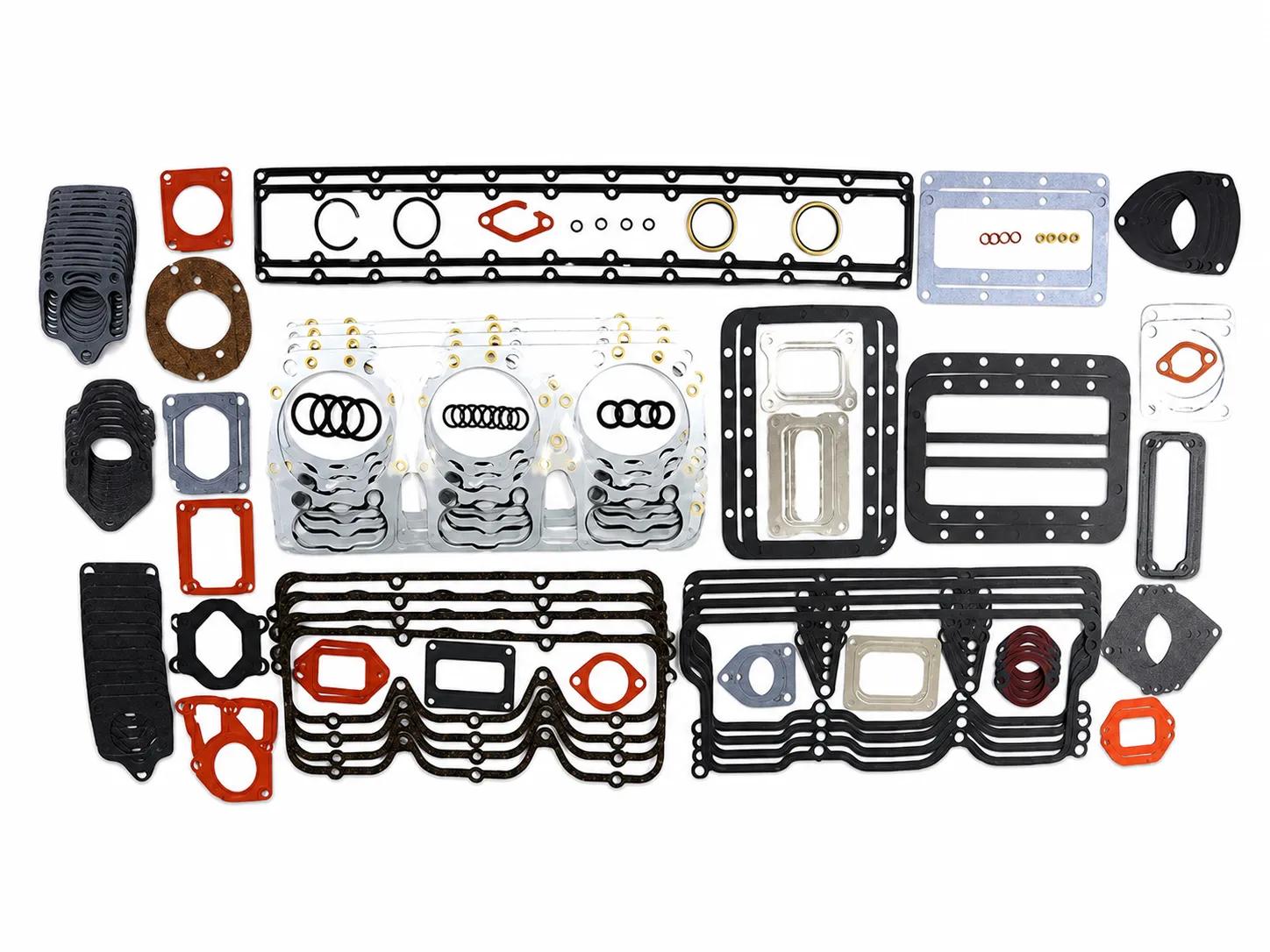
| Head gasket | Seals between the cylinder head and block | Mandatory top overhaul item; check first on oil/coolant leaks | High — provide ESN/CPL/part number |
| Upper gasket set | The gasket group used in a top overhaul | Replaced as part of the top overhaul | High — provide ESN/CPL |
| Front crankshaft seal | Seals the front of the crankshaft | Routine complete overhaul item; check on visible leaks | High — provide ESN/CPL/part number |
| Rear crankshaft seal | Seals the rear of the crankshaft | Routine complete overhaul item | High — provide ESN/CPL/part number |
| O-rings | Seal various fittings and connections | Replaced along with the associated component during repair | Low — part number is usually enough |
Cooling System Parts
| Part | Function | Replacement Reference | Matching Risk |
|---|---|---|---|
| Water pump | Drives coolant circulation | Check on leaks or abnormal coolant temperature | High — provide ESN/CPL/part number |
| Thermostat | Regulates coolant flow to maintain operating temperature | Inspect periodically; check first on temperature irregularities | Medium — provide part number |
| Fan belt | Drives the fan and related accessories | High-frequency item, routine schedule | Low — part number is usually enough |
| Coolant hoses | Connect cooling system components | Replace on aging or leaks | Low — part number is usually enough |
Lubrication System Parts
| Part | Function | Replacement Reference | Matching Risk |
|---|---|---|---|
| Oil pump | Provides oil circulation pressure | Check first on low oil pressure | High — provide ESN/CPL/part number |
| Oil filter | Filters contaminants from the oil | High-frequency item, routine schedule | Low — part number is usually enough |
| Oil cooler | Lowers oil temperature | Check on abnormal oil temperature | Medium — provide part number |
| Oil pan | Stores engine oil | Replace on leaks or damage | Medium — provide part number |
| Oil pressure sensor | Monitors oil pressure readings | Check on abnormal readings or a warning light | Medium — provide part number |
Worth flagging: if an engine is already showing low oil pressure alongside unusual noise, replacing just the pump or filter usually isn't enough — bearing and crankshaft wear typically need to be checked too.
Electrical Components
| Part | Function | Replacement Reference | Matching Risk |
|---|---|---|---|
| Starter motor | Cranks the engine on startup | Check on weak or failed starting | High — provide ESN/CPL/part number |
| Alternator | Charges the battery and powers the electrical system | Check on charging irregularities | High — provide ESN/CPL/part number |
| Sensors (temperature, pressure, etc.) | Monitor engine operating parameters | Check on abnormal readings or a warning light | Medium — provide part number |
High-Frequency Stock Items
Some of these already showed up above (fuel/air/oil filters, belts) — this section pulls them together from a purchasing angle rather than adding another system category. These are the items with predictable consumption rates that make the most sense to stock in bulk on a schedule:
| Part | Function | Replacement Reference | Matching Risk |
|---|---|---|---|
| Oil filter | Filters oil contaminants | High-frequency item, routine schedule | Low — part number is usually enough |
| Fuel filter | Filters fuel contaminants | High-frequency item, routine schedule | Low — part number is usually enough |
| Air filter | Filters intake air contaminants | High-frequency item, routine schedule; more often in dusty environments | Low — part number is usually enough |
| Coolant filter | Filters cooling system contaminants | Routine schedule | Low — part number is usually enough |
| Belts | Drive fan, water pump, and accessories | High-frequency item, routine schedule | Low — part number is usually enough |
| Hoses/clamps | Carry fuel, coolant, or air; secure piping | Replace on aging or leaks | Low — part number is usually enough |
| General gaskets/seals | Routine sealing | Replaced along with the associated component | Low to medium, depending on location |
Which Parts Actually Require ESN, CPL, or Part Number Confirmation?
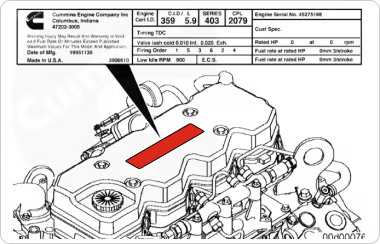
Each table above already flags matching risk item by item — here's the same information pulled together in one place, so it's easier to scan. Get any of these wrong, and the consequences tend to be expensive (won't install, rework, another shutdown), so don't order these from engine model or part name alone:
- Injectors, fuel pumps
- Turbochargers
- Pistons, piston rings, piston pins, cylinder liners
- Main bearings, rod bearings, thrust washers
- Head gaskets, upper gasket sets, front/rear crankshaft seals
- Water pumps
- Starter motors, alternators
- Overhaul kits (top, in-frame, or complete)
For these, try to provide the part number, engine model, ESN, CPL, nameplate photo, old part photo, application, and quantity. Routine consumables — filters, belts, hoses — are the opposite case: a model or part number is usually all that's needed. Put simply: this list is telling you what you can order outright, and what you can't afford to guess on.
Which Parts Are Worth Stocking Ahead of Time?
Not everything needs to be kept on the shelf, but a few categories are worth stocking in advance — especially for mining fleets and gensets, where downtime is expensive:
- High-frequency stock items (oil/air/fuel filters, belts) — consumption is predictable, so these are the best candidates for bulk, schedule-based ordering
- High-frequency check items (injectors, water pumps, starter motors, alternators) — when these fail, you usually need a replacement fast; keeping a few on hand cuts downtime significantly
- Routine overhaul items (piston rings, liners, bearings, gasket sets) — if a planned overhaul is already on the calendar, order to that scope ahead of time rather than scrambling mid-repair
Priorities shift by buyer type: end users typically stock based on their own equipment's failure history and maintenance schedule; workshops care more about coverage of high-frequency parts (injectors, water pumps, bearings) across common models, so they're ready for whatever comes in; traders tend to stock consumables and common overhaul parts to keep local turnover moving.
If you're managing a fleet or a genset program, it's worth building a parts record by engine model and ESN — that's the simplest way to avoid mixing up parts across engines with different configurations.
Not sure how often or how much to stock? Send us your equipment models and operating hours, and we'll help work out a stocking plan.
Turning This List Into an Accurate Quote Request
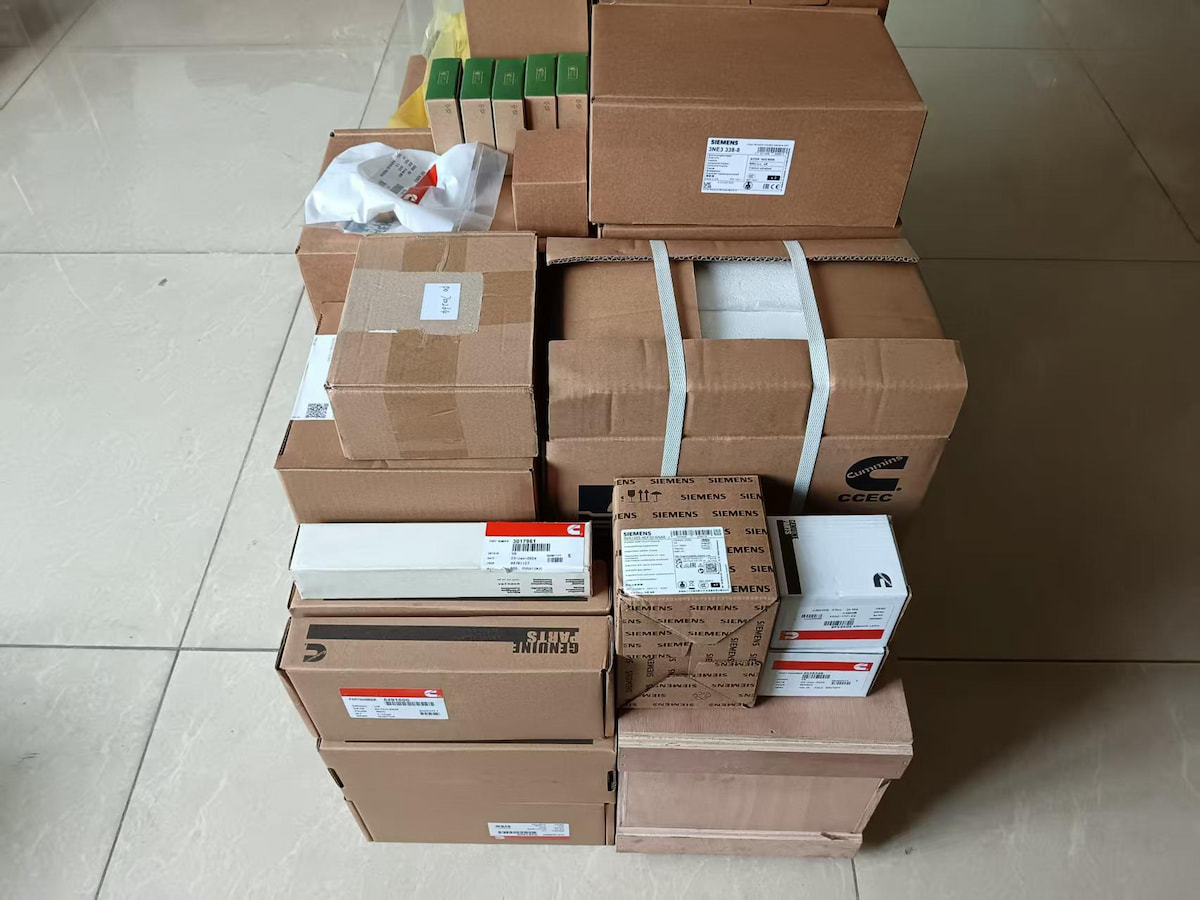
A list is a starting point — getting an actual quote still requires more specific information, especially for higher-risk items like pistons, liners, bearings, and injectors. ZEB Power can help confirm the right Cummins parts based on your engine model, ESN, CPL, or parts list, and quote either genuine or high-quality aftermarket options depending on what you need.
Use this format and you can send it as-is:
Cummins Parts Inquiry Format:
- Engine Model:
- ESN:
- CPL:
- Application:
- Part Name:
- Part Number:
- Quantity:
- Genuine or Aftermarket:
- Urgent or Stock Order:
If you don't have the ESN or CPL yet, that's fine — send over the part names and rough quantities from the list, and we'll help narrow down the exact match from there.
Put your list together and send it over — we'll confirm the match on each item and get back to you with a full quote.
FAQ
1. Can this list be used directly as a purchase order?
It's a good starting point, but for higher-risk items — injectors, pistons, liners, bearings, gaskets — confirm the engine model, ESN, or CPL before finalizing the order, to avoid a mismatch.
2. Which parts get left off orders most often?
Usually the smaller supporting items — O-rings, hoses, some sensors. They're inexpensive individually, but missing one can stall an entire repair, so it's worth double-checking these against the list too.
3. How often do high-frequency stock items need replacing?
That depends on the engine model, operating conditions, and the manufacturer's maintenance schedule — this article isn't giving specific intervals. Check the engine's maintenance manual or go by actual operating hours.
4. Do overhaul-related parts (rings, liners, bearings) all get replaced together?
Typically, yes, as a set during an in-frame or complete overhaul — but whether each one actually needs replacing still comes down to teardown findings, not just ordering off the list.
5. Is the stocking list the same for mining equipment and gensets?
Broadly similar, different emphasis. Mining equipment tends to prioritize stock levels of high-wear consumables (filters, belts, injectors); gensets lean more toward having overhaul-related parts ready ahead of a planned maintenance window.
6. Do all these parts need to be genuine?
Not necessarily. Filters and belts have well-established aftermarket options. For critical parts — injectors, pistons, liners, bearings — whether genuine makes sense depends on engine displacement and the application.
Summary: Start With the List, Then Confirm the Match
This system-by-system parts list gives you a fast way to see roughly what an engine is made of and when each part is likely to need attention — plus which items you can order outright and which ones you can't afford to guess on. It's a solid starting point for a stocking plan or a quote request. What it can't replace is accurate matching — at the point of actually ordering, each part still needs to be confirmed against the engine model, ESN, and CPL.
Got your list together? Send it over — we'll confirm the match on every item and get you a full quote.