

Cummins Complete Overhaul & Rebuild Kit – Full Assortment

4972
Table of Contents
Generating table of contents
When an engine has racked up a lot of hours, shows wear across multiple areas at once, or develops a new internal problem shortly after an in-frame overhaul, the repair scope may no longer make sense to keep confined to a single component. At that point, the question isn't just which worn parts to replace — it's whether the engine should come out for a more systematic complete overhaul.
The difference between a complete overhaul kit and an in-frame overhaul kit gets misunderstood a lot as "just more parts, higher price" — that's not quite right. This article works through what a complete overhaul is actually more complete about, when it makes more sense than going straight to an in-frame overhaul, and the details worth confirming before you order.
The Real Difference Between Complete and In-Frame Isn't Just "More Parts"
An in-frame overhaul follows the logic of "the engine stays on the equipment, and confirmed-worn core moving parts get replaced." A complete overhaul works differently — it's closer to a systematic teardown and rebuild. It's not just swapping worn components; it's a more thorough inspection, cleaning, and restoration covering areas that could affect long-term reliability, addressed all at once rather than waiting for each one to fail and cause a callback.
That difference in logic is exactly why the "extra" in a complete overhaul kit isn't a handful of parts tacked on for good measure — it covers areas outside the in-frame scope that still affect the engine's overall lifespan and reliability: front and rear crankshaft seals, camshaft-related seals, and a more complete gasket system. More on exactly what that looks like below.
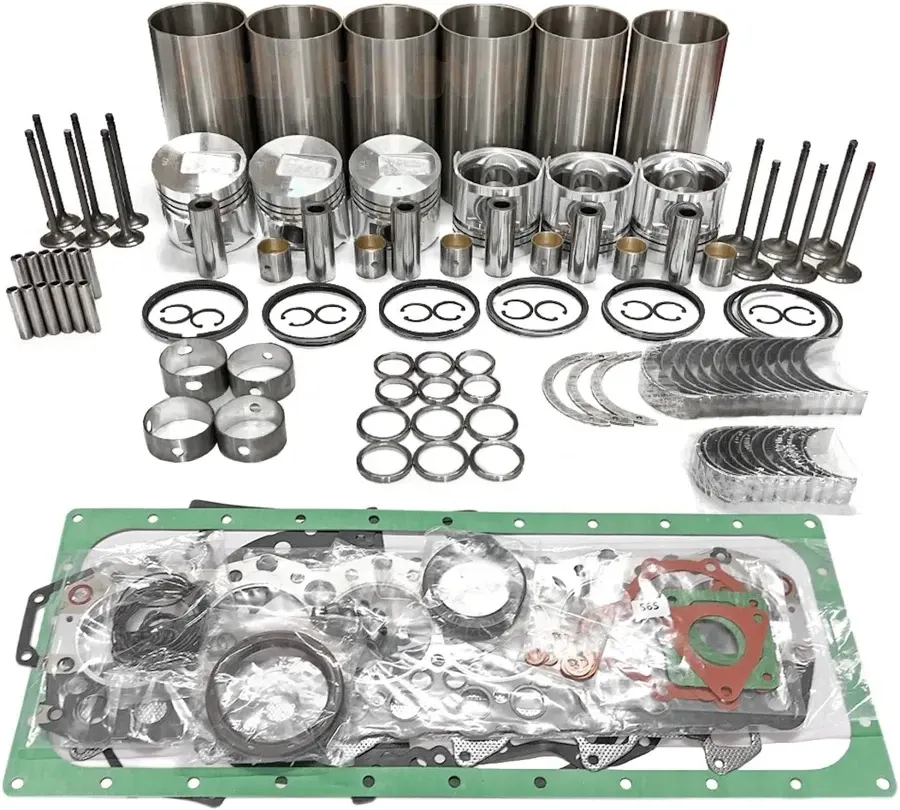
Parts List: What Scope a Complete Overhaul Kit Typically Extends To
A complete overhaul kit typically covers the same core components as an in-frame overhaul — pistons, liners, and bearings — and extends further into gaskets, oil seals, and other seals tied to a fuller teardown. But there's no fixed standard for exactly how far that extends — it still comes down to the engine configuration and the supplier's itemized list, not a simple "in-frame parts plus a fixed few extras" formula. Commonly extended areas include:
- Front crankshaft seal — prevents leaks at the front of the crankshaft. Many in-frame kits don't necessarily cover this; complete overhaul kits more commonly include it, but it's still worth confirming item by item
- Rear crankshaft seal — same purpose at the rear of the crankshaft; similar situation to the front seal, and inclusion still depends on the specific list
- Camshaft-related seals — the sealing condition around the camshaft, which an in-frame overhaul typically doesn't proactively inspect or replace. Whether this is included depends on the engine model and how the specific kit is defined — not every complete kit covers it by default
- A more complete gasket package — compared to an in-frame kit, which only covers gaskets tied to the disassembly scope, a complete overhaul kit typically extends to more upper, lower, and external interface seals, but exactly which gaskets are included still needs to be confirmed against the list
- Other internal components confirmed by the specific engine configuration — which ones apply depends on the engine model, CPL, and actual teardown findings
Worth noting: exactly which gaskets are in the "gasket package," and what "other internal components" actually refers to, also varies by supplier — the same issue that comes up with in-frame kits. Compare quotes item by item rather than assuming a complete overhaul automatically means the most comprehensive list just because of the name.
Is a Complete Overhaul Kit the Same as a Complete Rebuild Kit?
In customer inquiries and supplier quotes, "complete overhaul kit" and "complete rebuild kit" often point to the same underlying need — a parts package for a full engine overhaul or rebuild. But as with everything above, suppliers don't define kit scope consistently, so the name alone doesn't tell you whether the contents are complete. What still matters is the itemized list, how it was matched against the ESN/CPL, the bearing spec, and the gasket/seal scope — not which of the two terms was used.
"Complete" Doesn't Mean Everything Is Included
A lot of buyers assume "complete overhaul kit" means "complete enough that nothing else needs buying" — that assumption is genuinely risky. In practice, a complete overhaul kit still typically excludes:
- Injectors, fuel pumps
- Water pumps, oil pumps
- Turbochargers
- Starter motors, alternators
- Sensors, belts, filters
- The cylinder head assembly, crankshaft, camshaft, connecting rods, flywheel
- External block-mounted accessories
Whether these need replacing depends on teardown findings and the actual repair scope — they shouldn't be assumed included just because the kit is labeled "complete." Judging whether a complete overhaul kit is the right fit isn't about whether the word "complete" appears in the title — it's about whether the list actually covers what this specific overhaul needs replaced, which is exactly why confirming item by item matters more than ordering off the name.
When a Complete Overhaul Makes More Sense Than an In-Frame Overhaul
Not every engine needing repair should jump straight to a complete overhaul, but a few situations tend to make it the more sensible choice:
- Running hours are already high — areas outside the in-frame scope (seals, gaskets) are likely also approaching end of service life
- The engine is already scheduled to be pulled for repair — if a more thorough teardown, cleaning, and measurement process is already planned, preparing only in-frame-scope core components usually isn't enough, since pulling the engine involves more seal locations and reassembly steps
- An in-frame overhaul was done recently and a new problem has shown up — this usually signals the wear extended further than expected; a second in-frame job may make less sense than addressing it systematically
- The equipment is critical standby power or a primary mining asset that can't afford another shutdown soon — a complete overhaul costs more upfront, but reduces the odds of being back in the shop shortly after
- Multiple systems show wear at the same time, rather than an isolated issue in one area
On the flip side, if the problem is relatively contained (say, low compression and oil consumption with everything else in good shape), an in-frame overhaul may already be sufficient — no need to spend on a complete overhaul "just to be safe." Which one actually applies still comes down to teardown findings, not running hours or symptom descriptions alone.
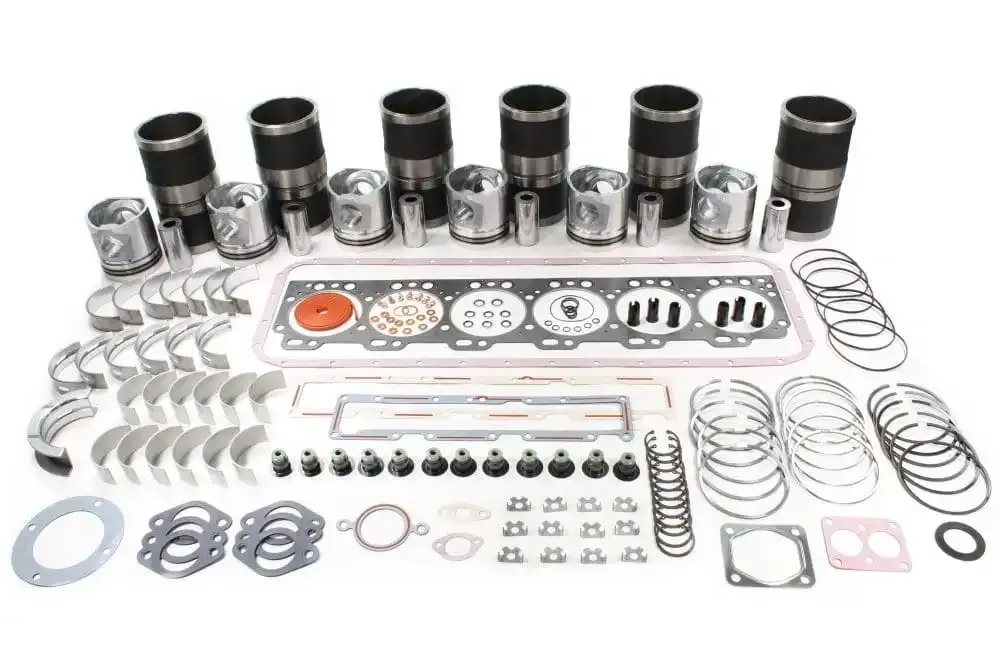
Why Inspection and Machining Results Matter Before a Complete Overhaul
This is one clear way a complete overhaul differs from an in-frame overhaul — before a complete overhaul, a workshop typically inspects the crankshaft, block, and similar areas first, and those findings directly affect bearing spec, seal selection, and other part choices. This inspection and any machining work is typically handled by a local repair shop or machine shop — it's not something a parts supplier provides — but the results are critical for confirming the right part versions, and worth understanding ahead of time:
- The teardown and inspection are usually more thorough — not just confirming known wear points, but checking whether the crankshaft, block, and similar areas fall within acceptable tolerances
- If the crankshaft has been reground, bearing spec adjusts accordingly — this is exactly why bearing spec for a complete overhaul relies more heavily on actual inspection findings than an in-frame job does, rather than stocking standard spec ahead of time
- Before ordering a complete overhaul kit, it's better not to rush into a standard-spec order — get the inspection results from a local shop first (crankshaft condition, bearing spec, old part photos), and a supplier can use that to help confirm whether standard, oversized, or special-spec parts are needed
If a supplier says "don't worry about the inspection results, just go with standard parts," that's worth a follow-up question. A large part of a complete overhaul's value comes from "inspect first, then confirm what actually needs replacing" — skipping that step and defaulting to a fixed list can end up functionally no different from a beefed-up in-frame overhaul.
Common Cummins Engine Series That Need Complete Overhaul Kits
Complete overhaul kits are common across a range of mid- and large-displacement diesel engines and long-service equipment, including 4BT/6BT/6BTA/6BTAA, 6CTA 8.3, QSB/QSC/QSL, NT855/NTA855, M11/ISM/QSM11, KTA19, KTA38, KTA50, and the QSK19/38/50/60 series — widely used in gensets, mining equipment, construction machinery, and industrial power applications. For larger-displacement models like the KTA19, KTA38, KTA50, and QSK19, confirming the exact list matters even more, since CPL, compression ratio, piston version, and application configuration can all affect which core components fit.
Regardless of the model, though, it's not a good idea to order off a generic label like "KTA38 complete rebuild kit." The engine model is only a starting reference — the final confirmation still needs the ESN, CPL, part number, nameplate photo, and teardown findings.
Applications: Mining, Critical Standby Power, and High-Hour Fleets
Complete overhauls show up most often where two conditions overlap: high cost of downtime and high running hours.
Primary mining assets — sustained heavy load racks up hours quickly, and once a maintenance window is decided on, operators typically prefer to handle everything in one pass rather than risk another shutdown soon after.
Critical standby power — data centers and hospitals have very low tolerance for downtime. If an engine has run for years and needs an overhaul, the reliability recovery from a complete overhaul often delivers more value in this context than an in-frame job. Worth noting: low running hours on a standby unit don't guarantee good condition — extended low-load operation, lack of regular load testing, humid environments, or inconsistent maintenance can all affect actual reliability just as much.
High-hour equipment in general (regardless of specific application) — not limited to mining or gensets, any critical piece of equipment with high accumulated hours and low tolerance for frequent shutdowns is worth considering for a complete overhaul rather than staged repairs.

Genuine or Aftermarket for a Full Rebuild
For the core moving parts in a complete overhaul, the genuine-vs-aftermarket logic is similar to an in-frame overhaul — it comes down to whether you can absorb the cost of a failure. But a complete overhaul carries one more consideration: given that you've already committed to a full, one-time systematic rebuild, the certainty premium of genuine core components is often worth weighing more heavily against the aftermarket savings — the whole point of a complete overhaul is reducing the odds of another teardown soon, and if a core component fails again shortly after due to an aftermarket quality issue, that defeats the purpose of doing the complete overhaul in the first place.
That said, this isn't an absolute rule. For mature mid- and lower-displacement engines, if the aftermarket supplier has a consistent production record, material control, and inspection documentation, high-quality aftermarket is a viable option even for core moving parts. For high-output engines, critical equipment, and high-downtime-cost projects, it's worth holding a higher bar on core component sourcing, traceability, and long-term reliability. Whichever route you take, parts still need to be confirmed against the ESN and CPL for the specific version.
Comparing Complete Overhaul Kit Quotes
When comparing complete overhaul kit quotes, on top of the same checks that apply to an in-frame kit (core components, small parts, gaskets, seals, spec, matching basis, sourcing), a few extra things are worth confirming:
| Comparison Point | What to Confirm |
|---|---|
| Inspection reference | Has the quote accounted for crankshaft/block inspection findings, or is it based on standard parts by default? |
| Spec confirmation | If the crankshaft has been reground, has the quote been adjusted for oversized parts, or is it still calculated on standard? |
| Seal scope | Does it genuinely include front/rear crankshaft seals and camshaft-related seals, not just an in-frame kit's seal scope? |
| Upper-end components | Are valve seals and injector seals included (this doesn't mean valves, guides, etc. themselves are included)? |
| Lead time basis | Does the lead time account for possible spec adjustments once inspection results come in? |
| Quote scope | Does it include packaging, shipping, and export documentation costs? |
If a quote doesn't say anything about how inspection results might affect bearing spec, piston version, or other part choices, it's likely just a preliminary list based on standard spec — not something to treat as the final order basis.
Buying Checklist and Inquiry Format
Before ordering a complete overhaul kit, confirm:
- Engine model, ESN, CPL
- Whether you already have inspection results from a local repair shop or machine shop, and the condition of the crankshaft and block
- Whether front/rear crankshaft seals, camshaft-related seals (if applicable), and the specific gasket scope are clearly itemized
- Whether bearing spec has been confirmed against inspection results, rather than applied from standard parts by default
- Genuine or aftermarket, with core and supporting components addressed separately
Complete Overhaul Kit Inquiry Format:
- Engine Model:
- ESN / CPL:
- Application:
- Running Hours:
- Prior Repair History (has an in-frame overhaul been done?):
- Crankshaft Condition (known to have been reground?):
- Engine Nameplate Photo:
- Inspection Report / Old Parts Photos:
- Required Kit Scope:
- Bearing Size:
- Gasket / Oil Seal Requirement:
- Genuine or Aftermarket:
- Quantity:
- Destination Country:
- Required Delivery Time:
Not sure whether your equipment needs an in-frame or a complete overhaul, or have inspection findings you'd like to match against specific part specs? Send us your engine details and inspection results, and we'll help confirm.
How ZEB Power Supplies Complete Overhaul Kits
ZEB Power supplies complete overhaul kits for Cummins diesel engines, covering primary mining assets, critical standby power, construction machinery, and other high-running-hour industrial power applications.
Before quoting, we confirm the core components, gaskets, seals, and small parts needed for the kit based on your engine model, ESN, CPL, nameplate photo, old part photos, inspection results, or repair notes — and we'll also spell out what's not included, so a complete kit doesn't get mistaken for something that covers injectors, water pumps, turbochargers, or other external accessories. For questions like whether the crankshaft has been reground, whether bearings need to be oversized, or whether pistons and liners require a special version, we recommend confirming with a local repair shop or machine shop's inspection results first. ZEB Power can then help determine whether standard, oversized, or special-spec parts are the right call.
We support genuine core components for complete overhauls, and can also offer quality-verified, high-quality aftermarket options for mature mid- and lower-displacement engines, with the right choice depending on the application and reliability requirements. Whether you're inquiring under "complete overhaul kit" or "complete rebuild kit," we'll help work out exactly what needs to be included based on the actual repair scope, rather than quoting a flat total.
Ready to order a complete overhaul kit? Send ZEB Power your engine model, ESN/CPL, nameplate photo, and inspection results, and we'll check the parts list and get you a quote.
FAQ
1. What's the biggest difference between a complete overhaul and an in-frame overhaul?
It's not just more parts — the core difference is the repair logic. An in-frame overhaul targets confirmed-worn core moving parts; a complete overhaul is a more systematic teardown and rebuild that typically draws on more thorough inspection findings and covers a fuller crankshaft seal set, upper and lower gaskets, and other seals tied to the full disassembly scope.
2. Does a complete overhaul kit mean every part on the engine is included?
No. Injectors, fuel pumps, water pumps, oil pumps, turbochargers, starter motors, sensors, belts, and filters typically aren't included by default — whether they need replacing depends on teardown findings. Judge a kit by its list, not its name.
3. When should you go straight to a complete overhaul instead of an in-frame overhaul first?
When running hours are high, an in-frame overhaul was recently done and a new problem has appeared, the equipment is critical standby power or a primary mining asset that can't afford frequent shutdowns, or multiple systems show wear at once, a complete overhaul is usually the more sensible call — though it should still be confirmed against teardown findings.
4. Does a complete overhaul always involve machining?
Not necessarily — it depends on the inspection results. If the crankshaft, block, or similar areas show wear beyond standard tolerances, regrinding may be needed; if inspection results fall within acceptable range, no additional machining may be required.
5. Why do I need to provide inspection results when ordering a complete overhaul kit?
A complete overhaul can involve crankshaft regrinding, bearing spec adjustments, or model-specific parts. Without inspection results, a supplier can usually only offer a preliminary plan based on standard configuration — the final order should still be confirmed against a local shop's inspection findings. Inspection and machining are typically handled by a local repair shop or machine shop, and a supplier uses those results to help confirm the correct part specs.
6. Should complete overhaul core components be genuine or aftermarket?
Given that the whole point of a complete overhaul is reducing the odds of another teardown soon, core moving parts generally warrant a higher reliability bar. For mature mid- and lower-displacement engines, high-quality aftermarket is a viable option if the supplier has a consistent production record and inspection documentation. For high-output engines, critical equipment, and high-downtime-cost projects, it's worth holding a higher standard on core component sourcing and long-term reliability.
7. Does a complete overhaul typically take longer than an in-frame overhaul?
Usually, yes — because inspection results need to come in before part specs can be finalized, and that confirmation process takes extra time. When planning a maintenance window, it's worth completing the local inspection early and sharing the results with the supplier ahead of time, rather than going back and forth once the window is already underway.
Summary: The Key to Buying a Complete Overhaul Kit Is Confirming Specs Against Inspection Results
A Cummins complete overhaul kit isn't a fixed list that applies to every engine, and seeing the word "complete" doesn't mean every part needed for the overhaul is already included. A reliable buying process starts with confirming piston/liner version, bearing spec, gasket package, and seal scope against the engine model, ESN, CPL, and teardown findings — then comparing suppliers on list contents, sourcing, price, and lead time.
Before a teardown is complete, it's fine to get a preliminary quote based on standard configuration — but before placing the final order, share the local repair shop or machine shop's inspection results with the supplier to confirm whether standard, oversized, or other special-spec parts are needed.
Ready to order a complete overhaul kit, or have inspection results you want matched against specific part specs? Send ZEB Power your engine details and inspection results, and we'll help you sort it out.