

Caterpillar Engine Oil Filters: Types, Fitment & Selection

3589
Table of Contents
Generating table of contents
Oil filters are among the most frequently replaced maintenance parts for Caterpillar engines. They are also among the easiest components to mistake for interchangeable parts. Two filters may look nearly identical and have similar threads, yet differ in sealing design, filtration efficiency, oil flow direction, or bypass valve configuration. The risk of installing the wrong filter is not always that it will fail to fit. It may fit perfectly but fail to provide the protection the engine requires.
For repair shops, parts distributors, fleet operators, and equipment maintenance buyers, choosing the right oil filter means confirming which engine it fits, the correct part number, whether its filtration performance meets the original application requirements, and how the quoted quantity is defined.
This guide covers the main types of Caterpillar engine oil filters, how to select the correct replacement, and what to consider when purchasing them.
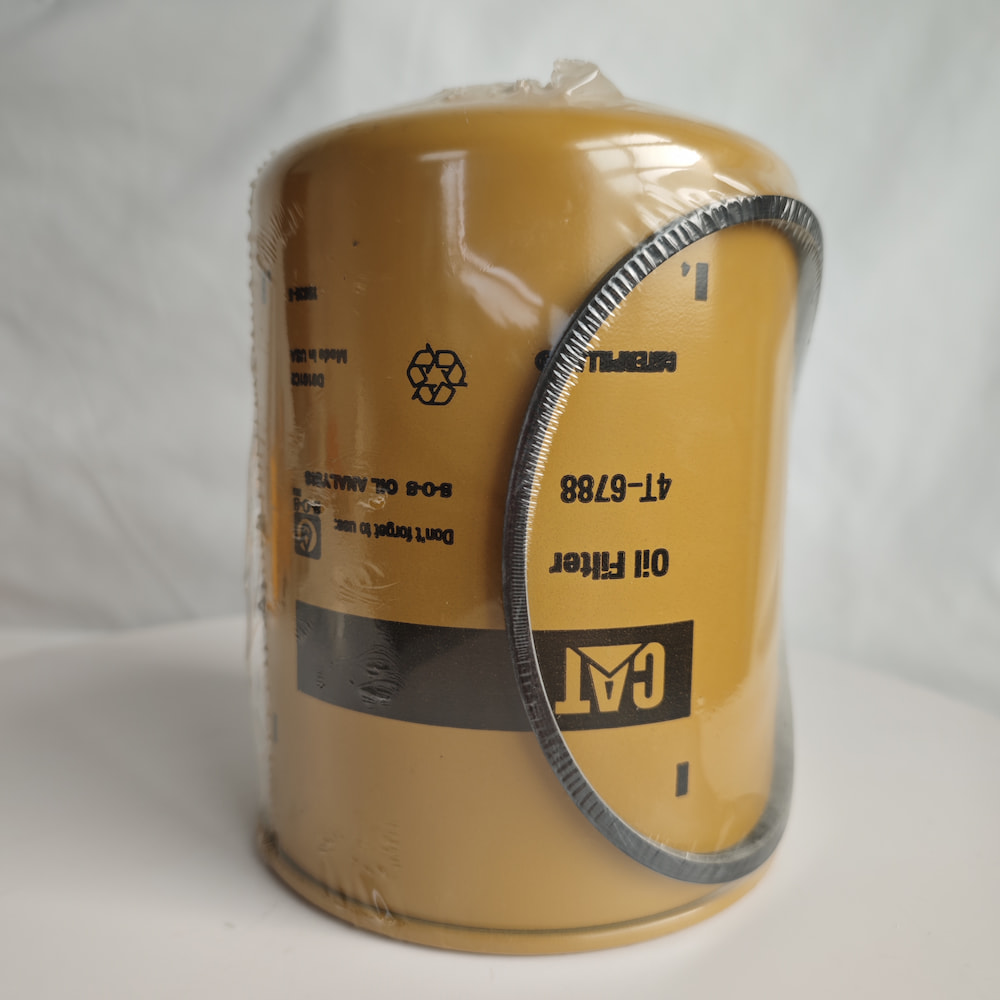
1. What Types of Caterpillar Engine Oil Filters Are Available?
Based on their construction, engine oil filters generally fall into two main categories:
| Filter Type | Key Features | What to Check Before Buying |
|---|---|---|
| Spin-On Oil Filter | The filter element and housing form a single unit, which is replaced as a complete assembly. | Thread specifications, overall dimensions, and sealing gasket |
| Cartridge / Element Oil Filter | The replaceable filter element fits inside a separate filter housing or filter assembly. | Compatibility between the element and housing, and whether sealing rings must also be replaced |
Some engines or lubrication systems also use bypass circuits or bypass valves. Depending on the design, the bypass valve may be built into the filter, incorporated into the filter base, or located elsewhere in the lubrication system. The exact arrangement should be verified against the lubrication system documentation and parts diagrams for the specific engine.
A single engine may also use more than one oil filter. The required configuration and quantity should be confirmed using the engine manual and configuration information. The description "engine oil filter" alone is not enough to identify the correct filter design.
2. Filtration Efficiency: Higher Is Not Always Better
Cat offers oil filters in different filtration categories, including Standard, Advanced, and Ultra High Efficiency. These categories represent different filtration designs and application requirements. The actual performance and compatibility of each filter should be checked against the product documentation for its specific part number.
Filtration category names are not always presented consistently across product pages and technical documents. For example, a particular category may be described as "Advanced" or "Advanced High Efficiency." The product information associated with the specific part number should therefore take priority over the category name alone.
A higher filtration category does not automatically make a filter the better choice for every engine. The correct approach is to identify the oil filter part number and filtration requirements specified for the engine first, then determine whether a verified upgrade or replacement option is available. Always refer to the relevant official product information to confirm the applicable engine models and operating applications.
3. How to Choose the Right Caterpillar Engine Oil Filter
1. Start With the Engine Identification Details
Before requesting a quotation, it is advisable to gather the following information:
- Engine model, such as C7, C13, C15, 3406, or 3512
- Complete engine serial number (ESN) and Arrangement Number
- Equipment model and operating environment
- Part number shown on the existing oil filter, along with photos of the filter and its mounting location
Engines within the same model family may use different oil filters depending on their serial number range or configuration. For this reason, ordering a filter based only on a description such as "C15 oil filter" is not recommended.
If the equipment has undergone an engine replacement or modifications to the filtration system, compatibility should be reassessed using the current installation, existing part numbers, and relevant technical documentation.
2. Check the Part Number and Specifications Before Comparing Dimensions
Similar appearance does not mean two filters are interchangeable. A more reliable selection process is to check the original part number, application compatibility, filtration specifications, mounting design, and finally the physical dimensions, rather than searching for a replacement based on size alone.
The following specifications are particularly important:
| Specification | What to Verify |
|---|---|
| Connections and Threads | Whether the thread specifications match the filter mounting base |
| Oil Flow Direction | Whether oil flows through the filter media in the direction required by the original design |
| Overall Dimensions | Whether the filter height and diameter are suitable for the available installation space |
| Sealing Gasket | Whether the gasket dimensions and material match the original design requirements |
| Bypass and Anti-Drainback Design | Where applicable, whether the filter or system design meets the requirements of the original application |
| Filtration Performance | Whether the filtration category and relevant manufacturer-specified performance characteristics meet the application requirements |
| Pressure Rating | Whether the filter can withstand the required operating pressure |
A filter that screws onto the mounting base does not necessarily have the correct bypass configuration. Likewise, two filters with identical external dimensions may use different filter media and offer different filtration performance.
These differences can affect the protection provided to the engine. Critical specifications should therefore be verified using product documentation rather than appearance alone.
3. Verify Part Numbers, Supersessions, and Cross-References
Caterpillar part numbers commonly consist of numbers, letters, and hyphens, such as 1R-1807 or 7W-2326. These are provided as part number format examples only. Their compatibility with a particular engine must be verified separately.
When checking a part number, confirm:
- Whether the original part number is still current or has been superseded by a newer number
- Whether the superseding part number applies to the specific engine serial number or configuration
- Whether the replacement requires any additional seals or related components
Third-party oil filter manufacturers often provide cross-reference numbers to identify potential alternatives to original equipment parts. These references are useful for narrowing down the options, but they do not replace verification of the actual specifications.
When requesting information from a supplier, ask for the corresponding original equipment part number, a product specification sheet covering dimensions and filtration category or performance, and the applicable engine models.
A supplier who claims that a filter is "equivalent to" a particular part number but cannot provide supporting product information presents a greater purchasing risk.
4. Consider the Operating Conditions
If the equipment operates for extended periods under heavy loads, in dusty environments, at high temperatures, or under other demanding conditions, the engine's maintenance requirements, oil condition, and actual service plan should also be considered.
Oil filter replacement intervals should follow the applicable engine Operation and Maintenance Manual rather than being established independently of the manufacturer's maintenance requirements.
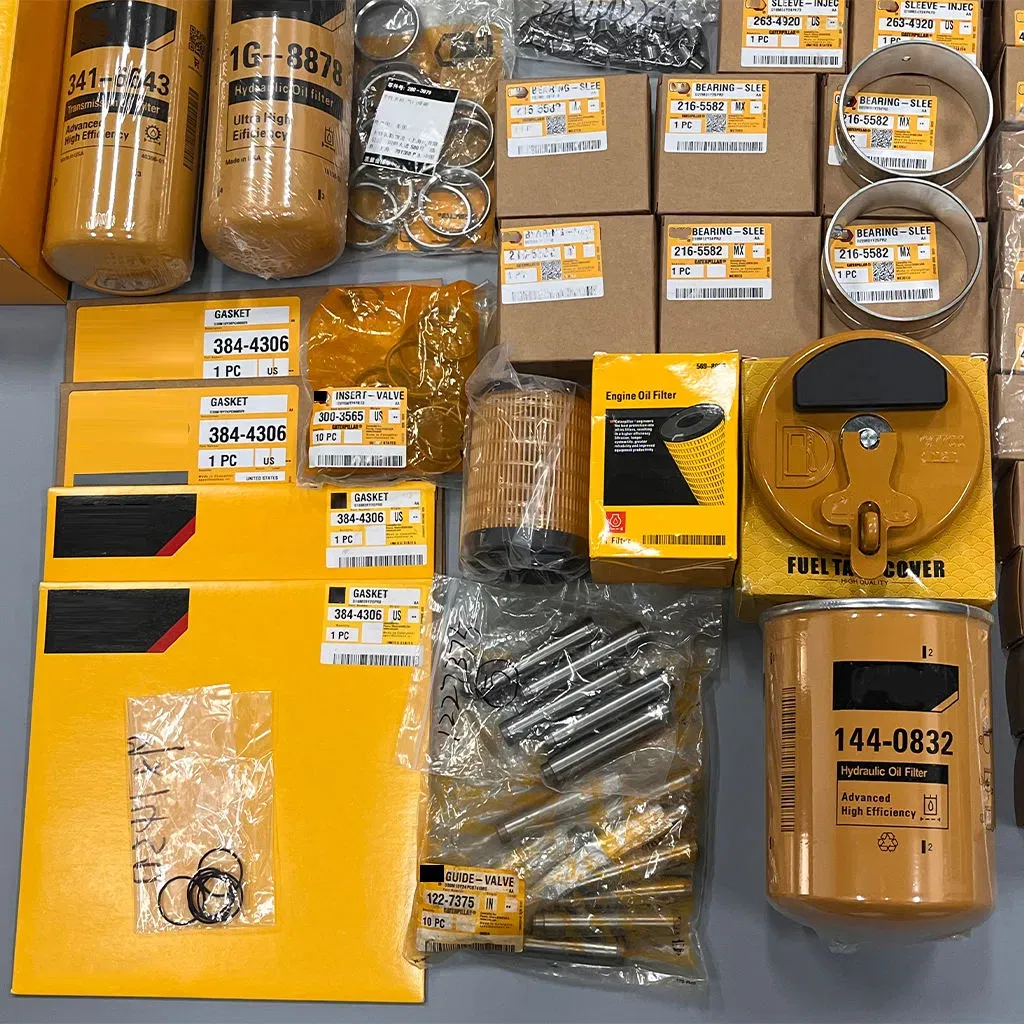
4. How to Buy Caterpillar Engine Oil Filters
1. Identify the Brand and Verify the Specifications
Engine oil filters are consumable maintenance parts designed to be replaced rather than reused. They are generally purchased as new products. One of the main purchasing decisions is whether to choose a Genuine Cat filter or a third-party replacement from an identifiable brand.
When evaluating a third-party oil filter, asking whether the product is good quality is not enough. More useful questions include:
- Which original equipment part number does the filter correspond to?
- Who manufactures the filter?
- What is the third-party manufacturer's own part number, and how does it cross-reference to the Cat original part number for purchasing, inventory management, and traceability?
- Do the filtration performance, threads, sealing gasket, bypass design, anti-drainback features, and other critical specifications meet the original application requirements?
- What warranty terms apply, and how are incorrect fitment issues handled?
If the equipment is still under warranty, whether using a third-party oil filter affects warranty coverage depends on the terms of the applicable warranty agreement. Check with the warranty provider before making the replacement.
2. Prepare a Clear Request for Quotation (RFQ)
- Engine model and serial number, plus the Arrangement Number if available
- Oil filter part number, or the old part number and photos of the existing filter
- Required quantity and whether the order is quoted per filter, carton, or pallet
- Brand requirements, such as Genuine Cat or acceptable third-party alternatives
- Equipment type, destination country or region, and required delivery schedule
If the correct part number is already known, the RFQ can be straightforward: provide the part number, quantity, brand requirements, and delivery destination.
3. Compare Quotations Beyond Unit Price
| Comparison Point | What to Verify |
|---|---|
| Part Number | Whether the quotation covers the same part number or a verified replacement |
| Brand and Manufacturer | The product brand and, for third-party filters, the actual manufacturer |
| Filtration Performance and Key Specifications | Whether the filter meets the original application requirements |
| Quantity and Packaging | Whether pricing is per filter, carton, or pallet; units per carton, minimum order quantity (MOQ), and packaging method |
| Stock Availability and Lead Time | Whether the filters are in stock and the expected shipping date |
| Shipping | Freight charges, agreed trade terms, and estimated transit time |
| Warranty and Returns | Warranty period and how incorrect fitment or product quality issues are handled |
| Product Identification and Shipping Documents | Whether individual filters and outer cartons are clearly labeled, and whether packing lists and batch information are provided |
A lower unit price may simply reflect different packaging quantities or a product with different specifications. Oil filters can vary in filtration performance, construction, and application requirements.
The more meaningful comparison is the total purchasing cost of products that meet the same application requirements, rather than the price of an individual filter alone.
Looking to source Caterpillar engine oil filters? Send us your engine model, serial number, oil filter part number or photos of the existing filter, required quantity, and delivery destination. We can help verify compatibility and prepare a quotation.
4. What to Consider When Buying Oil Filters in Bulk
For parts distributors, repair service providers, and fleet operators purchasing dozens or even hundreds of filters at a time, several additional details are worth checking beyond the part number:
- Packaging and labeling: Check whether individual filters and outer cartons display the correct part numbers and quantities, whether different models are packed separately, and whether the packing list identifies quantities by model.
- Batch consistency: Confirm whether the products supplied under the same order have consistent manufacturers, models, and specifications. If the packaging or external appearance changes, ask the supplier to confirm that the product specifications remain unchanged.
- Inventory cross-referencing: Maintain inventory records using the original equipment reference number, supplier part number, and applicable engine models. Avoid combining different part numbers into a single stock item simply because the filters look alike.
5. Inspect Deliveries and Verify Product Sources
Before installing the filters or adding them to inventory, carry out the following checks:
- Verify part numbers, quantities, and purchase order details, and check that individual product labels match the outer carton labels.
- Inspect the packaging for damage and check the filter housings for deformation, impact damage, corrosion, or moisture exposure.
- Check that the threads and sealing gaskets are intact.
- Count the products against the packing list and batch information, and retain the relevant documents and photos taken upon delivery.
Packaging, labels, and part numbers are useful for initial inspection, but they cannot independently prove a product's origin.
For bulk purchases, ask the supplier to identify the actual brand, manufacturer, or source of supply and provide any available batch or traceability information. If a quotation is significantly below the prevailing market price and the supplier cannot explain the source of the products, further verification is advisable.
Inspecting every filter in a large shipment may not be practical. Instead, sampling inspections can be arranged according to order quantity and risk level, with particular attention to labeling, appearance, connections, and batch consistency.
If part numbers do not match, labels are inconsistent, or the filters show visible abnormalities, contact the supplier before installation. Bulk shipments should also be stored according to the supplier's recommendations to prevent moisture exposure and crushing damage.
Conclusion
Choosing the right Caterpillar engine oil filter is not simply a matter of finding one with matching dimensions. The part number, engine compatibility, filtration performance, mounting design, and purchasing quantity all need to match the actual requirements.
Frequently Asked Questions (FAQ)
1. How Do I Find the Correct Caterpillar Engine Oil Filter Part Number?
You can check the relevant parts catalog, use Cat parts lookup resources, or ask a supplier to verify the filter using the engine model, serial number, and part number printed on the existing filter. A general description such as "engine oil filter" is usually not enough to identify the correct product.
2. Can Two Oil Filters With the Same Dimensions Be Used Interchangeably?
Not based on dimensions alone. You also need to verify part number cross-references, filtration performance, connections, sealing gaskets, oil flow direction, bypass and anti-drainback design, and compatibility with the specific engine and application.
3. Which Is Better: Advanced or Ultra High Efficiency Oil Filters?
A higher filtration category does not automatically mean a filter is more suitable for a particular engine. Start with the filter and filtration requirements specified for the original application, then check whether a verified upgrade option is available.
4. Can Third-Party Oil Filters Replace Genuine Cat Filters?
Third-party filters can be evaluated as replacement options, provided their corresponding original equipment part numbers, filtration specifications, mounting design, application compatibility, and manufacturing brands are verified. A claim that a filter replaces a particular part number is not sufficient on its own.
5. Will Using a Third-Party Oil Filter Affect My Equipment Warranty?
This depends on the terms of the applicable equipment warranty. If the equipment is still under warranty, check with the warranty provider before installing a third-party replacement filter.
6. How Often Should Caterpillar Engine Oil Filters Be Replaced?
Oil filter replacement intervals should follow the Operation and Maintenance Manual for the specific engine. Requirements vary depending on the engine model, operating conditions, and oil used. Applying a single fixed replacement interval to every engine is not recommended.