

Caterpillar Aftermarket Engine Parts: Quality & Sourcing

2164
Table of Contents
Generating table of contents
One of the most common questions when buying aftermarket engine parts for Caterpillar engines is whether the quality is reliable. However, "aftermarket" primarily describes where a part comes from and how it is supplied. Aftermarket parts are manufactured by companies other than the original equipment manufacturer (OEM) and are marketed as replacements for, or compatible with, specific Caterpillar part numbers. The term itself does not indicate a particular level of quality. Actual quality depends on the manufacturer, product specifications, and supply conditions.
For repair shops, parts distributors, and equipment maintenance buyers, the more practical questions are: Which original Cat part number does the aftermarket part correspond to? Who manufactures it? Does it meet the specifications required for the original application? And how will any fitment or quality issues be handled?
This guide explains what Caterpillar aftermarket engine parts are, how to select them, how to evaluate their quality, and what to consider when purchasing them.
1. What Are Aftermarket Engine Parts?
Aftermarket parts are replacement components manufactured by companies other than the original equipment manufacturer. When sourcing these parts, it is important to distinguish between three separate aspects:
- Brand and source: Whether the part is a Genuine Cat product or a third-party replacement sold under an identifiable brand.
- Product condition: Whether the part is new, remanufactured, or used.
- Transaction terms: Whether the part is purchased outright or supplied under an exchange arrangement involving the return of an old component (core).
"Aftermarket" generally refers to the source of a part, while "remanufactured" describes its condition. Genuine equipment manufacturers can also offer remanufactured products. Therefore, aftermarket and genuine should not be treated as labels that automatically indicate different quality levels.
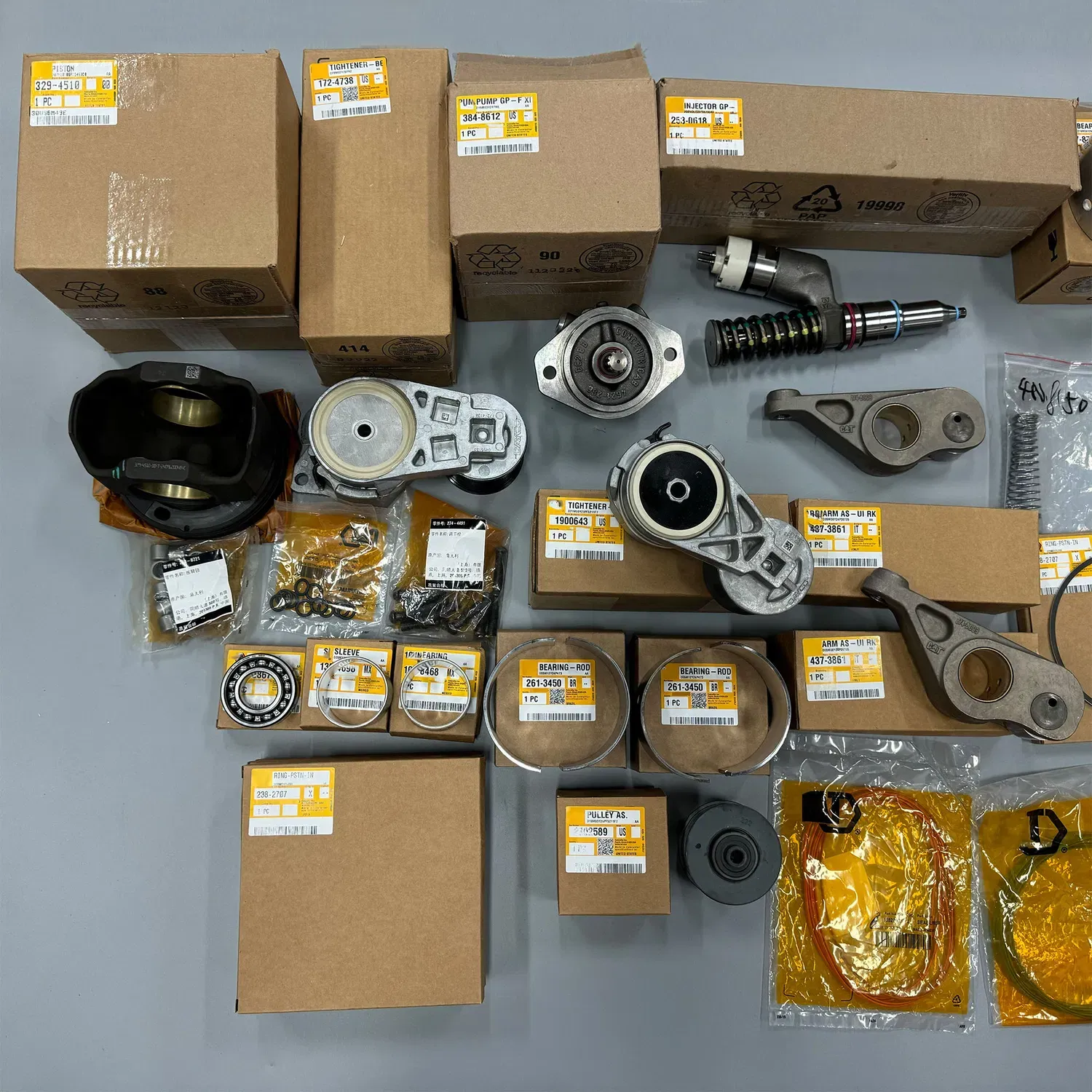
It is also important to distinguish between "fits Caterpillar" and "Genuine Cat." The former is a compatibility claim made by the manufacturer or supplier, while the latter identifies a genuine original equipment product. This distinction should be clearly stated in the quotation.
Aftermarket parts are generally sold under a third-party manufacturer's own brand or identity, with references to the Caterpillar part numbers they are intended to replace. Counterfeit parts, by contrast, are products falsely presented as genuine original equipment parts.
These are not the same thing. A part is not counterfeit simply because it is not genuine. Conversely, the presence of a Cat logo on the packaging does not, by itself, prove that the product is Genuine Cat.
2. Different Parts Require Different Quality Checks
The purchasing risks associated with aftermarket parts vary by component type. It is therefore useful to establish different evaluation priorities for different categories of parts.
| Part Category | Key Evaluation Criteria |
|---|---|
| Consumables such as Filters and Seals | Part number cross-references, critical specifications (connections, sealing design, and filtration performance), and batch consistency |
| Internal Engine Parts such as Cylinder Liners, Pistons, and Bearings | Standard or repair sizes, material and machining documentation, and whether all components in the set come from the same manufacturer |
| Fuel System Components such as Injectors and Fuel Pumps | Applicable engine serial numbers and configurations, test documentation, and any installation, calibration, or other service requirements |
| Turbochargers | Complete turbocharger versus cartridge, mounting configuration, and warranty terms |
| Electronic Components such as ECMs and Sensors | Configuration and compatibility, programming or setup requirements, and procedures for handling incorrect fitment |
| Assemblies such as Water Pumps and Starter Motors | Connections and mounting configuration, whether the assembly includes the housing, and warranty coverage |
For high-value components, parts that directly affect critical engine performance, or components that would be costly to remove and reinstall, more detailed technical documentation, testing information, and warranty coverage should be considered rather than comparing prices alone.
3. How to Evaluate the Quality of Aftermarket Engine Parts
Appearance alone is not enough to judge the quality of an aftermarket part. A more useful approach is to break down "quality" into specific points that can be verified with the supplier:
- Manufacturer: Identify who actually manufactures the part and whether the supplier is the manufacturer, a brand owner, or a trading company. Claims such as "OEM quality" without clear brand or manufacturing information warrant further verification.
- Specification matching: Confirm the corresponding original Cat reference number and whether critical specifications, including dimensions, connections, sealing arrangements, and filtration performance, meet the original application requirements.
- Technical documentation: Request relevant material, dimensional, machining, or test information appropriate to the type of component.
- Traceability: Check for batch or production identification and whether products supplied under the same order come from the same manufacturer and production batch.
- Warranty and issue resolution: Confirm the warranty period and coverage, along with the procedures for handling incorrect fitment or product quality problems.
The level of documentation required should reflect the risk associated with the component. A standard O-ring and a high-value fuel injector do not require the same level of supporting information. It is not necessary to request a complete set of inspection reports for every individual part.
Two other common risks also deserve attention. The first is price: if a quotation is significantly below the prevailing market price and the supplier cannot clearly explain the product's source, further verification is advisable. The second is product condition: confirm whether the quoted component is new or remanufactured to avoid receiving a product whose actual condition does not match its description.
4. How to Buy Caterpillar Aftermarket Engine Parts
1. Prepare a Clear Request for Quotation (RFQ)
- Engine model, complete serial number, and serial number prefix, plus the Arrangement Number if available
- Original Cat part number, or the existing part number and photos of the old component
- Required quantities and units of measure
- Whether aftermarket alternatives are acceptable, along with any brand or product condition requirements
- Equipment type, destination country or region, and required delivery schedule
2. Compare Quotations Beyond Unit Price
| Comparison Point | What to Verify |
|---|---|
| Original Equipment Reference Number | Whether the corresponding Cat part number is clearly identified and the supplier's own part number is recorded |
| Brand and Manufacturer | Product brand, actual manufacturer, and whether a kit contains parts from one source or multiple brands |
| Critical Specifications | Whether the product meets the original application requirements |
| Product Condition | Whether the part is new or remanufactured |
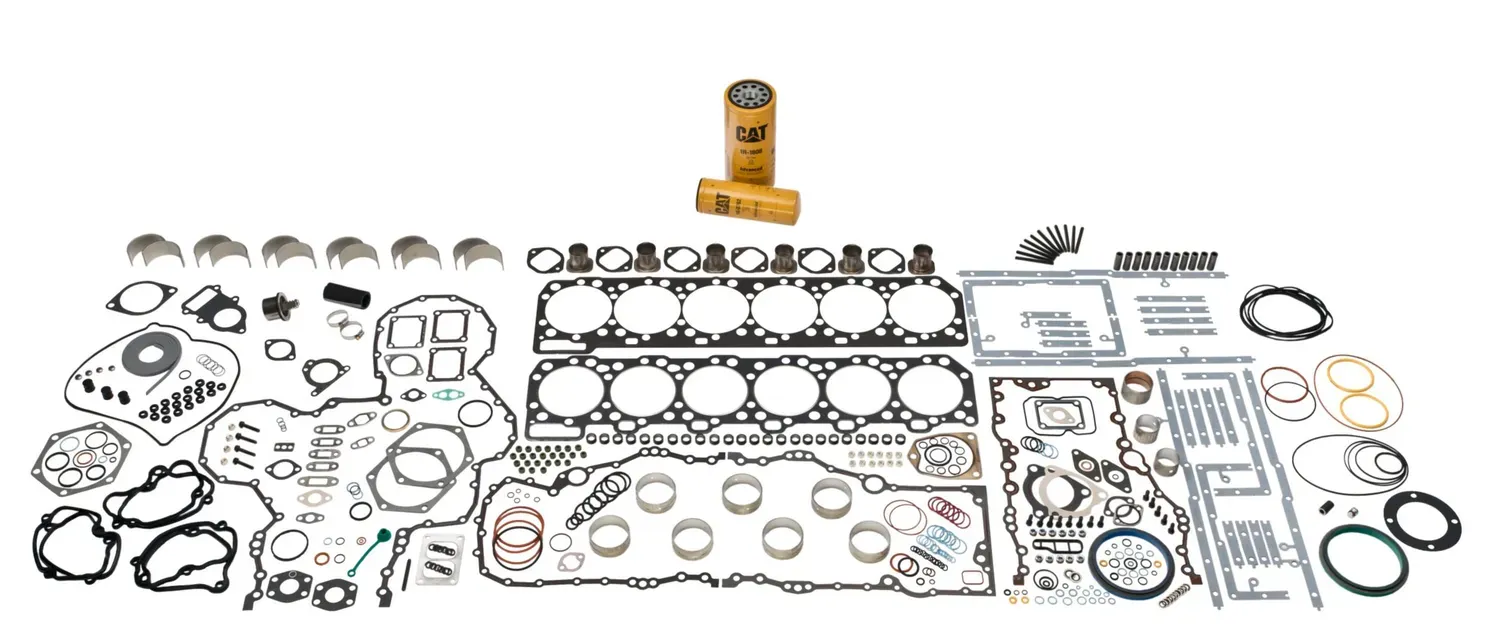
| Quantity and Packaging | Whether pricing is per individual part, per cylinder, per complete engine set, or per carton; units per carton, minimum order quantity (MOQ), and packaging method |
| Availability and Lead Time | Whether the parts are in stock and when they are expected to ship |
| Shipping | Freight charges, agreed trade terms, and estimated transit time |
| Warranty and Returns | Warranty period and coverage, and how incorrect fitment or quality issues are handled |
| Identification and Shipping Documents | Whether individual parts and outer cartons are clearly labeled and whether a packing list, batch information, or bill of materials is provided |
A lower unit price may simply reflect differences in packaging quantities, specifications, or the scope of supply. The more meaningful comparison is the total cost of products that meet the same requirements, including the potential costs associated with incorrect fitment, rework, and equipment downtime, rather than the price of an individual component alone.
Looking to source Caterpillar aftermarket engine parts? Send us your engine model, serial number, Cat part number or photos of the existing component, required quantity, and delivery destination. We can help verify compatibility and prepare a quotation.
3. Managing First Orders and Bulk Purchases
- Start with a trial order: When working with a new supplier or sourcing a new part number, consider placing a small initial order to verify fitment, product identification, and installation before increasing purchase volumes. Successful testing of samples or a small batch only confirms that the products and supply conditions tested were acceptable. It does not guarantee that every subsequent batch will be identical. Bulk orders should still be checked to confirm that the same manufacturer and specifications are being used.
- Keep product identity and sourcing consistent: Record the supplier's brand, supplier part number, original Cat reference number, and product specifications in the purchase order. Specify that the actual manufacturer or critical specifications must not be changed without the buyer's approval. If the packaging or external appearance changes, the supplier should confirm that the product specifications remain unchanged.
- Maintain accurate inventory cross-references: Organize inventory records using the original Cat reference number, supplier part number, and applicable engine models. Do not combine different part numbers into a single stock item simply because the components look alike.
4. Inspect Parts Upon Delivery
- Verify part numbers, quantities, and purchase order details, and check that labels on individual parts match those on the outer cartons.
- Inspect the packaging and components for deformation, impact damage, corrosion, or moisture exposure.
- Check critical dimensions and connections on important components.
- Confirm that the actual brand, manufacturer, and supplier part number match the purchase order, and that the product condition matches the quotation. Where a consistent manufacturing source has been agreed upon, check that no unreported changes have occurred.
- Keep the packaging, labels, purchase documents, and photos taken upon delivery.
Inspecting every component in a large shipment may not be practical. Instead, sampling inspections can be arranged according to order quantity and risk level, with particular attention to labeling, appearance, connections, and batch consistency.
If part numbers do not match, specifications appear incorrect, or product condition differs from what was quoted, contact the supplier before installation. Returns and responsibility assessments are generally more difficult once parts have been installed.
Conclusion
Choosing aftermarket engine parts should not come down to debating whether aftermarket or genuine parts are inherently better. What matters is whether the manufacturer, specifications, technical documentation, traceability, and warranty terms can be verified. Once those details are clear, quotations can be compared on an equivalent basis.
Frequently Asked Questions (FAQ)
1. Are Aftermarket Engine Parts Always Lower Quality Than Genuine Parts?
Not necessarily. "Aftermarket" describes a third-party source rather than a specific quality level. Actual quality depends on the manufacturer, product design and specifications, manufacturing consistency, testing, and warranty conditions.
2. How Can I Verify Which Original Cat Part Number an Aftermarket Part Replaces?
Ask the supplier to specify the corresponding Cat part number and provide product specifications and application information. Then verify compatibility using the engine serial number and configuration. Cross-reference numbers help identify possible replacements, but they do not replace final fitment verification.
3. Will Using Aftermarket Parts Affect My Equipment Warranty?
This depends on the terms of the applicable equipment warranty. If the equipment is still under warranty, check with the warranty provider before installing aftermarket replacement parts.
4. Are Aftermarket Parts Counterfeit?
No. Aftermarket parts are generally manufactured and sold by third-party companies under their own brands or identities, with references to the Cat part numbers they are intended to replace. Counterfeit parts falsely present themselves as genuine original equipment products. These are different categories. A Cat logo on the packaging does not, by itself, prove that a part is Genuine Cat.
5. What Should I Do When Buying Aftermarket Parts for the First Time?
Start with a small trial order. Ask the supplier to identify the manufacturer, corresponding original part numbers, product specifications, and warranty terms. Once fitment and product identification have been verified, you can consider increasing the order quantity.
6. What Should I Do If an Aftermarket Part Does Not Fit?
Confirm the supplier's procedures for handling incorrect fitment before placing the order. If a problem occurs, retain the packaging, labels, purchase documents, and photos taken upon delivery. Contact the supplier before installing the part whenever possible.